Week 11: Hot Aisle Cold Aisle Containment for Data Center
Aim - Hot Aisle Cold Aisle Containment for Data Center.
Objective - To Clean up the geometry and setup the case for the data center and make the necessary calculations to setup the case.
Introduction -
Data centers are a very crucial part of our today's digital world. Datacenters store all the relevant data in one place and process our various numbers of digital tasks at a very high speed. These devices are large and powerful computer servers, located in one place. For any digital company/business, it is common to have large room housing around 1 to 2000 server racks. A huge set of these devices is called a "data center". It has become an essential part of any modern-age large business.
The most important requirement for a data center is its uninterrupted, zero-downtime operation. For uninterrupted operation, two things are crucial: power and cooling. Uninterrupted power is assured by having several backup sources of power that can automatically bring online as soon as a power failure is detected. Cooling is a more complex issue.
Each server rack in a data center consumes electrical energy and dissipates a large amount of heat in the range of 2-20kW. For the electronics to function properly, it needs to be cooled and kept at an acceptable temperature level. Overheating may cause the equipment to malfunction, melt or burn, but more commonly. safety devices on the server racks will detect high temperatures and shut down the equipment. It is this interruption that presents a serious problem for a data center and needs to be prevented.
Working -
Cold air enters the server rack through the front face and hot air exits from the rear face. In a larger room, in which 2000 server racks may be spread all over the room which knows as the "Server Room". It is not easy to supply cooling air to each rack. This task is accomplished by a clever concept called the raised floor data center. The server racks are installed on a tile floor that is raised 0.3-0.6m above the real solid floor. The floor tiles are removable and some of the solid tiles can be replaced by perforated tiles or grilles to permit the cold air to enter the above floor space. By locating the perforated tiles at the foot of the server racks, cooling air is delivered to them. This area below the server room catering pressurized cold air into the room is known as the "Plenum"
After the heat exchange takes place the hot air then finds its way back to the air-conditioners due to density difference.
A down-flow air conditioning unit is placed on the raised floor. It draws the hot air in the room into its top face and supplies cold air from its bottom into the underfloor space. Such an air conditioner is called "Computer Room Air Conditioner (CRAC)" by the data center community. The cold underfloor air enters the above floor space through perforated tiles that are placed at the foot of the server racks. The racks, in turn, draw in this air through their front face and exhaust hot air from the rear face. The hot air finally returns to the top of the CRAC.
Geometry -
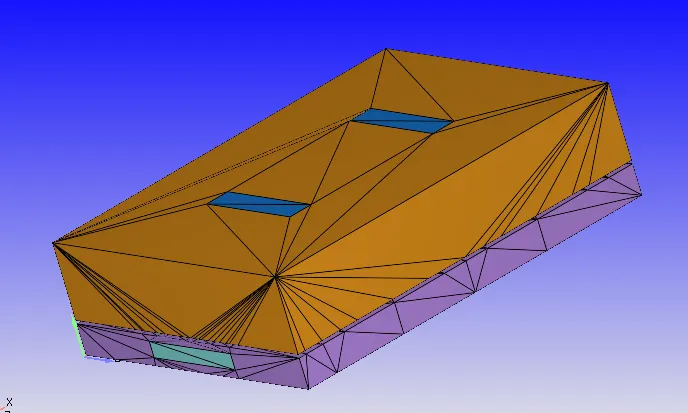
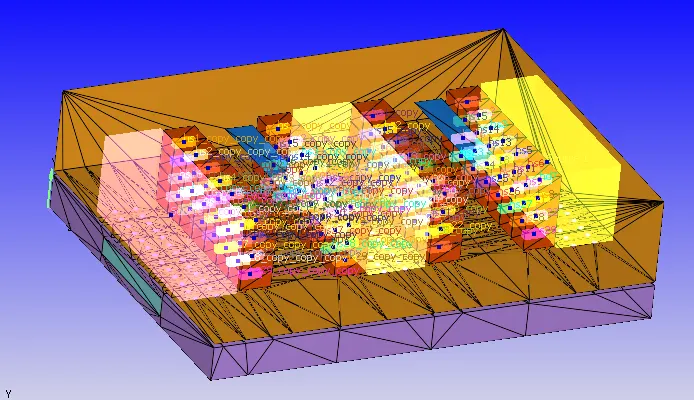
Drag and drop the geometry and clean all the open edges triangles, create inlet & outlet boundary, delete additional walls of the room, etc.
Case setup -
- Application type › Time-based
- Materials> Select Predefined mixture "Air" o 02 and N2 Gas species added > Solid Simulation - Aluminium
- Simulation parameters
- Run Parameters - Transient -
- Simulation time parameters - 0.75s
- Solver parameters - Density-based NS solver
- Boundary conditions-parameters assigned as follows
- Inlet 1 and 2 - Inflow Type - Inlet - velocity 0.0029 kg/s, 285/300K. Air Species
- Outlet - Outflow Type - 101325Pa. 300K. Air Species
- Plenum - Fixed Wall - Law of wall - 285K Temp
- Server room - Fixed Wall - Law of wall - 300K Temp
- Server box - Interface - velocity and temperature -
- Forward side - Law of wall - Law of wall
- Reverse side - No Slip - DI
- Initial Conditions and Events
- Region and initialization Add Volumetric Region with Air species.
-
-
Physical Models -
- Turbulence model - RNG K Eps
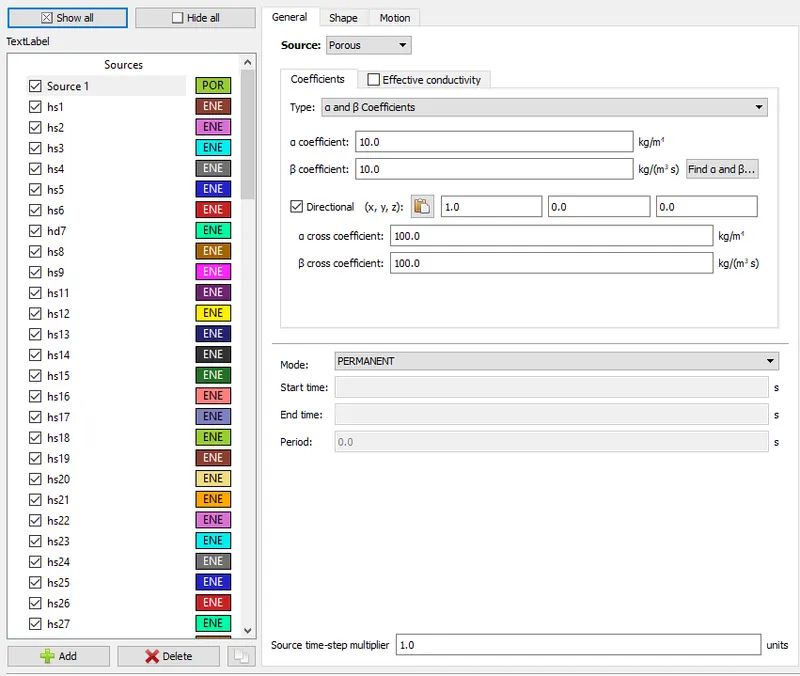
- Source and sink
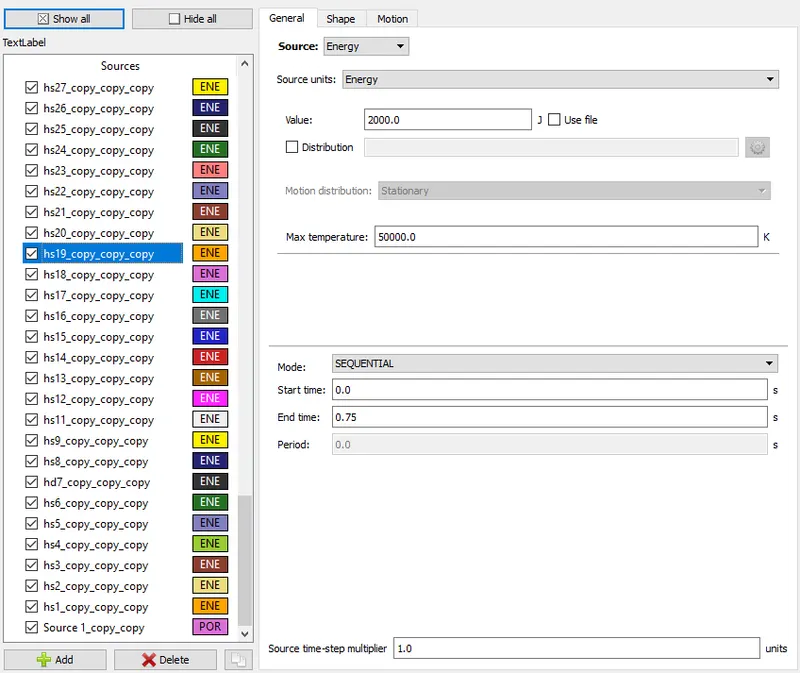
- Super cycling
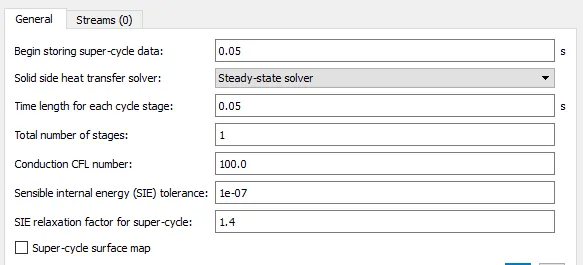
-
Grid Control
-
Base Grid - 0.1x0.1x0.1 m
- AMR
-
-
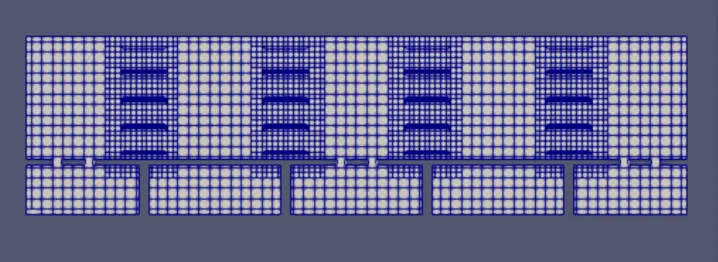
Output/Post-processing o Time interval 3D O/p files - 0.0075s for 100 3D files
-
Advanced Parameters

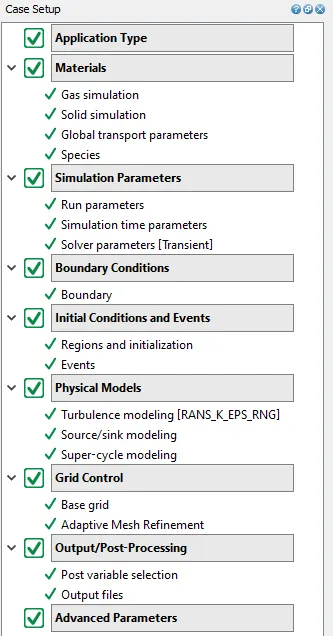
Obervations -
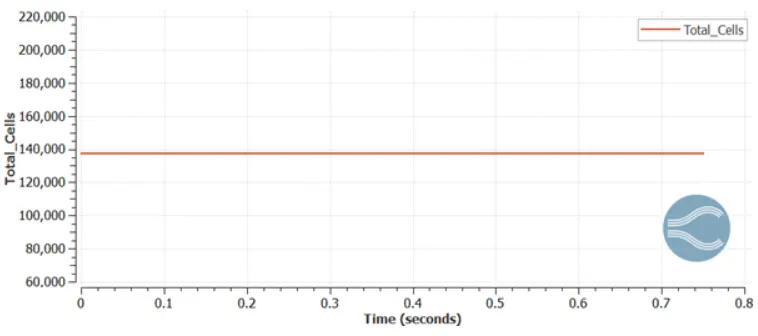
- Mesh and cell count -
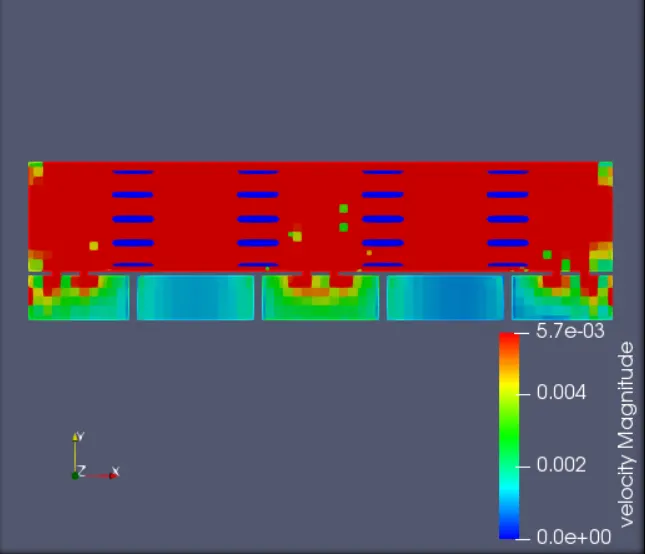
- Velocity -
-
Pressure -
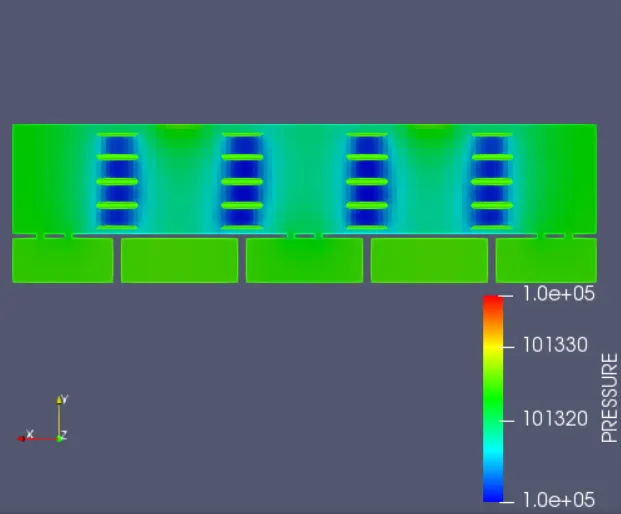
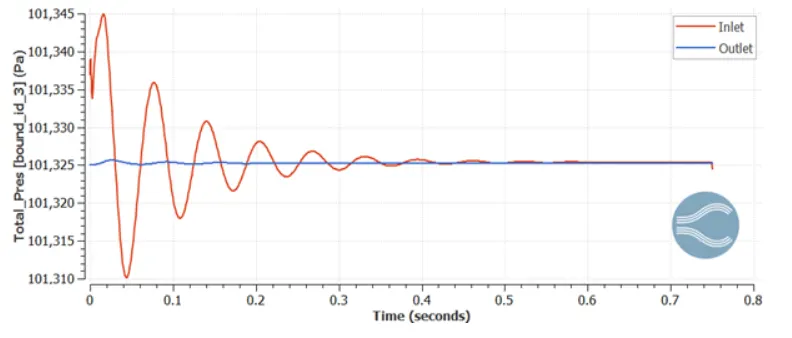
- The pressurized cold air enters the plenum region slowly and enters the server area which is a low-pressure region through the tiles. When the cold air enters the server room pressure gradually decreases due to mixing with the hot air from the heat sources and then it goes out through the outlet port and the pressure comes down.
- Temperature Vs Density
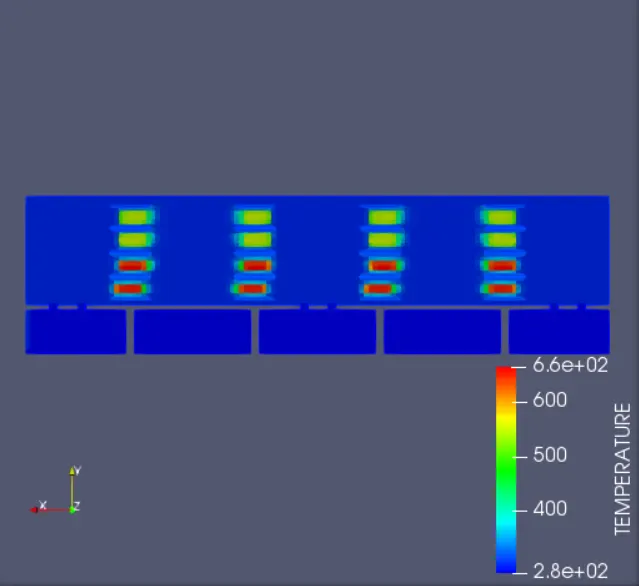
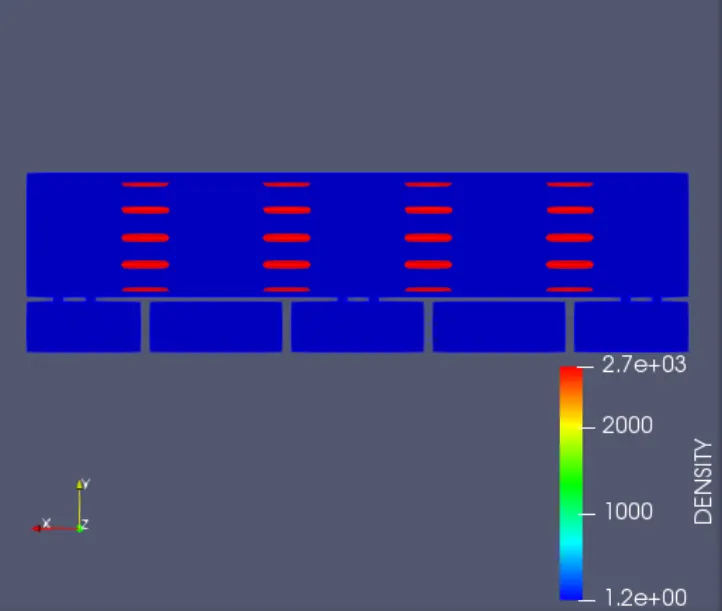
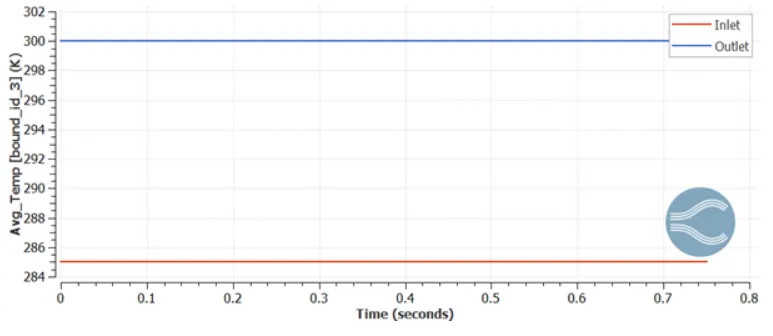
- We see that density and temperature are inversely proportional.
- The heat radiated from the server heat source will heat up the air around it to a higher temp and the cold air coming from the plenum region to the server room through perforated tiles mixes with the hot air which tends to decrease the temp and since the hot air lighter than the cold air, it rises and then it gets away through the outlet port located at the top of the server room.
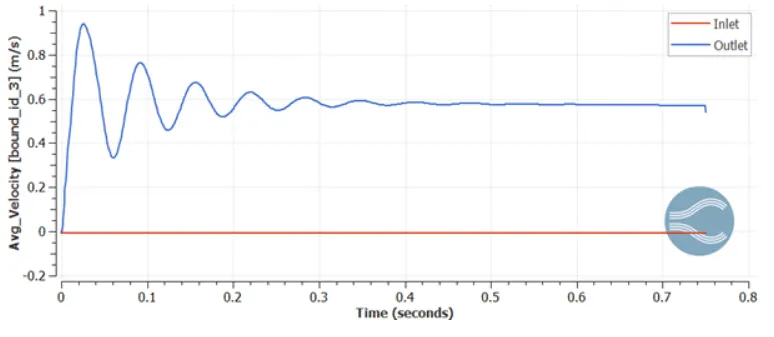
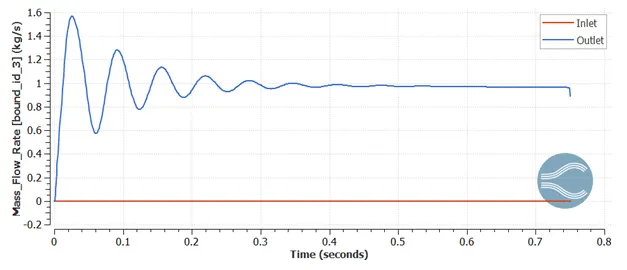
- Mass flow rate
- Conclusion
- The required Simulation of Hot Aisle Cold Aisle Containment for Data Center in done and results are shown as well.