Week 11 - Final project
AIM:
To design the car door inner panel with reference to given Class-A surface by using given mastersection, creating attachment features and performing draft analysis to check the CATIA V5 part is manufacturable.
Objective:
1. creation of product file from the given Class A data with all the parts separetaed out
2. Creating the tooling direction for all the parts.
3. creating the solid bodies by making proper class B and class C surfaces
4. Follow the mastter section to create the flanges and engineering features.
5. creation of features for final join operation to be performed with additional information provided dog houses and heat stakes
6. Draft analyses of each component was performed to check the manufacturing feasibility.
Introduction:
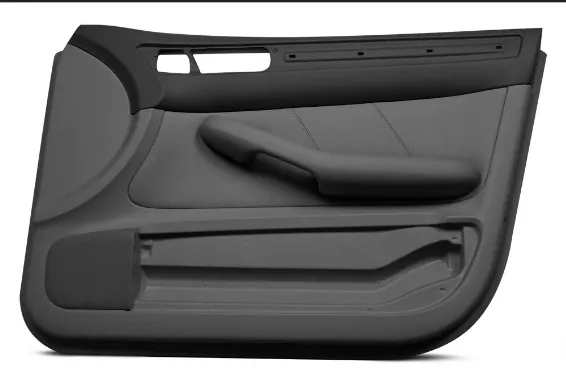
Inner door panel is aesthetic and functional component in car, it is interface between car inteior and inner working of door. Inner door panel is usually consist of arm rest, map pocket, bottle holder, lower substrate.Nowadays door panel made plastic mateial of polypropylene, ABS, etc its helps to making of light weight and complecate shapes of door panel.
Draft analysis:
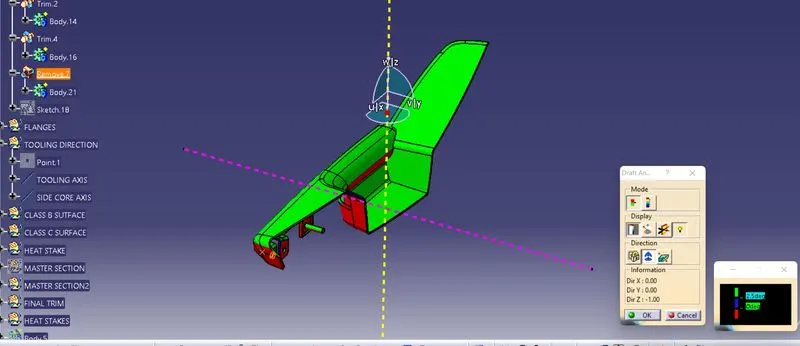
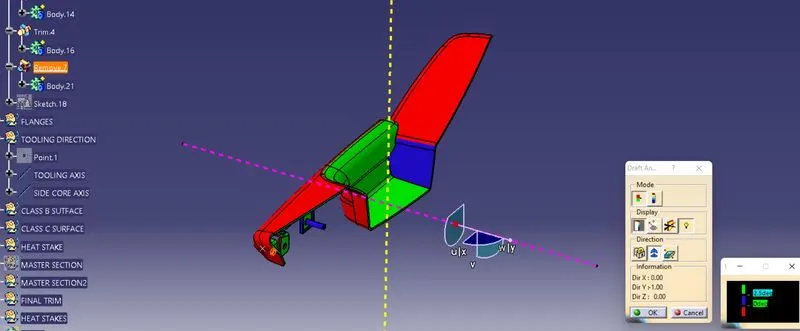
draft analysis is a techinque is used to analyze whether our part model created in catia V5 is manufacturable based on the draft condtion applied. Here the part should get easly removed from the mold.
No parts can be ejected from the tool if it is having straight 90 degrees profile from its base surface. Asmall draft angle provided to each an every area of the component inorder to get easly removal of component from the tool.
Here we are providing or assuming a direction in which component should eject in order to get easly removal of components from the tool. In other words let us know whwther the model is having a draft angle and how much is the draft angle from the tool direction.
Procedure for Draft analysis:
- Fisrt check the continuety of given Class A surface.
- Check three directions (X, Y & Z) and dicide which is the best possible dirction to produce a mold.
- At Z axis direction in the faces are either positive or negative so the Z axis we tacken as dummy tooling axis
Tooling axis creation:
Direction which mold opens or cavity opens.
create a point at center of hole create axis sysytem on apoint create an intercection line along ZX plane on class A surface.
Extend the line that you want to create tooling axis for the model the do the draft analysis using the line axis.
Draft analysing method:
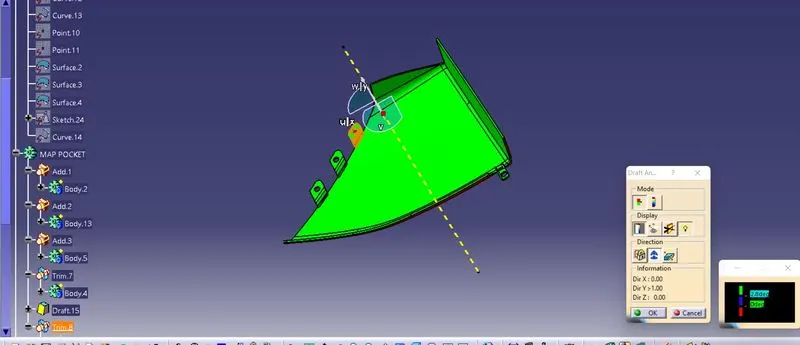
insert-analysis -feature draft analysis. Select compass icon in draft analysis dialogue box and drag the compass and place it into the tooling axis select to draft direction option switch to quick analysis mode see whether surface are passed draft angle or not.
Door inner panel including components:
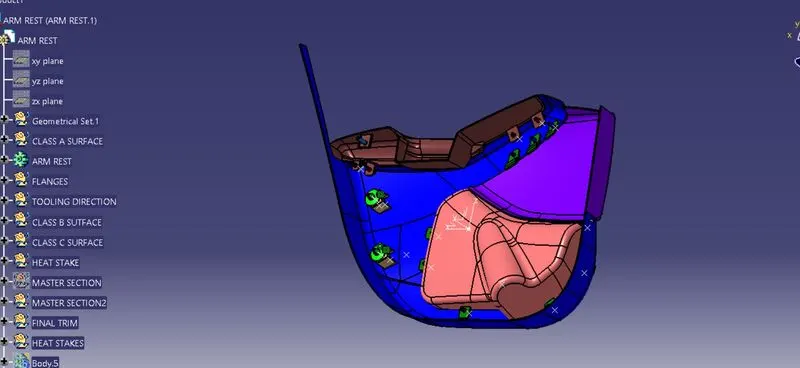
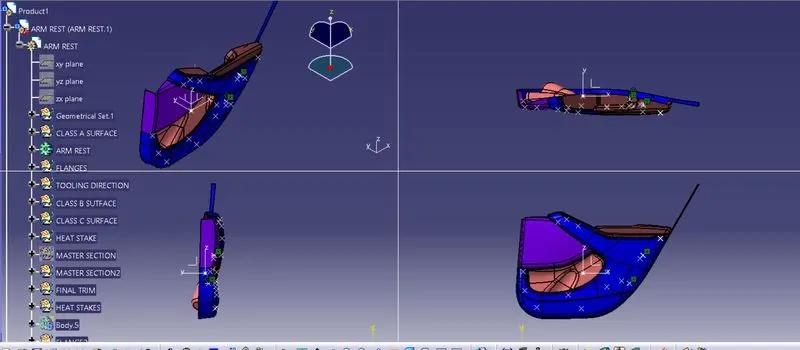
- ARM REST
- MAP POCKET
- BOTTLE HOLDER
- LOWER SUBSTRATE
ARM REST:
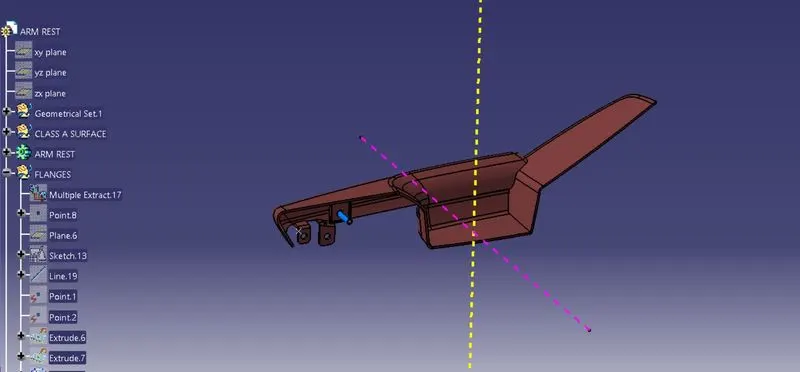
Class A surface:
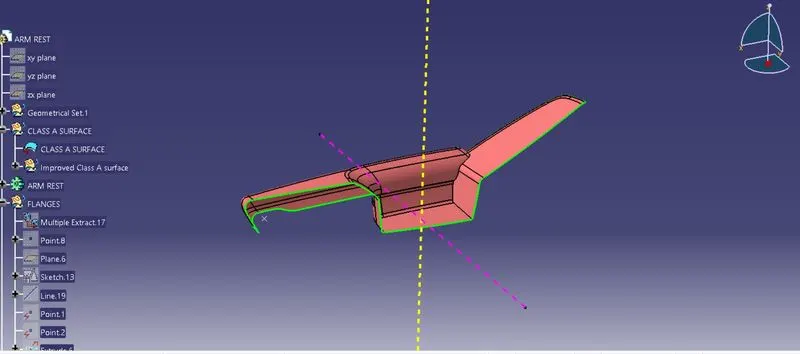
Draft analysis of Class A
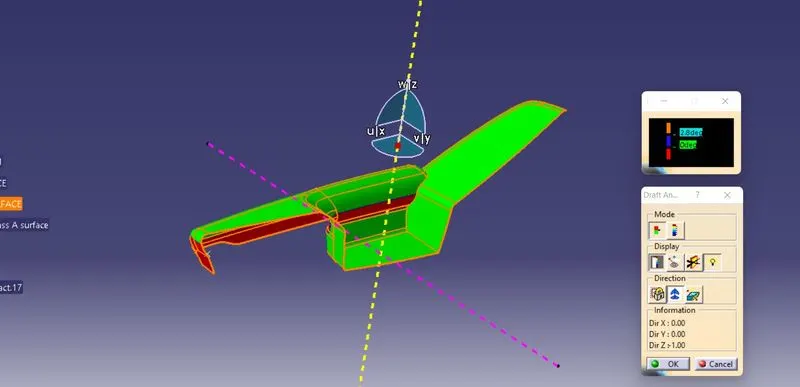
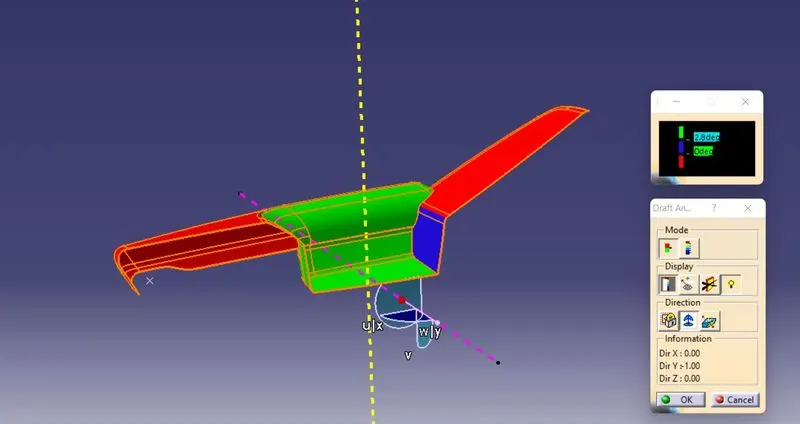
*NB:The given class A surface have negative draft angle, for the further modifiacation coordinate with class A creation engineering team.
Class B surface:
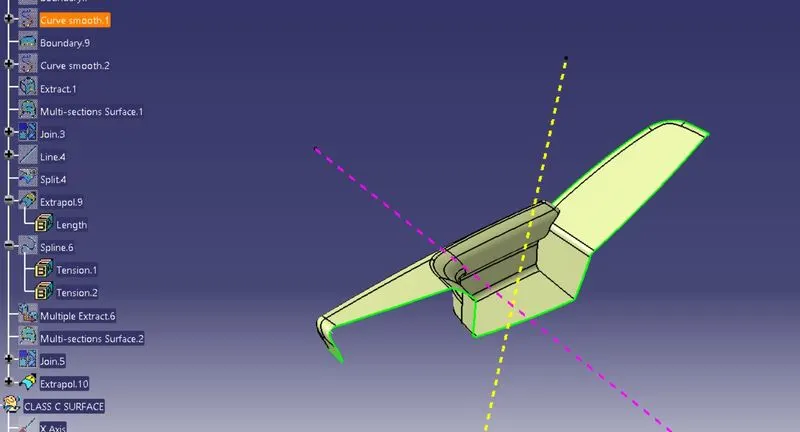
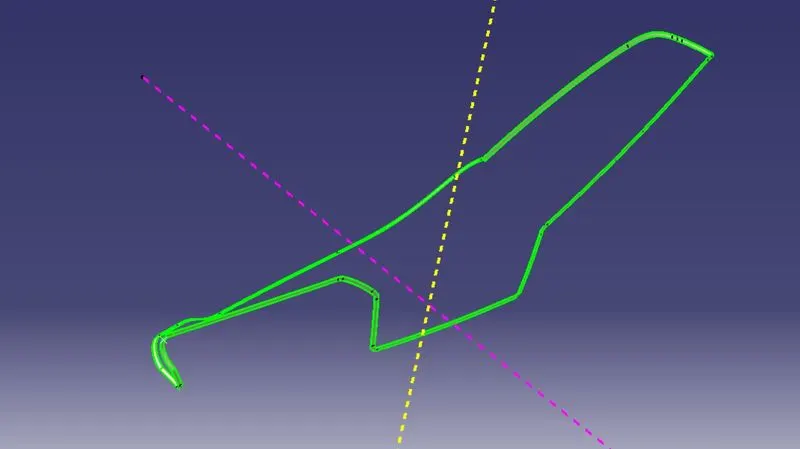
Class C surface:
PLASTIC PART WITH ENGINEERING FEATURES:
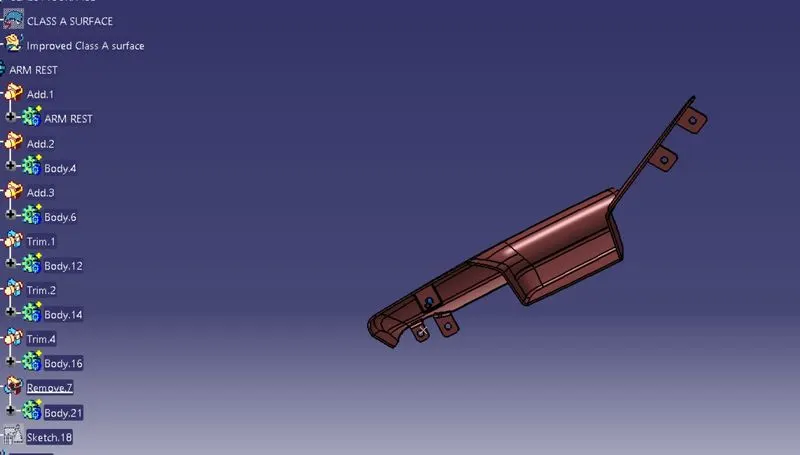
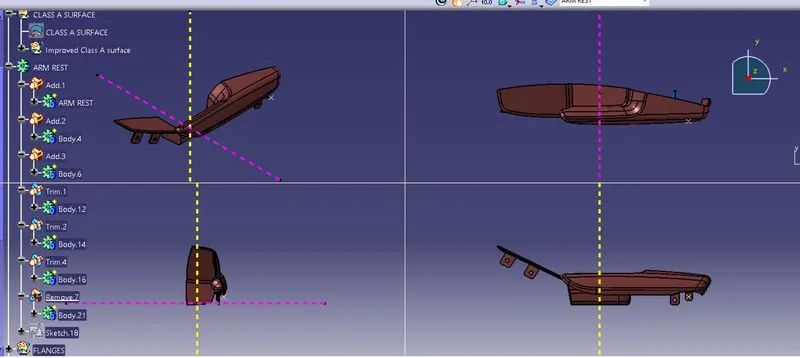 DRAFT ANALYSIS:
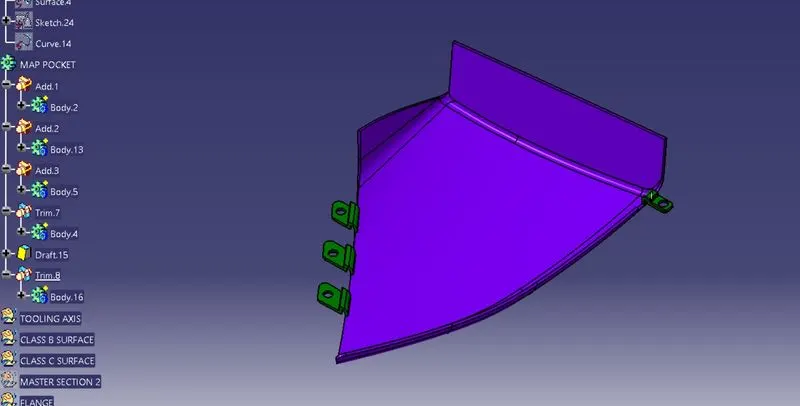
MAP POCKET:
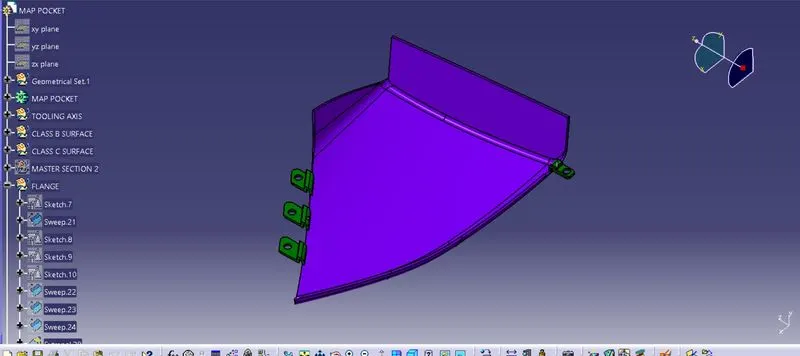
Class A Surface:
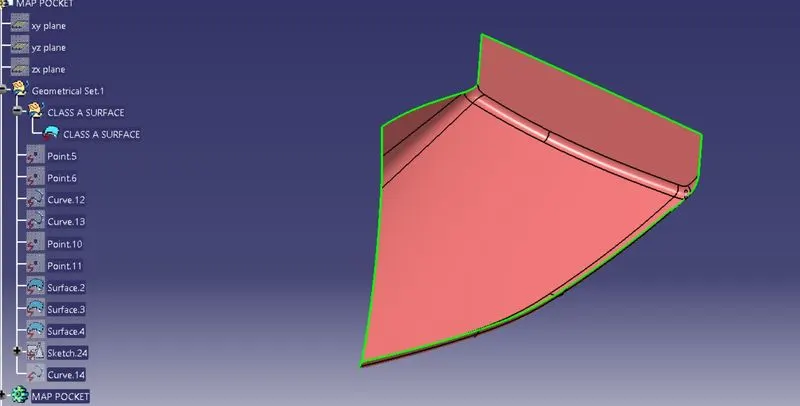
Draft analysis of Class A surface
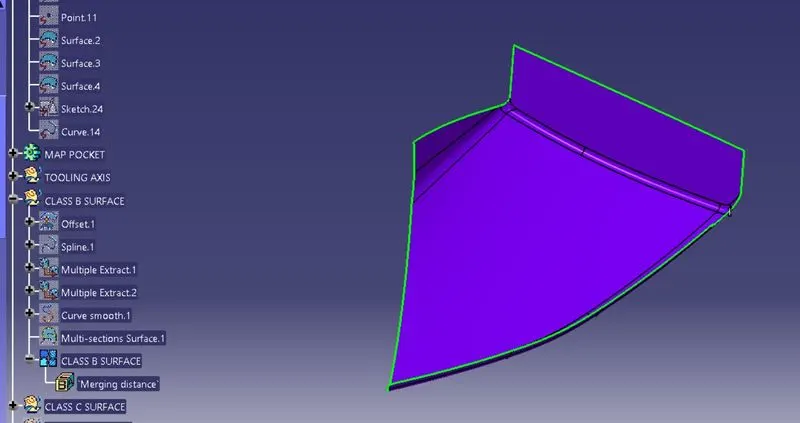
Claass B surface:
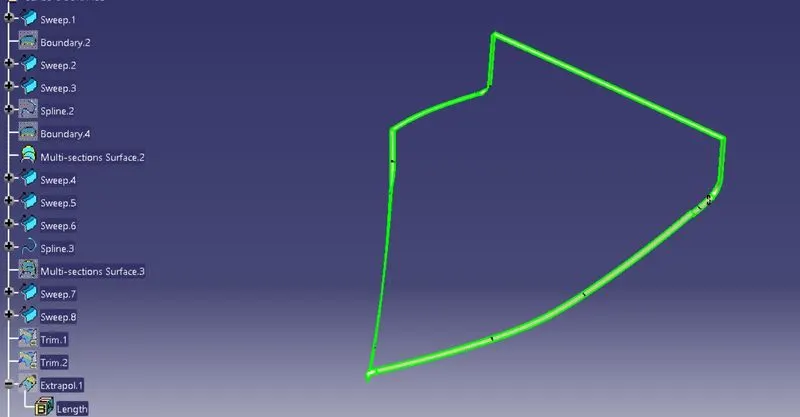
Class C surface:
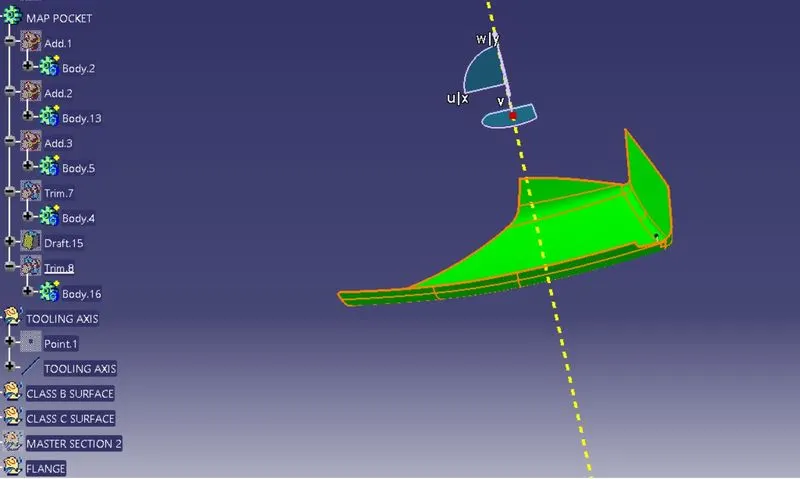
Plastic part with engineering Features:
Draft analysis:
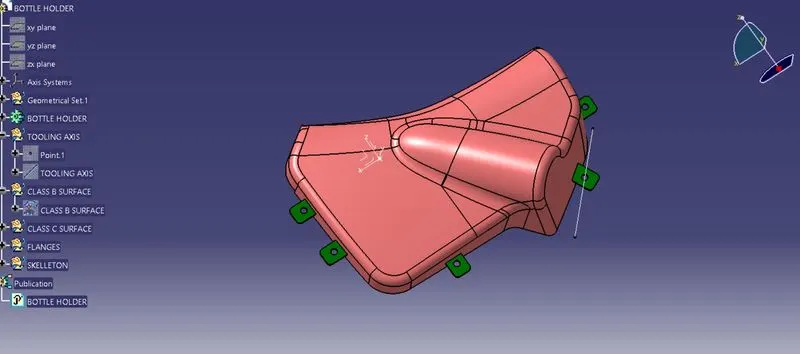
BOTTLE HOLDER:
CLASS A SURFACE:
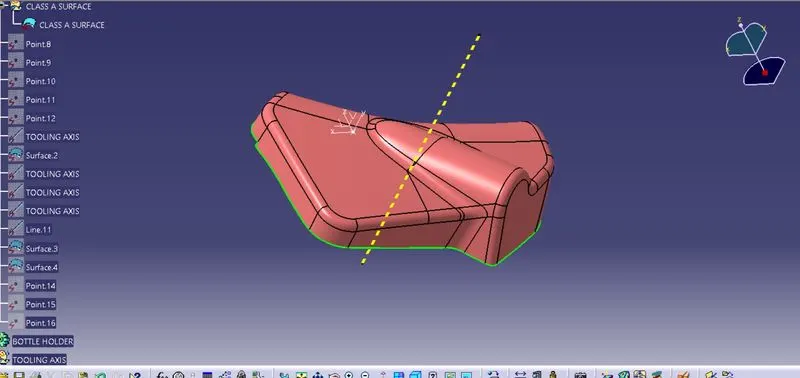
DRAFT ANALYSIS OF CLASS A SURFACE:
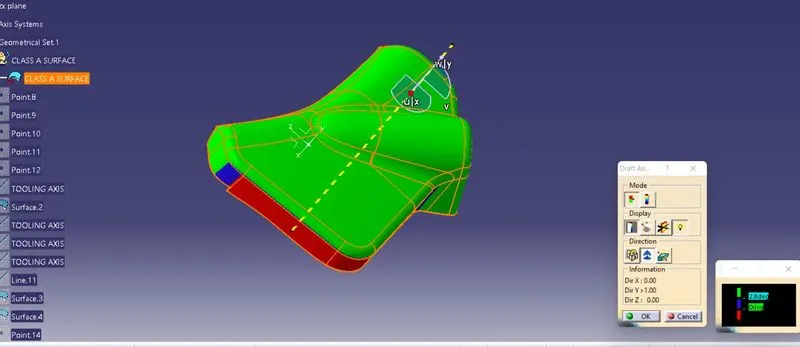
*NB:The given class A surface have negative draft angle, for the further modifiacation coordinate with class A creation engineering team.
CLASS B SURFACE
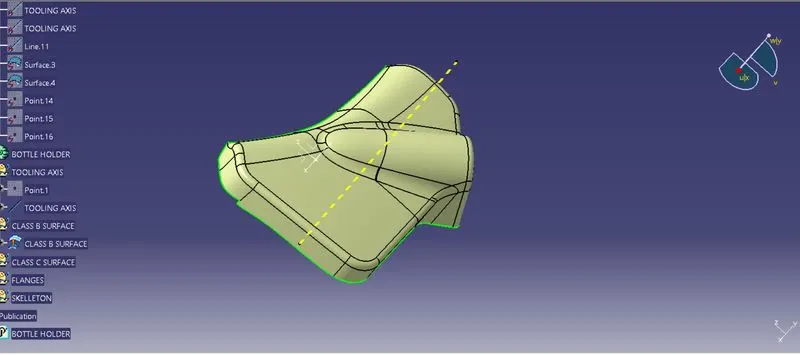
CLASS C SURFACE:
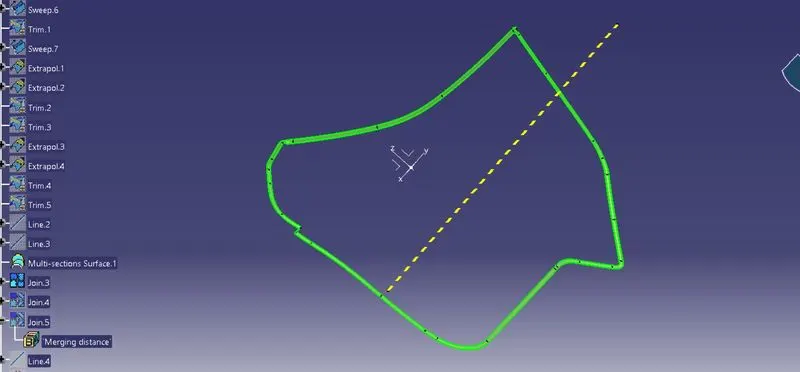
PLASTIC BODY:
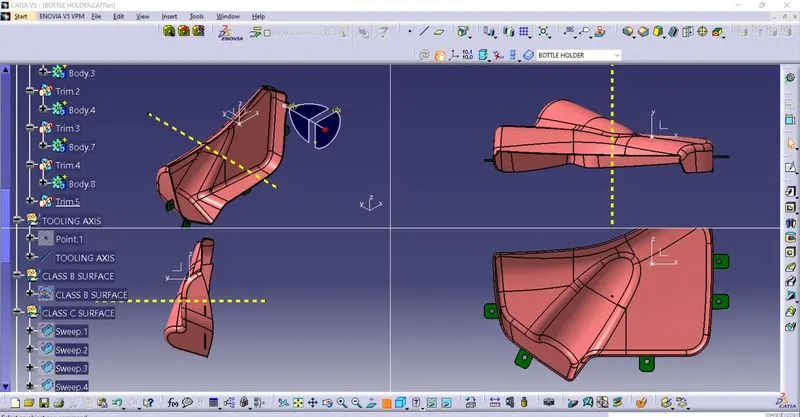
DRAFT ANALYSIS OF PLASIC BODY:
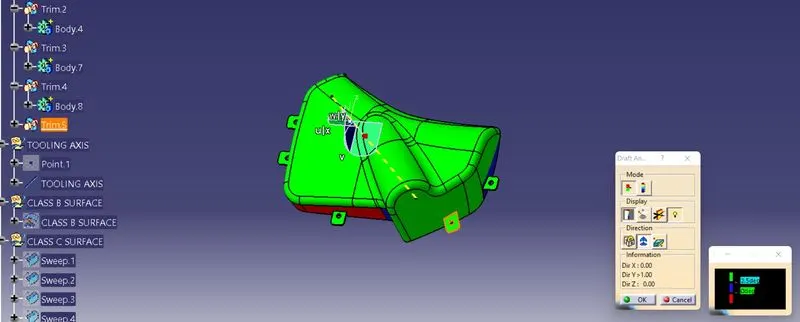
LOWER SUBSTRATE:
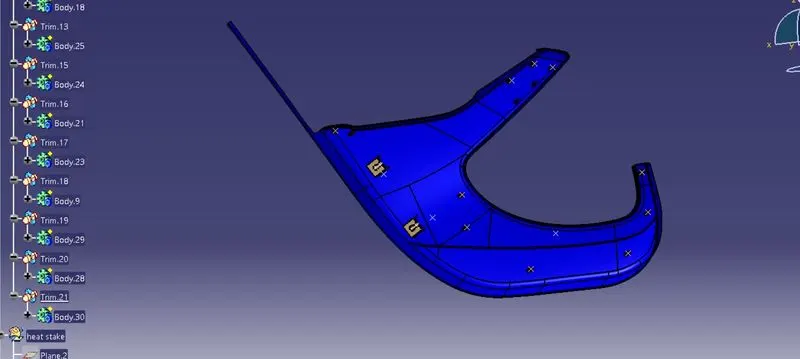
CLASS A SURFACE:
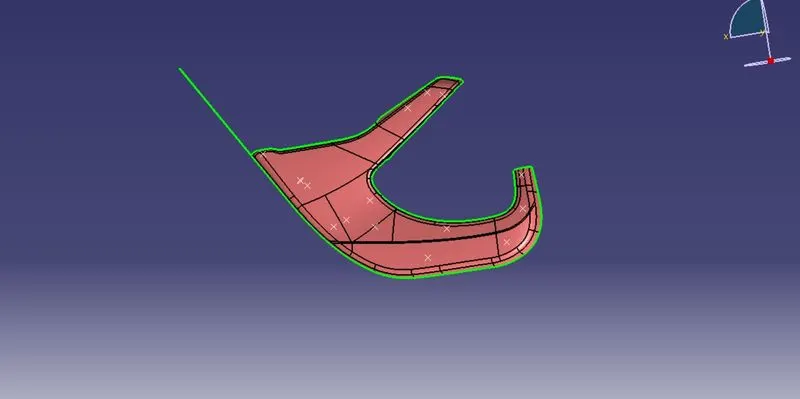
DRAFT ANALYSIS OF CLASS A:
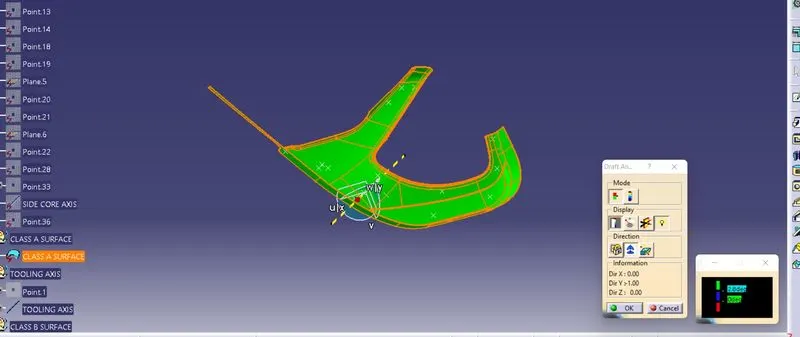
CLASS B SURFACE:
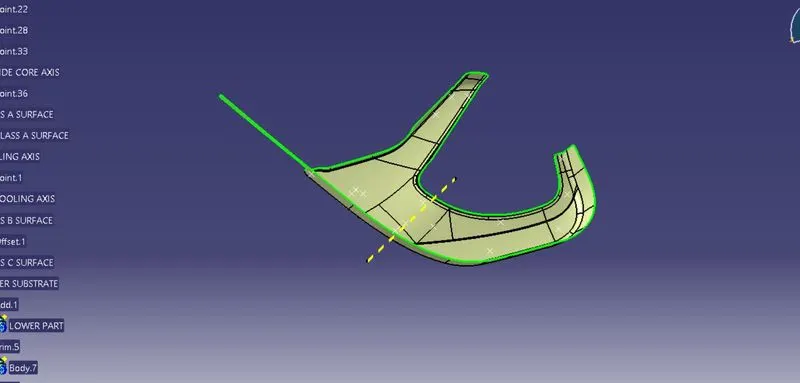
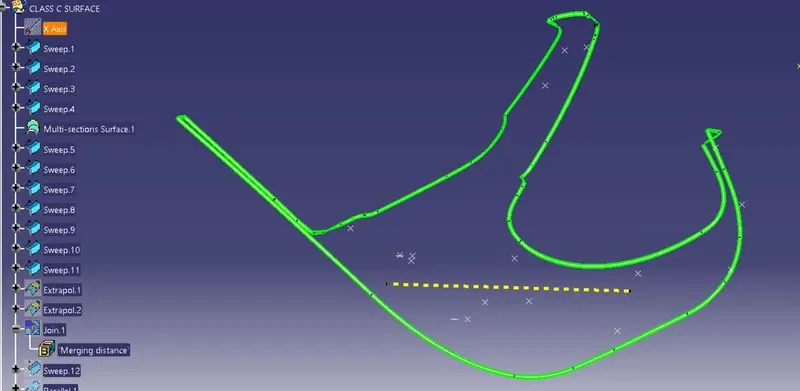
CLASS C SURFACE;
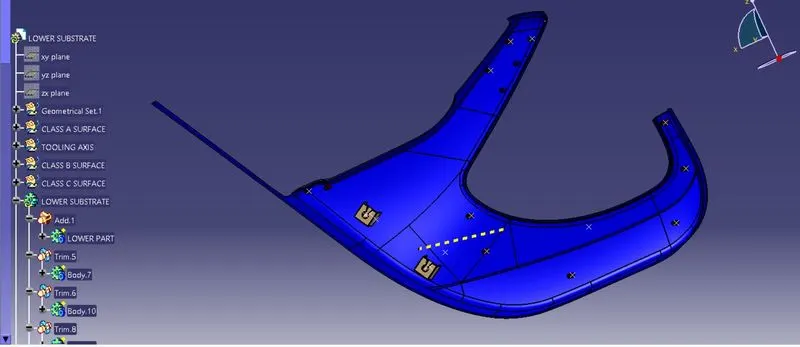
PLASTIC BODY WITH ENGINEERING FEATURES:
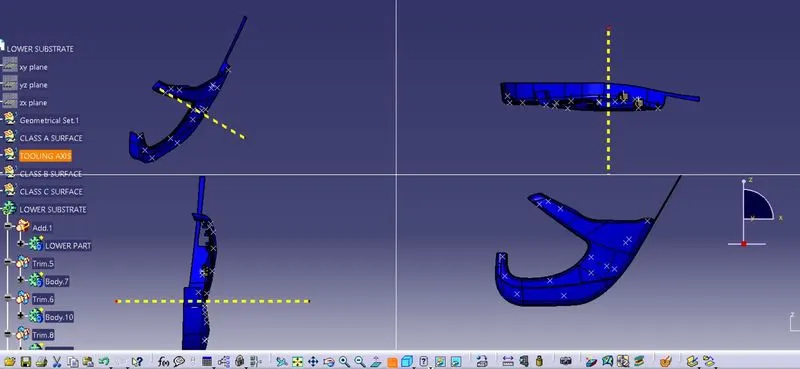
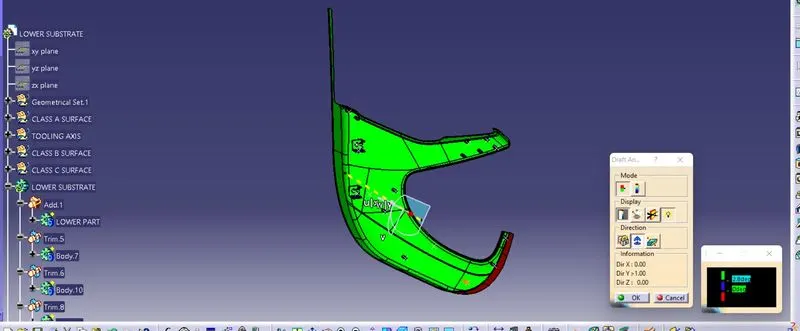
DRAFT ANALYSIS:
ENGINEERING ATTACHMENT FEATURES:
DOG HOUSE
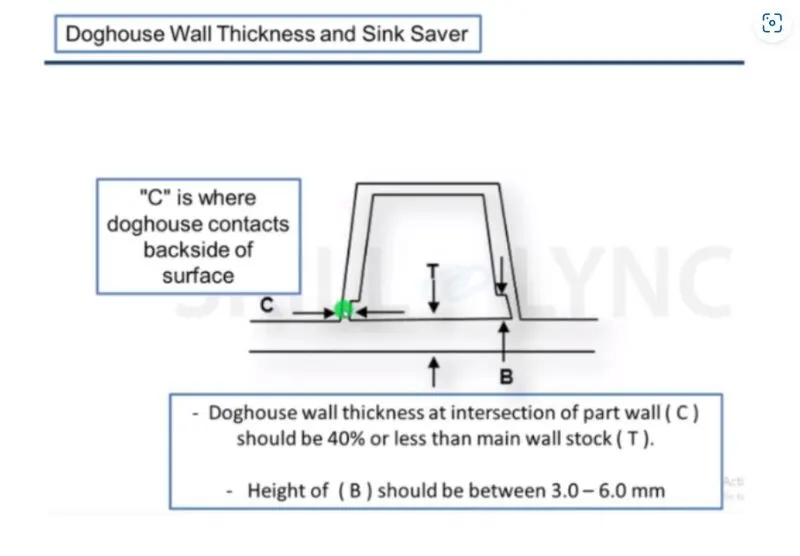
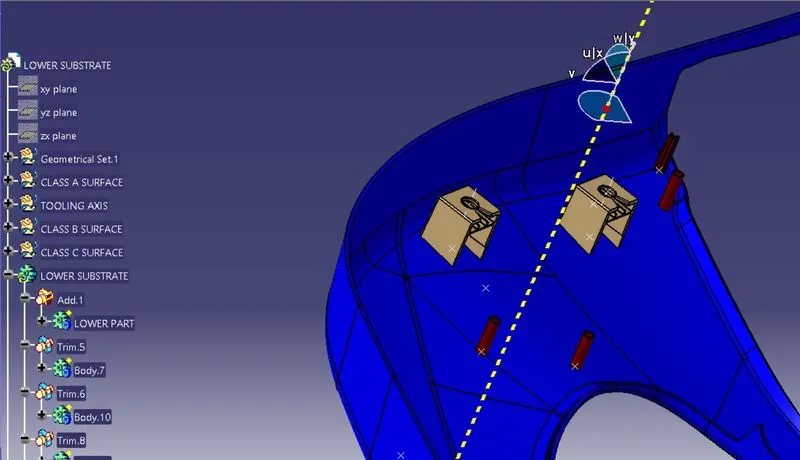
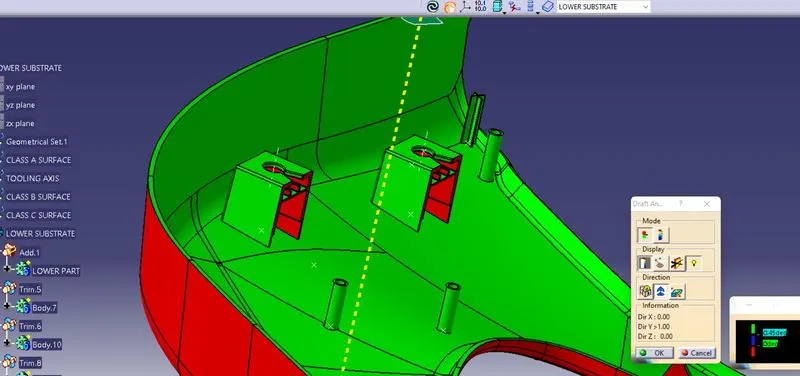
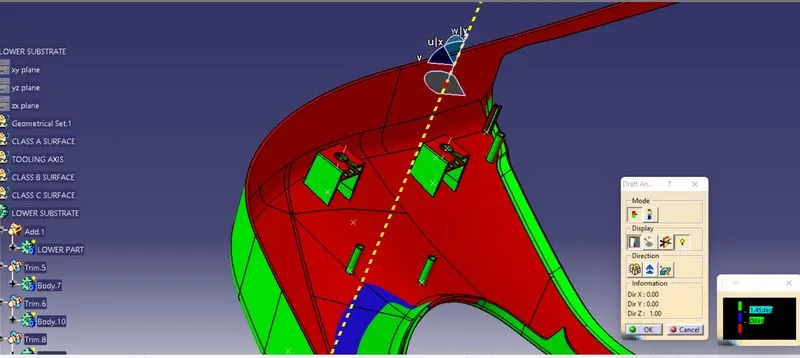
Dog housr is an engineering feature which is helps to remove sink mark formed on class A surface while creating attachment features on class B surface.Doghouses are subjected to draft analysis to prevent breakage of the component during ejection from the mould.
FLANGES:
Flanges are the joining features that help to assemble different components. The mastersection was used to make flanges. After creating one flange axis to axis sytem was used to translate the flanges. The draft of 0.5 is given to the flanges. The gap between flanges should be 60-100 mm. Boolean operations were used to add attachment features into closed body
PUSH PIN CLIPS:
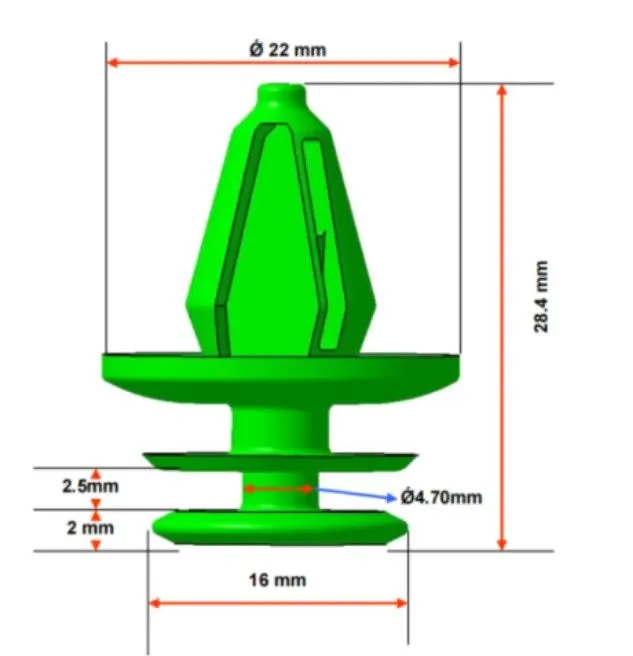
Push pins are used for joining one component to another . These are basically attached to the doghouse.
HEAT STAKES:
Heat stakes also known as thermoplastic staking, it is process of joining two dissimilar materials together. In heat staking, local heating and cooling is used to raise the temperature of plastic components and allow plastic reforming to be carried out. This reforming can be used in a wide variety of applications.
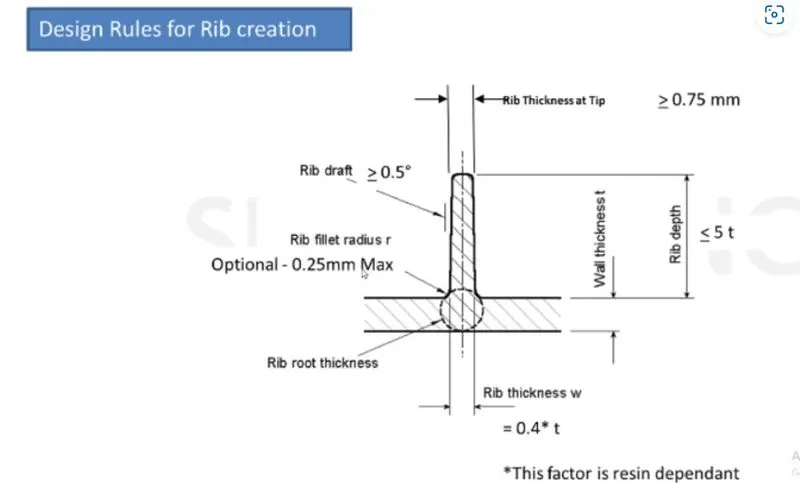
The advantages of heat staking are as follows:
- Simplications of the machinery
- Reduced cost of machinery.
- Multiple fastening point.
- Allows higher density of welds compared to hot air, cold form or ultrasonic welding.
Ribs- Ribs are the feature that provides stiffness to the parts and toughness without increasing the thickness of the part.
Locators- Locators provide easy alignment to the parts which are mating with each other.
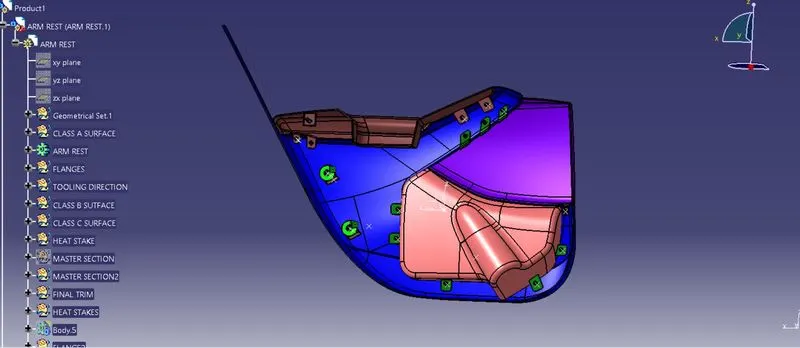
ASSEMBLY OF DOOR TRIM INNER PANEL:
CONCLUSION
Door Trim was made with OEM guidelines using Part Workbench and Generative Shape Design Workbench using CATIA V5.