Week 11 - Final project
Project title :Development of a Door trim panel
The objective of the project is to development of vechile interior door trim panel by using catia v5 with given class A surface along with the master section .also creat side attachment feature as per the design rule.
Introduction :
There are ten stages of automotive product life cycle development are listed.
1.concept sketch
2.styling class A
3.feasilbility check
4.concept validation
5.New product design
6.Product development
7.prototyping
8.design validation
9.pilot production
10.Mass production
From the above stage it is in stage five NEW PRODUCT IS DEVELOPED and validate d from class A surface. The objective design class B and class C surface from given class A surface and creat solid body from it using software in catia v5 solidwork can take into consideration of draft analysis which makes component suitable for production using injection molding
procedure to creat a new plastic component from give class A
1.Creation of tooling axis
2.creation of class b surface
3.creation of class c surface
4. creation of closed body
5.draft analysis
Tooling axis
Tooling axis plays important role in plastic design manufacturing and designing the axis decides the direction to which mould is going to work while production of component
for the particular component x,y,z direction can be possible to the cost of the component
Creating class B surface
TO Creat class B surface using class A aurface offset to 2.5mm and will see some patches on offseted surface to fill the surface wth using multisection command and fill command .
Creating class C surface
To creat class C surface using the edges of class A surface .using boundary or extract or multi extract command to sweep with reference surface in 90 degree.In that sweep not every part can sweep correctly there are some fillet areas and some edges are not form here we can use multisection or fill command join A+C to get final output to Trim with class A+C and B we get final surface .creation of solid body with the final surface.and draft analysis.
TO CREAT B SIDE FEATURES
FLANGE
flange are need to join different component together ,so i have to creat flange as design guideliness of master section given as the input basically the measurement and location.
RIBS :Ribs provide a means to economical stiffness and strength in molded parts without increasing overall wall thickness
Design rule of ribs are DRAFT sgould 0.5 degree perside minimum
Thickness of the rib 40% of wall thickness or 0.4*t is the wall thickness.
height of wall thickness 5*t.spacing for the more than one ribs is 3:1.minimum thickness at the tips 0.75,Radius are 0.25 max.Ribs should connected to other structural features where possible.Rib root thickness should not be more than 305 0f the wall thickness.
Dog house
Dog house feature is an engineering feature used in plastic trim design. The primary function of a dog house is to avoid sink marks on the class A surface which occure due to features such as thick screw boss or ribs on the backside of class A .we can also use them for making features of that are perpendicular to the main tooling axis.
design rule of dog house is minimum height :less than 6mm causes steel condition
3:1 ratio of steel width to height but 2:1is preferred.Draft minimum 1.5 degree.sink saver :height (c)=40% of nominal thickness width (b)=3.0mm-6.0mm.optimal radius :25mm
HEAT STEAK:Heat steak is mainly used for attachment methods to component together.heat steak is the process to attach two seprate component.
reason for heat staking
multiple staking shapes for diffferent benifts
Excellent durability
No extra material are needed
increased efficiency
Easy maintenance.
CLASS B SURFACE
ARM REST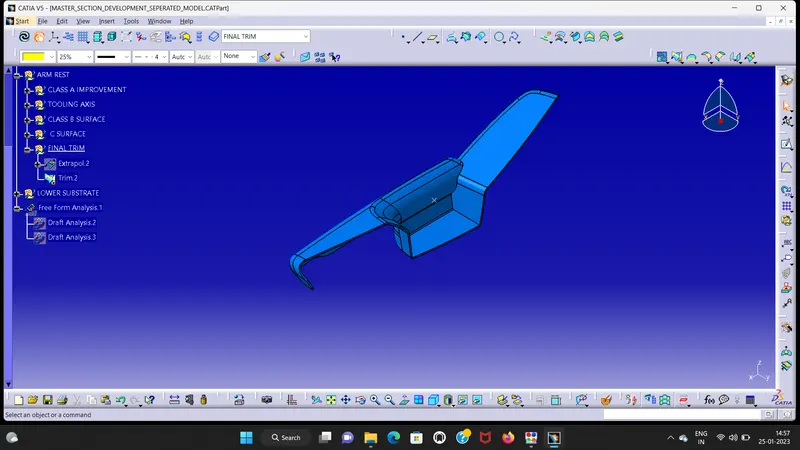
LOWER SUBSTRATE
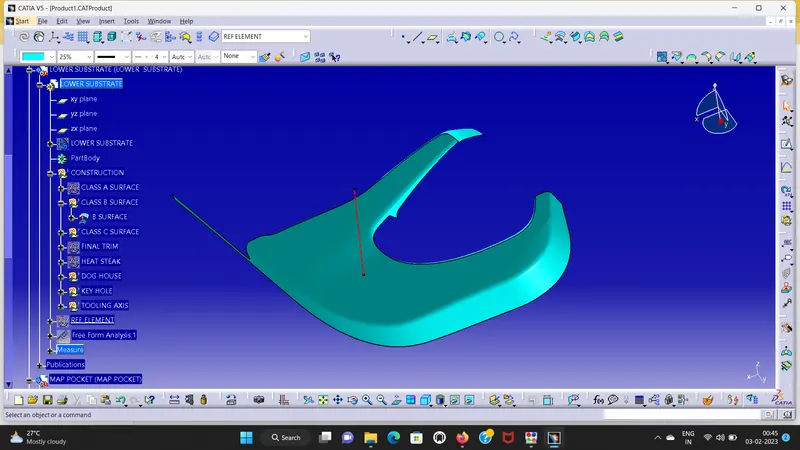
MAP POCKET
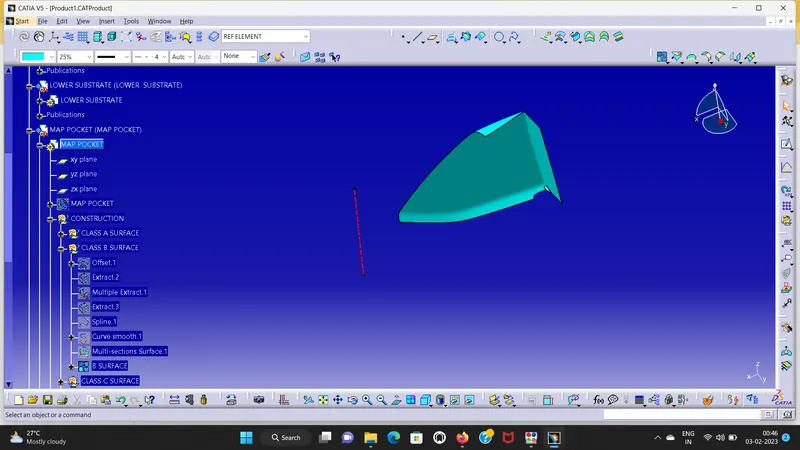
BOTTEL HOLDER
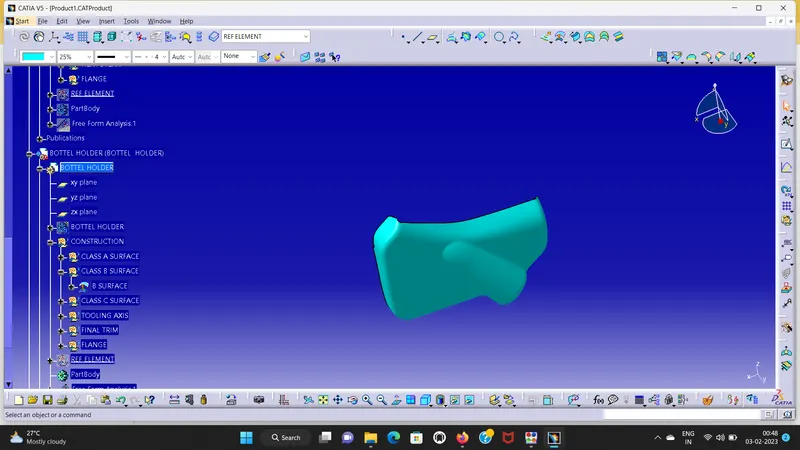
CLASS C SURFACE
ARM REST
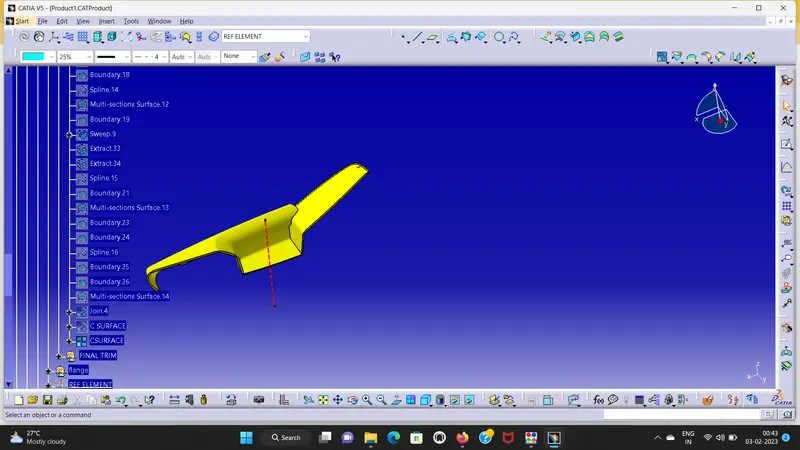
LOWER SUBSTRATE
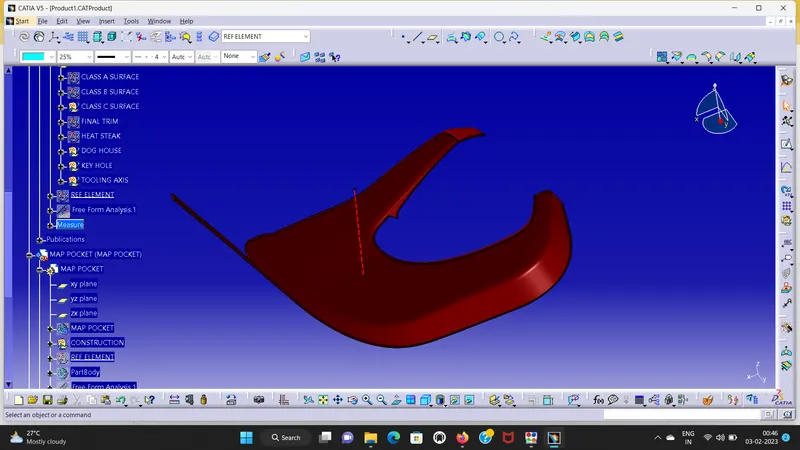
MAP POCKET
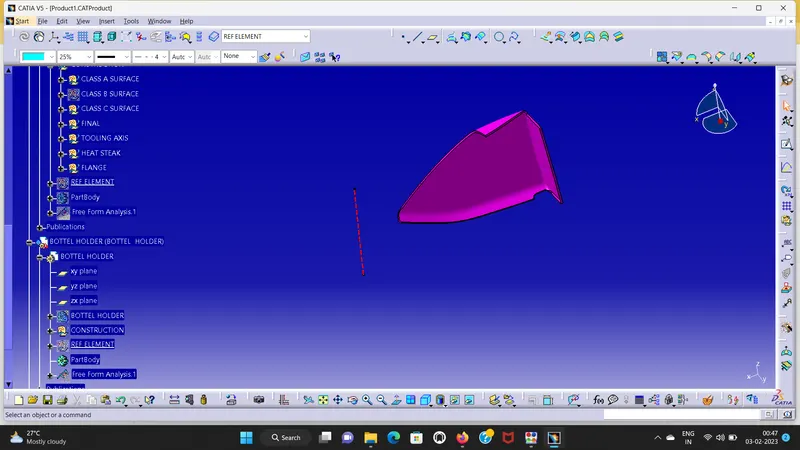
BOTTEL HOLDER
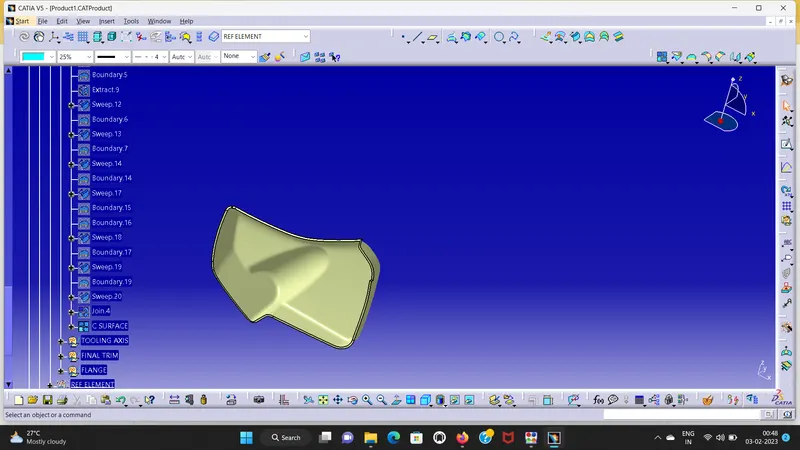
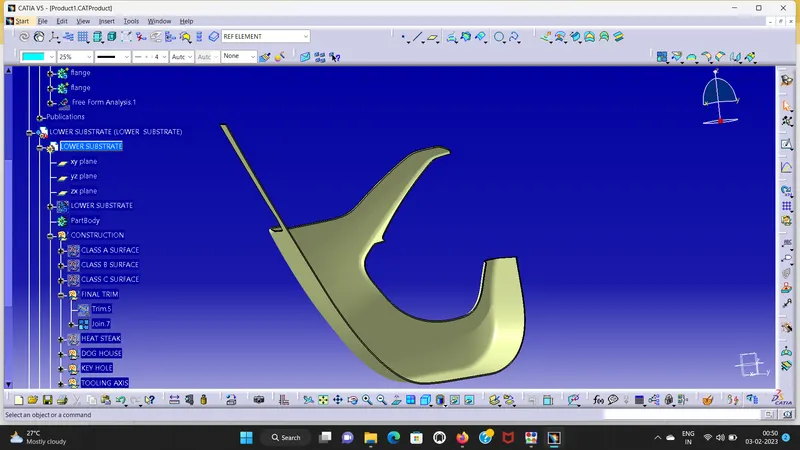
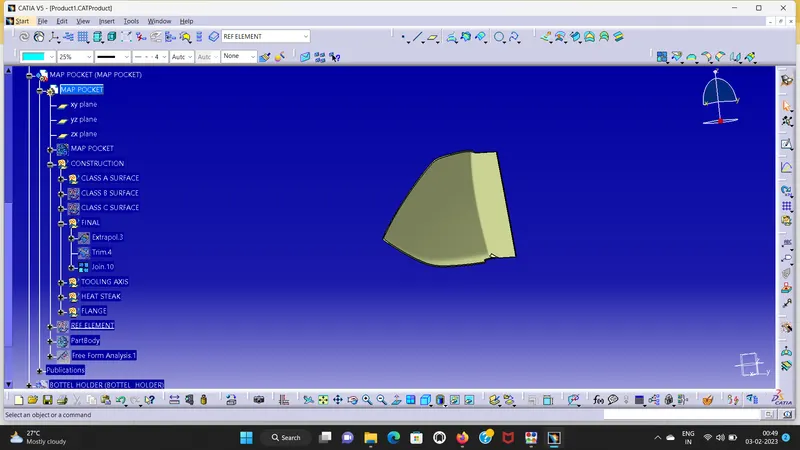
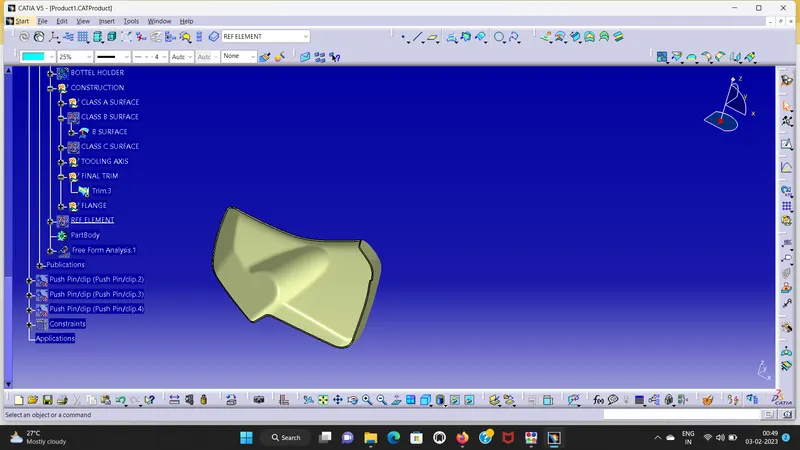
FINAL SURFACE
ARM REST
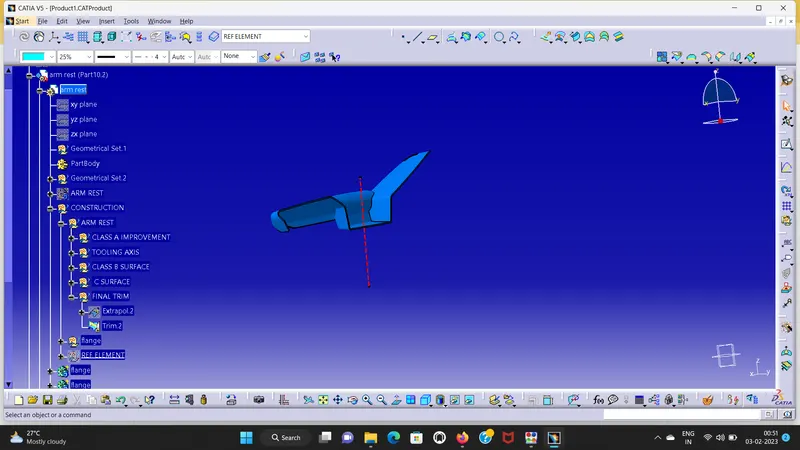
LOWER SUBSTRATE
MAP POCKET
BOTTEL HOLDER
ASSEMBLY
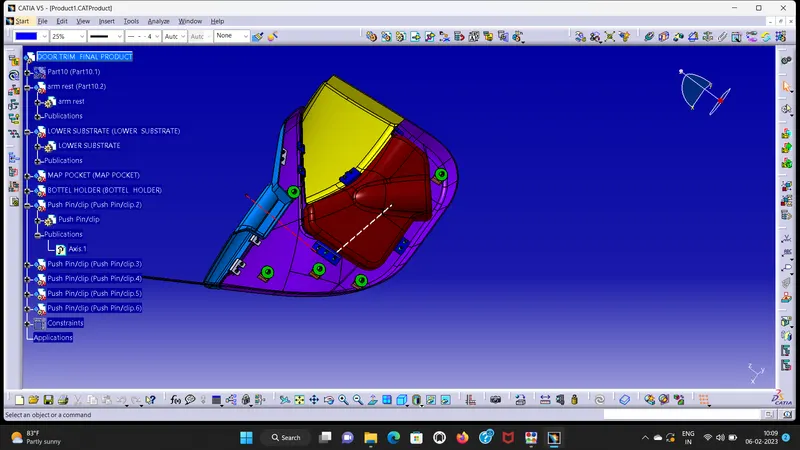
CONCLUSION
The door panel successfully designed by following all design rules used in automotive industry. all the attachment feature are properly placed at different location.