Week 11 - Final project
FINAL PROJECT - DOOR TRIM PANEL
OBJECTIVE:
- Create class B and C surfaces for the given class A surface.
- Create individual tooling axis.
- Create a Heat stack and Dog House based on the master section.
- Create plastic material and find the material weight of the component.
- Create parting lines.
- Create a drafting angel.
Door Trim Panel components.
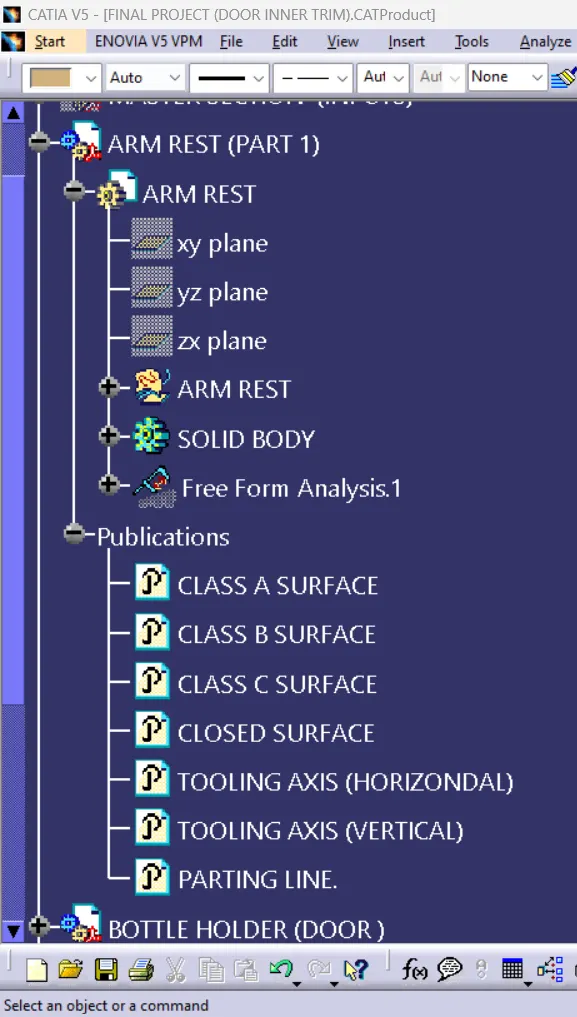
- Arm Rest.
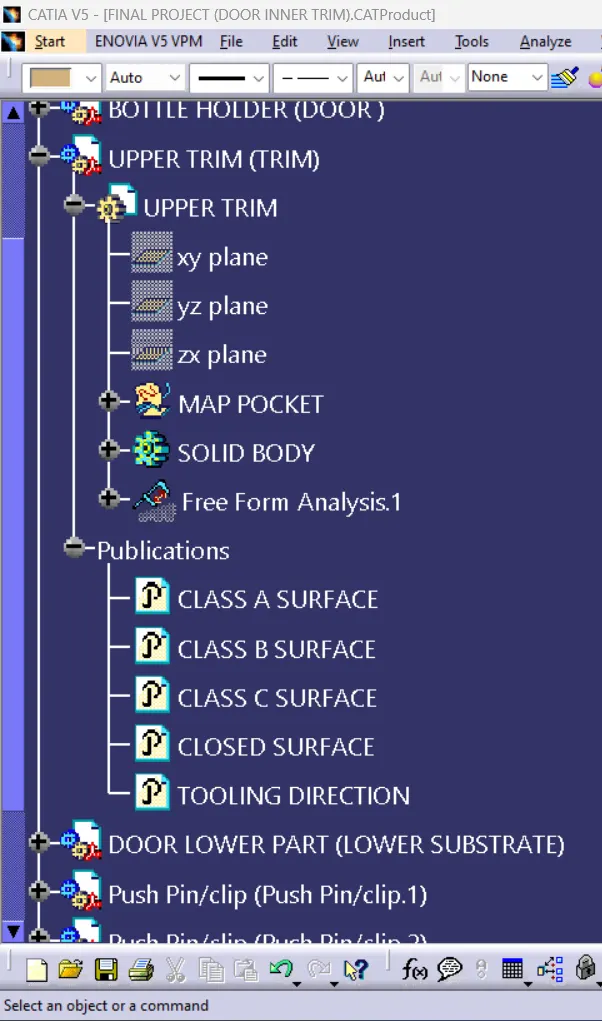
- Map Packet.
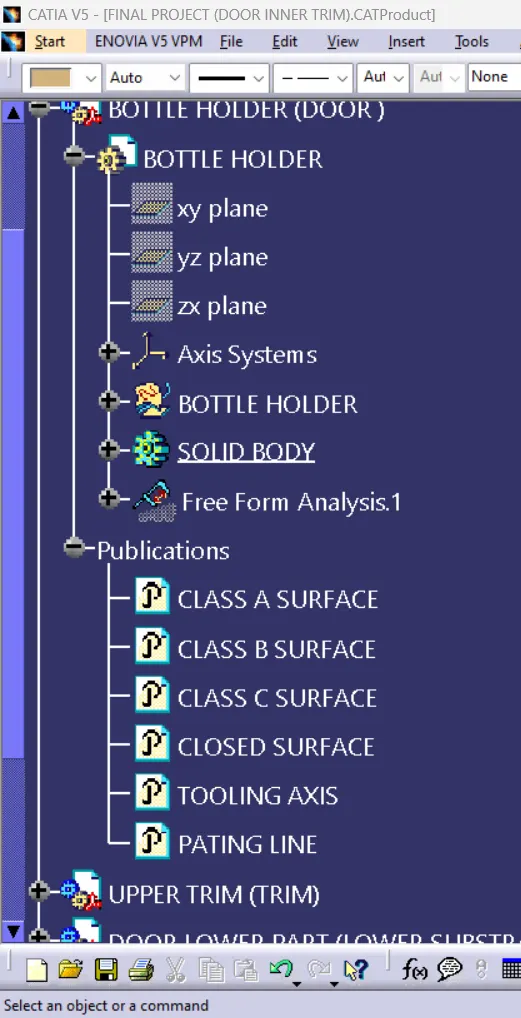
- Bottle Holder.
- Door Lower Substate.
Arm Rest:
Surface modeling :
Class A surface:
- class a is an input to get stylish.
- check the class A surface to fully closed surface or not.
- the use to create class B surface.
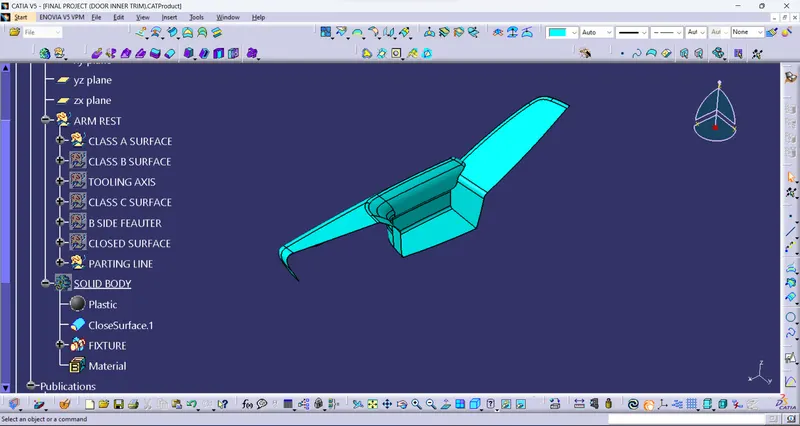
Class B surface:
- Class B surface has Extracted the surface from the class A surface.
- First, offset the surface for a 2.5mm thickness based on the master section.
- To develop the surface use a sweep to create one surface.
- Finally, create a class B surface.
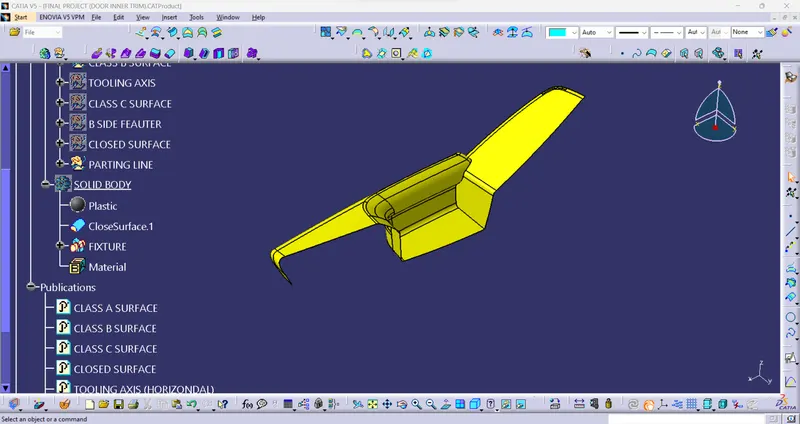
Class C Surface:
- Create class C surface used to Sweep to reference surface command to close the surface and then trim the body.
- Both A and C surfaces join. and trim the Class B surface.
- To get the closed surface.
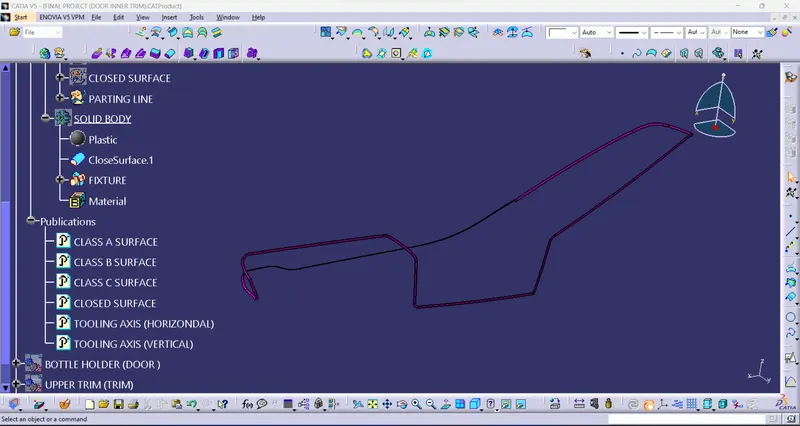
Closed Surface:
- Trim both class c and class B surfaces to get the closed surface.
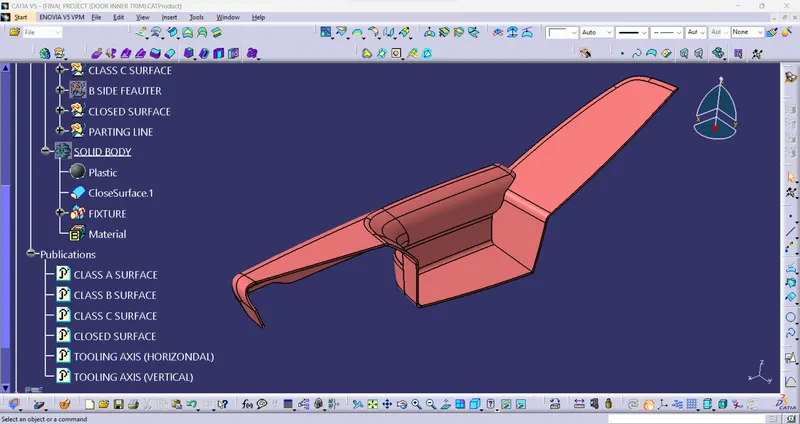
Solid-body of the final component:
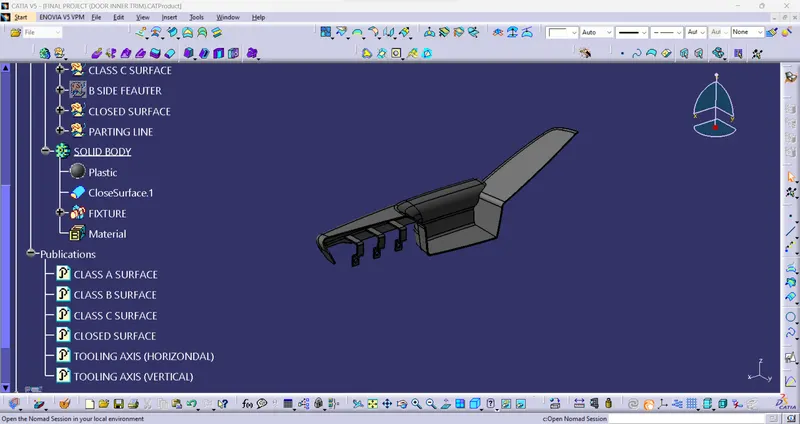
Map Pocket:
Surface modeling :
Class A surface:
- class a is an input to get stylish.
- check the class A surface to fully closed surface or not.
- the use to create class B surface.
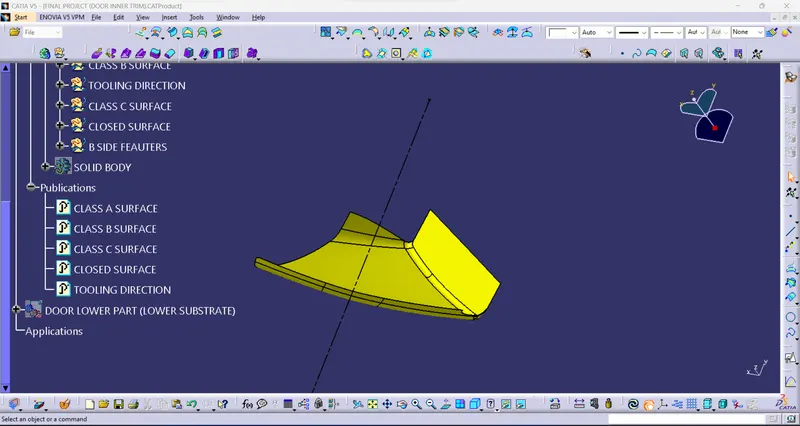
Class B surface:
- Class B surface has Extracted the surface from the class A surface.
- First, offset the surface for a 2.5mm thickness based on the master section.
- Finally, create a class B surface.
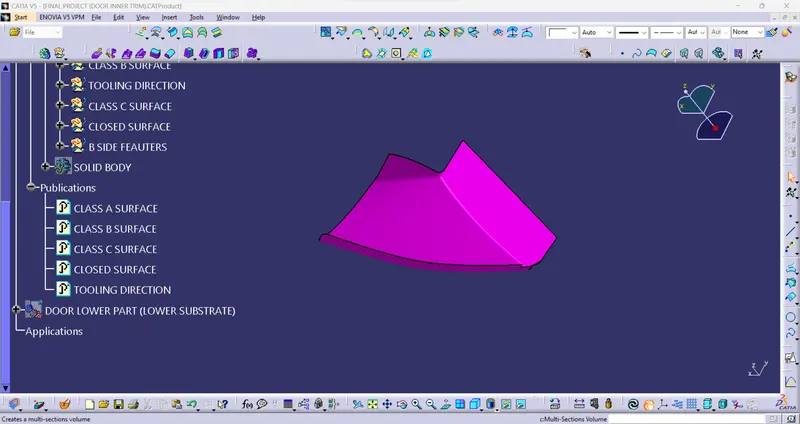
Class C Surface:
- Create class C surface used to Sweep to Draft surface command to close the surface and then trim the body.
- Both A and C surfaces join. and trim the Class B surface.
- To get the closed surface.
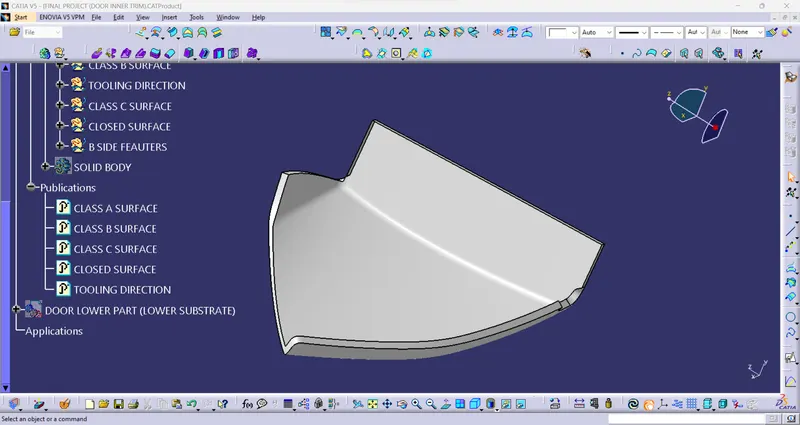
Closed Surface:
- Trim both class c and class B surfaces to get the closed surface.
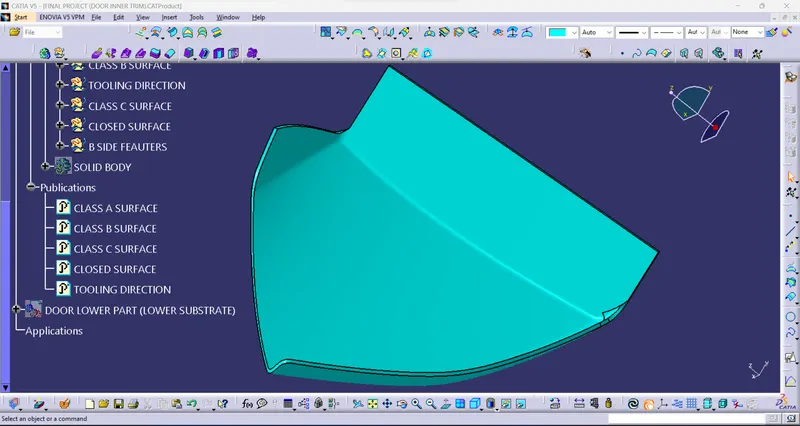
Solid-body of the final component:
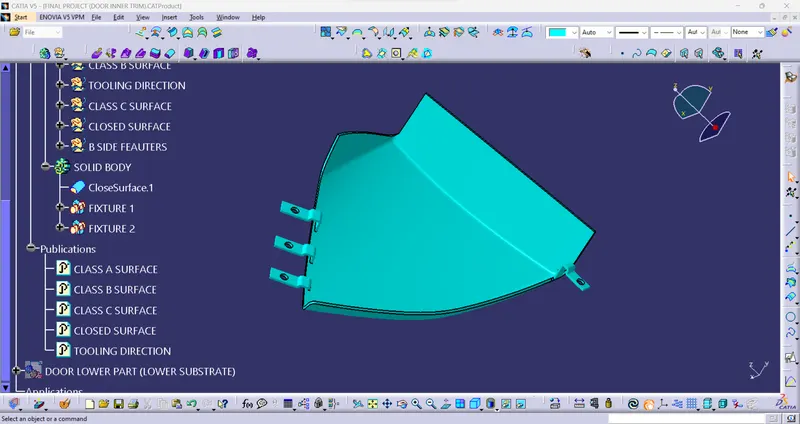
Bottle Holder:
Surface modeling :
Class A surface:
- class A is an input to get stylish.
- check the class A surface to fully closed surface or not.
- the use to create class B surface.
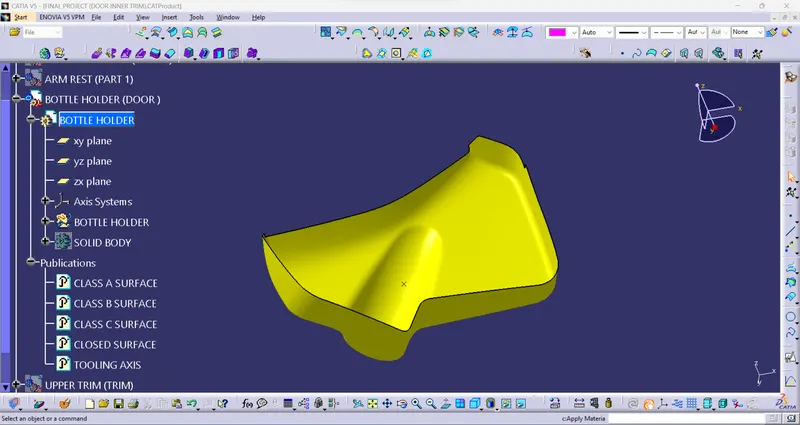
Class B surface:
- Class B surface has Extracted the surface from the class A surface.
- First, offset the surface for a 2.5mm thickness based on the master section.
- Finally, create a class B surface.
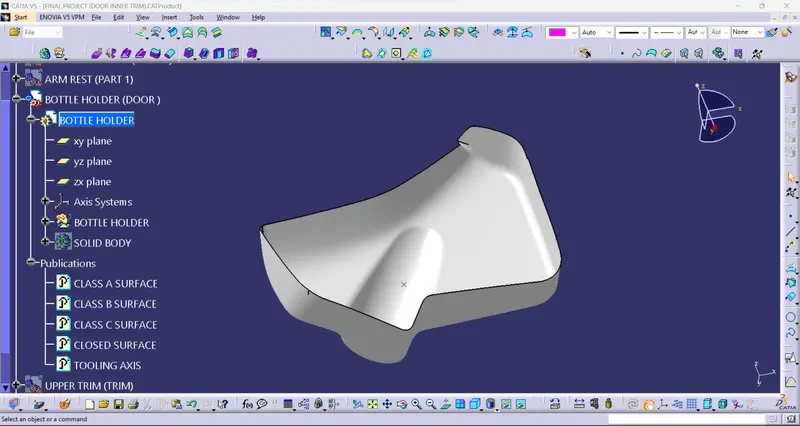
Class C Surface:
- Create class C surface used to Sweep to reference surface command to close the surface and then trim the body.
- Both A and C surfaces join. and trim the Class B surface.
- To get the closed surface.
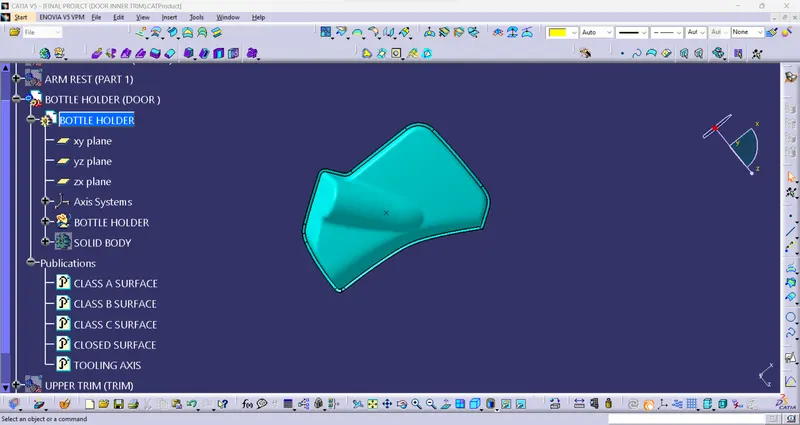
Closed Surface:
- Trim both class c and class B surfaces to get the closed surface.
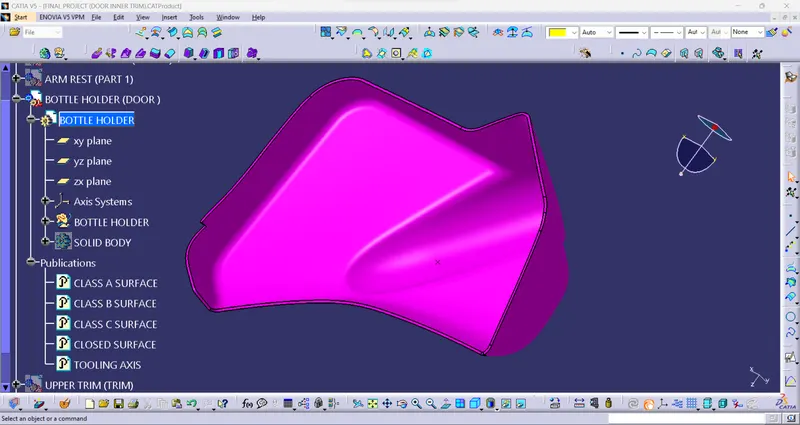
Solid-body of the final component:
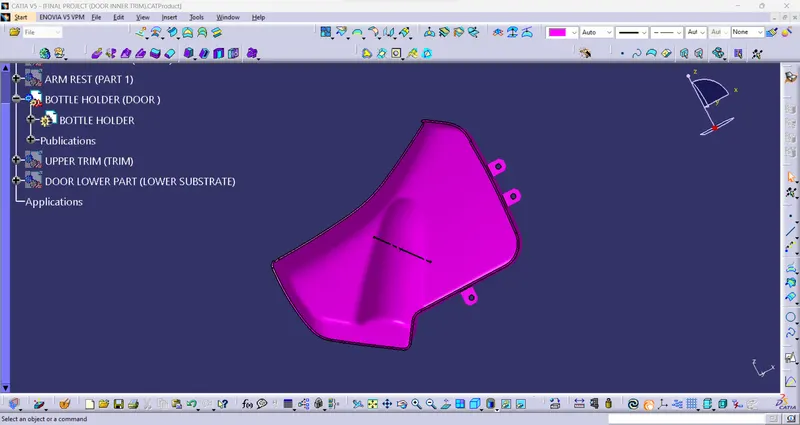
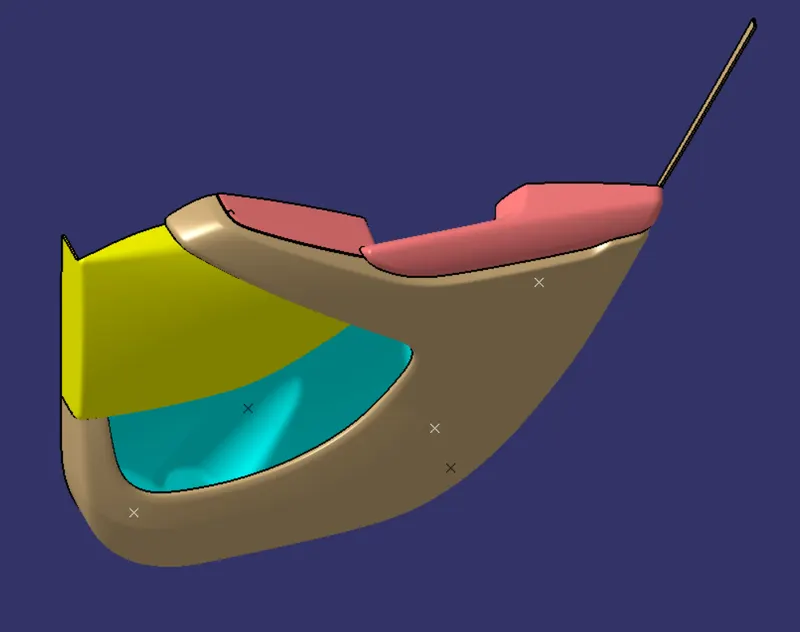
Door Lower Substate:
Surface modeling :
Class A surface:
- class a is an input to get stylish.
- check the class A surface to fully closed surface or not.
- the use to create class B surface.
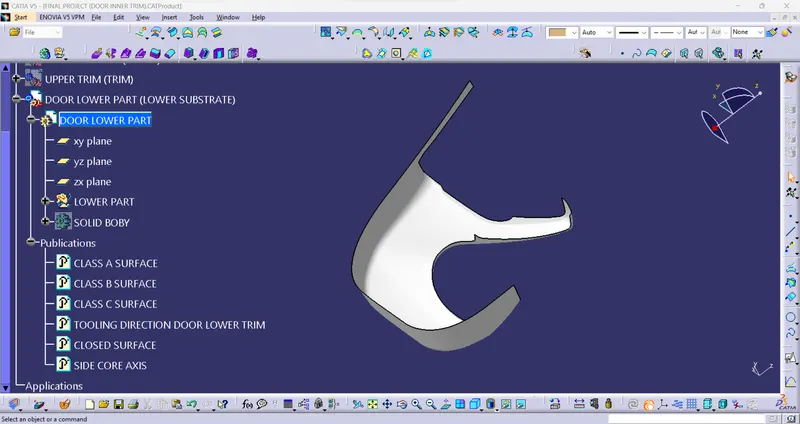
Class B surface:
- Class B surface has Extracted the surface from the class A surface.
- First, offset the surface for a 2.5mm thickness based on the master section.
- Finally, create a class B surface.
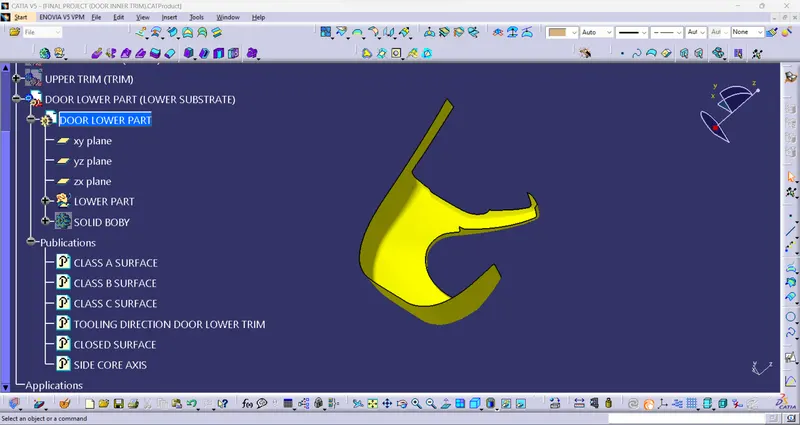
Class C Surface:
- Create class C surface used to Sweep to reference surface command to close the surface and then trim the body.
- Both A and C surfaces join. and trim the Class B surface.
- To get the closed surface.
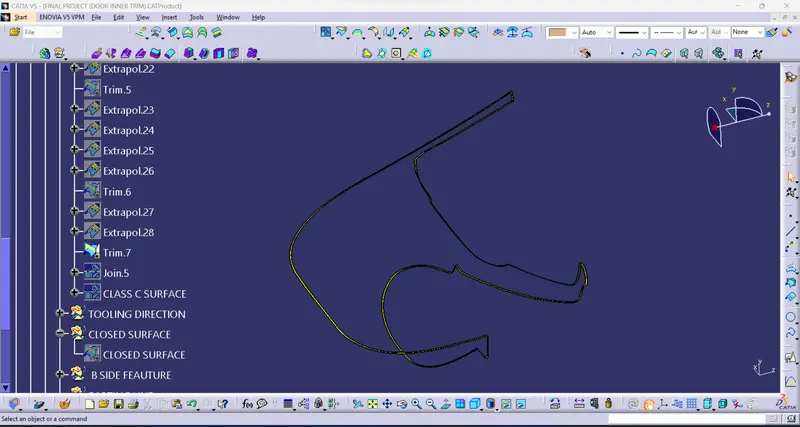
Closed Surface:
- Trim both class c and class B surfaces to get the closed surface.
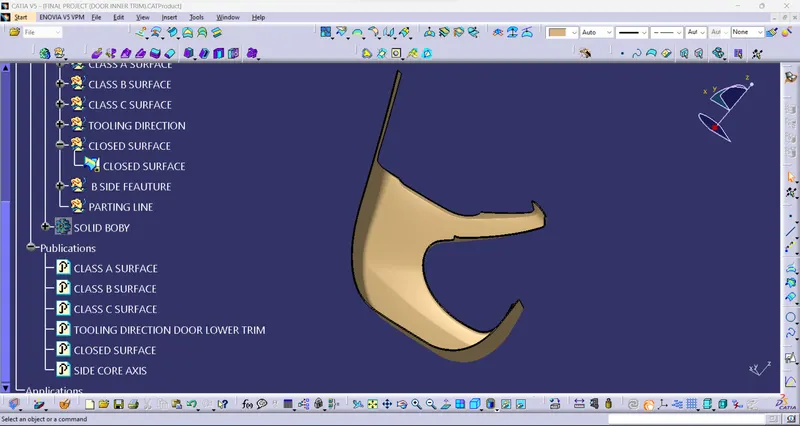
Solid-body of the final component:
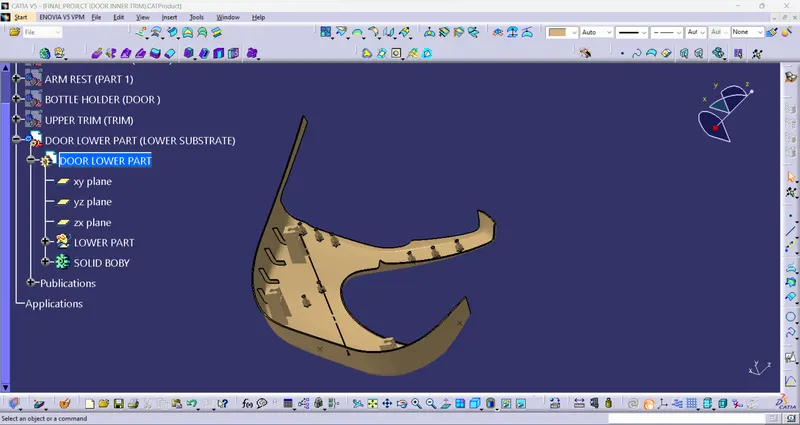
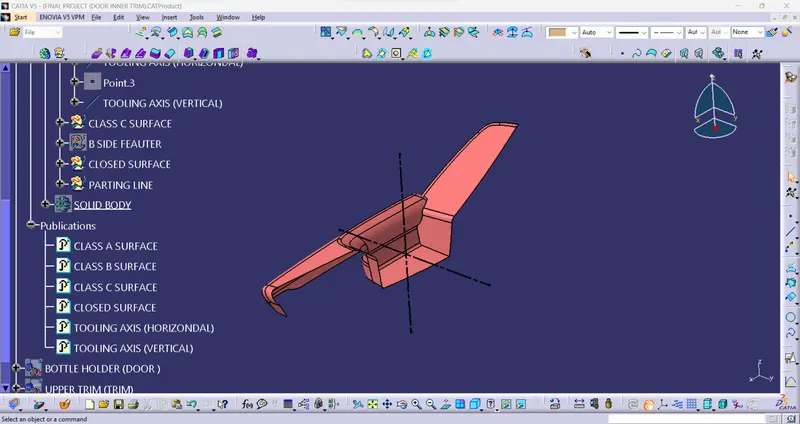
Tooling Axis:
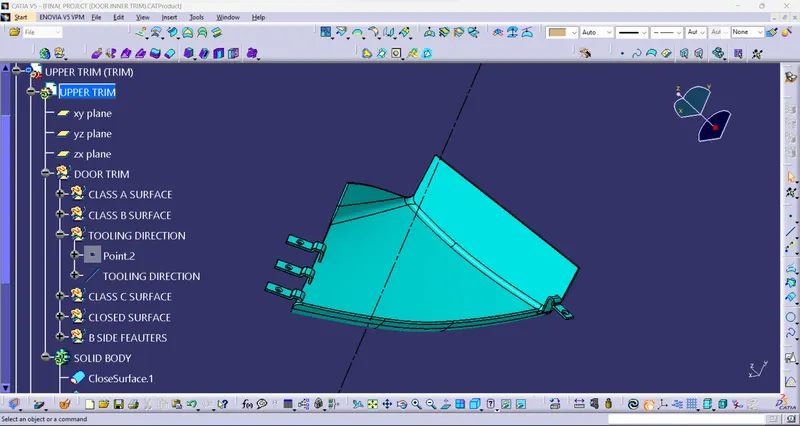
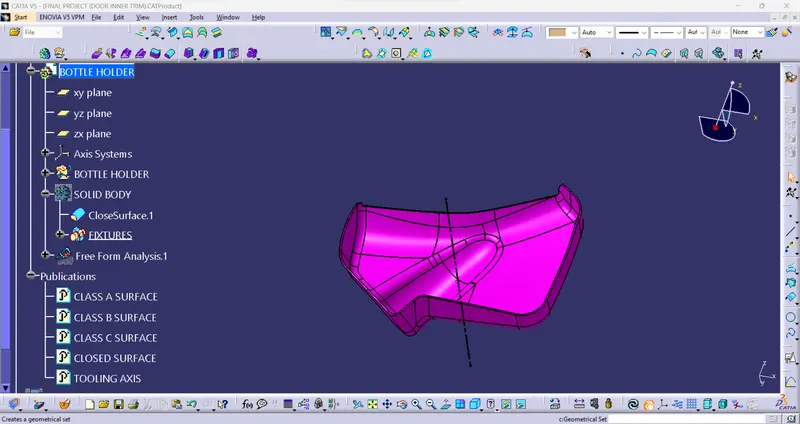
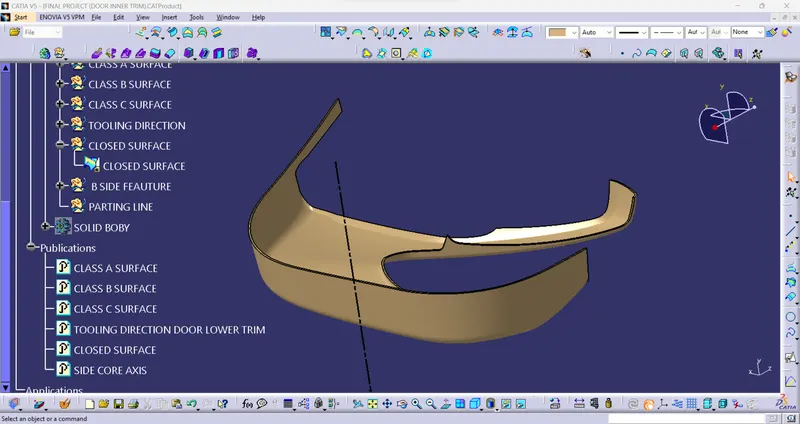
- Tooling Axis is a line in which the core & cavity is open.
- create an intersection on both sides to check the center of the axis
- To create a point using the surface to generate the line to the center of the tooling axis.
- To change the name to Tooling axis.
- Due to the complexity of the surface was impossible to clear all the surfaces in a single tooling axis and hence two tooling axis were created as below.
Arm Rest.
Map Packet.
Bottle Holder.
Door Lower Substate.
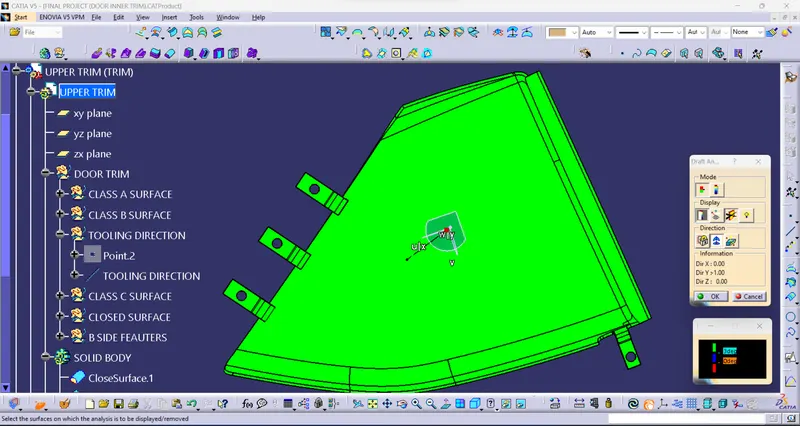
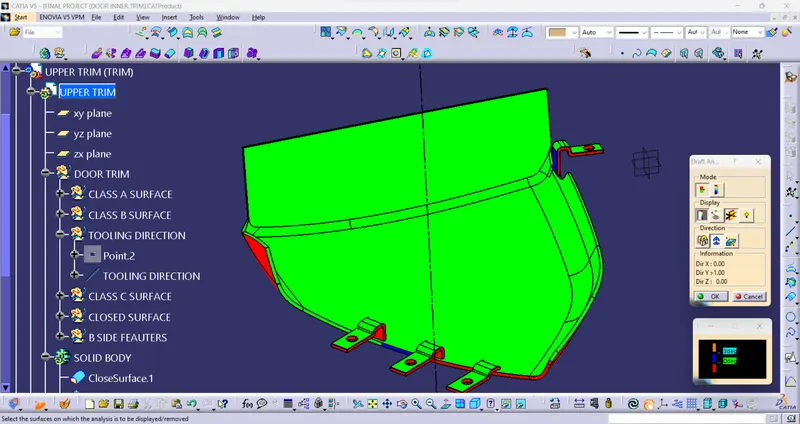
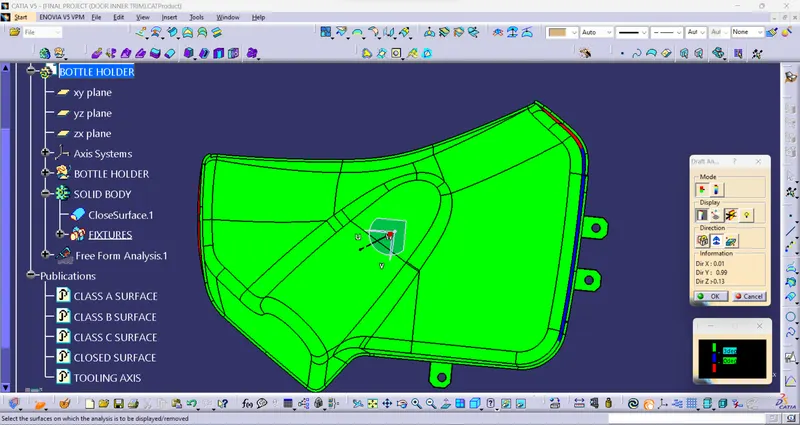
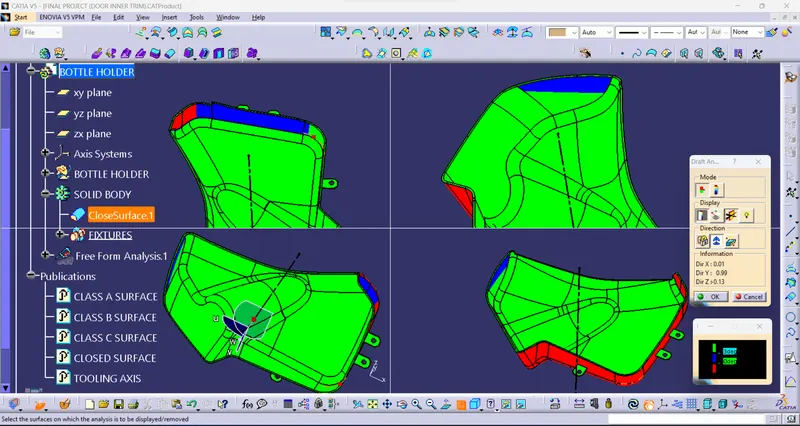
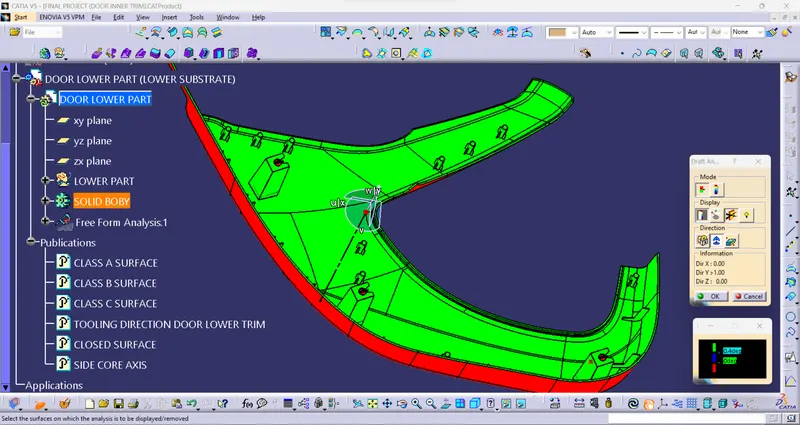
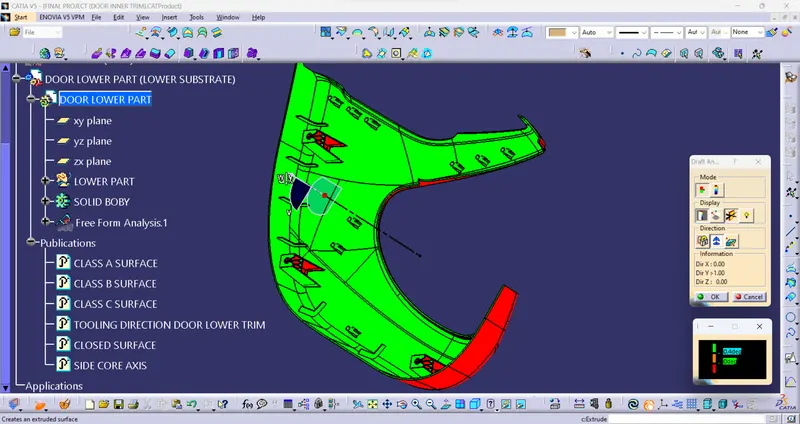
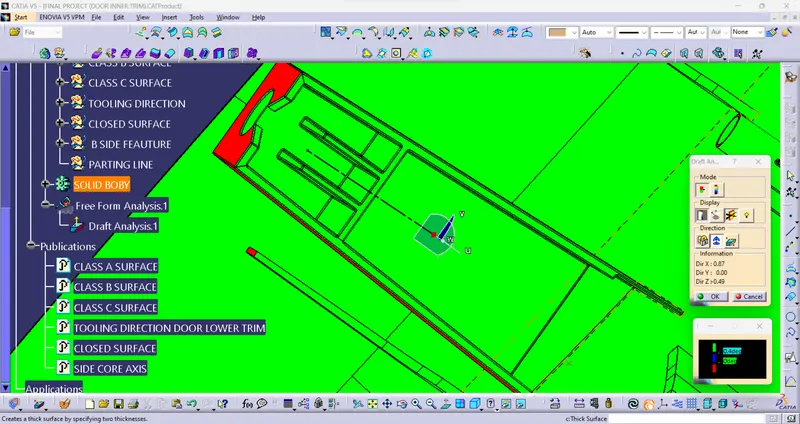
Draft Analysis:
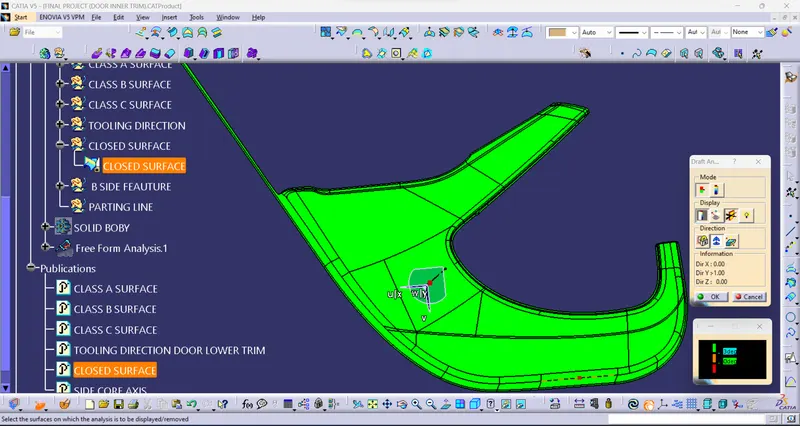
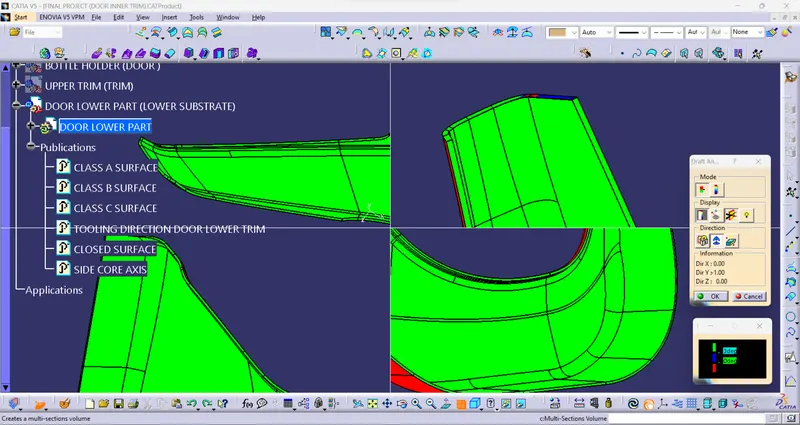
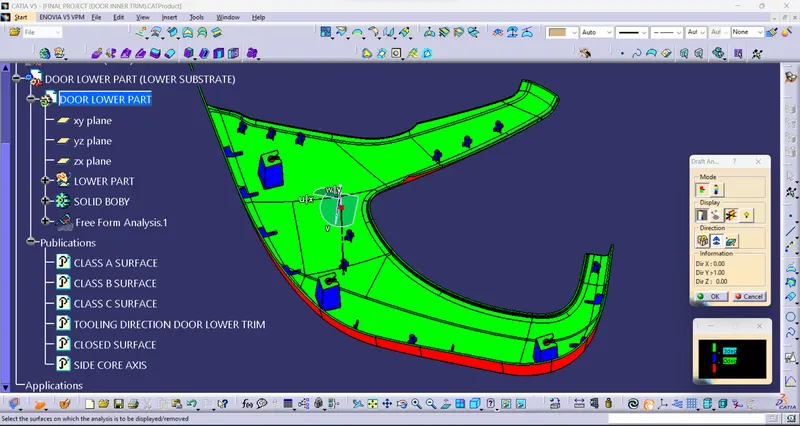
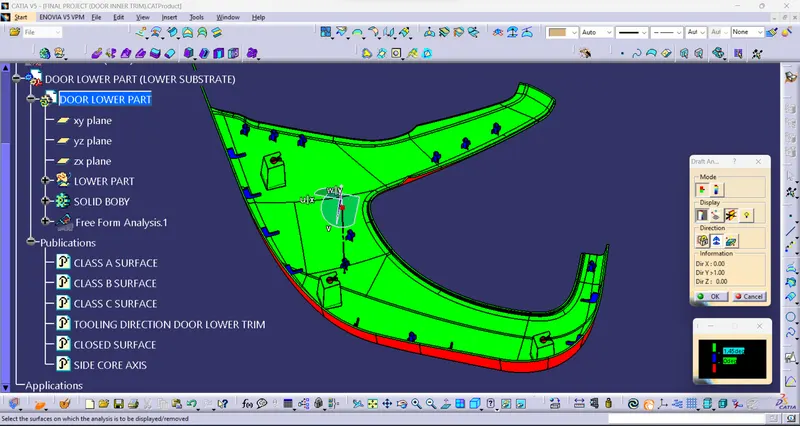
an appropriate draft angle will aid in the removal of the part from the mold. without the proper draft, angle parts may become hung up or stuck upon ejection, and mold damage may occur. be sure there are appropriate draft angles on all bosses, ribs, and normal walls. the draft angle most often between 3° angle.
Arm Rest:
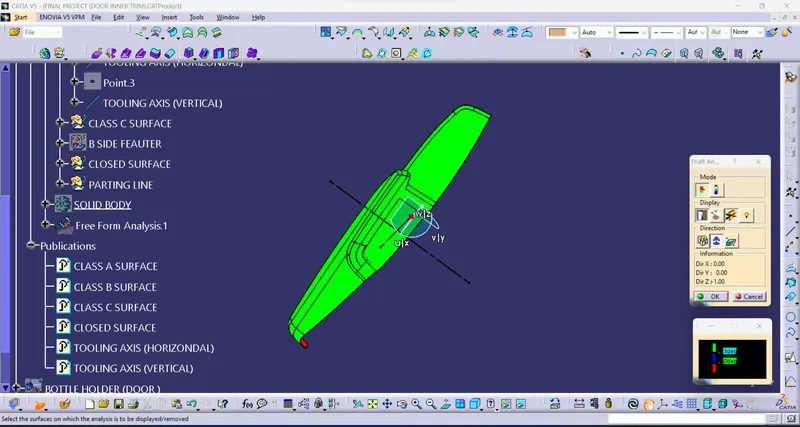
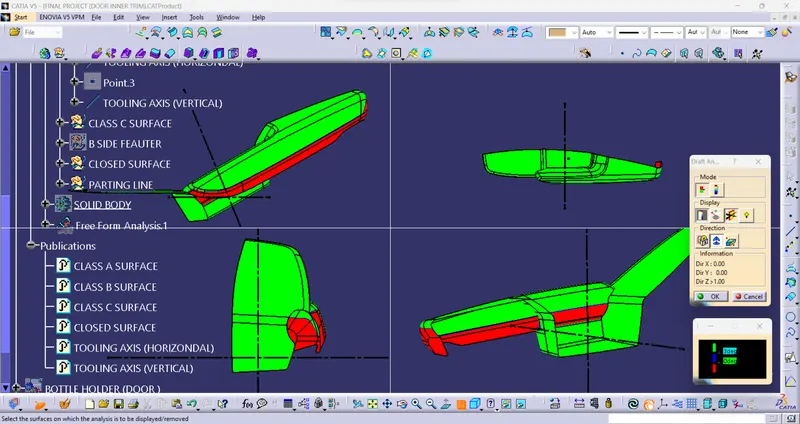
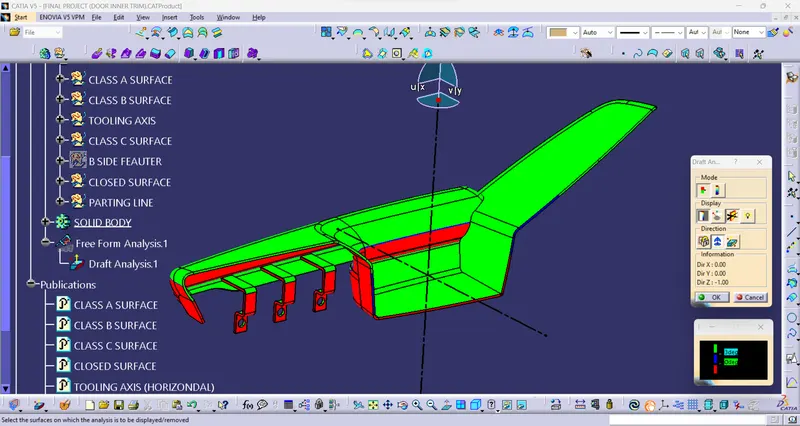
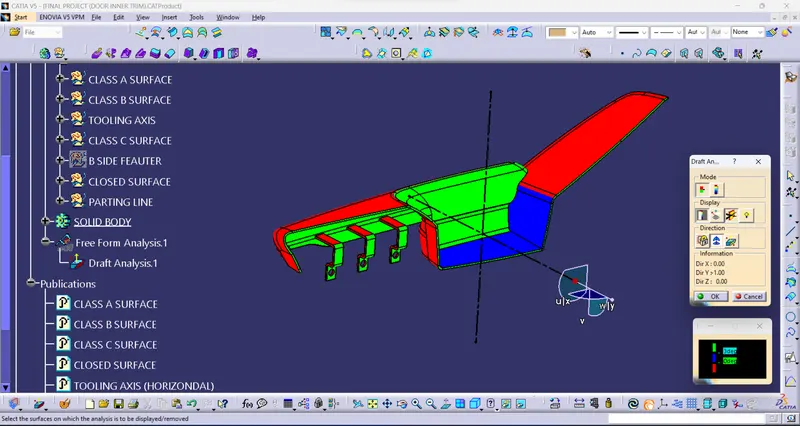
Map Packet.
Bottle Holder.
Door Lower Substate.
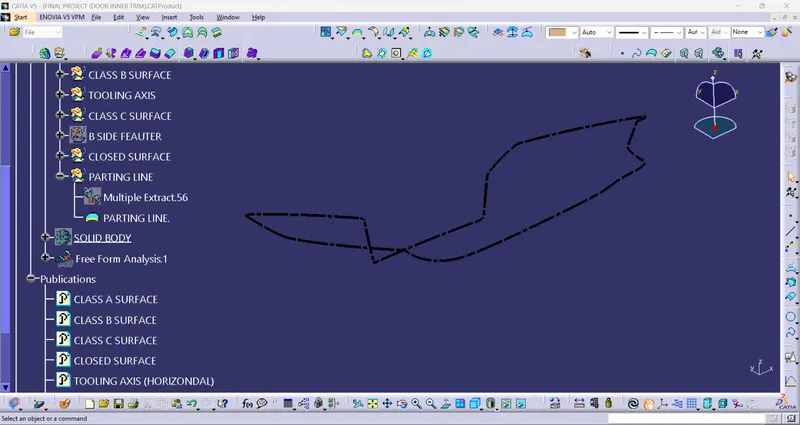
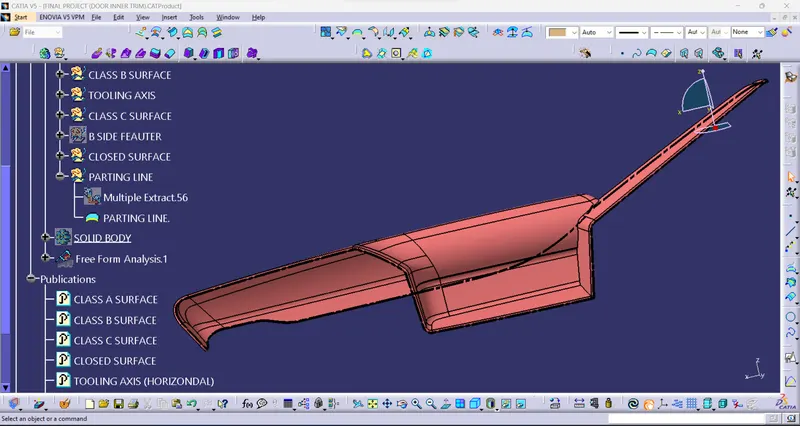
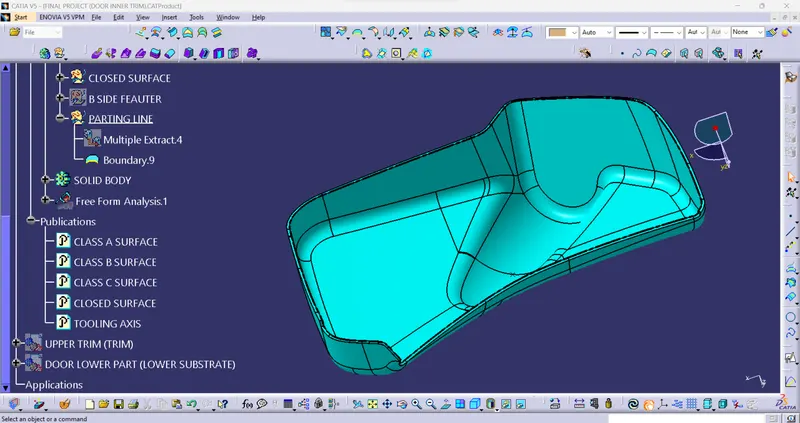
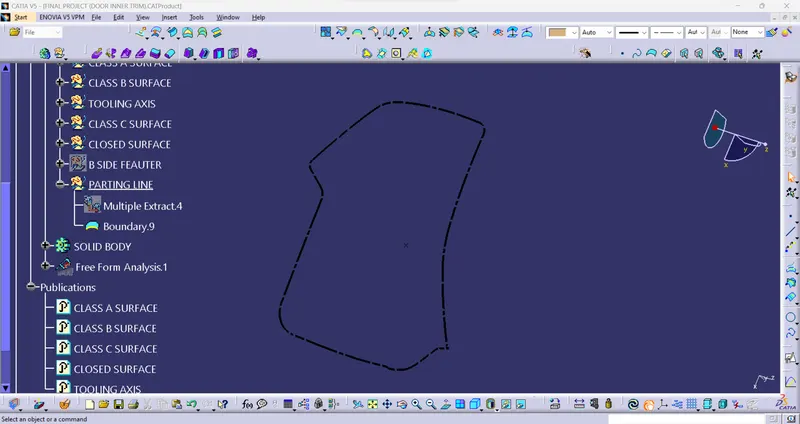
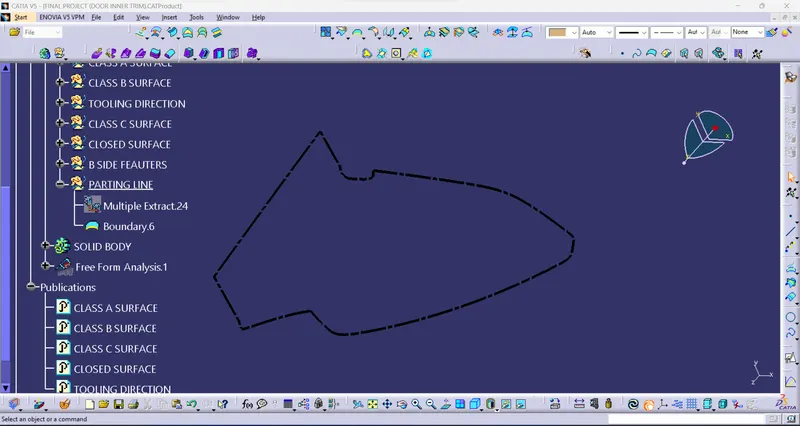
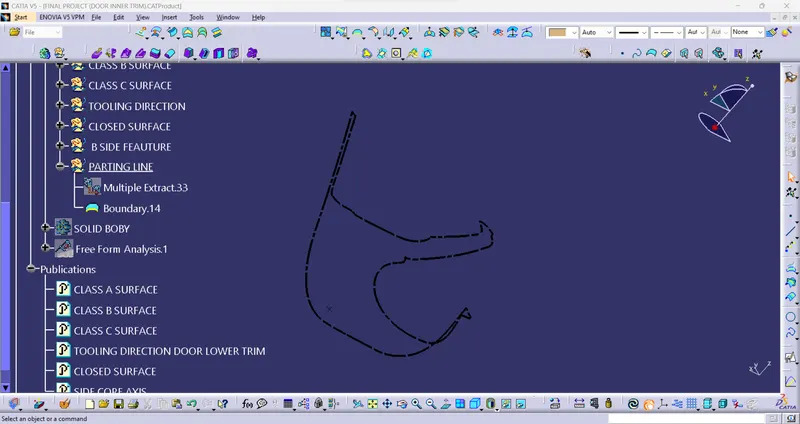
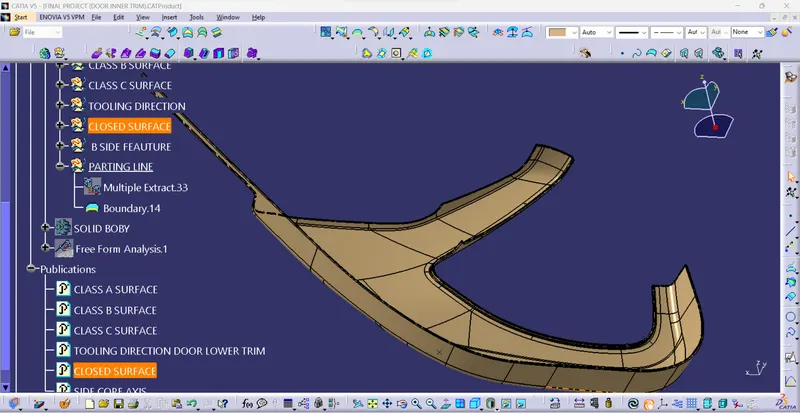
parting surface:
Arm rest:
Bottle Holder:
Map Pocket:
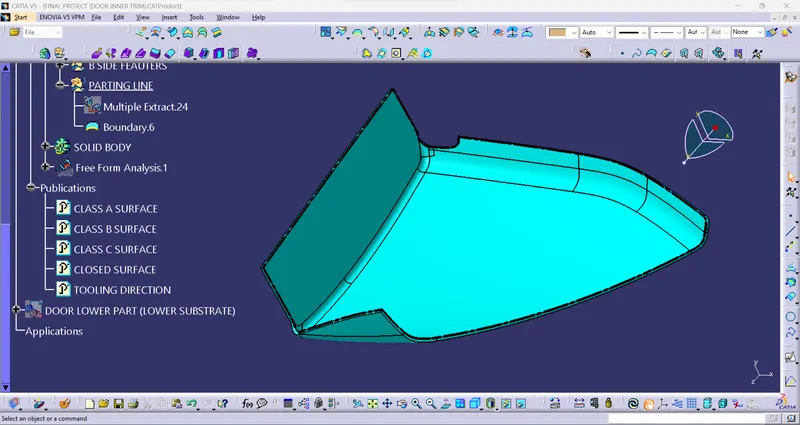
lower trim
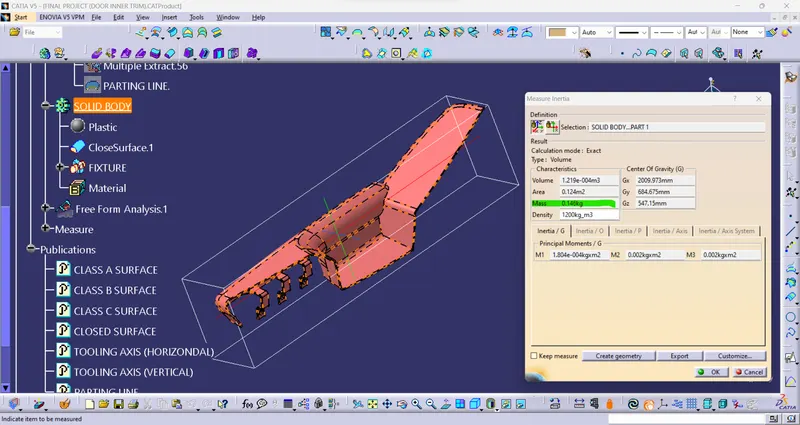
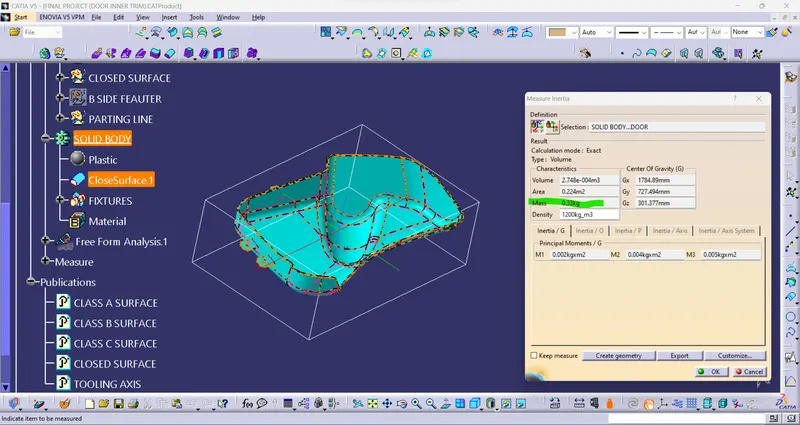
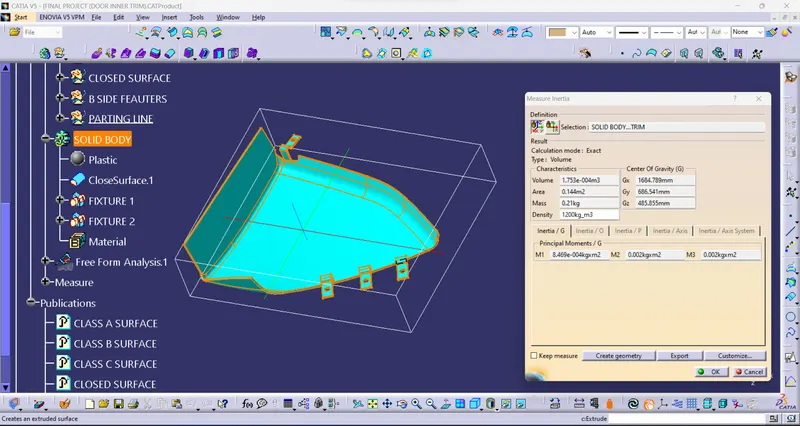
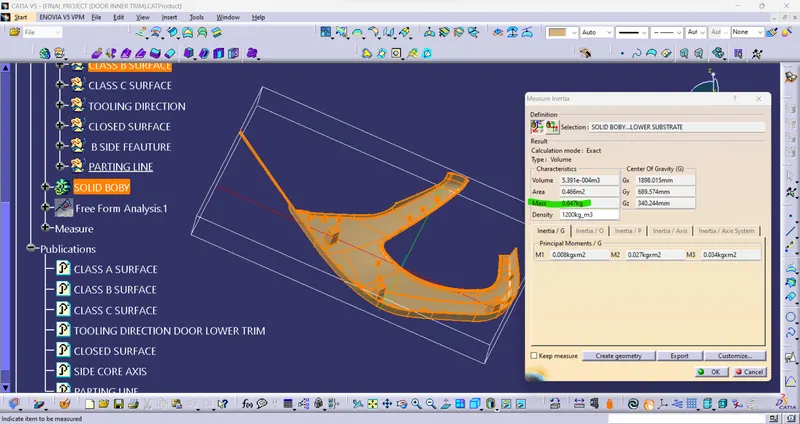
ADD MATERIAL AND CALCULATE ITS WEIGHT:
arm Rest:
Bottle Holder:
Map Pocket:
lower trim:
Weight of component:
| Arm Rest | 0.146kg. |
| Map Packet. | 0.21kg. |
| Bottle Holder. | 0.33kg. |
| Door Lower Substate. | 0.647kg. |
| Total Weight | 1.333Kg. |
Final output:
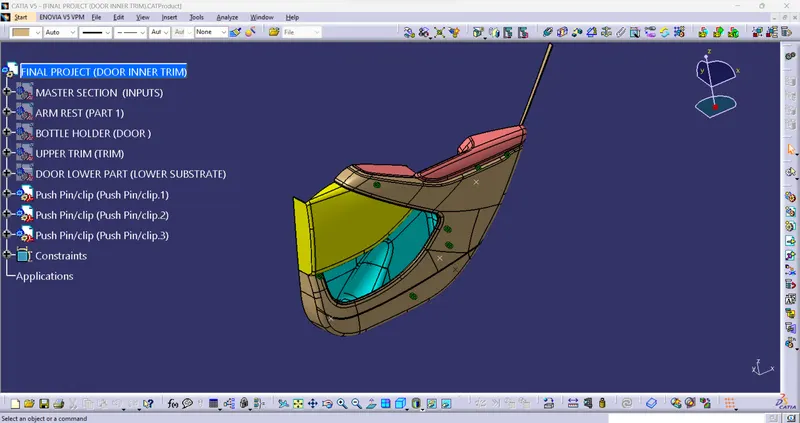
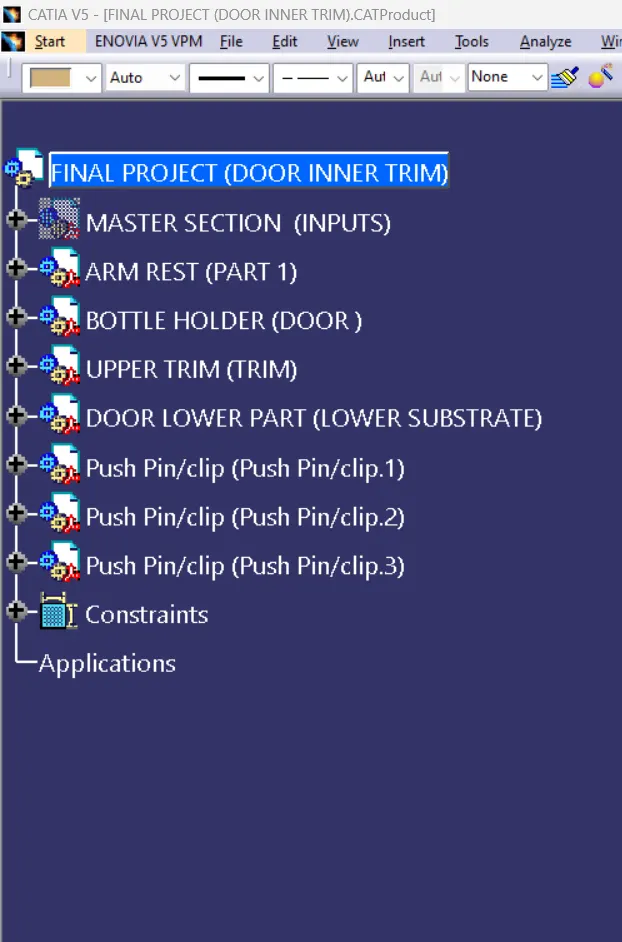
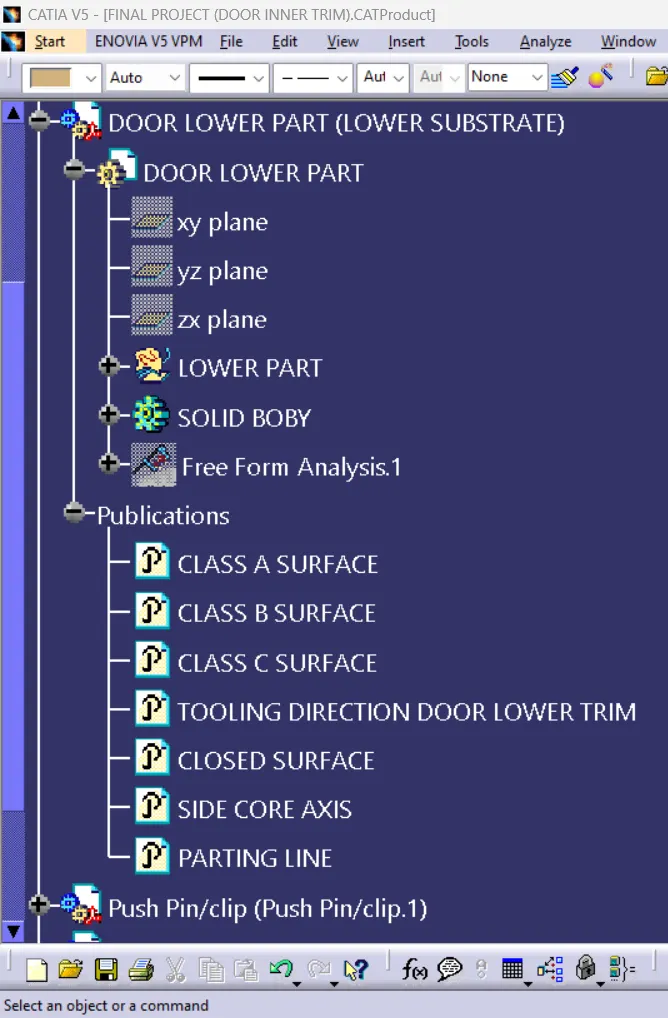
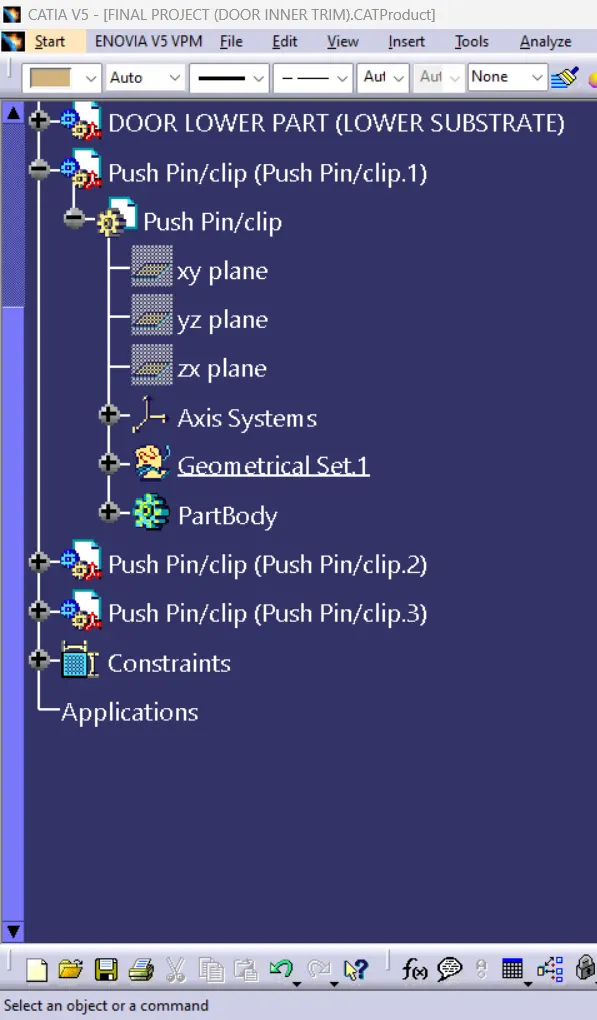
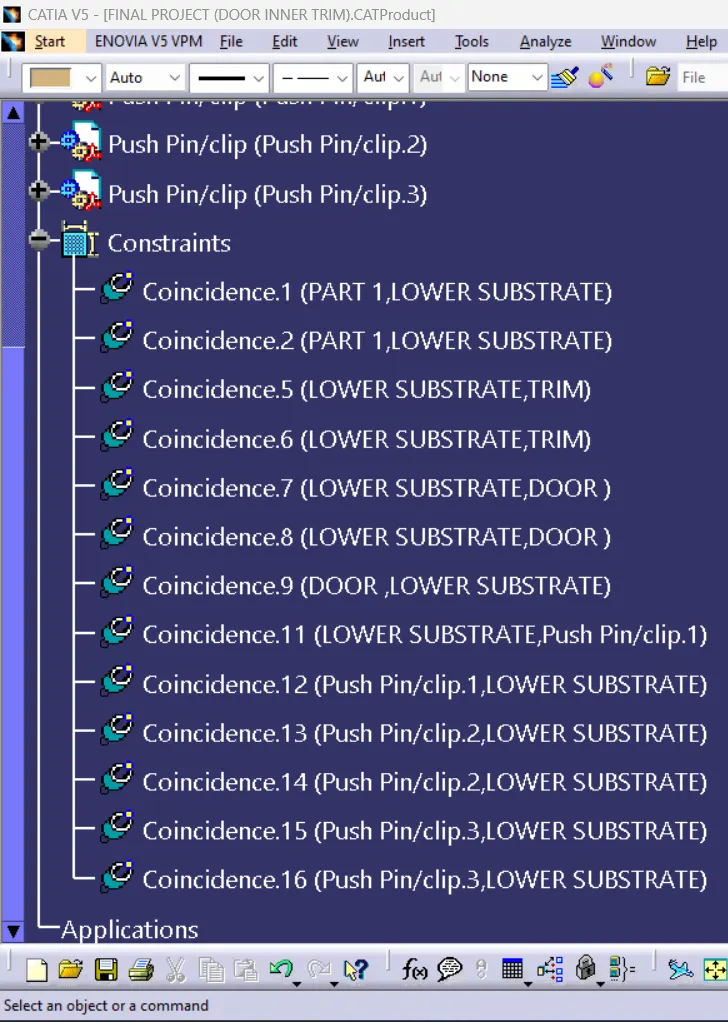
Tree structure: