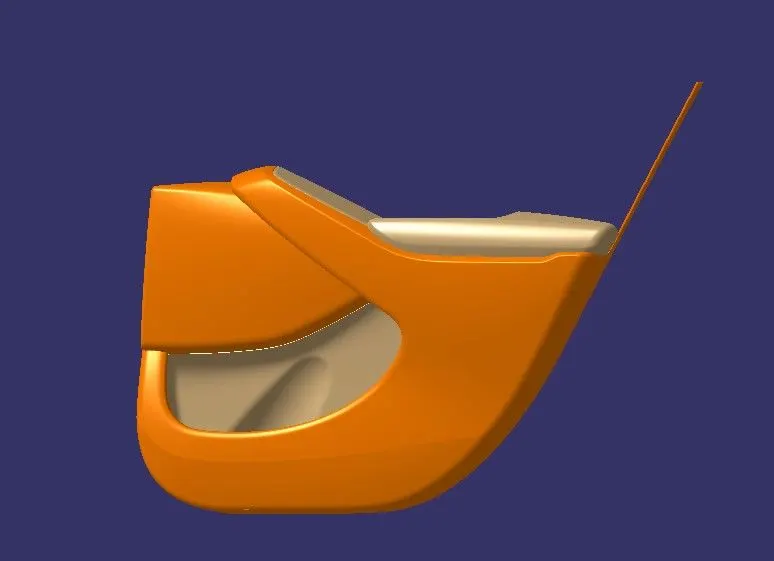
Week 11 - Final project
AIM:
- To create the tooling axis for the given Stylish Class A surface.
- To analyse the Class A surface using tooling axis as reference for draft analysis.
- To create Class B and C surfaces for the given Class A surface and form closed surface.
- To create a solid part body from the closed surface.
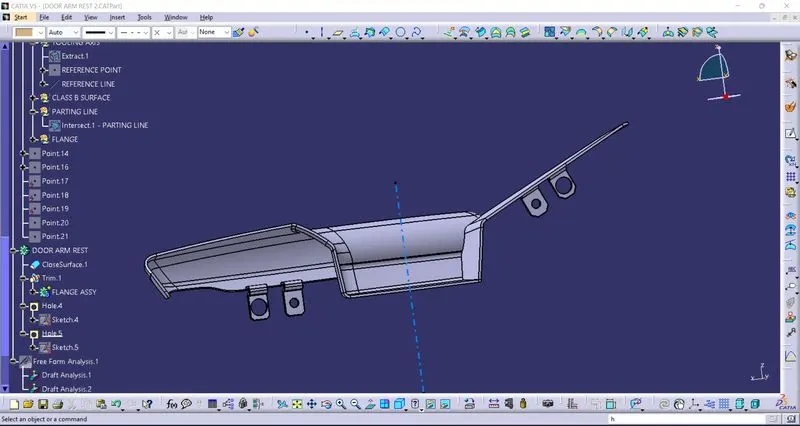
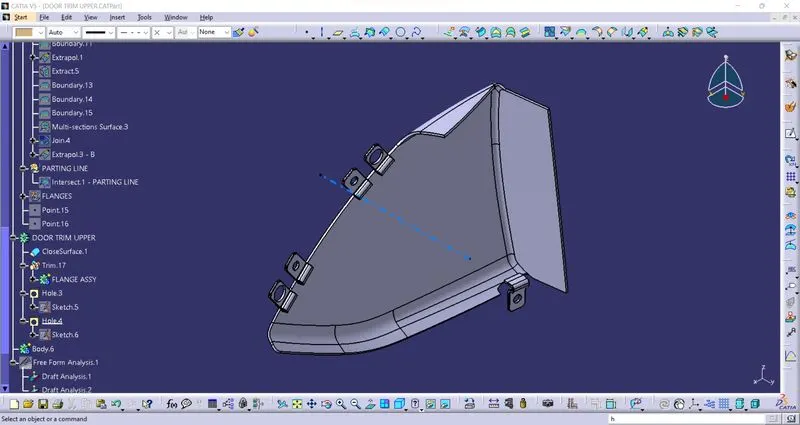
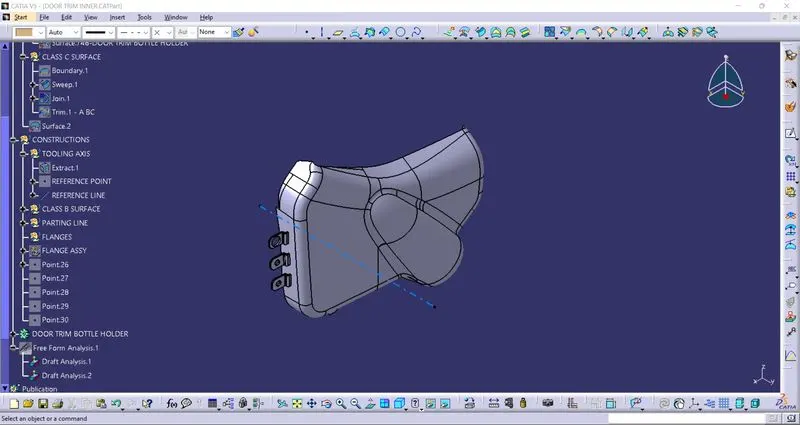
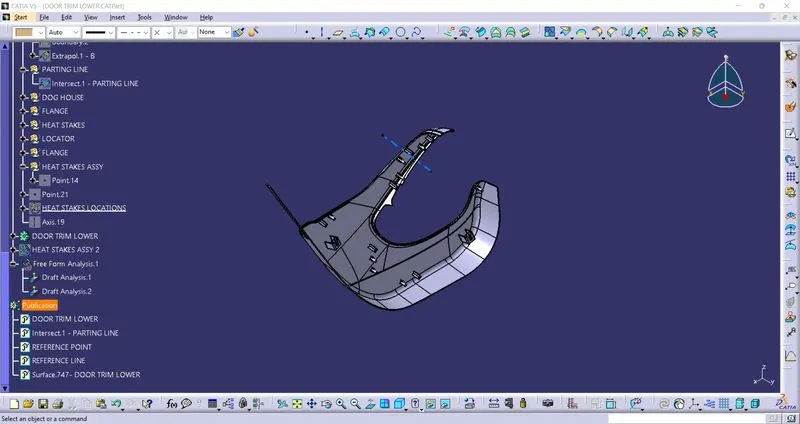
- To create B side features such as Dog house,heat stakes and locators for fixing the parts.
- To analyse the formed part body for draft analysis.
Door Panel:
Door panels serve as an interface between the interior of the car and the inner workings of the door, and between vehicle occupants and the door. They are expected to meet a variety of design specifications regarding safety, aesthetics, and functionality.
Master sections are the guides for design requirements which decide the component packaging after technical (Styling, Concept or Class-A) surfaces.
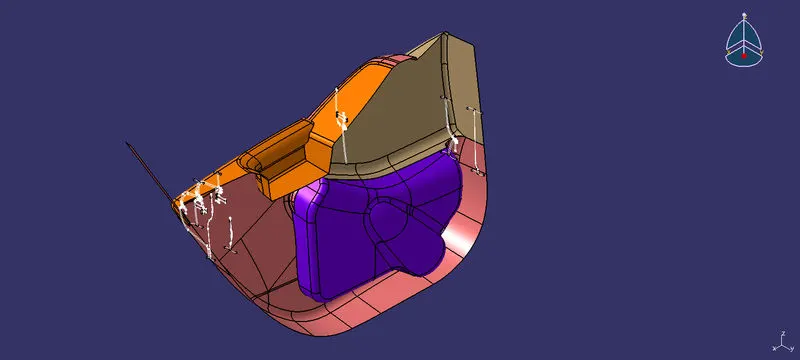
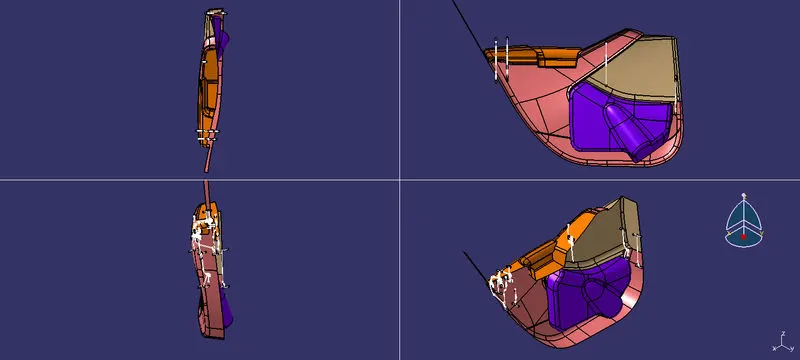
Tooling axis:
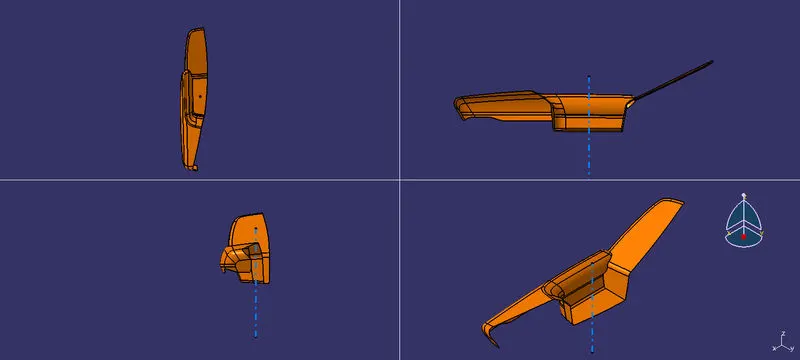
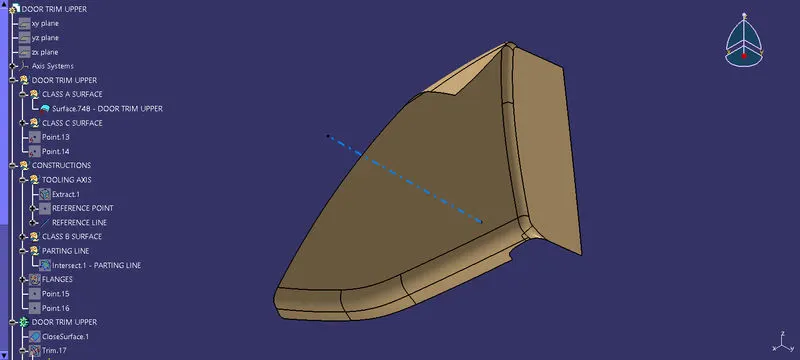
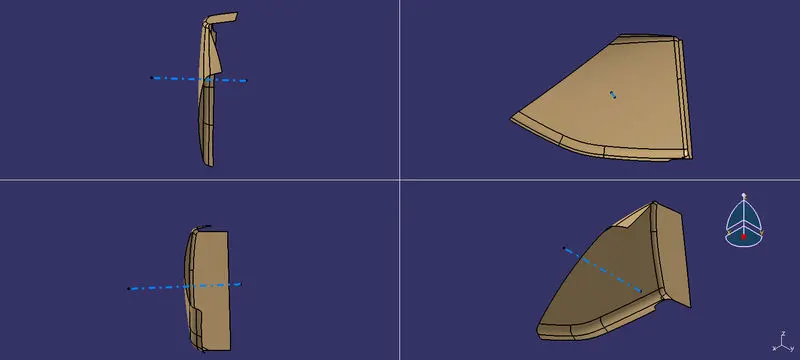
- To create tooling axis,given class A surface is viewed in XY,YZ & XZ plane.
- Choose the view from one among the three views,most of the surface can be viewed.
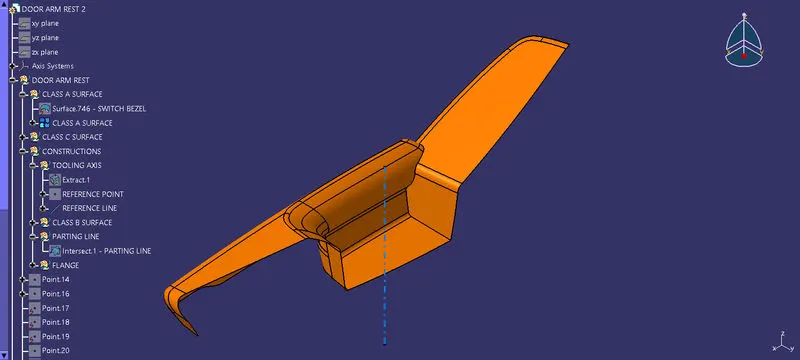
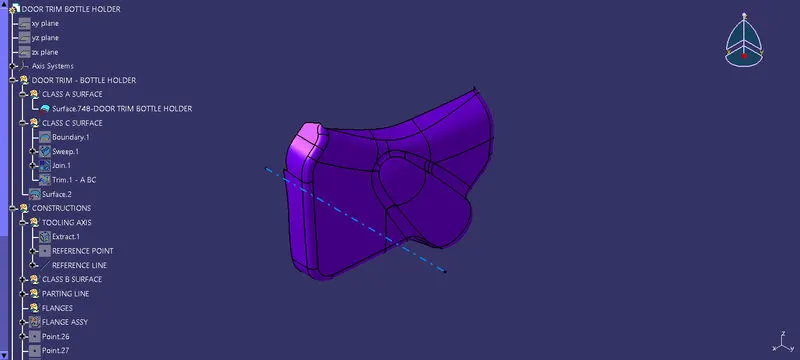
- From the plane,a flat surface is choosen and centre point on the surface is taken as reference point and line passed through point is taken as tooling axis.
- Using tooling axis line,draft analysis is applied and drafting angle is cleared.
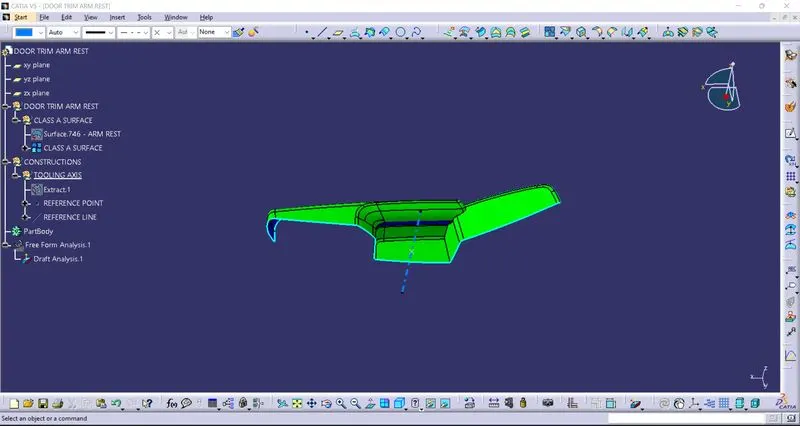
Tooling axis for Door Trim arm Rest:
Tooling axis for Door trim Map pocket:
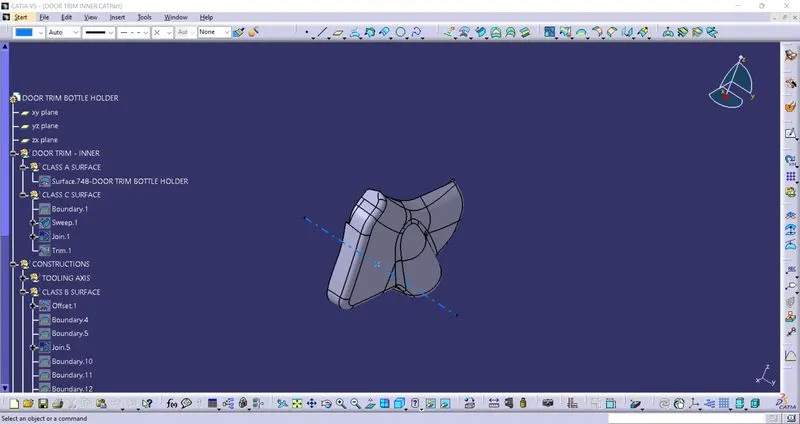
Tooling axis for Door Trim Bottle Holder:
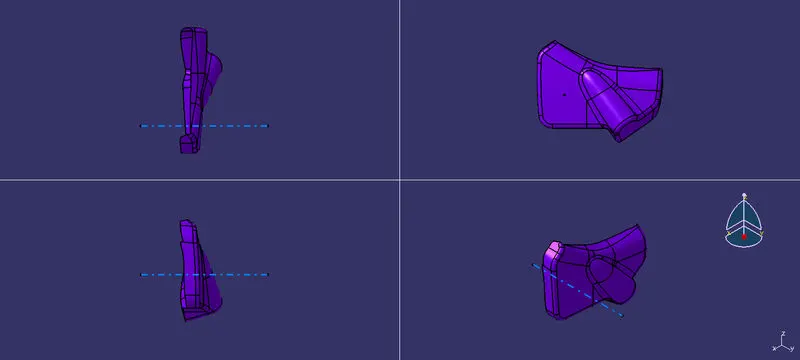
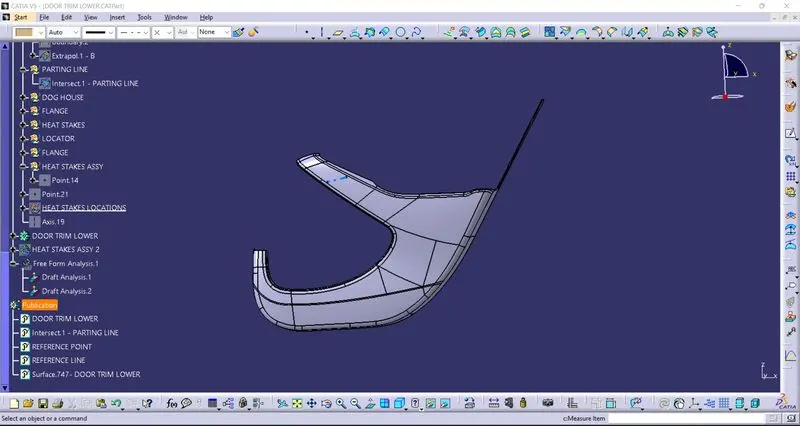
Tooling axis for Door Trim Lower Substrate:
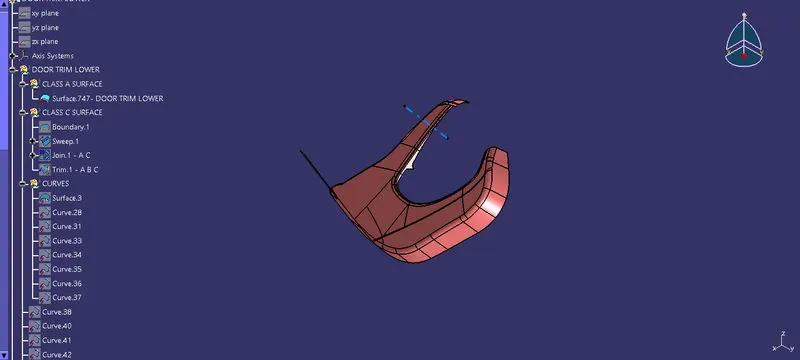
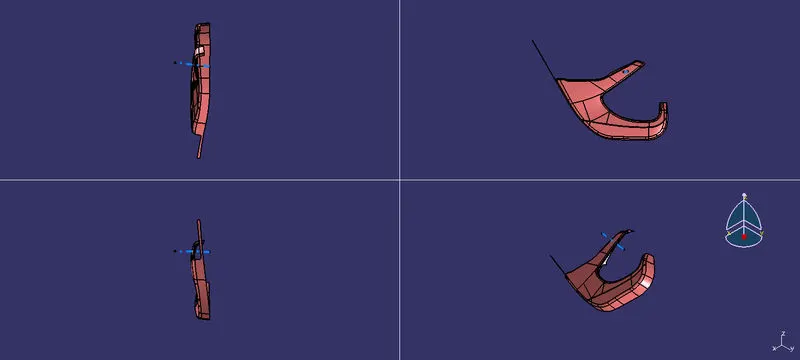
Draft analysis:
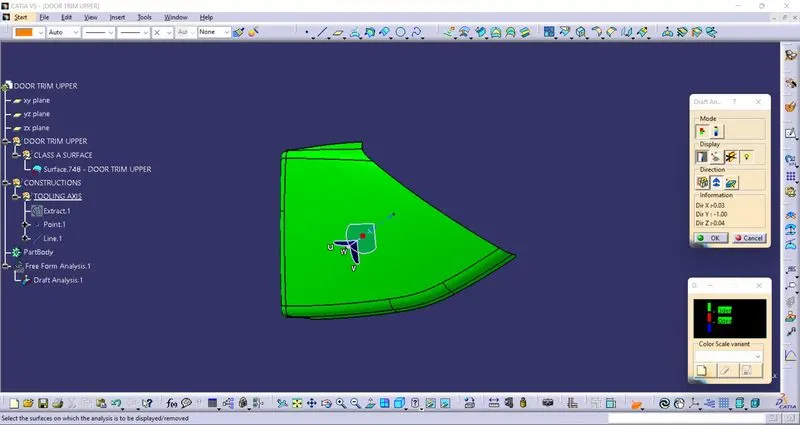
- From the tooling axis line as reference,draft analysis is applied.
- All areas of the surface is cleared at 3 degree drafting angle.
Door Trim arm Rest:
Door trim Map pocket:
Door Trim Bottle Holder:
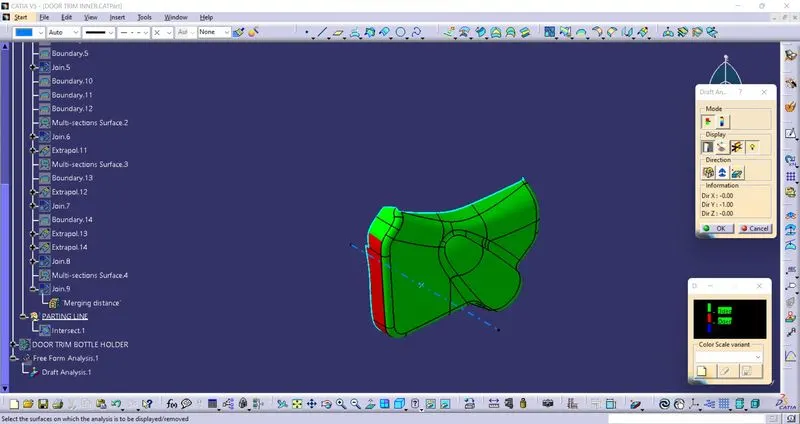
At 3 degree draft analysis,Class A surface is not clearing the draft analysis.
Door Trim Lower Substrate:
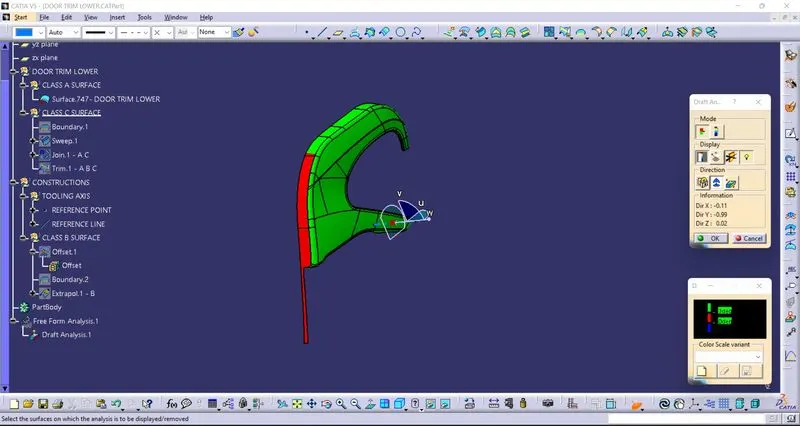
At 3 degree draft analysis,Class A surface is not clearing the draft analysis.
CLASS B SURFACE:
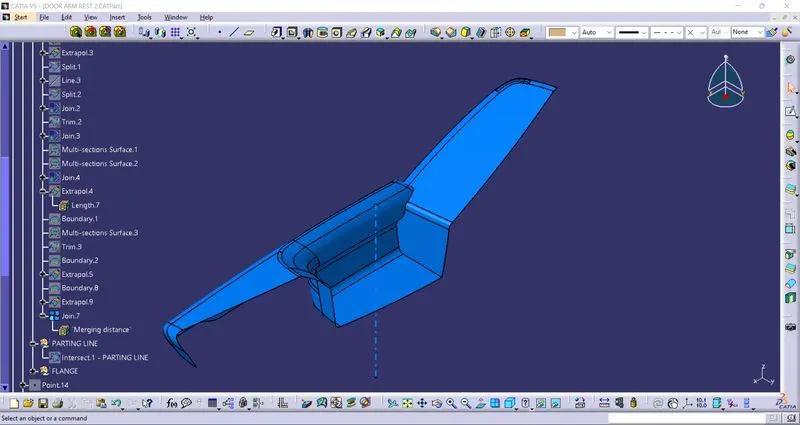
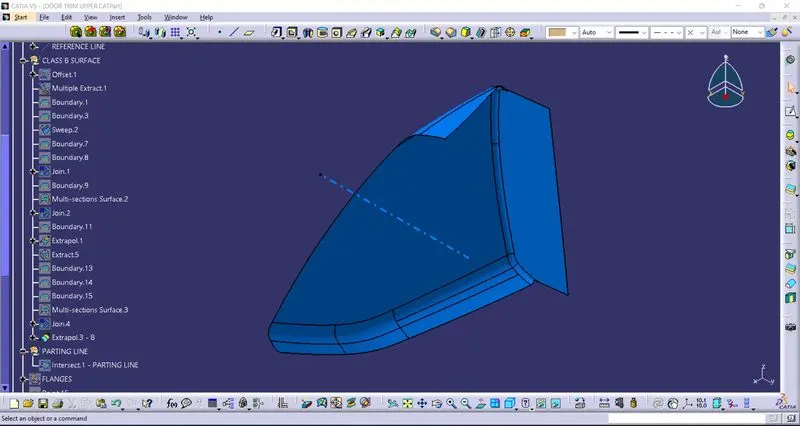
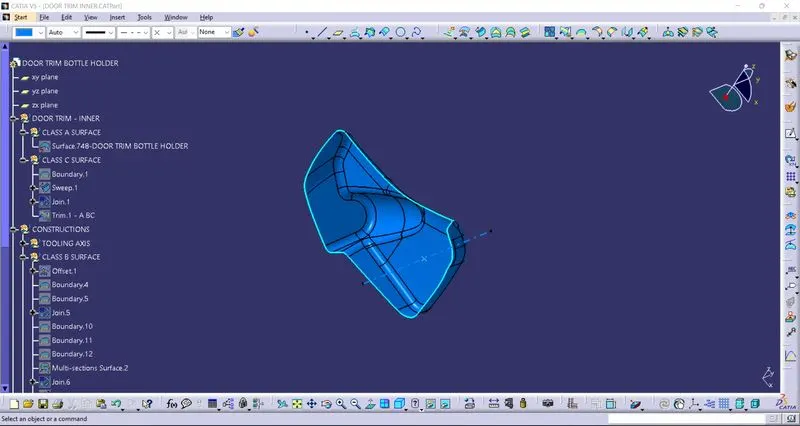
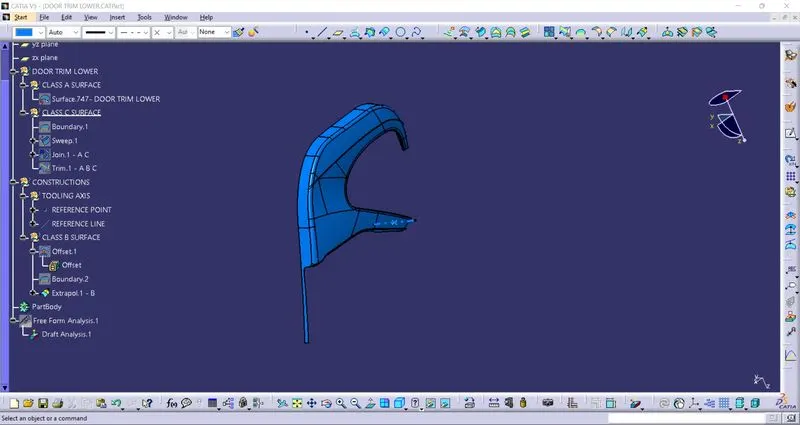
Class B surface is formed by offsetting the Stylish Class A surface with reference to master section.
Door Trim arm Rest:
Door trim Map pocket:
Door Trim Bottle Holder:
Door Trim Lower Substrate:
CLASS C SURFACE:
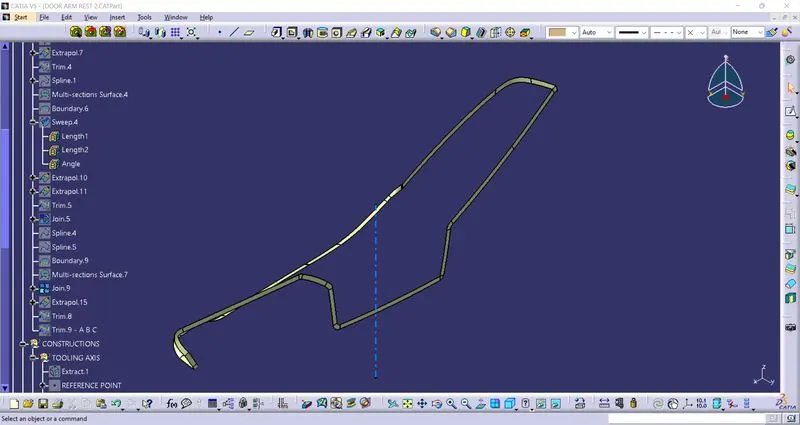
Class C surface is created to perpendicular to the edge of Class A surface with 3 degree drafting angle.
Door Trim arm Rest:
Door trim Map pocket:
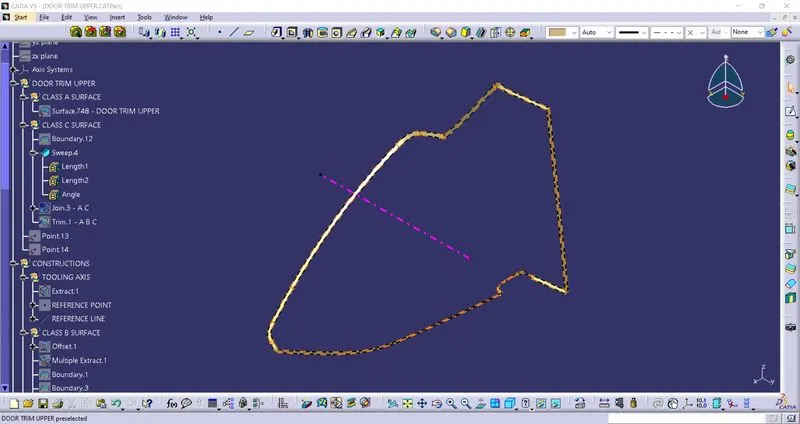
Door Trim Bottle Holder:
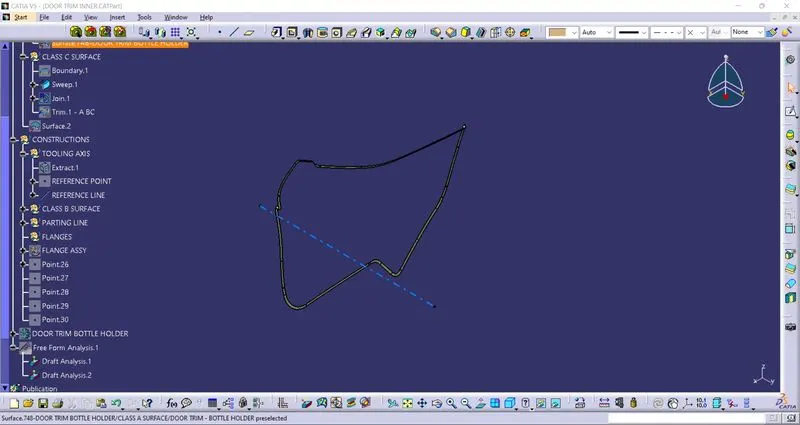
Door Trim Lower Substrate:
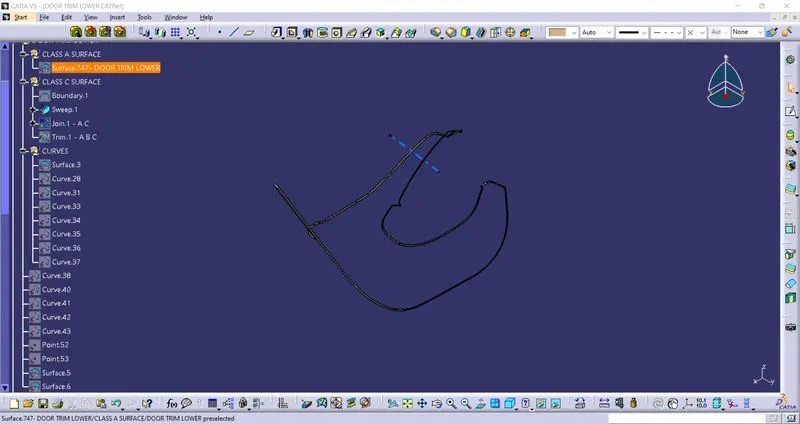
After the creation of Class B and C surfaces for the given Class A surface,join the all surfaces to form a closed Body.It can be checked by using boundary command.
Door Trim arm Rest:
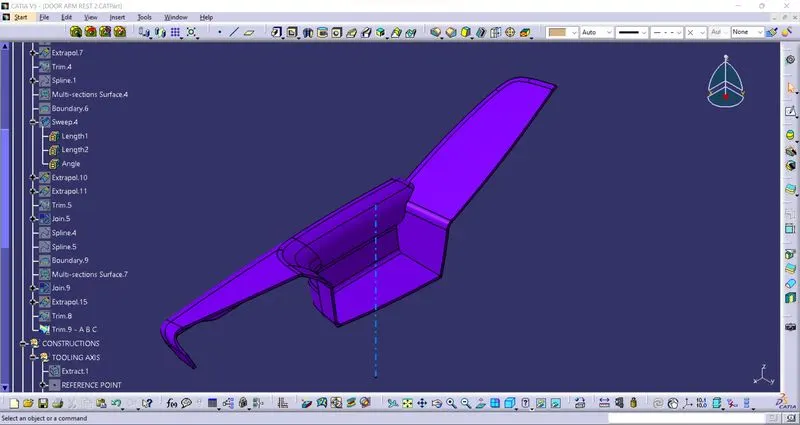
Door trim Map pocket:
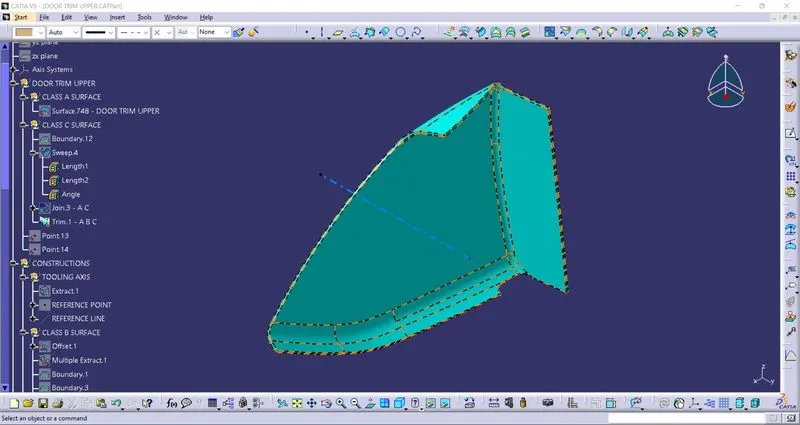
Door Trim Bottle Holder:
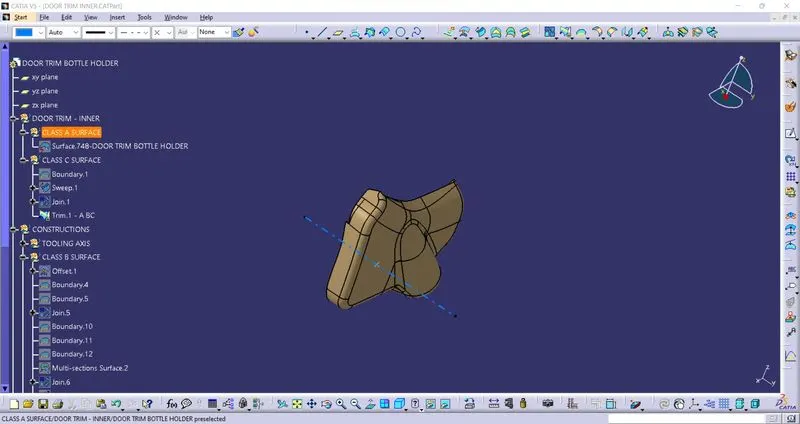
Door Trim Lower Substrate:
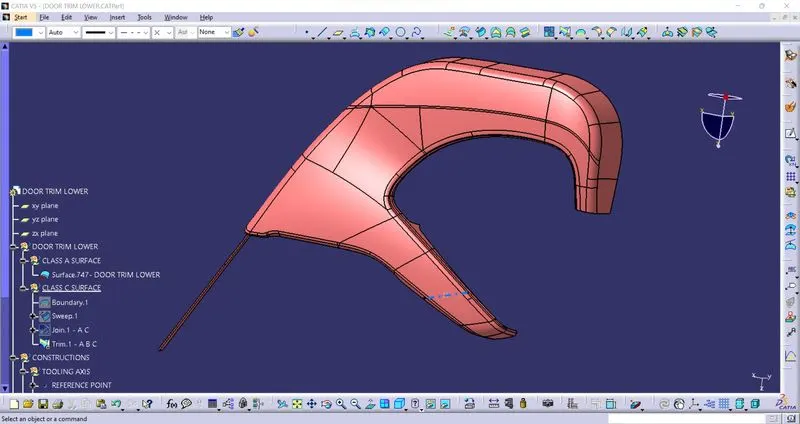
CLOSED BODY:
Door Trim arm Rest:
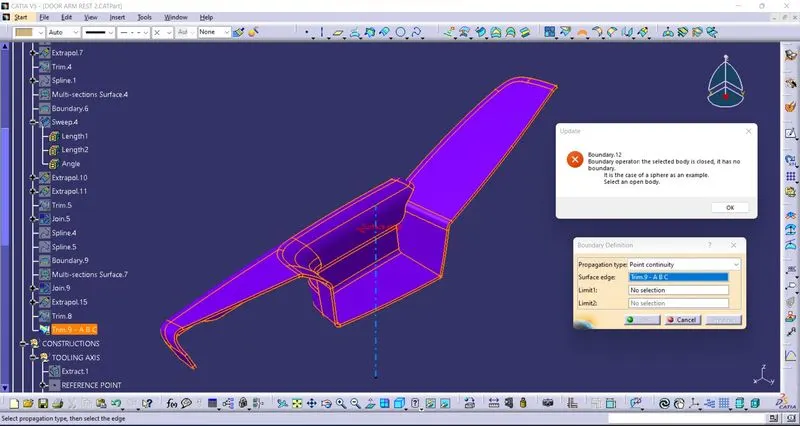
Door trim Map pocket:
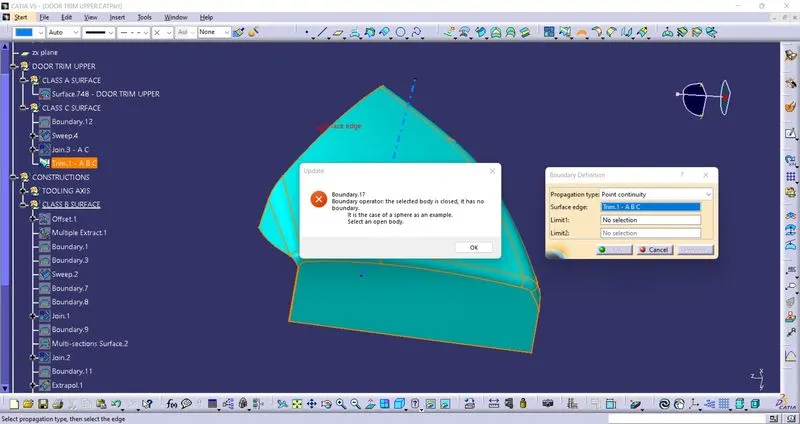
Door Trim Bottle Holder:
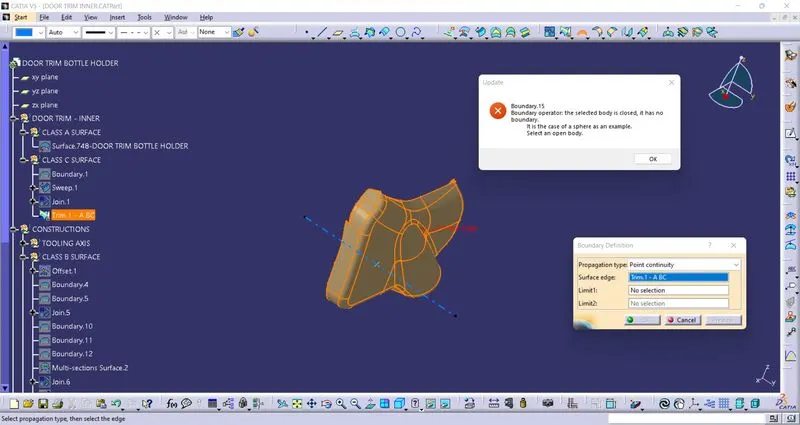
Door Trim Lower Substrate:
PART BODY:
From the closed surface,solid part is formed using thicken surface command.
Door Trim arm Rest:
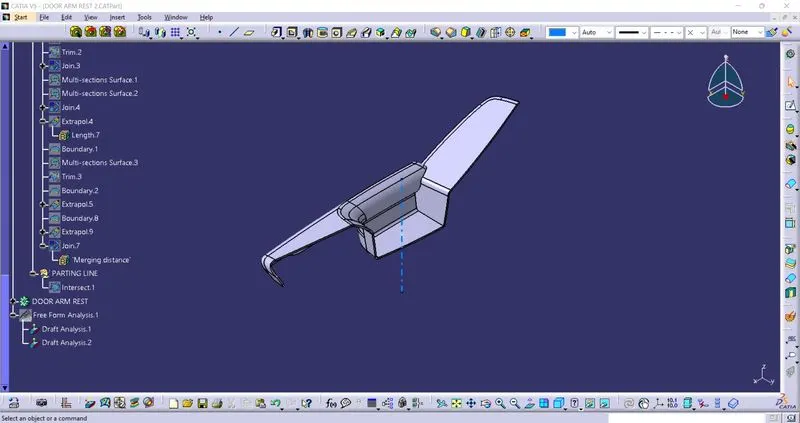
Door trim Map pocket:
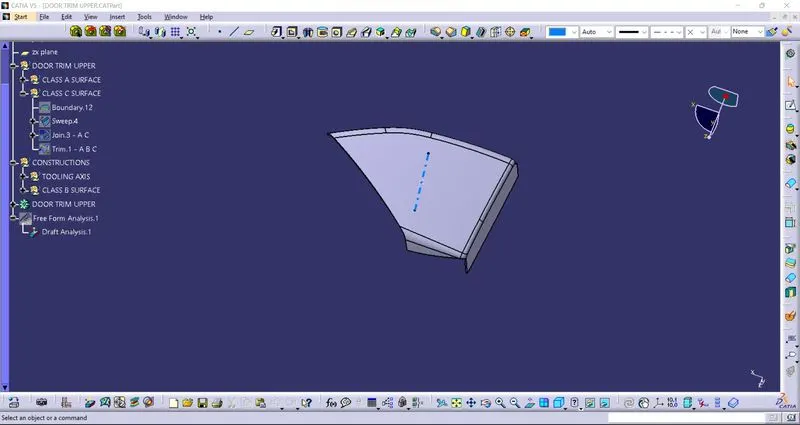
Door Trim Bottle Holder:
Door Trim Lower Substrate:
3-2-1 Locating principle:
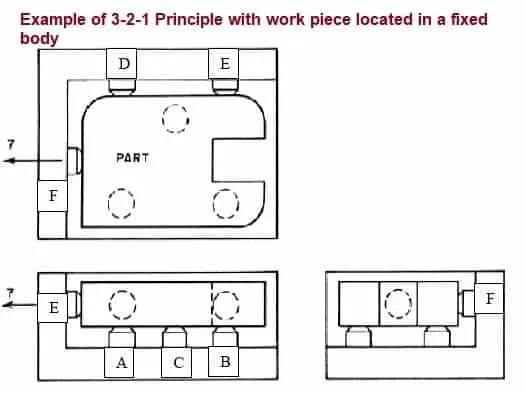
The 3-2-1 principle states that the six locators are sufficient to restrict the required degree of freedom of any workpiece. In this, motion is restricted using clamps and locators. A three-pin base can restrict five motions and six pins restrict nine motions.
- The workpiece is resting on three pins A, B, and C which are inserted in the base of the fixed body.
- The workpiece cannot rotate about the axes XX and YY and also cannot move downward.
- In this way, the five degrees of freedom 1,2,3,4 and 5 have been arrested.
- Two pins D and E are inserted in the fixed body, in a plane perpendicular to the plane containing pins A, B & C.
- Now the workpiece cannot rotate about the Z-axis and also it cannot move towards the left.
- Hence the addition of pins D and E restrict three more degrees of freedom, namely 6, 7, and 8.
- Another pin F in the second vertical face of the fixed body, arrests degree of freedom 9.
The above method of locating a workpiece in a fixture is called the 3-2-1 Principle.
- 3 points in one plane: The “3” in 3-2-1 refers to 3 locators (passive fixture elements) on the primary locating/datum surface.
- 2 points in another plane: The “2” in 3-2-1 refers to 2 locators on the secondary locating/datum surface.
- 1 point in a third plane: The “1” in 3-2-1 refers to 1 locator on the tertiary locating/datum surface
Heat Stakes:
Heat Staking is a pulsed-heat process to join two or more parts out of which one at least is made of plastic. The process is to deform the plastic material using heat and force at a set process time. The bond is made by partially de-forming the plastic part in order to fix the other.
Heat Staking makes it easy to bond metal to plastic and is commonly used in high volume/low cost applications such as automotive, IT and consumer appliances.
Heat staking can be performed using wide range of plastics including polypropylene, ABS, polycarbonate and many others.
Advatages of heat staking process
- Similar and dissimilar materials may be joined: metal to metal, plastic to plastic, metal to plastic
- Accurate control operating within a small process window
- Local heating resulting in no damage to surrounding materials
- Processing of glass-filled materials
- No mechanical vibration
- Many heat-stake shapes possible through custom designed tools.
Dog House:
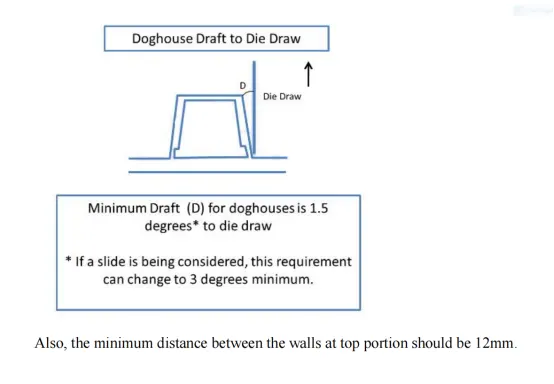
Dog house is an engineering feature used in plastic trim design. Dog houses are used as supporting feature. Sometimes other engineering features like snaps; locators etc. are mounded on them to increase their
strength. Dog houses are subjected to draft analysis to prevent breakage of the component during ejection from mould cavity. Dog house and other engineering components are built on B-surface.
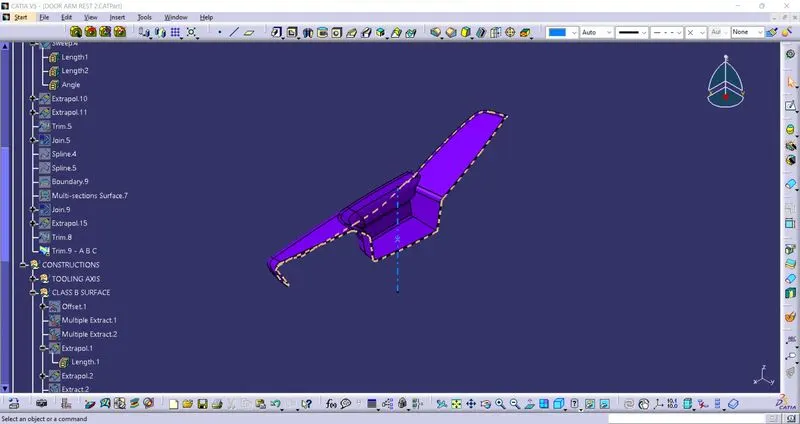
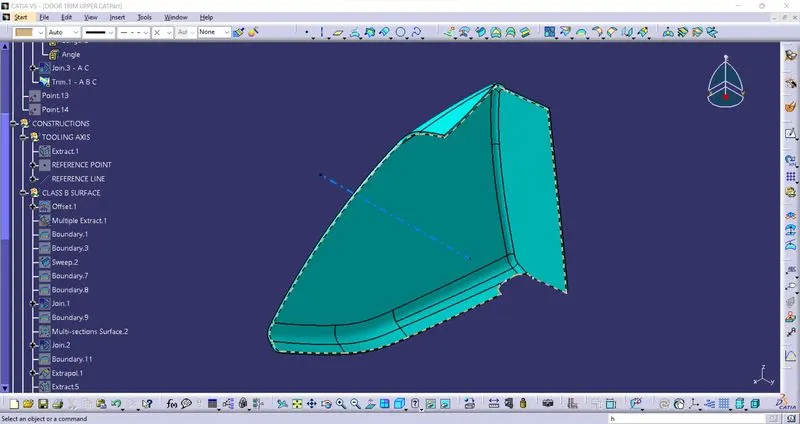
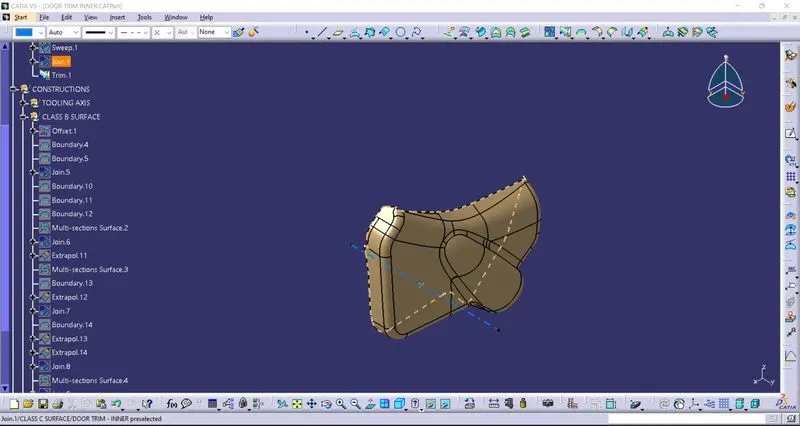
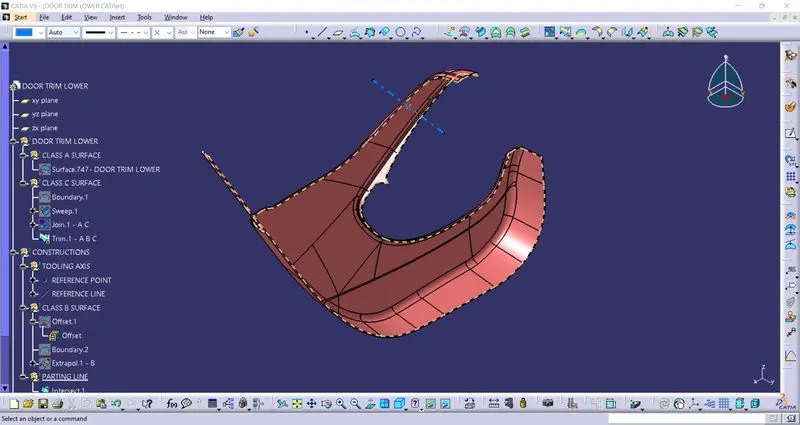
Parting line:
Parting line is a line where mold and cavity separates.
Door Trim arm Rest:
Door trim Map pocket:
Door Trim Bottle Holder:
Door Trim Lower Substrate:
Engineering features:
Door Trim arm Rest:
Door trim Map pocket:
Door Trim Bottle Holder:
Door Trim Lower Substrate:
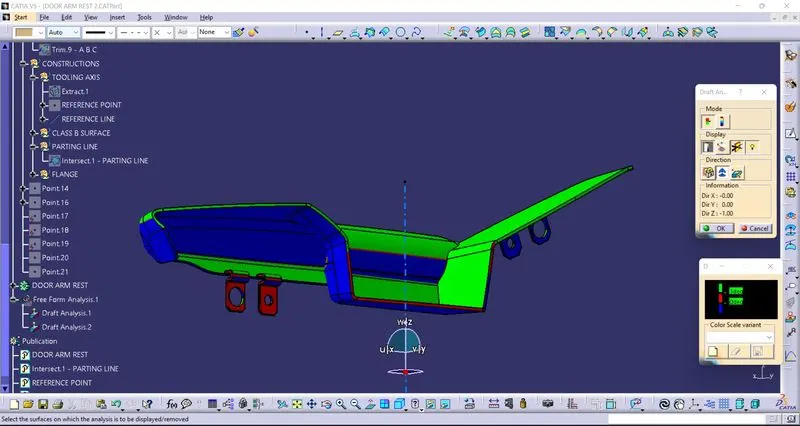
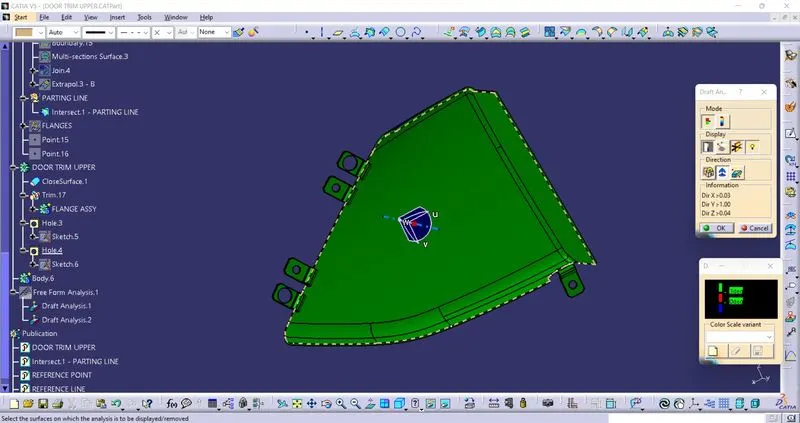
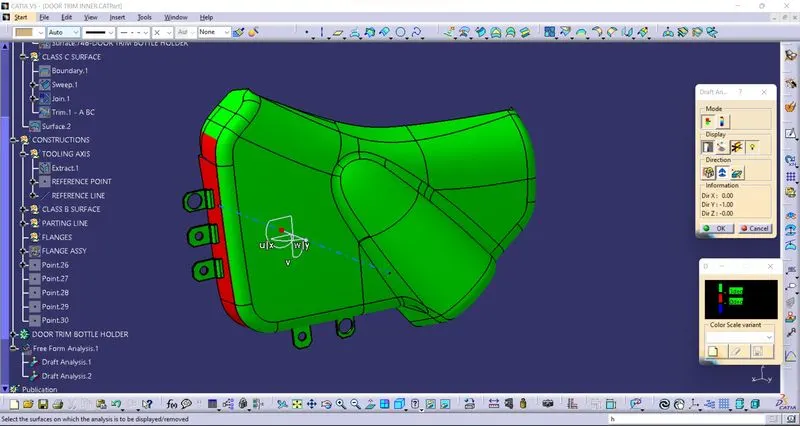
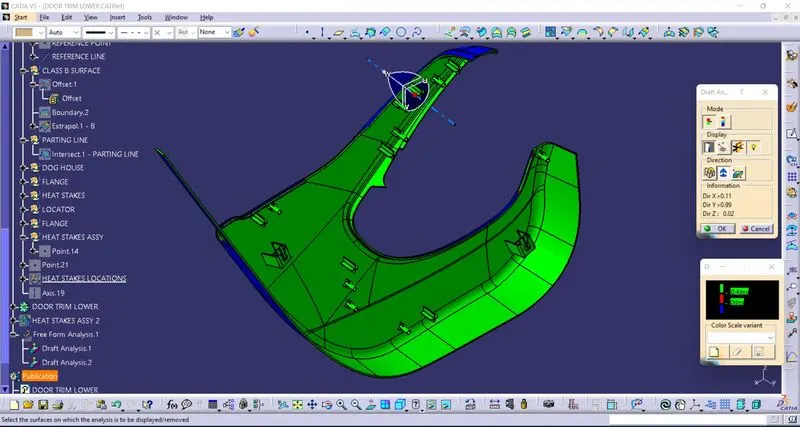
DRAFT ANALYSIS OF PART MODELS WITH ENGINEERING FEATURES:
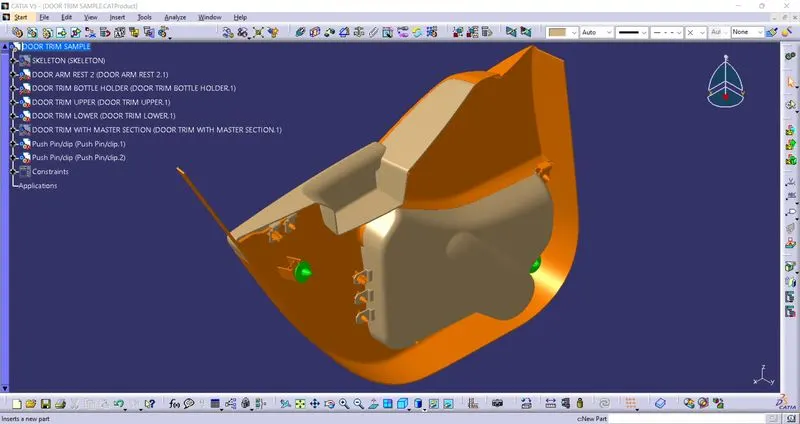
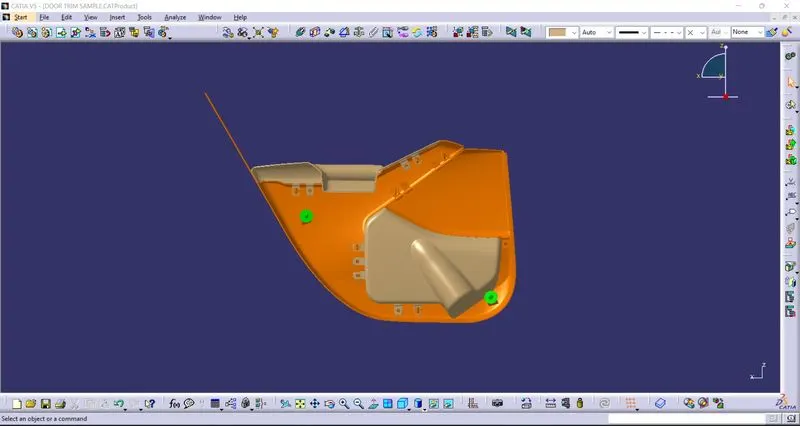
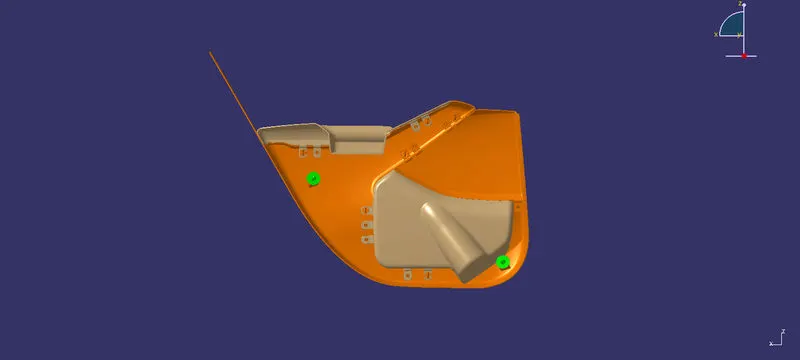
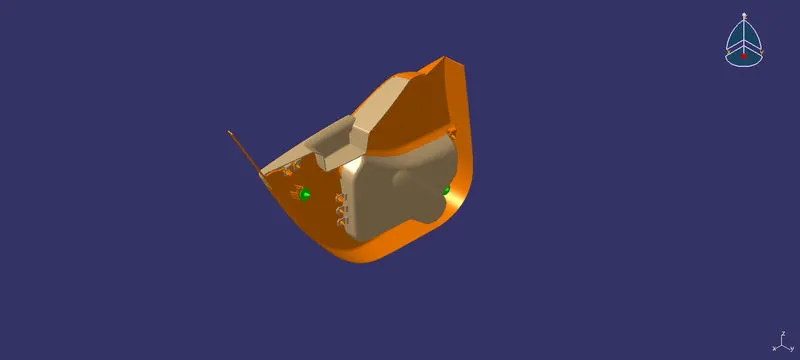
Door Trim arm Rest:
Door trim Map pocket:
Door Trim Bottle Holder:
Door Trim Lower Substrate:
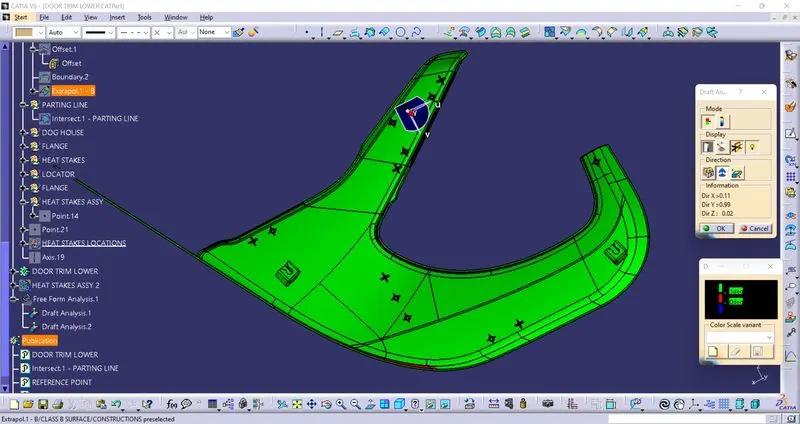
At 3 degree drafting angle,dog house are cleared in draft analysis.
Heat stakes are cleared with minimum draft angle 0.5 degree draft analysis.
Conclusion:
- Tooling axis is created separately for each class A surface and it is analysed with draft analysis feature.Class B and C surface is formed and closed surface is formed.From closed surface,Solid part model is formed.Engineering features are added and analysed with draft analysis feature.Plastic material is applied on the models.