Week 11 - Final project
AIM:
To design a Door Panel of an Automotive
- To create an assembly and organize different surfaces of the given class A surface into different parts of the door trim panel. To create a tooling axis and perform a draft analysis on the class A surface of each part.
To create class B, class C surface, and close surface for each part.
- To perform draft analysis on the close body of each part.
- To create engineering features (Heat stakes, Locators, Dog House) to join the parts of the door trim panel together.
- To assemble push pins to the door panel.
INTRODUCTION:
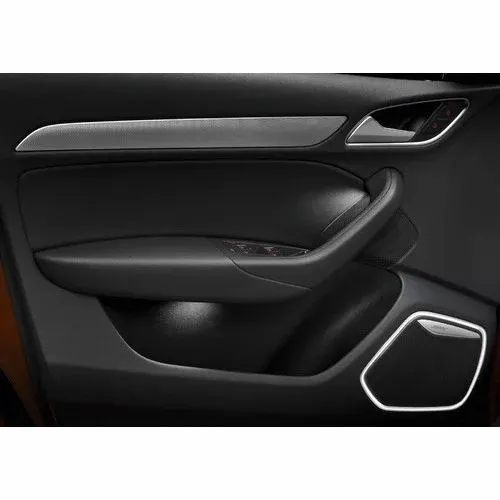
A door panel, also known as a door card, is an insert that covers the interior components of a vehicle's door. Modern cars often have door cards that are constructed of plastic and incorporate other decorative elements, with injetion molding being the most common method. Other features that add to the vehicle's aesthetic, functionality, and ergonomics are usually included in the door panel. Armrests, switches, or other controls for the windows and locking mechanism, convenience lights, speakers, storage compartments, and other features are examples of this.
Material Used For Production Of Door Panel:
The Interior Part Of The Door Assembly Generally Manufactured By
- Polypropylene (Pyp)
- Acrylonitrile Butadiene Styrene (Abs)
- Polyvinyl Chloride (Pvc)
- Polyphenylene Ether (PPE)
Major Components Of Door Trim:
These Are The Components Which We Work On This Project-
- Lower Substrate
- Door Armrest
- Bottle Holder
- Map Pockets
Task To Perform On This Project:
- Creation Of Tooling Axis
- Creation Of Class A, B, And C Surface
- Creation Of Closed Surface Of All The Components
- Creation Of B Side Features
- To Perform Draft Analysis
Lets create each part step by step.
LOWER SUBSTATES:
Creating the Tooling Axis
It Is The Direction In Which The Core And Cavity Move. We Will Required Multiple Tooling Axis For Each Component . We Will Also Work On The Side Core Axis.
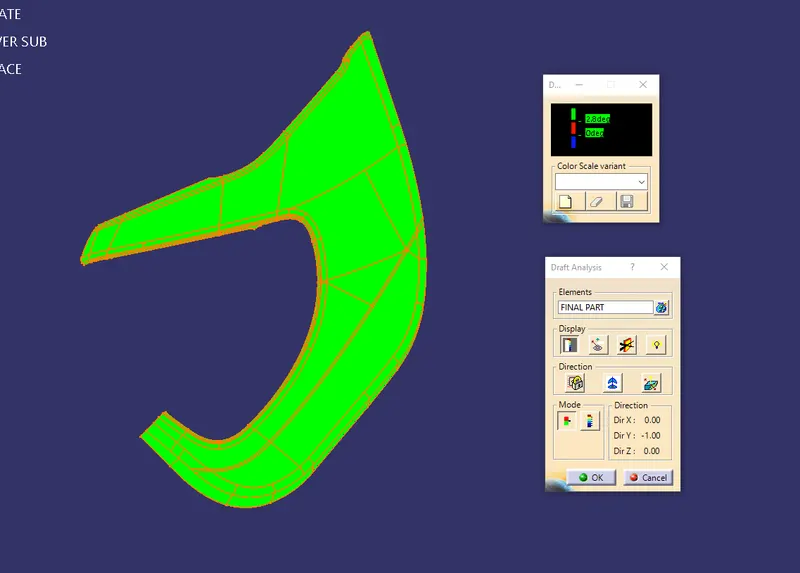
We Will Create A Tooling Axis For The All The Components.For Clearing The Tooling Axis For Door Arm Rest We Hav To Use The Compass And Lock The Oreatnaton Where The Tooling Axis Show The All Green In The Draft Analysis Under The 3 Degree Angle. As For The Lower Substrate And Map Pocket, We Will Directly Go For The Natural Tooling Axis Y-Direction.
CLASS B SURFACE
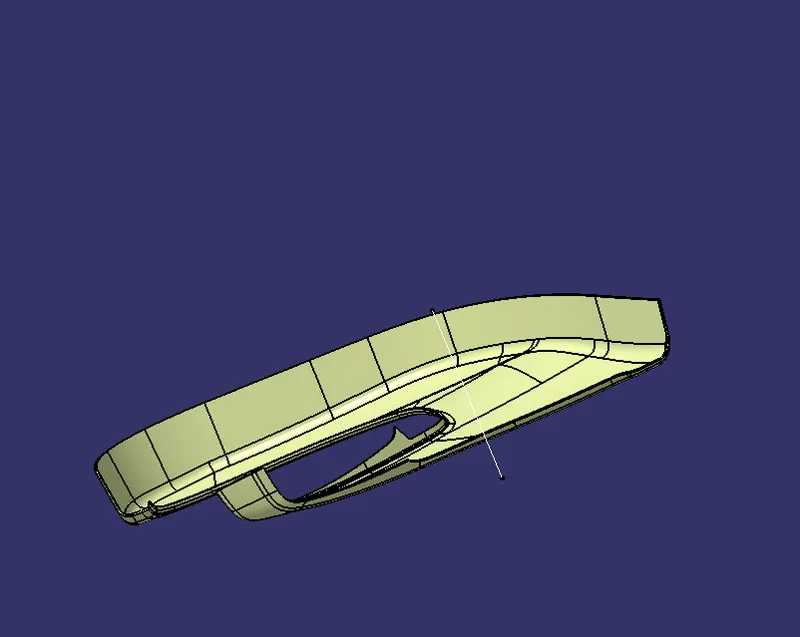
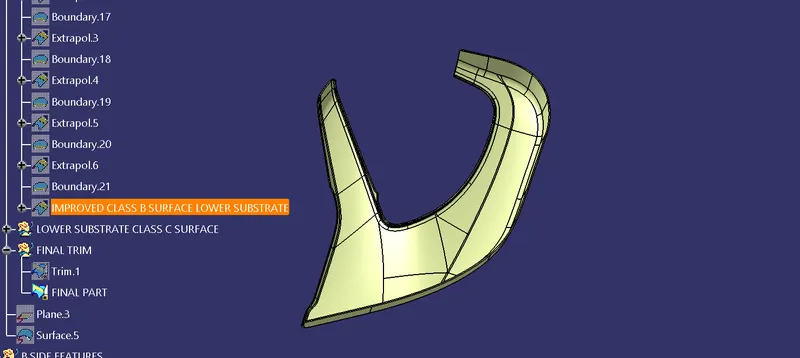
Class B Is Generally At The Backside Of The Class A Surface And It Is The Offset Part Of The Class A Surface and extrapolated edges of the B surface for use to trim with C surface.
CLASS C SURFACE
Create boundary from the A surface of Lower substates.
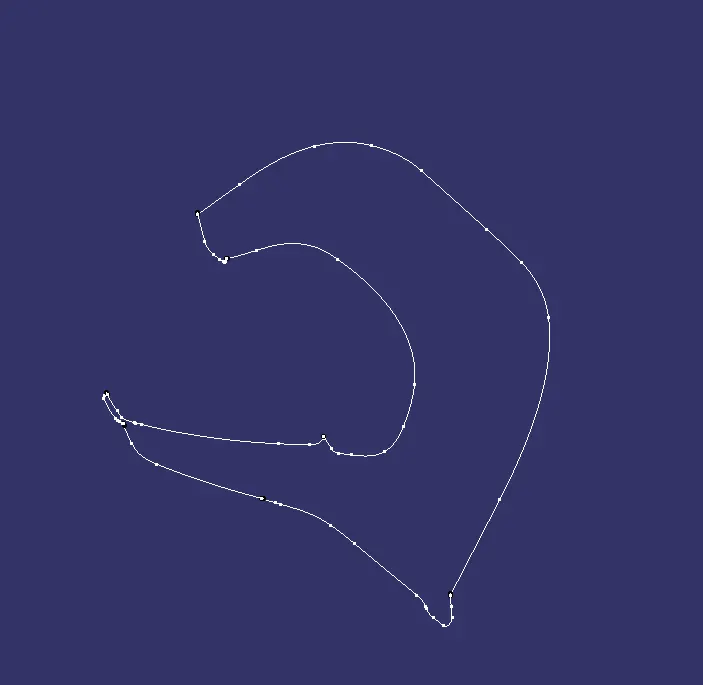
Create sweep from the created boundary of A Surface in angles of 3 degree ad 90 degree based on the surfaces.
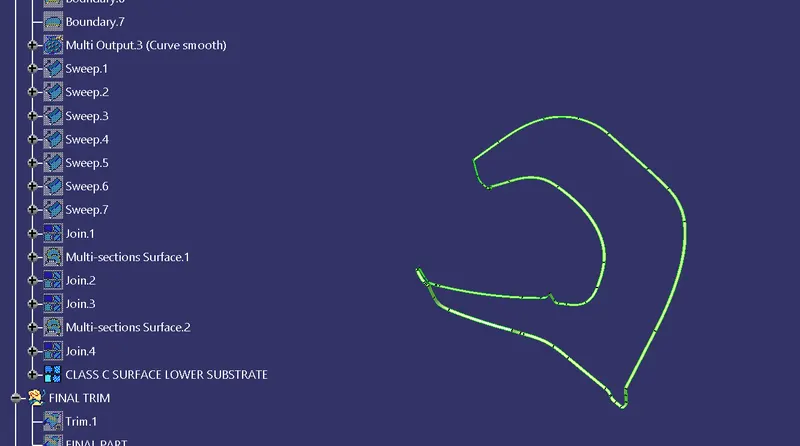
After the creation of C surfaces trim with A surface.
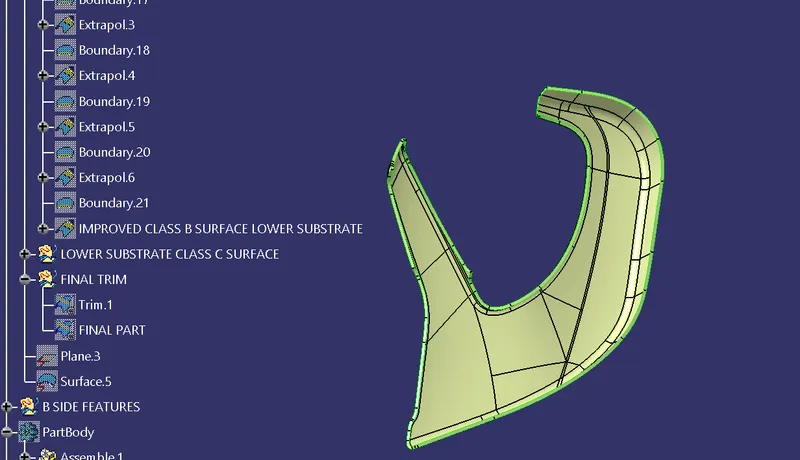
Finally, in the lower substrates, trim A and C surfaces with extrapolated B surface.
MAP POCKET
Given Class A surface
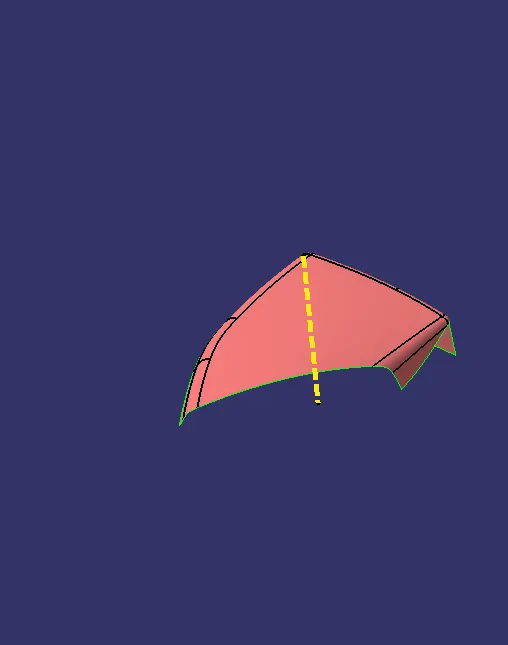
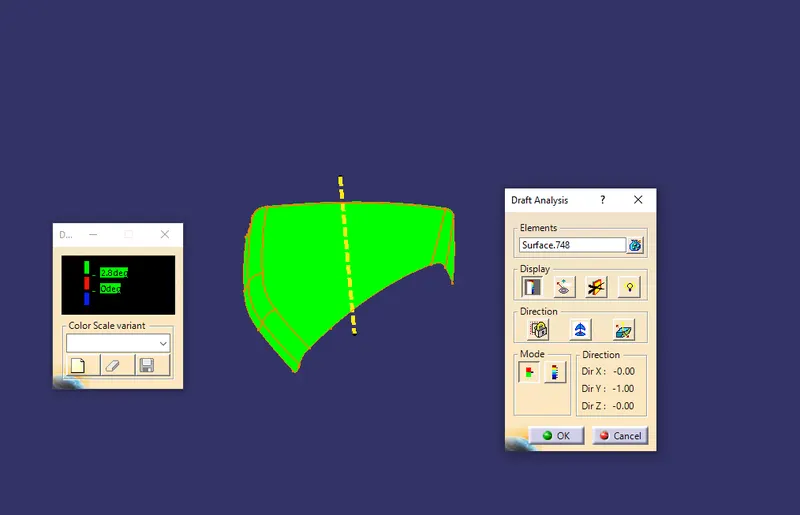
Draft Analysis for Given A surface Map pocket.
CLASS B SURFACE
Similarly, Offset 2.5mm from the A surface to create B surface.
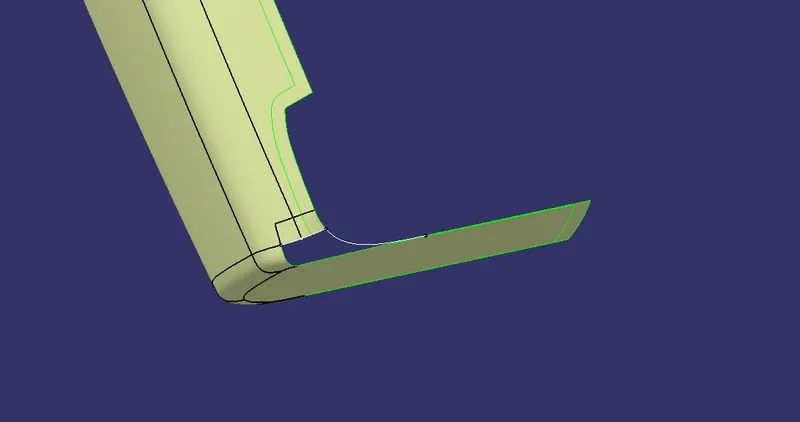
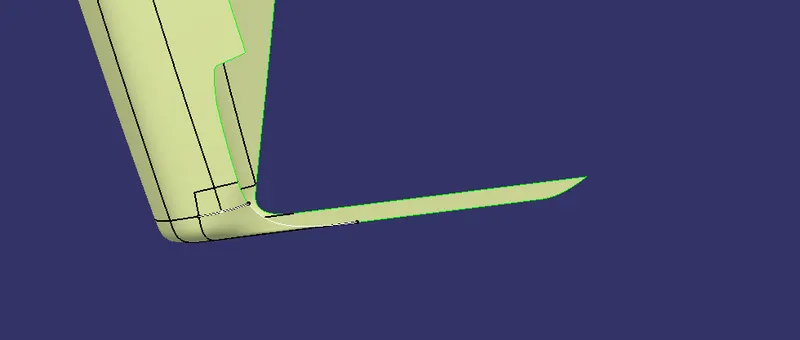
In the B surface, some patches are formed and have to solve the patches like below in the pictures.
CLASS C SURFACE
Similarly, take the boundary from the edge of the A surface between sharp edges.
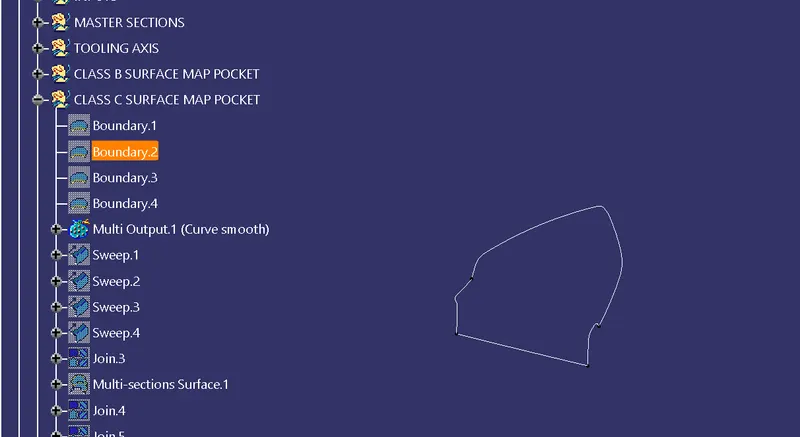
Create sweep from the taken boundary in 90 degrees and 3 degrees depends on the edges.
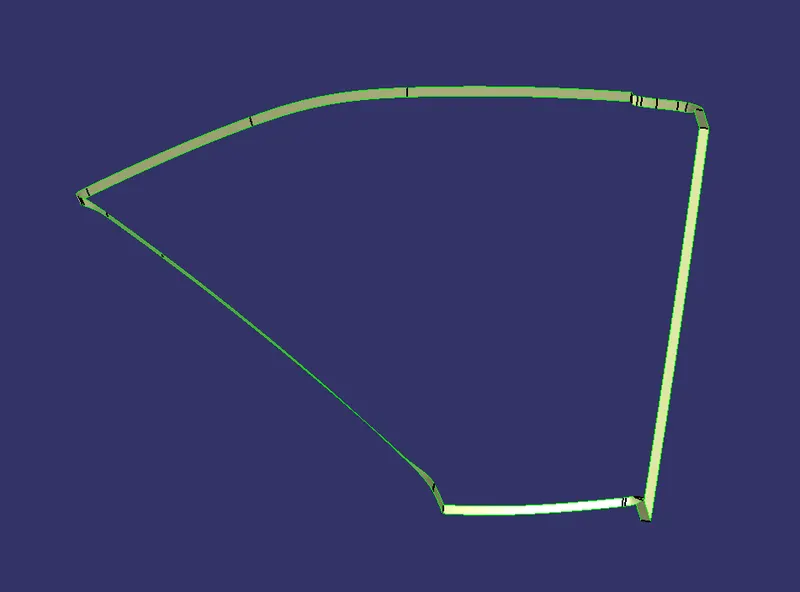
JOIN A and C SURFACE:
Trimmed the A Surface and C Surface.
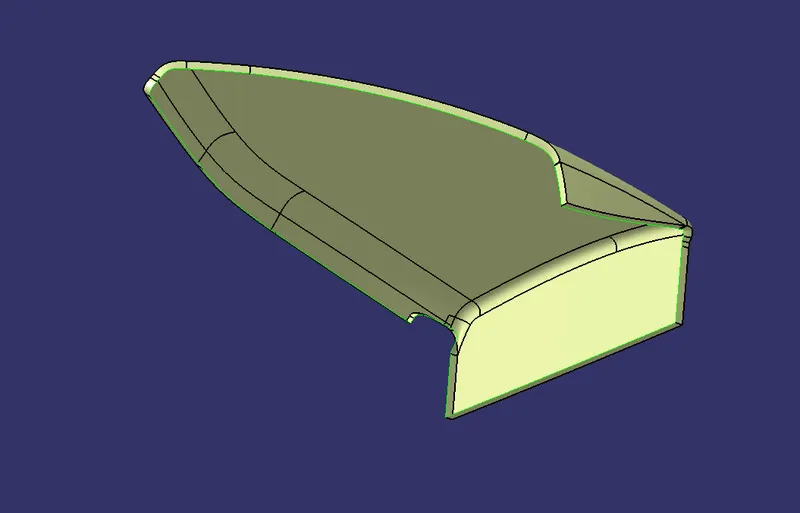
Final part
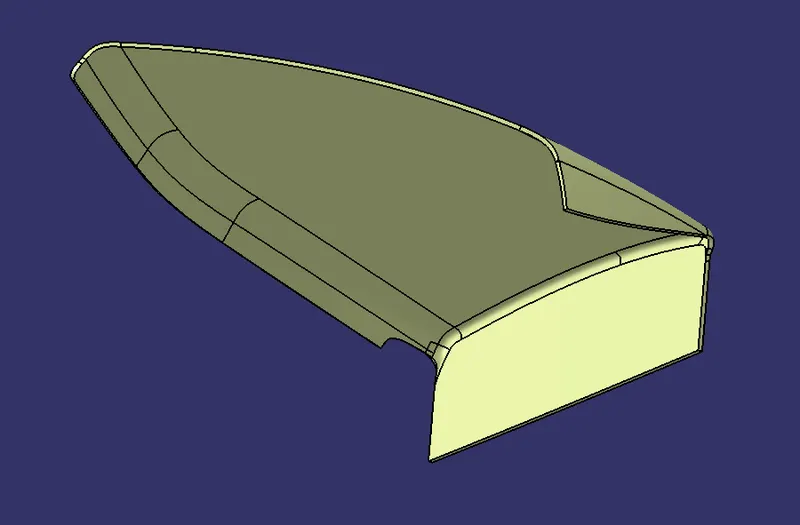
BOTTLE HOLDER
The given A surface of Bottle Holder.
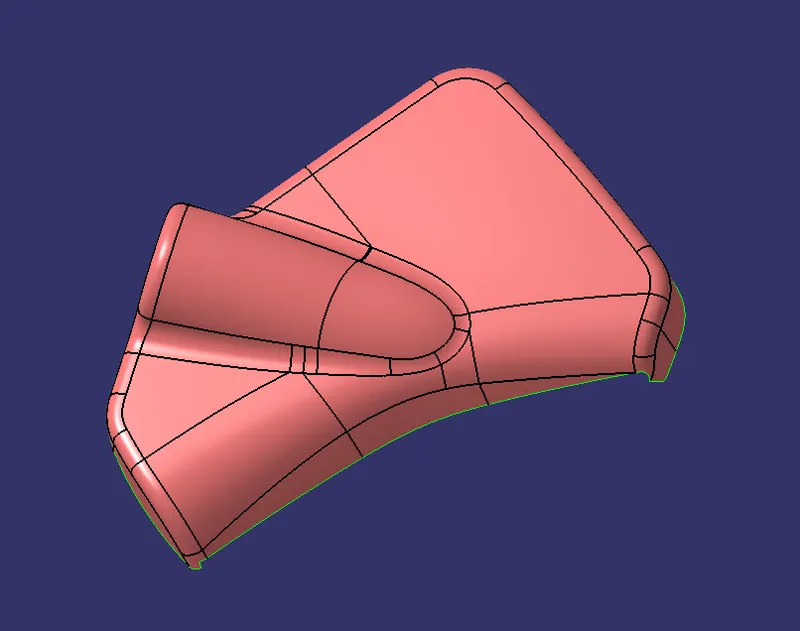
CLASS B SURFACE
Offset the A Surface 2.5mm to create B Surface, if any patches are form have solved the discontinuities.
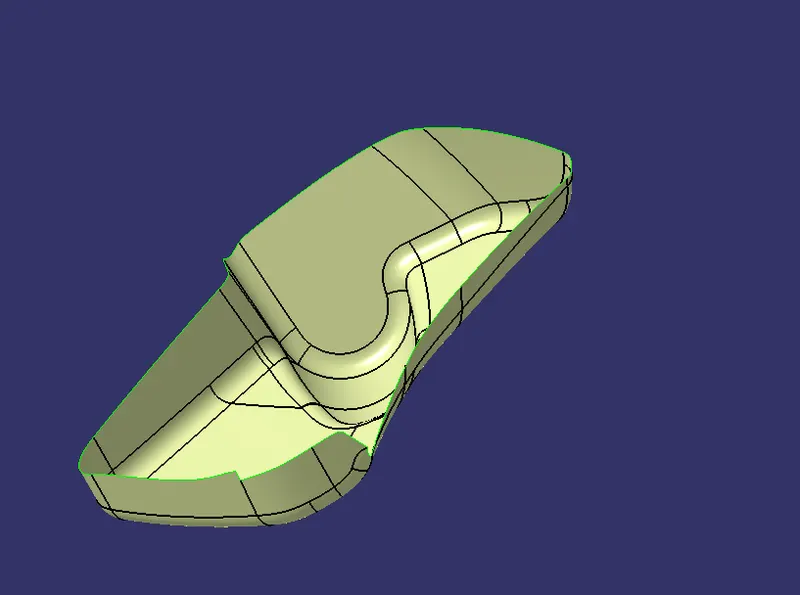
CLASS C SURFACE
As it is in the previous component, have to create boundary from the A surface.
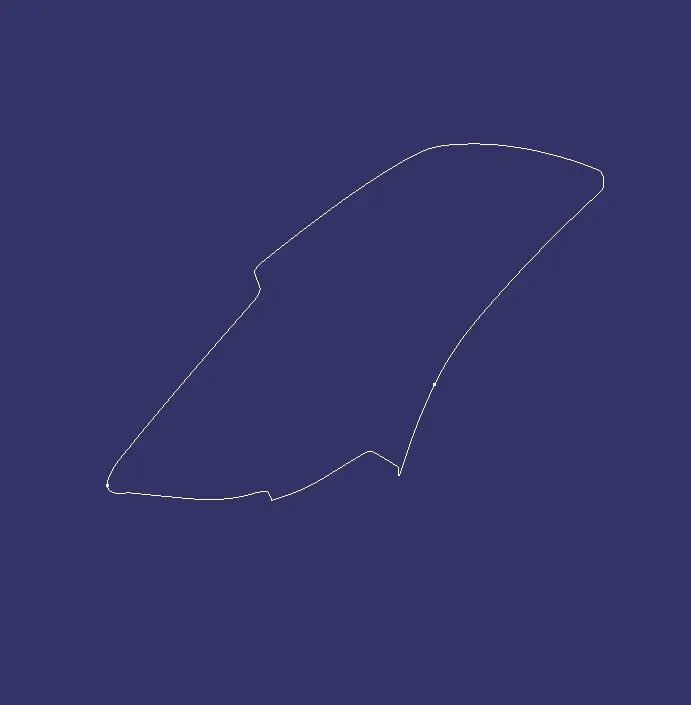
Create sweep from the boundary with respect to the surface at the same angles.
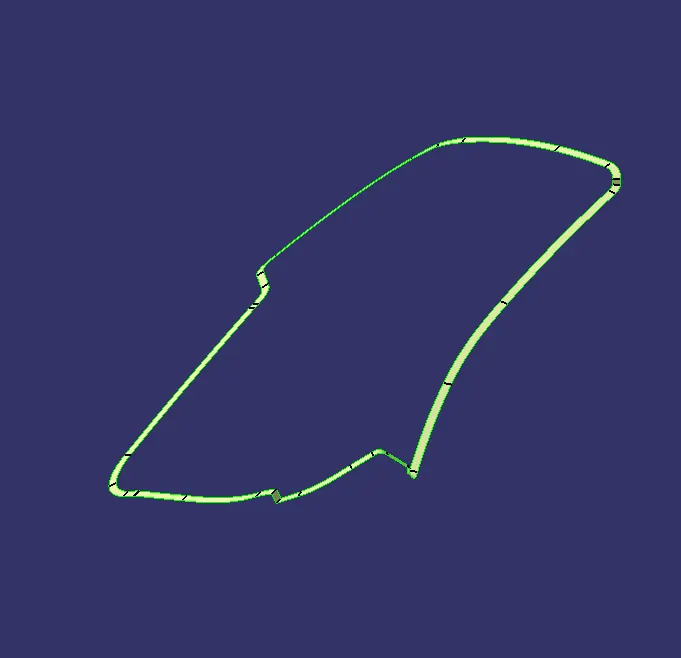
Trimmed the C surface with given A surface
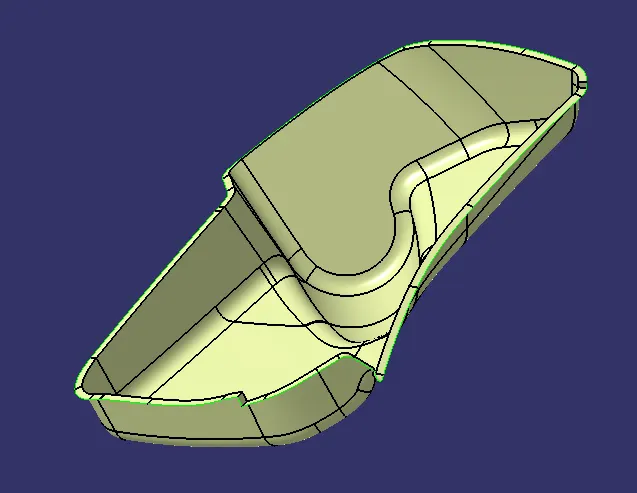
Finally in the bottle holder, trim the B surface with trimmed A and C surfaces.
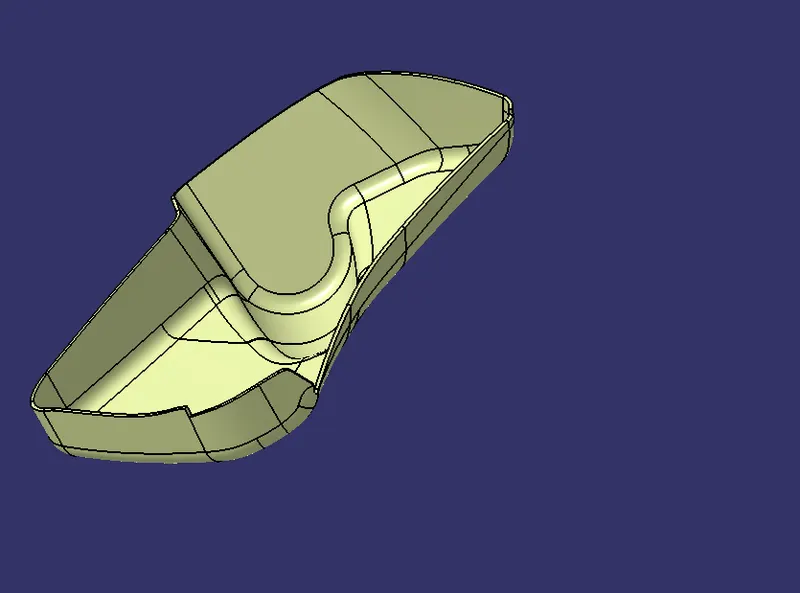
DOOR ARMREST
Given A surface of Door armrest component and creation Tooling axis and Slider axis with respect to appointing and direction.
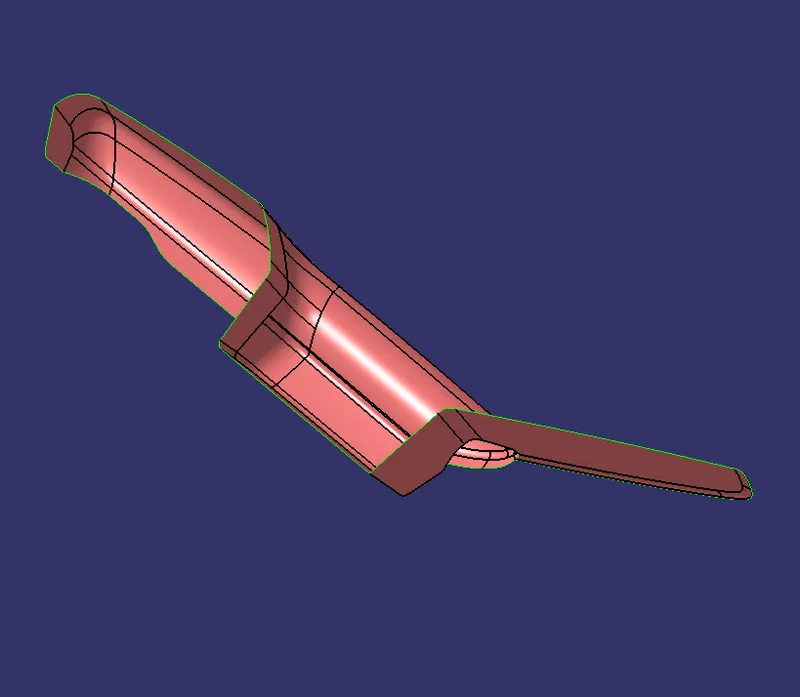
CLASS B SURFACE:
Offset the A surface to create the B surface
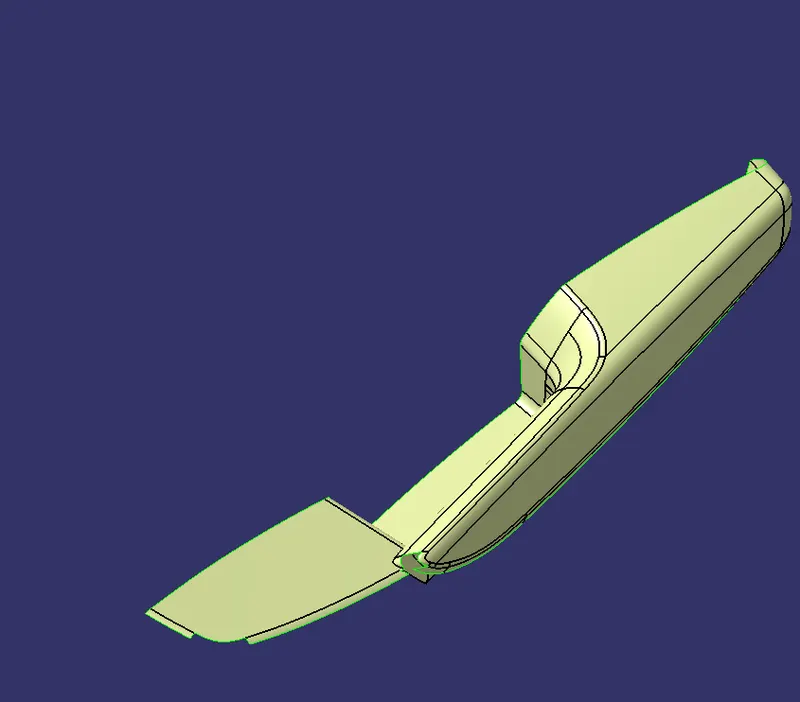
IMPROVED CLASS B
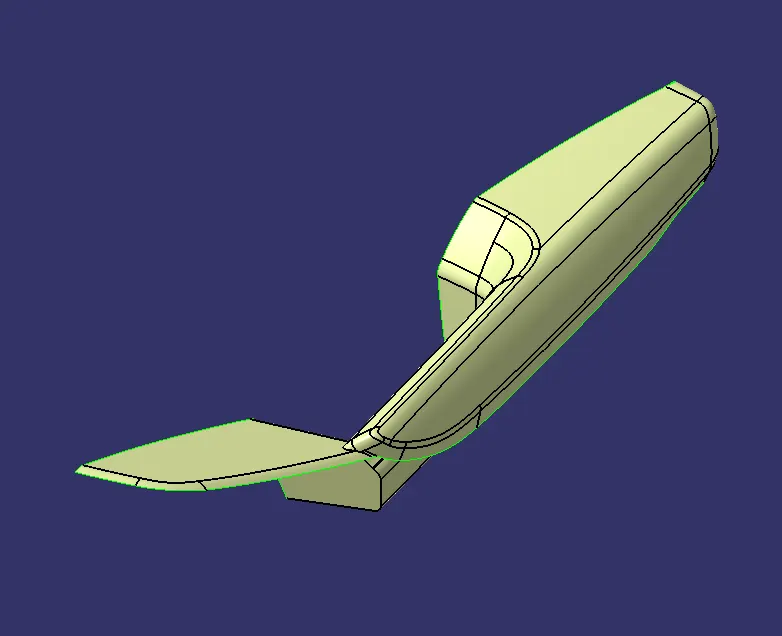
CLASS C SURFACE:
Take boundary from the A surface as possible edges without more curvature surfaces.
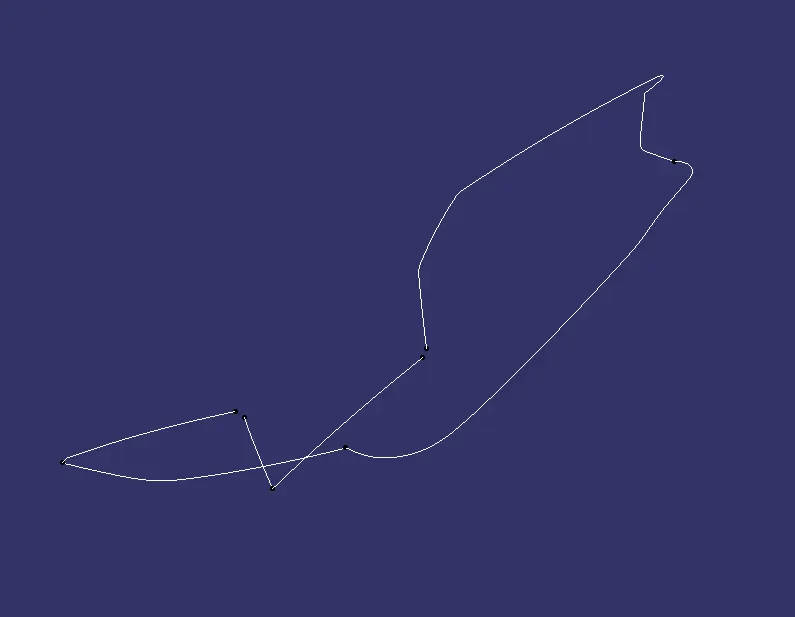
Sweep the boundary with respect to A surface and remaining portion have to create multi section in the curvature with help of spline in tangency.
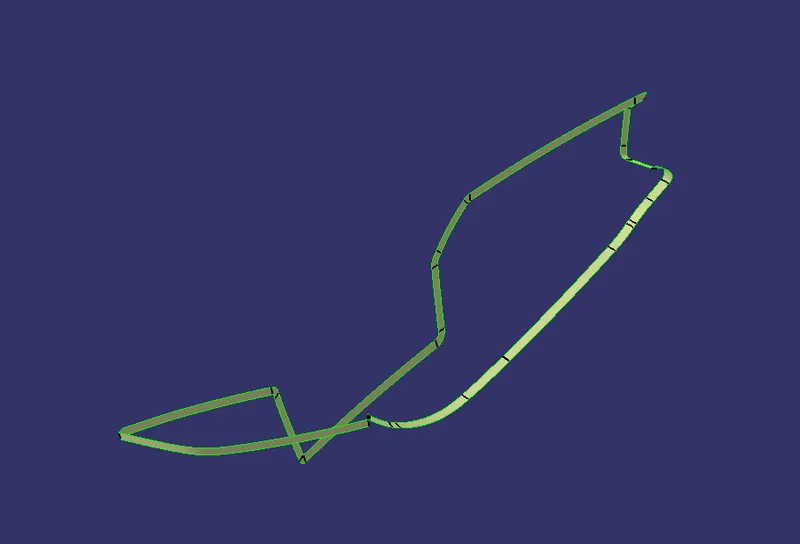
Trim A surface and C surface
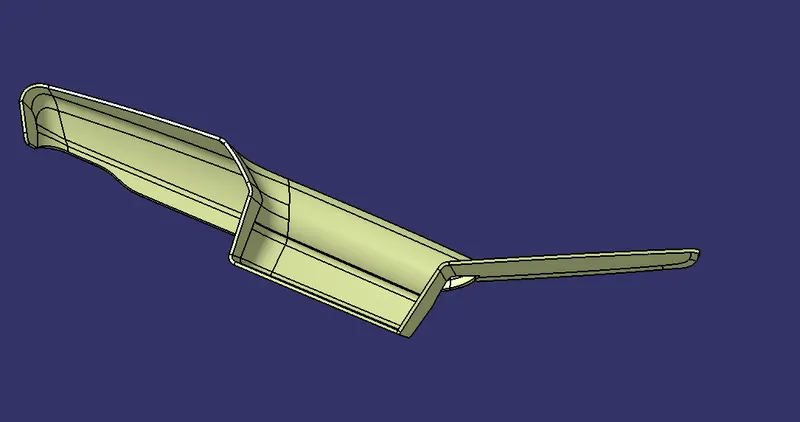
CREATION OF FLANGE:
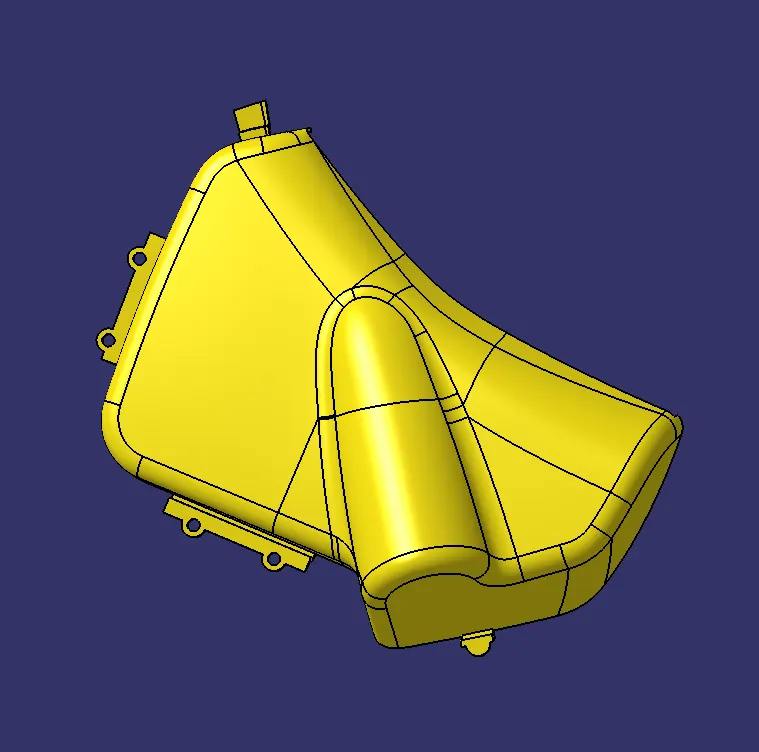
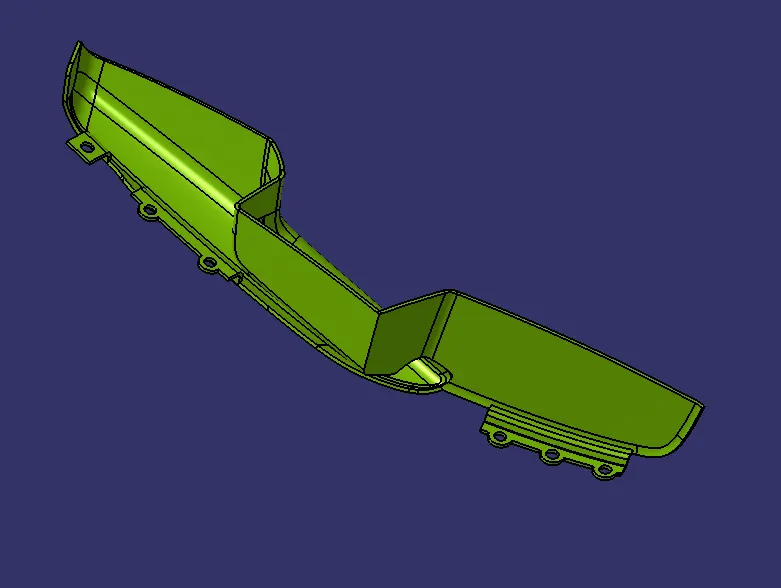
Flange is created With reference to given master section have to create flanges in the Door armrest and Map pocket
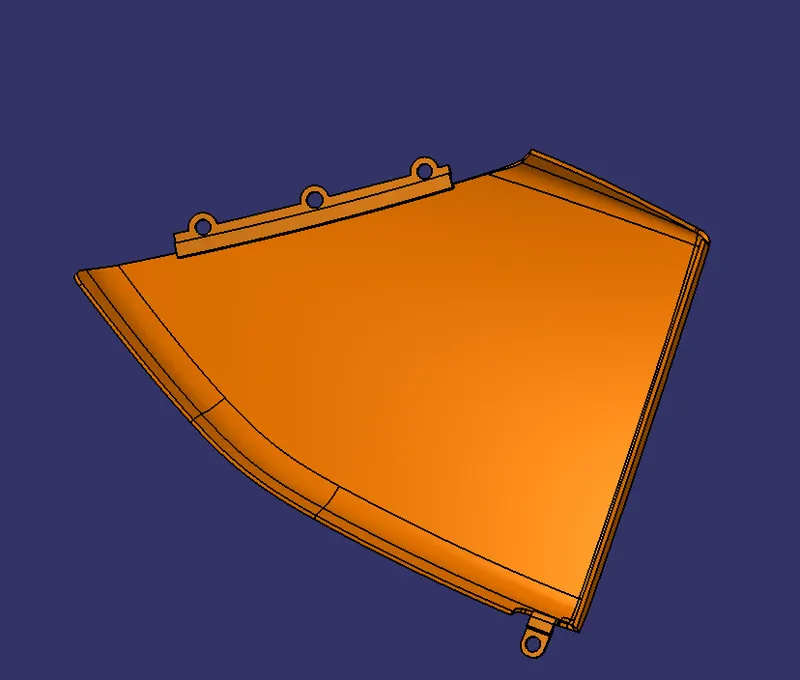
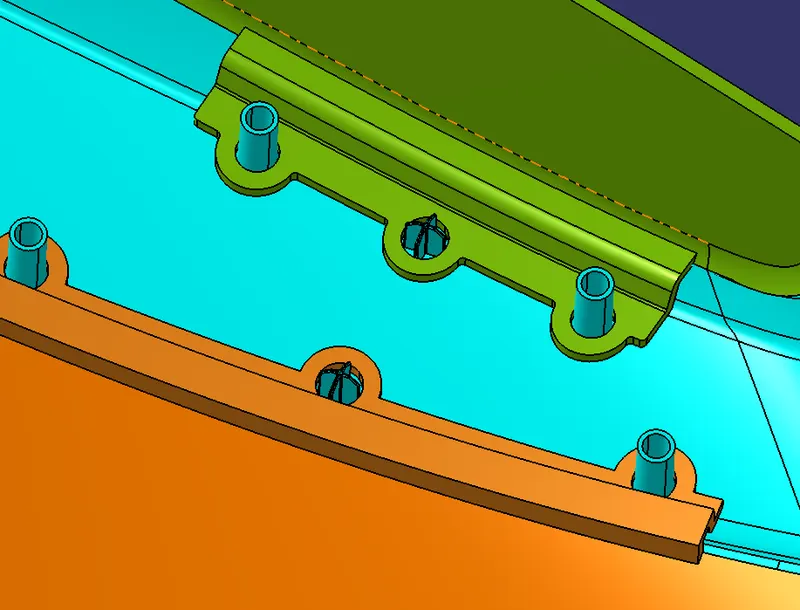
HEATSTAKES
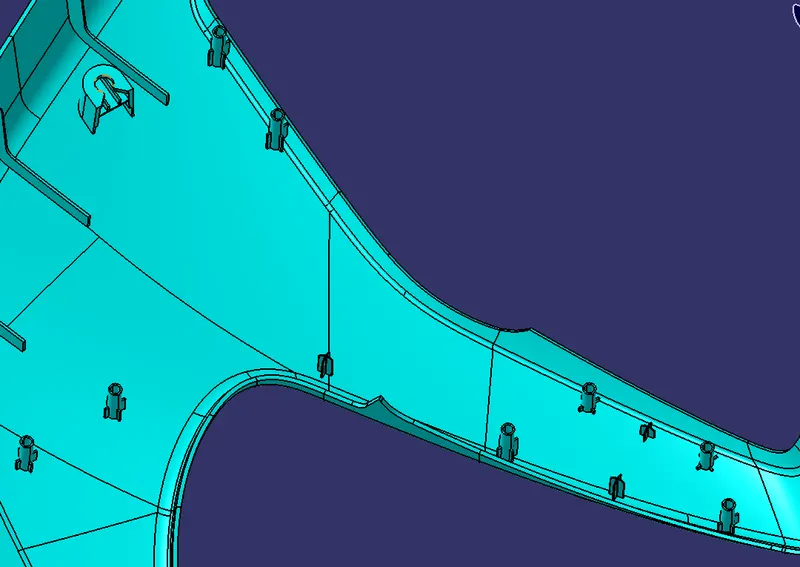
Heat staking is a pulsed–heat process to join two or more parts out of which one at least is made of plastic. The plastic is to deform the plastic material using the heat and foam at a set process time. The bond is made by partially deforming the plastic part in order to fix the other. Heat stakes make it easy to bond metal to plastic and is commonly used in high volume and low-cost application such as Automotive, IT, and consumer appliances. Here we should give ribs for the heat stakes to increase the strength of the heat stakes.
LOCATORS
4 WAY LOCATORS:
- To create 4 Way locators, the ribs should be created intersecting with each other.
- Open the Sketcher Workbench and Draw 2 lines intersecting each other and constrain it.
- Exit the Sketcher Workbench and Pad the Sketch with a thickness of 1.2 mm.
- Now, provide a draft of 0.5 degrees to the faces. Here the pulling direction is the tooling axis and the neutral face is the top face.
- Provide the chamfer of 3*45 to the edges of the locators.
- For the 2-way locators, only a single line needs to be created and the rest procedure is the same as 4-way locators.
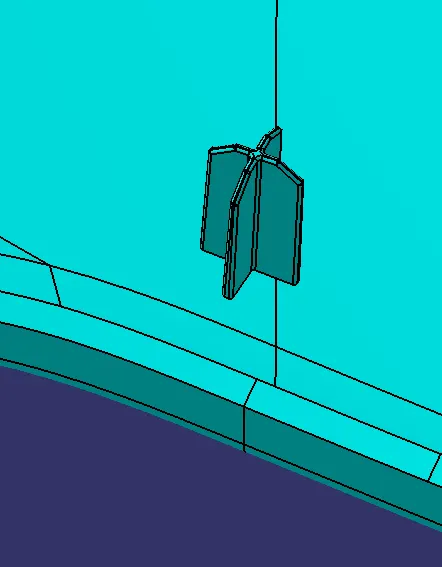
we created the heatstakes in which required positon by using principle of degree of freedom along with flanges in the door trim assembly.
DOG HOUSE
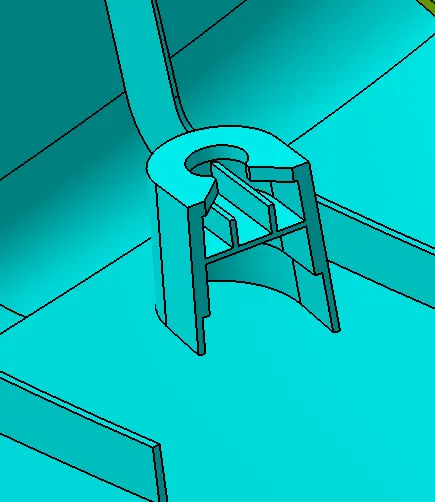
Dog house is an engineering feature used in plastic trim design. Dog houses are used as supporting feature. Sometimes other engineering features like snaps; locators etc. are mounded on them to increase their strength. Dog houses are subjected to draft analysis to prevent breakage of the component during ejection from mould cavity. Dog house and other engineering components are built on B-surface
Design Rules.
-
Doghouse wall thickness at the intersection of the part wall ( C ) should be 40% or less than the main wall stock ( T ).
-
Height of ( B ) should be between 3.0 – 6.0 mm
RIBS
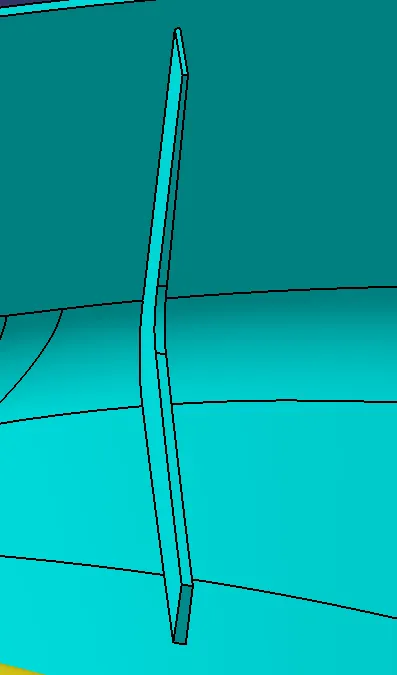
These Are The Components Which Provide Strength And Stiffness Without Using Overall Thickness. They Are The Feature In Plastic Injection Molded Parts.
Design rules for ribs
let's consider Nominal Wall thickness is T
The thickness of the rib - 0.3T to 0.7T
Height of the rib - less than 5T
Space between two ribs - more than 4T
Fillet radius of rib- T/8 or 0.25mm max
A draft angle of rib - 0.5 degree
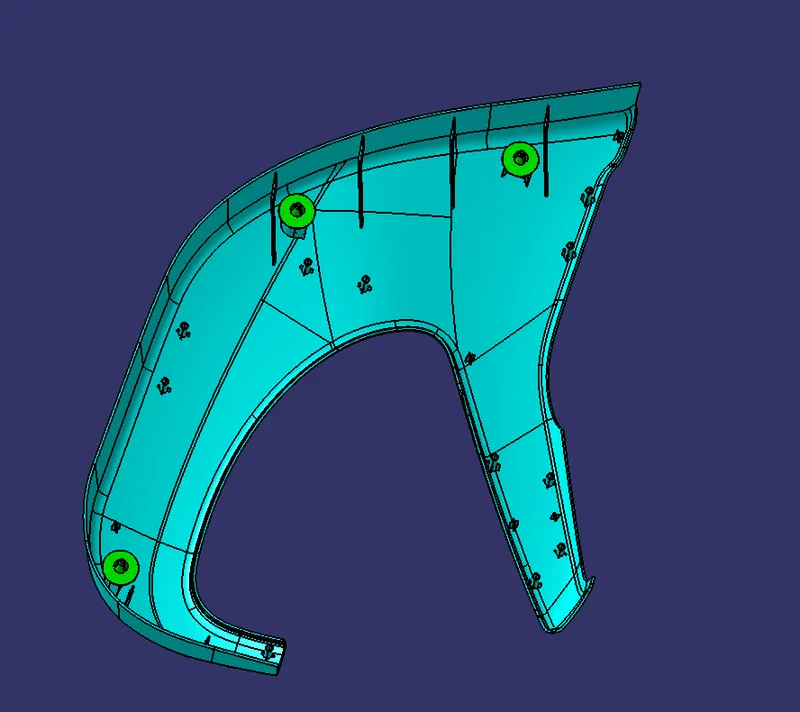
FINAL LOWER SUBSTATES WITH ENGINEERING FEATURES:
FINAL MAP POCKET:
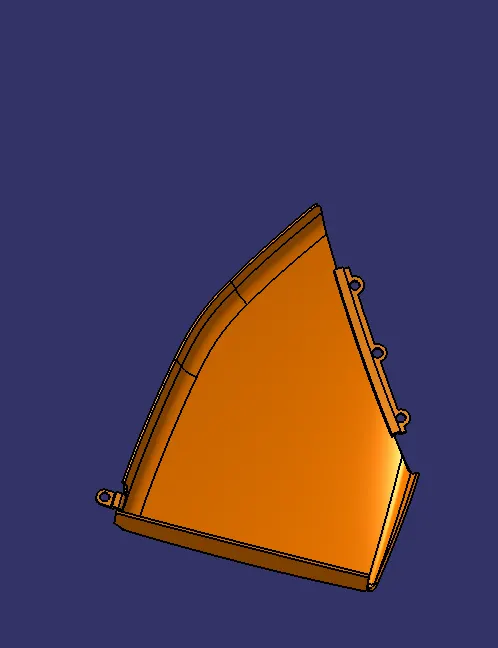
FINAL BOTTLE HOLDER:
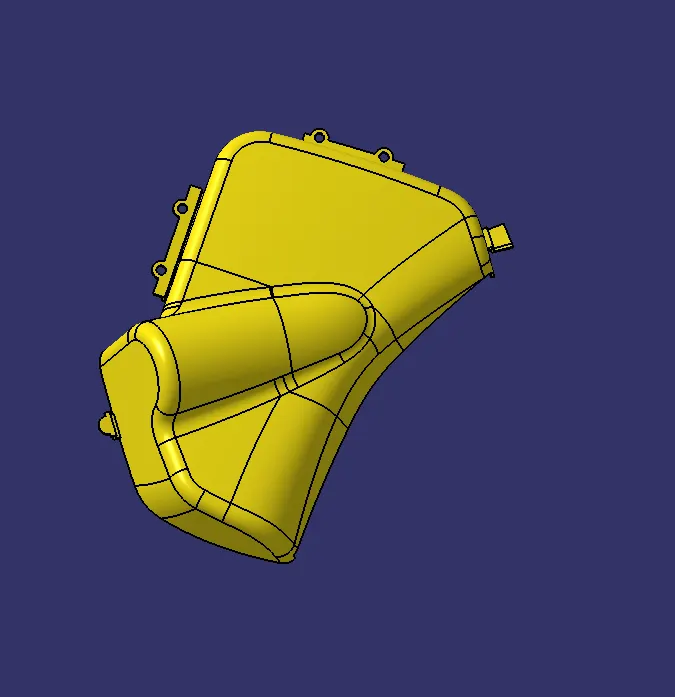
FINAL DOOR ARM REST:
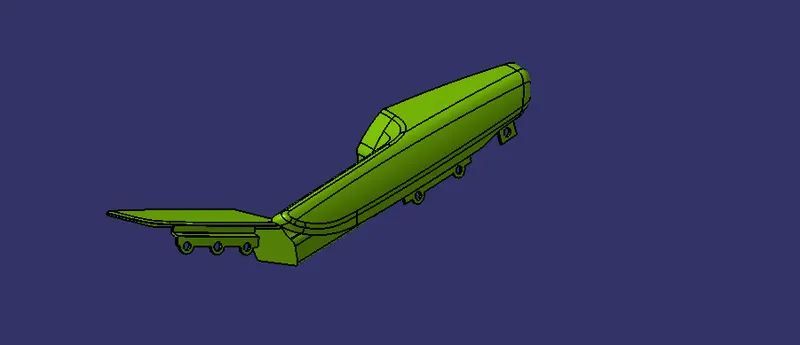
DOOR TRIM ASSEMBLY
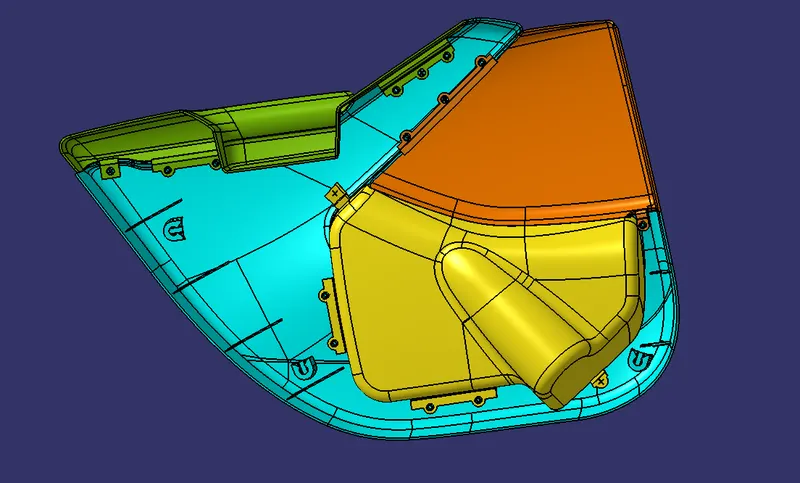
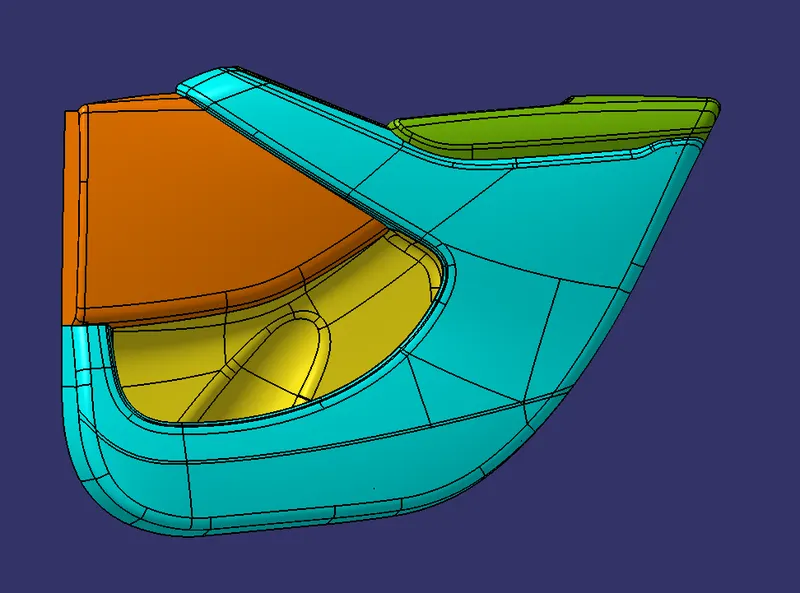
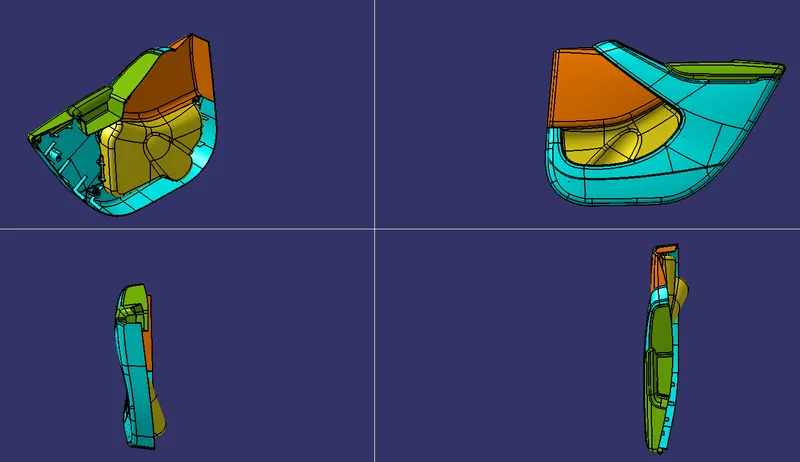
ISOMETRIC VIEW OF DOOR TRIM
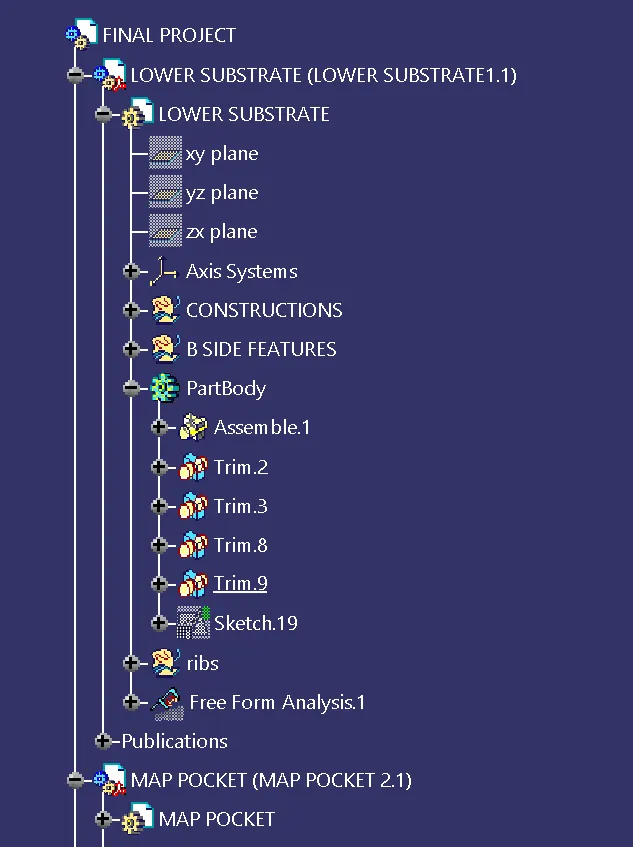
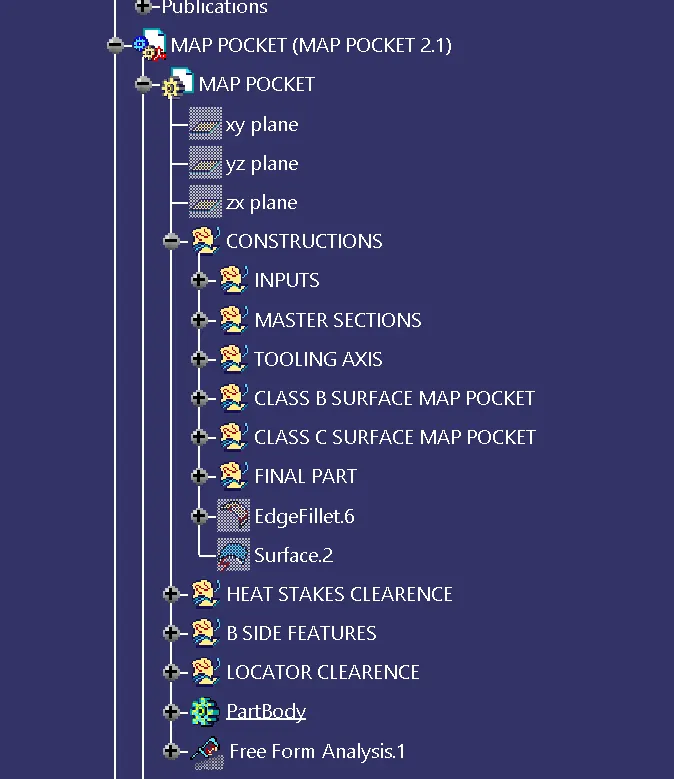
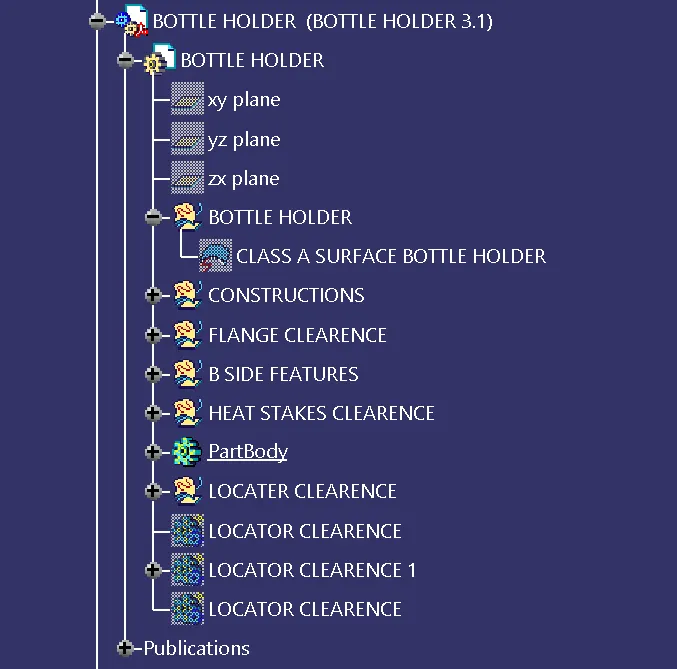
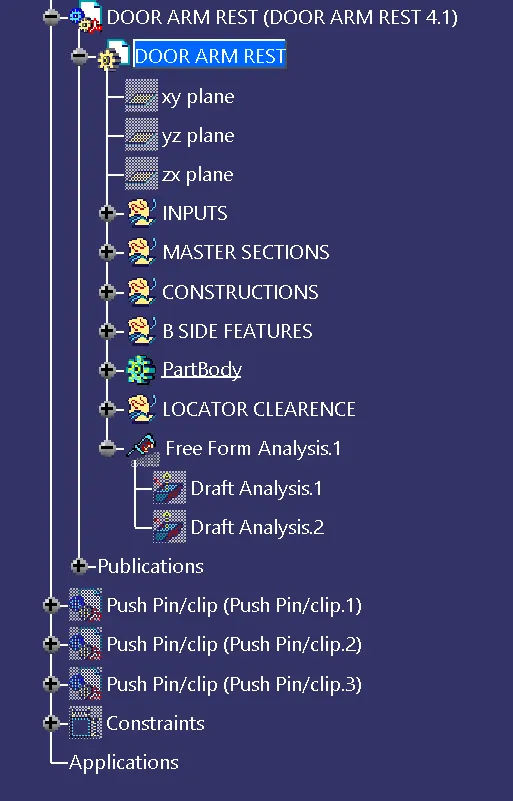
TREE STRUCTURES:
CONCLUSION
The creation of the car interior door trim is designed using the given class A surface as the input and Class B and C surfaces are created with the help of the Class A surface. By using the given master section attachment features I.e. Heat stakes, Flanges, Dog House, and Push Clips are created using the design rules. The draft analysis has been performed to analyze the draft of the component to manufacture easily applying draft to the surface by 3 degrees and 0.5 degrees to the attachment features. With all data and reports, we can conclude that draft analysis is very important to design any plastic component to mold the plastic easily. The analysis will verify that all surfaces are favorable for being pulled from a cavity. It may also highlight or give insight into defective areas.