Week 11 - Final project
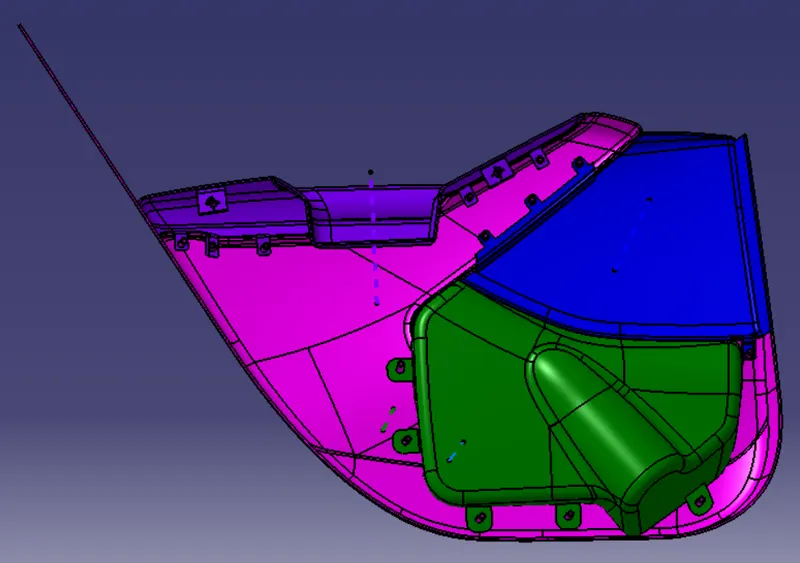
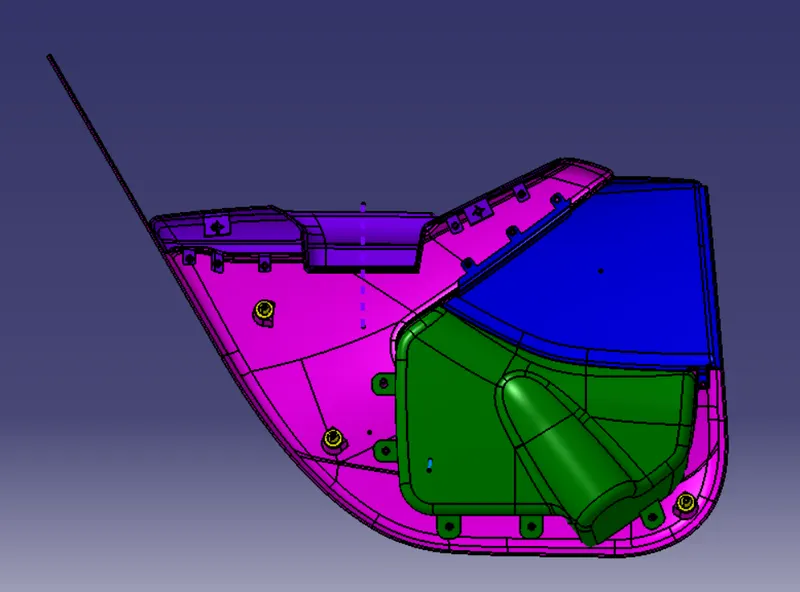
Design and Development of Vehicle Interior Car Trim using CATIA V5 with given Class-A surface along with MasterSection. Side Attachment Features are designed along with it.
Door Trim. An interior component is attached to the inner side of the door. This product does more than merely improve the appearance of the vehicle’s interior. Rather, it is a vital module component that creates a more comfortable interior by providing a variety of accouterments and functions.
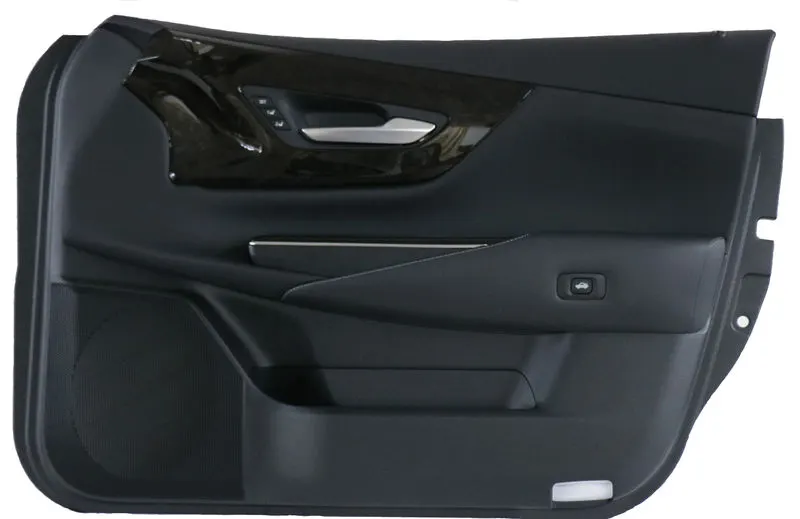
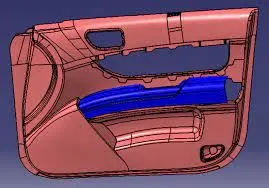
Door panels serve as an interface between the interior of the car and the inner workings of the door, and between vehicle occupants and the door. The door Panel is divided into different sections.
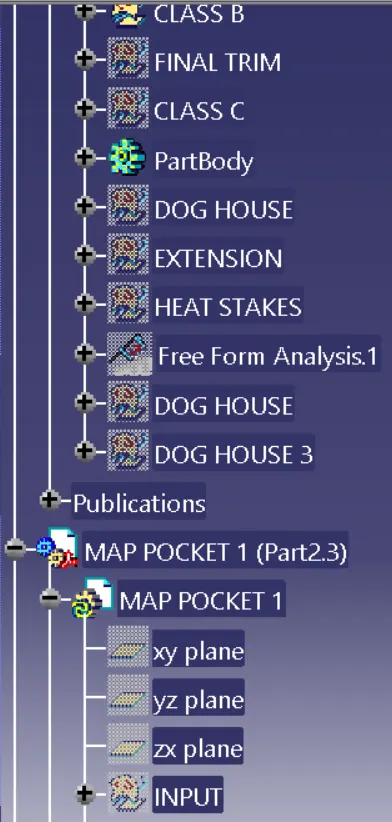
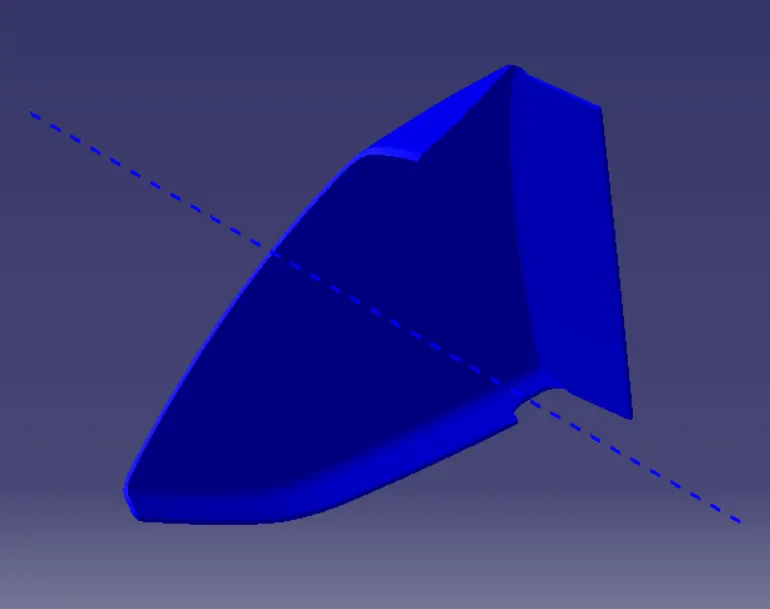
Map Pocket 1
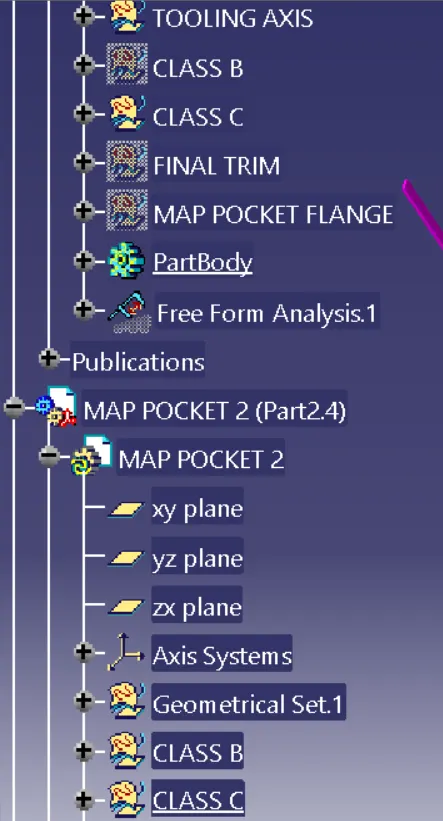
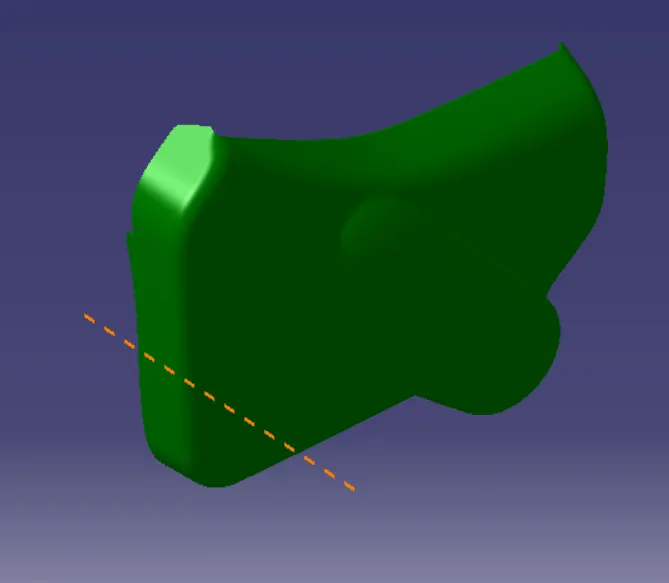
Map pocket 2
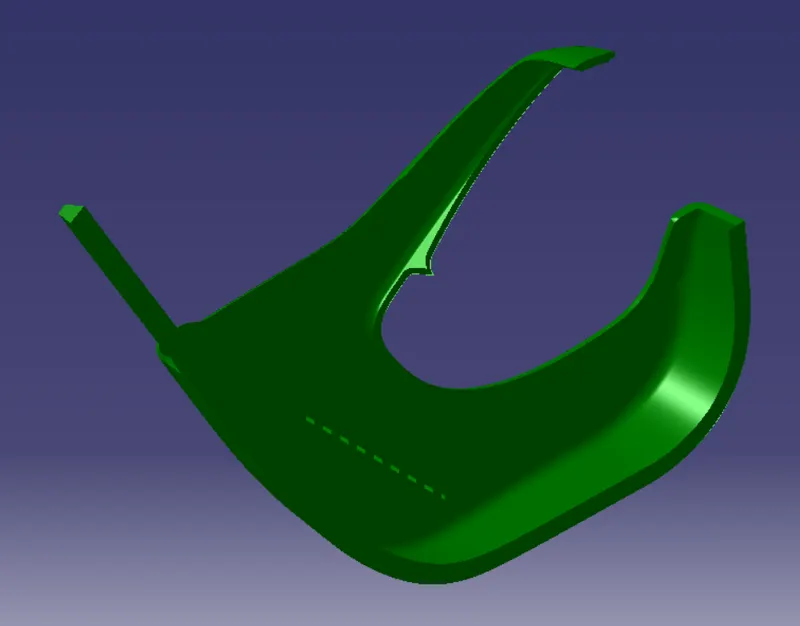
Lower Substrate
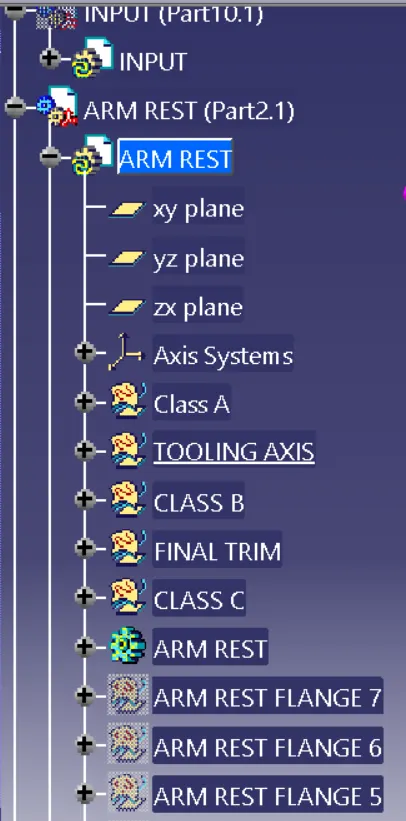
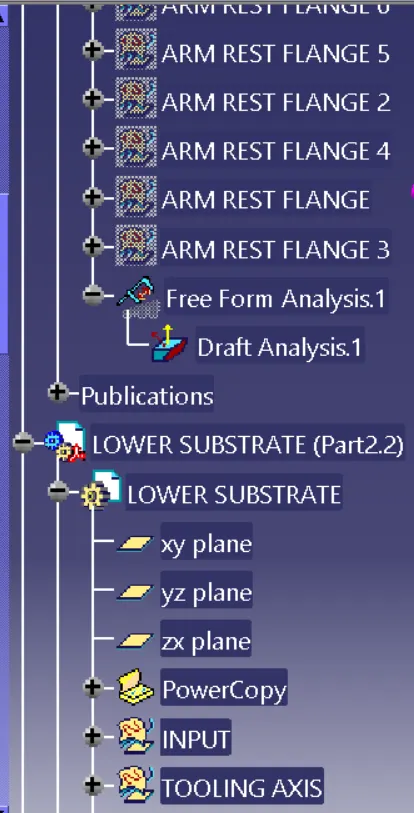
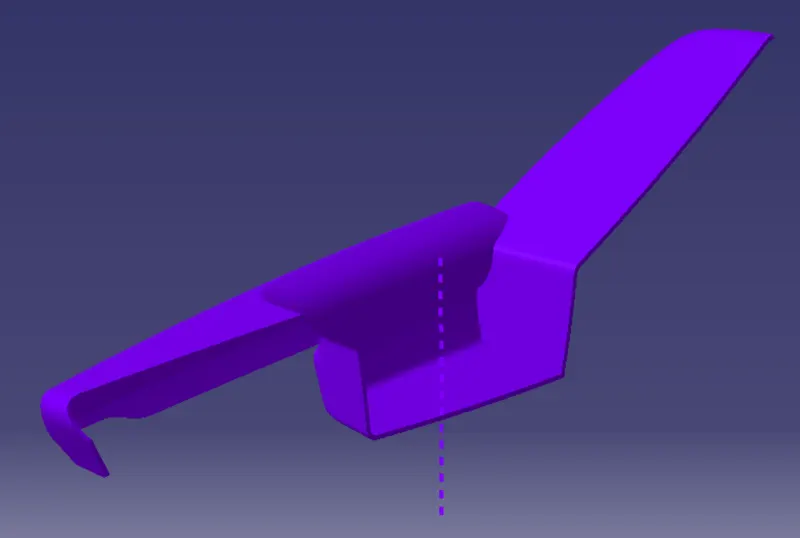
Arm Rest.
Class A Surface
- Visible surface and aesthetic look
- Surface with textures
- Surfaces provided by customer(OEM)
- Don't have any features like(rib, snap, bosses, etc) on class A surface.
- Class A surface is made from scanned data with different software like alias etc.
- Surfaces which is having CURVATURE CONTINUITY IS CALLED class-A.
Class B surface
- Invisible Surfaces.
- Surface mostly don't have textures
- The surface needs to be created according to the class-A surface.
- Having all features(Rib, boss, snap, etc) in B-side surface only.
- Surfaces which is having TANGENT CONTINUITY IS CALLED class-B
Class C Surface
- Class C finish allows more imperfections than Class A or B.
- It is often specified for interior surfaces not readily visible, surfaces that will be covered by another part when assembled, or surfaces that the Customer feels do not need to meet a high cosmetic finish.
- It is used for parts or surfaces which are not viewed after installation or viewed only for service.
- The distance between each point of the edges of two neighboring patches is no more than 0.05 mm.
- The angle between the tangents to the surface on the edges of two neighboring patches is no more than 30’ (0.5◦).
- Shape tolerance is not applied.
Dog House
A dog house is a 4 sided box attached to a flat surface which usually requires a riser/slide to mold. In other words, it has 3 sides and a “roof”, where the roof usually has a hole for attachment purposes.
Determining the Tooling Axis
1) Connectivity Of Surface
After receiving the class A surface model the connectivity of surfaces was checked. It helps to find discontinuity within the surfaces of the model. The Connectivity of the surface can be checked in three different ways
Join Operation
Boundary Operation
Disassemble Operation
After verifying the connectivity of surfaces these operations were deleted.
2) Determining the Tooling Axis
The Tooling axis is the axis along which the mold or core and cavity open. The tooling axis for a model has to be decided so that no additional works are needed on it which helps to reduce the cost.
Tooling Axis is created by bisecting the lines in the master section with a center point between them as reference.
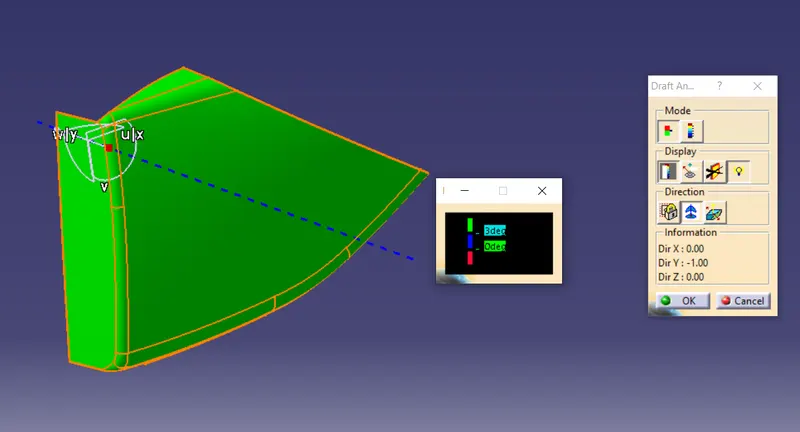
Tooling Axis of Map Pocket 1
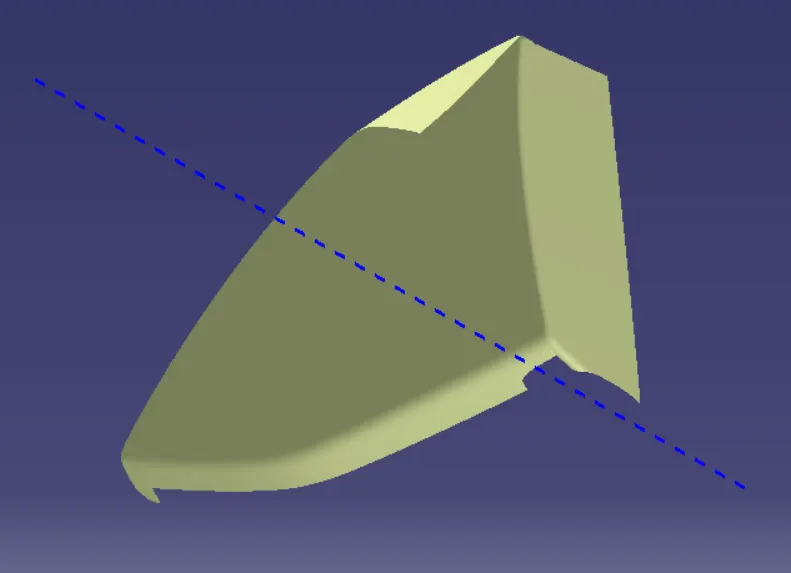
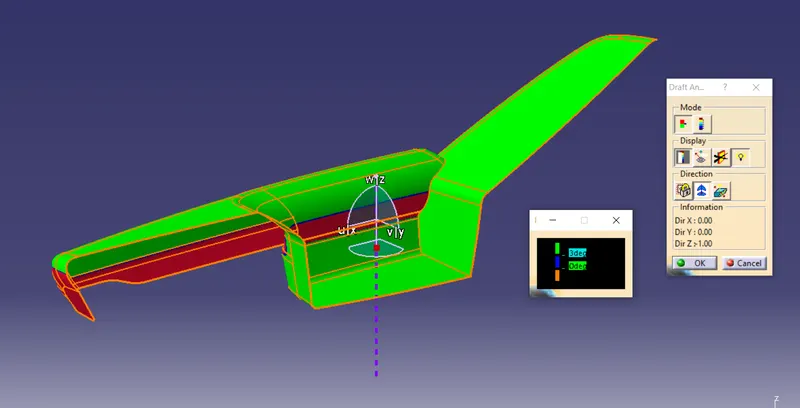
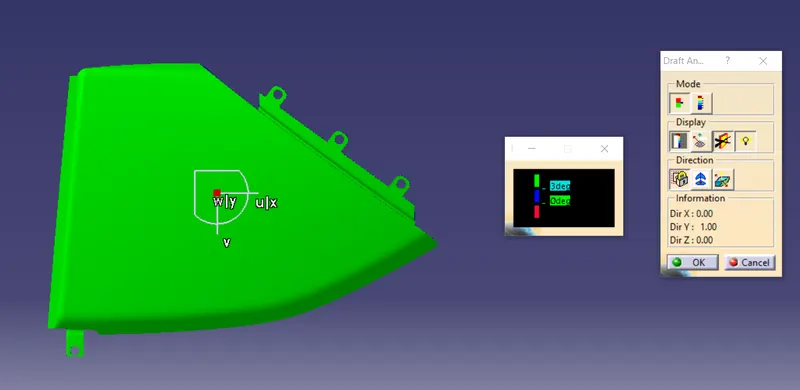
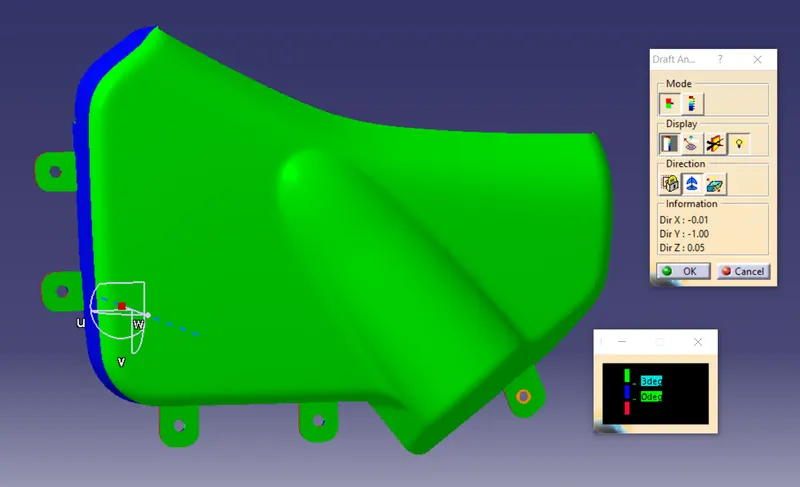
Draft analysis
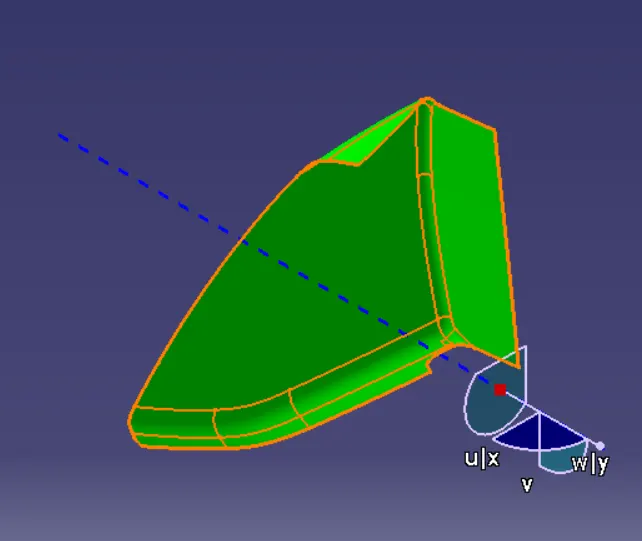
Tooling Axis of Map Pocket 2
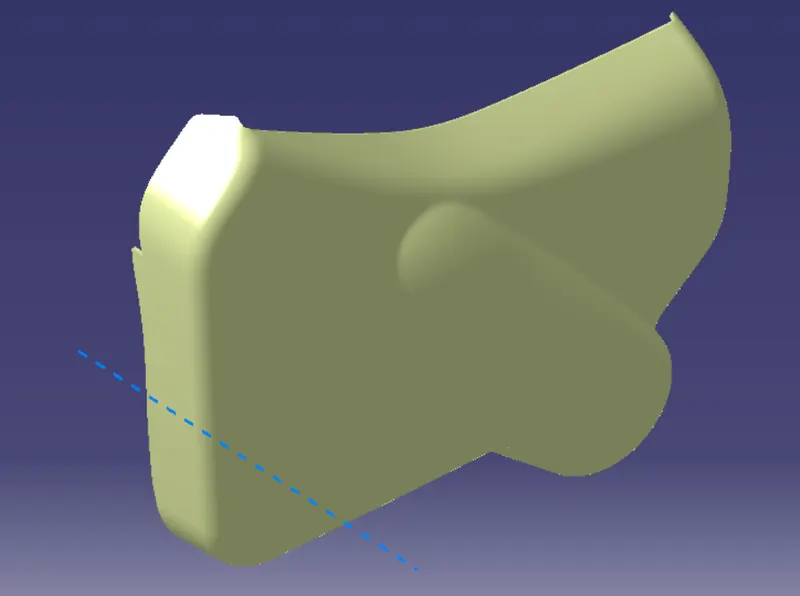
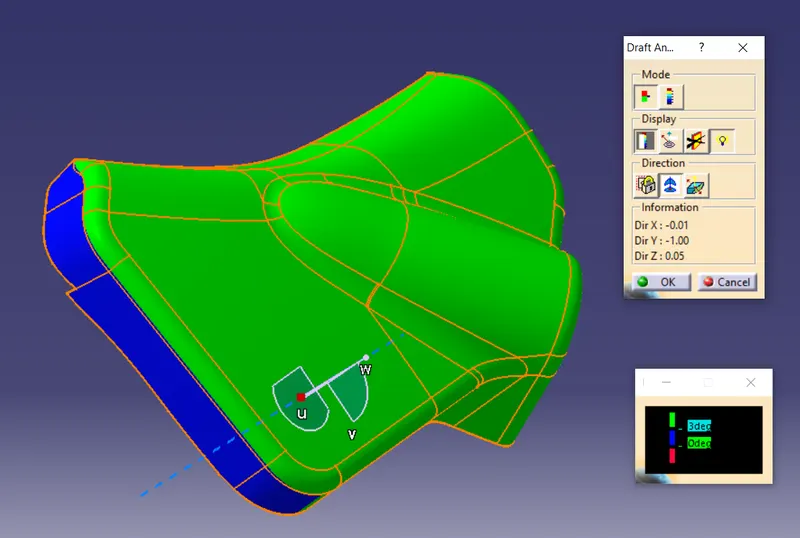
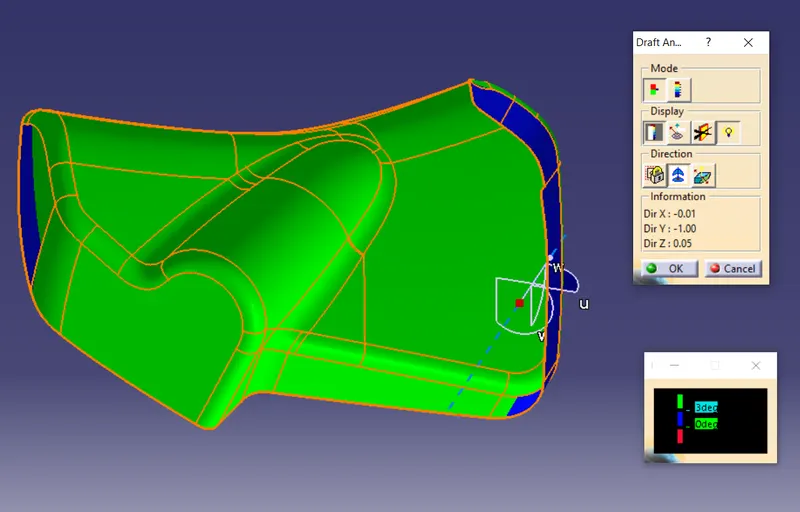
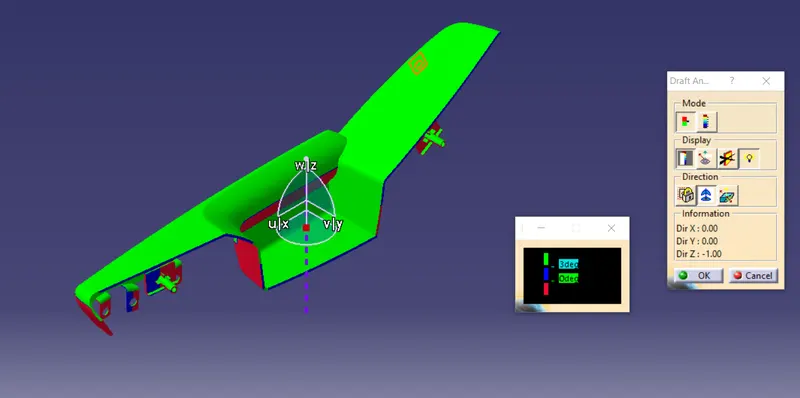
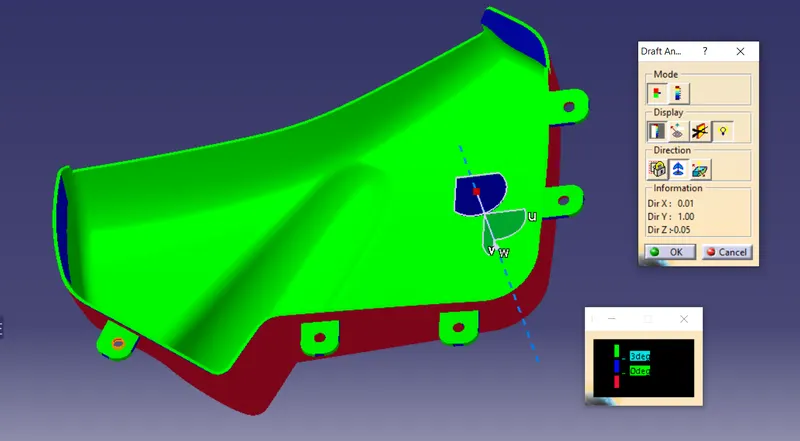
Draft Analysis
Tooling Axis of Lower Substrate
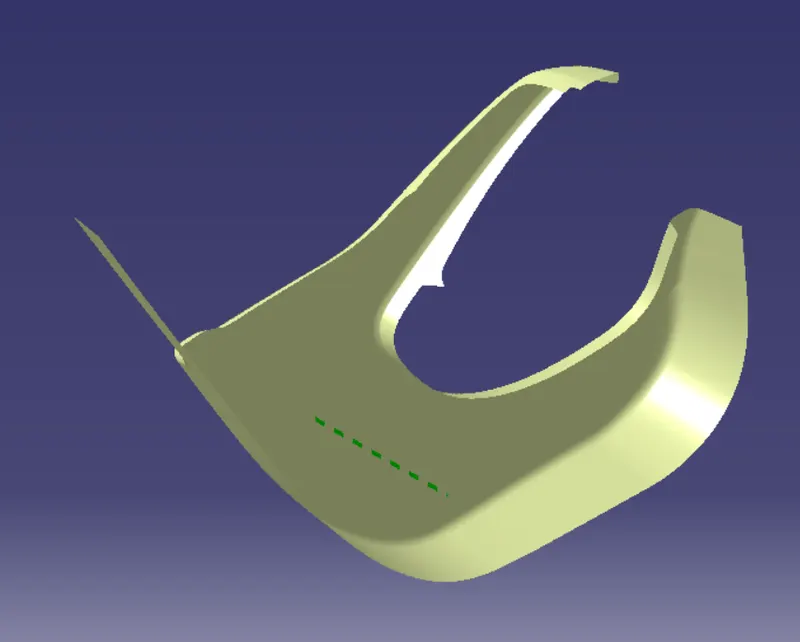
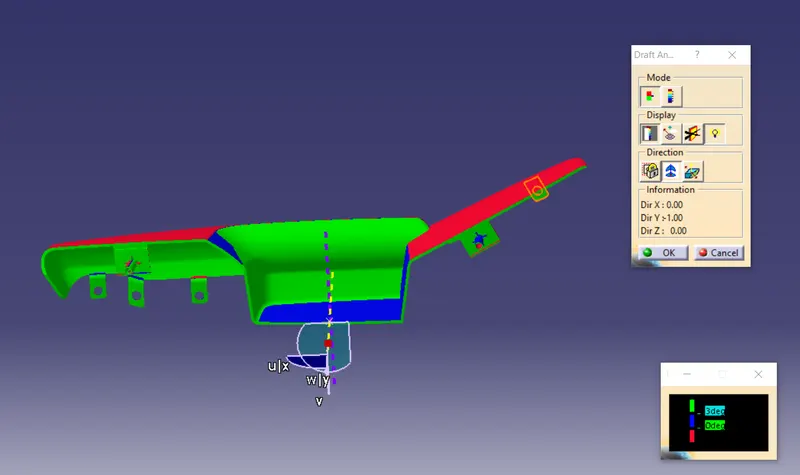
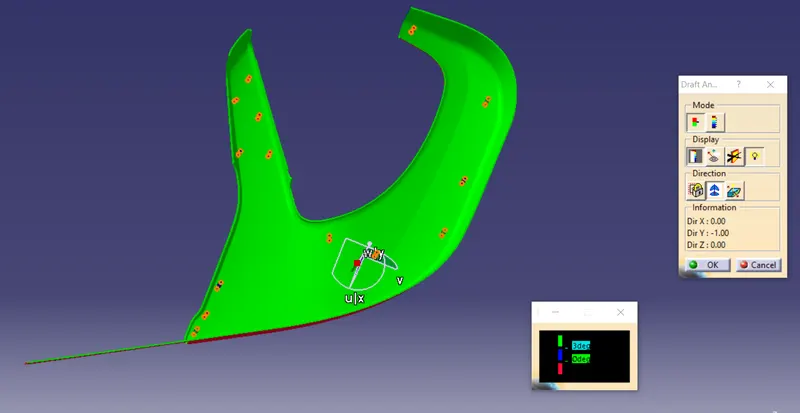
Draft Analysis
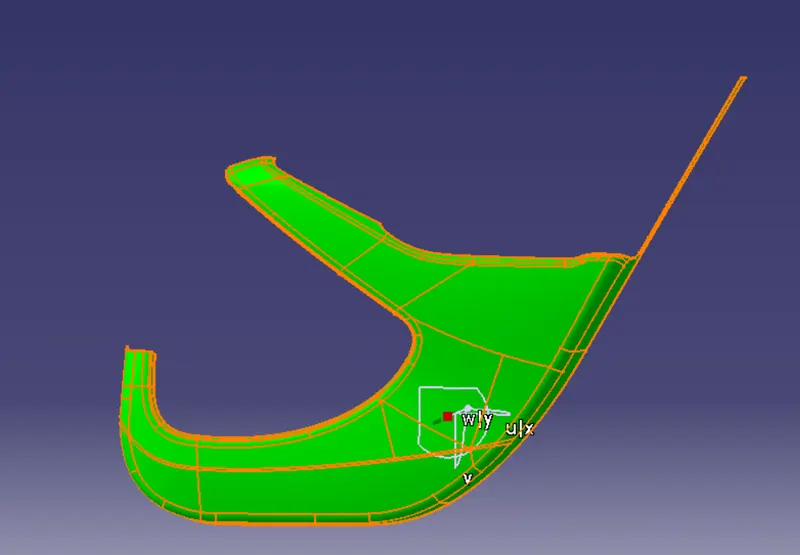
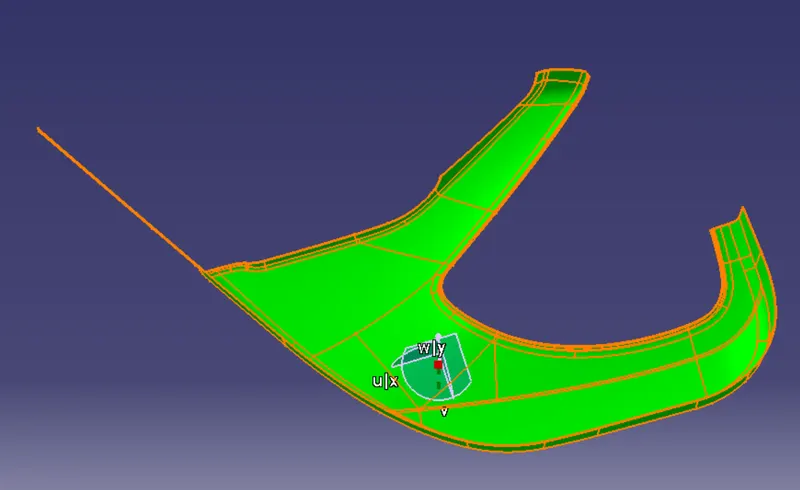
Tooling Axis of Arm Rest
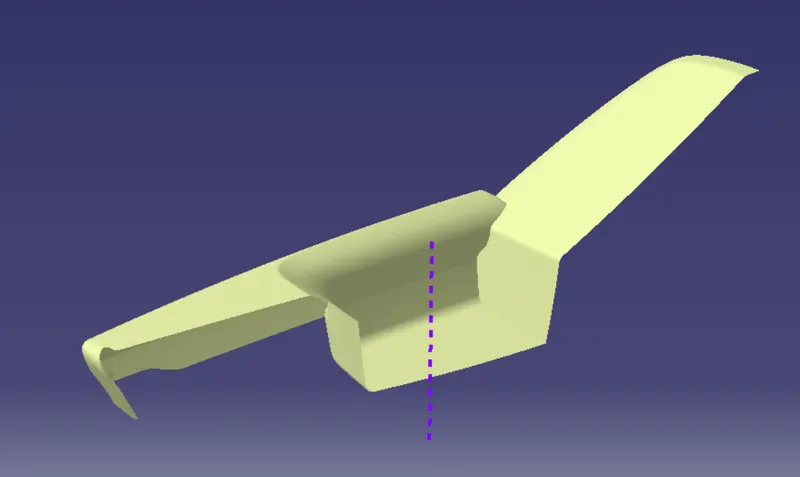
Draft Analysis
Creating Class B Surface
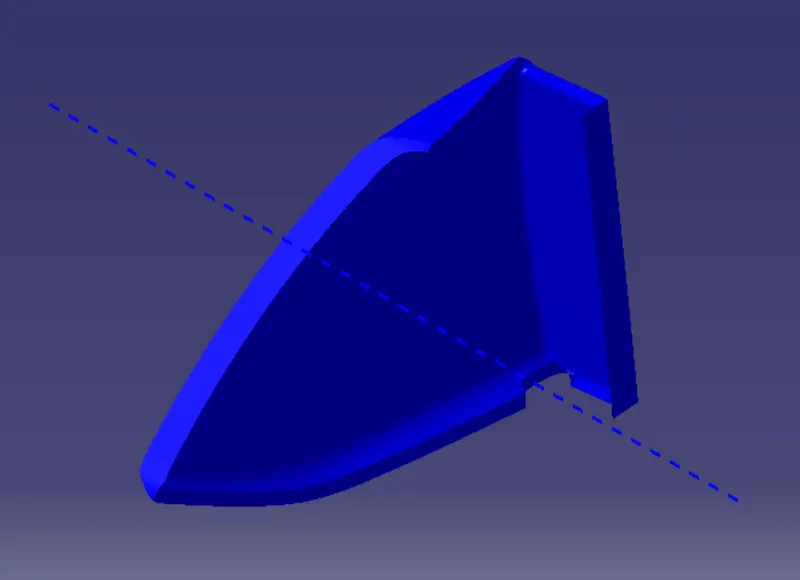
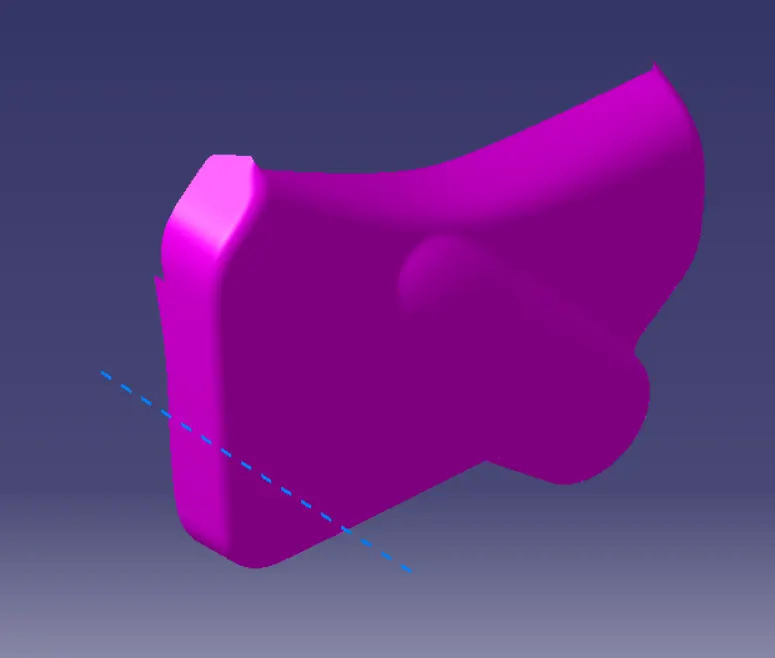
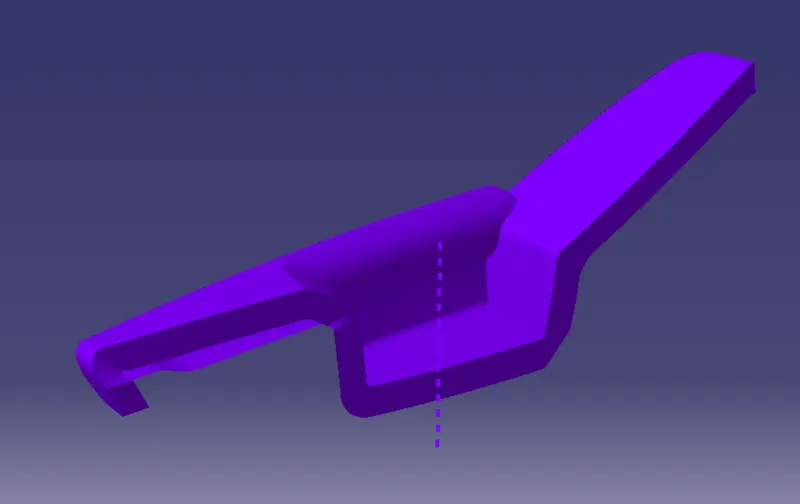
Class B surface is created by offsetting surfaces to the thickness ie 2mm. Class B is created along with Flanges.
Class C
Class C is created by extrapolating the edges from the class A Surface. Edges are properly swept along the tooling axis, trimmed to get the final C surface.
The Class B and Class C surfaces are trimmed to get the final closed surface. It is made of a Closed body using the closed body feature.
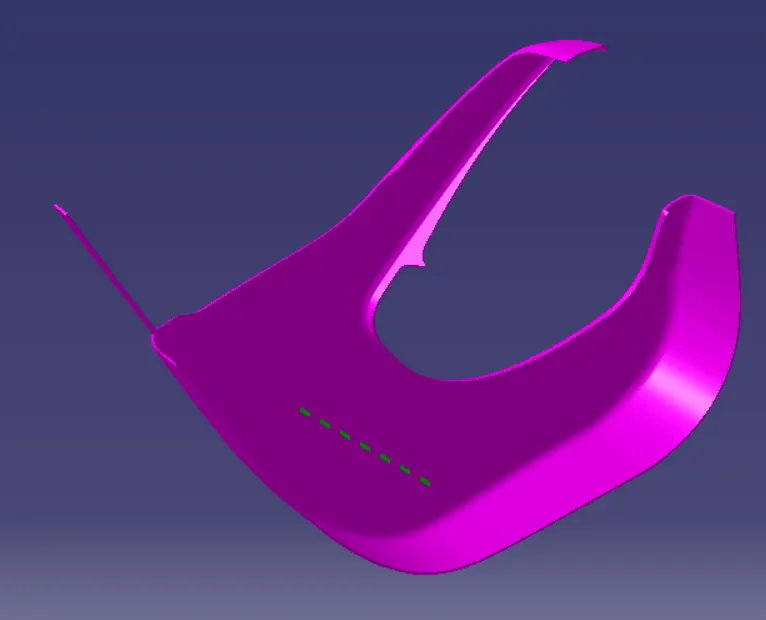
Flanges
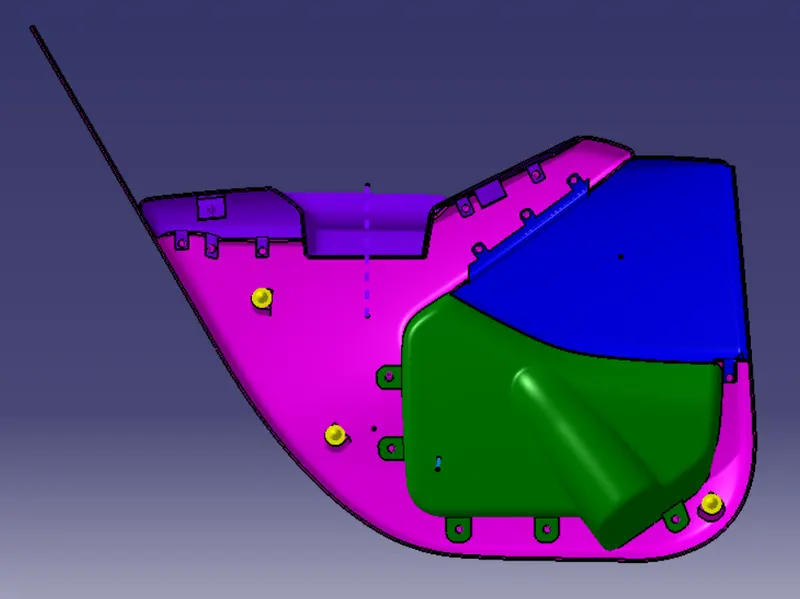
Flanges are created on the parts of door trim to attach the door armrest, map pocket 1, and map pocket 2 with the lower Substrate
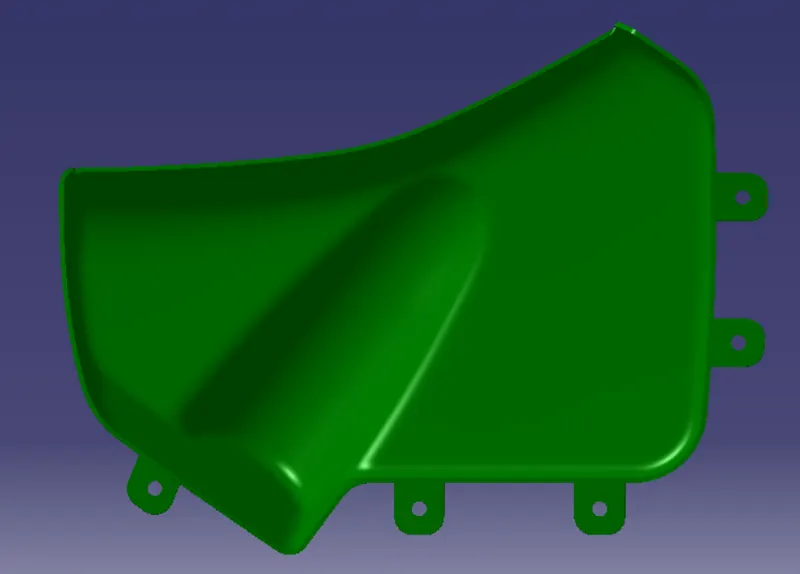
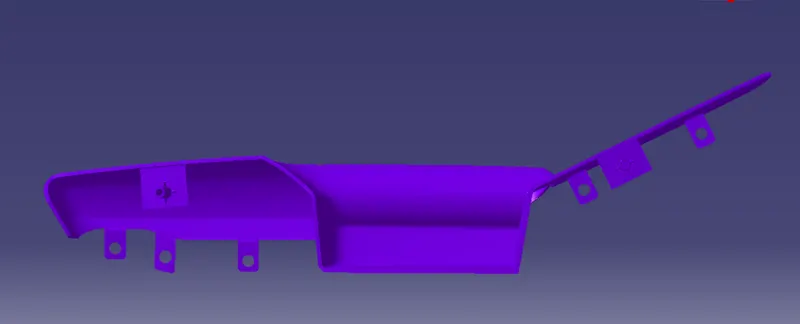
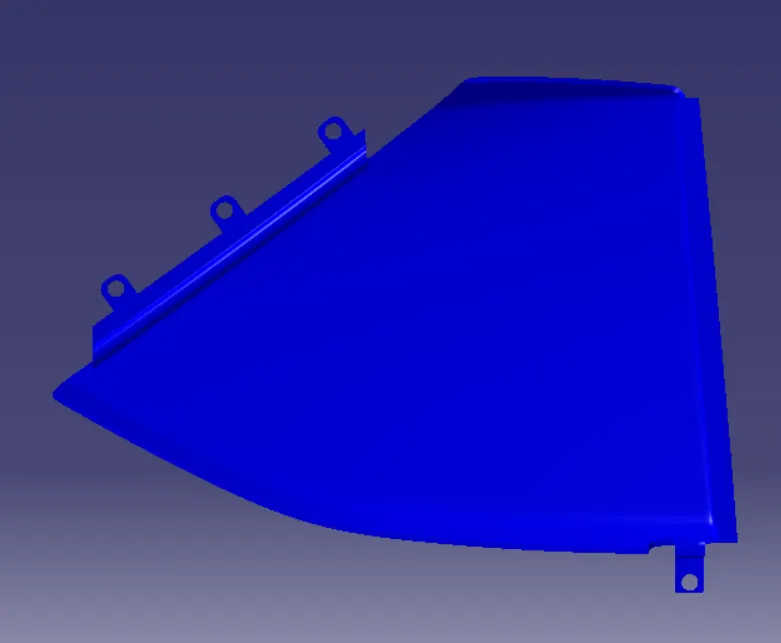
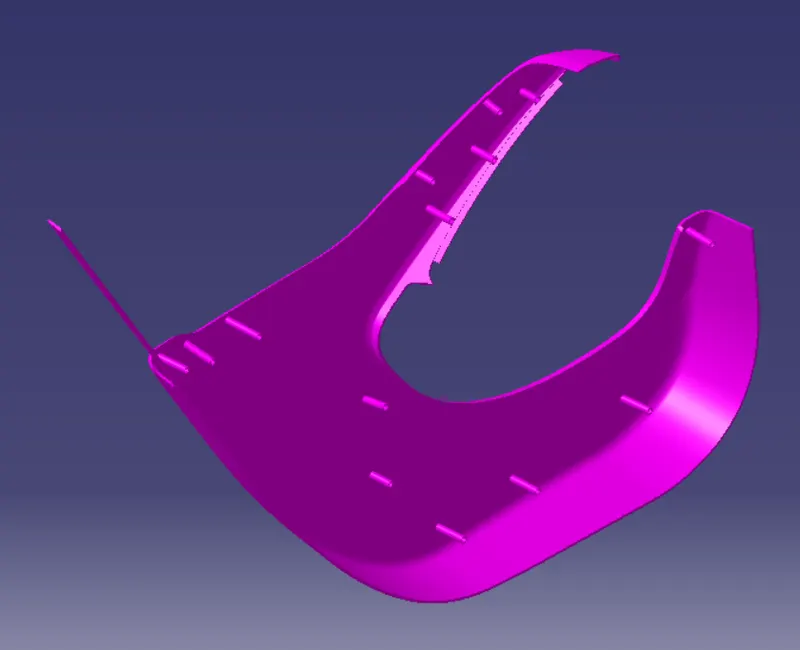
Heat Stakes
Heat Staking is a pulsed-heat process to join two or more parts out of which one at least is made of plastic. The process is to deform the plastic material using heat and force at a set process time. The bond is made by partially de-forming the plastic part in order to fix the other.
Heat Staking makes it easy to bond metal to plastic and is commonly used in high volumes/low-cost applications such as automotive, IT, and consumer appliances.
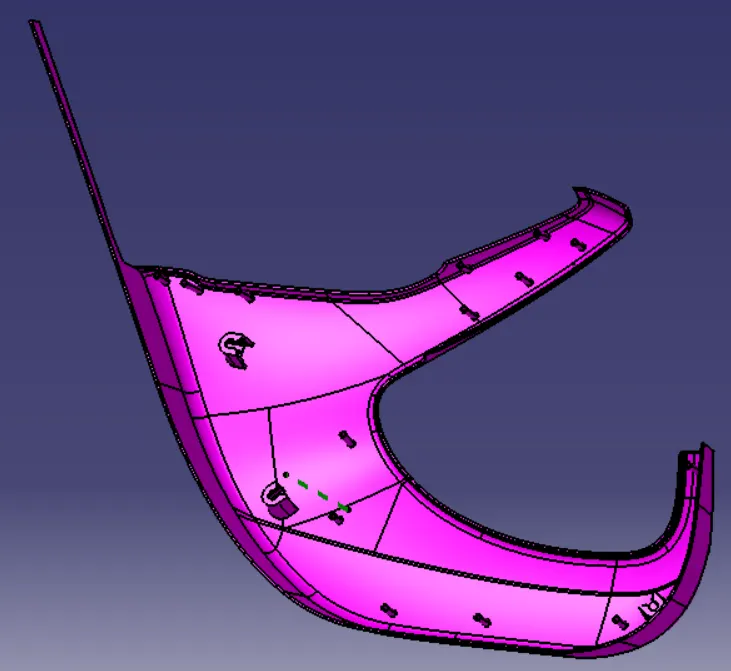
Heat stakes are made on the lower substrates in reference to the flanges made on the other parts.
Dog House
A dog house is a 4 sided box attached to a flat surface which usually requires a riser/slide to mold. In other words, it has 3 sides and a “roof”, where the roof usually has a hole for attachment purposes.
Dog House is Created as per the given Diagram and attached to the lower substrate.

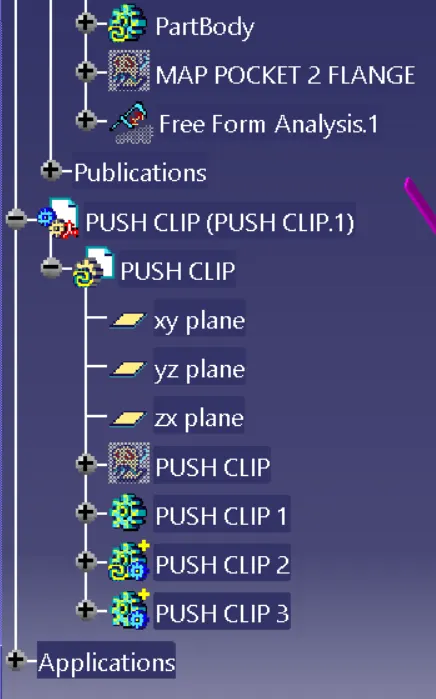
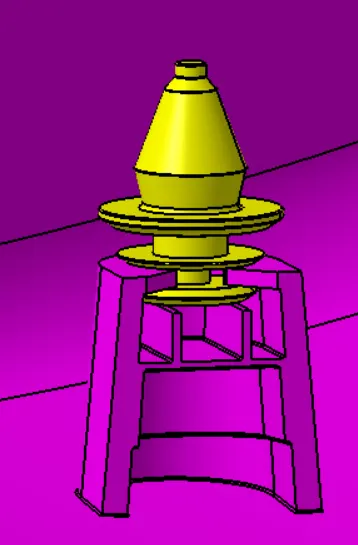
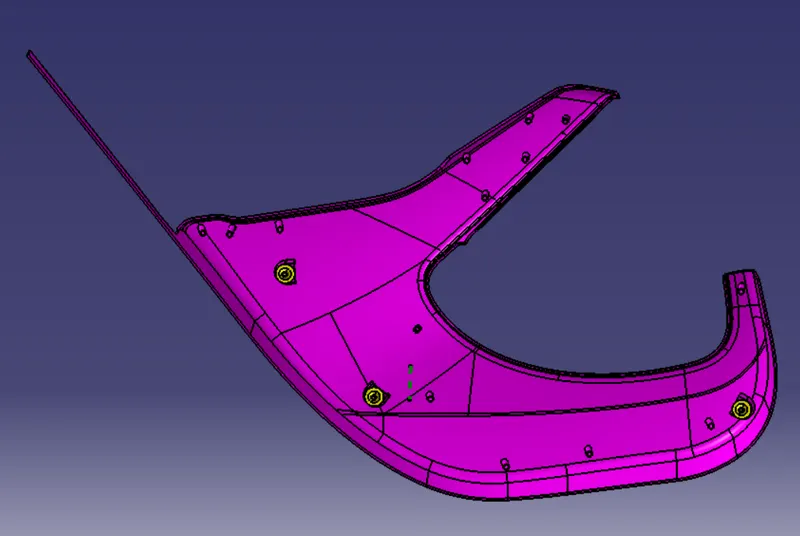
Push Clip
Push Clips are attached on the top of Dog House.
Draft Analysis.
a)View parameters are customized to Material mode.
b)Insert --- Analysis --- Featured Draft Analysis
c)Compass is moved to Tooling axis. It is locked in that position.
d)Selected the model. after analyzing the Quick analysis mode some surfaces have draft angles less than 3. The draft angle of those surfaces is changed by adjusting some values.
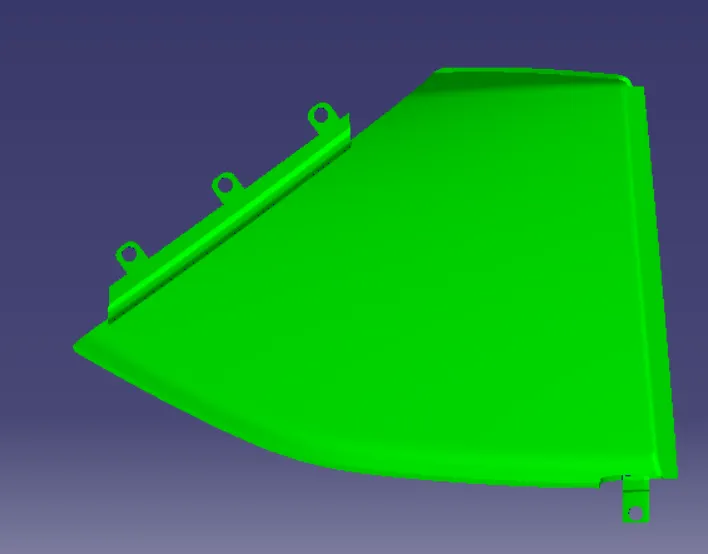
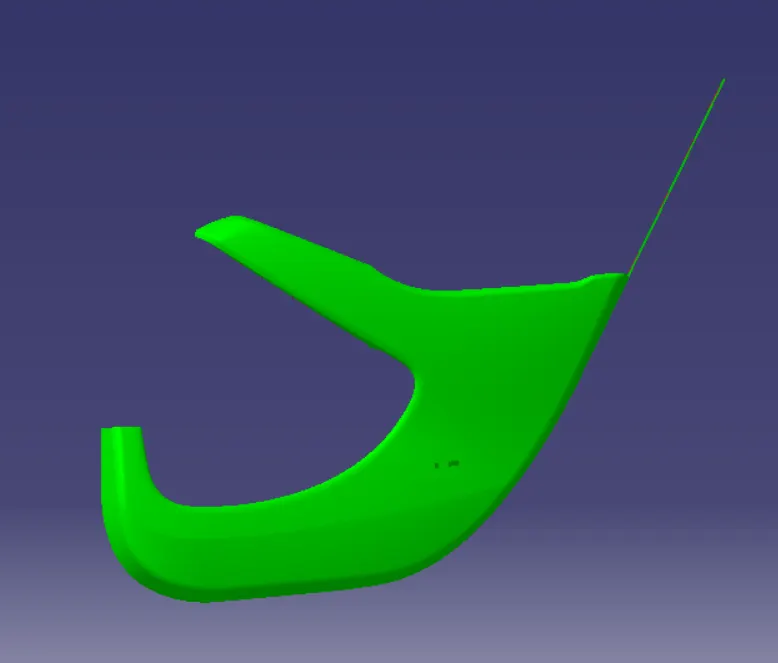
Door Trim Panel