Week-11 Challenge: Braking
Week-11 Challenge
Braking
1.) For a defined driving cycle, calculate the energy required for braking.
Answer:
Braking:
A vehicle decelerates dynamically from a specific velocity when it brakes. A certain amount of time is required for the vehicle to stop or change speeds. When the vehicle accelerates, whether while moving or after stopping, it has kinetic energy, and when it decelerates, the opposite happens.
Kinetic energy can be defined as: for an object with mass (m) and motion (V):
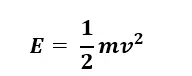
m = mass of the vehicle in (Kg)
v = velocity of the vehicle in (m/s)
E= Kinetic energy in (KJ)
The engine supplies kinetic energy to move the car forward from a complete stop to the required speed. While braking, this energy is lost as heat.
The velocity in our scenario will be (V-Vi), where V is the vehicle's speed and Vi is the speed of a vehicle that is slowed down or brought to a stop.
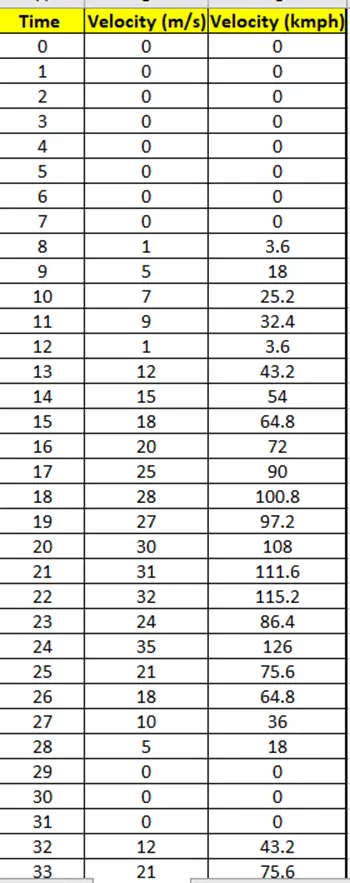
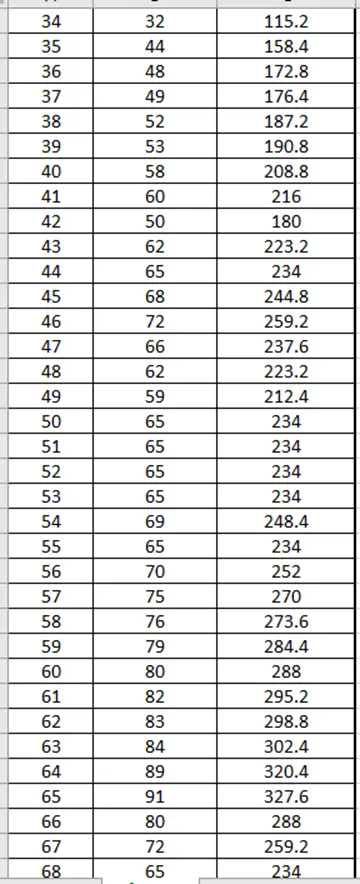
The data set used to illustrate the relationship between vehicle velocity and time is known as the drive cycle. As seen below, the drive cycle is created in Excel:
.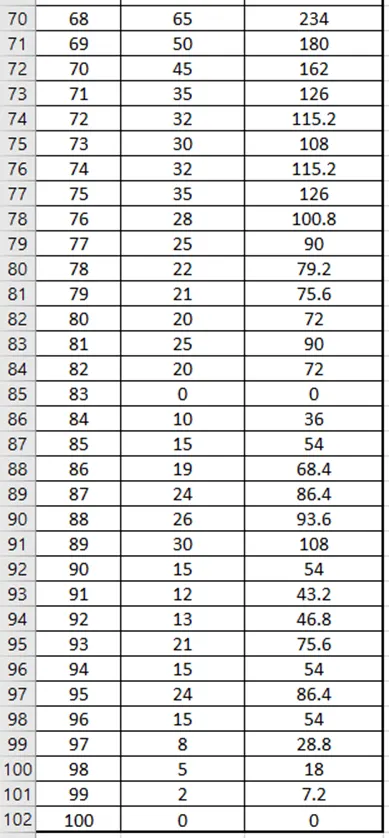
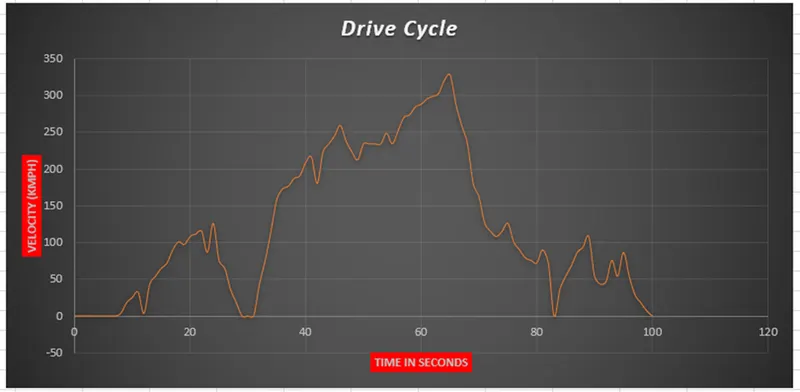
Six braking points from the motor cycle were obtained. The mass has been fixed at 1200 kg. The table below provides the amount of energy needed for braking.
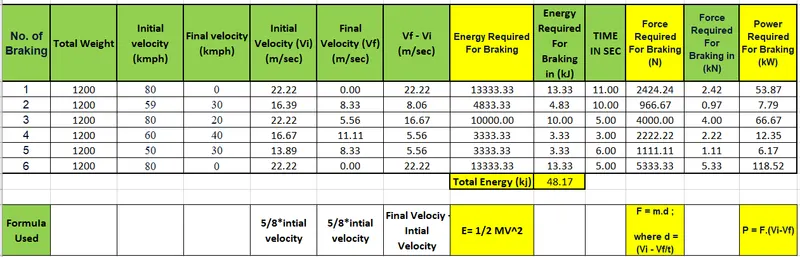
From the above table we observed that the;
No. of Braking = 1
- Initial Velocity is 80 & final is 0, time = 11 sec then the energy required for the braking is 13.33 kj
- Force and the Power Required for the braking is also high.
No. of Braking = 6
- Initial Velocity is 80 & final is 0, time =5 sec then the energy required for the braking is 13.33 kj
- Force and the Power Required for the braking is also higher that the first case
- Because the time is so less so the extra amount of Force and the power for the Braking is Required
- But the amount of energy consumed is same compared with the first case.
Result: Hence, the total energy required for braking is = 48.17 kj
2.) Why electric motor can’t develop braking torque at high speed similar to starting? How electric and mechanical brakes are coordinated?
Answer:
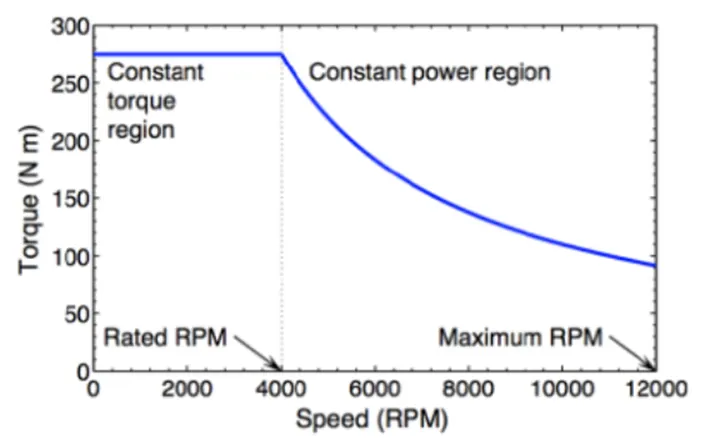
In order to get an electric motor running, which generates a high torque when beginning, a high current is needed at first. The speed-torque characteristics of an electric motor demonstrate that the torque of a motor will be high and constant for speed below the critical speed whereas the torque starts to reduce once it reaches the critical speed and maintains the constant power at high speeds, so EV motors cannot develop braking torque at high speeds.
Regenerative Braking:
This kind of kinetic energy recovery system converts kinetic energy from an object into potential or stored energy in order to slow down the car and, as a result, improve fuel efficiency. In a regenerative braking system, energy can be converted using a variety of techniques, including electromagnetic, hydraulic, flywheel, and spring. a flywheel hybrid powered by electromagnetics.
By using magnetic fields or mechanical torque, they are connected to a vehicle's drive wheels or positioned along the drive system to prevent the wheels from turning. Unlike friction brakes, which merely lose energy to slow the car by converting the kinetic energy into thermal energy, these motion inhibition techniques allow energy to be created during braking.
By lessening the overall braking force placed on the vehicle's friction brakes, regenerative braking systems can minimize fuel consumption and the wear on the brake pads. The transmission of HEV and EV vehicles is designed in such a way that when the driver applies the brakes, the electric motor reverses and instead applies resistance to the wheels rather than power. This resistance applied to the wheels is then passed through the electric motor and used to recharge the batteries.
Limitations:
The braking force from an electromagnetic field is always constrained by the maximum charging rate of the circuit and the battery capacity.
Why electric motor can’t develop braking torque at high speed similar to starting?
A motor-generator and battery pack are used in EV applications to provide power. As electricity flows through the motor under a magnetic field, it produces force. The motor will spin more quickly the more current that is applied.
The direction of the electric current is reversed in an electric motor used for regenerative braking, and instead of drawing current to spin the armature, the armature is spun through the field by the vehicle's deceleration. As quickly as the driver can accelerate and take off, the motor can alternate between driving the vehicle and generating electricity, which is utilized to recharge the battery.
Back EMF, also known as back electromotive force, is produced as the motor's revs rise. More back EMF is produced as a motor spins faster, which lowers the effective voltage it can give. At 0 RPM, however, all of the electricity that the motor generates at the moment electric power is delivered is converted into instant torque—there is no back EMF to dampen the output. The instantaneous torque effect decreases as the revs increase because there is more back EMF.
The cause of this is that the power stage's PWM duty cycle cannot be increased further since the Vmotor is too close to the Vbemf, notwithstanding how much the current loop wants to boost current (proportional to torque).
Two types of Braking:
- Mechanical Braking:
- Electrical Braking
Mechanical Braking:
All mechanical brakes function by causing two surfaces to rub against one another and creating frictional forces. The surface area of the frictional surfaces and the applied actuation force have a significant role in a brake's stopping power or capacity. The slowing or stopping of shafts in equipment drives is accomplished by assemblies of mechanical brakes. To move force from one point to another, they employ levers or connections. The connected shafts' motion is slowed or terminated during braking. Mechanical brakes come in many different varieties.
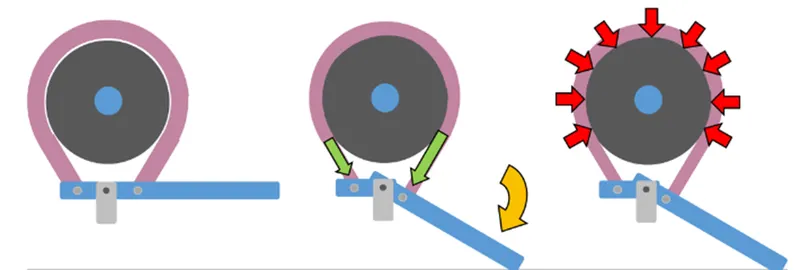
Band brakes:
The most basic type of brake is a band brake, which has a metal band coated with a friction substance that is heat- and wear-resistant.
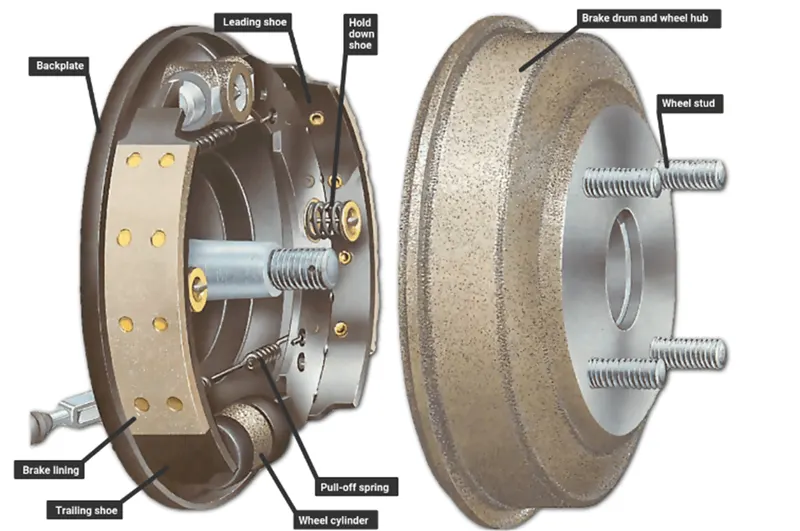
Drum brakes:
These are frequently used on car rear wheels, and they function when shoes press on a rotating surface known as a drum.
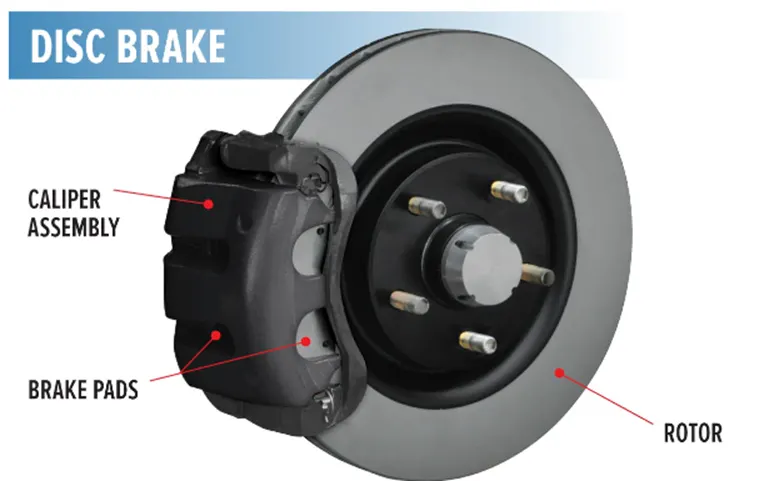
Disc brakes:
These are made up of a rotor, a caliper, and brake pads. The brake pads are compressed against the rotor while in use.
Electrical Braking:
Electric brakes are tools that slow down or halt the rotation of a rotating component using an electrical current or magnetic actuation force. They are utilized in applications requiring quick response times and accurate tension control in both industrial and automotive braking systems. Two conductor wires on the magnet in the backing plate tap directly into the wiring. The brake magnet becomes magnetized when the electricity is on.
The magnet is drawn to the surface of the drum. It rotates when it comes into touch with this area due to friction, which moves the actuating arm and forces the shoes up against the drum. These shoes are made of a unique brake pad material that withstands the heat produced by the friction. when the inside of the shoe is pressed upon.
Regenerative Braking, an extremely attractive electric braking system, is presently used for electric braking. The motor acts as a generator in this instance during braking. As is well known, a counter torque is generated during the producing process. As a result, the motor stops moving due to the counter torque. Additionally, the energy from the brakes is transformed into electrical energy that can be sent back to the source via power converters.
How electric and mechanical brakes are coordinated?
A regenerative braking system uses a motor that, when turned around, functions as a generator to transform waste energy (heat) into useable energy (stored in a battery). There are some restrictions with RBS, one of which is that the electric motor can't deliver all the brake torque required for significant decelerations. If only one axle receives the braking torque during braking, stability and maneuverability problems may result. Regenerative braking is therefore used in conjunction with a friction (mechanical) brake system to prevent such a predicament.
Brake Control Strategy, which refers to the strategic application of RBS and mechanical brakes,
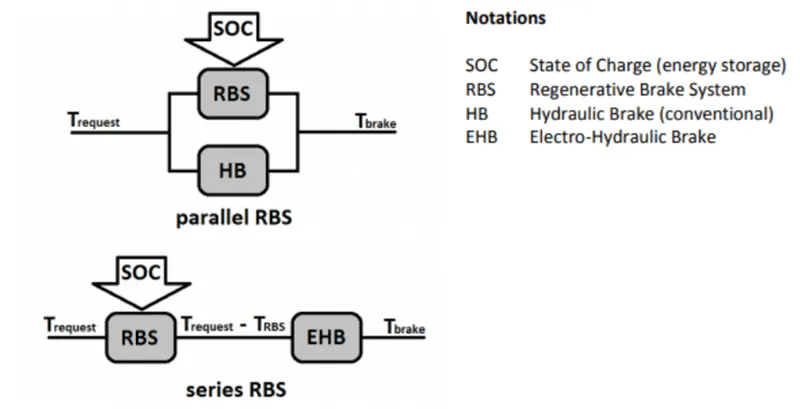
- Series Brake Control
- Parallel Brake Control
Series Brake Control:
The mechanical and regenerative (electric) brakes are applied successively in this type of control system. Only one brake system—either RBS or mechanical brakes—can be used at once.
The series brake system is additionally divided into:
- Driving was comfortable.
- Applying brakes in accordance with energy efficiency
Parallel Brake Control:
Both the mechanical brakes and RBS are deployed concurrently in this type of brake control system.
Electric driven intelligent brake:
Nissan created the braking control strategy known as EDIB. This type of parallel braking is depicted in the image below.
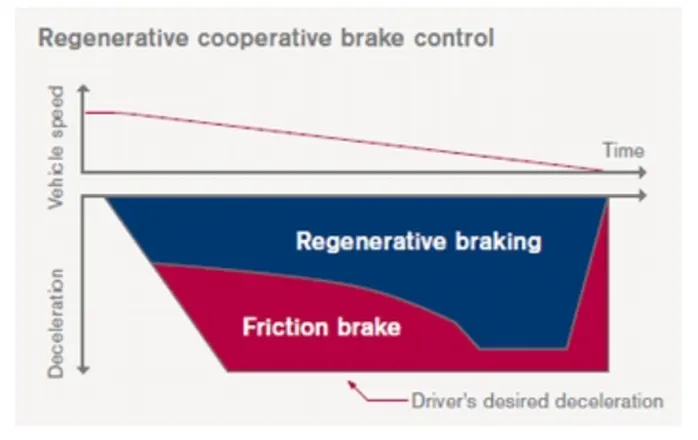
The aforementioned illustration demonstrates how, when a vehicle is travelling at higher speeds, both the frictional and regenerative brakes are applied concurrently.
Because the motor's torque is significant at low speeds, the regenerative brake has a larger braking component than frictional brakes.
Working of EDIB:
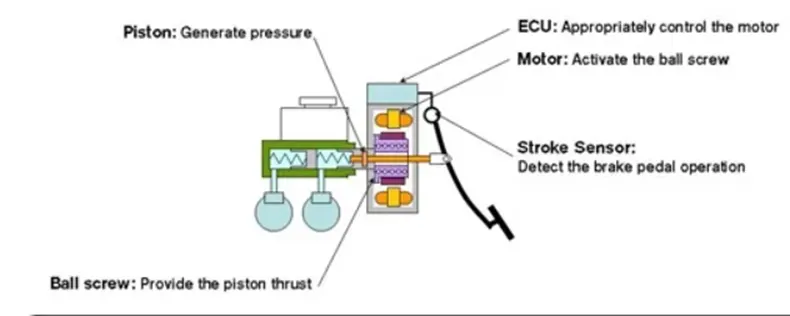
The brake operation is detected by the stroke sensor when the driver presses the brake pedal. The ECU receives that report and uses it to operate the motor. The piston is engaged by the engine through the ball screw, increasing the pressure of the friction brake (hydraulic pressure). The friction brake's hydraulic pressure is best controlled to provide maximum energy regeneration.
- Make a MATLAB program which plots contour of given motor speed, torque and efficiency values. Attach the code as a .m file attach a screenshot of all the plots.
Answer:
MATLAB SCRIPT:
%Efficiency Mapping for Electric Motors (contour)
clear all
close all
clc
v = linspace(1,1000); % Speed in rad/sec
t = linspace(1,250); % Torque in Nm

%Motor loss constants
Kc = 0.2; %Copper Loss coefficient
Ki = 0.008; %Iron Loss coefficient
Kw = 0.00001; %Winding Losses coefficient
C = 25; %Constant Motor Losses

[W,T] = meshgrid(v,t);
Po = (W.*T);% Output power
CL = (T.^2)*Kc; %Copper Loss
IL = (W*Ki); %Iron Loss
WL = (W.^3)*Kw; %Winding Loss
Pin = Po+CL+IL+WL+C;

Efficiency = Po./Pin;

S = [0.70,0.80,0.85,0.90,0.91,0.92,0.925,0.93];


[q,h] = contour(W,T,Efficiency,S);
colorbar
xlabel('Speed(rad/s)');
ylabel('Torque(N/m)');
title("Motor efficiency");
clabel(q,h);
CODE EXPLANATION:
- To clear all variables in the workspace, all plots in the workspace, and the workspace itself, the clear all, close all, and clc commands are first typed.
- Using the linspace command, the speed and torque are defined as 2-Dimensional linearly spaced arrays.
- There are established motor losses constants.
- Using the meshgrid command, the speed and torque 2-D arrays are subsequently converted to 3-D arrays.
- Speed and torque are combined to form the output power equation.
- There are defined equations for motor losses based on speed and torque.
- The input power is determined by adding the motor losses to the output power.
- The efficiency is therefore described as the relationship between input and output power.
- An array with efficiencies between 0.7 and 0.93 is defined in order to map the contour for various efficiency ranges.
- The contour command is used to plot the speed, torque, and efficiency on the graph.
The MATLAB program's contour plot is shown below:
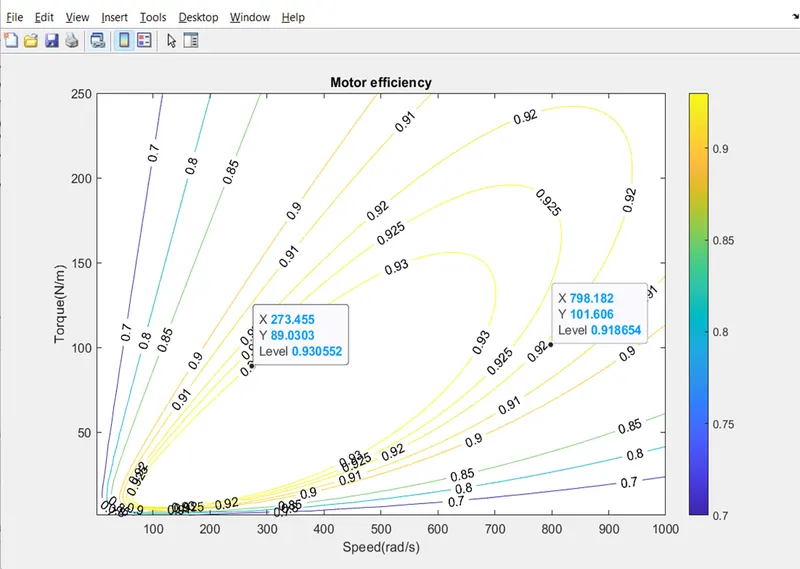
The Motor Speed-Torque Efficiency Contour Plot is shown in the plot up top. Due to the location of the group of efficiencies with the highest efficiency value (93percent), a point is designated in the innermost contour line.
Height is at its greatest, and another point is designated as the outermost contour line, which contains a collection of efficiencies and is where the lowest efficiency value—70 percent—is found.
Going inward in terms of efficiency order is equivalent to moving outward in terms of efficiency order.
Conclusion:
Thus, for the above question the detailed answer was created and also using the MATLAB Script.
References:
https://pigeonsblue.com/2014/04/25/band-brakes/
https://www.howacarworks.com/brakes/renewing-drum-brake-shoes
https://www.lesschwab.com/article/complete-guide-to-disc-brakes-and-drum-brakes.html
https://www.carblogindia.com/electric-driven-intelligent-brake-system/
https://www.autotecnica.org/nissan-leaf-approfondimento-tecnico/