Week-11 Challenge: Braking
1. a) Driving cycle:
Driving Cycle:A series of data points representing the speed of a vehicle versus time.
- Driving cycles are produced by different countries and organizations to assess the performance of vehicles in various ways, as for instance fuel consumption, electric vehicle autonomy and polluting emissions.
- Driving cycle(SAE-J227) shown below:
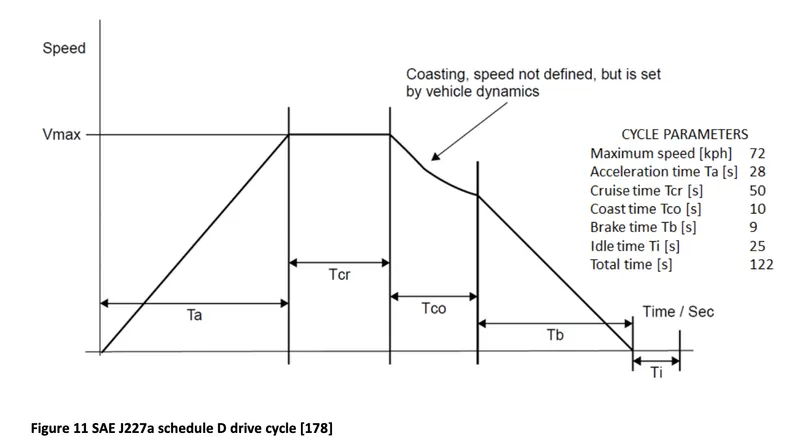
- Here, driving cycle is constructed using different acceleration and constant speed. So, we can see that different periods are there.
- coast time is where tractive force is reduced to zero. so, vehicle floats on inertia and road conditions.
- In different variations of J227, the periods of different parts are varying.
b)To calculate energy required for braking:
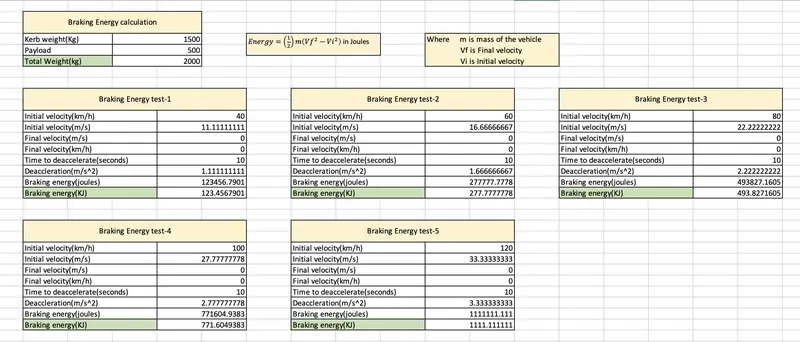
- Considered the intial and final velocity of vehicle with mass.
- Braking Energy is calculated using excel calculator.
2. a) Electric motor can’t develop braking torque at high speed similar to starting:
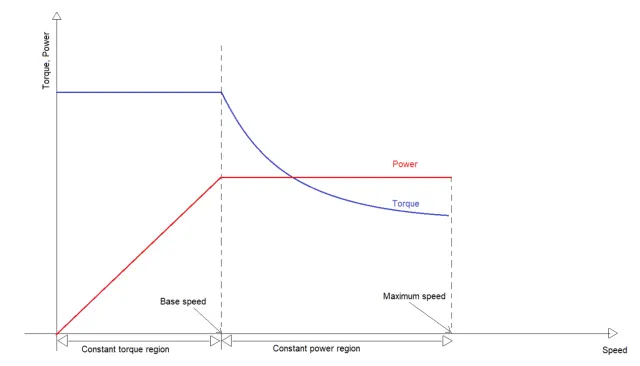
- In constant Torque region,Torque is constant and power increases linearly. Power is proportional to velocity because force is constant(P= F*V).
- At starting, velocity is increasing linearly. We can apply brakes without any problem.
- Applying braking torque on each wheel can lead to tire slip and slip is function of angular velocity.
- During braking, there is power and heat lossses. At high speed, there will be more power losses.
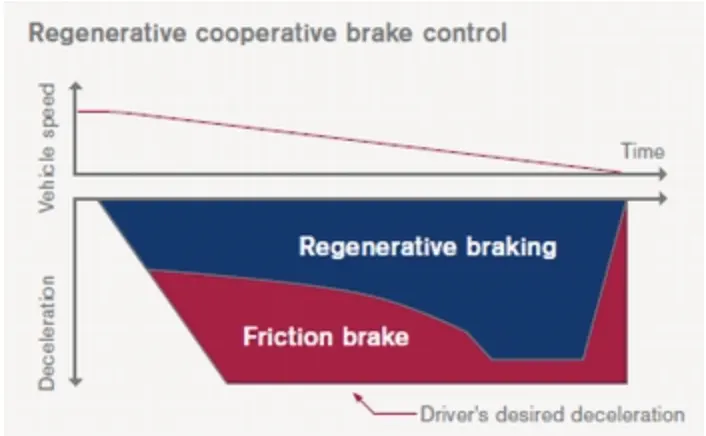
b) Electric and mechanical brakes coordination:
- Electrical braking: With the help of motor brakes can be applied.Types are: Plugging, Rheostatic, Dynamic and Regenerative brakings.
- Mechanical braking:By using frition brakes are applied, there may be wear and tear, maintainence cost will be high, heat losses and skidding may happen.
- Electrical braking systems are used for functional braking (controlling the speed; bringing the load to standstill). Mechanical braking systems are used for emergency stopping or for parking.
- The electrical braking system cannot be used as a safety device. Most systems will require a mechanical braking system as a backup safety device.
- At low speed; Regenerative brakes are used.
- At high speed; Both regenerative and hydraulic brakes are used.
3. Contour of given motor speed, torque and efficiency values:
Losses in EV: hysteresis losses, eddy current losses, copper losses, windage losses, and thermal losses.
m-scipt:
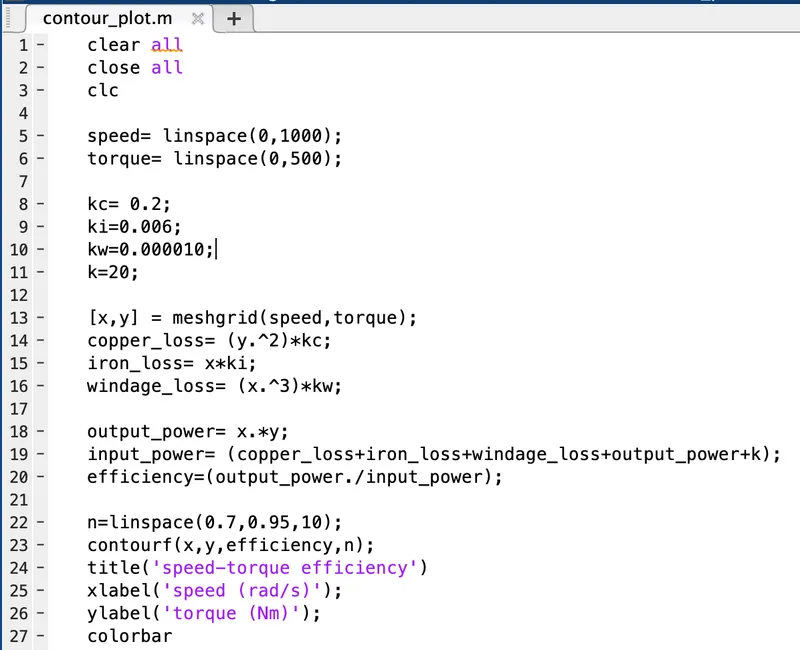
Simulation:
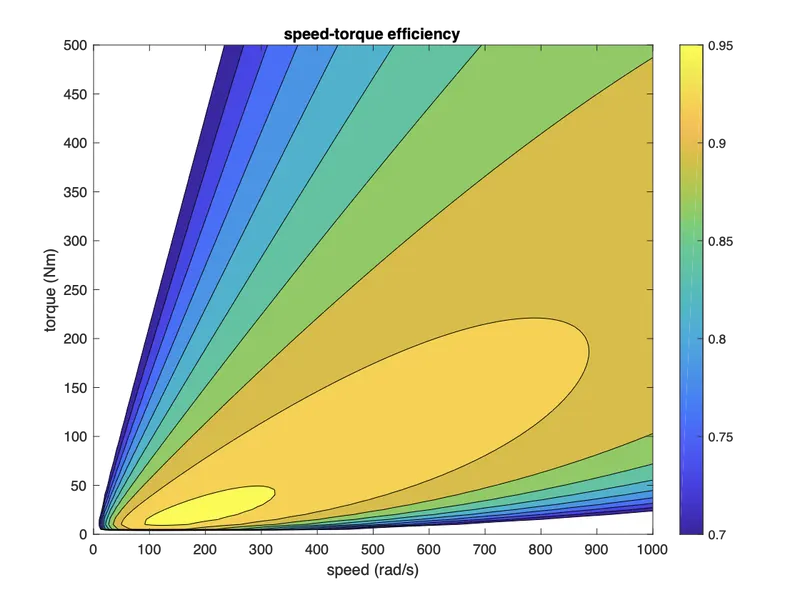
- Color bar shows the efficiency.
- High efficiency(95%) is seen at speed of 100 to 300 rad/sec.