Week-11 Challenge: Braking
1.For a defined driving cycle, calculate the energy required for braking. -----------------------------------------------------------------------------------------------------------------------------------------
ANS:
In this case we use a random driving cycle for urban driving cycle.
at firts the vehical runing kinetic energy K=(1/2)*m*(v^2)
where,
m=vehical mass
v=vehical force
K=(1/2)*m*(V(1)-V(2))
V(1)=final velocity
V(2)=initial velocity
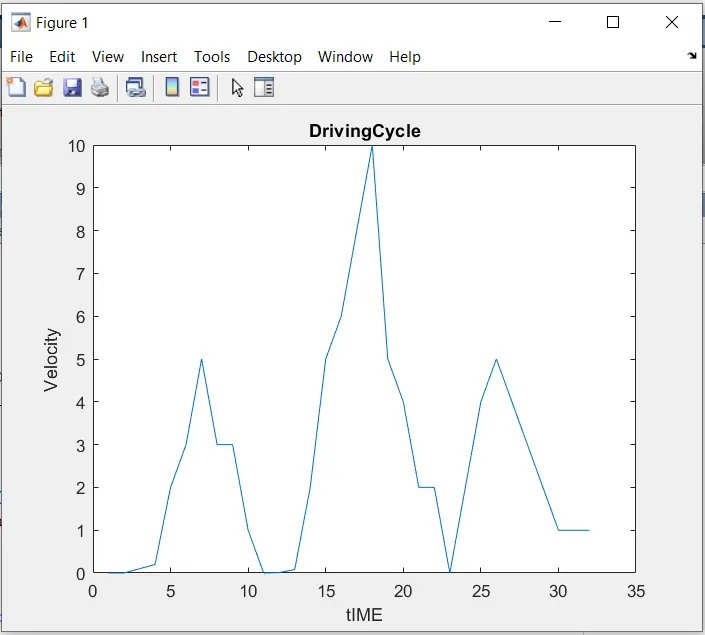
At first we folow the vehical pic velocity to calculate high velocity then we count the time and track the lower velocity then we put the valuse in equation and we continiously doing this prosses and adding the calculating braking power and adding each poer and at the end we found the total powe of the driving cycle braking power.
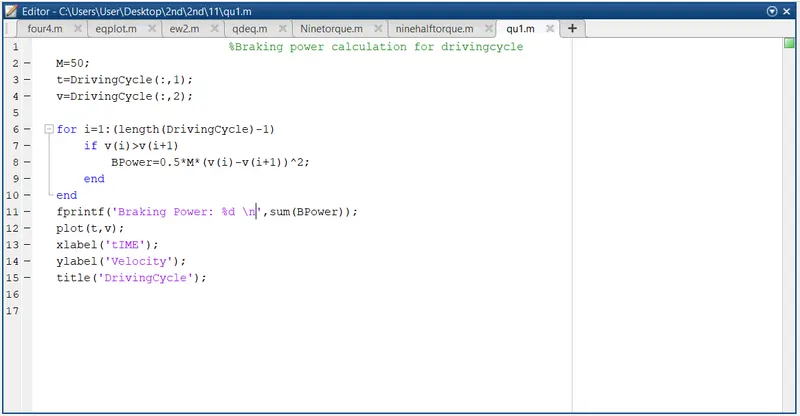
Program for calculating the Braking power from any DrivingCycle:
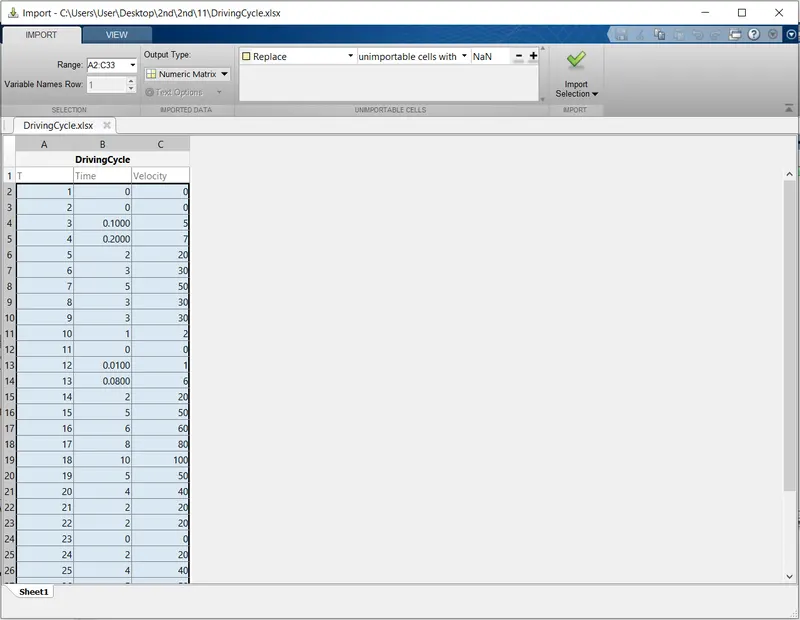
Random DrivingCycle:
Total Power requare for Braking:
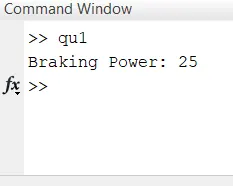
The calculate Braking power is 25Kw.
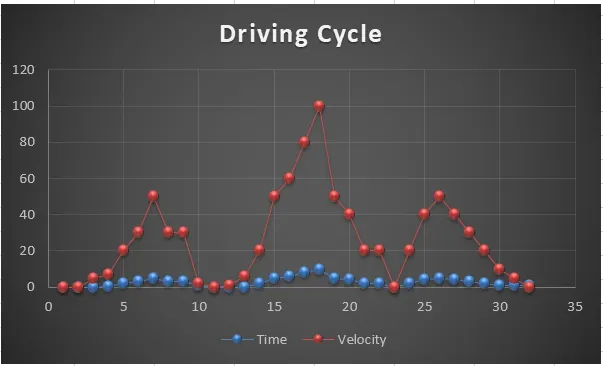
DrivingCycle graph:
-------------------------------------------------------------------------------------------------------------------------------------------
2.Why electric motor can’t develop braking torque at high speed similar to starting? How electric and mechanical brakes are coordinated?
-------------------------------------------------------------------------------------------------------------------------------------------
ANS:
At the starting condition the motor is at high torque condition after gain the final speed or bound by final load the motor torque become constant which is very less than starting value.The motor oparation oparate at constant load and constant torque condition.At the point when the systen run at constant speed the torque become constant that is constant torque condition.
Electrical Vehical torque:
In case of EV braking the systen cut the motor power and the motor rotate with the veical body innertia this time the motor work as genaretor and this breaking system called regeratetive braking.After regenarative braking the system take long time for stop the vehical becouse the motor has a capasity to charging current and vo;ltage that's why the system take time after breaking some vehical we use motor direction change we give reverce force to oppose momentum motion force.but again the same limitation the motor has acapacity to deliver limited power.
Mechanical Braking:
In case of Mechanical braking we use friction force to stop the vehical wheel in mechanical friction force is more than electrical power thats why we can stop the vehical at short time periode But the limitation is if we use onlymechanical force to stop the vehical at short periode there genarate heavy amount of heat which can damage the vehical.In case the Disbrake if we use the disbrake or car hand brake directly and the vehical speed is too much then the vehical movement changes which cause the accident or damge the vehical.
if we use electrical breaking and mechanical breaking both equal time we can reduce the time to stop the electrical vehical.
In case or regenareting braking we recover the power or we store the braking power.we can use the power to charge the vehical charging System.
For applying both type of braking system we can protect the vehical damage,incase regenatating braking we can protect from heat production at electrical circuit,at braking time we can hold the Torque.
-----------------------------------------------------------------------------------------------------------------------------------------
3.Make a MATLAB program which plots contour of given motor speed, torque and efficiency values. Attach the code as a .m file attach a screenshot of all the plots.
------------------------------------------------------------------------------------------------------------------------------------------
ANS:
Let Electrical motor speed W red/sec =Wx(2*pi/60)
The torque is represented T
and the efficiancy
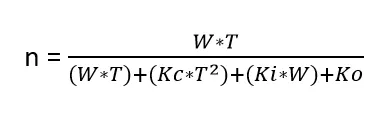
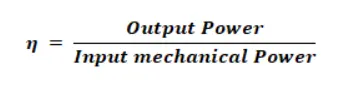 ............................(A)
From the relation,
Output Power=Speed x torque= W*T ...............................(1)
Input Power=Output Power+Losse
where,
Losses=Copper loss(Pc)+Iron Loss(Pi)+Other ..............(B)
Copper Loss Pc=(I^2)*Ra [Ra is armature resistance which is constant]
I=Armature Current
Ra=Armature resistance
Now,
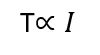
So, Pc=Kc*(T^2) [Kc is for copper loss].........................(2)
For ,
Iron Loss (Pi)=W*Ki [Ki is constant for Iron loss]................(3)
For,
Other Losses (Po)=Ko [ko is constant for other losses]...........(4)
All values put into the equation A we get.
 ..............................(C)
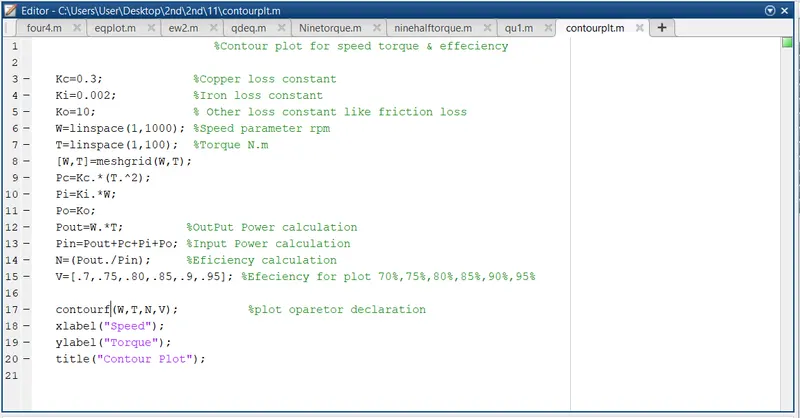
Calculation Parameters:
speed W=1000 rpm
Torque T=100 N.m
Kc=0.3
Ki=0.002
Ko=10
Program:

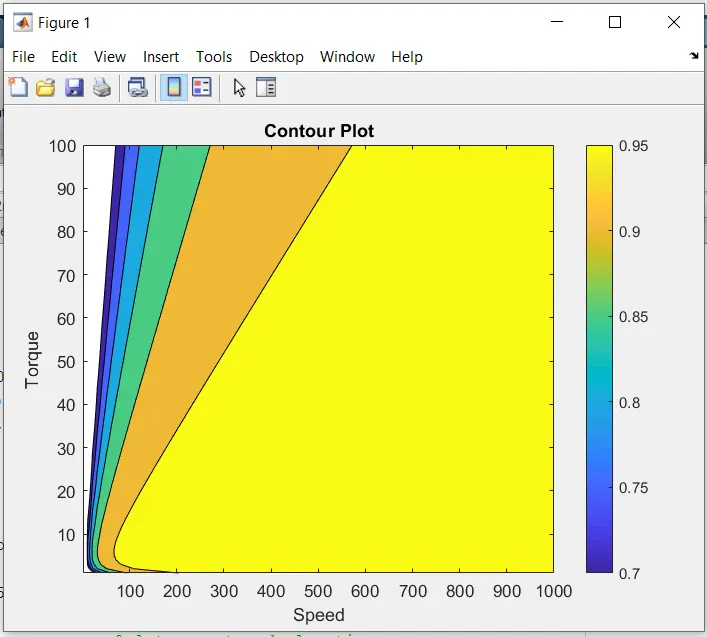
Plot: