Week 11 Car Crash simulation
1. Objective
We will have to perform a parametric study using 3 different values of thickness for the car body. We will need to apply some conditions as mentioned in the video that corresponds to this challenge. Also, we need to analyze the total deformation and equivalent stresses acting on the model.
2. Case setup and execution
Case 1
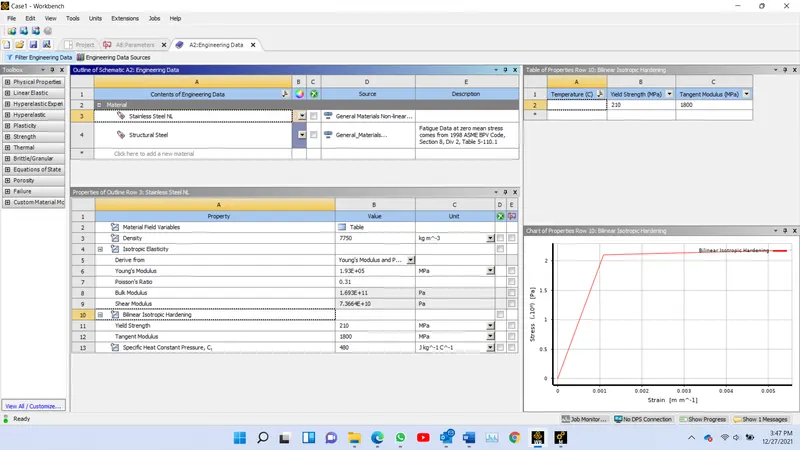
Select Stainless Steel Non-linear as the material for car body from Engineering data sources.
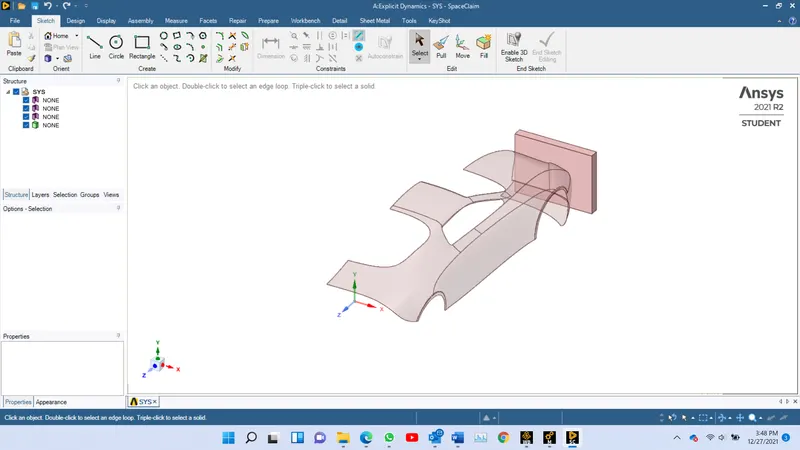
Import geometry file and check for any abnormalities in the model using SpaceClaim
Update the geometry file << Model
Rename assembly parts as Wall and Car_body
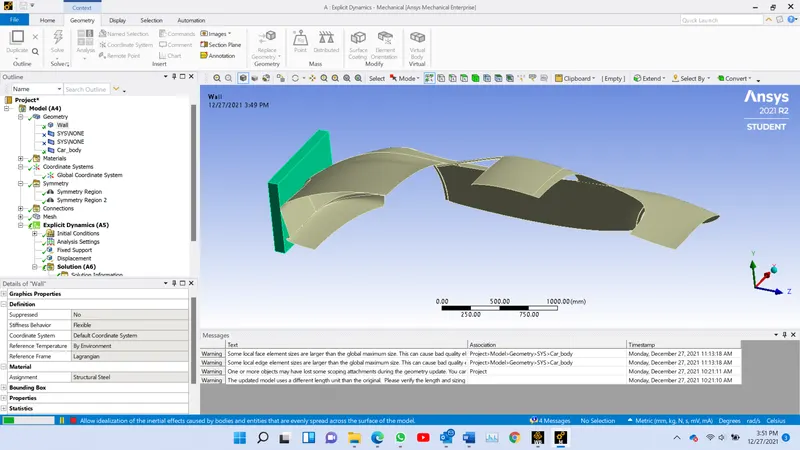
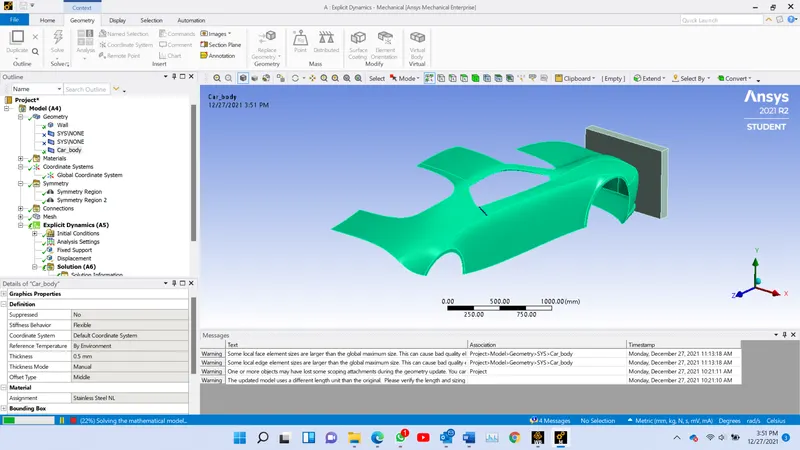
Suppress 2 default parts
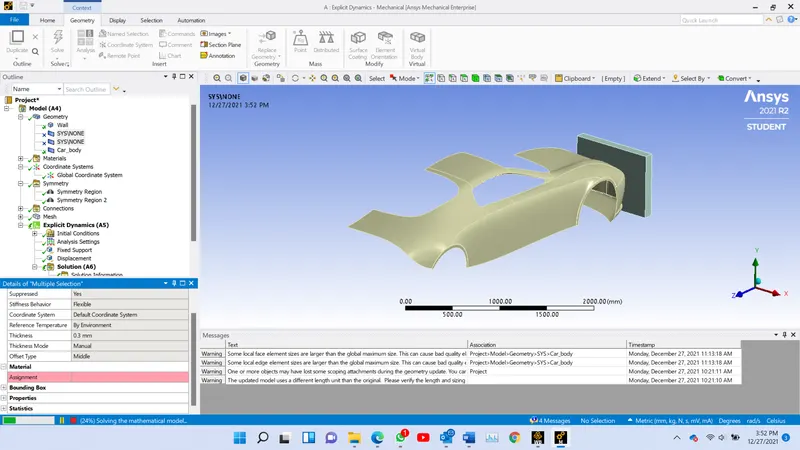
Assign Structural steel as a material of Wall
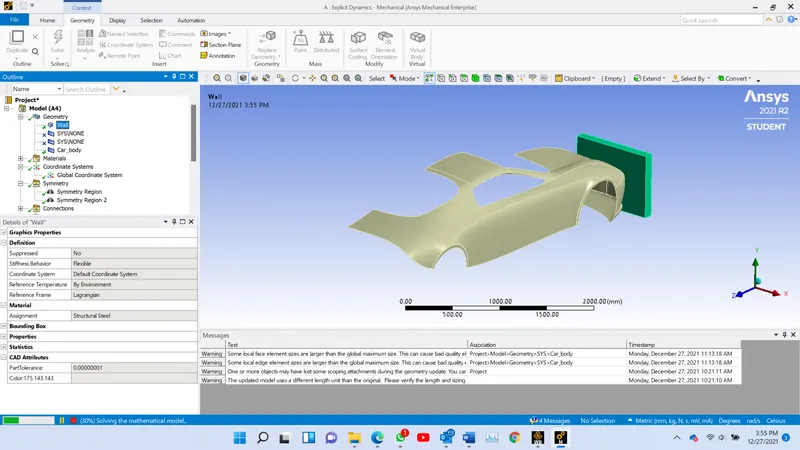
Assign Stainless steel NL as a material of Car_body. Assign a thickness of 3 mm and enable the parametric study
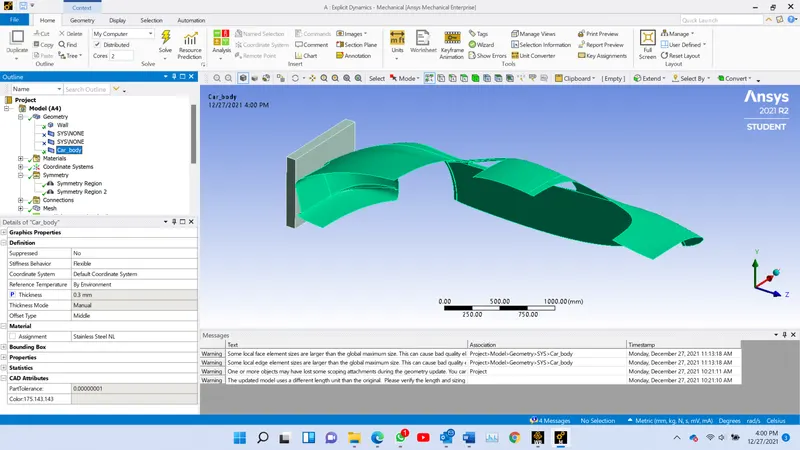
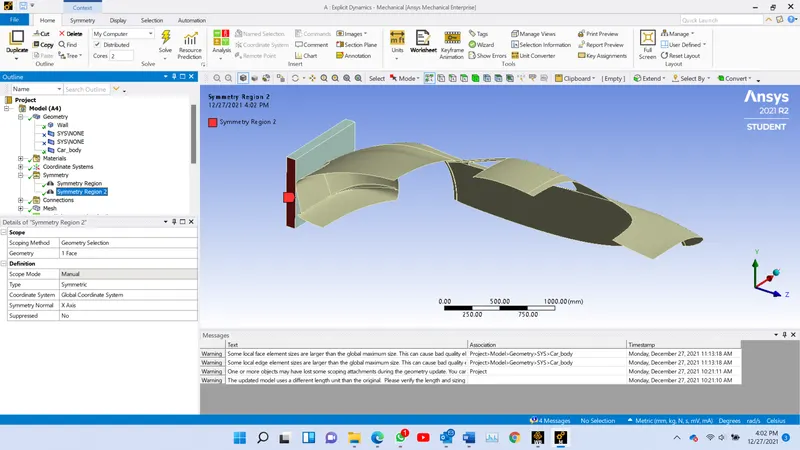
Select 10 edges of Car_body as a Symmetry Region to reduce the computational time. Symmetry normal edge would be along X-direction
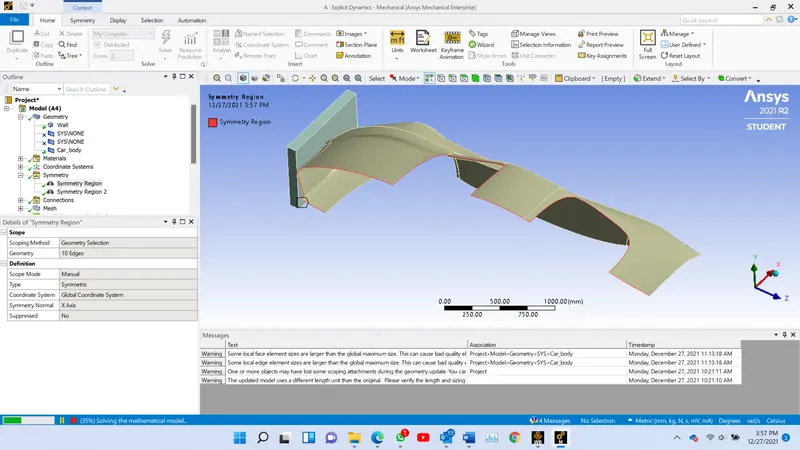
Select 1 face of the Wall as another Symmetry region. Symmetry normal edge would be along X-direction
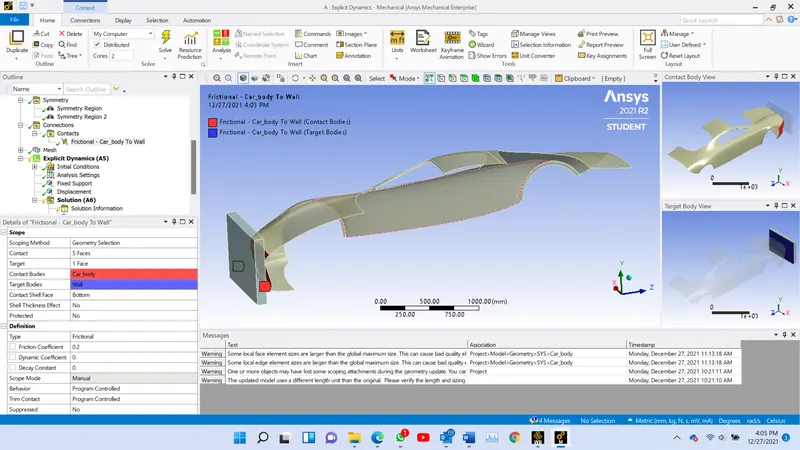
Assign Frictional contact pair between Car_body and Wall. The frictional coefficient will be 0.2. Change contact shell face to bottom. Target bodies will be Wall and Contact body will be the front face of Car.
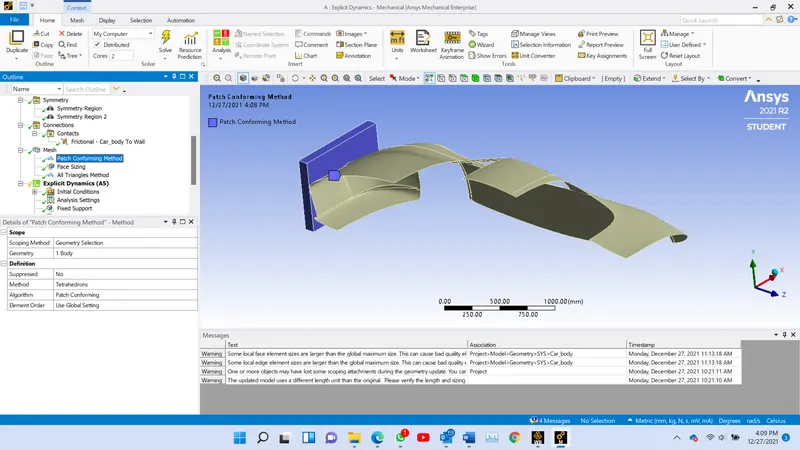
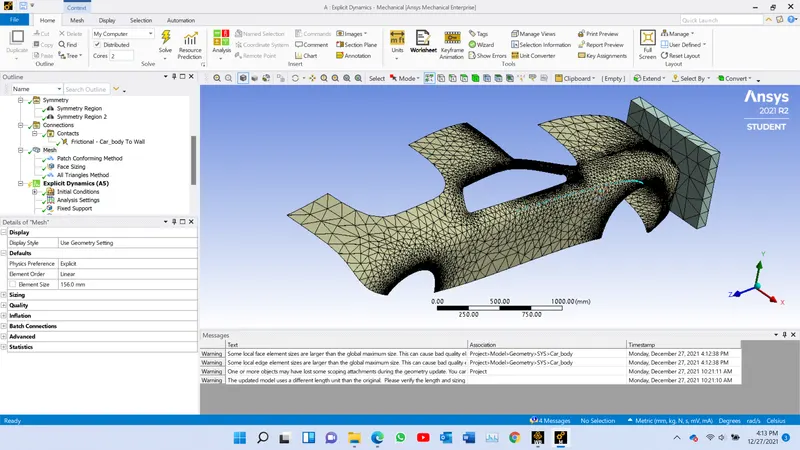
Assign tetrahedral mesh to Wall using Patch Conforming Algorithm.
Assign triangular mesh to Car_body
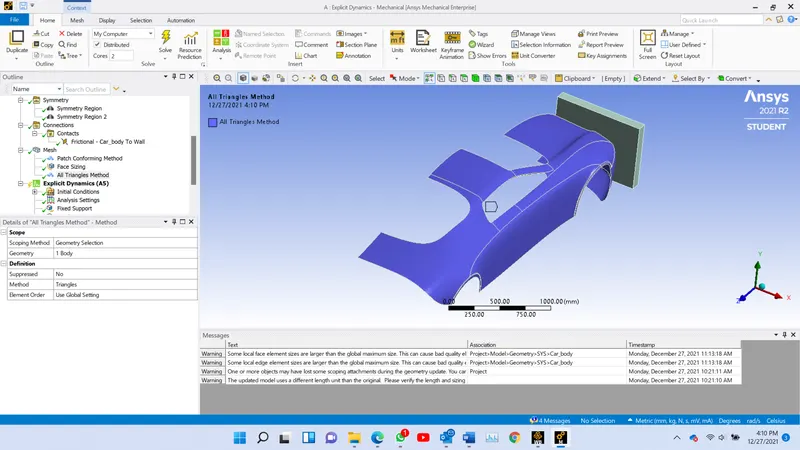
Assign element size of 156mm
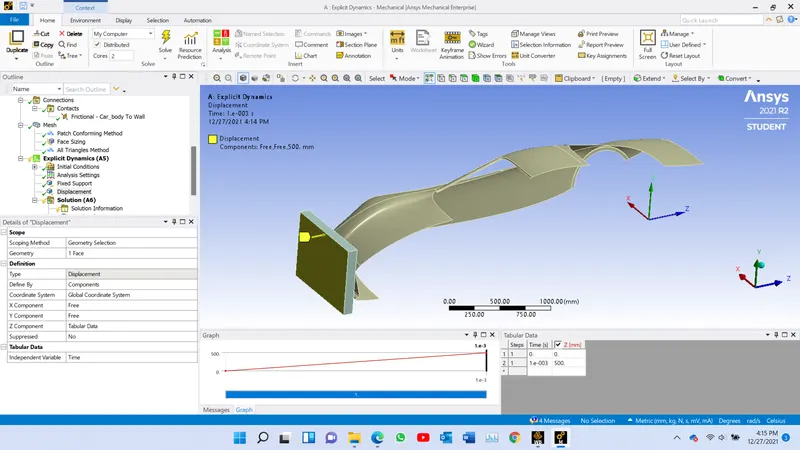
Apply Z-direction displacement of 500mm in the form of tabular data
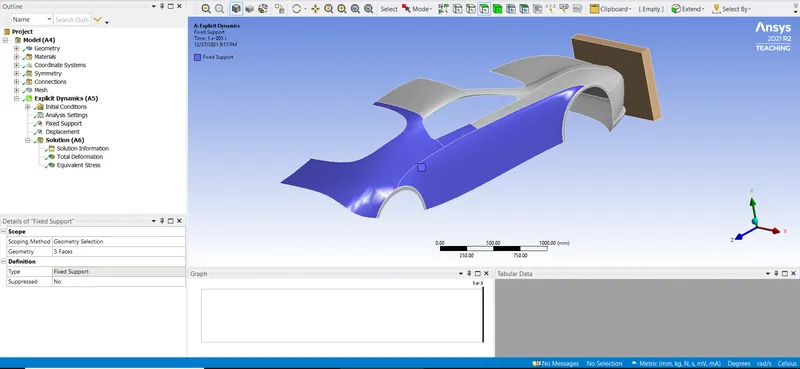
Fix 4 faces of Car_body which is not in contact during the impact with the wall
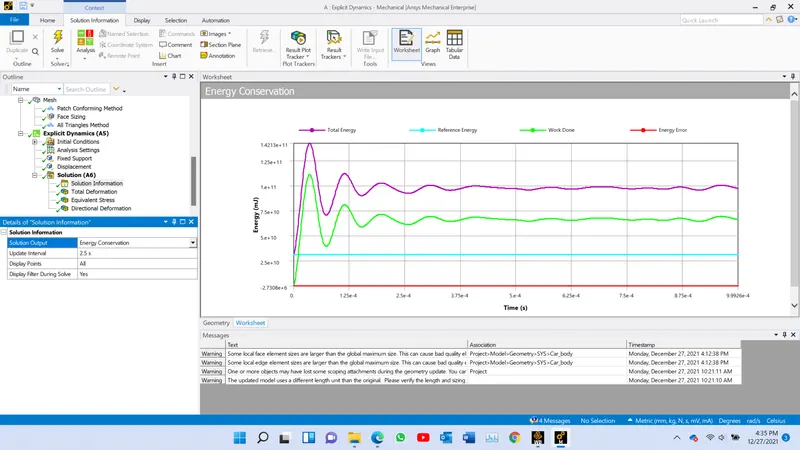
Energy conservation
Case 2
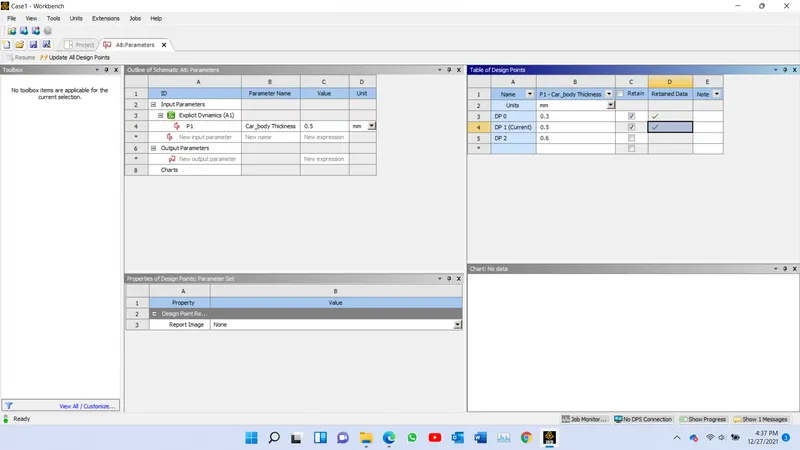
Set thickness of Car_body to 0.5 mm and make it current by clicking the retained data
Case 3
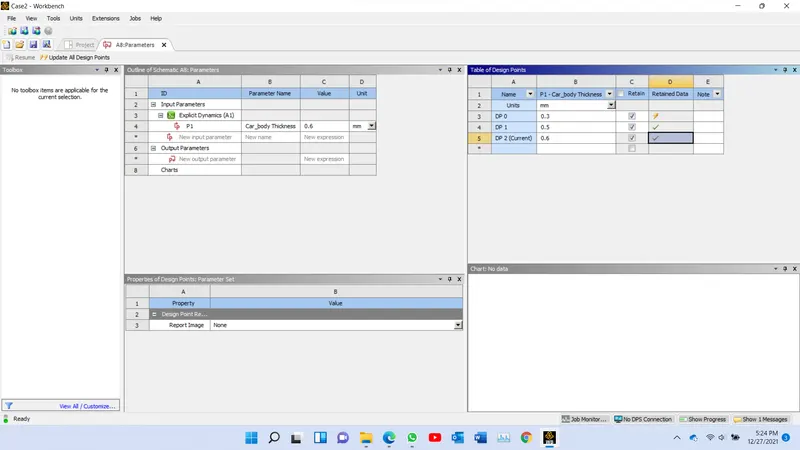
Set thickness of Car_body to 0.6 mm and make it current by clicking the retained data
3. Results of case 1
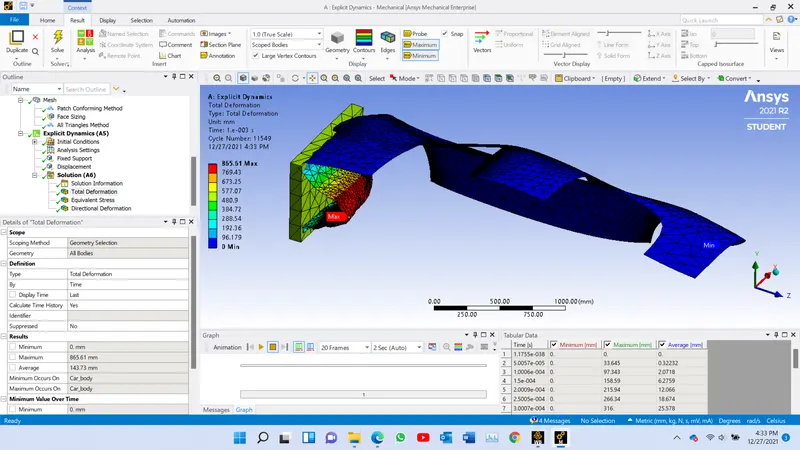
Total deformation
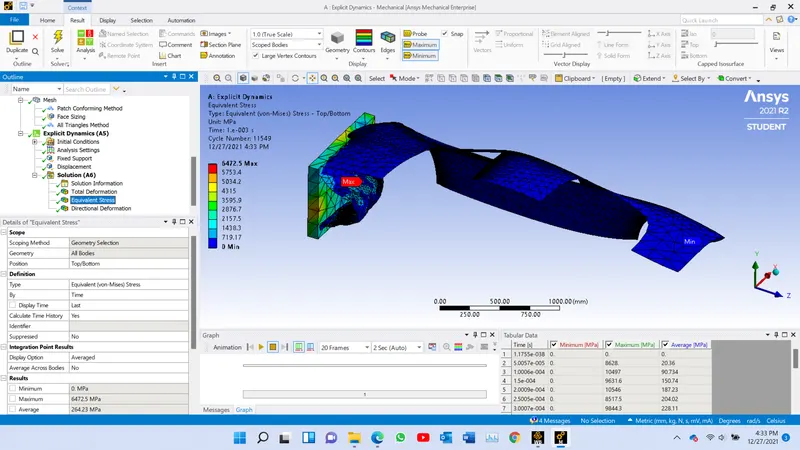
Equivalent stress
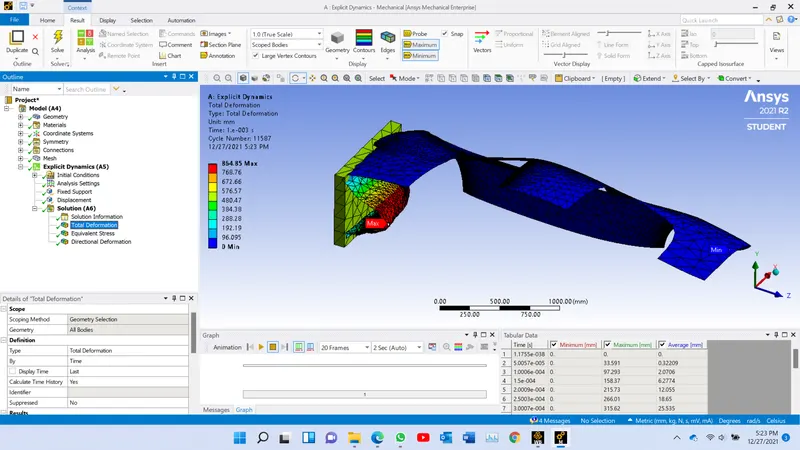
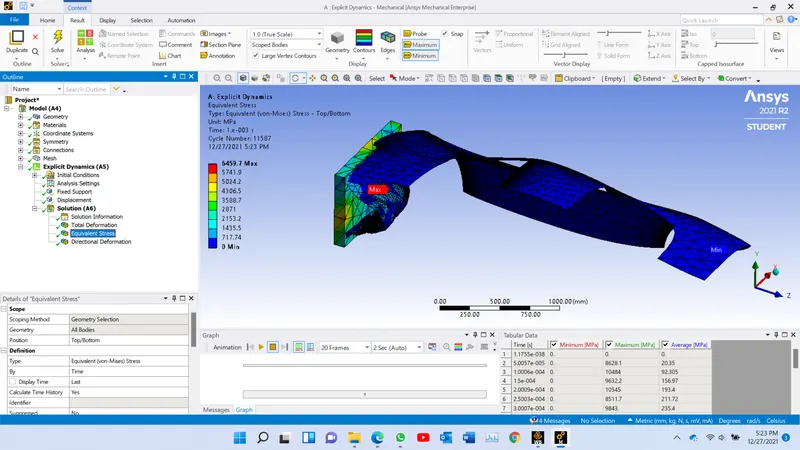
4. Results of case 2
Total deformation
Equivalent stress
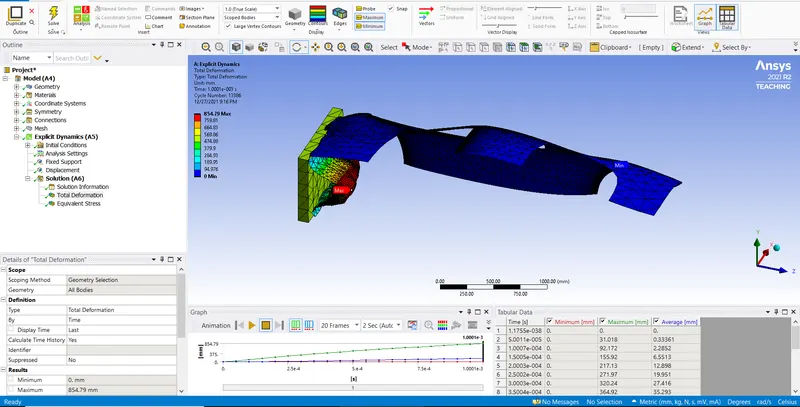
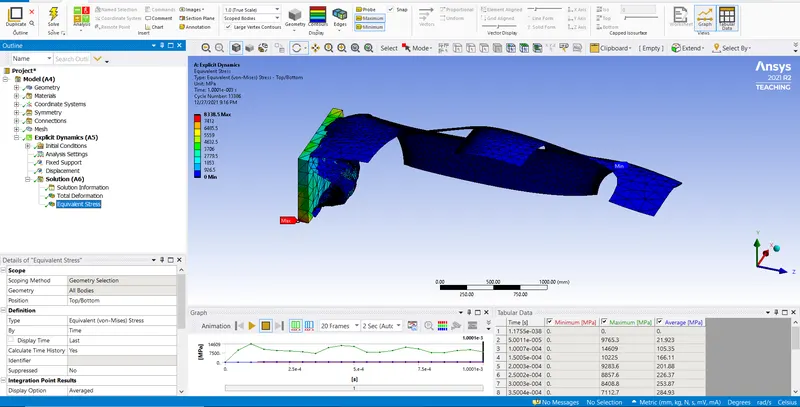
5. Results of case 3
Total deformation
Equivalent stress
6. Results, Conclusion and Report presentation
Case 1
| Total deformation | 865.61 mm |
| Equivalent stress | 6472.5 MPa |
Case 2
| Total deformation | 864.85 mm |
| Equivalent stress | 6459.7 MPa |
Case 3
| Total deformation | 854.79 mm |
| Equivalent stress | 8338.5 MPa |
As seen from above 3 cases, equivalent stress keeps on increasing from 6472.5 MPa to 8338.5 MPa. This is due to increased thickness of the Car_body. However total deformation is lowest in case 3 compared to other 2 cases.
7. Simulation files
Files are attached