Week 11 Car Crash simulation
CAR CRASH SIMULATION
OBJECTIVE
To perform Car crash simulation in ANSYS Workbench and conduct a parametric study with 3 different values of thickness for the car body
Analyse the total deformation and Equivalent stresses acting on the model.
MODEL SETUP
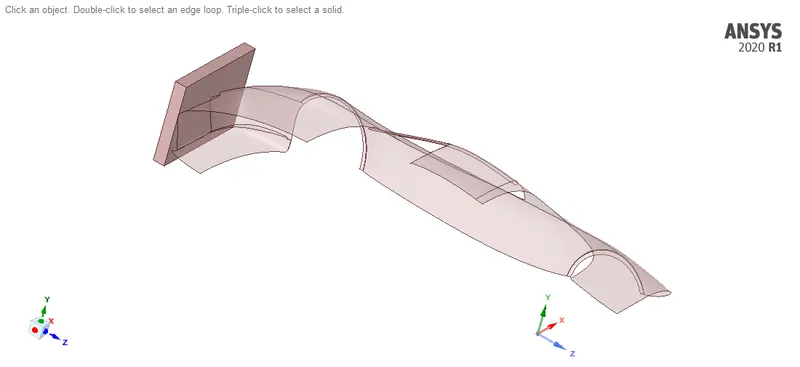
The 3D model of the setup is imported into ANSYS Space Claim. Check for any abnormalities in the Geometry.
MATERIAL ASSINGMENT:
Structural steel is assigned to the Wall
Stainless Steel NL is assigned to the Car body
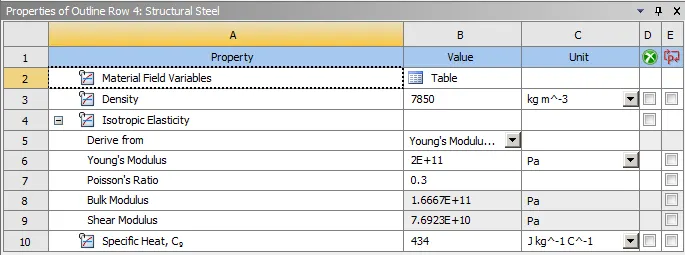
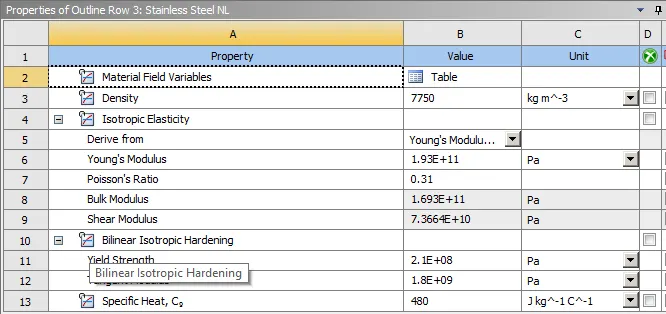
The properties of materials used is shown below
- Structural Steel :
- Stainless Steel NL :
MODEL SETUP:
After importing the Geometry, rename the specimen and assign respective materials.
SYMMETRY:
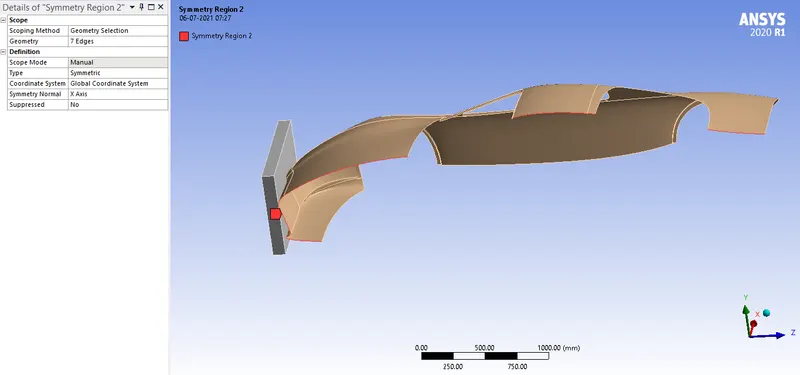
As the model is symmetric, we take 1/2 of the model and later mirror it to bigger model to account for the effects.
- A Symmetric region is assigned to one face of the wall
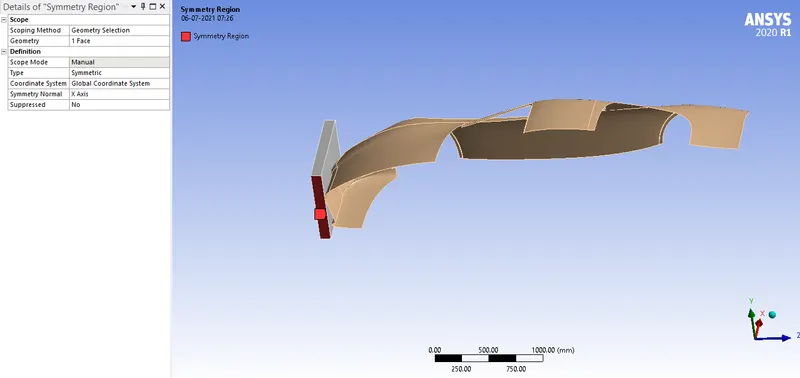
- Another Symmetric region is assigned to the edges of the car body as shown
BODY INTERACTION
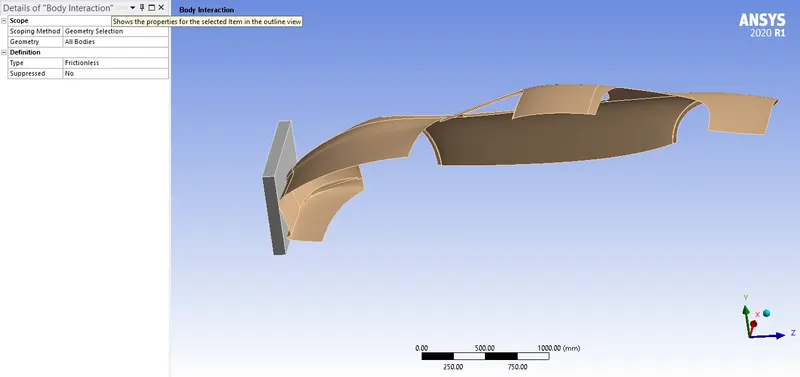
For all the bodies, Frictionless type Body interaction is chosen
MESHING:
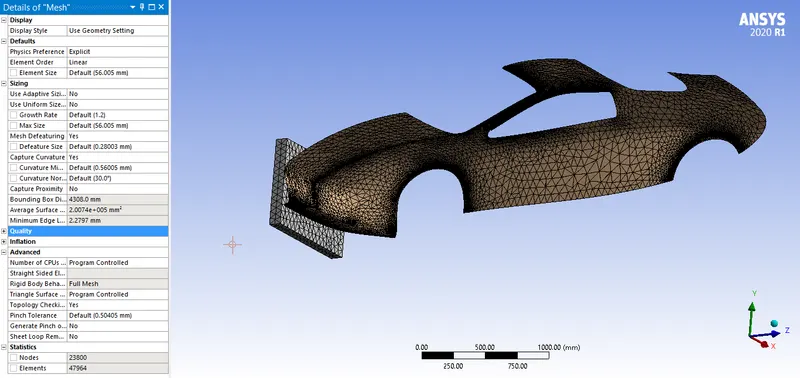
The meshing is done as follows,
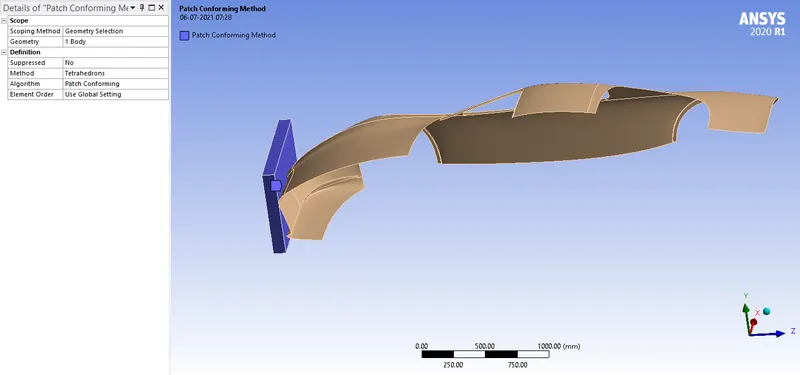
- The Wall is meshed with Tetrahedron elements with Patch Confirming Algorithm
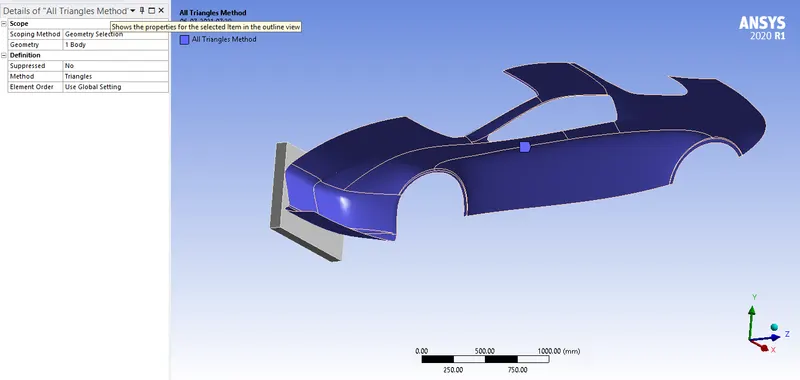
- The Car body is meshed with Triangle elements
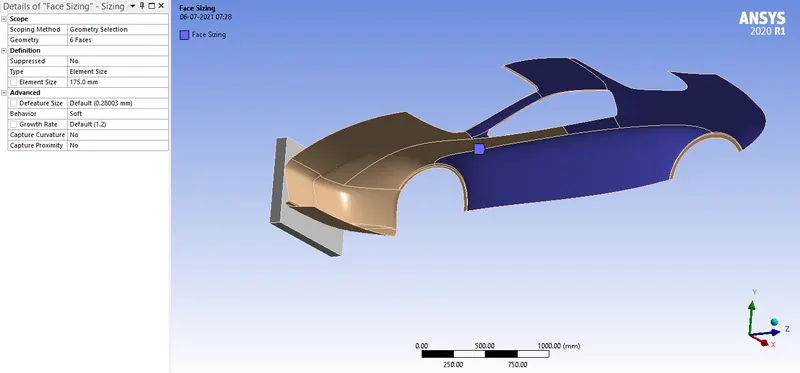
- A Face sizing of 175 mm is assigned to face of the car body as shown
FINAL MESH:
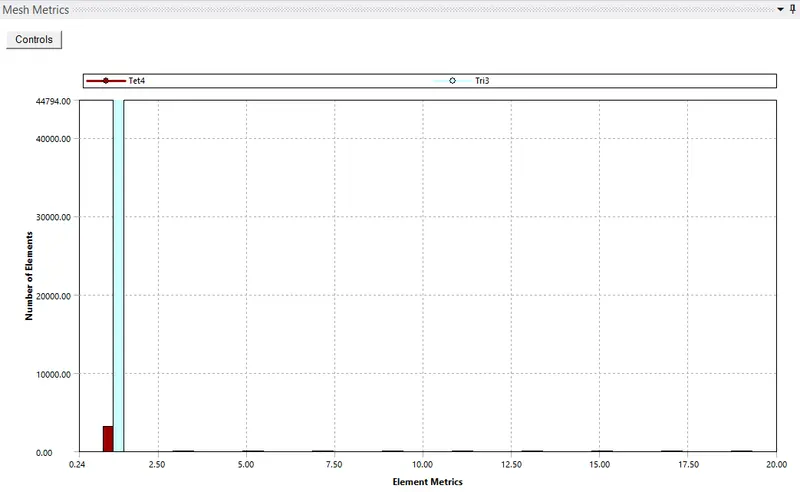
MESH QUALITY:
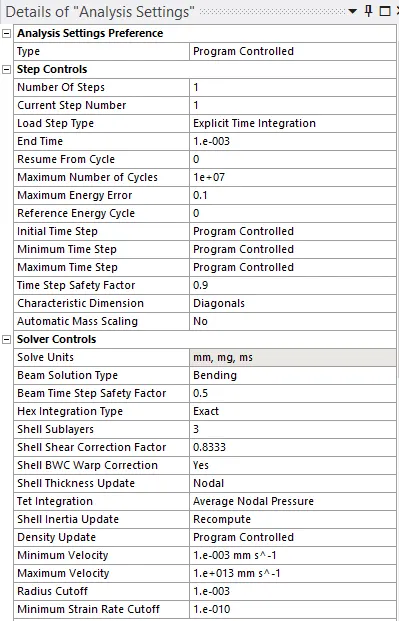
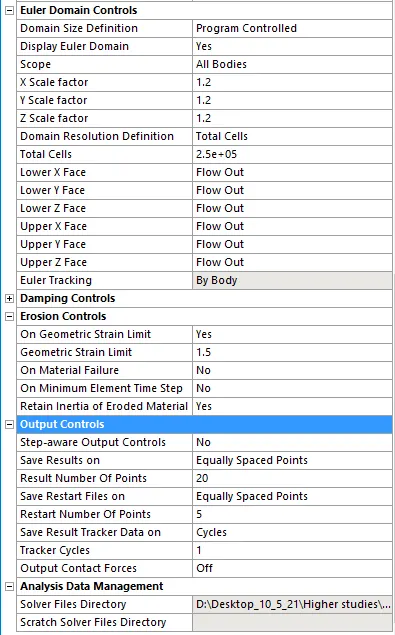
ANALYSIS SETTINGS:
The simulation is run for 1 step.
The End time is assigned a value of 0.001s.
Other settings are default and as shown below
BOUNDARY CONDITIONS:
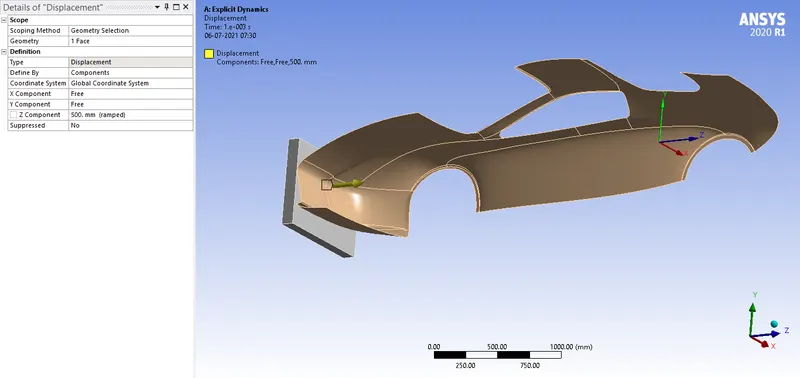
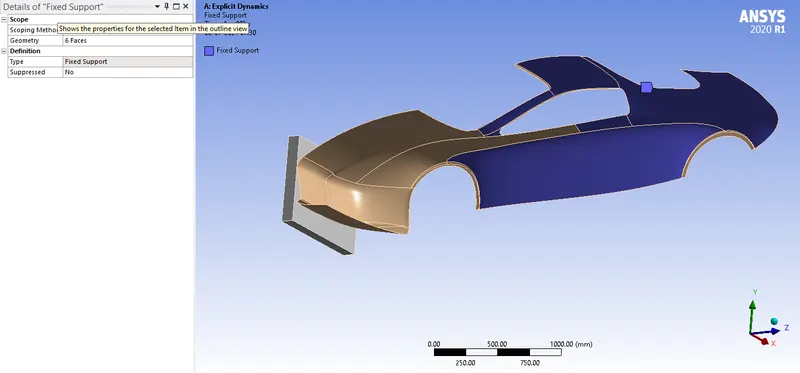
The boundary condition for this model are
- A Displacement of 500 mm for the Wall:
- A Fixed support for the faces of the Car body:
RESULTS:
PARAMETRIC SET RESULT FOR DIFFERENT CAR BODY THICKNESS :

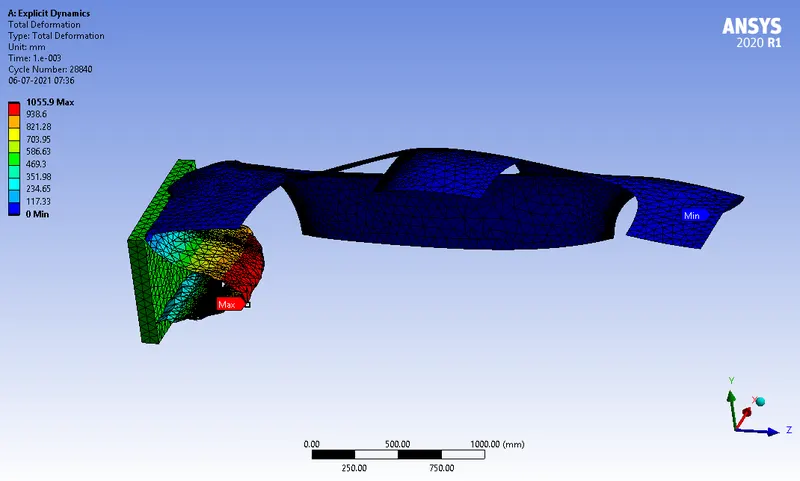
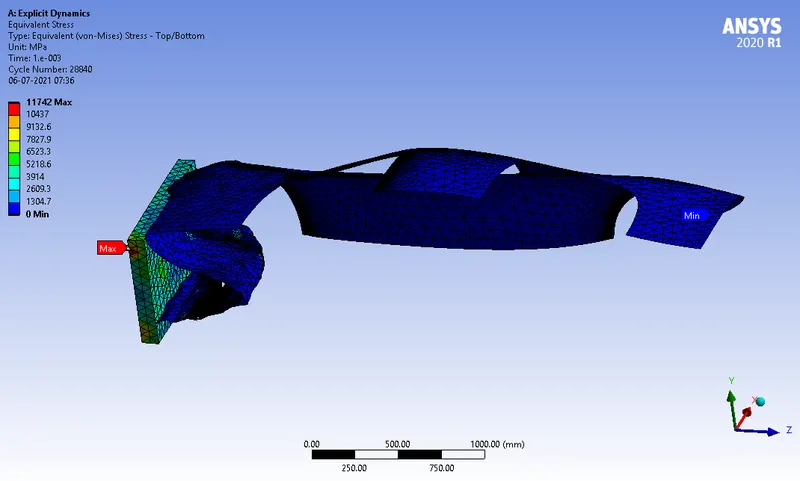
CASE 1:
ANIMATION:
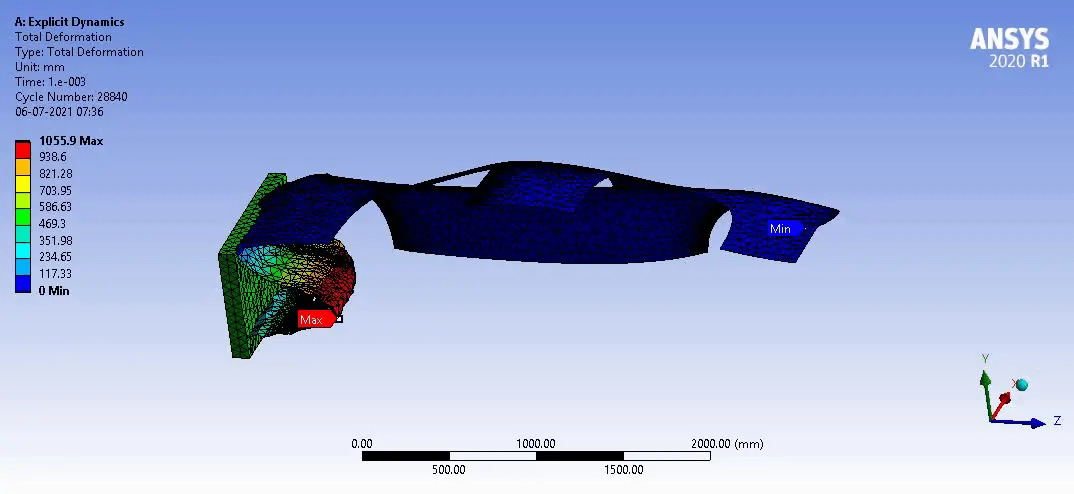
- Total Deformation
- Equivalent stress
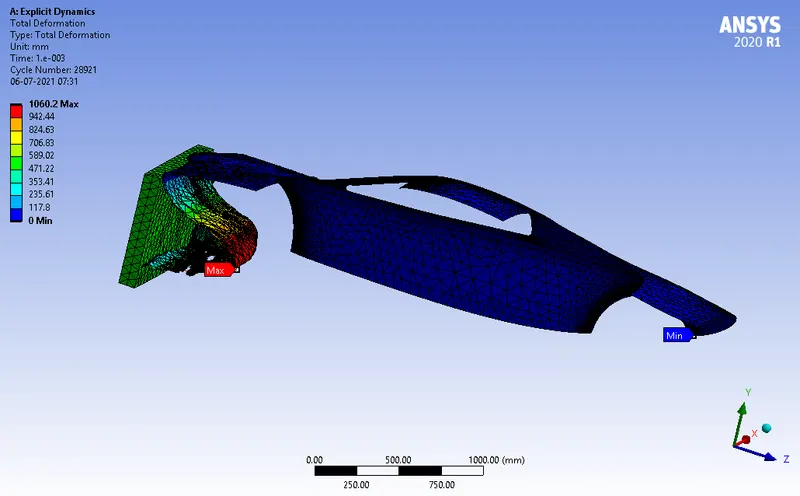
CASE 2:
ANIMATION:
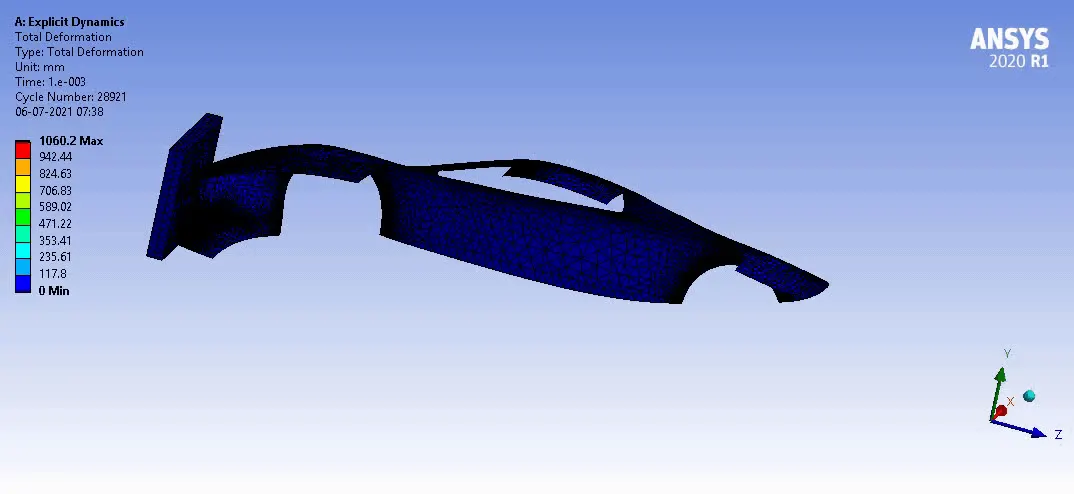
- Total Deformation
- Equivalent stress
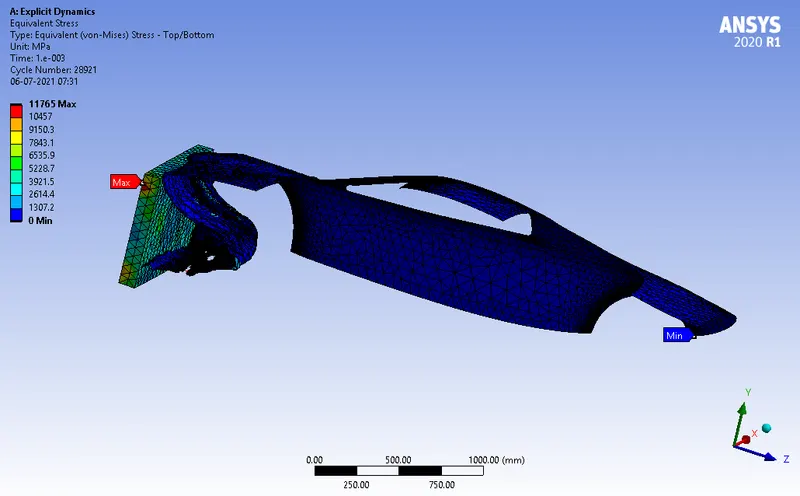
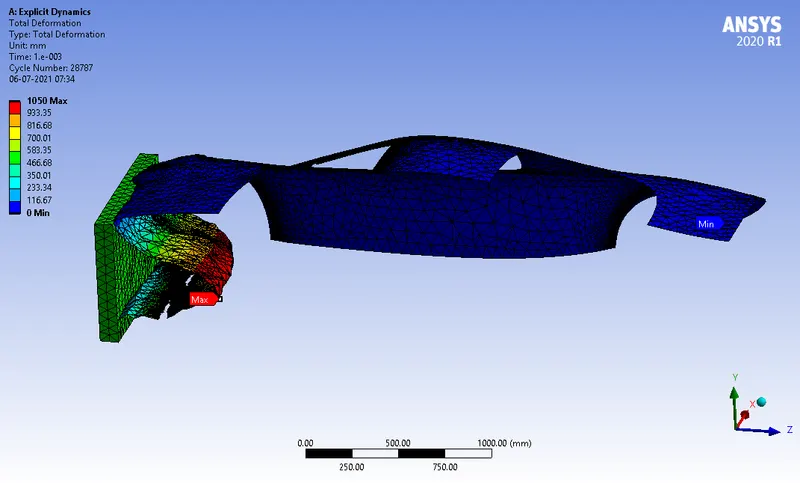
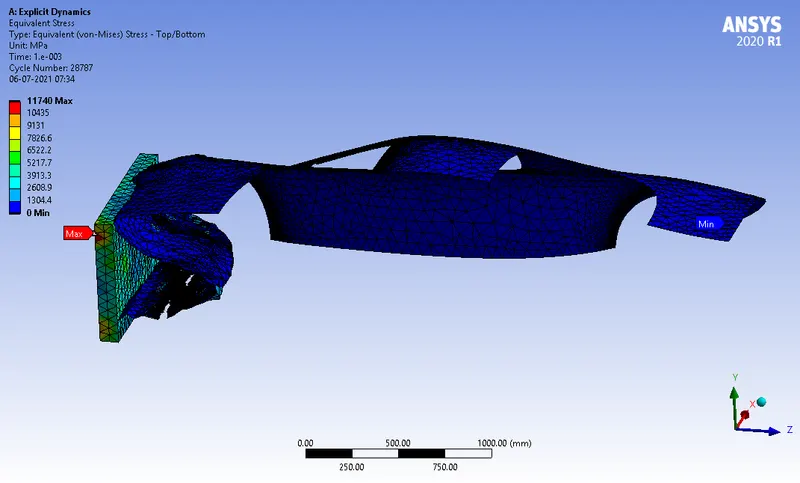
CASE 3:
ANIMATION:
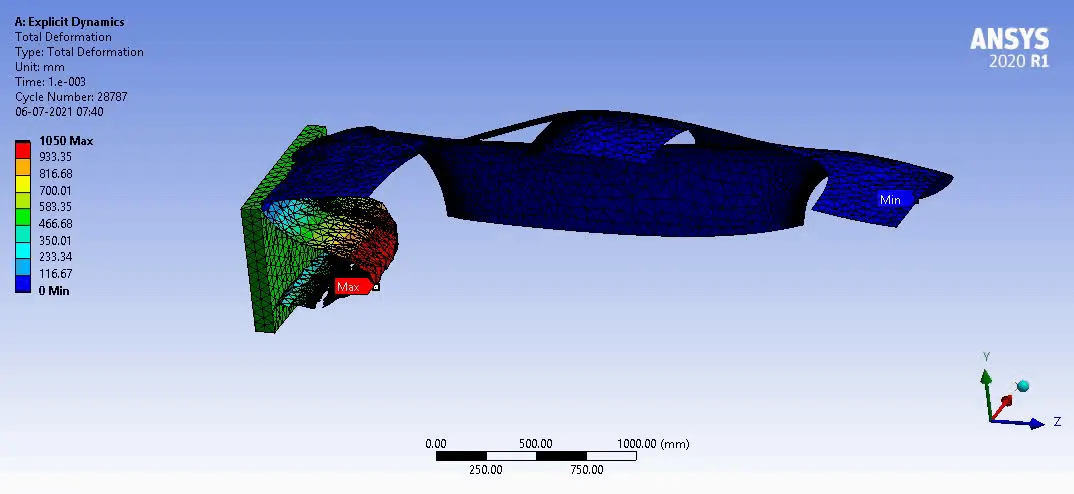
- Total Deformation
- Equivalent stress
CONCLUSION:
The values of all the results are tabulated below,
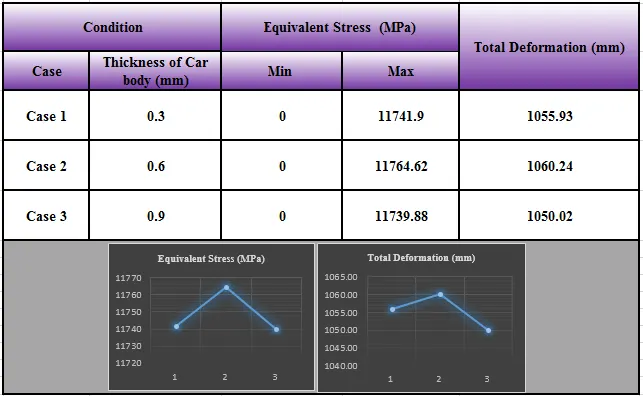
From the results, it can be inferred that
- Equivalent Stress increases when car body thickness is increased from 0.3 mm to 0.6 mm and then decreases when thickness is furthur increased to 0.9 mm
- Total Deformation also increases when car body thickness is increased from 0.3 mm to 0.6 mm and then decreases when thickness is furthur increased to 0.9 mm
The simulation files are attached below