Car Crash simulation using Ansys-Workbench.
AIM: The aim of this simulation is to perform a Parametric Study of a Car body with varying thickness undergo the crash test.
OBJECTIVE:
To perform the Crash test for the body of the same material but with different thickness.
- Thickness-0.3mm
- Thickness-0.5mm
- Thickness-0.7mm
PROCEDURE:
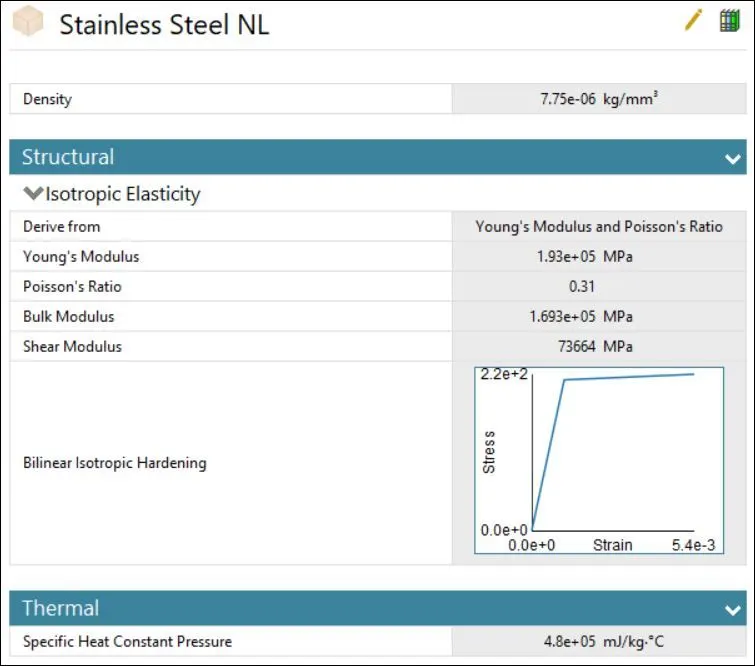
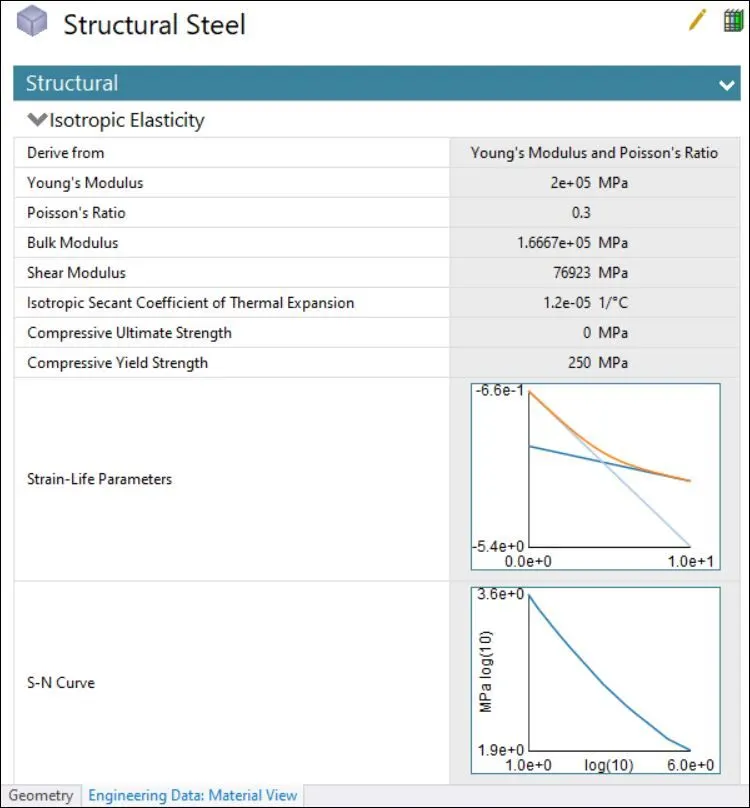
Once we open the Ansys-Workbench model we can select the Materials needed. The wall will be Structural Steel and Car body will be Stainless Steel NL. Once the materials are selected from the Engineering data we can import the model.
In order to reduce the computational time, we will be using only one-half of the car model. We will be using the symmetry option for all the surfaces as shown below.
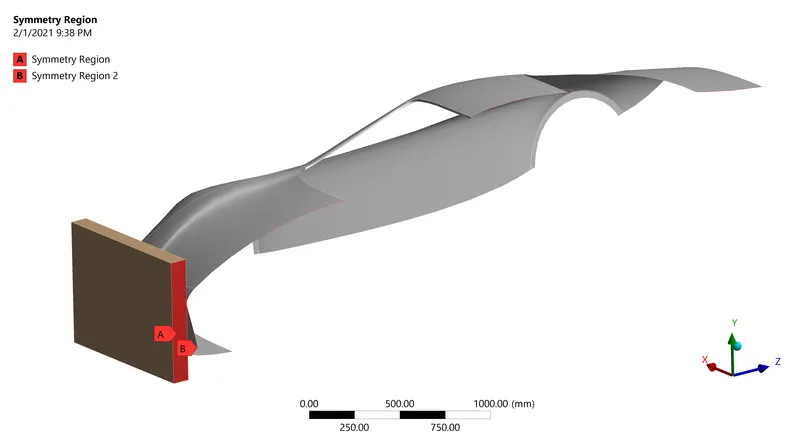
The edges along with the Car and also one side of the call is selected. Also, the Body interactions type of frictionless is selected.
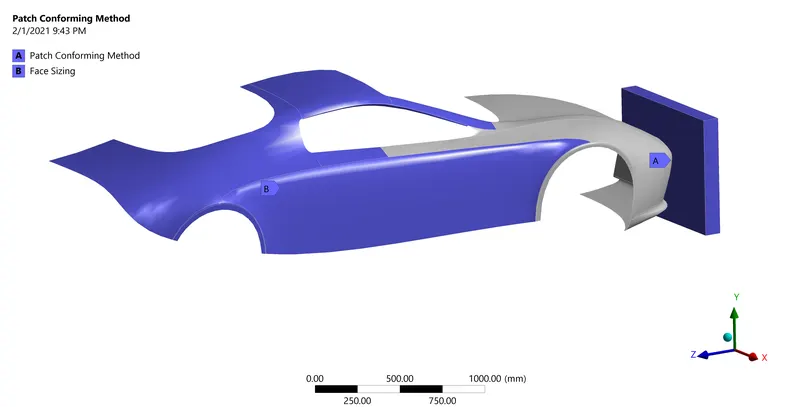
The Wall is given using a Mesh type of Tetrahedrons and also a Face sizing of 70mm is given.
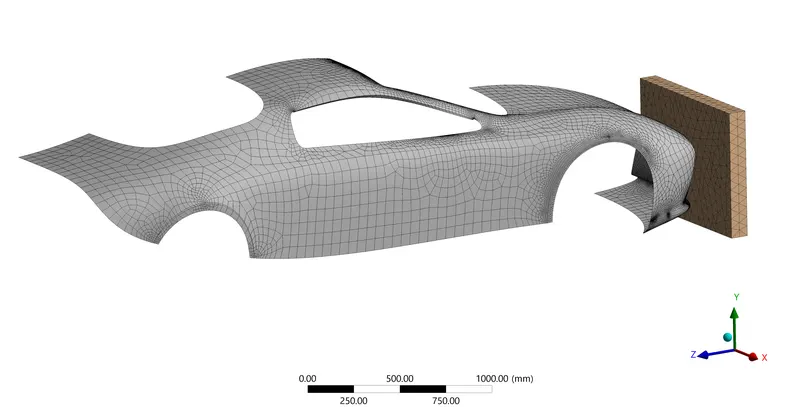
The Total number of elements formed is 16182 and the Nodes are 14072. Once the meshing is done we can give the load to the Model.
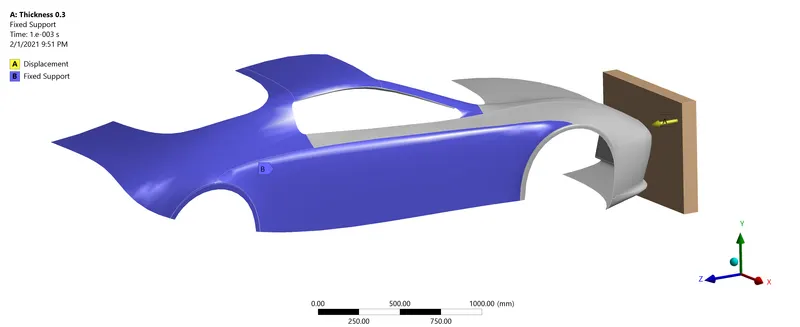
The selected blue surfaces are given Fixed support and the Wall is given a displacement of 500mm. And the total simulation is run for a Time of 0.001Seconds.
RESULTS:
CASE-1(Thickness-0.3mm)
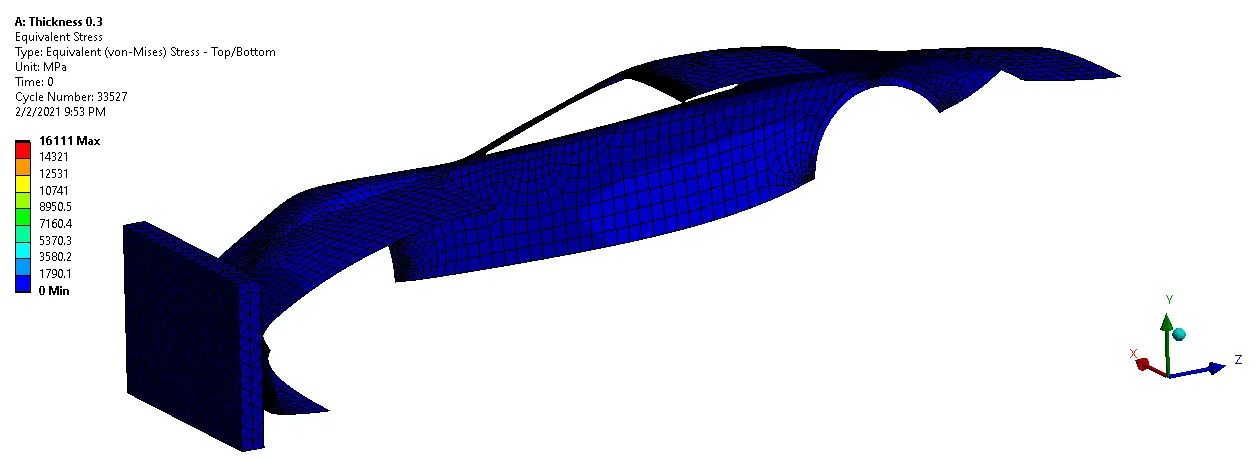
Equivalent Stress:
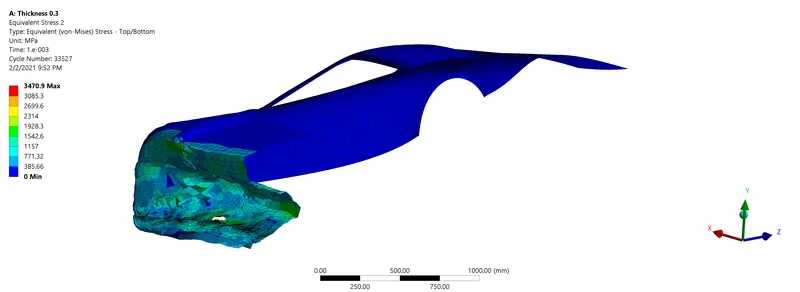
Stress Table and Graph:
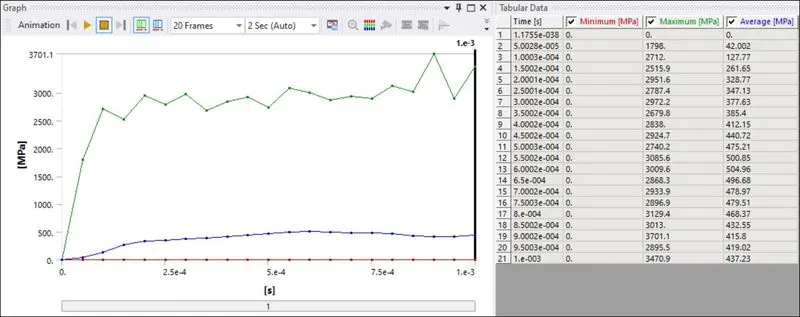
The Maximum Stress formed in this case is 3701.1 Mpa.
Total Deformation:
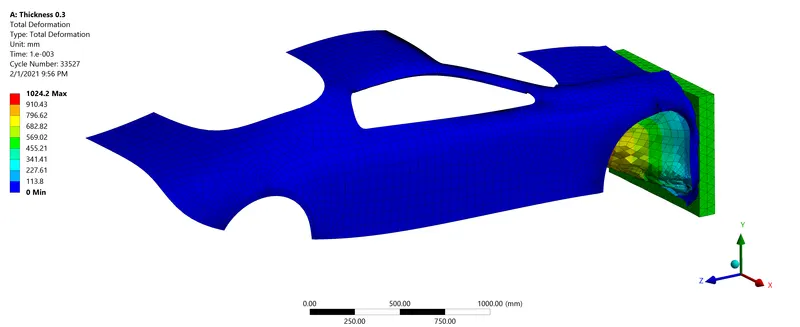
Table and Graph:
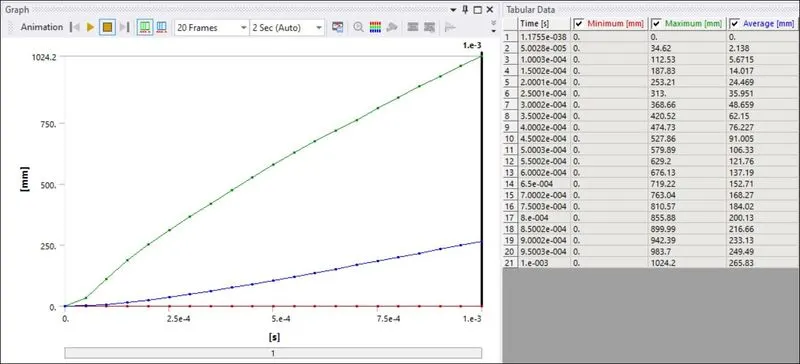
The Maximum deformation is 1024.2mm.
CASE-2(Thickness-0.5)
Equivalent Stress:
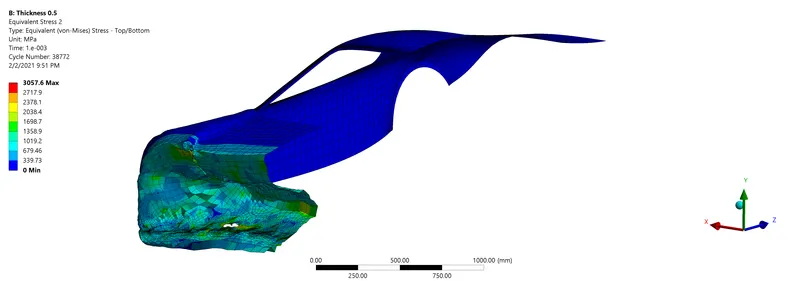
Stress Table and Graph:
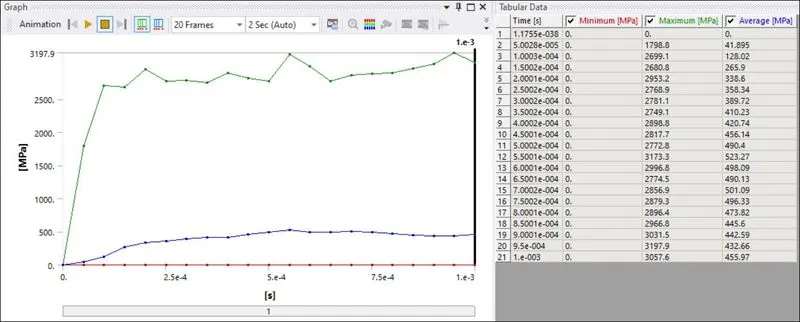
The Maximum Stress formed in this case is 3197.9 Mpa.
Total Deformation:
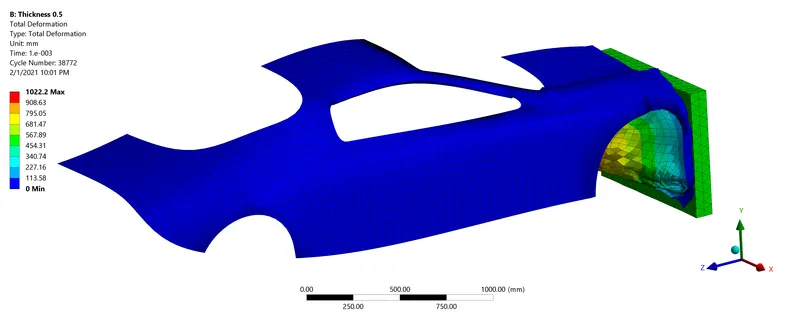
Table and Graph:
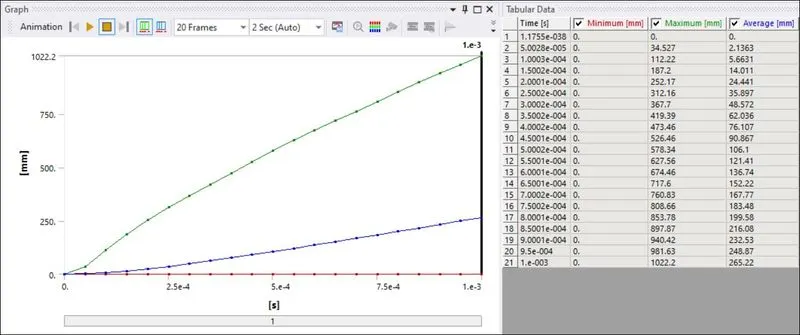
The Maximum deformation is 1022.2mm.
CASE-3(Thickness-0.7)
Equivalent Stress:
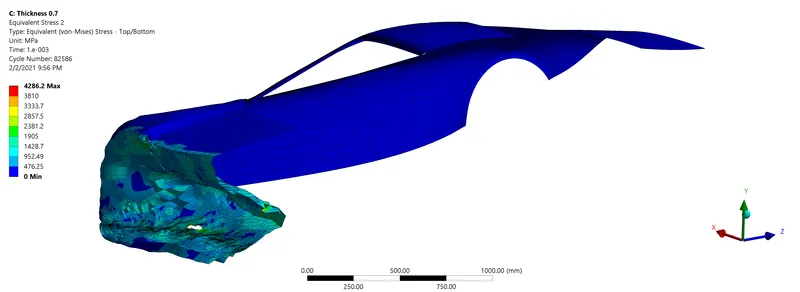
Stress Table and Graph:
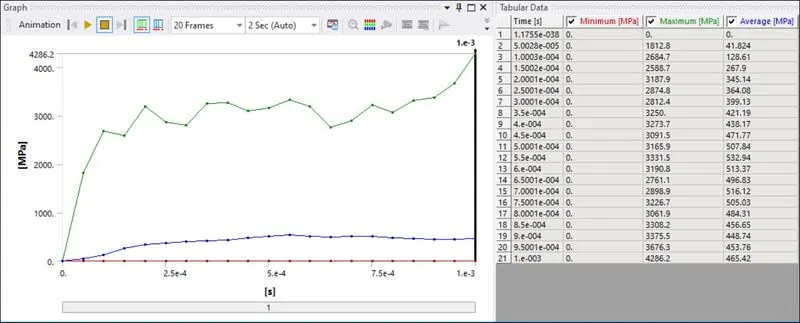
The Maximum Stress formed in this case is 4286.2Mpa.
Total Deformation:
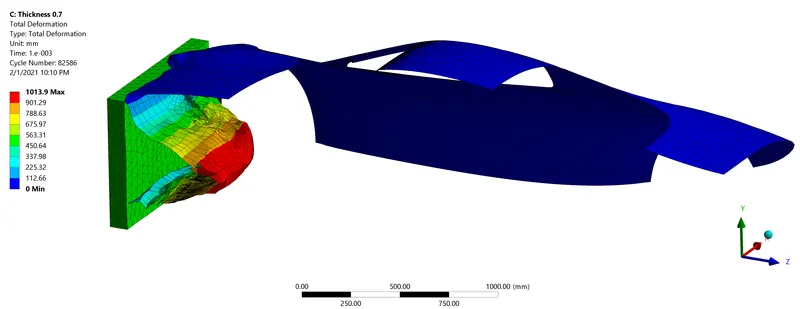
Table and Graph:
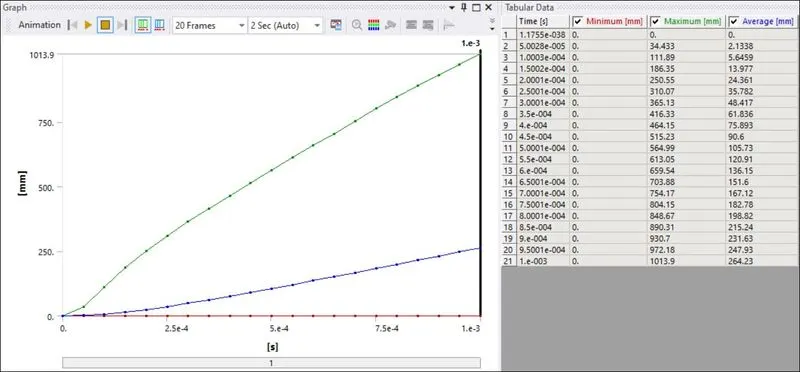
The Maximum deformation is 1013.9mm.
CONCLUSION:
The results are tabulated below:
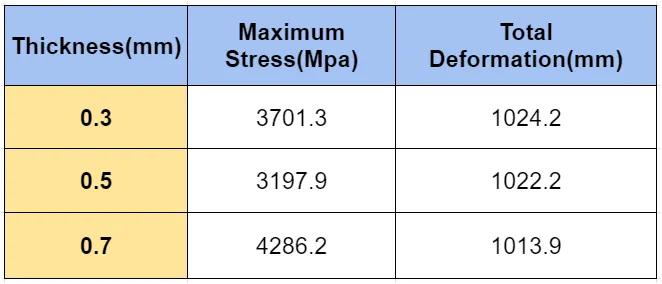
The Maximum Stress is formed when the thickness is 0.7mm and the least maximum is seen when the car is assigned a thickness of 0.5mm.
As the Thickness increases the deformation decreases. Maximum deformation is seen in the first case when the thickness is 0.3mm and the least when the car body is 0.7mm in thickness.