Week 11 Car Crash simulation
AIM: - To perform explicit dynamic analysis for car crash.
OBJECTIVE:
To study perform explicit dynamic analysis for car crash model with varying types of thickness and get results for Equivalent stress and the total deformation.
- CASE: 1 {Thickness of car body is 0.3 mm.}
- CASE: 2 {Thickness of car body is 0.5 mm.}
- CASE: 3 {Thickness of car body is 2 mm.}
THEORY:
- A frontal car crash occurs when two vehicles collide head-on, or when a vehicle collides with an object such as a wall or tree. The analysis of a frontal car crash typically involves determining the cause of the accident, the extent of the damage, and the injuries sustained by the occupants of the vehicles involved.
- One of the primary concerns in a frontal car crash is the safety of the occupants of the vehicles. The severity of injuries sustained in a crash can vary depending on a number of factors, such as the speed of the vehicles involved, the angle of impact, the size and weight of the vehicles, and the use of safety equipment such as seat belts and airbags.
- To reduce the risk of injury in a frontal car crash, it is important for drivers to follow safe driving practices such as obeying traffic laws, avoiding distractions while driving, maintaining a safe speed, and properly maintaining their vehicle. Additionally, using safety equipment such as seat belts and airbags can greatly reduce the risk of injury in a crash.
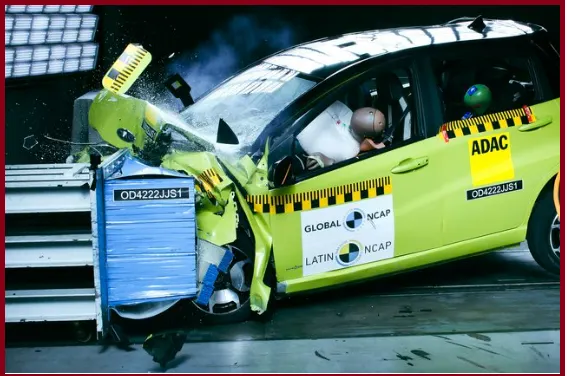
- Explicit dynamic analysis is a commonly used technique in simulating car crashes. It involves modelling the behaviour of the vehicle and its occupants during a collision by considering the complex interactions between the various components of the vehicle and the external forces acting on it.
- To perform explicit dynamic analysis for car crashes, a finite element analysis (FEA) software is typically used. The software divides the car into small, finite-sized elements and analyses the interaction between these elements and the external forces during a collision. The analysis takes into account the material properties of the vehicle, such as its stiffness and strength, as well as the nature of the collision, such as the speed and angle of impact.
- During the simulation, the software calculates the deformation and stress distribution of the vehicle's components, as well as the accelerations and forces acting on the occupants of the vehicle. This data can be used to evaluate the safety of the vehicle's design and to identify areas for improvement. It can also be used to assess the risk of injury to the occupants of the vehicle.
- Explicit dynamic analysis can help engineers and designers make informed decisions about the design and safety features of vehicles. By simulating different crash scenarios and analysing the results, they can optimize the design of the vehicle to better protect the occupants during a collision. This can include improving the stiffness and strength of the vehicle's structure, incorporating safety features such as airbags and seat belts, and using advanced materials to improve crashworthiness.
ANALYSIS SETUP:
Here we will start our work Explicit Dynamic analysis for car crash. We will perform the Analysis of the Car for the Frontal Crash for different thickness of the car body.
Different Cases based on the thickness of the Car Body
- CASE: 1 {Thickness 0.3 mm}
- CASE: 2 {Thickness 2 mm}
- CASE: 3 {Thickness 5 mm}
- Given Geometry
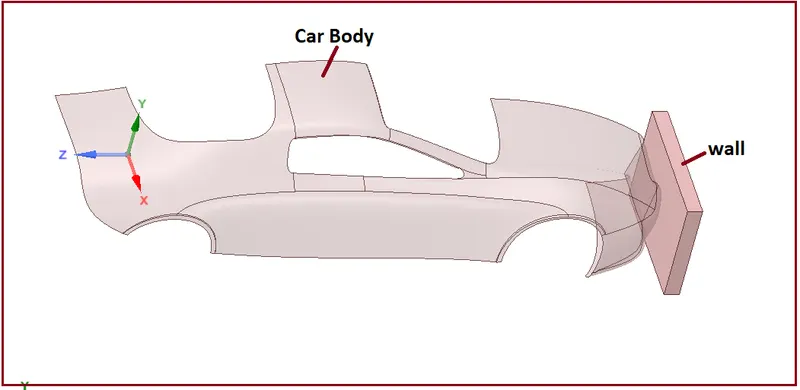
- Mesh
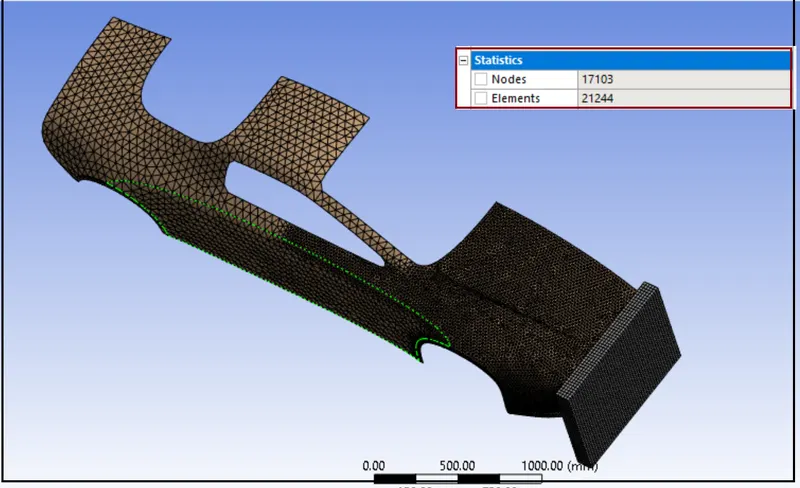
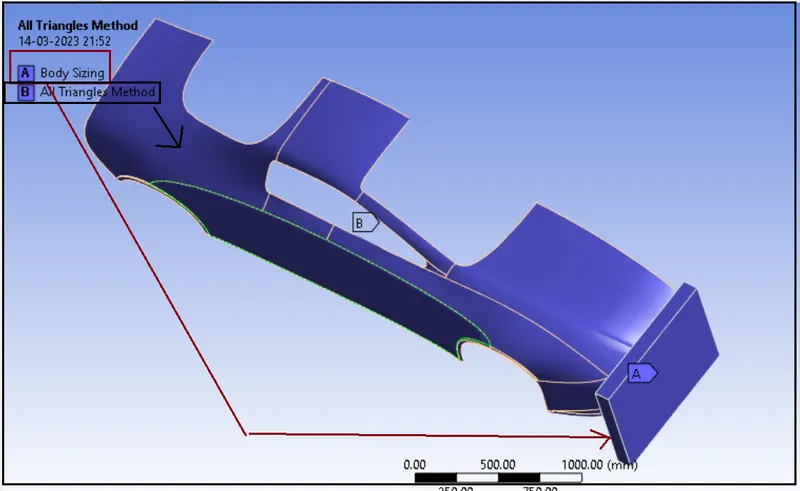
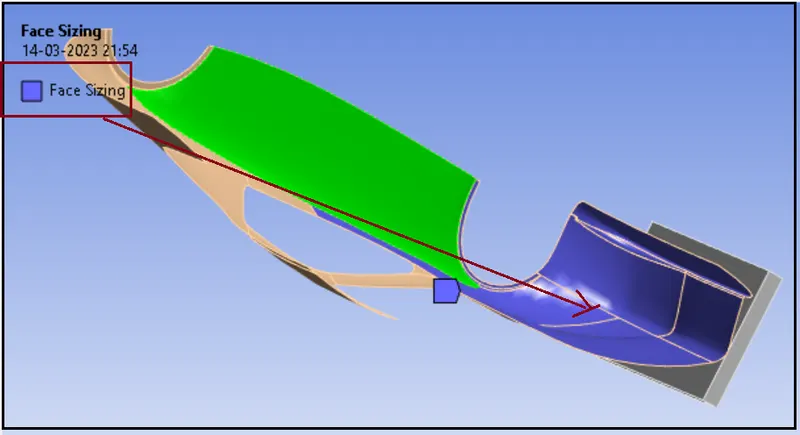
Mesh Details:
Meshing parameters for Car Crash Analysis is
- Patch Conforming Method: Car Body
- Method: Triangles
- Face Sizing: Car Body Front Faces
- Element Size: 20 mm
- Body Sizing: Wall
- Element Size: 20 mm
- Quality: Smoothing = Medium
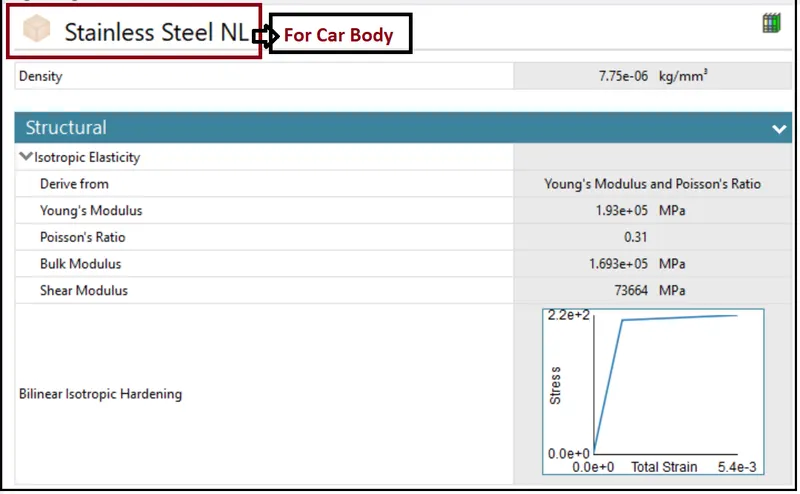
- Material {For car Body}
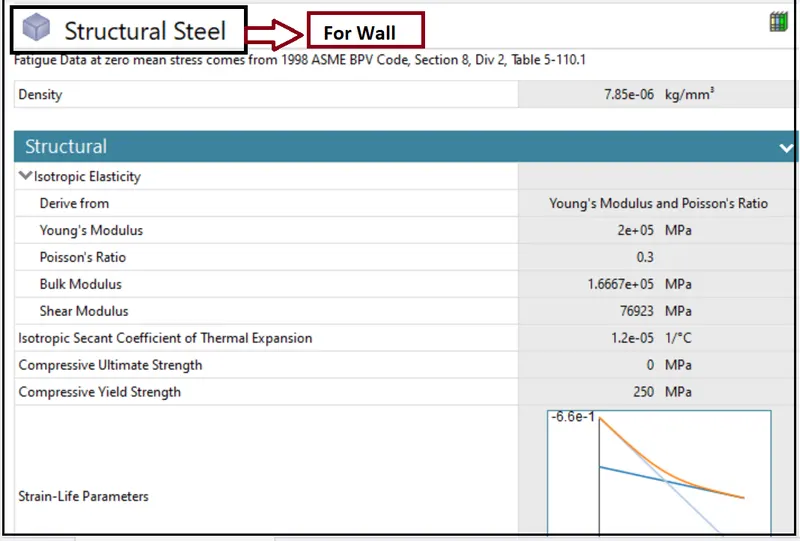
For Wall {Structural steel}
Initial steps
- Import model in Explicit Dynamics in Geometry section.
- Then go to Mechanical model section.
- Rename the Part of the setup as Car Body and Wall.
- Symmetry
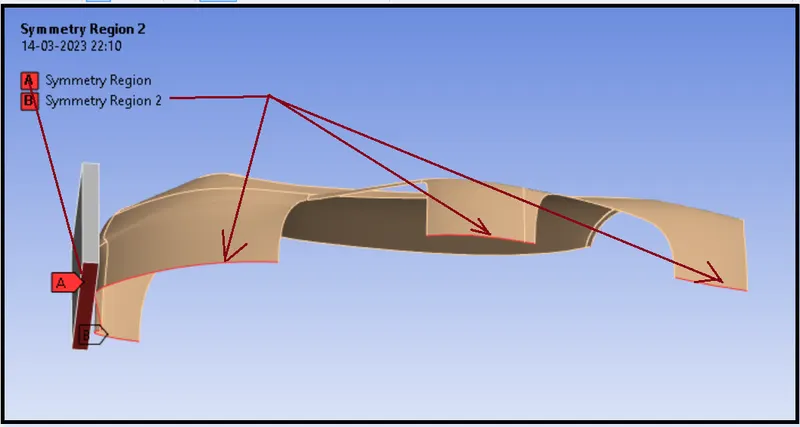
- Here we Create Symmetry Region for side edges of the faces of the Car Body which are symmetric in Plane (give Symmetry Normal to Global X—Axis.)
- Also Create Symmetry Region for side face of the Wall which is symmetric in Plane (give Symmetry Normal to Global X—Axis.)
- Boundary Conditions settings:
Our next step is creating Boundary Conditions:
Analysis Settings:
- No. of Steps: 1
- End Time: 0.001 s
- Maximum Number of Cycles:1e+07
- Maximum Energy Error: 5
- Initial Time Step: Program Controlled
- Minimum Time Step: Program Controlled
- Maximum Time Step: Program Controlled
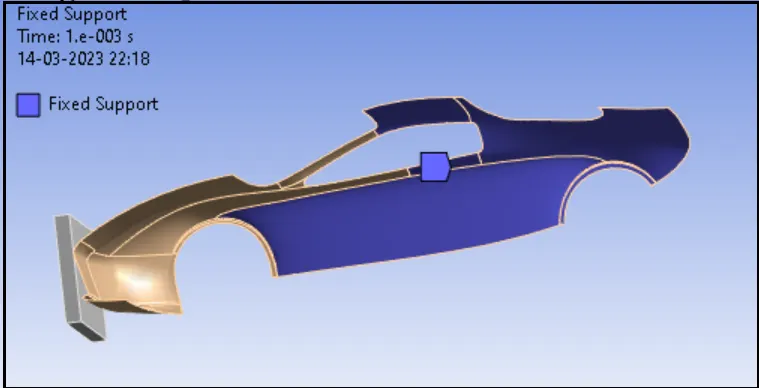
Fix Support
Here we want to Keep Rear faces of the Car Body as a fixed and to hold it while the Wall is impacting on the Frontal portion of the Car Body.
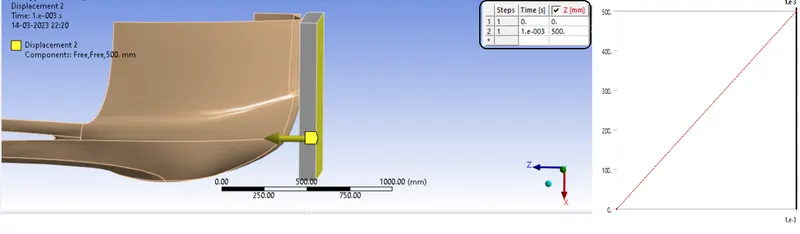
Displacement
Now we Apply Displacement to the Rear face of the Wall in the positive Z-Direction as given below
SOLUTION
After giving proper boundary conditions, create desired solutions for output results.
- Equivalent Stress
- Total Deformation
CASE: 1 {Thickness of car body is 0.3 mm.}
- Stress
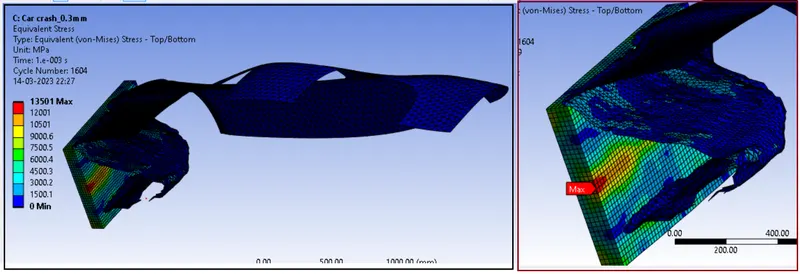
- Stress plot
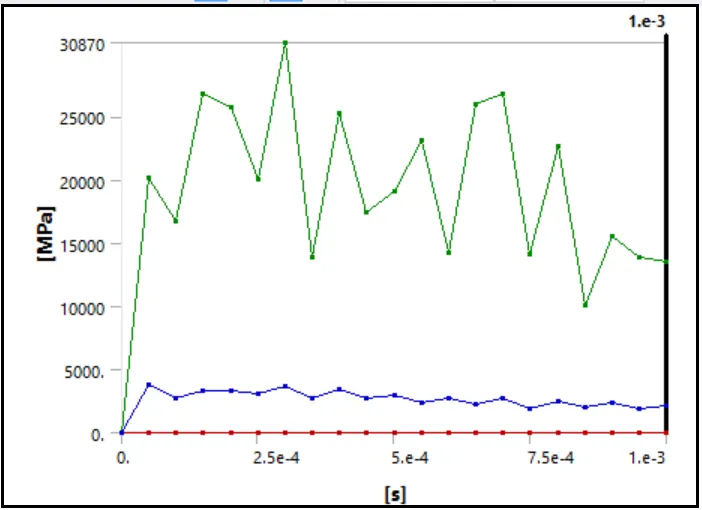
- Detailed Stress data
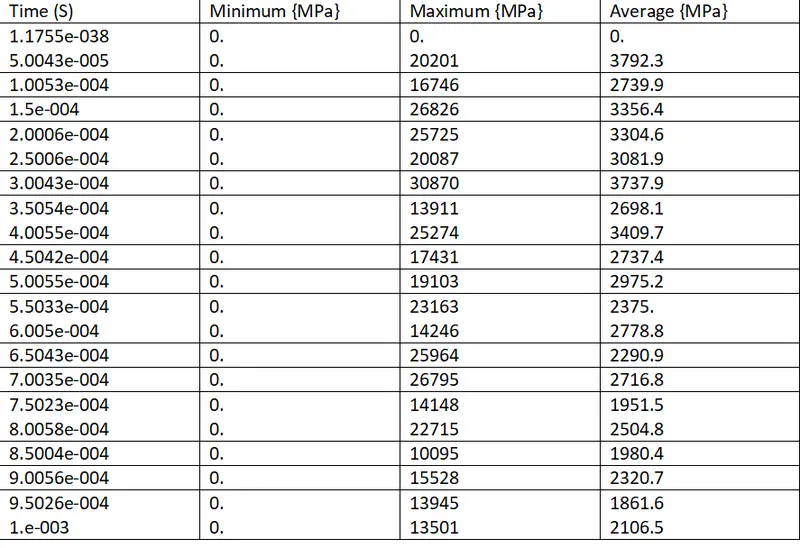
- Here Due to collision of the Car Body to the Wall, we can observe the maximum stress is occurring at the Wall.
- And the Maximum value of stress is 13501 MPa
- Total Deformation
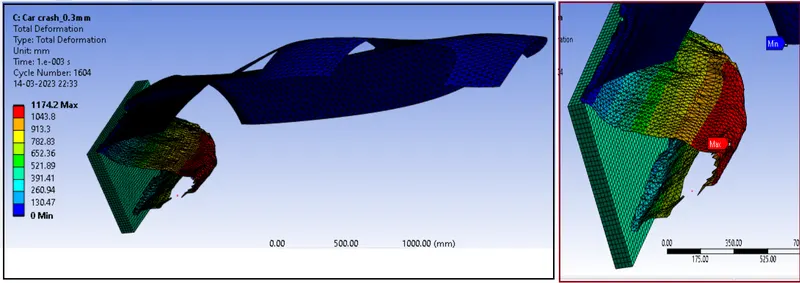
- Total Deformation Plot
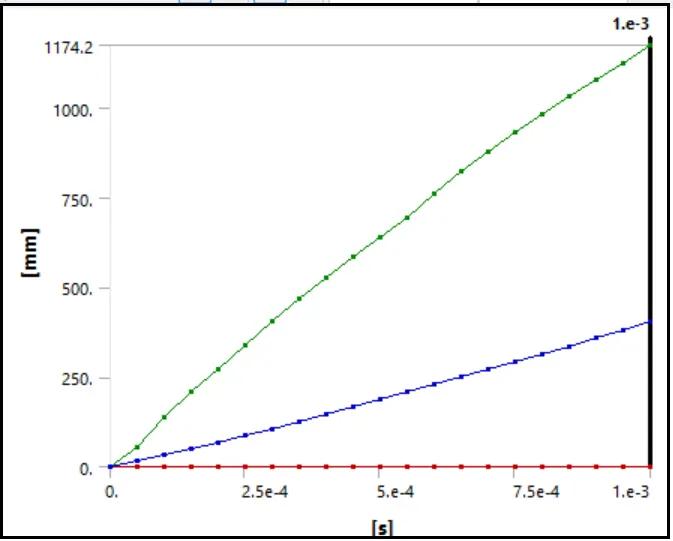
- Detailed deformation data
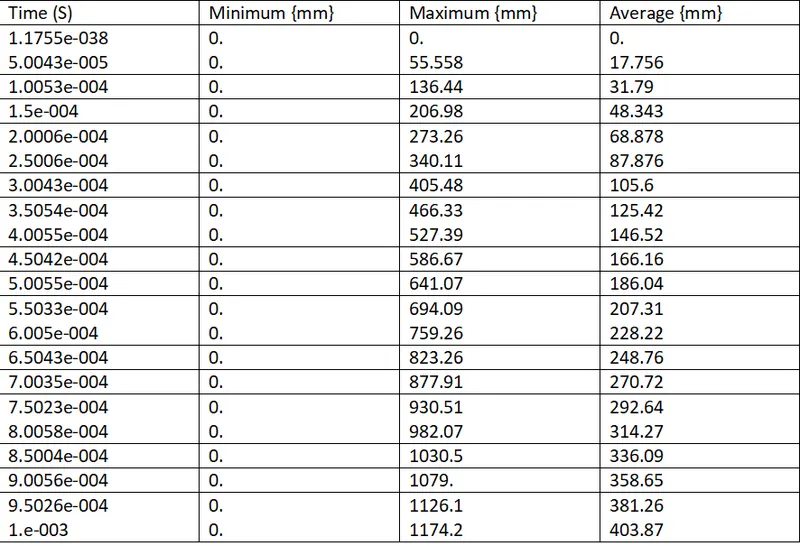
- The Maximum deformation is 1174.2 mm.
- Here we have given the displacement to the Wall up to 500 mm, we can see the deformation is occurring up to 1174.2 mm.
- Due to collision, bumper portion is experiencing the maximum deformation; this is because it is in the initial contact to the Wall.
- Due to impact of the Wall, frontal portion is facing the plastic deformation an we can observe the tearing of the frontal surface due to deformation.
- Stress {Car body}
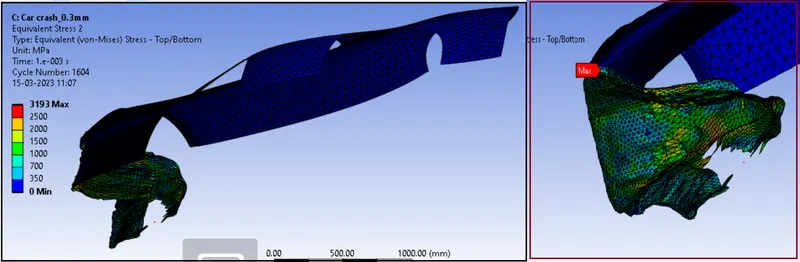
- Stress {Car body} Plot
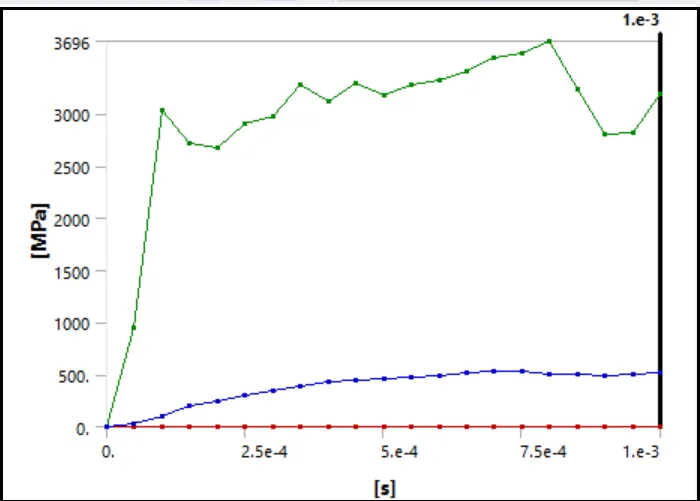
- Detailed Stress {Car body } data
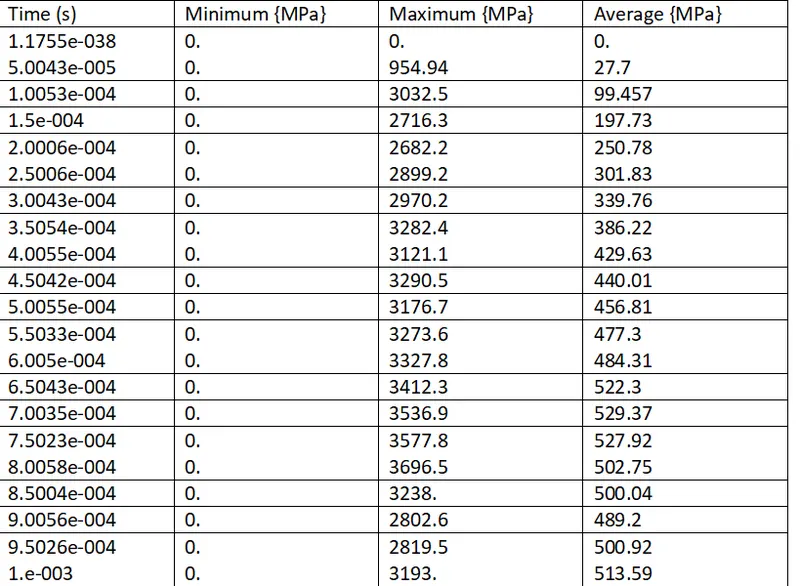
- Here The maximum stress is 3193 MPa.
- Due to collision of the Car Body to the Wall, we can see the maximum stress is occurring at the Wall.
- The wall Maximum Stress value is Much more then the car body stress value.
CASE: 2 {Thickness 2 mm}
- Stress
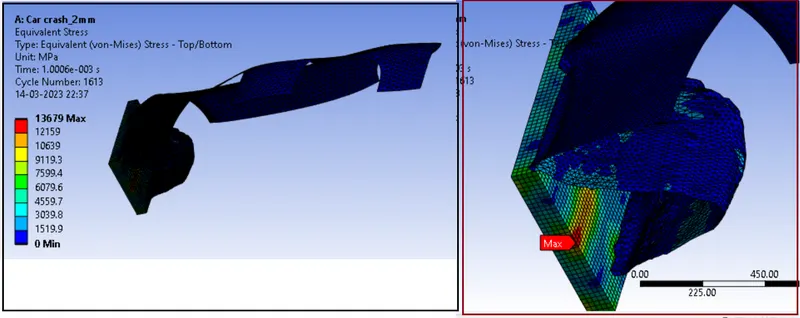
- Stress plot
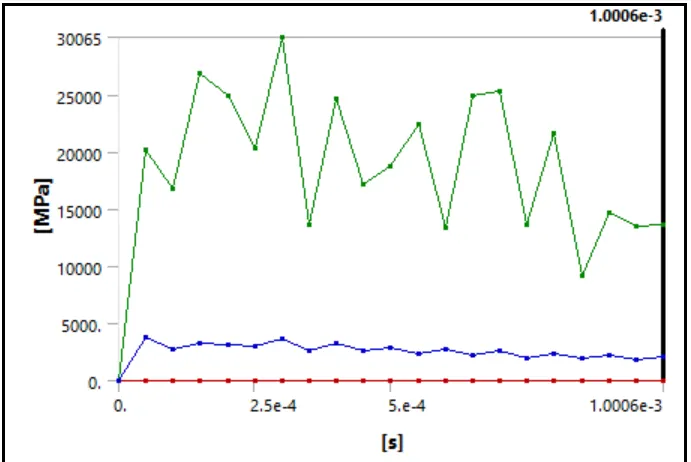
- Detailed Stress data
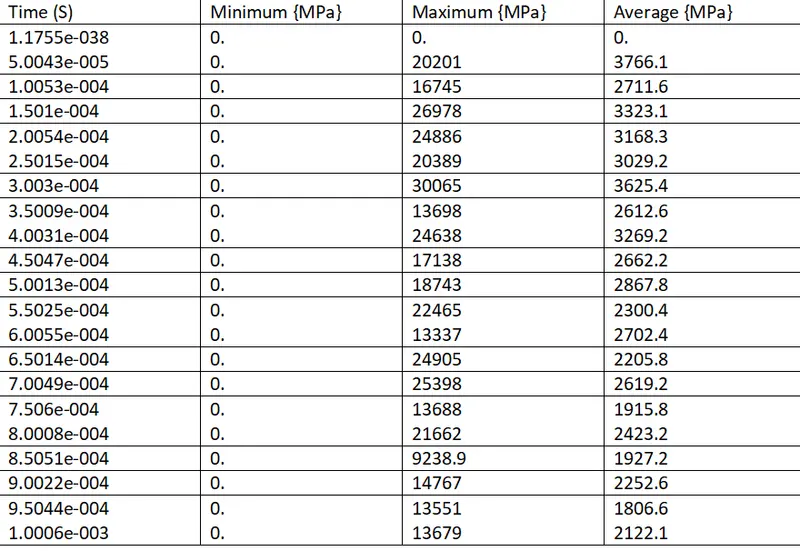
- Here Due to collision of the Car Body to the Wall, we can see the maximum stress is occurring at the Wall.
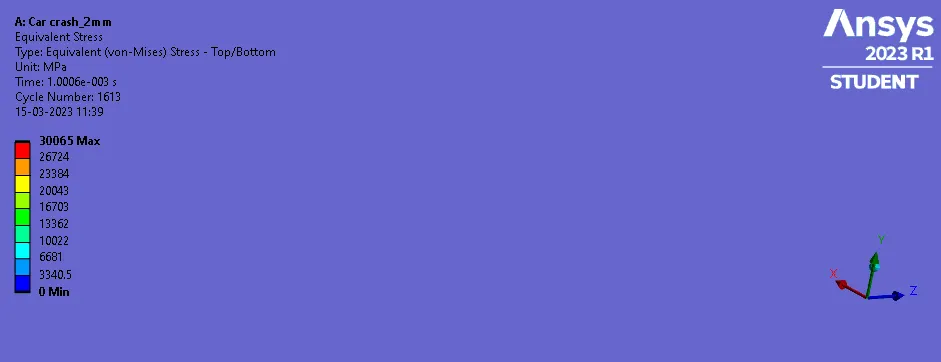
- The value of maximum stress is 13679 MPa.
- The thickness of the Car Body is increased up to 2 mm, so the location of the maximum stress is different, but also on the Wall.
- Total Deformation
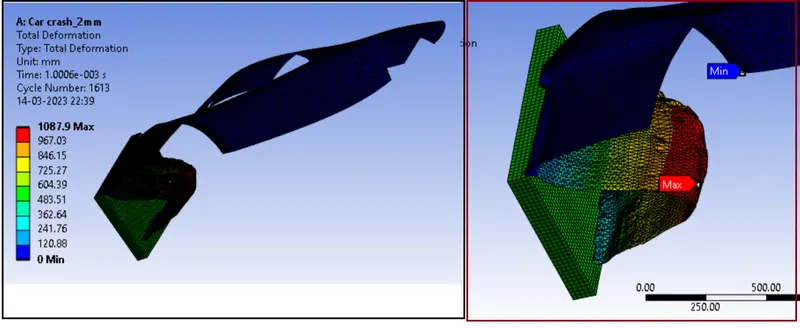
- Total Deformation Plot
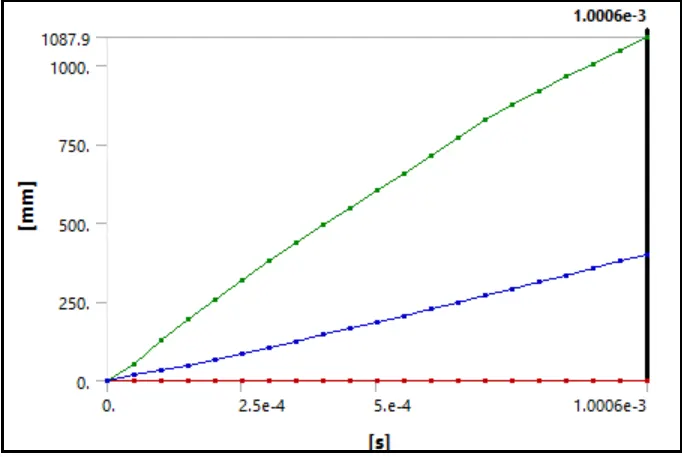
- Detailed deformation data
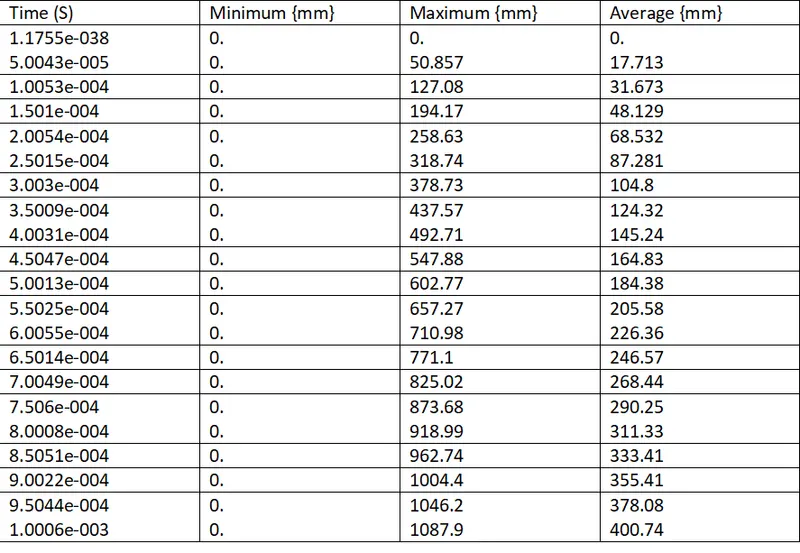
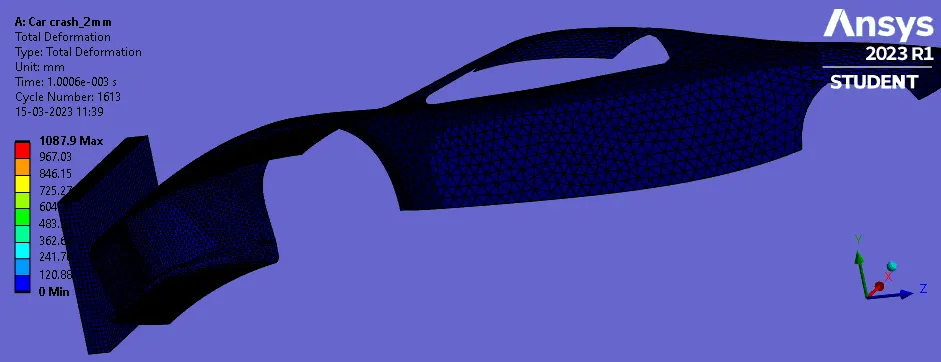
- Due to impact of the Wall, frontal portion is facing the plastic deformation.
- The value of Maximum deformation is 1087.9 mm.
- So, the maximum deformation is occurring on frontal portion of the Car Body.
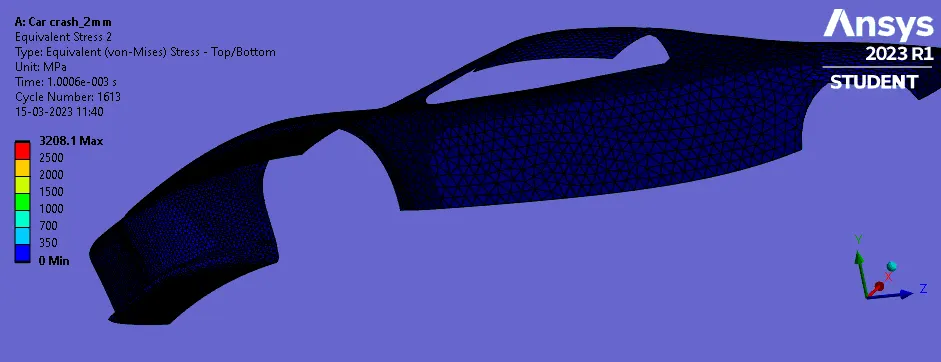
- Stress {Car body}
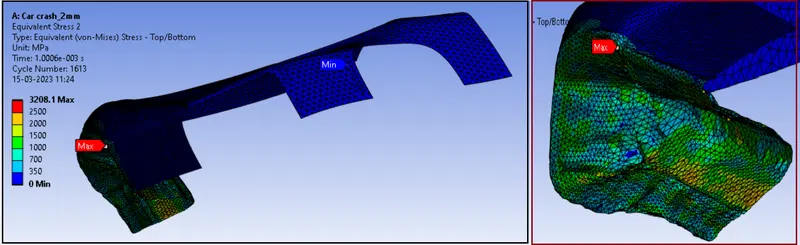
- Stress {Car body} Plot
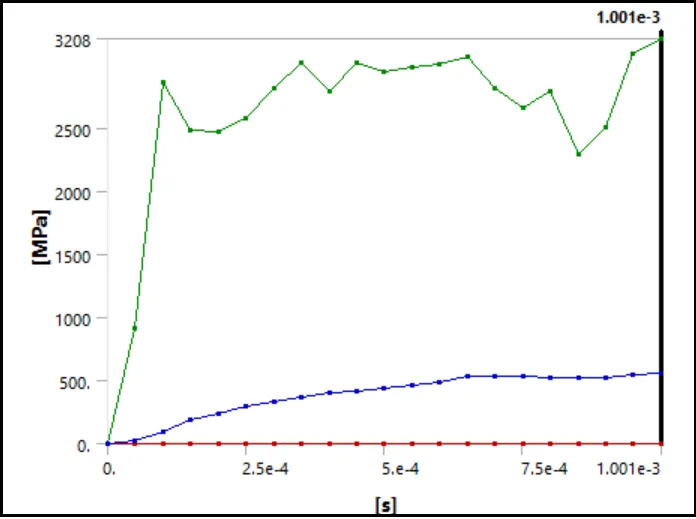
- Detailed Stress {Car body } data
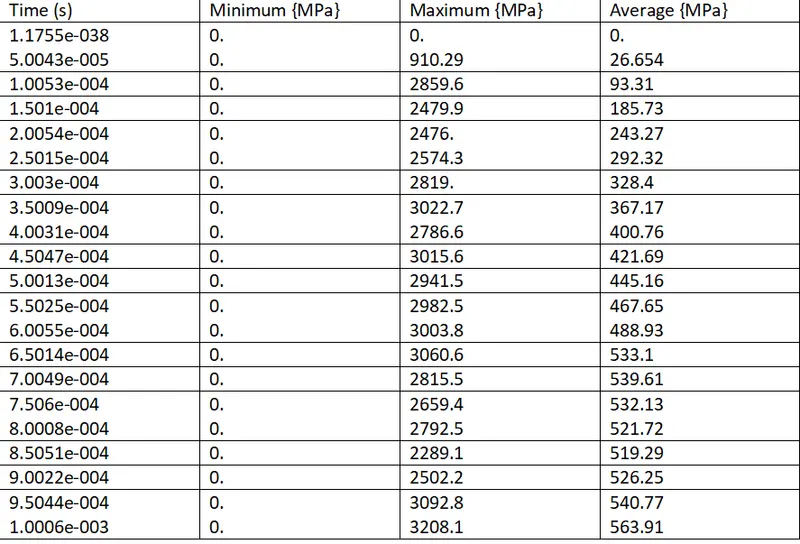
- Here The maximum stress is 3208.1 MPa.
- Due to collision of the Car Body to the Wall, we can see the maximum stress is occurring at the Wall.
- The wall Maximum Stress value is Much more then the car body stress value.
- Here, the thickness of the Car Body is increased up to 2 mm, so the location of the maximum stress is different.
CASE: 3 {Thickness of car body is 5 mm.}
- Stress
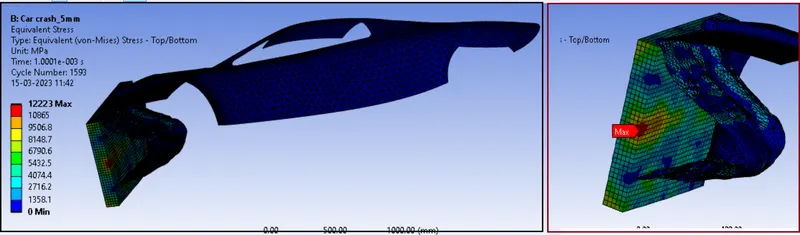
- Stress plot
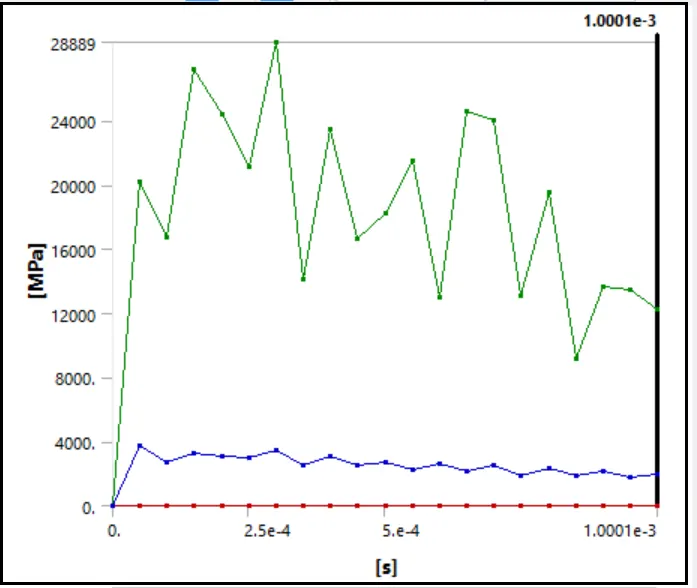
- Detailed Stress data
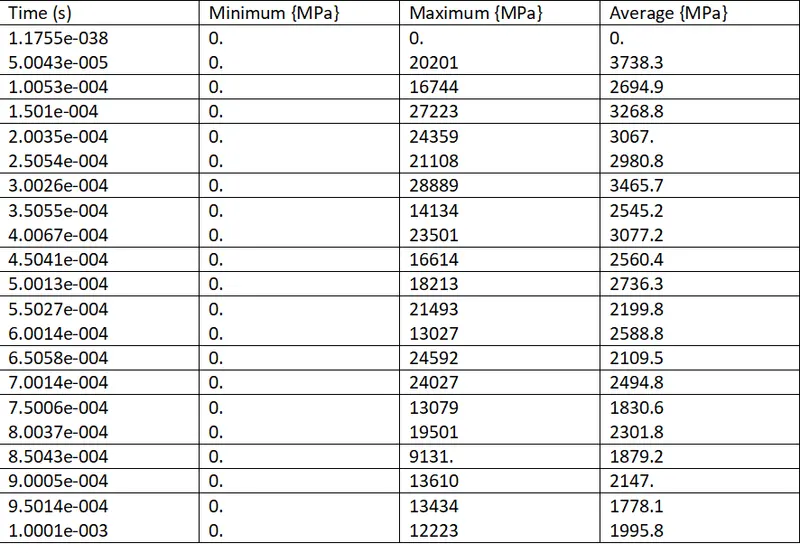
- Here The maximum stress is 12223 MPa.
- Due to collision of the Car Body to the Wall, we can see the maximum stress is occurring at the Wall.
- Here, the thickness of the Car Body is increased up to 5 mm, so the location of the maximum stress is different.
- Total Deformation
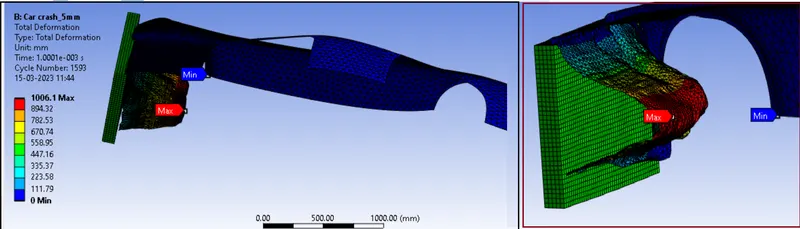
- Total Deformation Plot
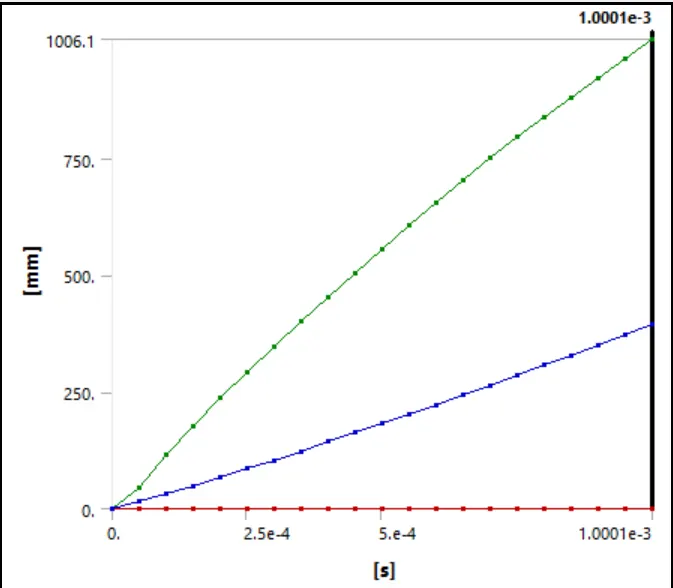
- Detailed deformation data
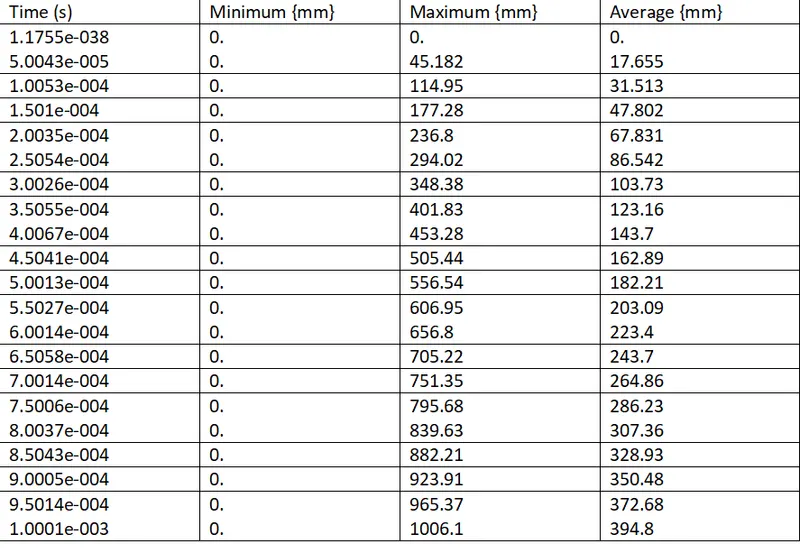
- The Maximum deformation is 1006.1 mm.
- Due to impact of the Wall, frontal portion is facing the plastic deformation.
- The maximum deformation is occurring on frontal portion of the Car Body.
- Stress {Car body}
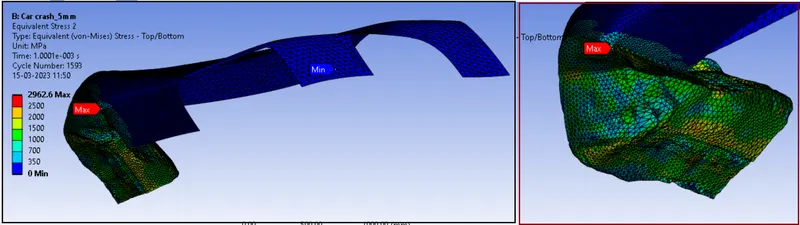
- Stress {Car body} Plot
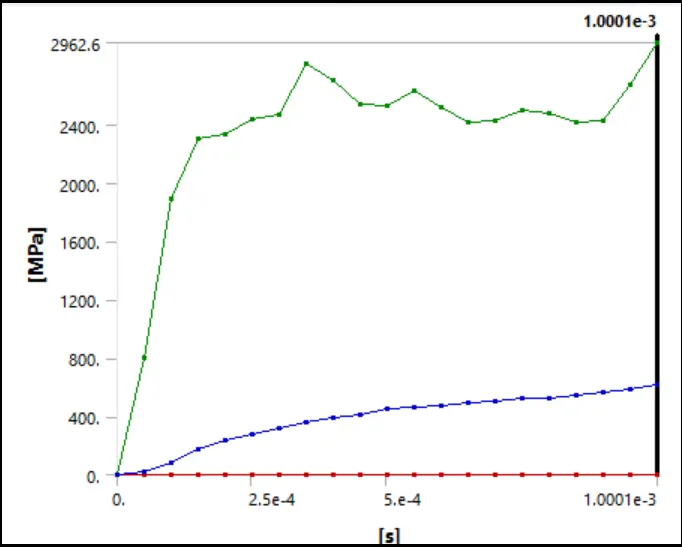
- Detailed Stress {Car body } data
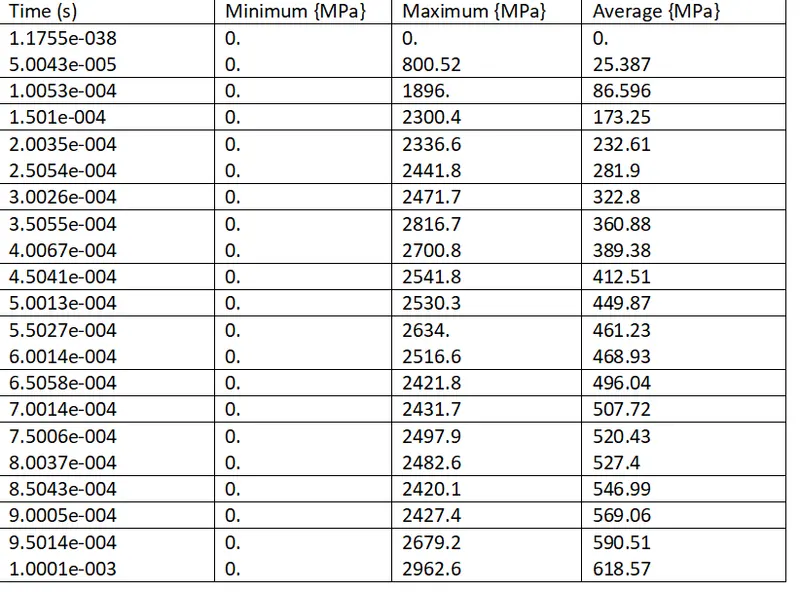
- Here The maximum stress is 2962.06 MPa.
- Due to collision of the Car Body to the Wall, we can see the maximum stress is occurring at the Wall.
- The wall Maximum Stress value is Much more then the car body stress value.
- Here, the thickness of the Car Body is increased up to 5 mm, so the location of the maximum stress is different.
Result Summary:
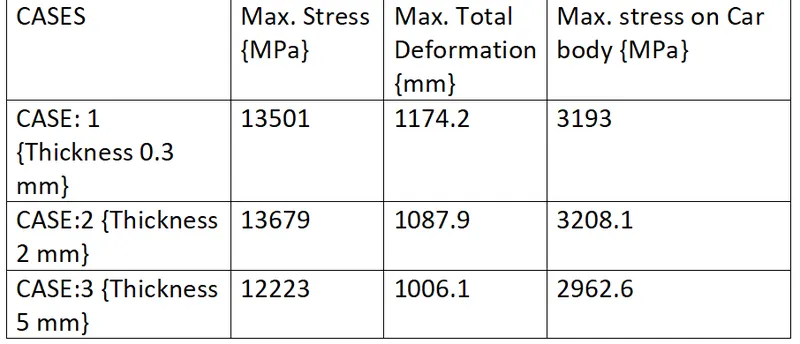
On comparison, We observe
- The stress is high for the CASE:2, where the thickness of the Car Body is 2 mm.
- The deformation is high for 0.3 mm thickness, because it can deform easily.
- In CASE:3, where the thickness is 5 mm, stress and deformation decrease compare to CASE:2
- Lowest stress and deformation are resulting in CASE: 3, where the thickness is 5 mm, because it can resist more to the load or given displacement.
CONCLUSION:
- From the above results we can conclude that the stress and deformation is decreasing as increase in thickness of the Car Body.
- In CASE:1 {0.3 mm thickness} the Car Body will be very light in weight and all the kinetic energy will be dissipated to the Car Body and the damage will also be high.
- In CASE:3 {5 mm thickness} it will be little rigid so whole Kinetic Energy will be transferred to whole Car Body, which is also not good.
- With thickness of 2 mm, the Car Body will not be so rigid and, so energy absorption will be optimized.
- So, 2 mm thickness is preferred for the Car Body for good Crash Safety results.
- Further study can be taken with different material properties for frontal impact with the same thickness to verify effect of material yield, plasticity on force carrying capacity, energy absorption and acceleration levels.
ANNIMATION...
CASE:1 {0.3 mm thickness}
Stress
Total Deformation
Stress Car Body
*********************************************************************************************************************************************************************************************************************************************************************END
Thanks & regards,
Devesh kashyap