Week 11 Car Crash simulation
Aim-
For this project, we will have to perform a parametric study using 3 different values of thickness for the car body by expicit dynamics.
Procedure-
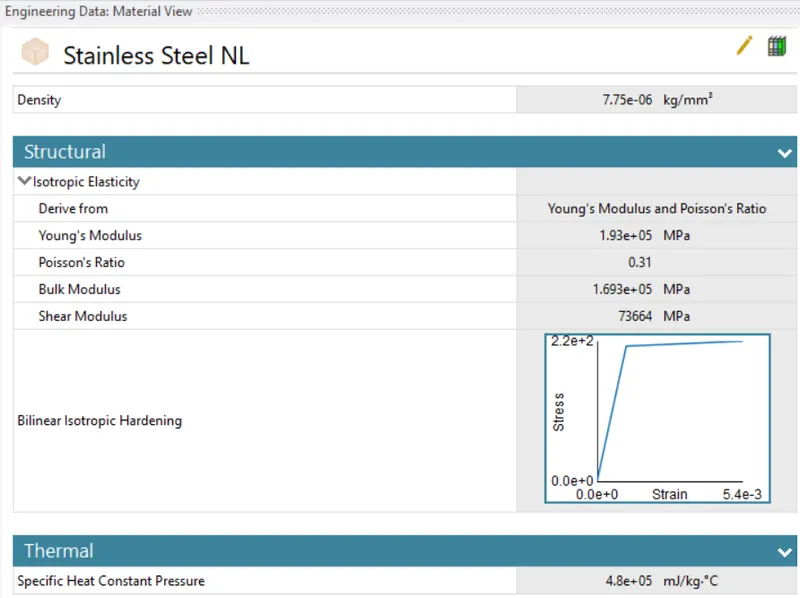
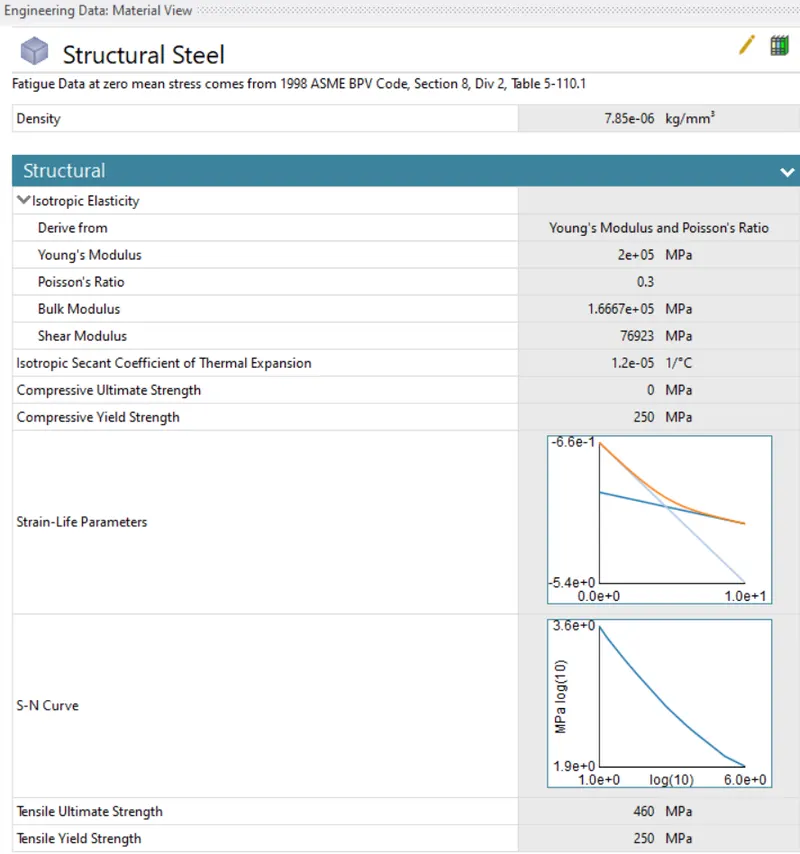
- Here no non-linear material has been not specified to us, so we will use the materials as follow for Car body,
Stainless Steel NL-
2. Structural Steel for wall.
- Now we have to import the model for that right click on the geometry tab and hit import>>then select the file from saved location and hit ok.
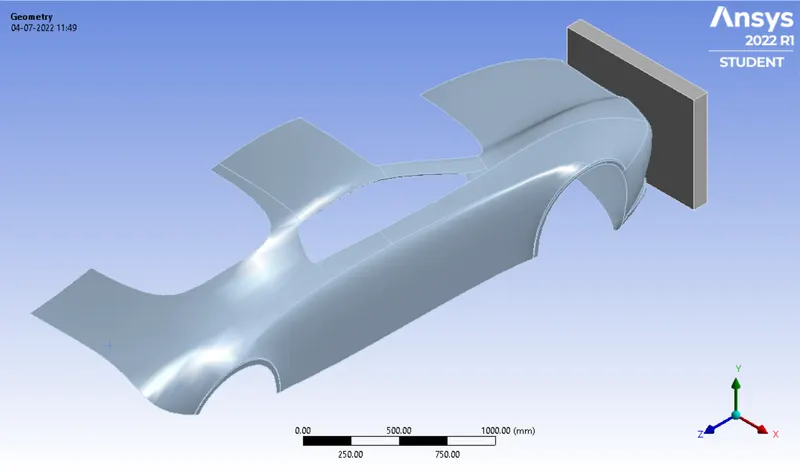
Symmetry-
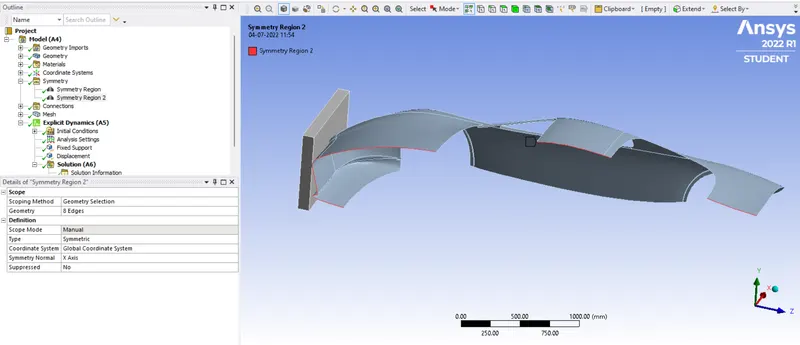
- Now we have to give symmerty to wall and car body since both models are halfly captured.
- To do so right click on model>>symmetry>>symmetry region>>select wall side face along x-axis as normal.
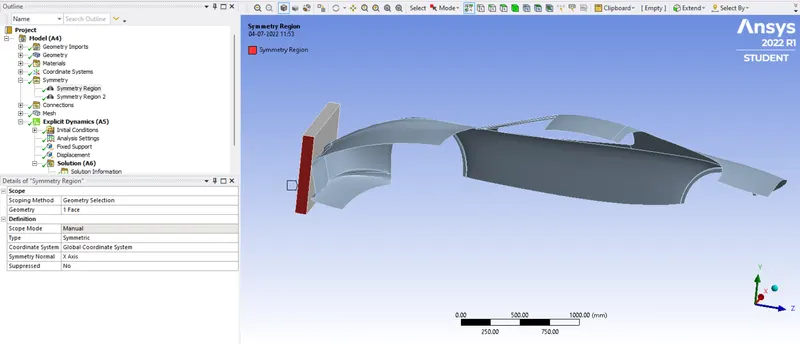
- For car side face for symmetry region.
Connections-
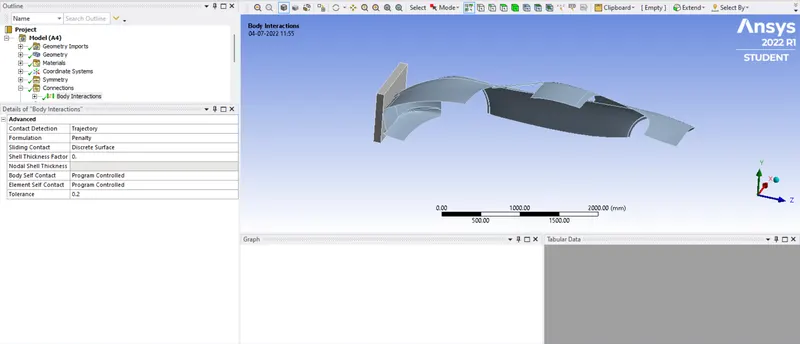
- Here we dont define ady contact as it is not required so we will delete the existing contacts and keep body interactions.
Mesh-
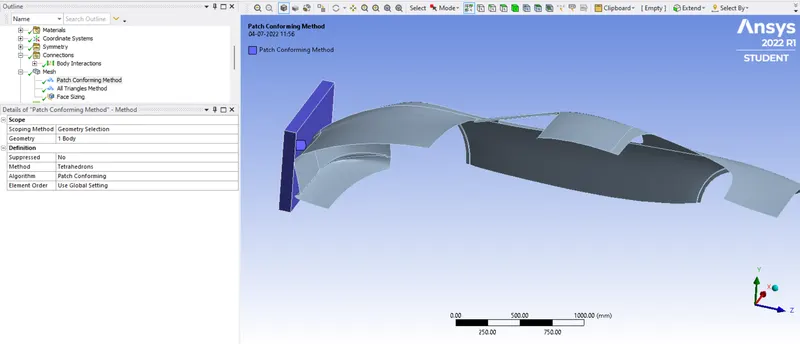
- For wall we have to insert a patch method as tetrahedrons.
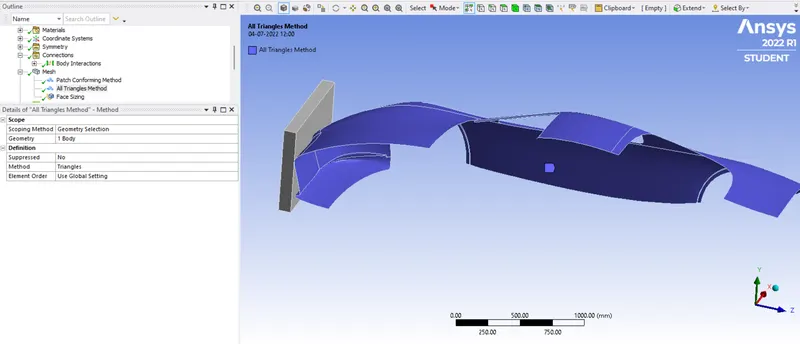
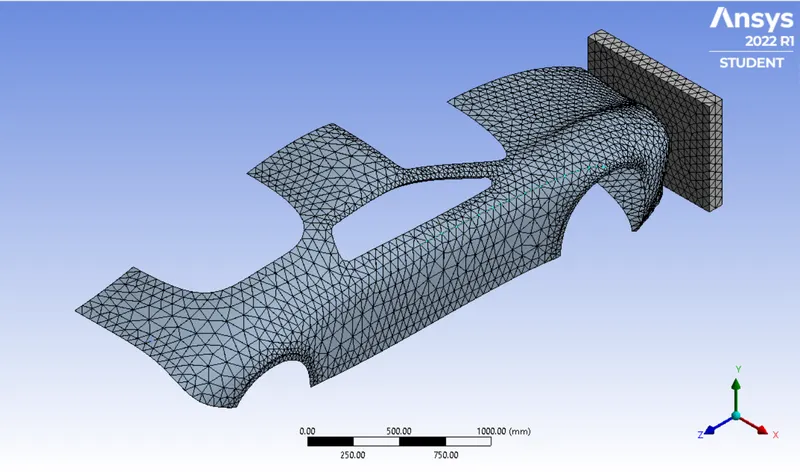
- For car body we have to select method as triangles since it has lesser thickness than 6mm, so we will consider it as 2d element.
- Now we have to insert the sizing for side of car body.
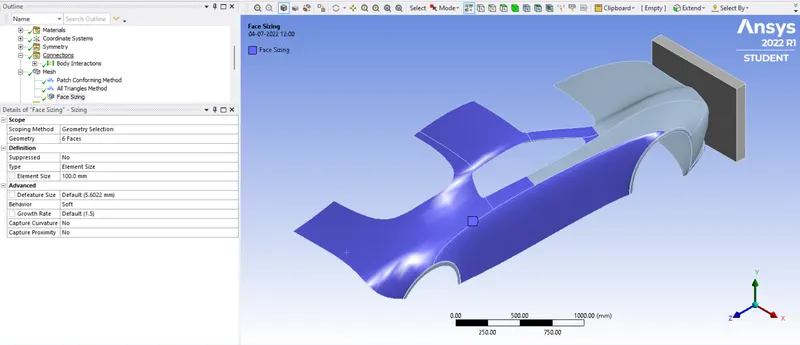
- For rest keep default mesh size and hit mesh.
Analysis Setting-
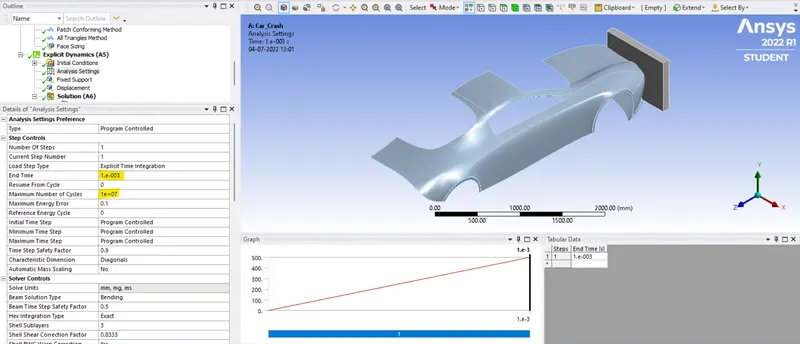
- Here we will give time step as 1e-3 and max. and rest of settings as default.
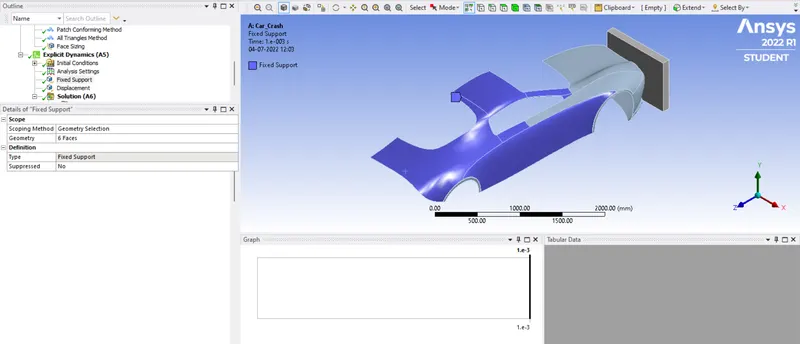
- As we are going to move wall so, we will fix car as rigid body.
- We will give displacement load to wall back side with ramped 500mm.
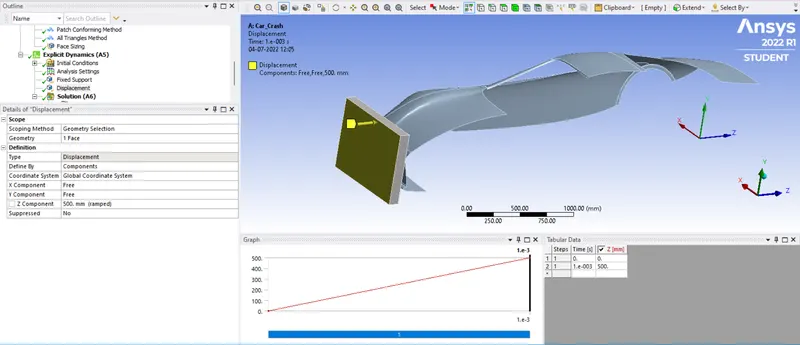
Solution Setting-
- Here we have to define total deformation, to do so right click solution>>insert>>deformation>>Total.
- Now for stress right click on the solution>>insert>>stresses>>equivalent (von-Mises).
Parametric setting-
- As per given condition we have to evaluate the result for 3 different thickness by parametric form.
- We need to give parametric value to total deformation and equivalent stress also.
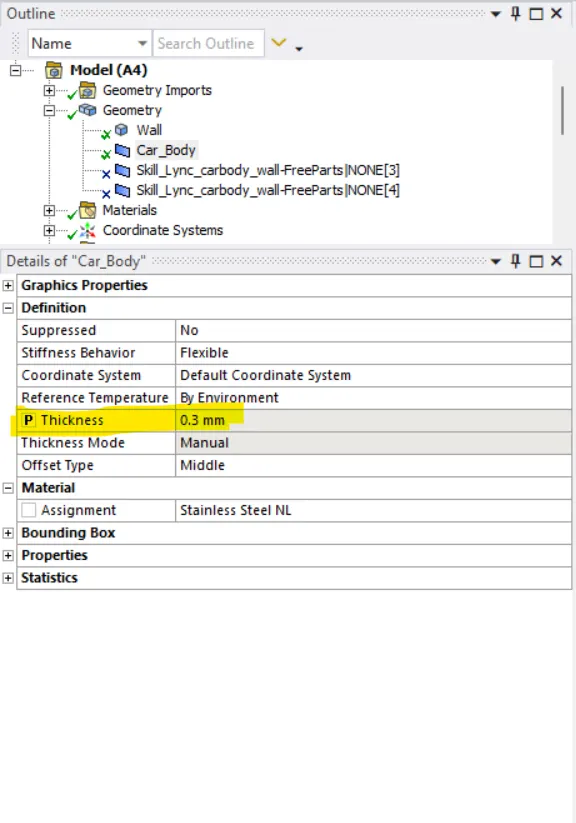
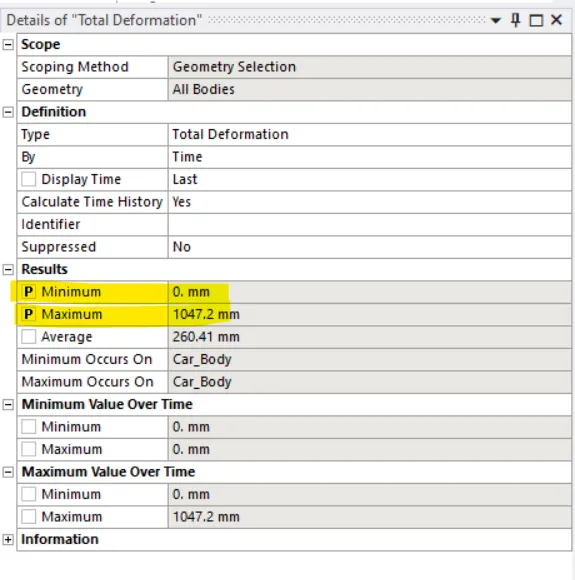
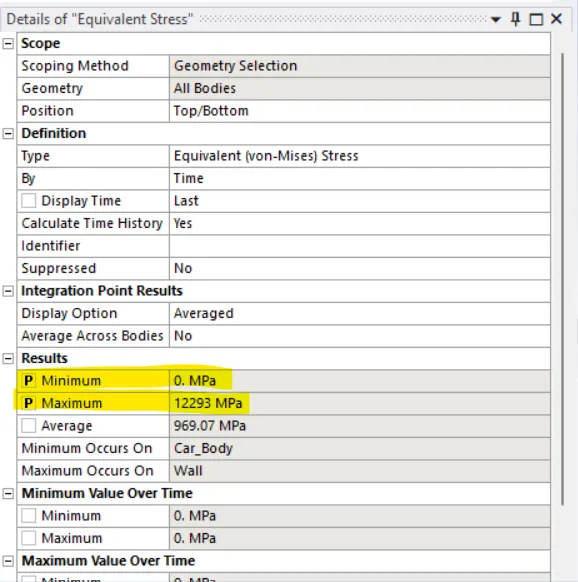
- Now parametric window will appear in the projects tab.
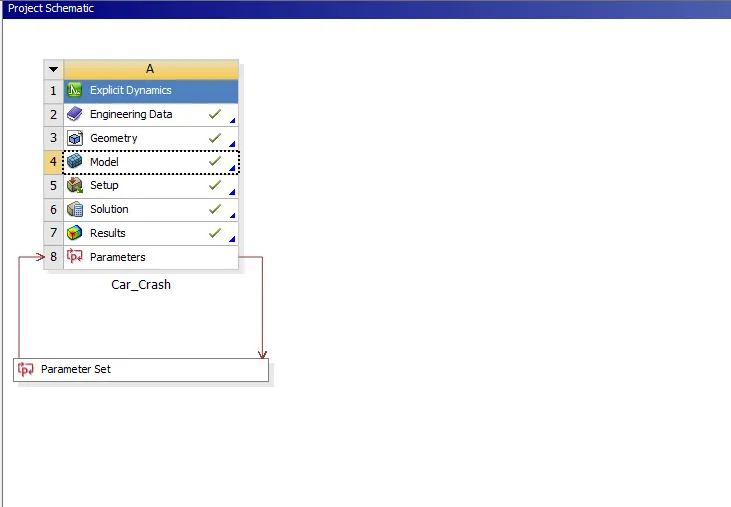
- Now input rest as 0.4mm and 0.5mm thickness to it in parametric settings.
Results-
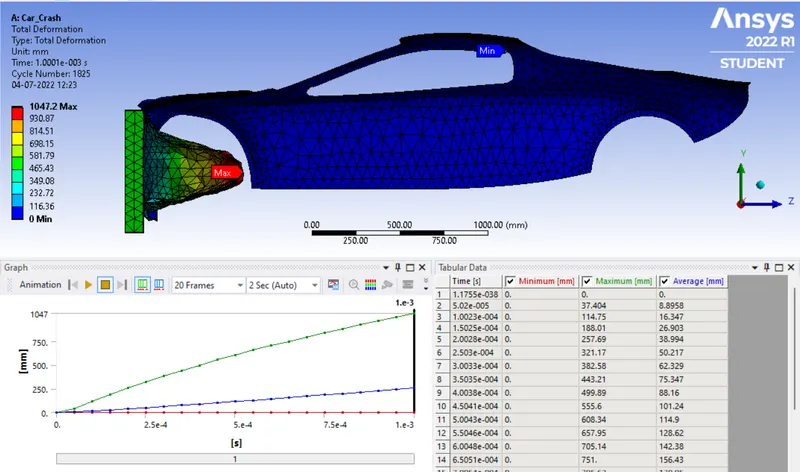
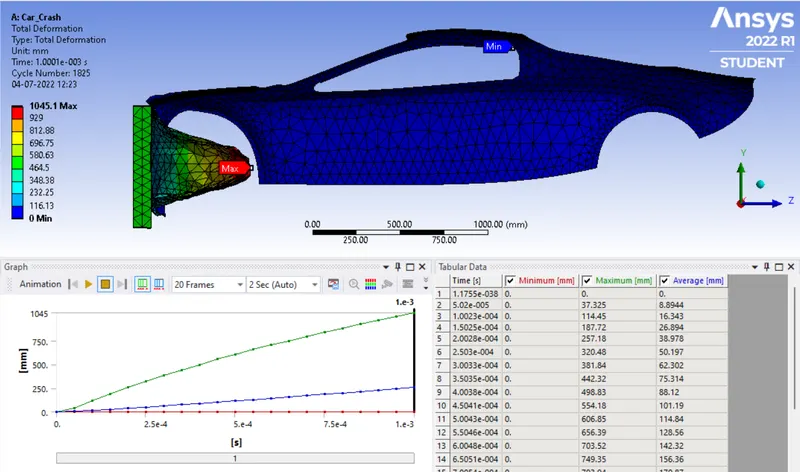
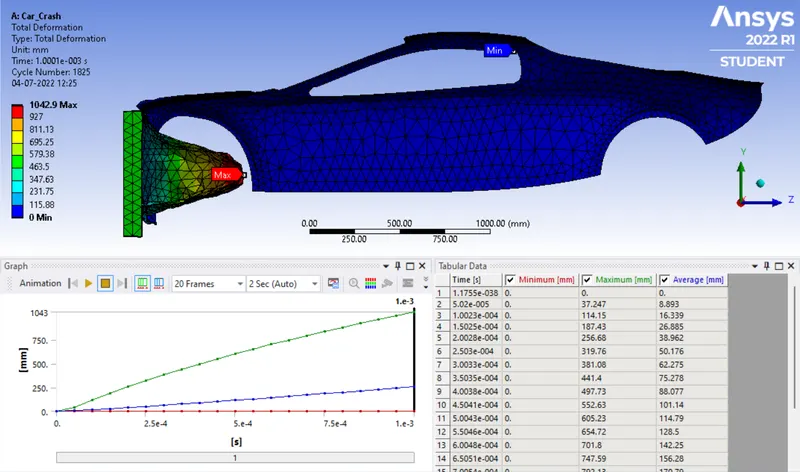
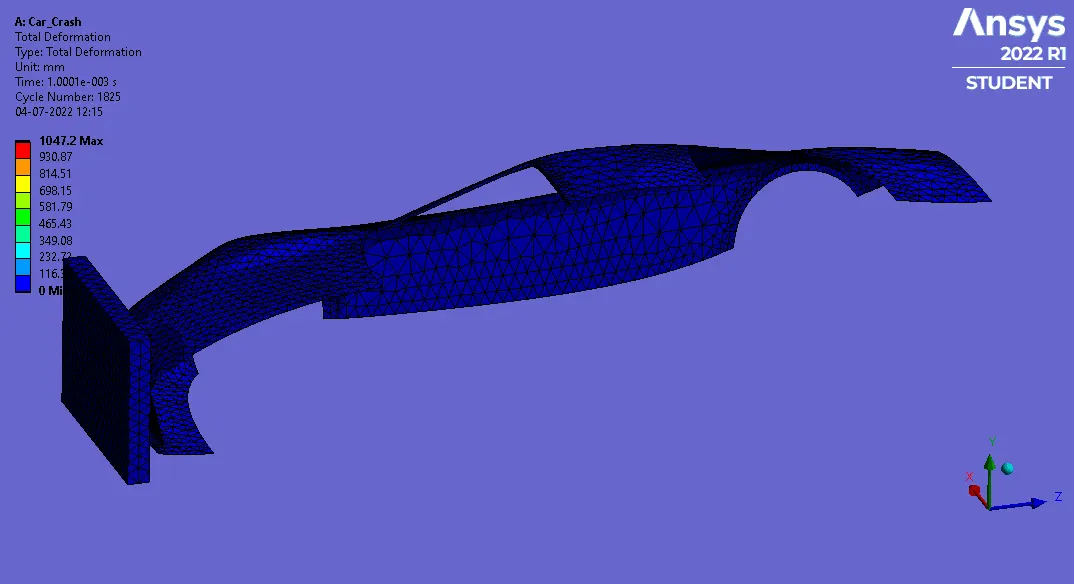
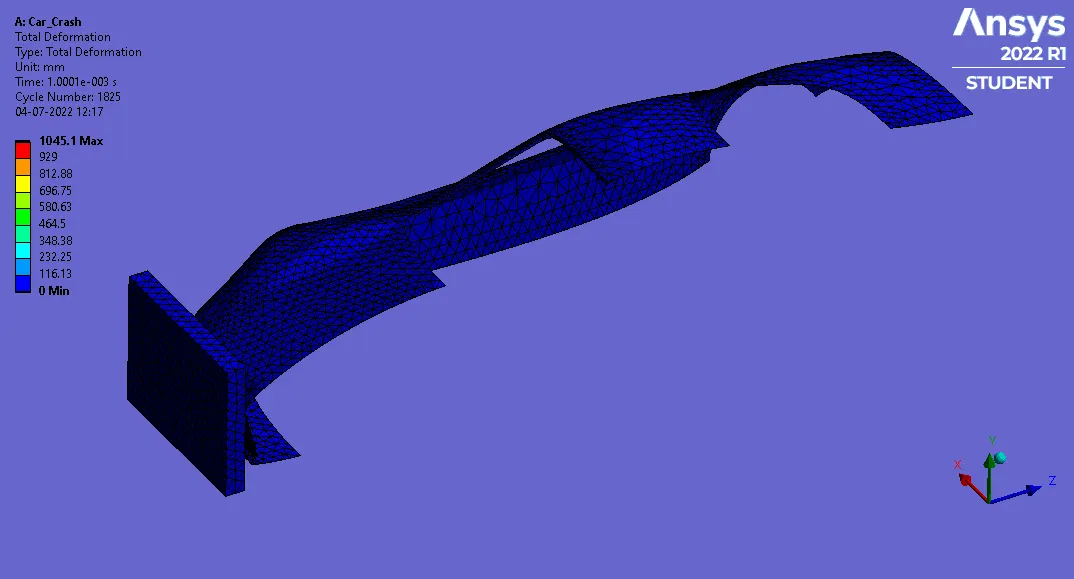
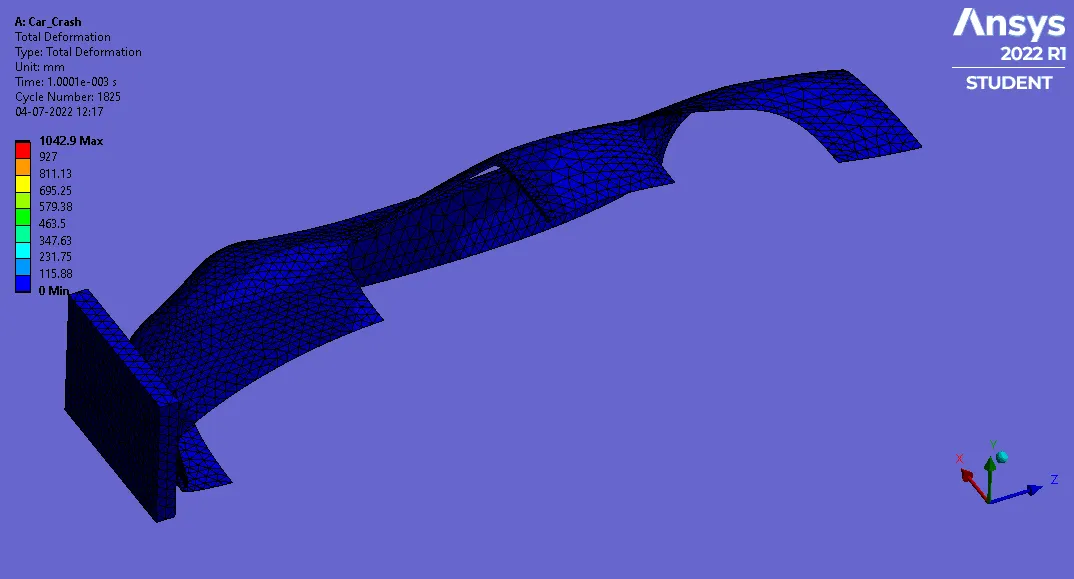
Total Deformation-
Case-1-0.3mm
Case-2-0.4mm
Case-3-0.5mm
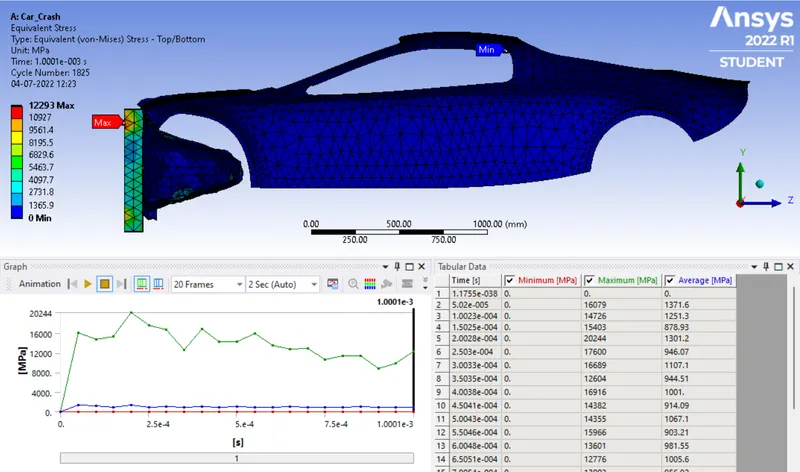
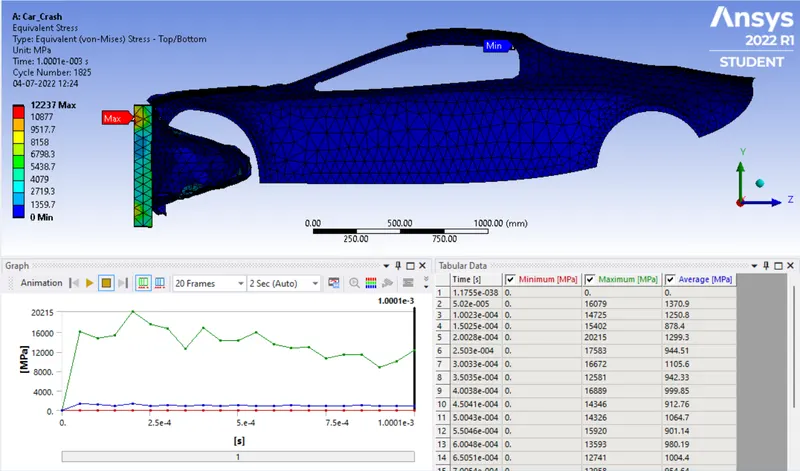
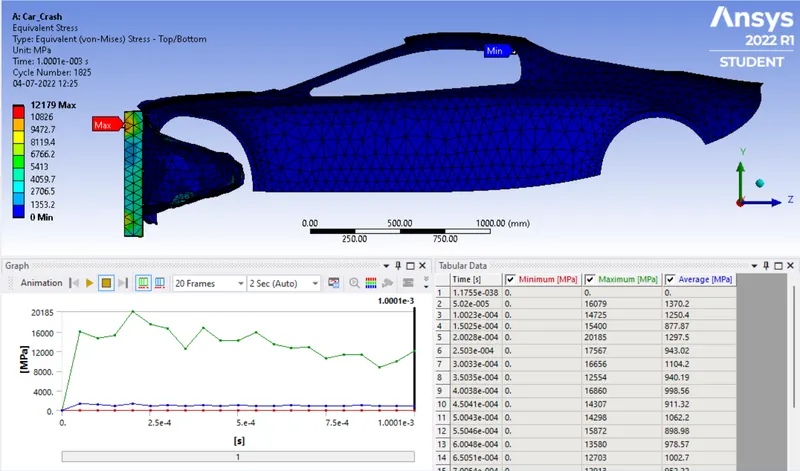
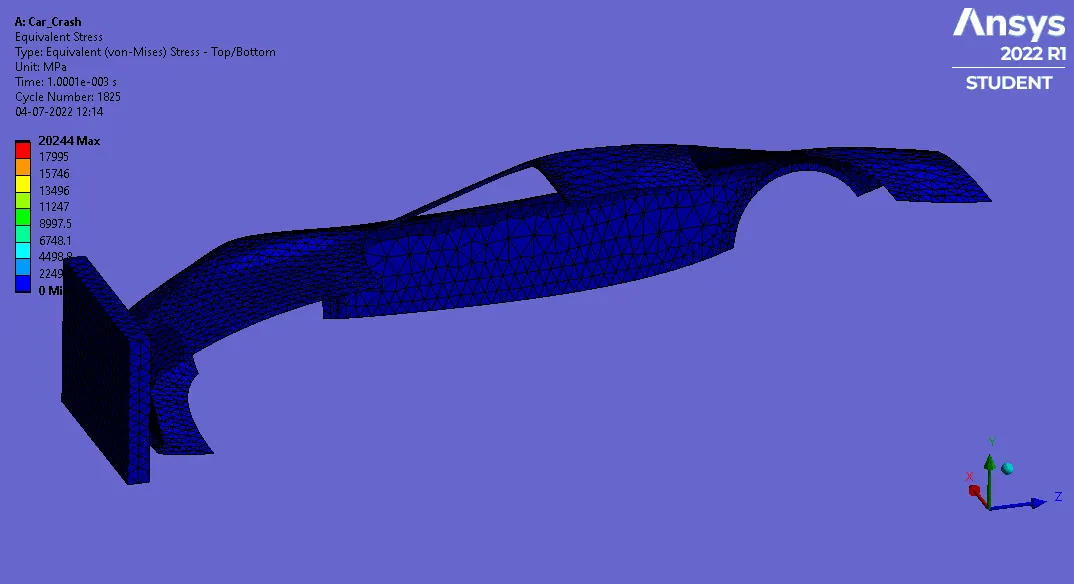
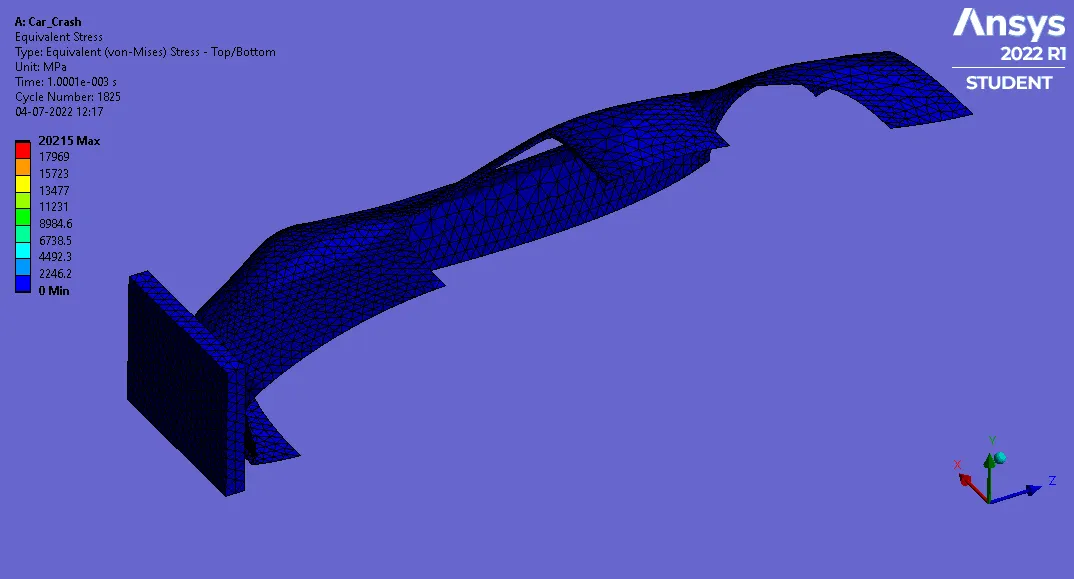
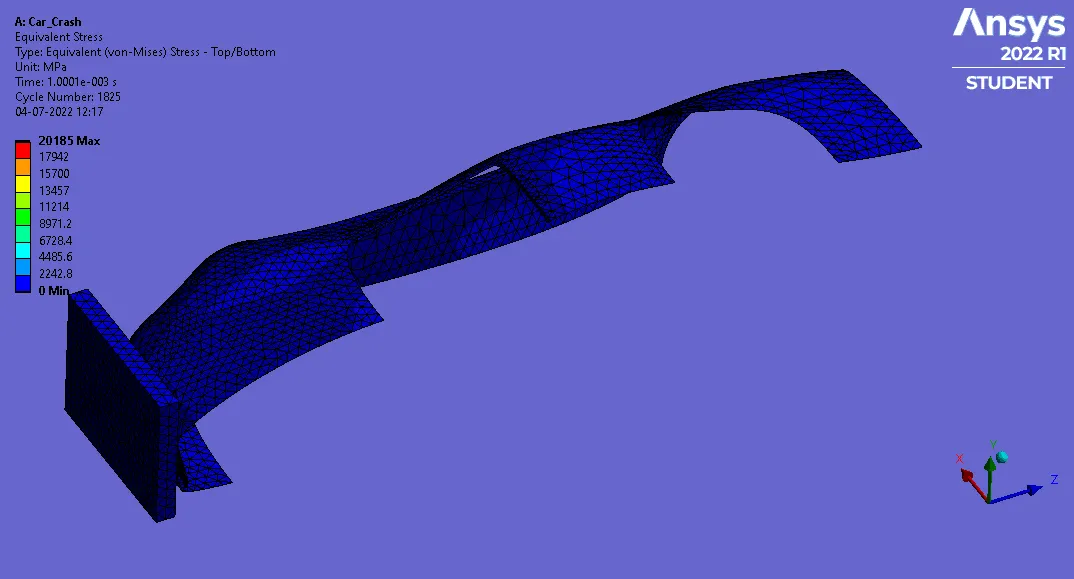
Equivalent Stress-
Case-1-0.3mm
Case-2-0.4mm
Case-3-0.5mm
Result Comparision-
|
Cases |
Total Deformation (mm) |
Equivalent Stress (MPa) |
||
|
Min. |
Max. |
Min. |
Max. |
|
|
Case-1 |
0 |
1047.22 |
0 |
12293.23 |
|
Case-2 |
0 |
1045.12 |
0 |
12237 |
|
Case-3 |
0 |
1042.87 |
0 |
12179.16 |
- From above table we can observe that with increase in thickness total deformation and equivalent stress decrease.
Animated Results-
Case-1-0.3mm thickness
Total Deformation
Equivalent Stress
Case-2-0.4mm thickness
Total Deformation
Equivalent Stress
Case-3-0.5mm thickness
Total Deformation
Equivalent Stress
Conclusion-
- From above simulation we have to select max. thickness for safe condition what we can conclude now.
- But in actual its not about metal thickness, its about how the energy of impact is absorbed.
- We will have to understand that the sheet metal doesn't contribute totally during crash, its the internal structure which decides fate of the car during crash.