Types of Thermal Management
OBJECTIVE-1:
To Prepare a report summarizing thermal management techniques for electric car battery packs.
Need of thermal management:
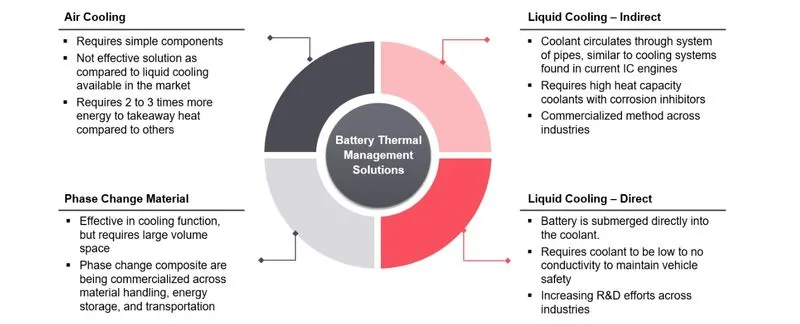
The battery pack & battery safety, performance of both power and capacity and lifespan is determined by the temperature, where the temperature is controlled and there is no risk of thermal runaway. So the necessary cooling and heating arrangement should be provided with the battery pack.
There are many effective and ineffective techniques in thermal management,let's discuss one by one.
The Four main cooling system for battery pack:
PCM:
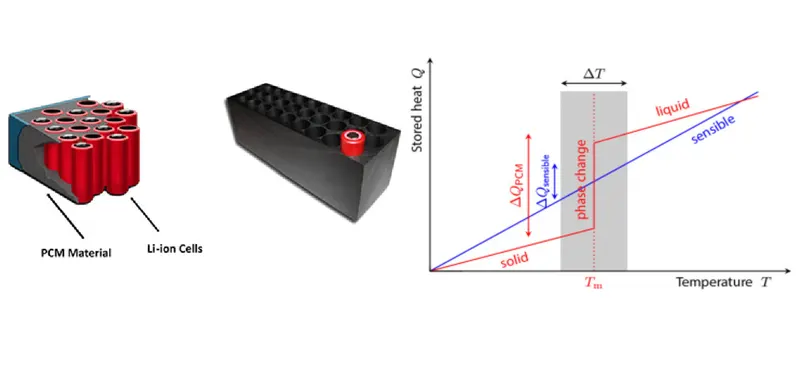
Phase change materials have high fusion heat which stores and releases the amount of heat during melting and solidifying at a fixed point. when the temperature is lower than the melting point, PCM is solid and heat is absorbed as sensible heat with the temperature rise. When the temperature reaches the melting point, heat is absorbed and stored as latent heat until the latent heat is up to the maximum without the temperature increasing. At the same time PCM changes its phase from solid to liquid. After that, PCM becomes liquid and heat is absorbed by PCM and stored as sensible heat. The melting temperature of PCM is variable and can be chosen according to requirements.
AIR COOLING:
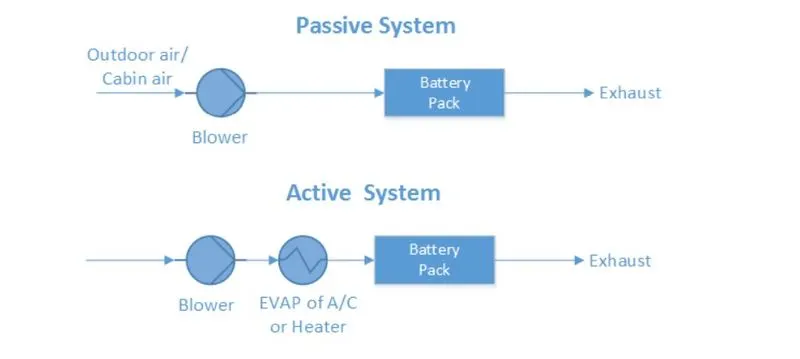
Air systems use air as the thermal medium. The intake air could be direct either from the atmosphere or from the cabin and could also be conditioned air after a heater or evaporator of an air conditioner. The former is called a passive air system and the latter is an active air system. Active systems can offer additional cooling or heating power. A passive system can offer some hundreds of watts cooling or heating power and an active system power is limited to 1 kW. Because in both cases the air is supplied by a blower, they are also called forced air systems.
LIQUID COOLING:
Direct cooling systems place the battery cells in direct contact with the coolant liquid. These thermal management schemes are currently in the research and development stage, with no cars on the market using this system. Direct cooling is more difficult to achieve, due to the fact that a new type of coolant is required. Because the battery is in contact with the liquid, the coolant needs to have low to no conductivity.
Immersion cooling: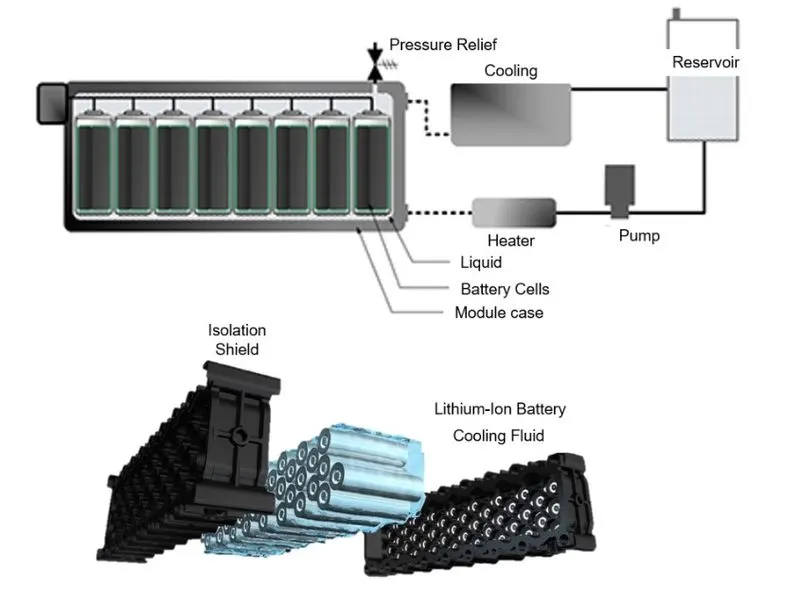
In direct liquid immersion cooling of the battery, the battery cells are entirely immersed in a dielectric heat-transfer fluid (dielectric coolant). This cooling method is also called Single-phase Liquid Immersion Cooling. The dielectric coolant is typically circulated with a pump to ensure that it flows continuously throughout the device architecture and comes in continuous contact with all cell walls, tabs, and electrical wiring within the battery module. Direct coolant flow absorbs the heat produced by the cells by direct conduction. It is then transferred to a heat transfer system such as a radiator or heat exchanger to transfer the heat energy to the atmosphere. If the heat load is sufficiently low, battery module cell walls can passively cool it utilizing convective airflow. Full immersion of battery cells also ensures the highest thermal contact and consistency.
Benefits of direct liquid cooling:
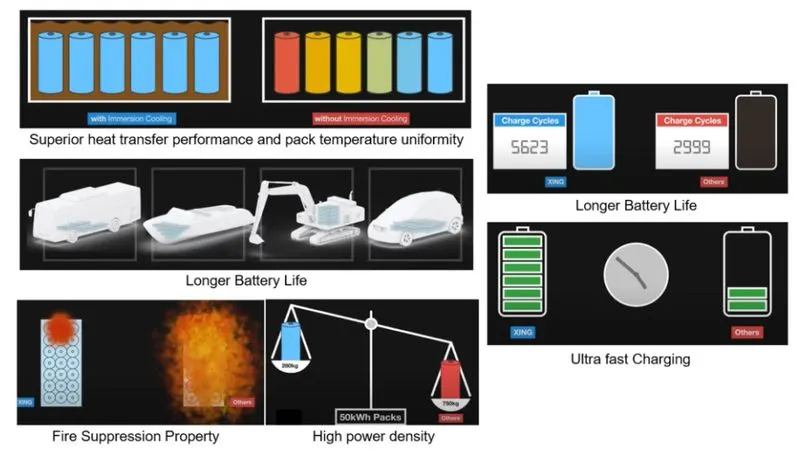
Indirect liquid cooling systems
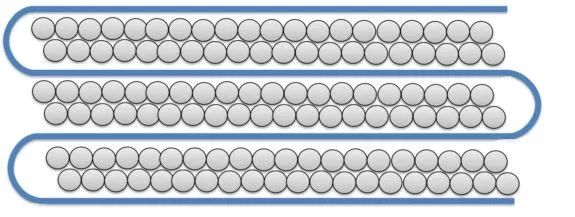
Indirect liquid cooling systems are similar to ICE cooling systems in that both circulate liquid coolant through a series of metal pipes. However, the construction of the cooling system will look much different in electric vehicles. The structure of the cooling system that achieves maximum temperature uniformity is dependent on the shape of the battery pack and will look different for each car manufacturer.
--------------------------------------------------------------------------------------------------------------------
There are some other cooling and heating techniques for the battery and battery pack.
Thermo-electrics
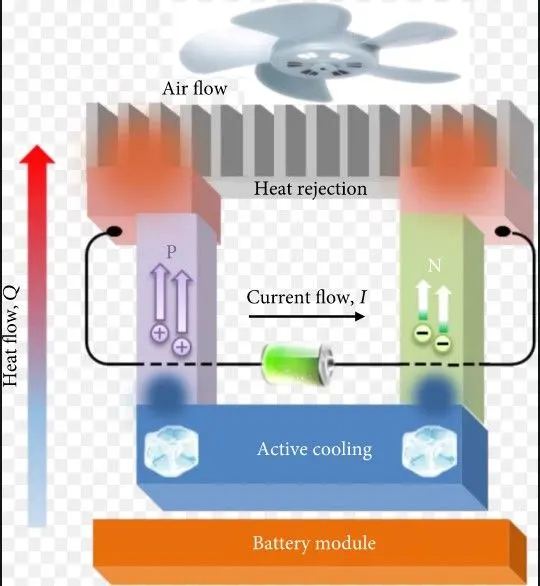
Thermo-electrics have small and lightweight structures and can turn a heating element to an efficient cooling element by reversing the polarity. Without moving parts to wear, thermo-electrics are reliable, durable and of low maintenance. And also easy to replace in case of failure. In addition, operation is quiet and vibration-free. The weakness of thermo-electrics is low efficiency. The highest efficiency is up to 0.8 which means more power is needed than heat dissipated.the performance is associated with the required temperature difference. The greater the temperature difference is, the lower the pumping capacity is, until it stops working at 70K. So under high temperatures the temperature difference is great and thermo-electrics perform badly. And there is one technical problem not solved: that the hot and cold sides are close to each other.
PTC-heater
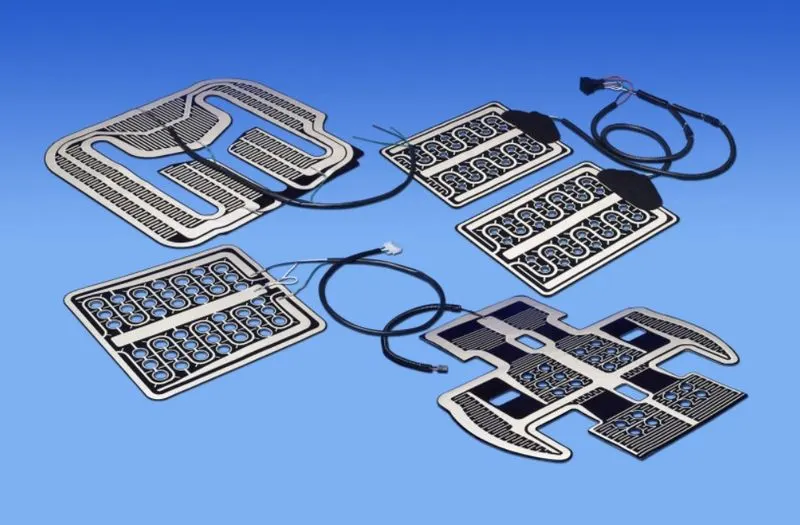
Positive Temperature Coefficient (PTC) heaters are self-regulating heaters that run open-loop without any external diagnostic controls. While traditional fixed-resistance heaters employ wires and coils to generate heat, PTC heaters use conductive inks printed on thin, flexible polymer-based substrates. Scoring high on reliability and efficiency, they are ideal for products that require safer, faster and more uniform heating. The properties of the material allow the PTC heater to act as its own sensor, eliminating the need for any external feedback controls. As a result, the heater inherently eliminates the risk of overheating.
Despite the various issues that have plagued traditional heaters to overcome all of these challenges - PTC heating - a technology that puts safety in the front seat., we continue to deploy them widely across industries.
Heat Pipe
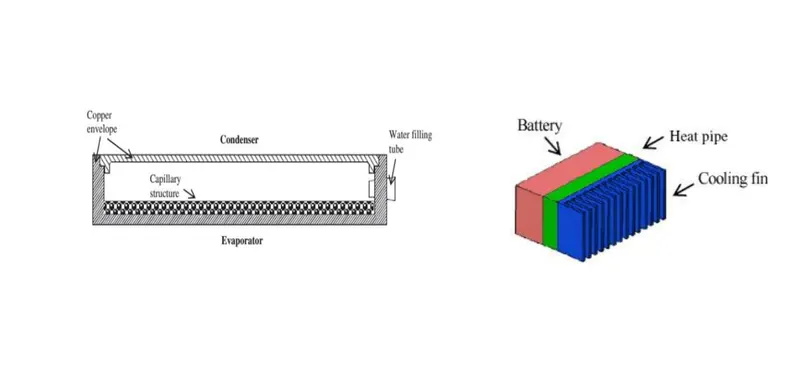
Heat pipe is another way to upgrade passive air systems. The structure of a heat pipe is shown The flat copper envelope of the heat pipe was under partial vacuum. The capillary structure is made of sintered copper powder. The heat pipe uses water as the working fluid. Water on the evaporator side will absorb heat and become vapour lower 100°C due to low pressure inside. Water on the condenser will dissipate heat to the surrounding and become liquid again. This cycle repeats again and again.
Done With the reference of (Battery Thermal Management Systems of Electric Vehicles)Master’s Thesis in Automotive Engineering