Week 10 - Simulating Combustion of Natural Gas.
COMBUSTION SIMULATION
AIM : To perform the combustion simulation of methane /air mixture and to identify the Nox and soot formation during the combustion process in the ansys fluent
INTRODUCTION :
Types of combustion simulations :
Based on mixing
- Non Premixed
- Premixed
- Partially premixed
Based on Phase
- Fluid
- wall
- Particles
- Porous region
- Based on Mixing ,the Non- premixed combsution simulation is used in direct injection and late injection .And the premixed simulation is used in carburetor
- And the Fluid phase combustion system is used in volumatric reactions based and Wall based are used in surface reactions ,particles based are used surface reactions based and porous is used in heat treatment system
As we know how the combsution occurs in the engine ,by mixing of the fuel and air and sending this mixture into the engine cylinder and by raising the temperature of the mixture the mixture get ignited .And as we previously discussed the non premixed combustion simulation that which comes under the diesel engines mostly we use direct injection in those kind of engines .And the Premixed combustion system is used in SI engines .So by combustion lot Pollution is ariseing and a lot of Nox and carbon monoxide are gases are releasing from the vehicles .And we ahev to reduce the those pollution gases by taking certain steps or some solution process
WHAT IS SOOT FORMATION
- Soot forms when we burn the hydrocarbon fuels .And then soot particles are formed when we burn gaseous particles at high temperatures and they don't easily turn back into gaseous form as the water droplets do
ANALYSIS SETUP :
GEOMETRY:
- Import the 3D geometry into the spaceclaim ,and we have convert this into the 2D geometry in order to start the solution process .
- After the importing select the split body option and then split the body by selecting the required plane and after spliting copy the required body then paste it into the new desing page then save it
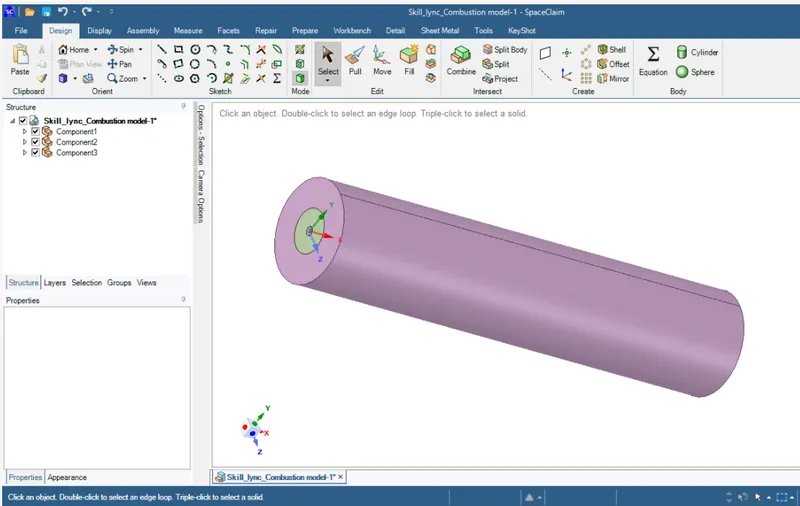
3D GEOMETRY
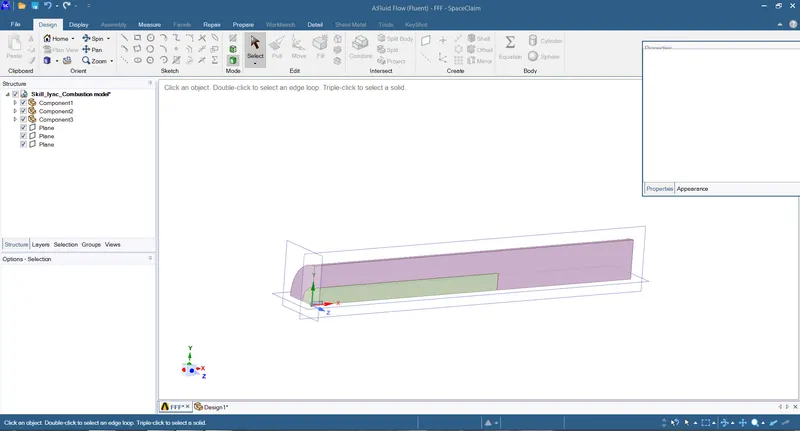
EXTRACTING THE 2D FROM 3D
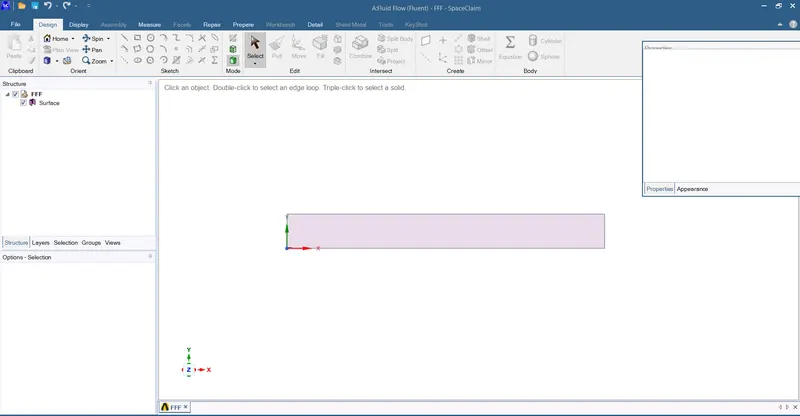
2D GEOMETRY
MESH :
- And after the importing the geometry then generate the mesh -2mm size
- ON proximity
- Nodes-17643
- Elements-17172
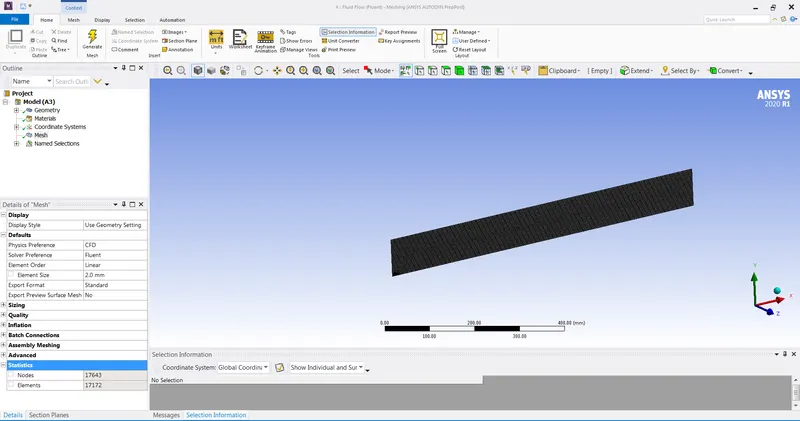
- And then update mesh
SOLUTION PROCESS :
- Axis symmetric
- energy -on ,K-eplison
- Species- transport species-volumetric -inlet diffusion -methane -air2-eddy disipiation -apply
- Boundaries -air inlet -1m/s Temp-300k-species -O2-0.23
- Fuel inlet -80 m/s temp-300k-species -CH4-1-H20-0
- outlet -pressure -0
- Hybrid intialization -intialize -before start starting the caluclations check the residuals
- And add Nox,Temperature ,soot formation plots them start the caluclations
- LINES AT -0.1,0.2,0.3,0.5,0.65
- WATER CONTENT-0.2,0.3
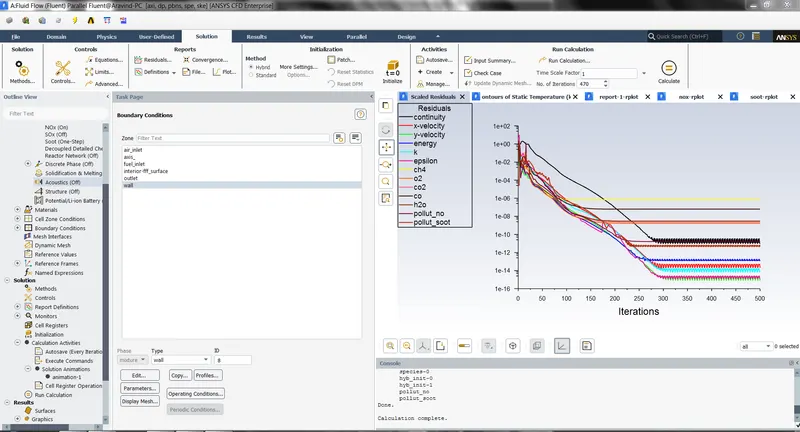
RESIDUALS
NO WATER CONTENT IS ADDED:
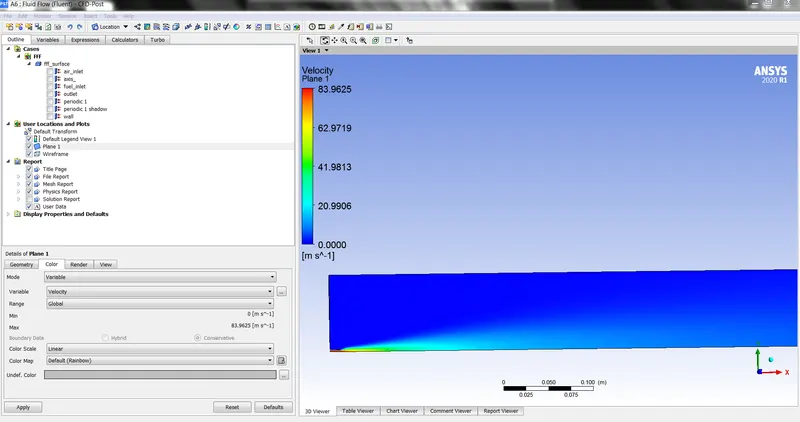
VELOCITY
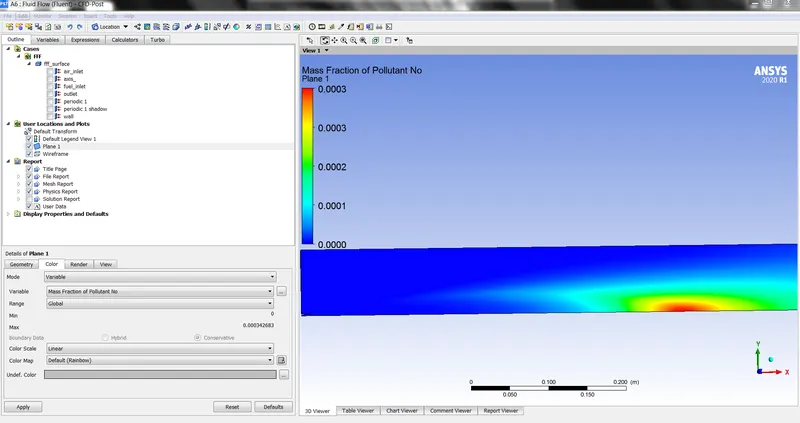
MASS FRACTION OF NO
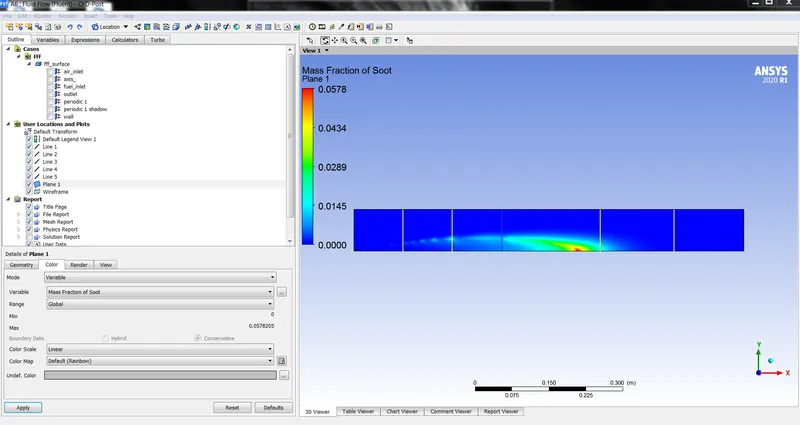
MASS FRACTION OF SOOT
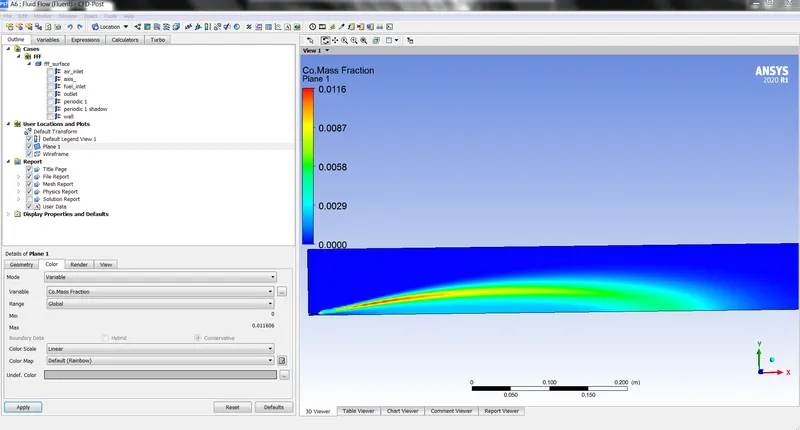
CO MASS FRACTION
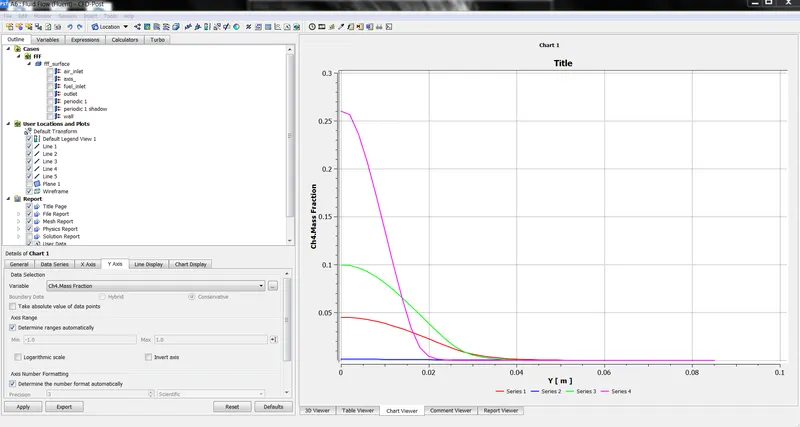
cH4 MASS FRACTION -CHART
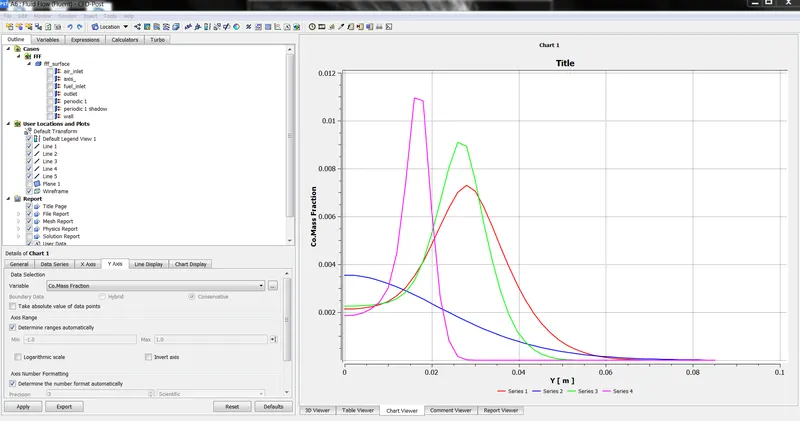
CO MAS FRACTION
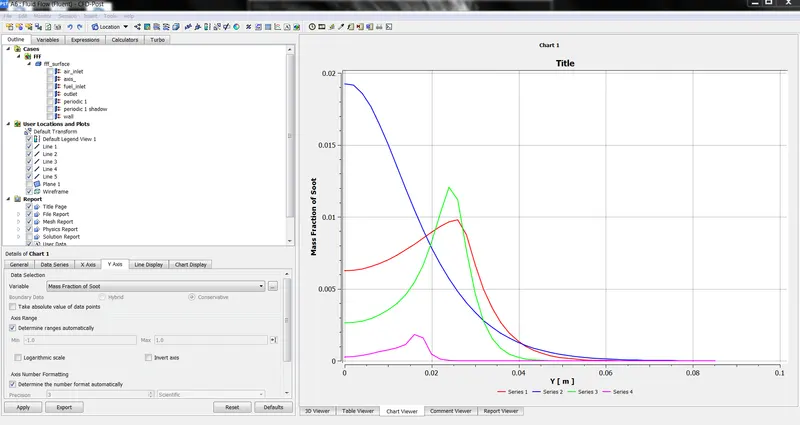
SOOT -CHART
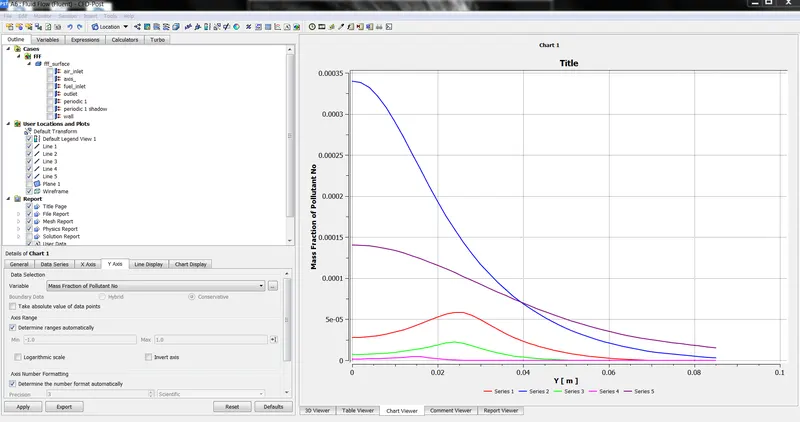
MASS FRACTION -NO
WATER CONTENT-0.2
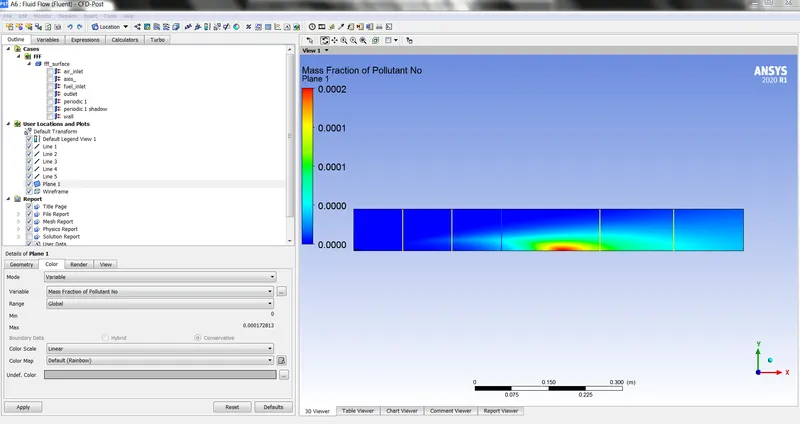
MASS FRACTION OF NO
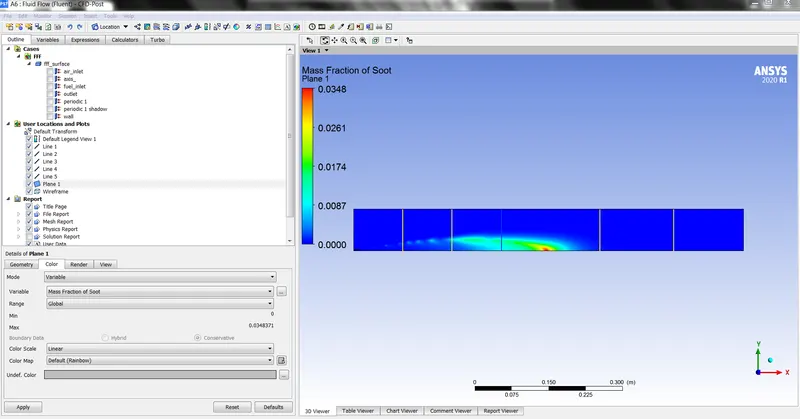
SOOT
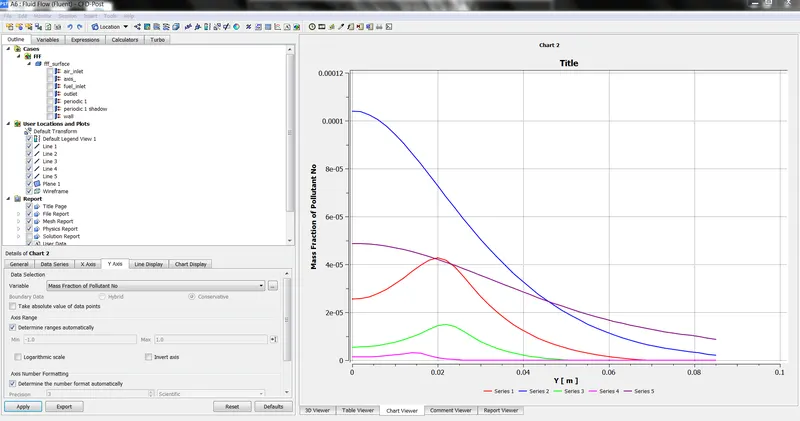
CHART-NO
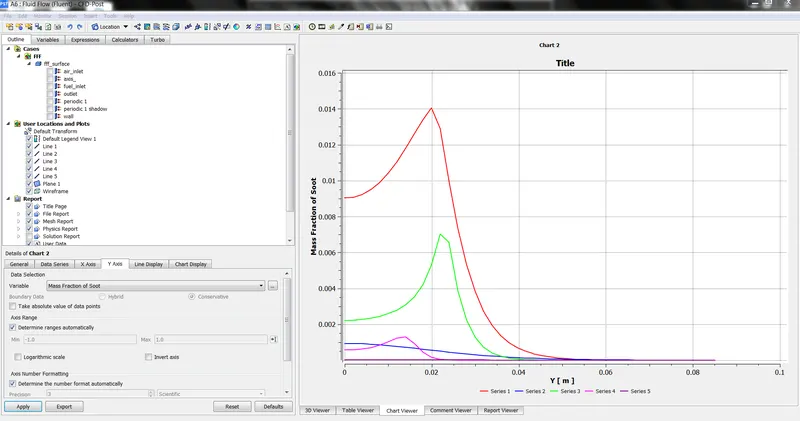
CHART-SOOT
WATER CONTENT -0.3
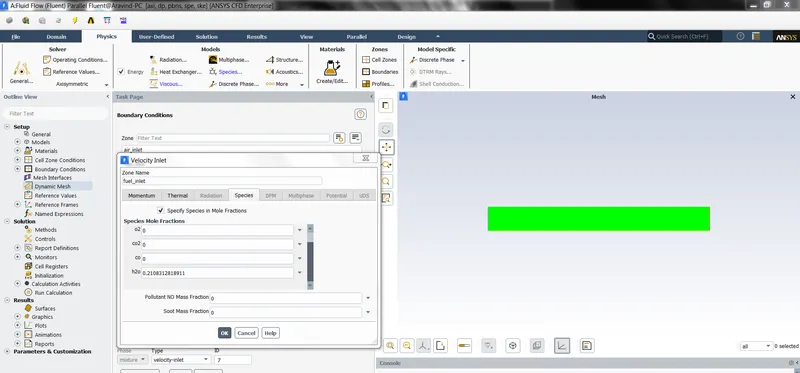
WATER CONTENT ADDED
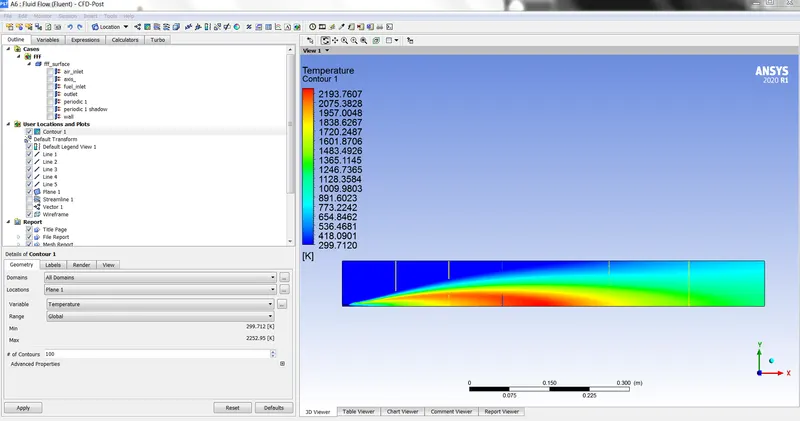
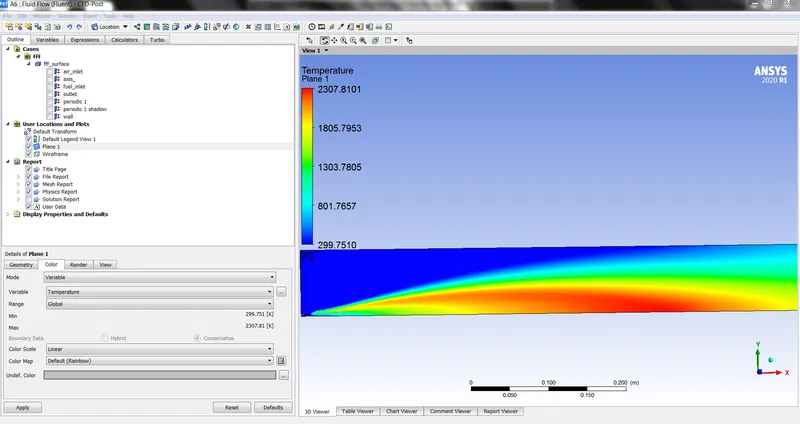
TEMPERATURE
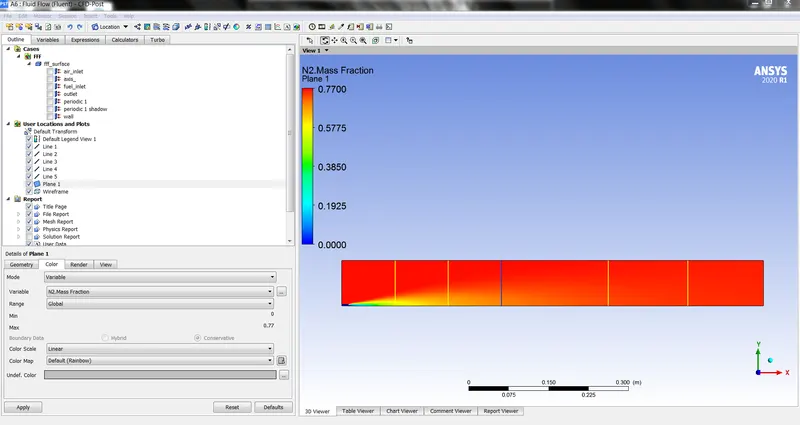
N2 MASS FRACTION
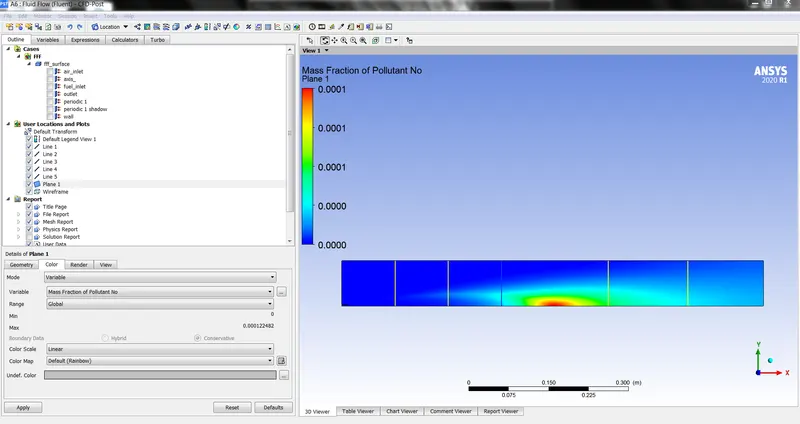
NO MASS FRACTION
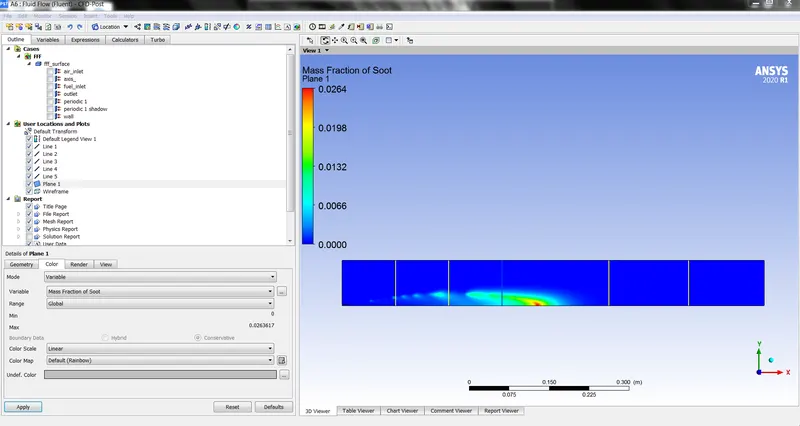
MASS FRACTION -SOOT
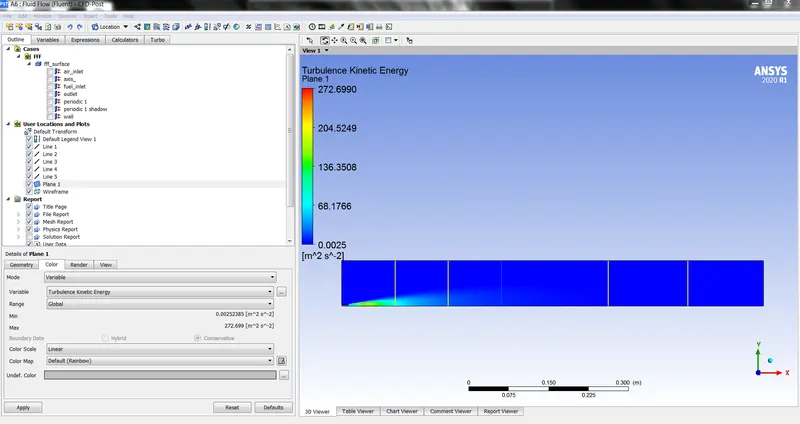
TURBULENCE KE
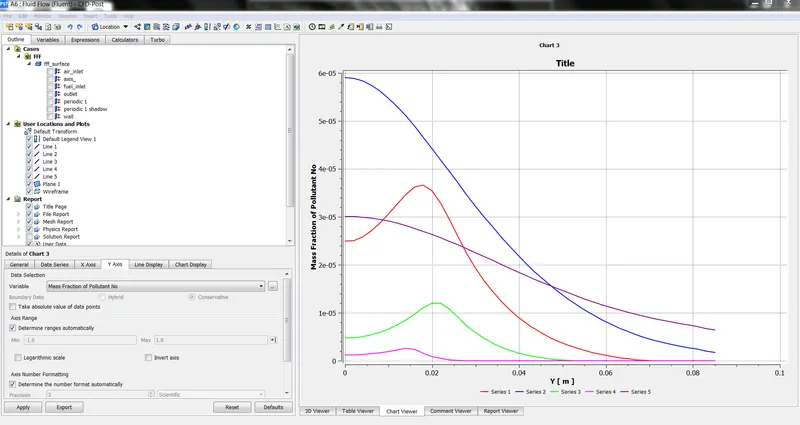
NO -CHART
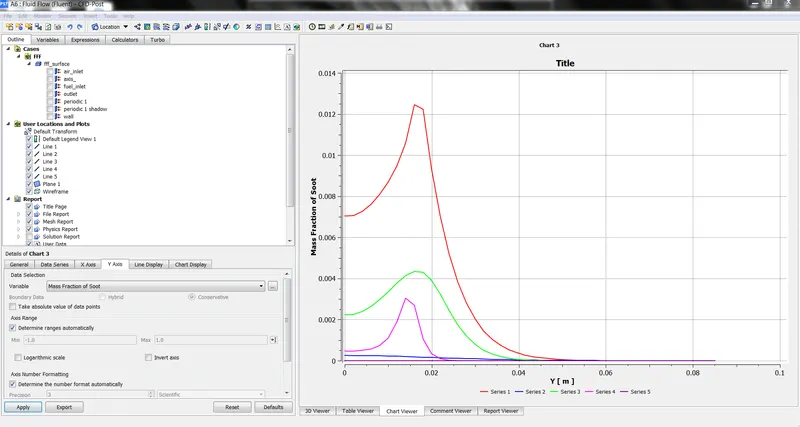
MASS FRACTION SOOT-CHART
CONCLUSION :
- All the above figures the shows the simulation results
- From the above results we can observe that the NOX,SOOT values are decreasing as we added water content into the fuel
- By this we can say that we can reduce the Nox by adding certain percentage amount of water content intothe fuel
- Max temp-2307k
- we have n't observed the complete nox formation yet form this simulation
- And these factors may vary based on burner desiging conditions ,inlet velocity and density
- This helps us to find out mass farction products of air and fuel
- By doing this project ,it helps me how to do a combsution simulation in the fluent