Week 10 - Simulating Combustion of Natural Gas.
Combustion challenge
Aim: Simulating combustion of air fuel mixture
Introduction: Energy is required in all commercial and private vehicles. This energy is generated by burning of fuel in the presence of air. This happens due to chemical reaction inside the engine which burns the fuel to produce energy and exhaust gases are produced as by products. This technology has been used in all transport vehicles ranging from bike, scooter, cars, truck, buses and even in aeroplanes and rockets.
Theory: When fuel burns in presence of air (oxygen), energy is produced. With this energy lot of harmful gases are also produced which degrades the environment. In this challenge, we will mix 5-30% water and check the decrease in harmful emissions such as NOx and Soot formation.
Solving and Modelling approach:
3D figure was converted to 2D to make the simulations easy and fast.
Inlet was provided for air and fuel. (air – 0.5 m/s, fuel – 80 m/s)
Two cases were discussed:
- Methane air mixture was burned without water
- Methane air mixture was burned with water ranging from 5 – 30%
Species was turned on. Methane – air was selected for first case, methane – air 2 step was selected for the second case.
In second case water was added in three concentrations: 5%, 15%, 30% by wt. as reactant. So, in second case, further three simulations with three different water concentrations were performed.
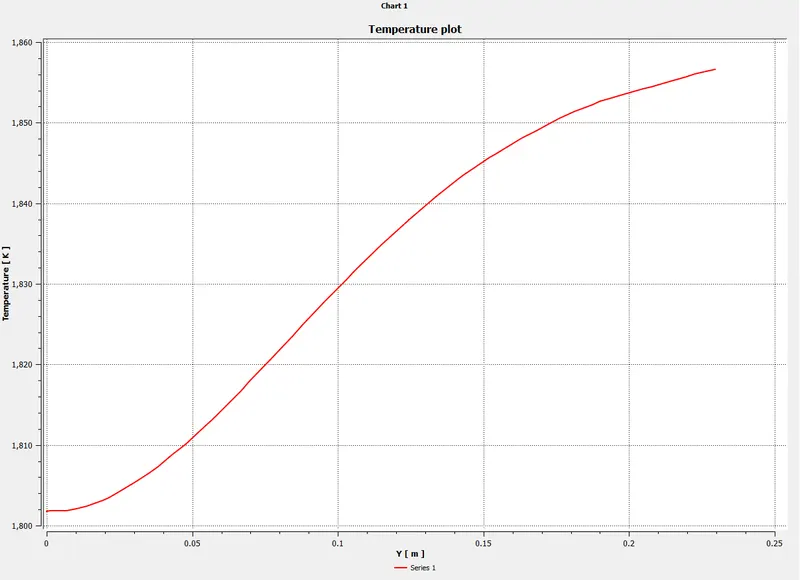
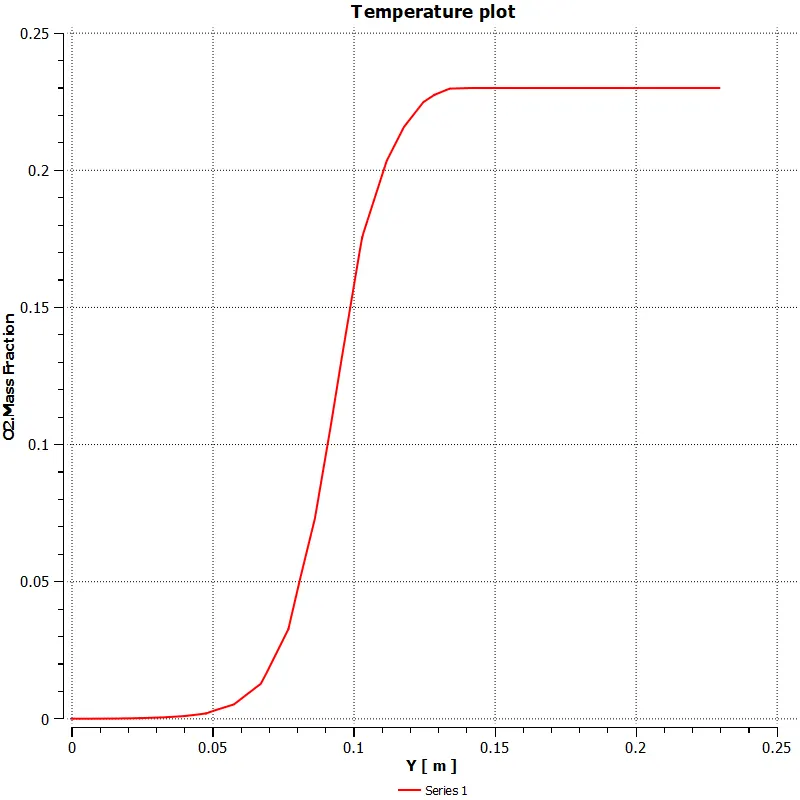
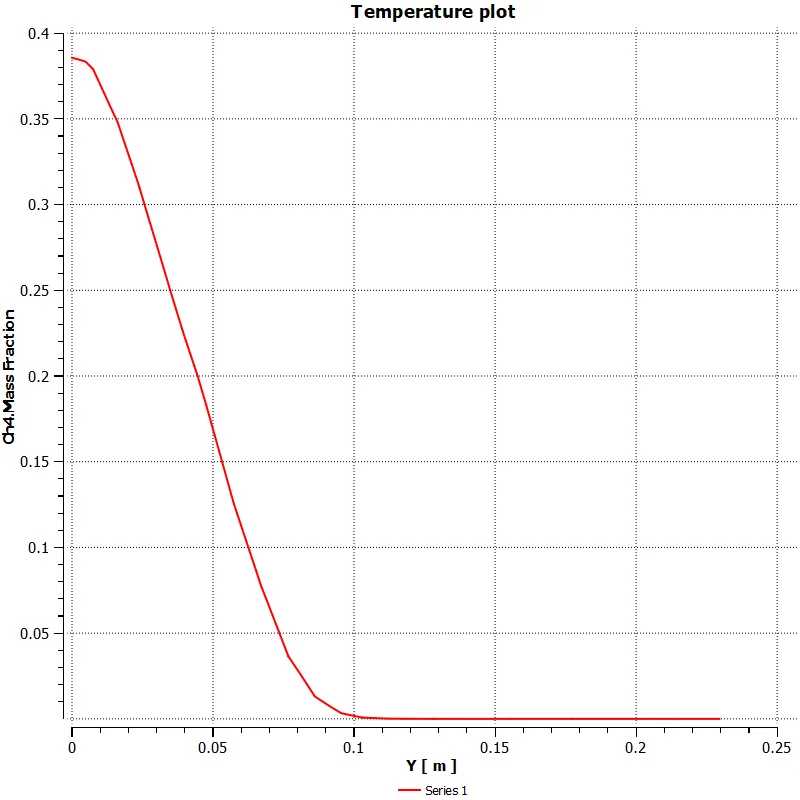
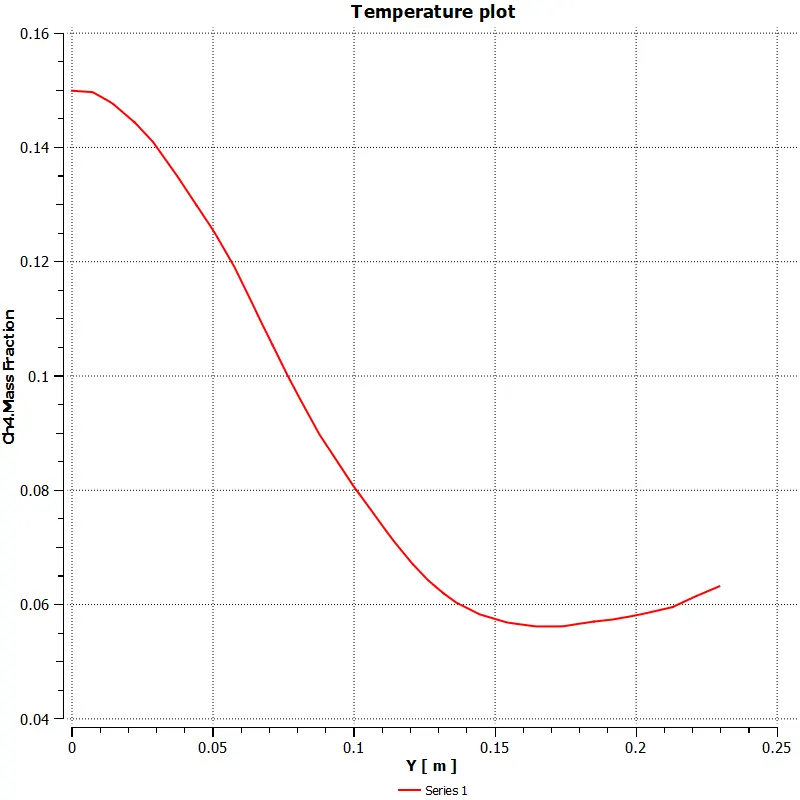
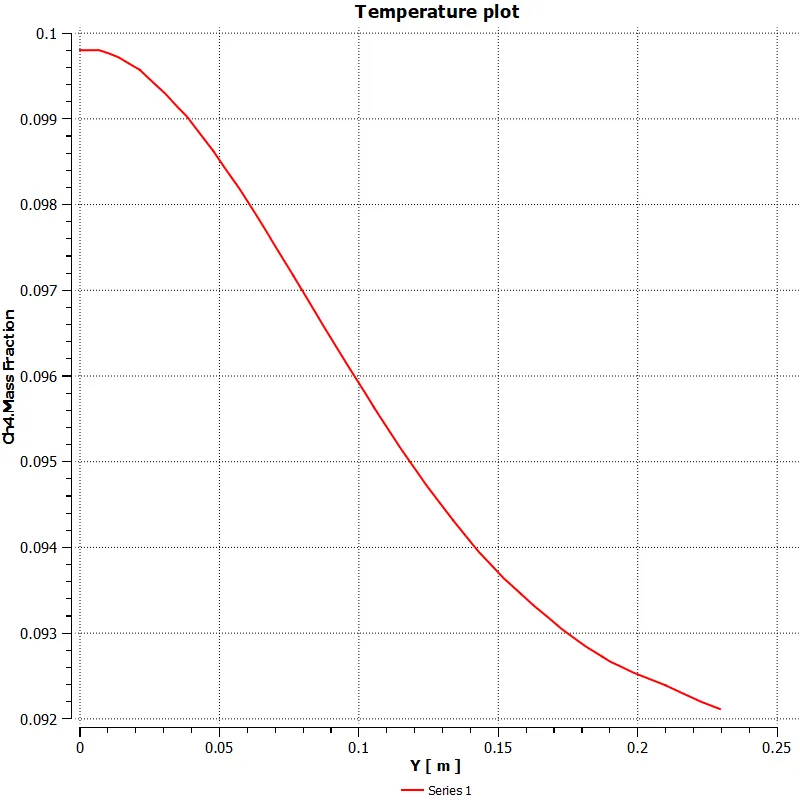
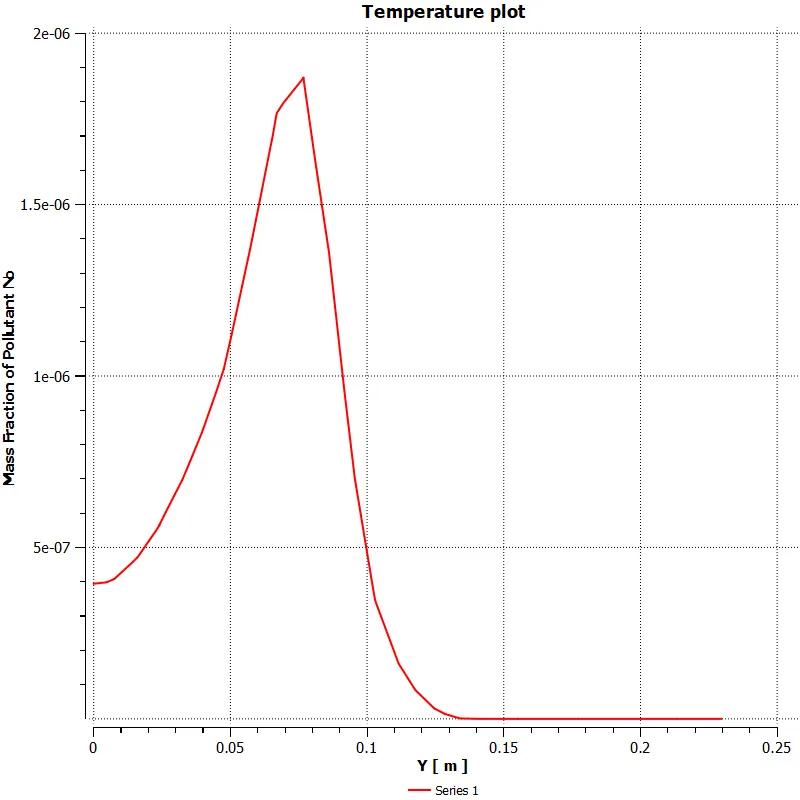
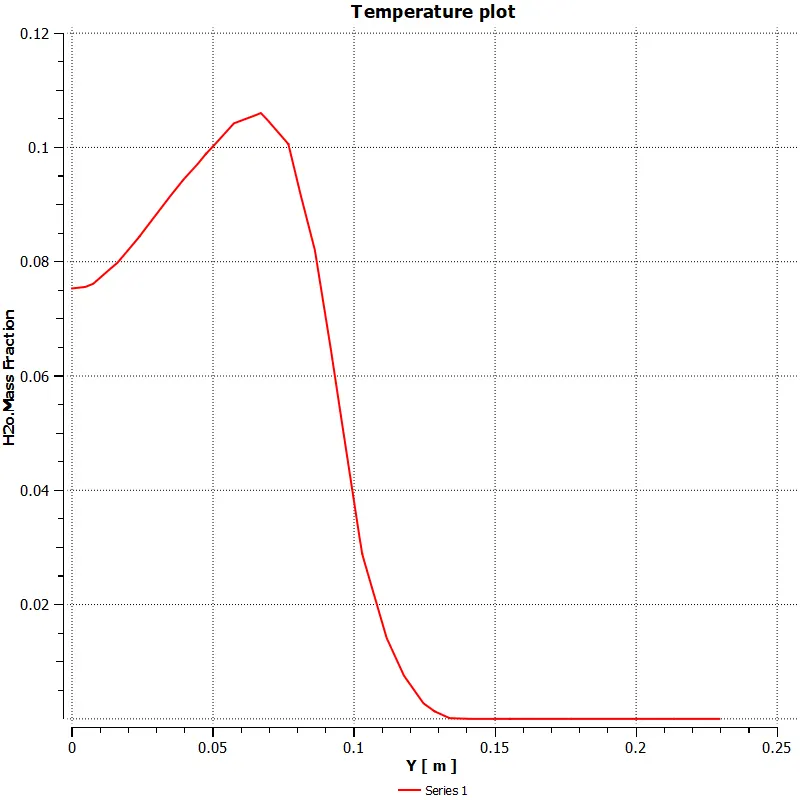
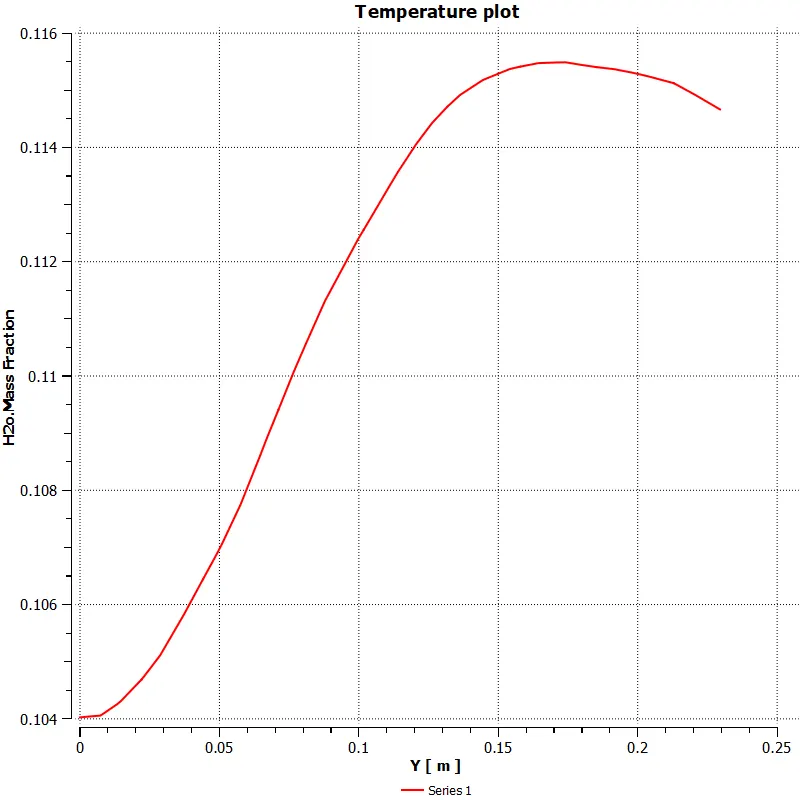
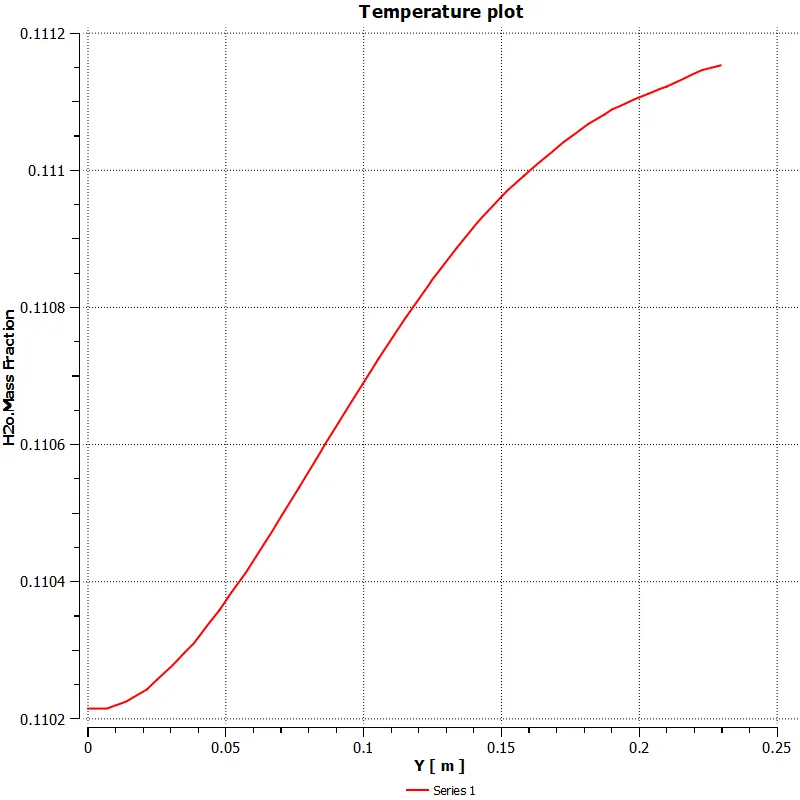
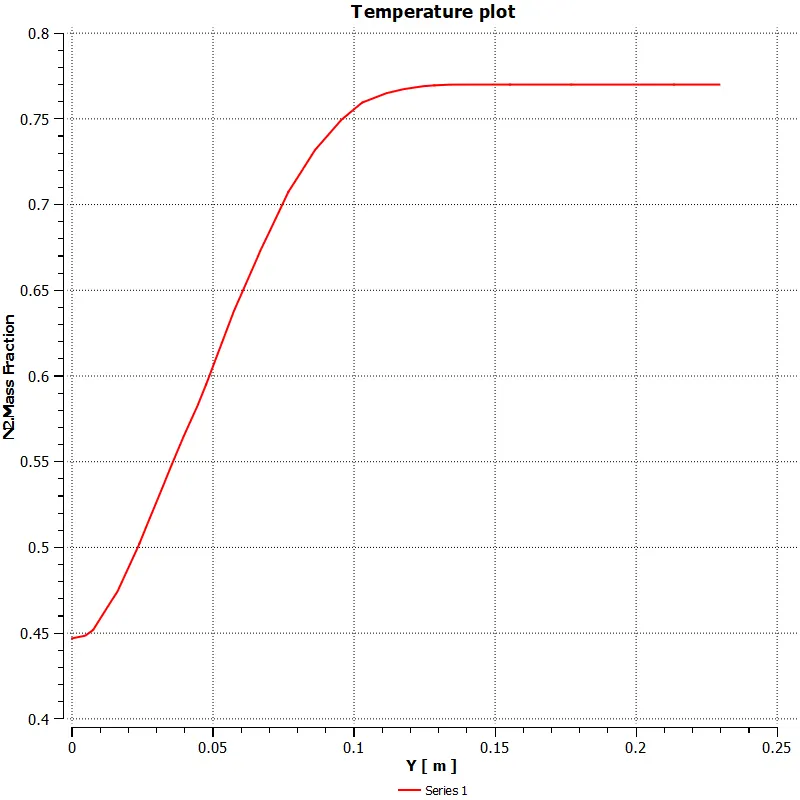
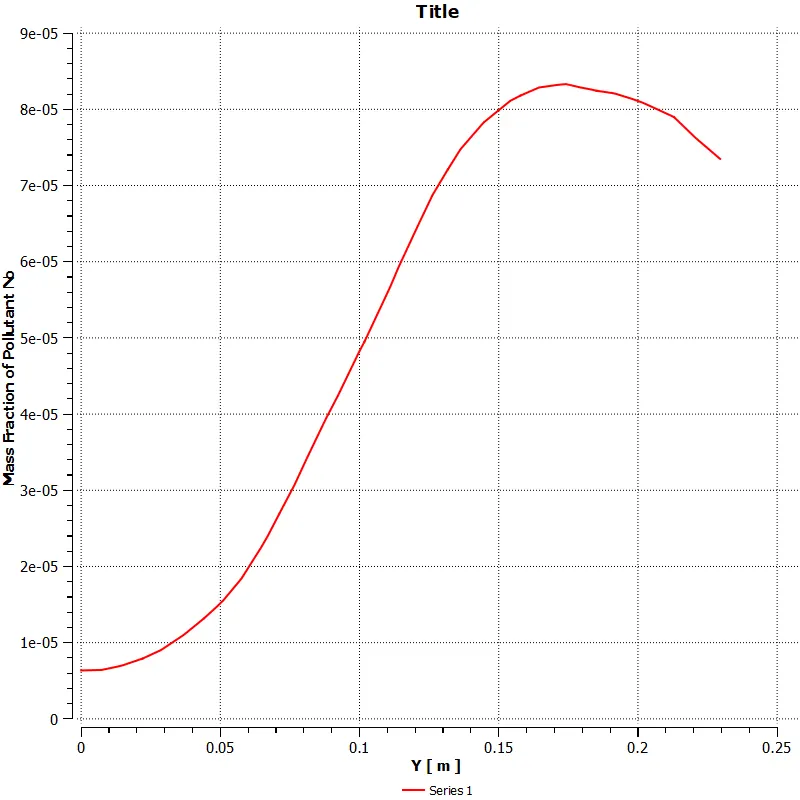
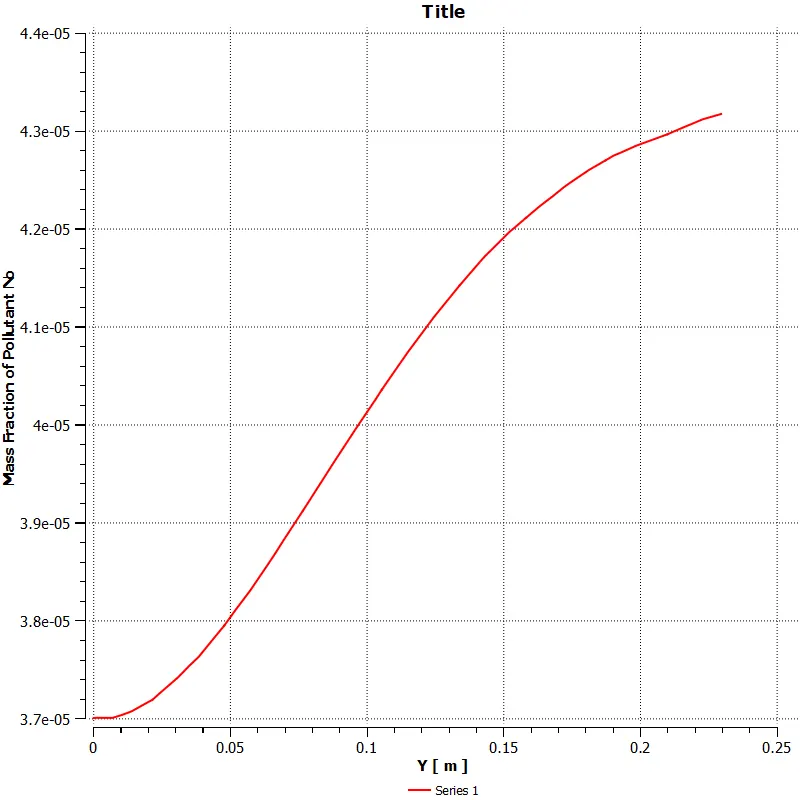
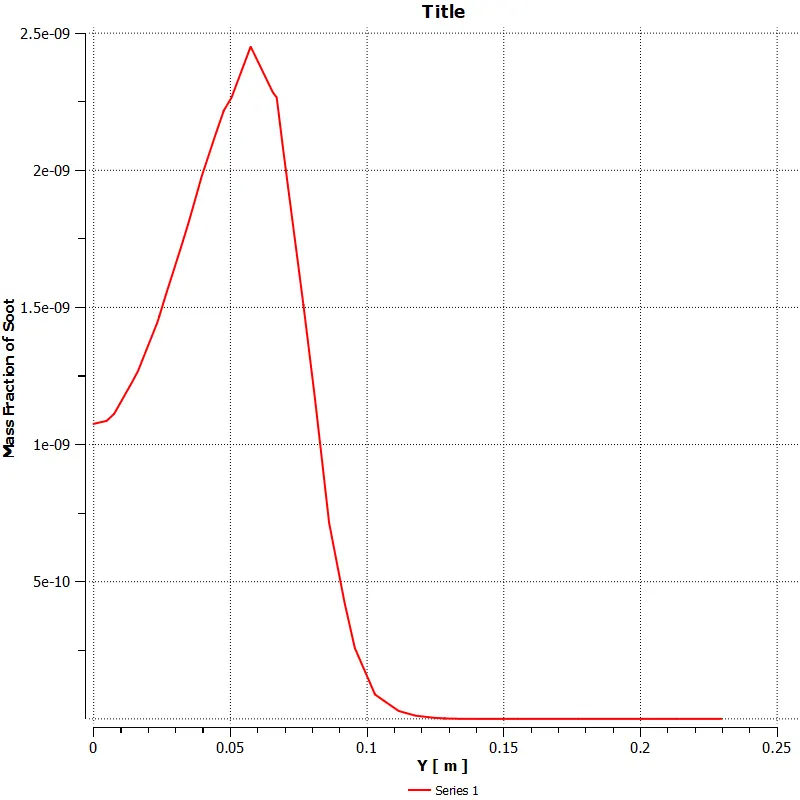
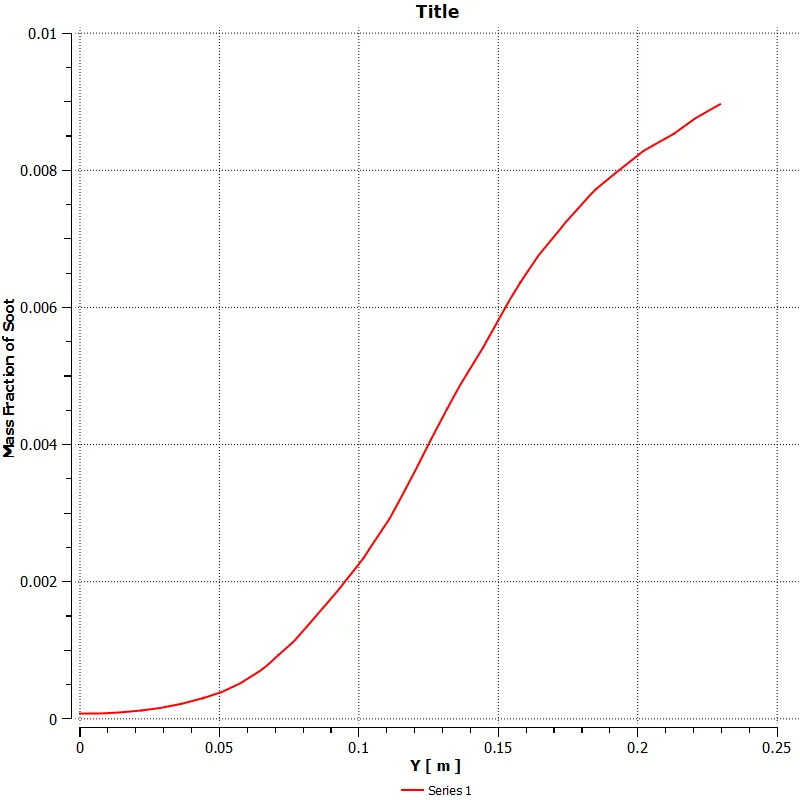
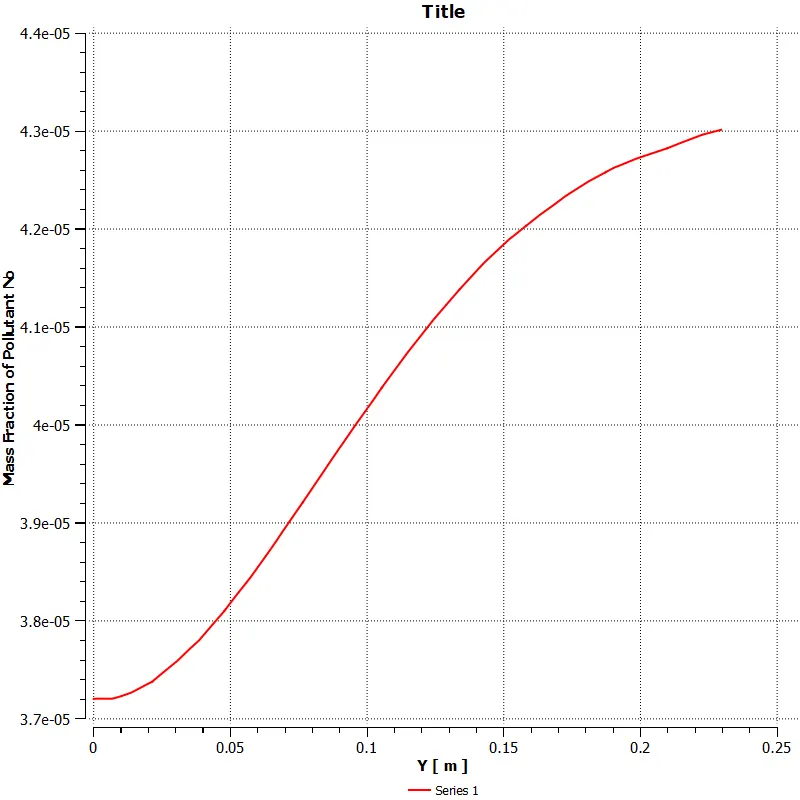
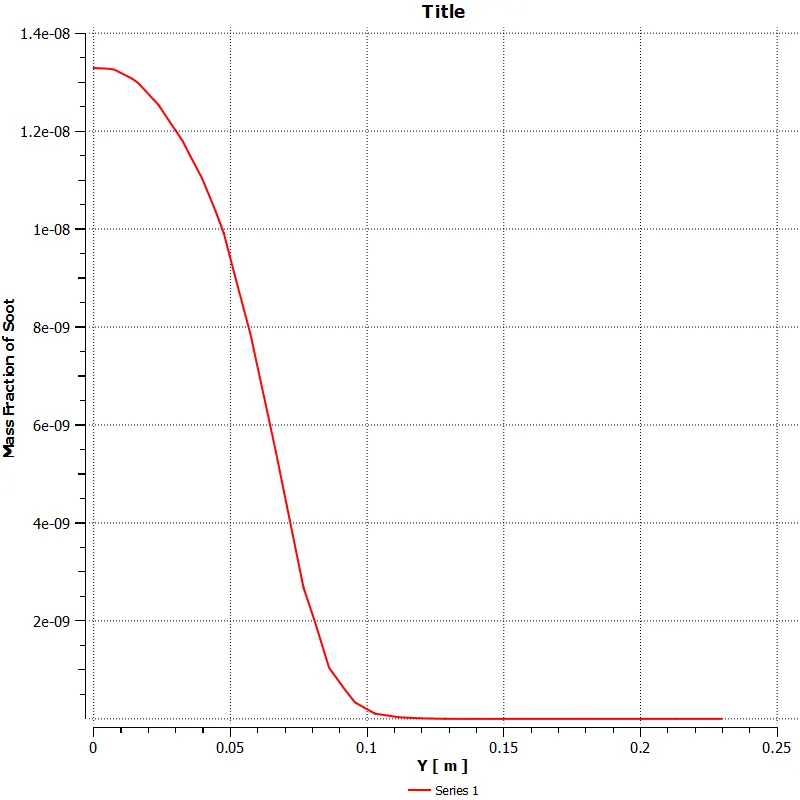
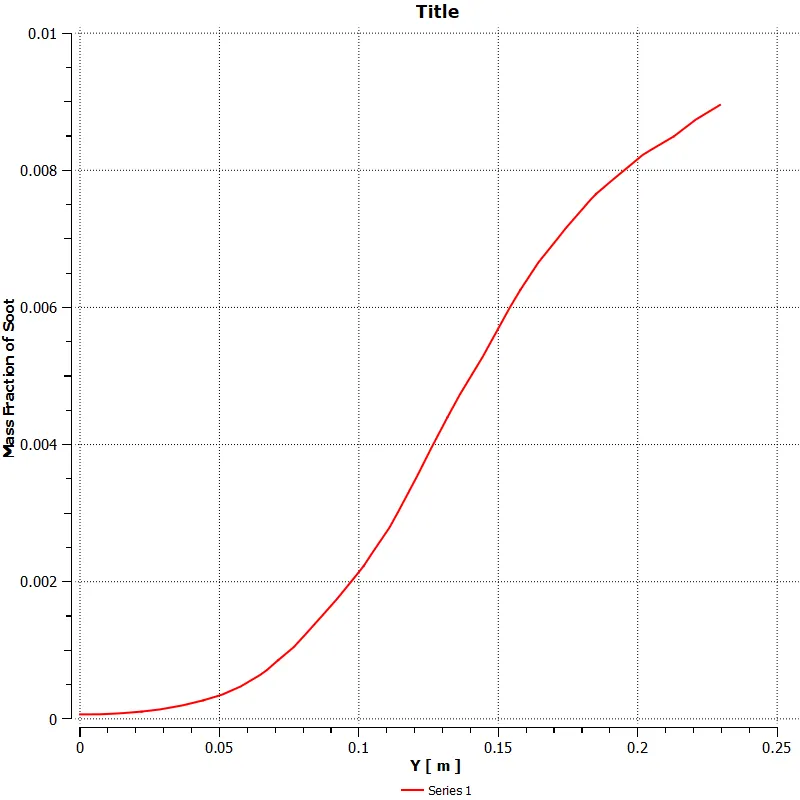
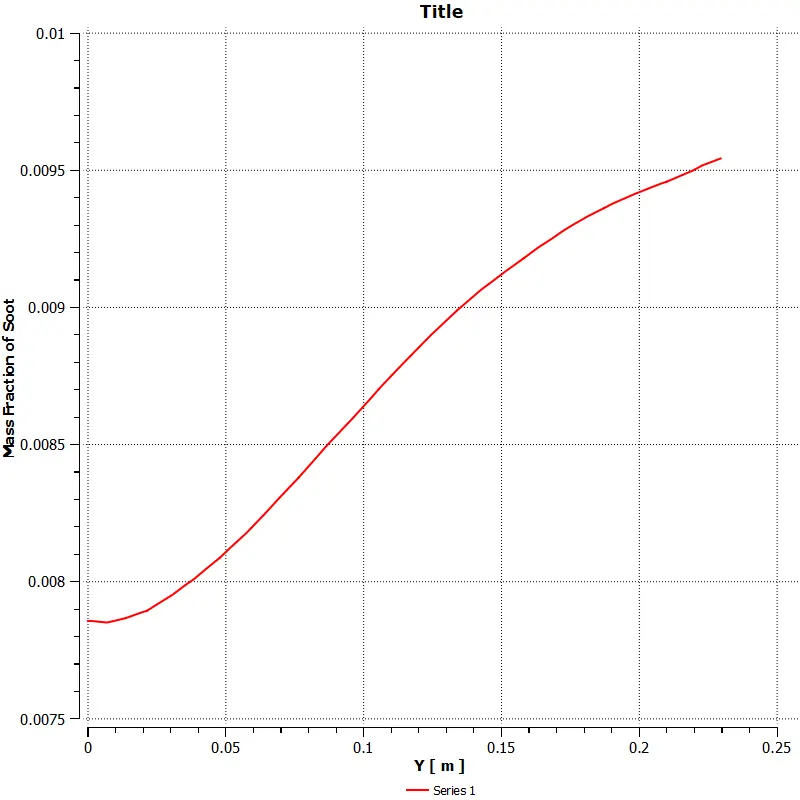
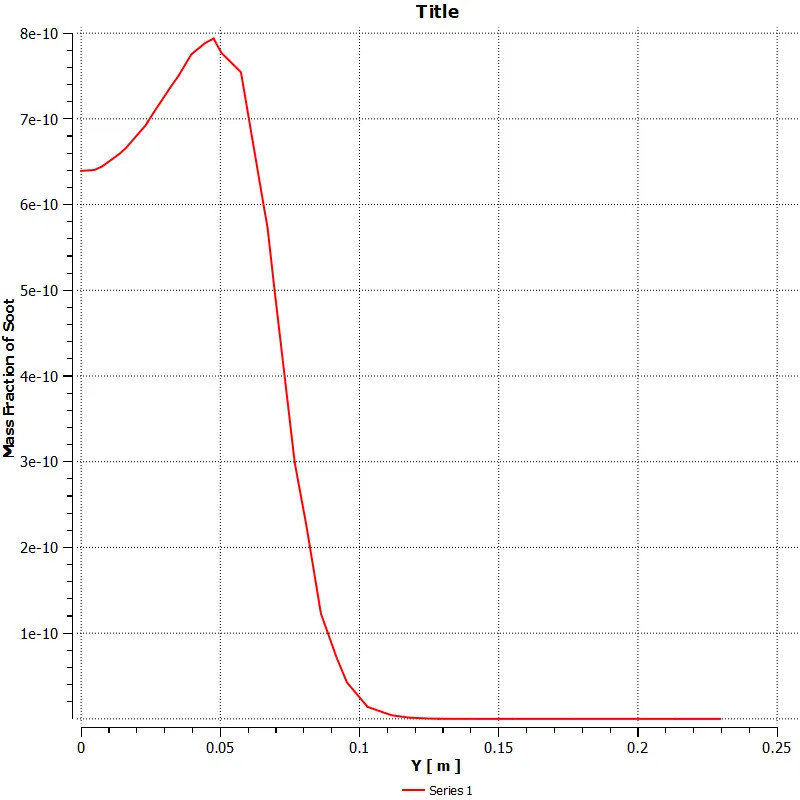
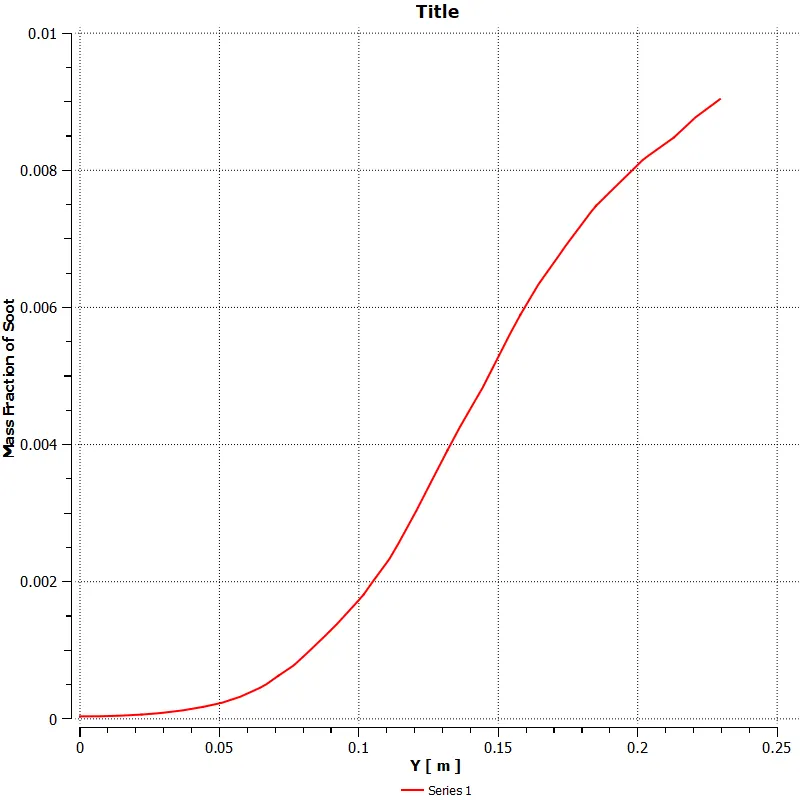
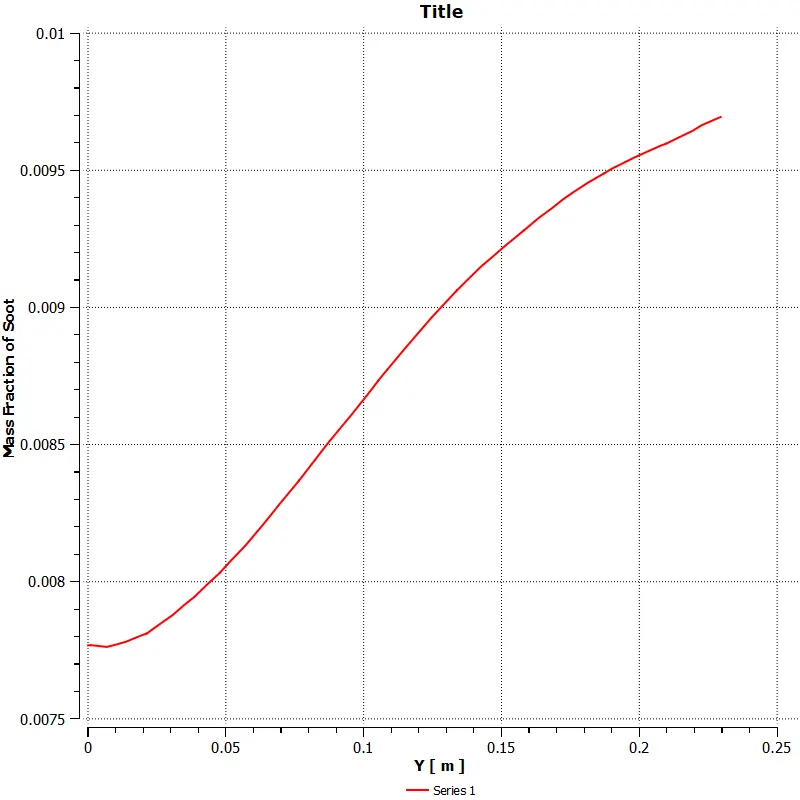
Three lines was plotted at a distance of 0.5 m, 1 m and 1.5 m. Charts were made using these three lines with x axis representing y line co-ordinates and y axis represented the different variables.
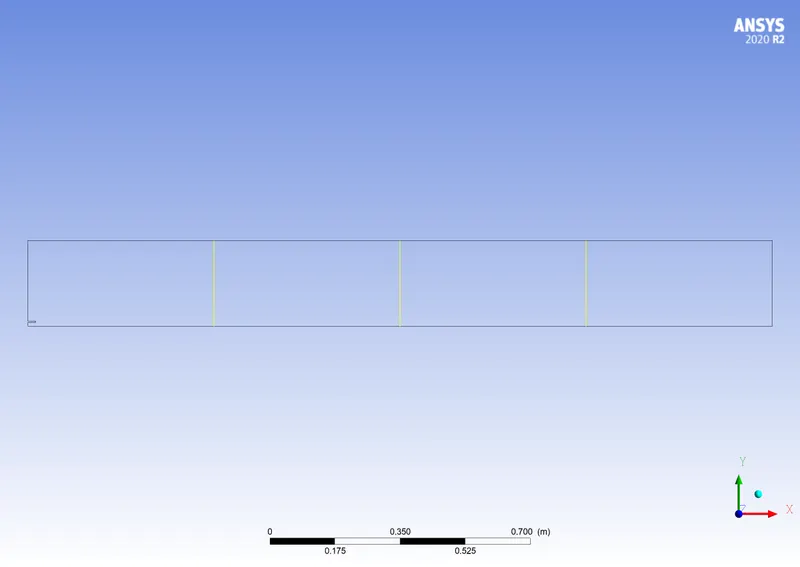
Geometry:
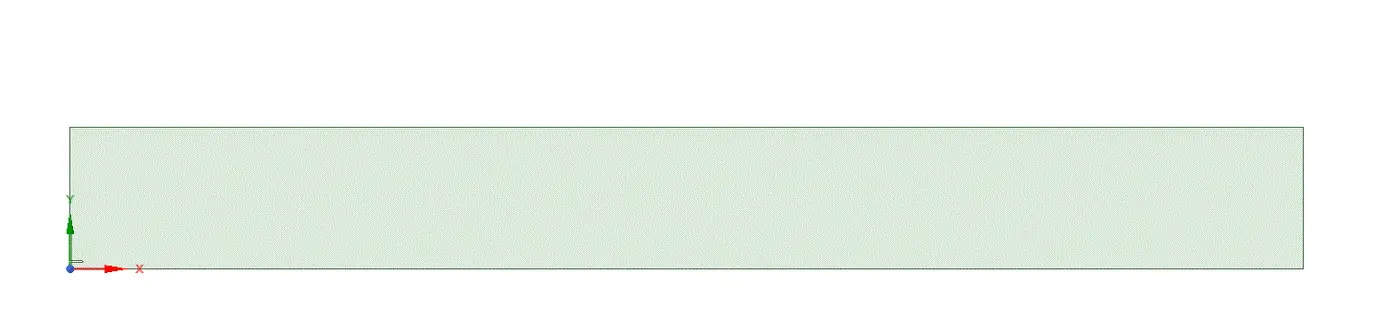
Mesh:
Around 10,000 elements were detected.
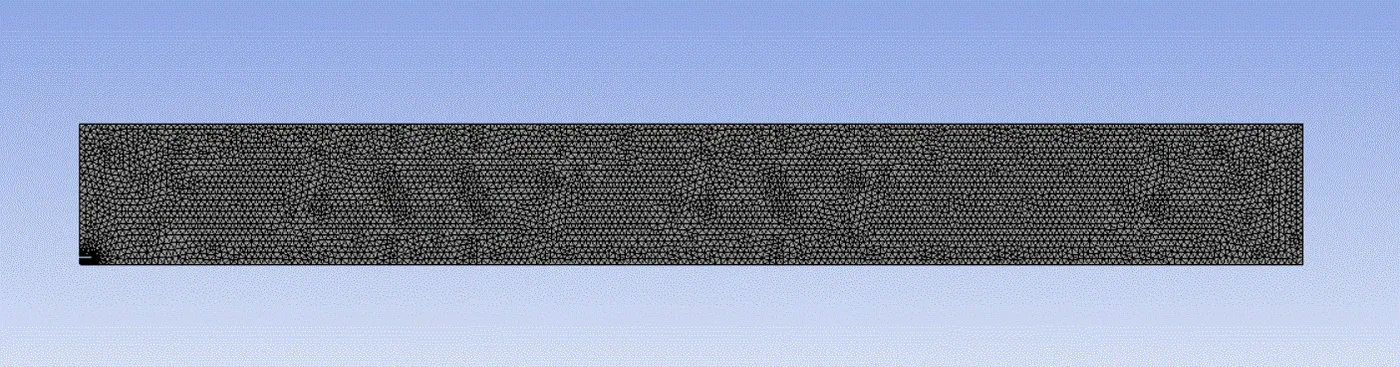
Setup:
Standard K-epsilon model was used to solve the problem. As the mixture will turn into turbulent region, K-epsilon was used.
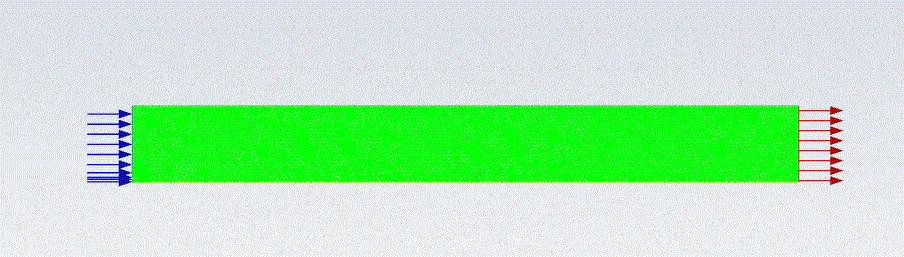
Results:
Residual plot was found very similar in all cases. All cases ran for 500 iterations.
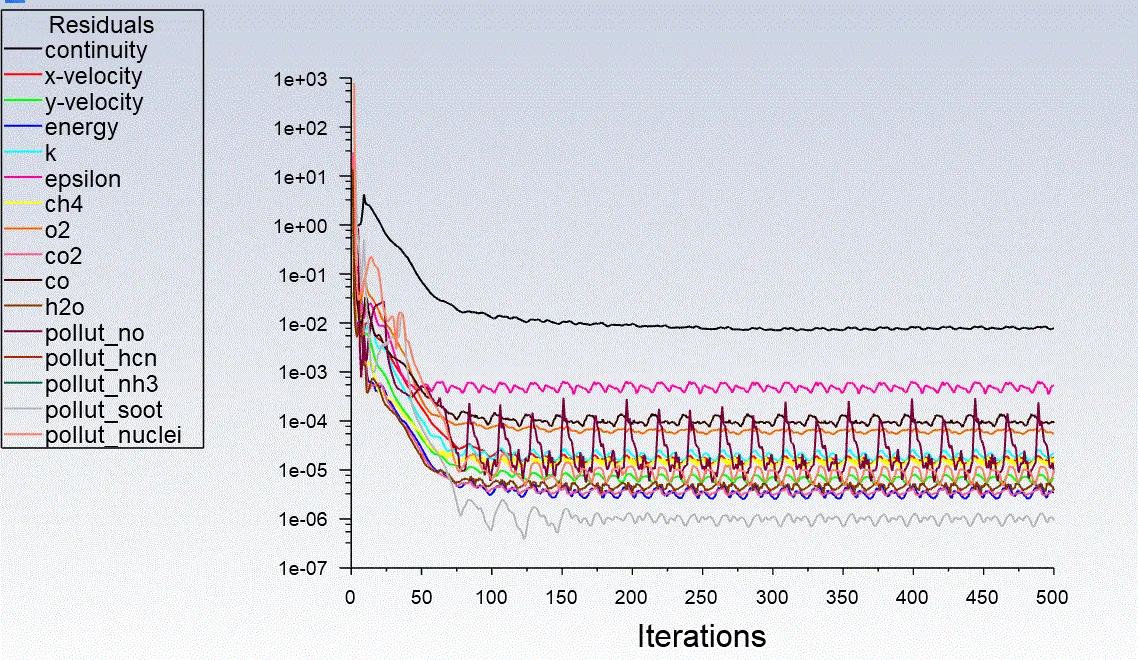
Part a: When methane was burned in presence of air (no water)
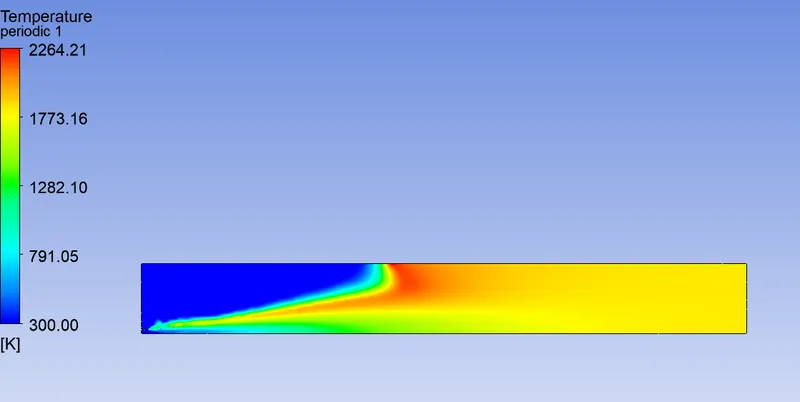
Temperature plot:
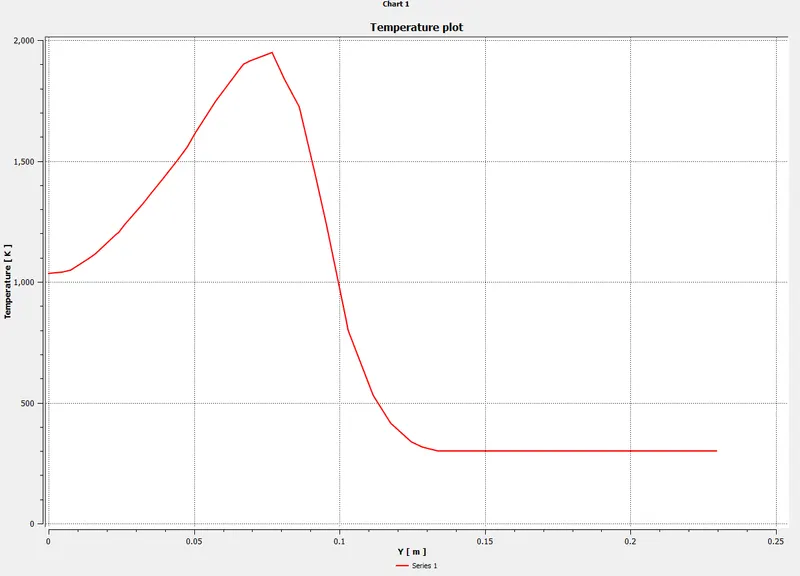
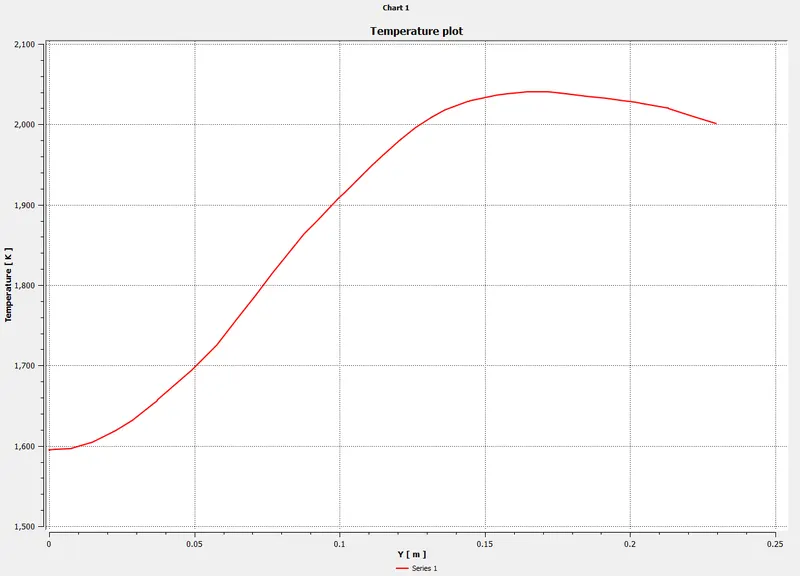
Reactants:
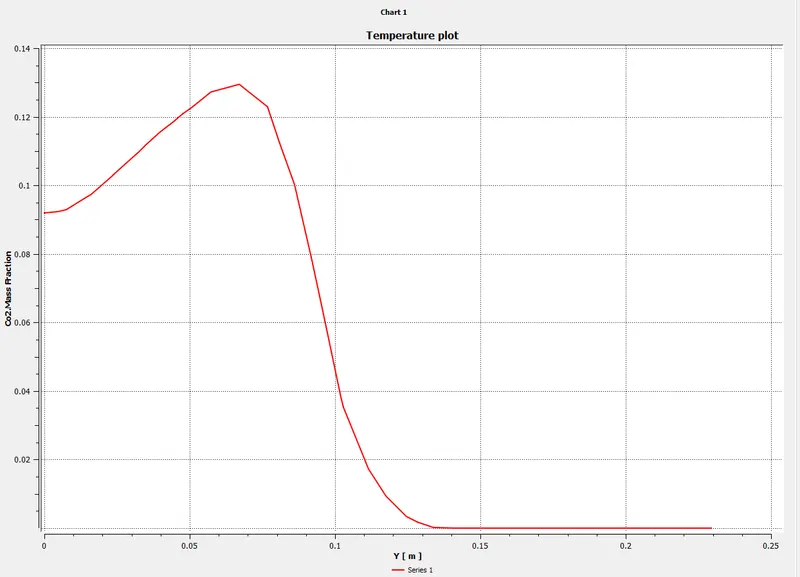
Oxygen:
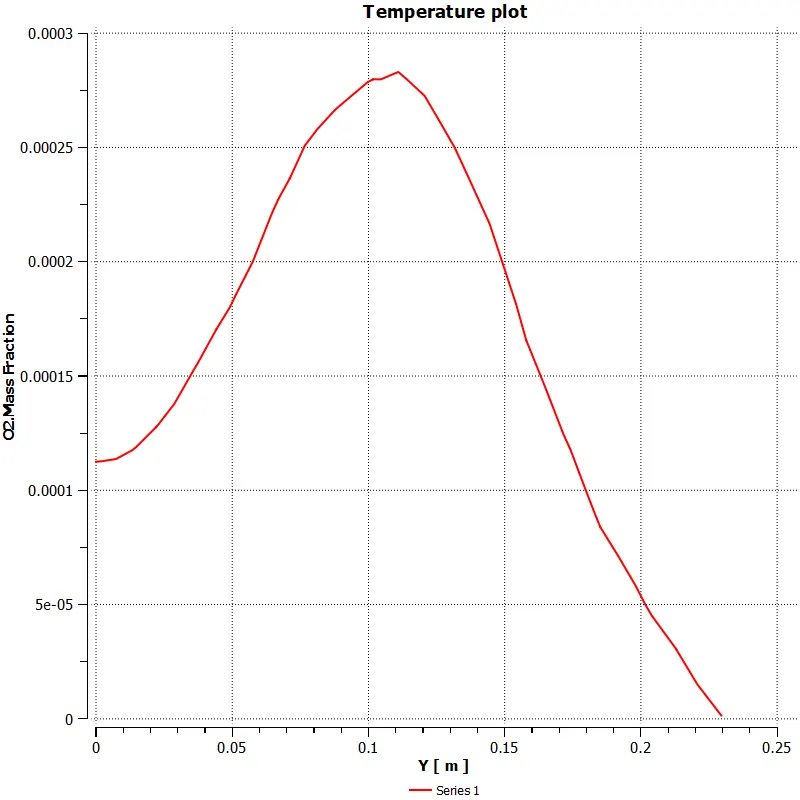
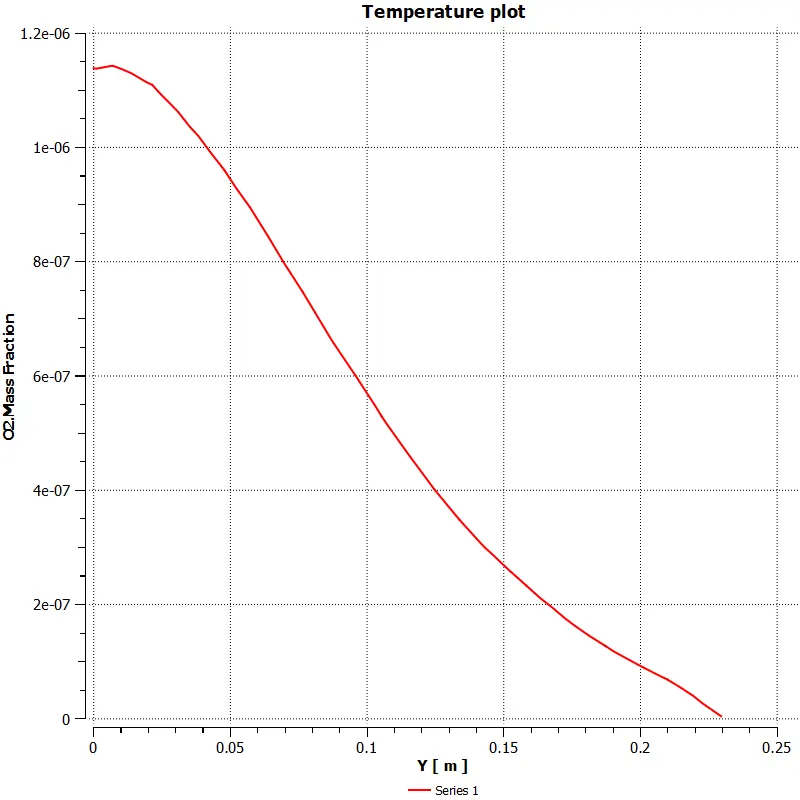
Methane (CH4):
Products:
NOx:
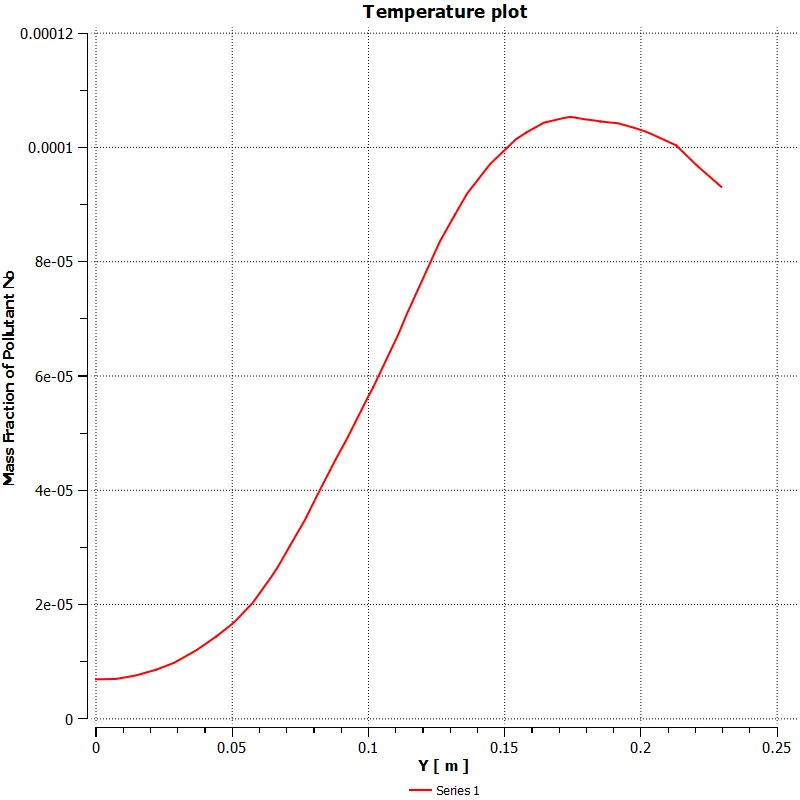
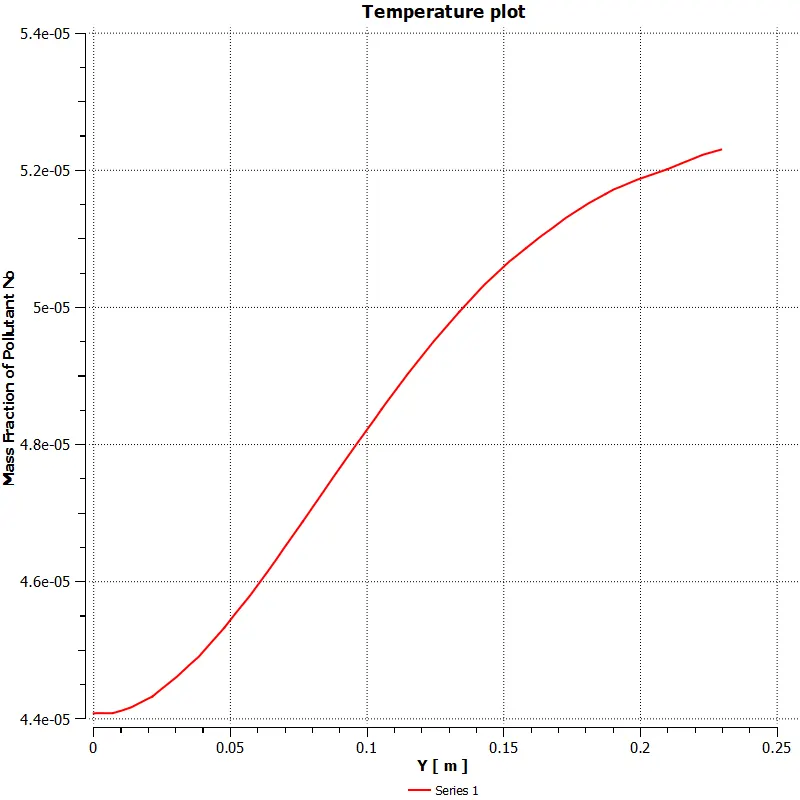
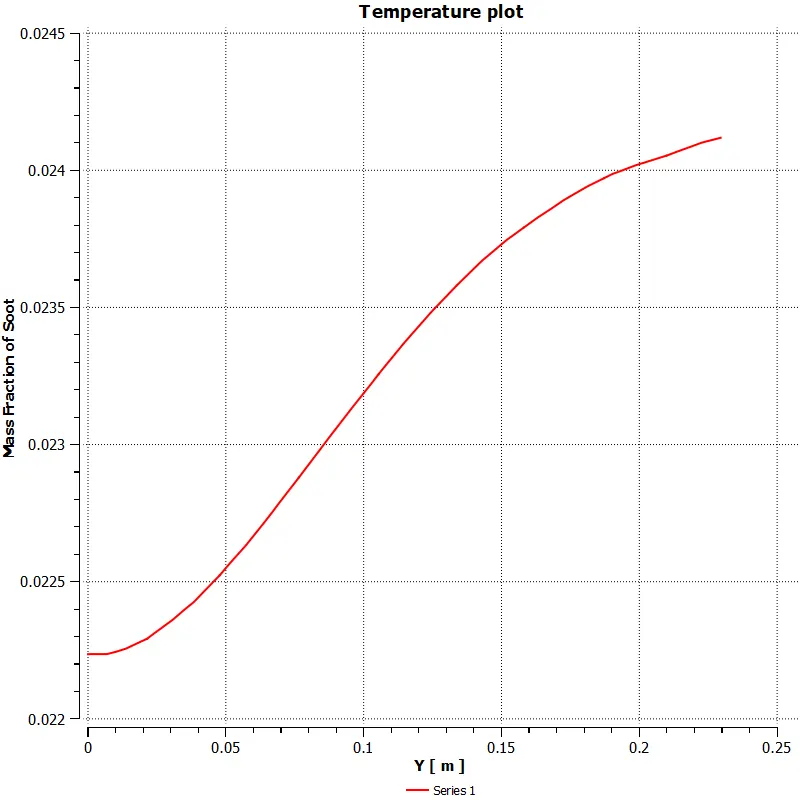
Soot formation:
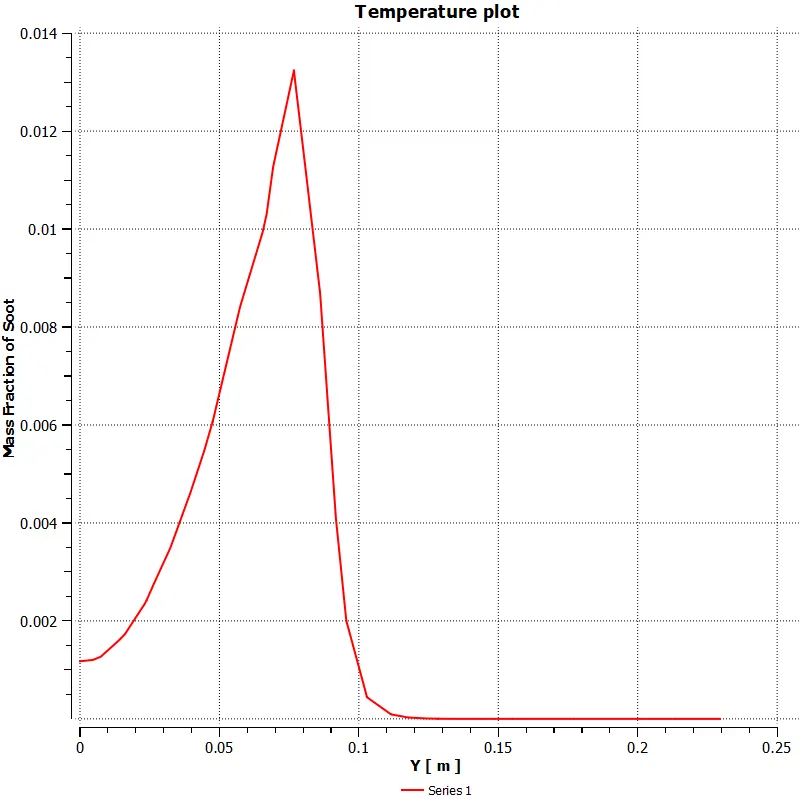
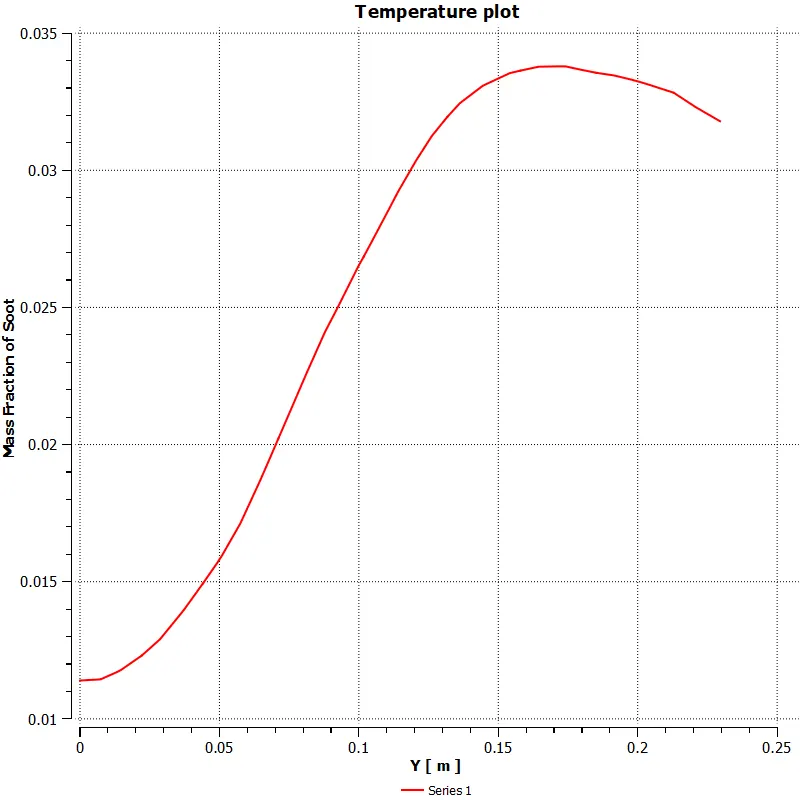
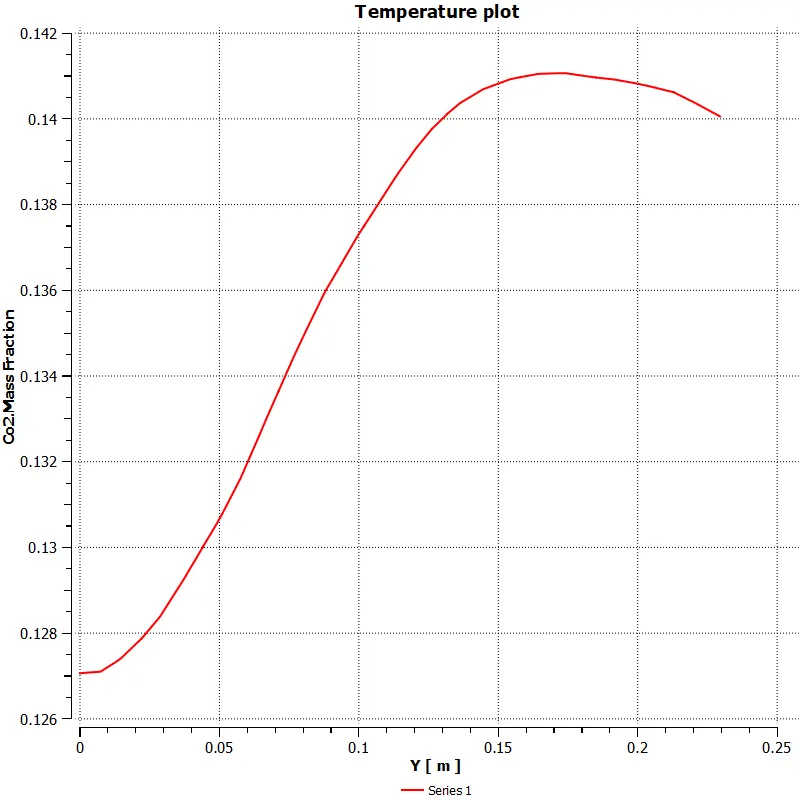
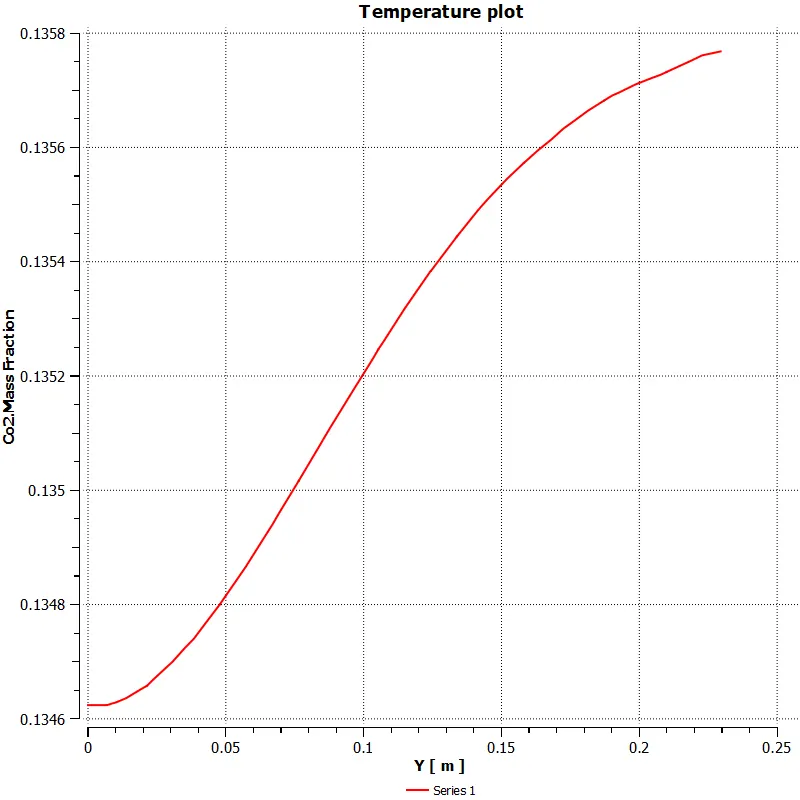
CO2:
Water:
Nitrogen:
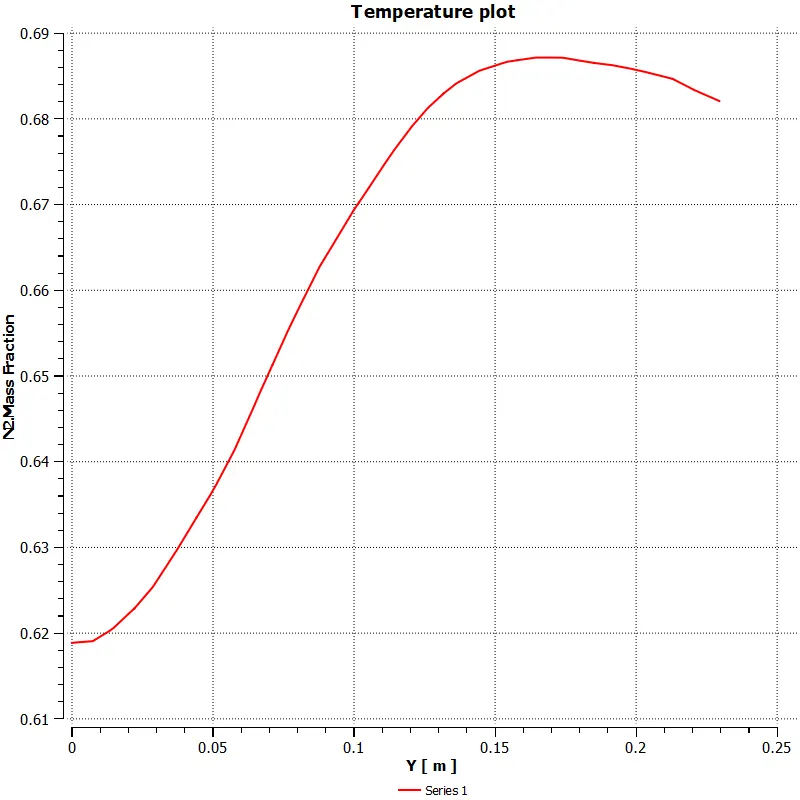
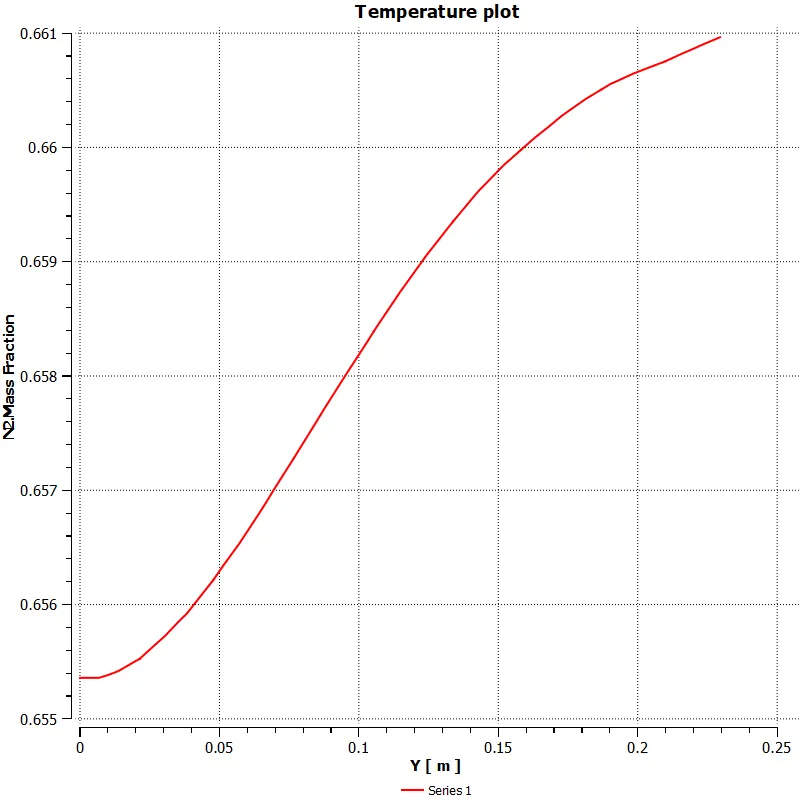
Part b: When methane was burned in presence of air with water ranging from 5 – 30 %
- When water was added 5% with fuel
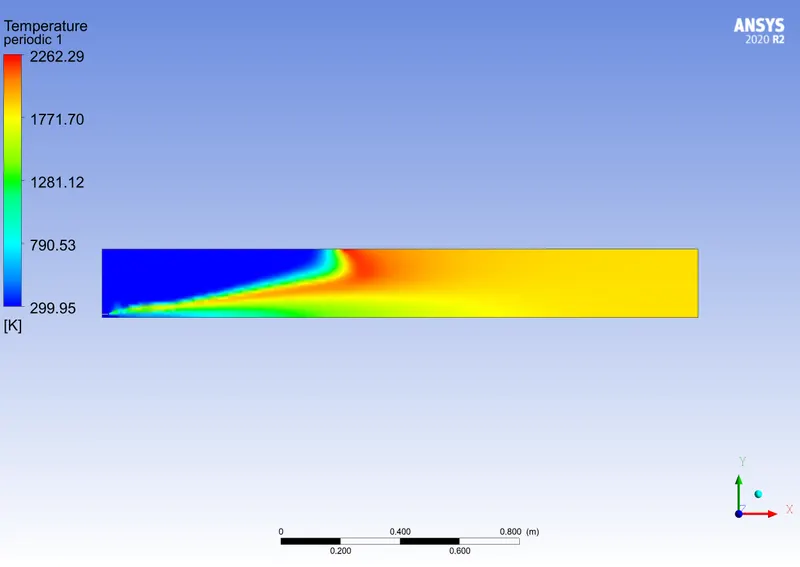
NOx:
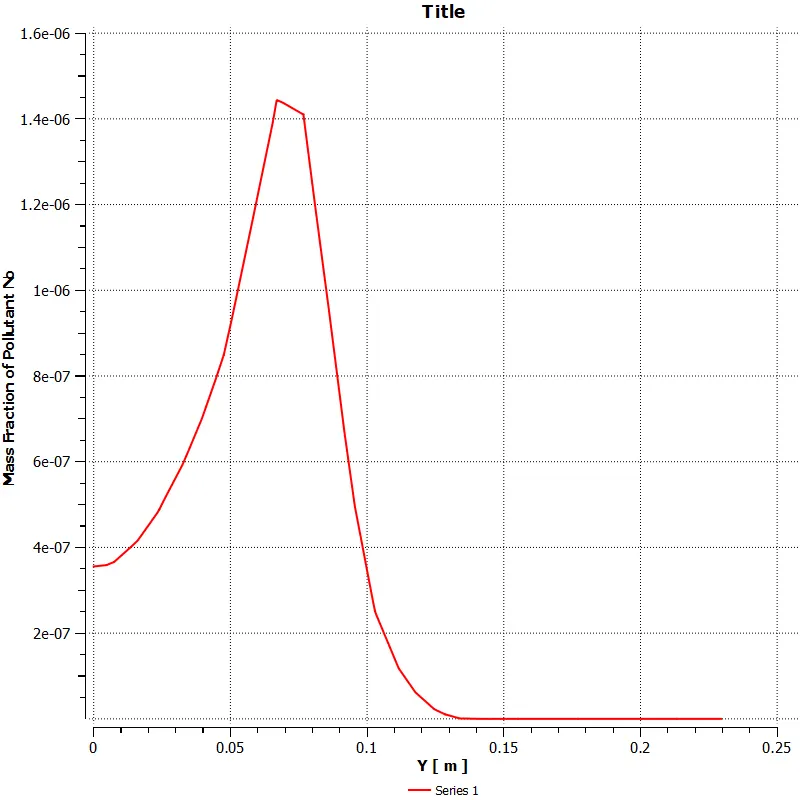
Soot:
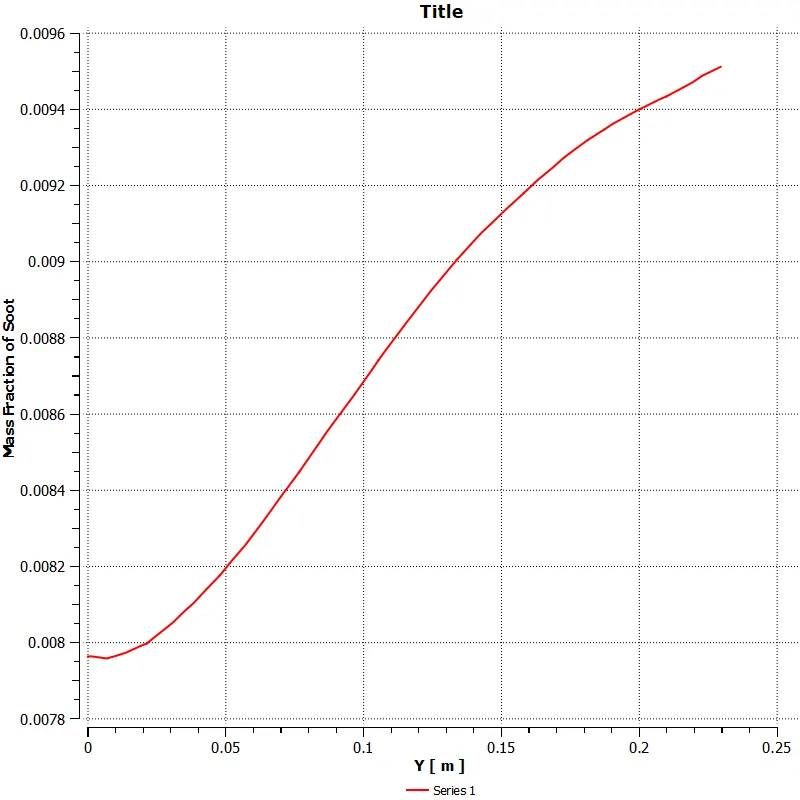
- When water was added 15% with fuel
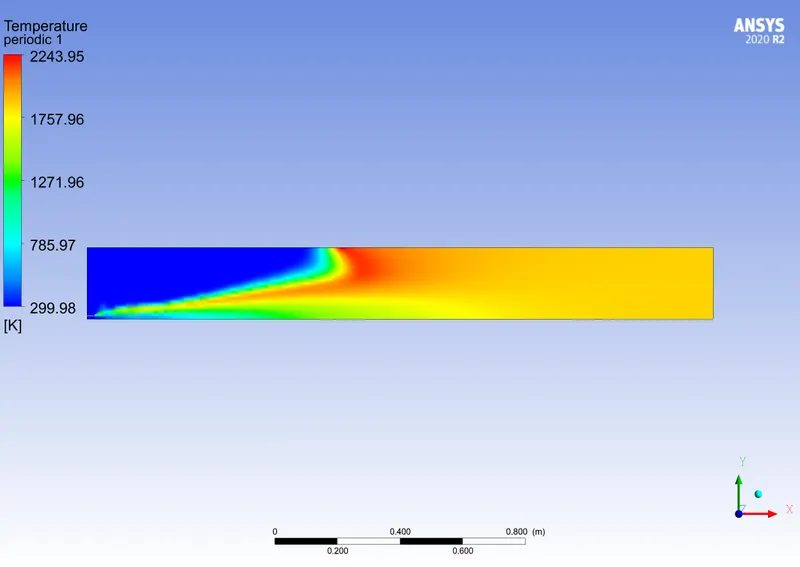
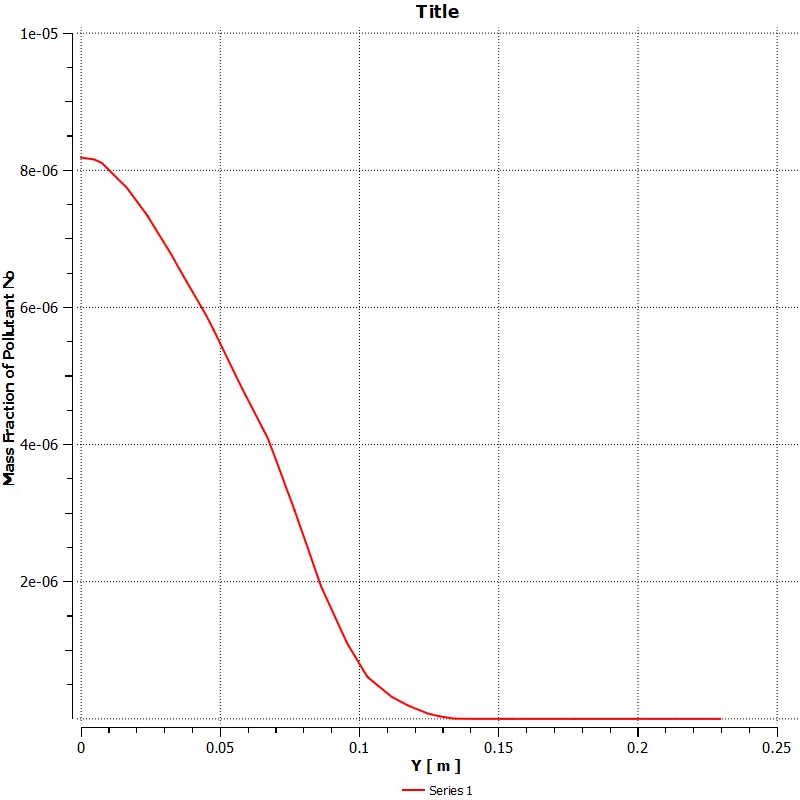
NOx:
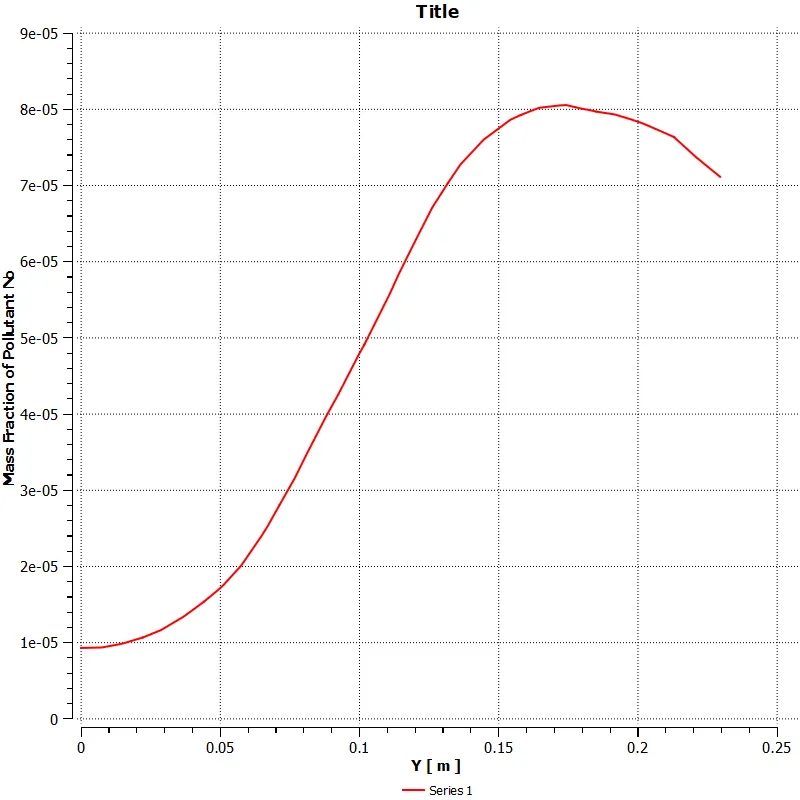
Soot:
- When water was added 30% with fuel
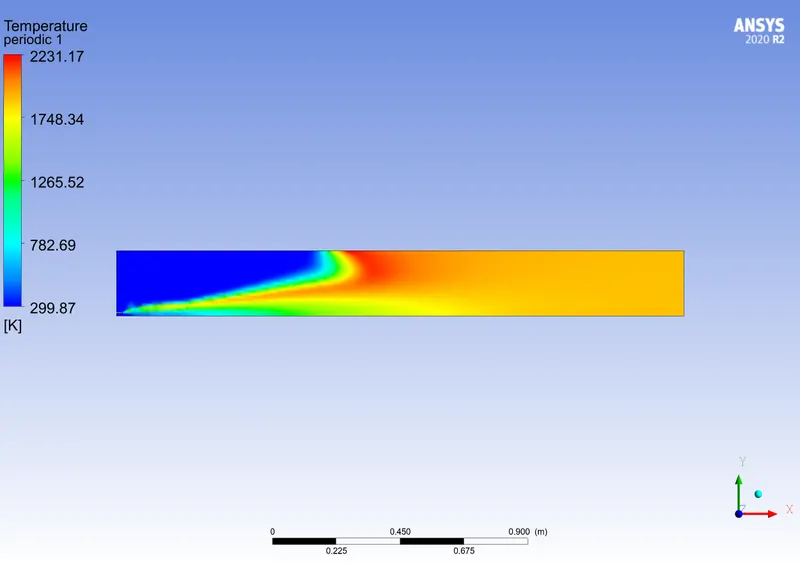
NOx:
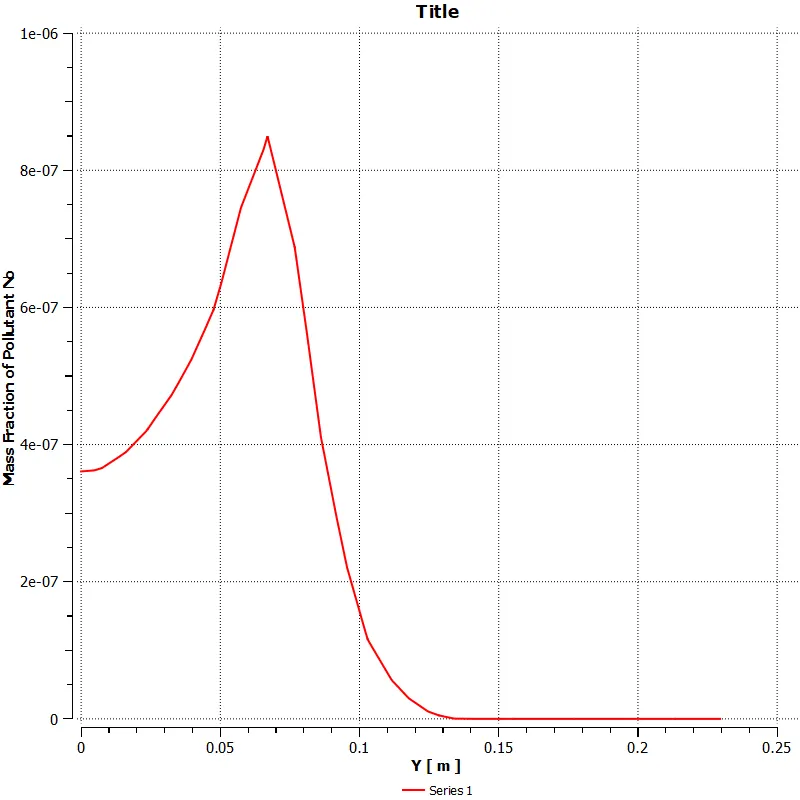
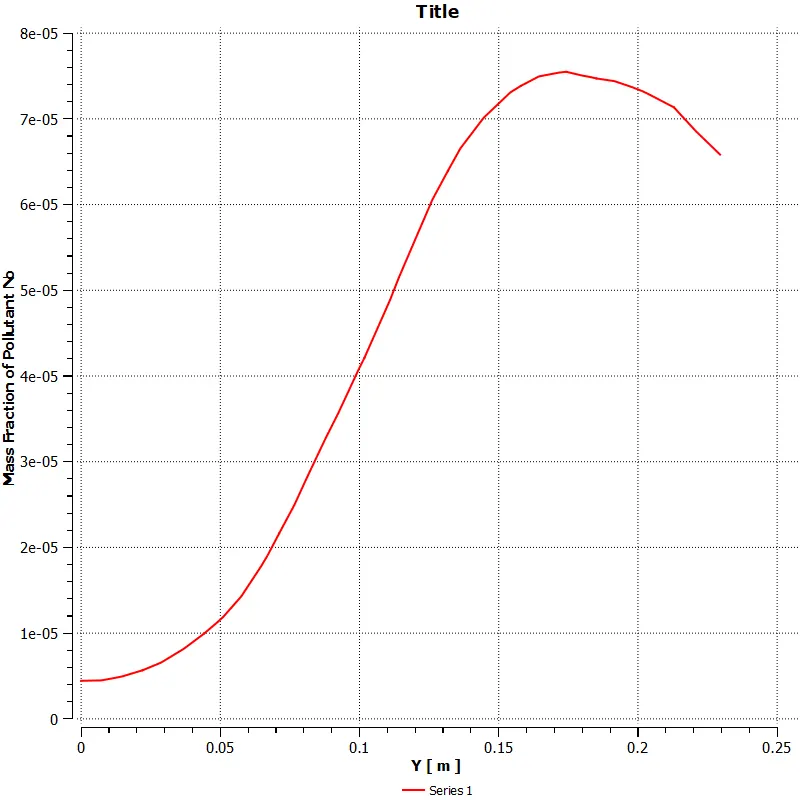
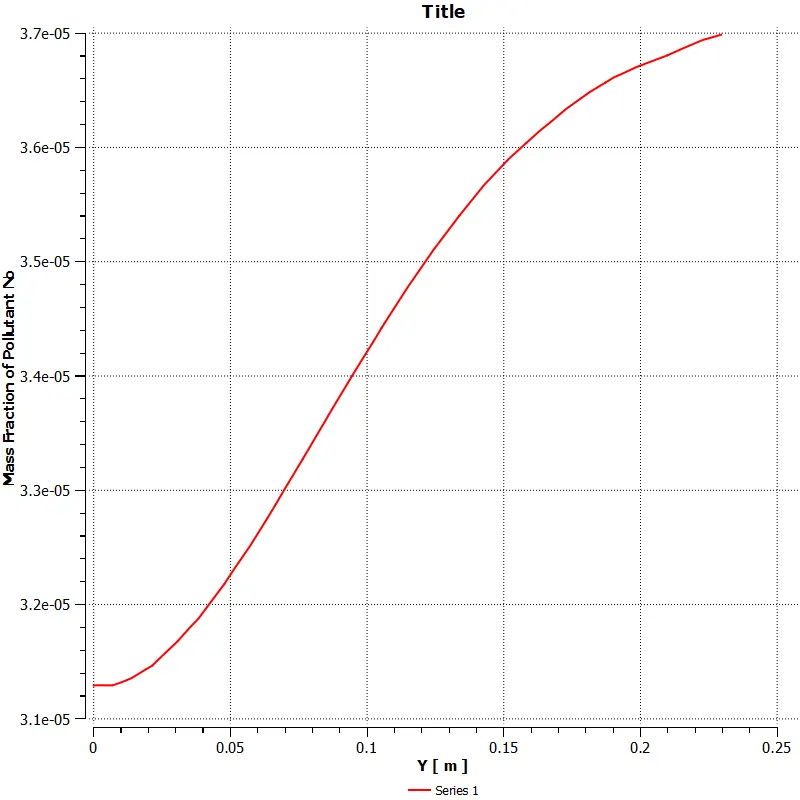
Soot:
Conclusion:
When methane was burned with air, different pollutants such as NOx and Soot was obtained at the outlet.
When water was added with reactants, different pollutants obtained at outlet got decreased.
|
No water |
5% water |
15% water |
30% water |
|
|
NOx |
5E-5 |
4E-5 |
4E-5 |
3.4E-5 |
|
Soot |
0.023 |
0.0088 |
0.0085 |
0.0085 |
However, adding water in the fuel mixture will decrease the thermal efficiency of the engine.