Week 10 - Simulating Combustion of Natural Gas.
AIM: -
Combustion Simulation of Natural gas inside a Burner using ANSYS FLUENT.
Objective: -
- To study the combustion Phenomenology for the whole problem.
- To study the eddy dissipation model.
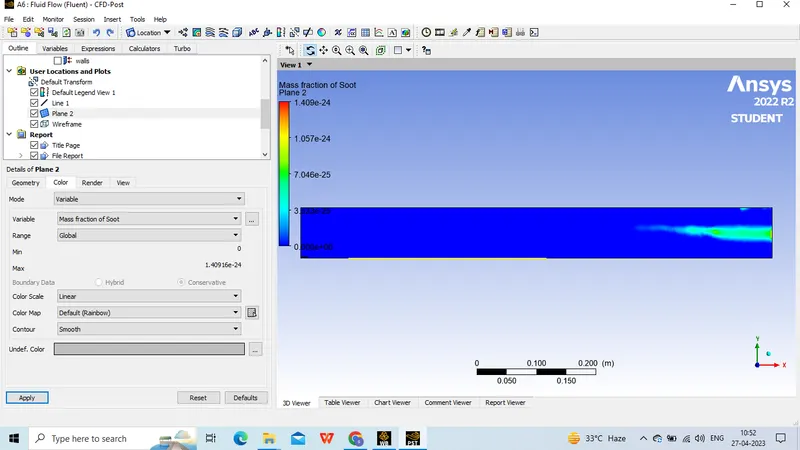
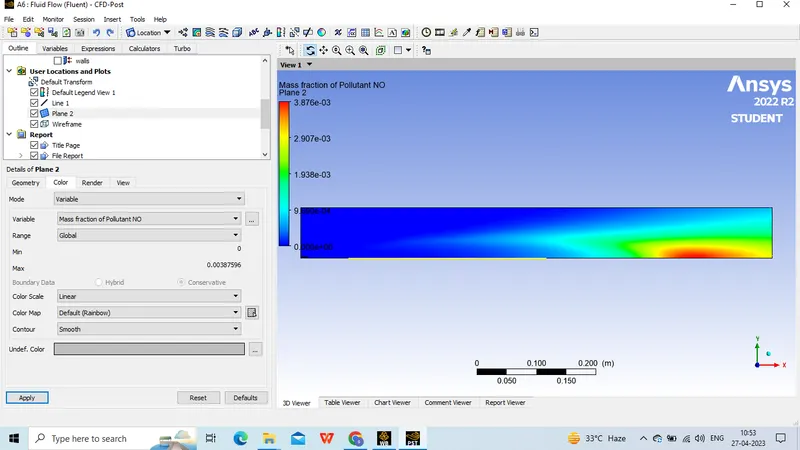
- To study the NOx and soot formation inside the burner.
- To pre-process the geometry for the simulation.
- To select correct element size and type for the simulation.
- To setup the combustion simulation using eddy dissipation model.
- To setup NOx and soot formation model in simulation.
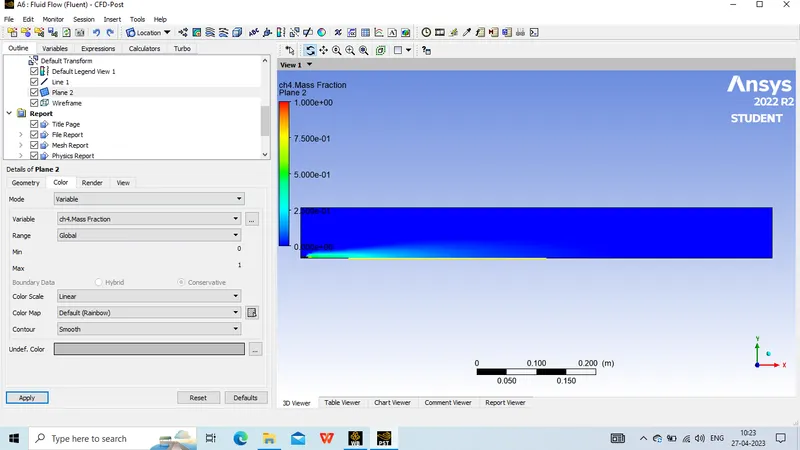
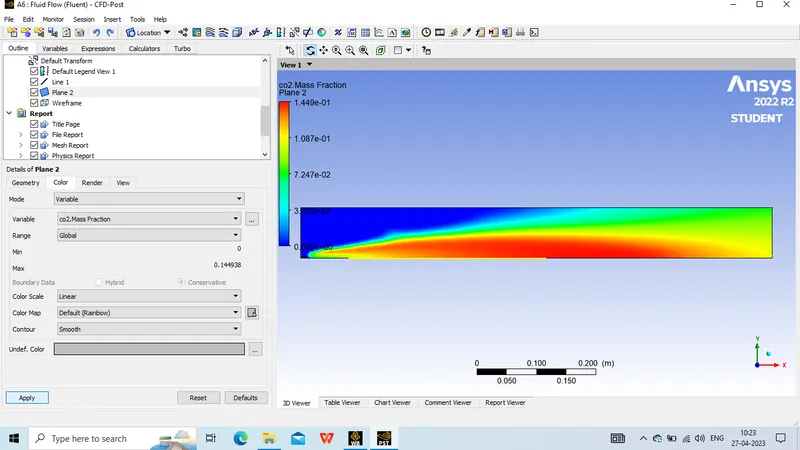
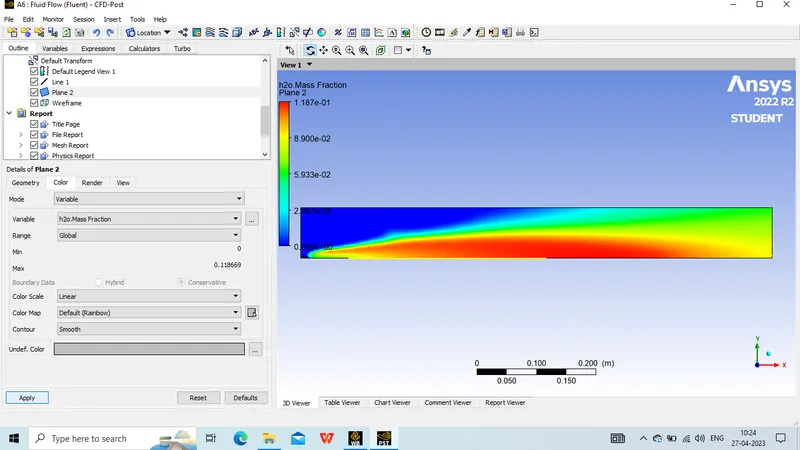
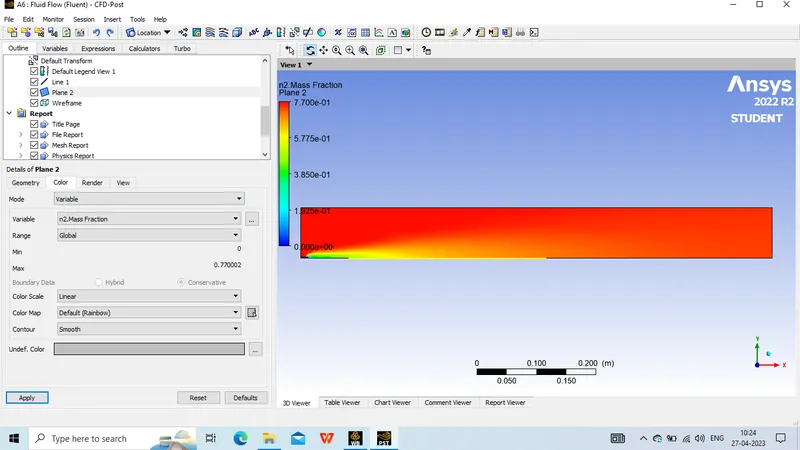
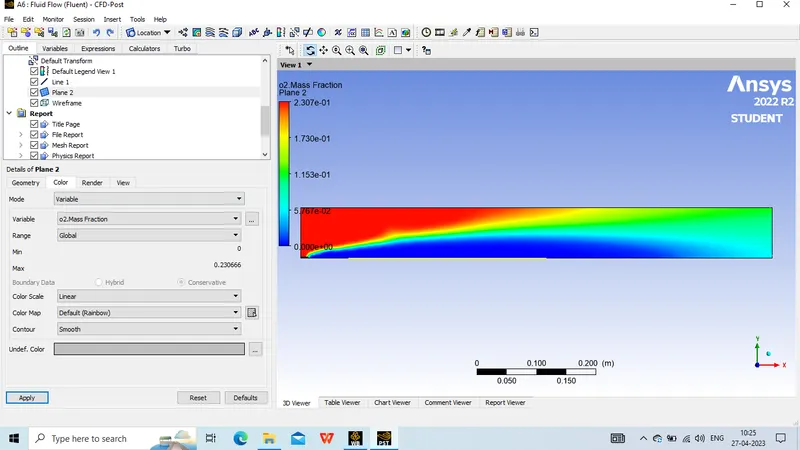
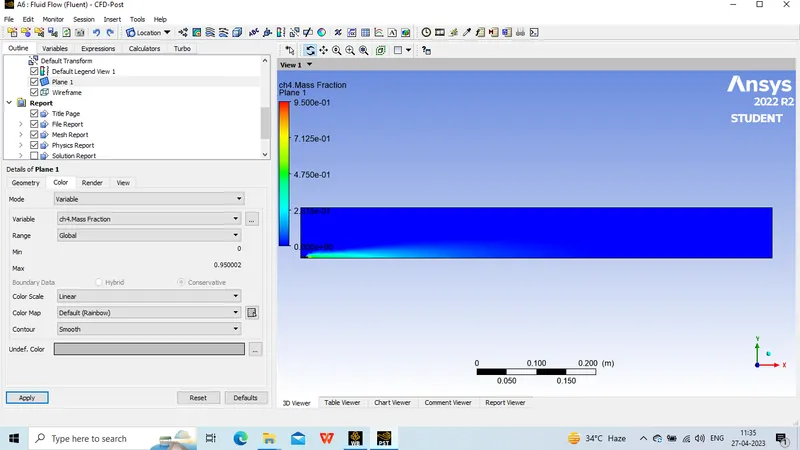
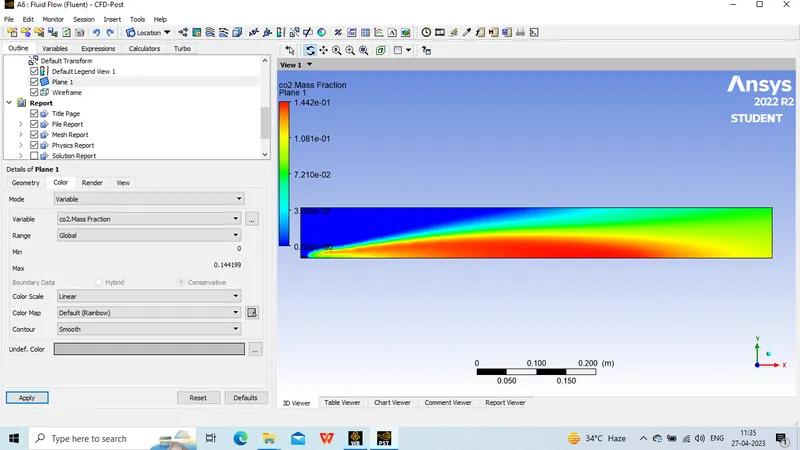
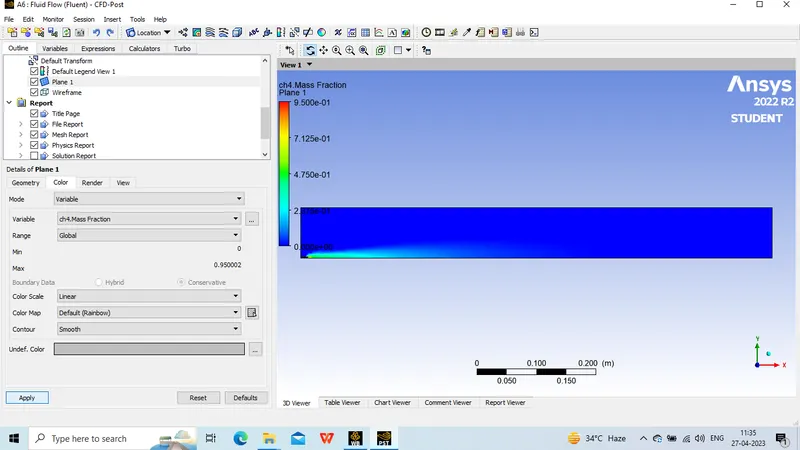
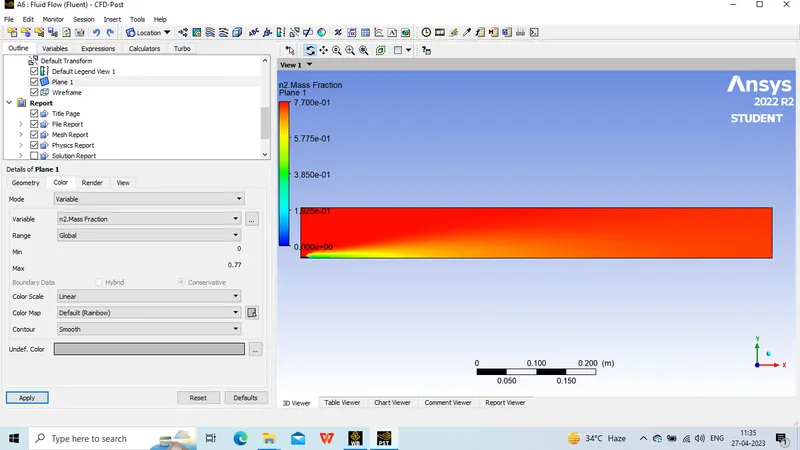
- To plot the mass fraction of CO2, H2O, CH4, N2, O2, NOx and soot formation.
- To perform the simulation by adding water with fuel in range of 5% to 30% to lower the NOx and soot formation in combustion.
1.0 Introduction
1.1 Opening Remark
A combustion is the Exothermic chemical reaction of a fuel with an oxidant to form the product. Basically there are two type combustion one is flame mode in which the thin zone of intense chemical reaction called ‘flame’ exist and another one is Non-flame mode in which volumetric combustion process is exited. The combustion simulation is performed to get the predictions of:
- flow fields and mixing characteristics
- Temperature fields
- Species Concentrations
- Particulates and pollutants.
The application of combustion modelling is applying for various kind of reacting flows such as furnaces, boilers, Process heaters, Gas turbines, automobiles and Rocket engines.
Modelling of combustion reaction in a software is difficult and need to take care for species which are taking part in reaction and its products. The combustion CFD model comprises of chemical kinetics and similarly achieving reacting flow mixture environment. Considering chemical kinetics, it is also important to have properly defined physical model with simulation to get the maximum out of process. Computational fluid dynamics of combustion model should be capable of enough to provide information related to species concentration, their volumetric generation or diffusion rate and changes in the system parameters like enthalpy, temperature and mixture density. The similar model should be good enough to solve the general transport equations for fluid flows and heat transfer as well as additional equations of combustion chemistry and chemical kinetics incorporated as per simulation environment details.
Chemical kinetics is part of combustion phenomenon, which is the study of entire reaction mechanism subject to different operating conditions. The whole reaction mechanism is the overall reaction of fuel and air with the elementary reaction. The elementary reaction is consisting of intermediate reaction cause generation of intermediate species, and the species react with fuel and air will cause the elementary reaction. This intermediate reaction caused due to breakup of chain reaction of fuel and air. The chemical kinetics is important as it provide when combustion process is going to start i.e. time period of ignition delay, rate of work done and used to determine emission from the chemical reactions. The elementary reactions in the case any combustion phenomena are mostly of three types which are bimolecular reactions, unimolecular reactions and thermolecular reactions. In bimolecular reaction the reactants produce the product and same product can be undergoing to produce the reactant. This reaction is most common in combustion. In unimolecular reaction there are two types one is isomerization in which transformation of composition is occurred and another case is decomposition in which breakdown of composition is occurred.
1.2 Solution Approach & Methodology
The geometry which is provided for the problem is 3D in shape. The simulation approach which used for the problem is 2D Axi-symmetry steady state turbulent model with species transport equation. The use of 2D Axi-symmetric model reduce the work load on the computational source and will reduce the time required for simulation. The burner geometry in 3D shape is shown below:
In combustion process most of the fuel are fast burning and the overall rate of reaction is controlled by mixing caused due to turbulence. In non-premixed flames, turbulent cause the fuel and oxidizer to mix and convert them into reaction zones where it burns as quickly as possible. Similarly, turbulence also mixes the cold reactants and hot products into the reaction zones, where reaction happen rapidly. Hence for pre-mixed combustion eddy dissipation model can be used to create the reaction into chamber. This model is only applicable for turbulent flows only. It assumes the reaction is fast relative to the transport processes in the flow. The reaction rate is proportional to turbulent mixing time defined by kinetic energy (k) and it dissipation rate epsilon (ɛ).
The formation of NOx and soot are due the incomplete combustion or due to excess amount of fuel inside the chamber. The formation of soot is also depending on the temperature of reaction. If the temperature of reaction is not high enough to produce the product of reaction, then formation of soot is occurred. The NOx emission can be formed through series of mechanism during both the premixed and diffusion burning. As in methane-air-2step mixture for the baseline setup the fuel present in higher quantity which rises to creation of NOx and soot in the chamber. To capture the effect of NOx and soot in the burner the FLUENT have NOx and Soot model which incorporate with eddy dissipation model of species transport. For determining the NOx FLUENT has different pathways in which NOx formation is occur during the combustion process. The pathways are Thermal NOx, Prompt NOx, Fuel NOx and NO2 intermediate. In case of Thermal NOx is depend upon highly temperature dependent chemical reactions. The Prompt NOx formation is proportional to number of carbon atoms present per unit volume and independent of parent hydrocarbon identity. The creation of Prompt NOx is most prevalent in rich kind of flames reactions. The main source of Prompt NOx is from the fuel fragmentation in hydrocarbon flames and the major contribution is CH and CH2. Hence it is important to check the Prompt NOx pathways to determine the generation of NOx in combustion reaction. Beside of Thermal NOx and Prompt NOx the fuel NOx also contribute in creation of major NOx. The nitrogen-containing organic compounds present in the liquid or solid fossil fuel which contribute for the formation of NOx during combustion process. Similar to NOx the soot formation is also incorporated in the simulation by one-step method.
All above methods are used to make the combustion simulation for the given burner problem. The boundary conditions are discussed in further section. The solution methodology is divided into five case. In which the baseline mesh setup is used to determine the creation of NOx and soot inside the burner. As the NOx and soot are not favorable for the outside environment it is better to lower to such extent which are defined by the environmental norms by government. To lower the NOx and soot formation the water is added with fuel in 5% to 30% amount. According to it rest of the 4 cases are defined. The overall cases are given below, all the fuel and water are defined in mass fraction.
Case 1 – Baseline Mesh setup.
Case 2 – Combustion simulation with Fuel = 0.95 and Water = 0.05 (5%)
Case 3 – Combustion simulation with Fuel = 0.9 and Water = 0.1 (10%)
Case 4 – Combustion simulation with Fuel = 0.8 and Water = 0.2 (20%)
Case 5 – Combustion simulation with Fuel = 0.7 and Water = 0.3 (30%)
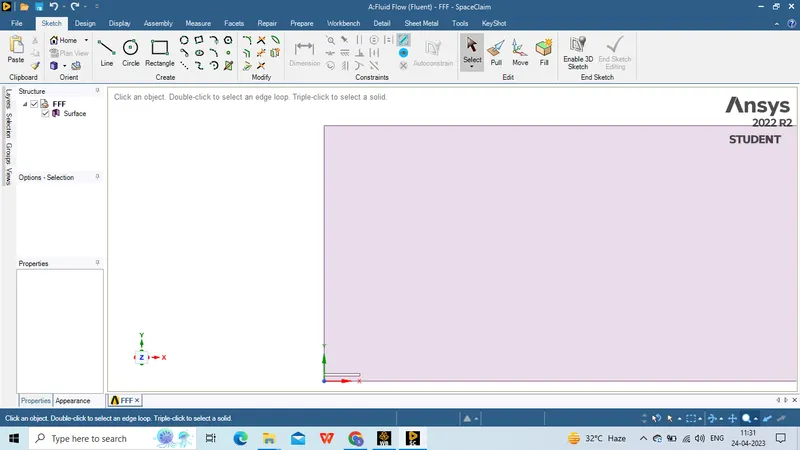
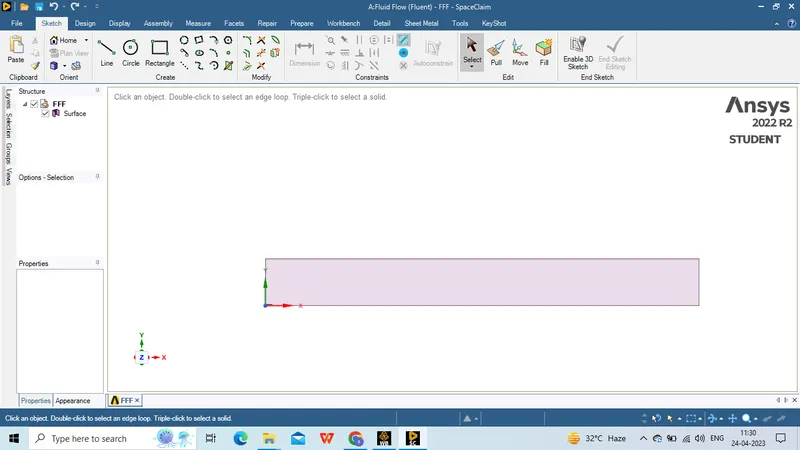
GEOMETRY:- In this section we have import the geometry. we have choose the combine option and select the plane option, so the 3d geometry converted in to 2d model.
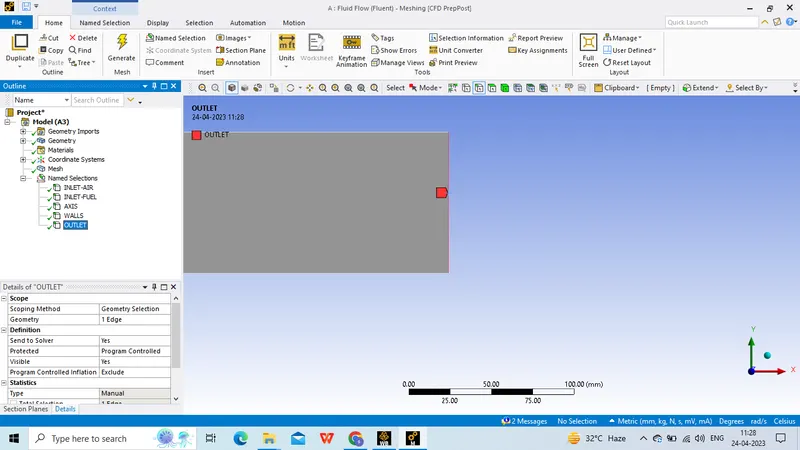
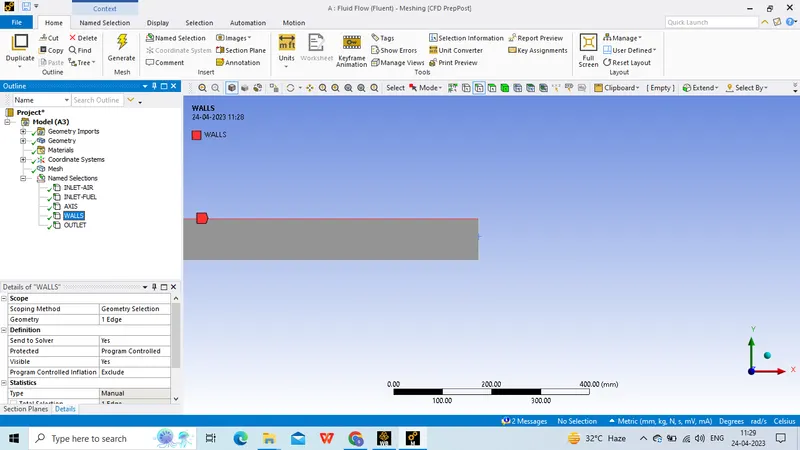
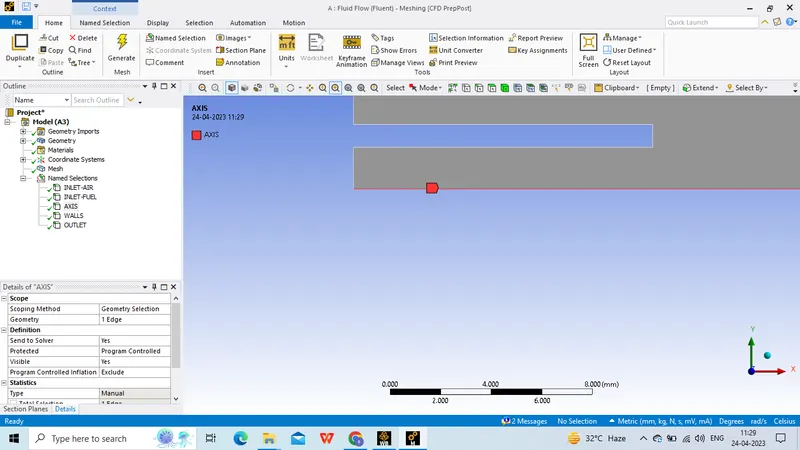
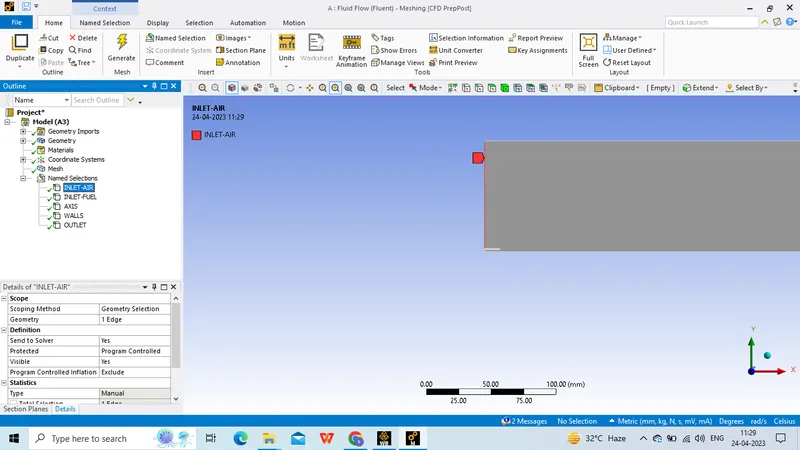
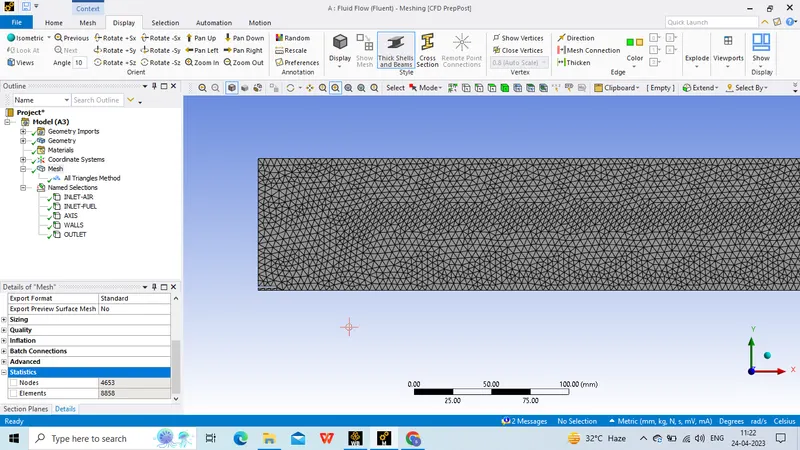
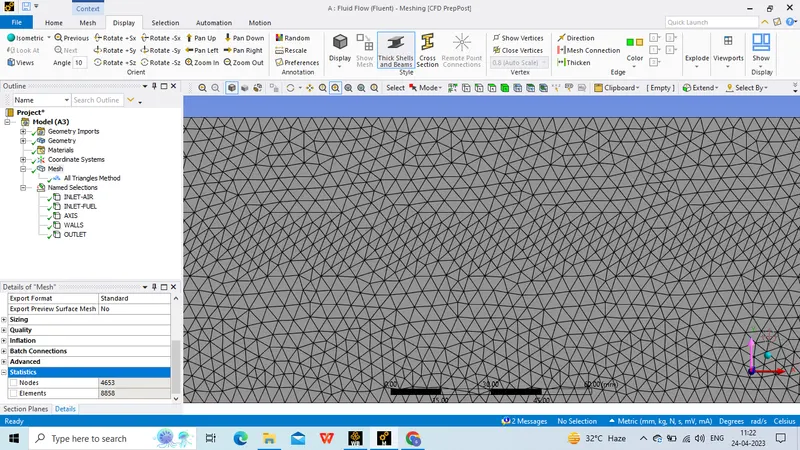
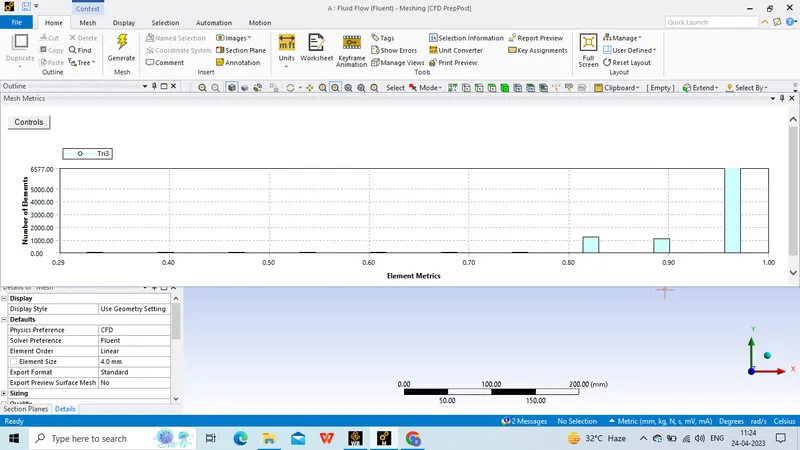
2. meshing:- In this section we have used the triangular mesh and we have given the indiviual names. axis , walls inlet fuel and inlet air and also we have find the mesh matrix.
SETUP PROCEDURE:-
# STEADY STATE
# AXISYMMETRIC
# PHYSICS
#K-EPSILON(VISCOUS MODEL)
# SPICES :- SPECCES TRANSPORT AND SELECT THE VOLUMETRIC , TO CLICK METHANE AIR
# NOX - ON
SOOT- ON
# BOUNDARY CONDITIONS:- INLET AIR VELOCITY - 0.5 , INLET -AIR ch4 - 0 and o2 - 0.23
# inlet-fuel - air velocity - 80, ch4 - 1, o2 - 0
# intilize the flow
# create the animation
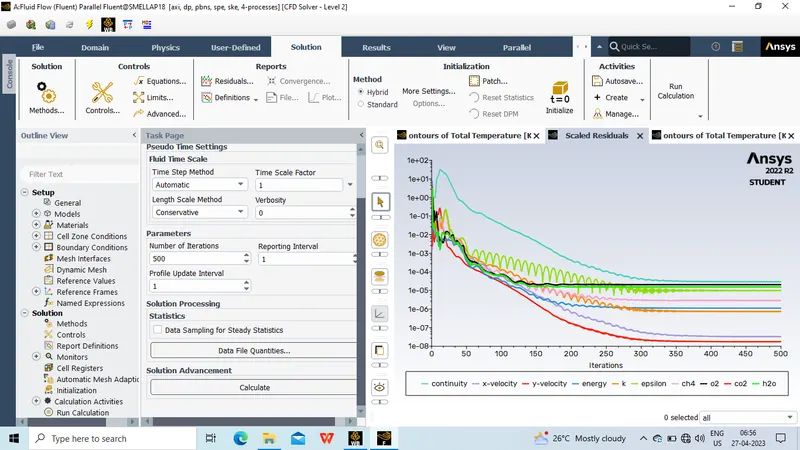
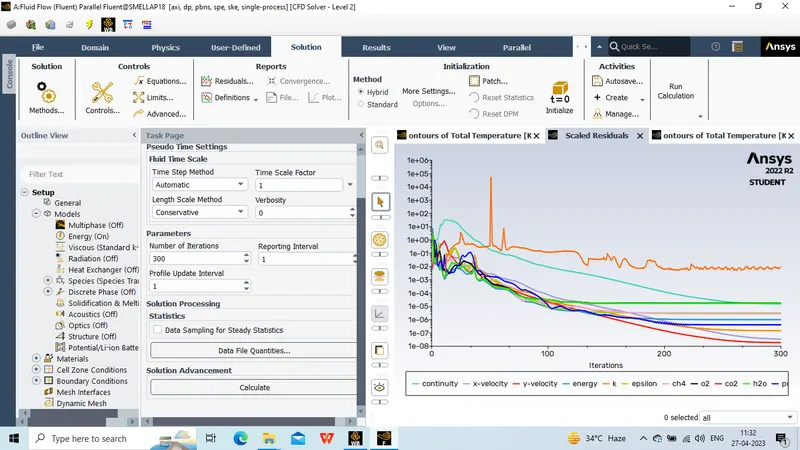
# runcalculations - 500 iterations
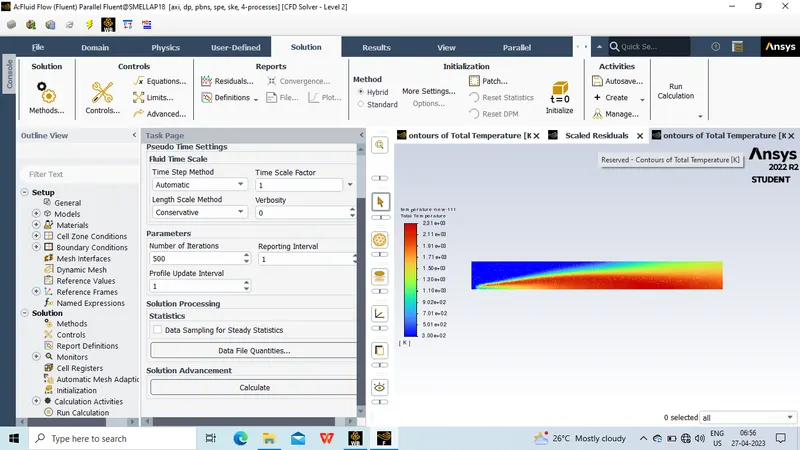
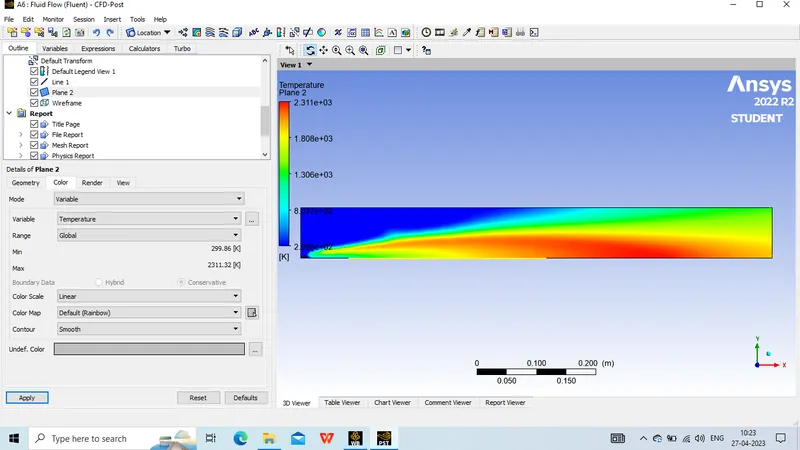
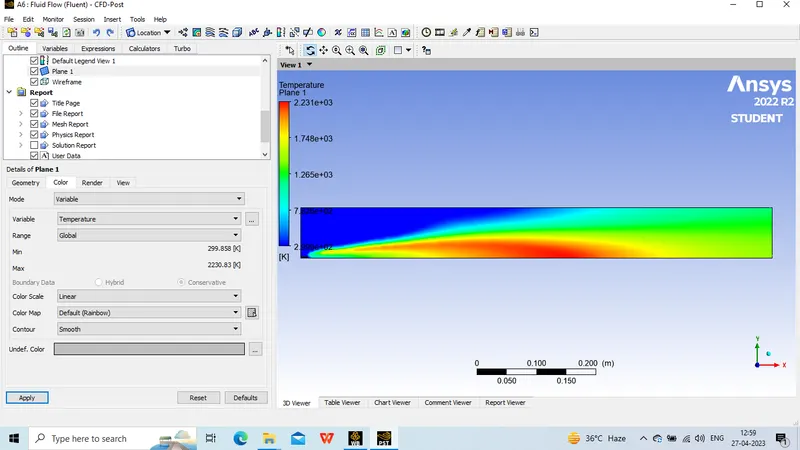
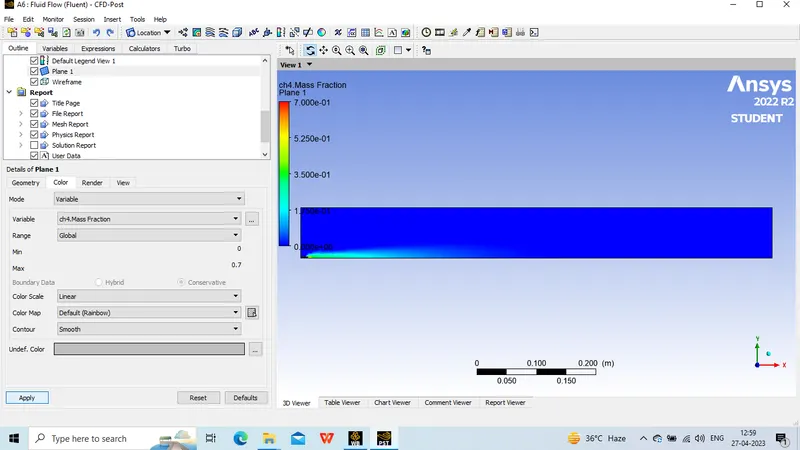
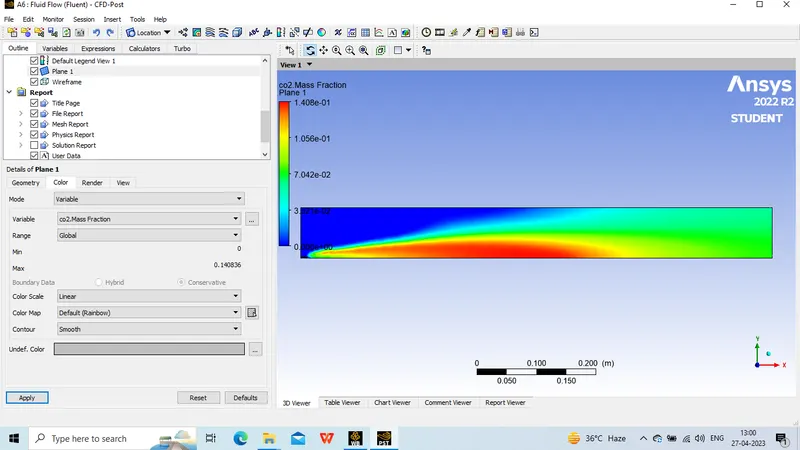
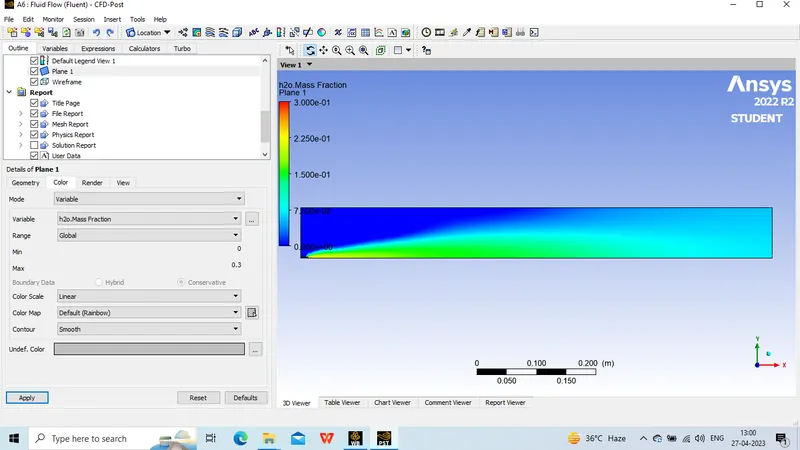
BASE CASE-1:-
CASE-2
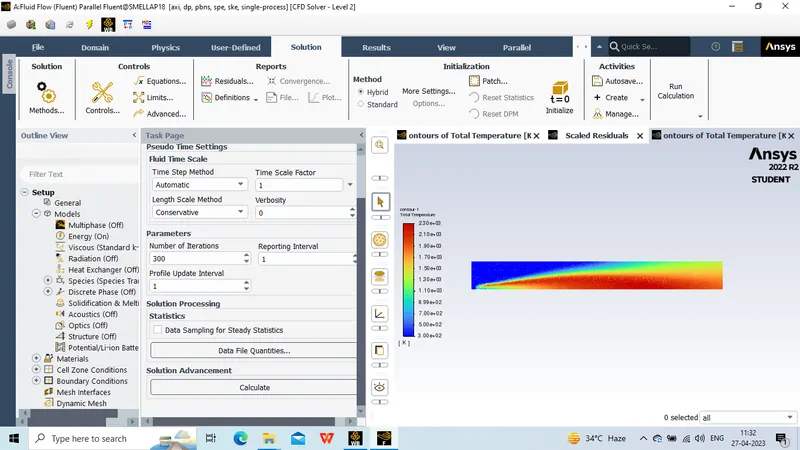
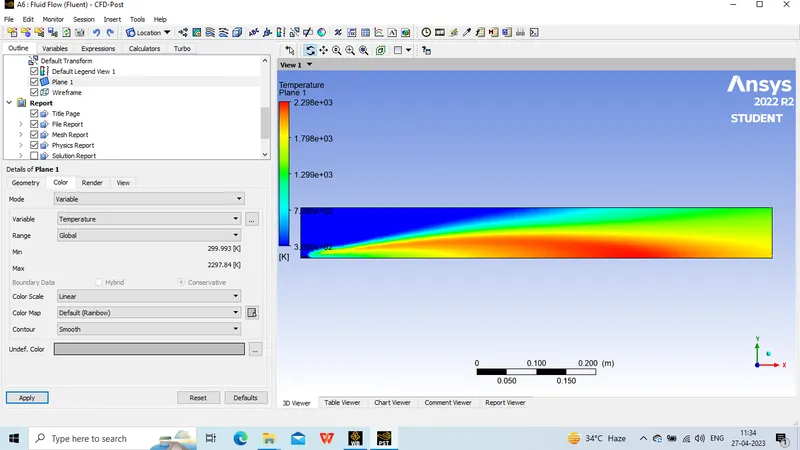
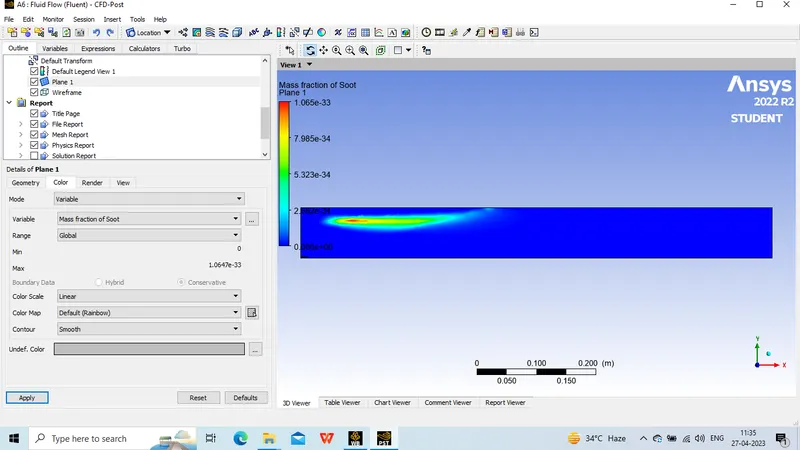
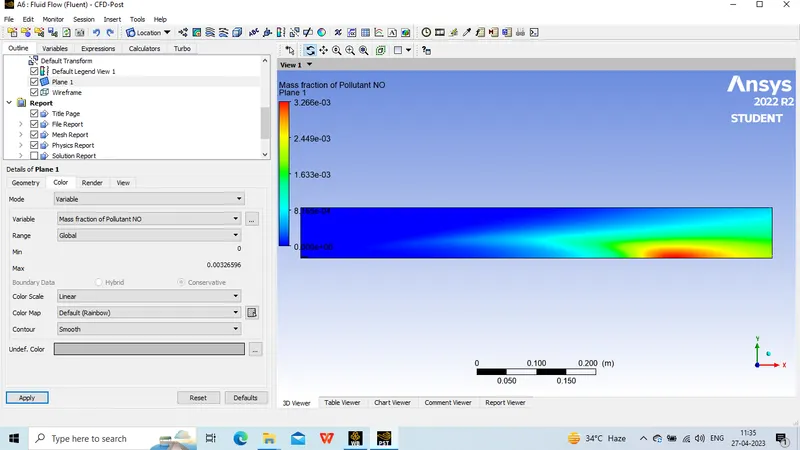
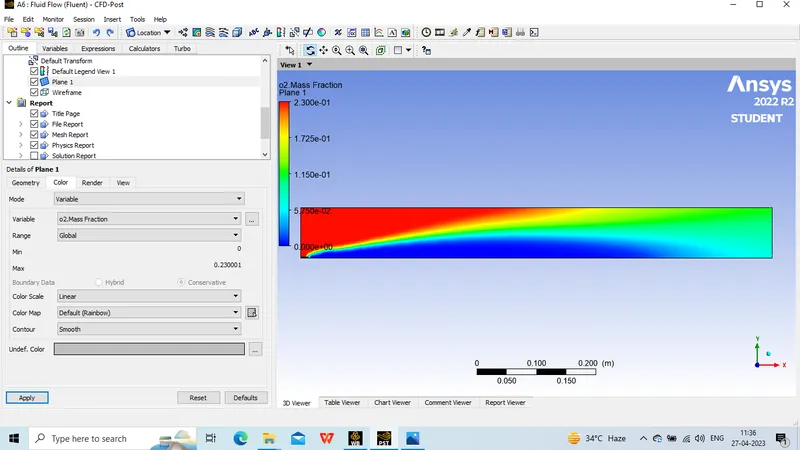
CASE-3
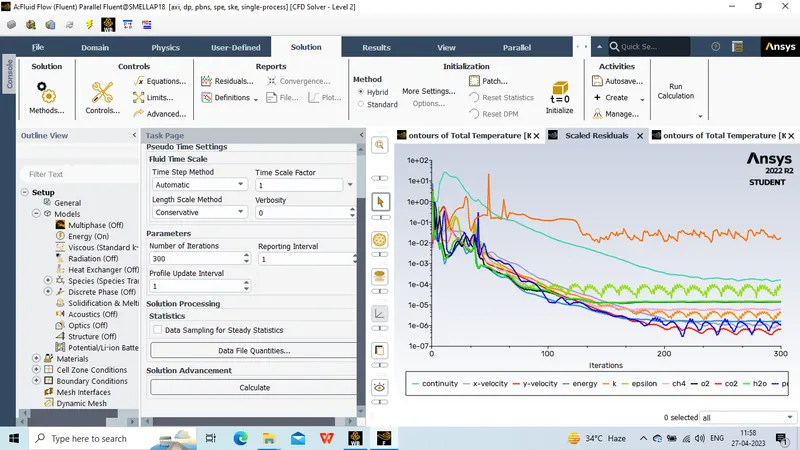
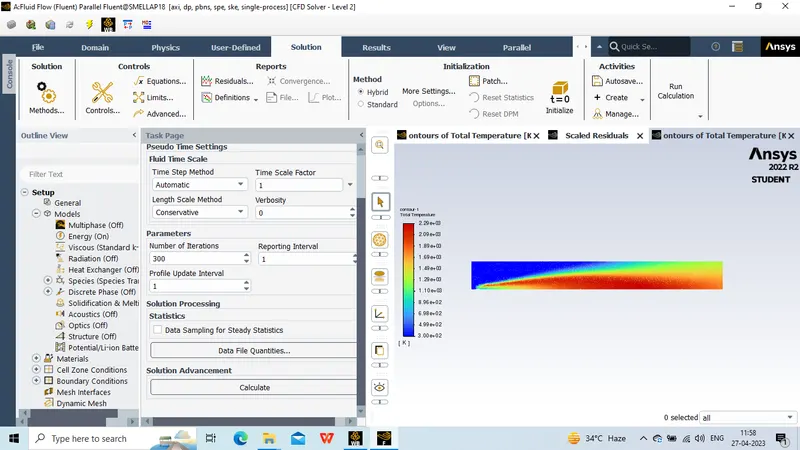
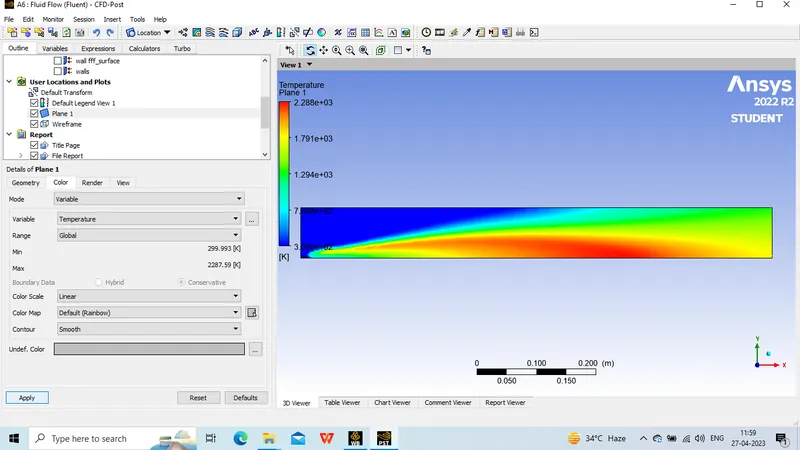
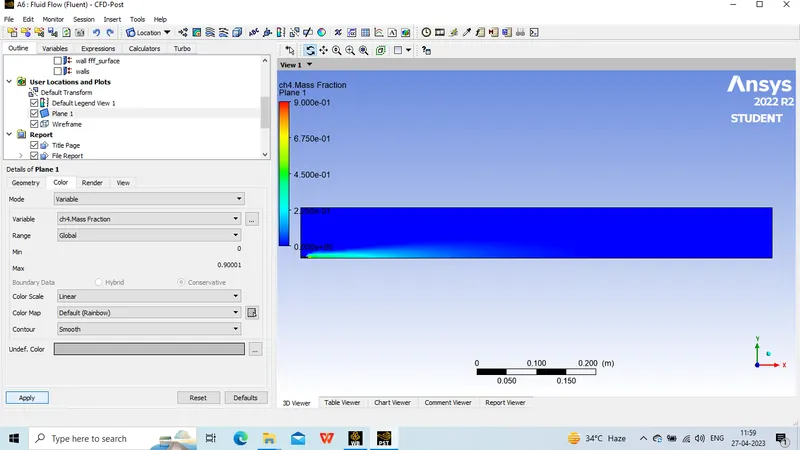
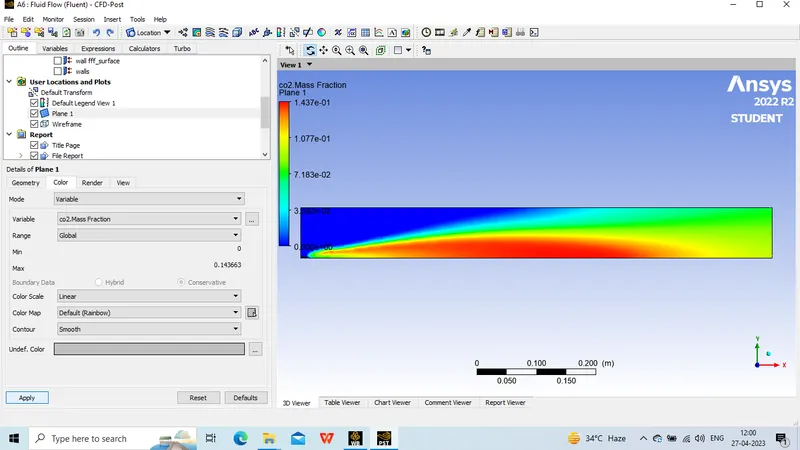
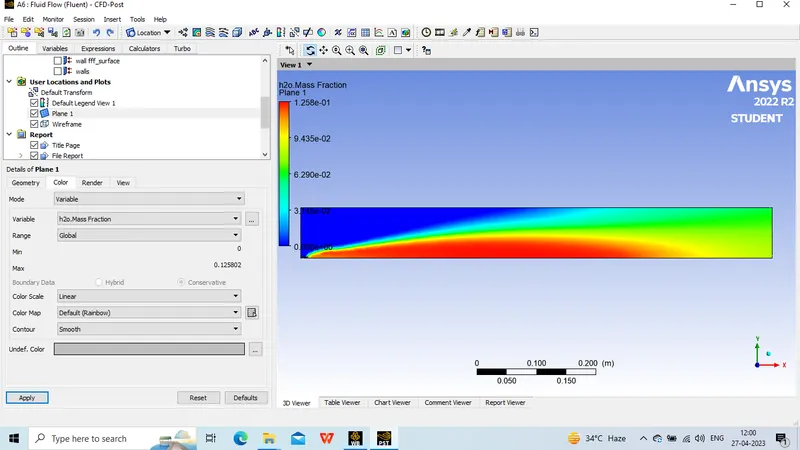
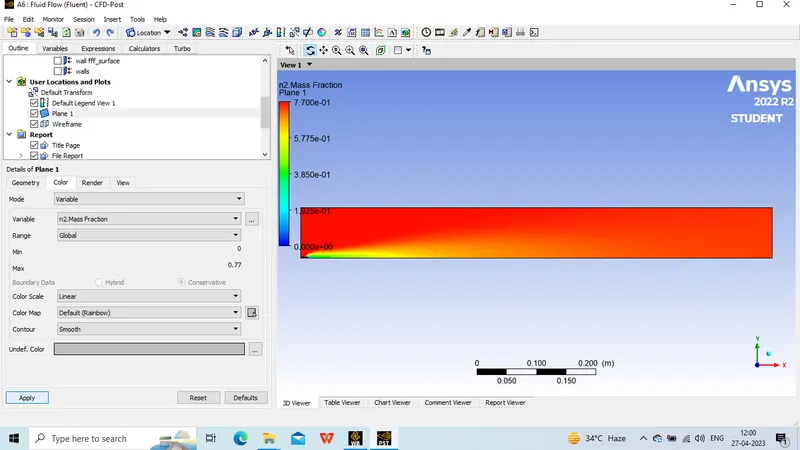
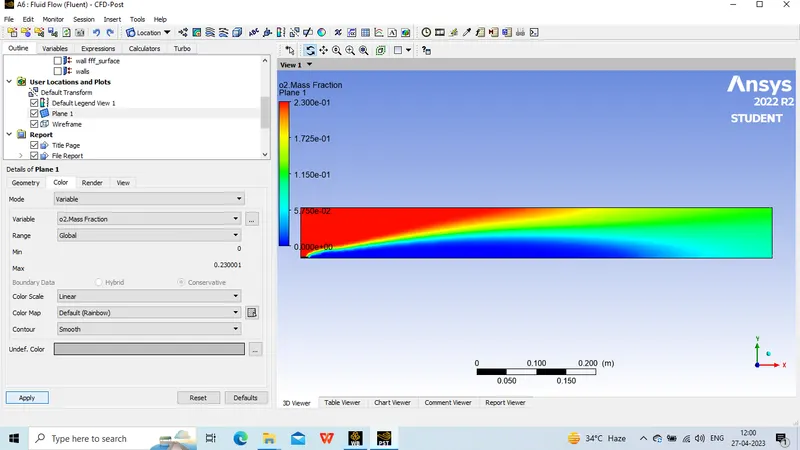
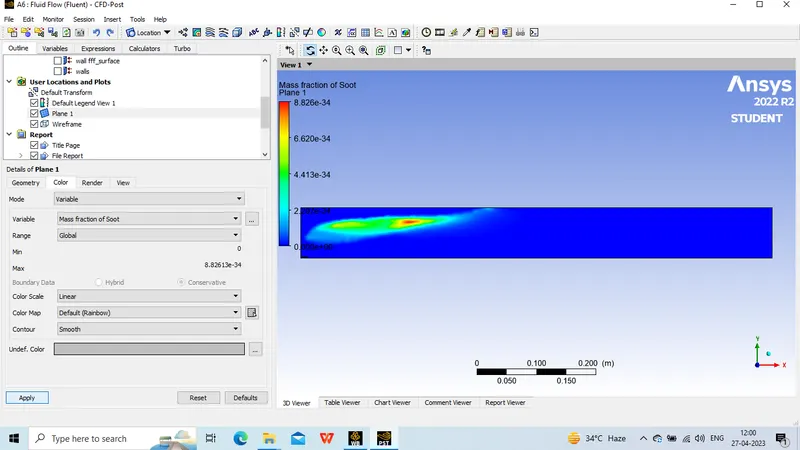
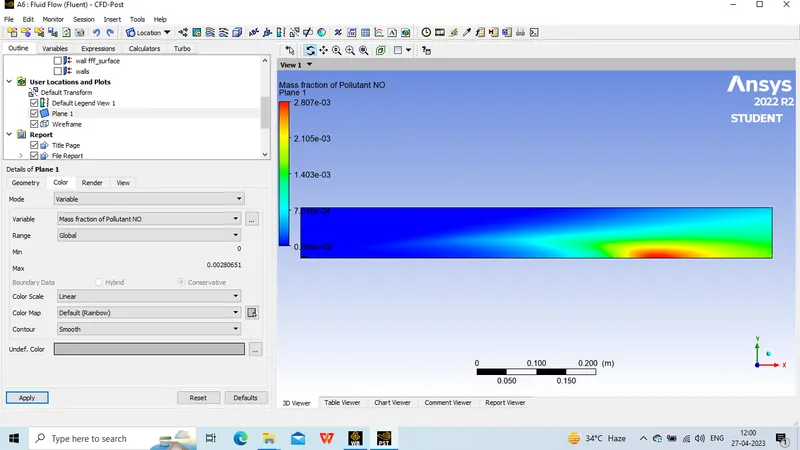
CASE-3:-
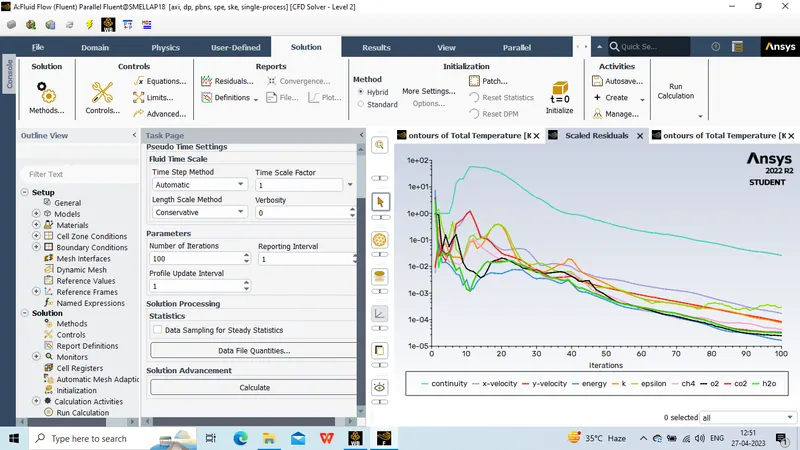
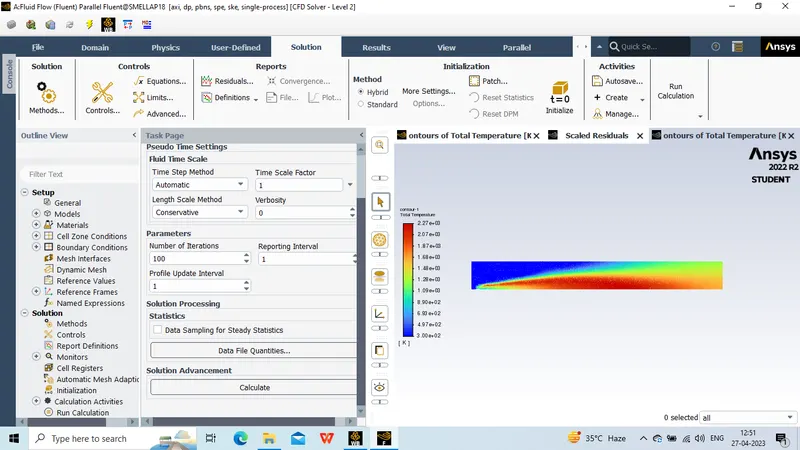
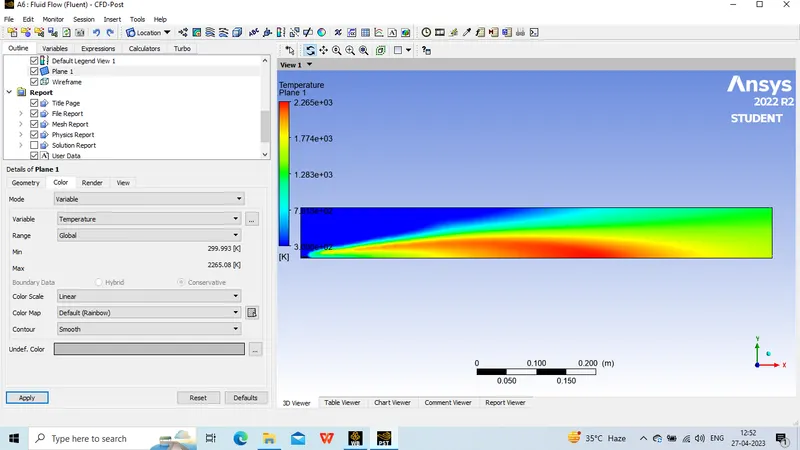
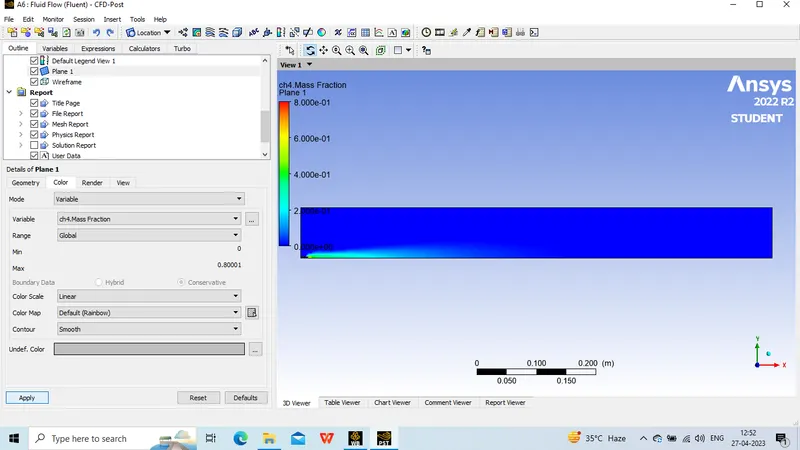
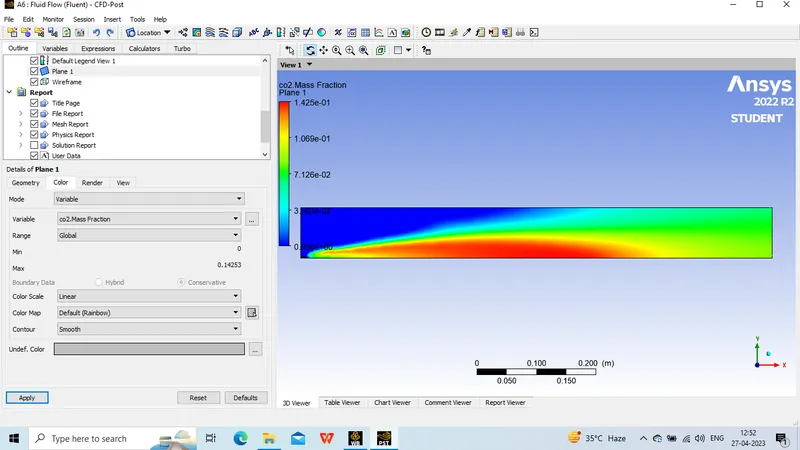
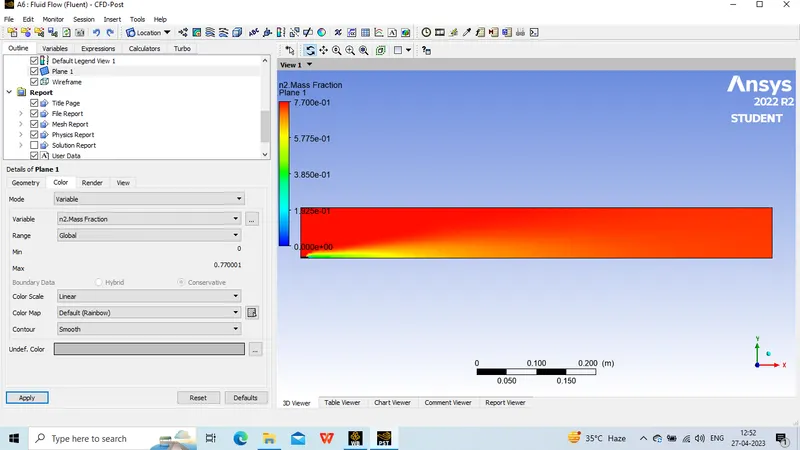
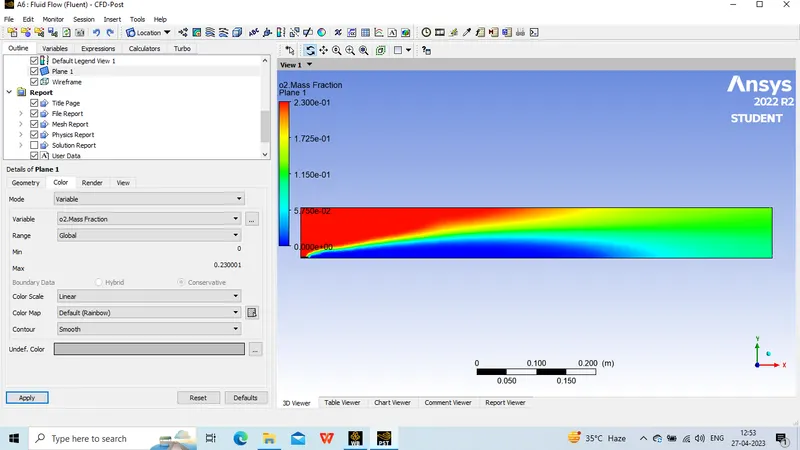
CASE-4
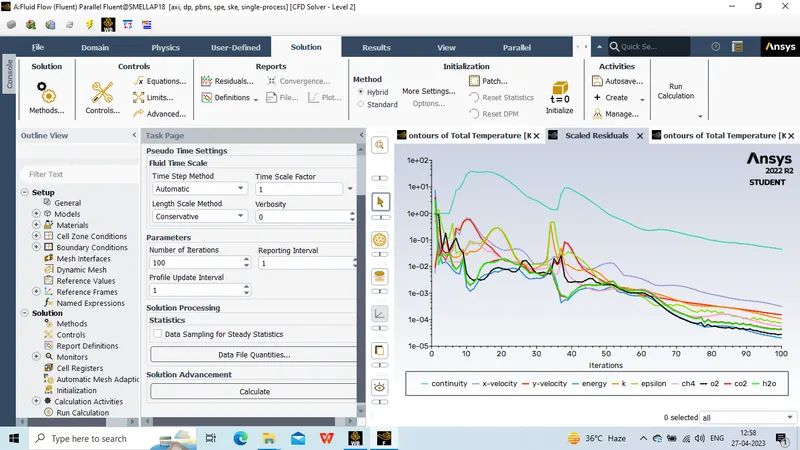
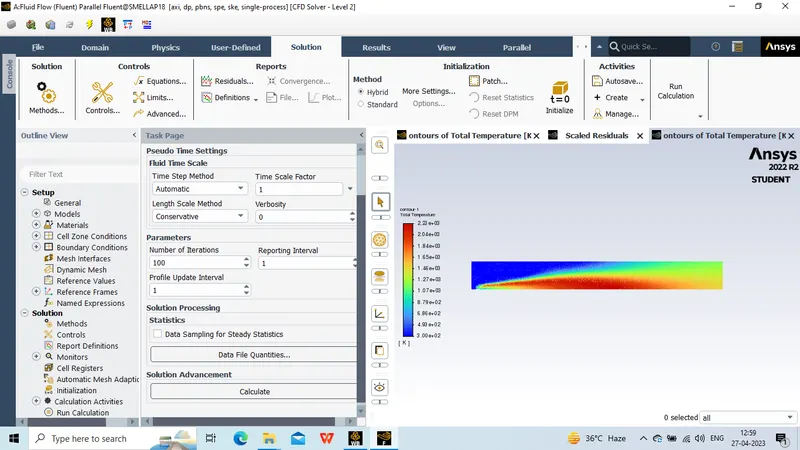
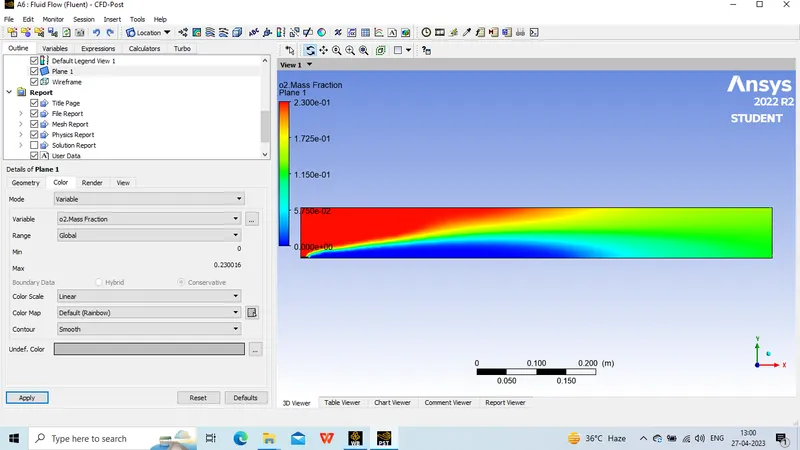
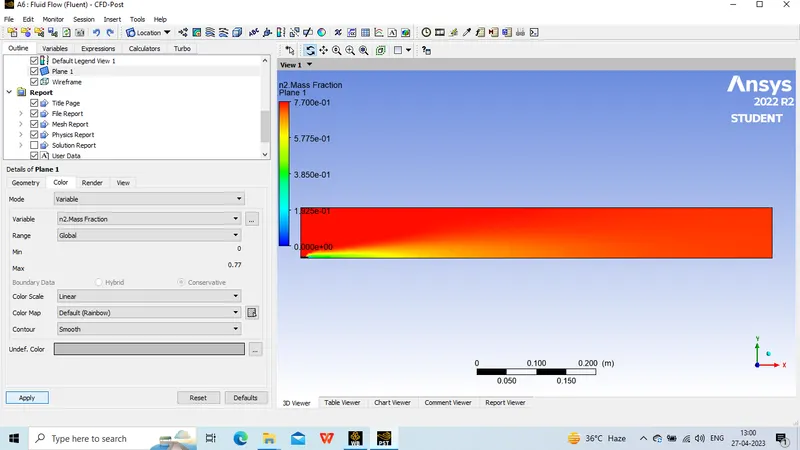
CONCLUIONS:-
This study investigates the mass fraction of product produced during combustion of natural gas and soot formation. Soot and Nox has adverse effect on environment although soot can be used as black pigment. Soot can be reduced by after treatment methods. In this study we added water into fuel and simulated. Water inlet is affecting soot formation but we can’t say much about it and NOx mass fraction is decreasing as water content is increasing. Methane is decreasing as we are proceeding towards outlet, because burning is arising somewhere middle of the combustor.