Week 10 - Simulating Combustion of Natural Gas.
AIM: To simulate the combustion of natural gas to calculate the mass fraction and by adding the water in the fuel to observe the effects to avoid har
THEORY :
Natural gas is the cleanest of all the fossil fuels, as evidenced in the Environmental Protection Agency Composed primarily of methane. The main products of the combustion of natural gas are carbon dioxide and water vapor. Coal and oil are composed of much more complex molecules, with a higher carbon ratio and higher nitrogen and sulfur contents. This means that when combusted, coal and oil release higher levels of harmful emissions, including a higher ratio of carbon emissions, nitrogen oxides (NOx), and sulfur dioxide (SO2)
The combustion of natural gas, on the other hand, releases very small amounts of sulfur dioxide and nitrogen oxides, virtually no ash or particulate matter, and lower levels of carbon dioxide, carbon monoxide, and other reactive hydrocarbons.
Natural gas, emitting fewer harmful chemicals into the atmosphere than other fossil fuels, can help to mitigate some of these environmental issues. These issues include:
- Greenhouse Gas Emissions
- Smog, Air Quality and Acid Rain
- Industrial and Electric Generation Emissions
- Pollution from the Transportation Sector – Natural Gas Vehicles
Chemically, this combustion process consists of a reaction between methane and oxygen in the air.
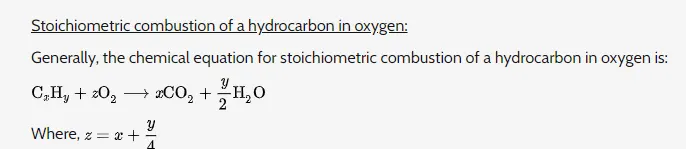
Factors affecting reaction rate for a chemical reaction are:
1. Nature of reactants
2. Physical state
3. Surface area of solid-state
4. Concentration
5. Temperature
6. Catalysts
7. Pressure
8. Absorption of light
MASS FRACTION :
The ratio of mass of a component in a mixture to the total mass of mixture is known as mass fraction.
MOLE FRACTION :
The ratio of number of molecules of one component of solution or other mixture to the total number of moles representing all the components.
Modelling and simulation:
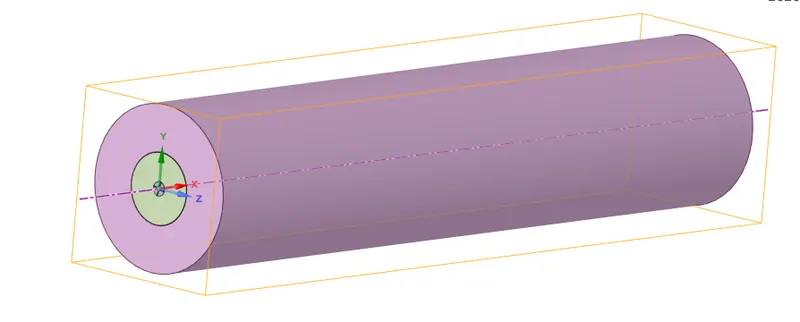
The 2-D axisymmetrical model is considered for the simulation. The 2-d model is shown below:

The 3-D model generated from 2-D using axisymmetric model is shown below:
MESHING:
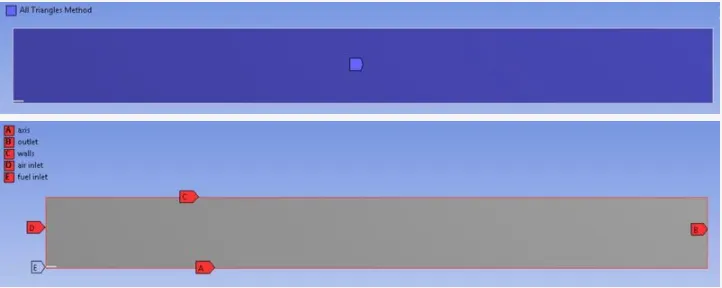
The named selections are chosen as shown in the figure:
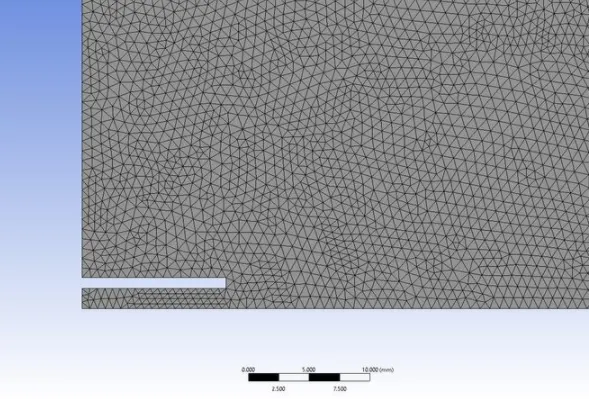
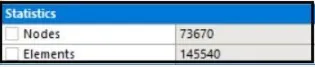
Triangular elements with an element size of 1 mm was chosen and capture proximity was enabled. The mesh is shown below:
FLUENT SETUP:
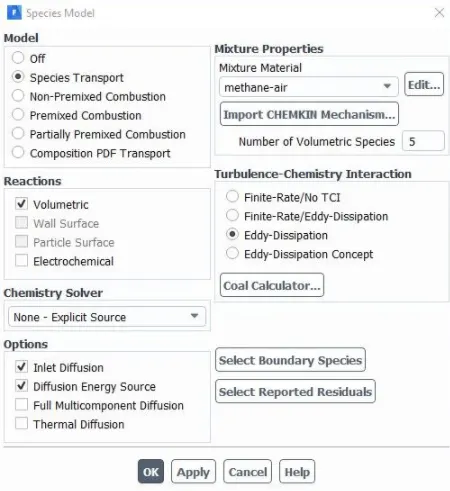
Since the temperature profile is required, energy equation is enabled. k-epsilon model which characterises mixing time scale is chosen.
Diffusion is the combination of laminar and turbulent flows..Generally turbulent diffusion is greater than laminar diffusion.
Hence Fick's law(Dilute approximation) is used.
Based on mixing properties, non-premixed combustion is used. Hence, Eddy discipation model is chosen.
In eddy dissipation model, there is no ignition.
Species:
Species transport with volumetric reaction is chosen.
Mixture material is methane-air.
No. of volumetric species - 5 (CH4,Co2,H2O,N2,O2)
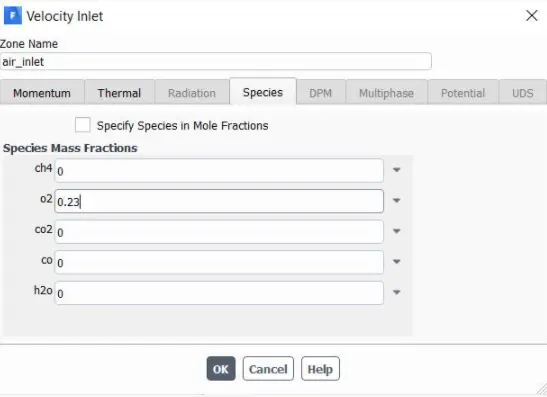
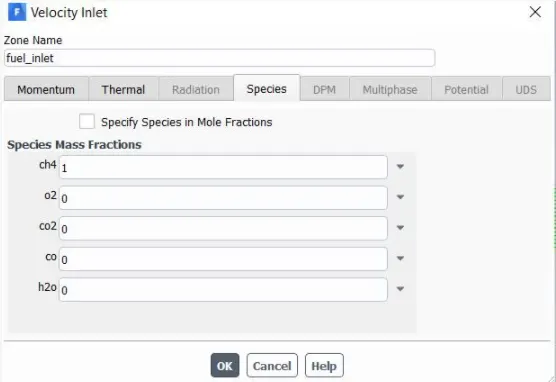
Air inlet velocity was 0.5m/s and fuel inlet velocity were given 80m/s in the boundary condition with 0.23 O2 and 1 CH4 by mass fraction. These are derived from equation of natural gas combustion.
Total mole fraction OF air = 9.52 moles (2moles O2+2*3.76 moles N2)
Mole fraction of O2 = moles of O2/total moles = 2/9.52 = 0.21
Mass fraction of O2 in air = 0.23
Moles of CH4 = 1
Inlet conditions:
AIR species inlet:
Fuel species inlet:
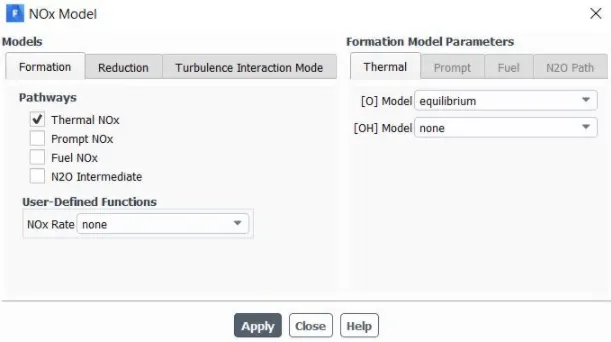
NOx model:
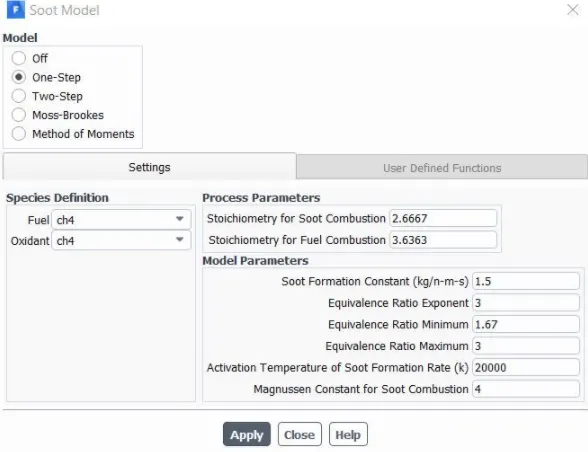
Soot model:
Results and Discussion:
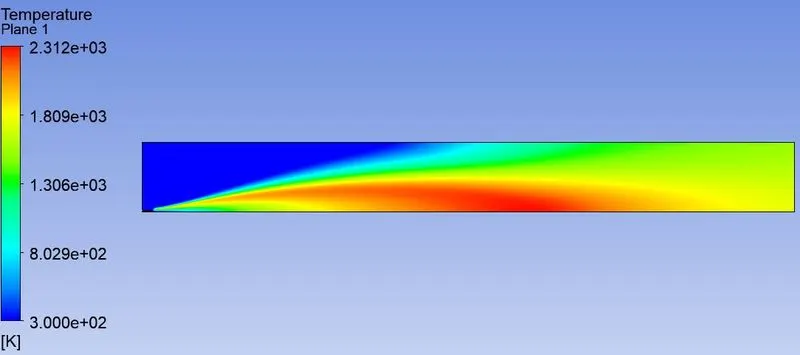
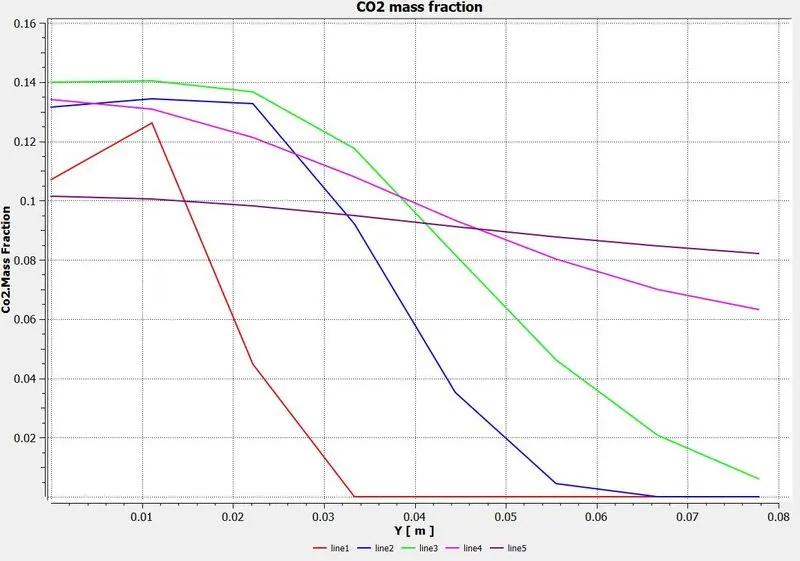
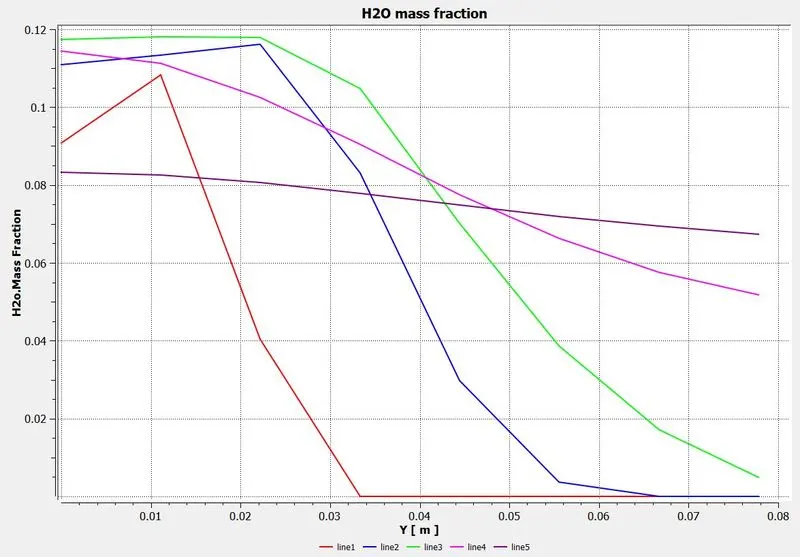
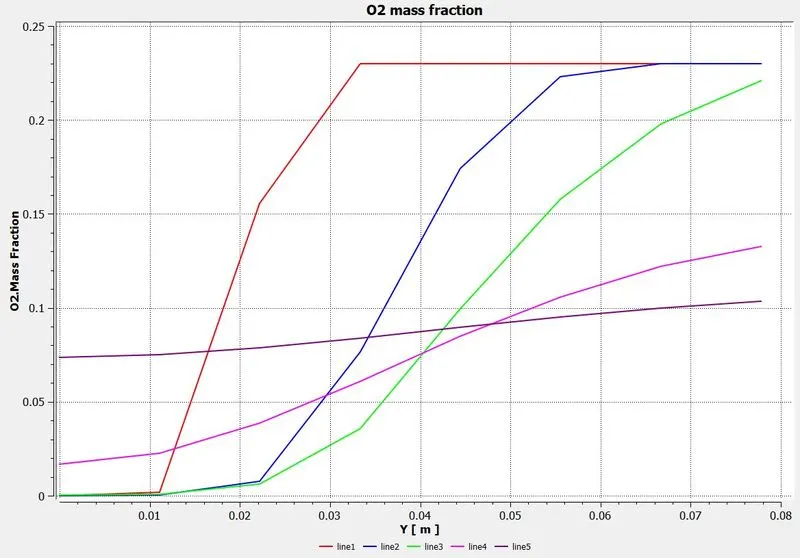
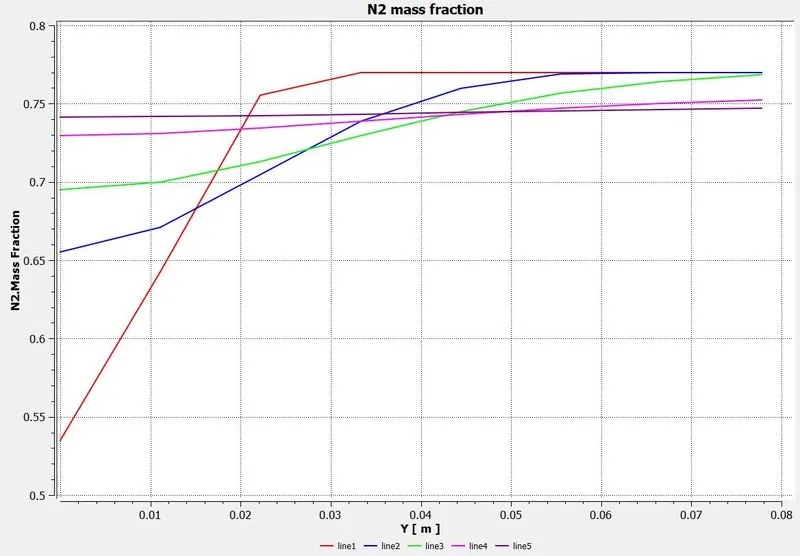
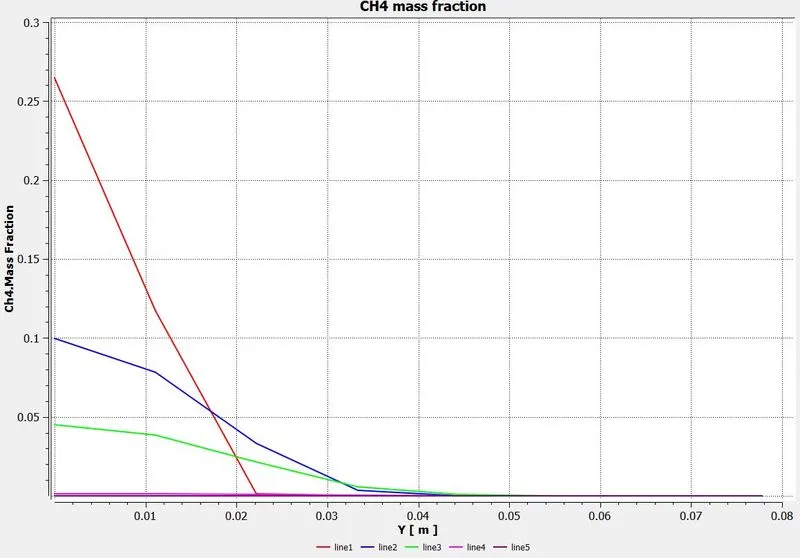
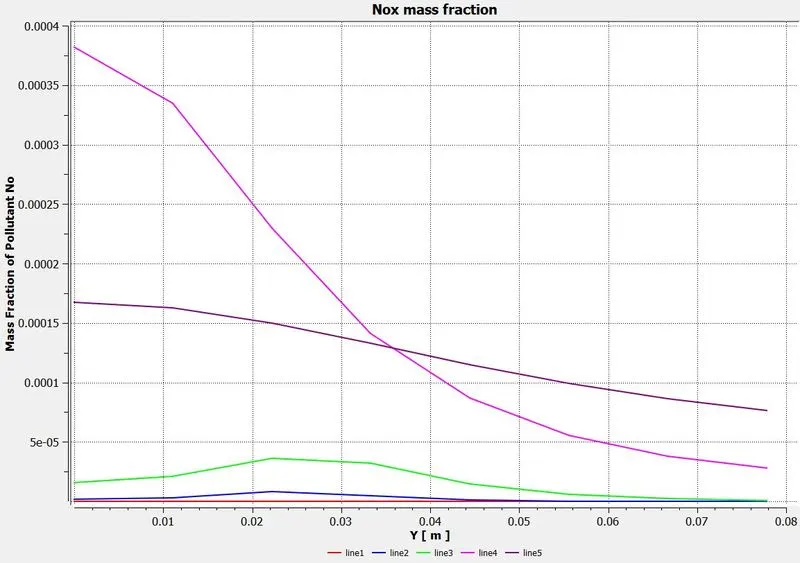
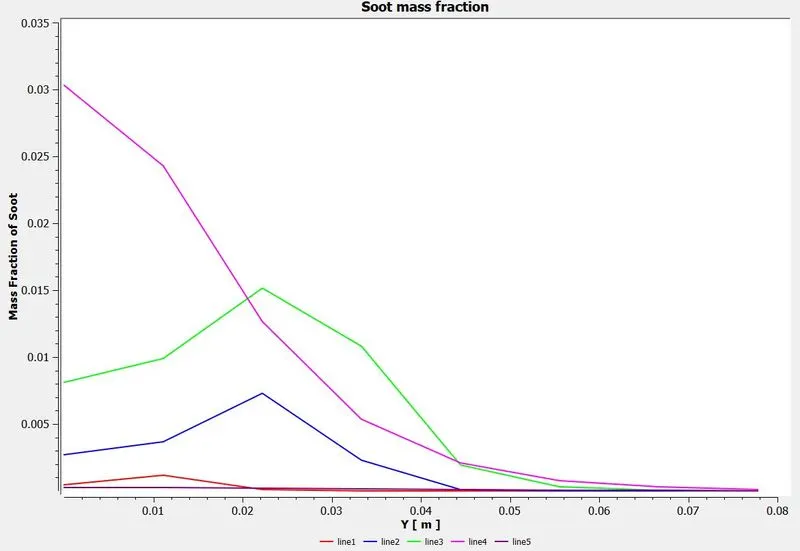
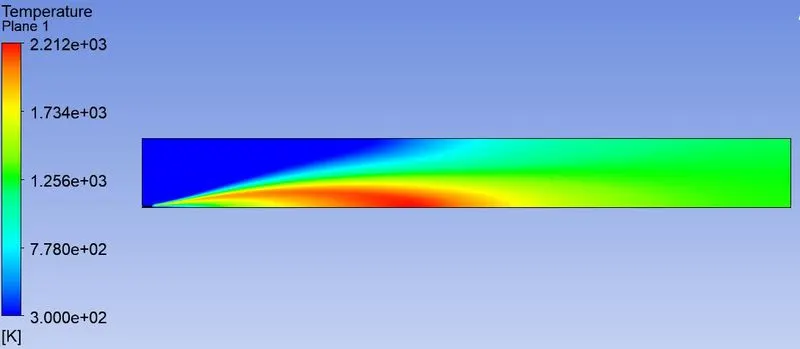
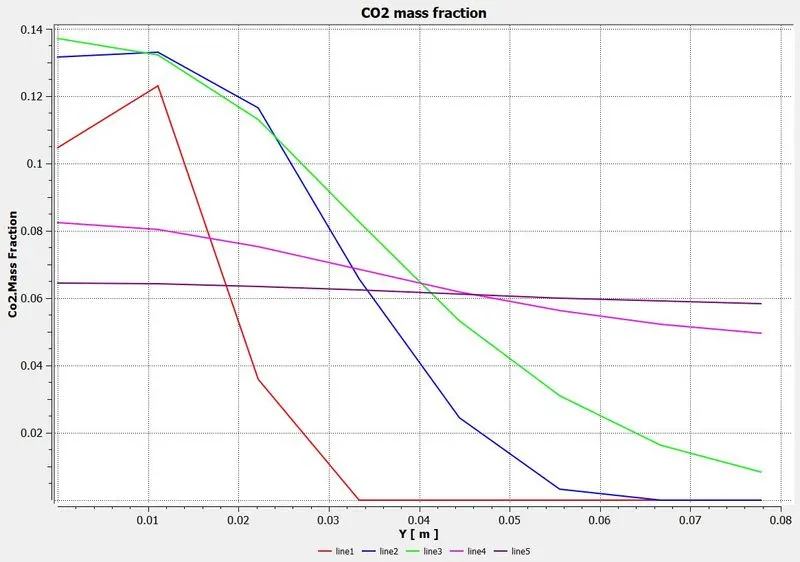
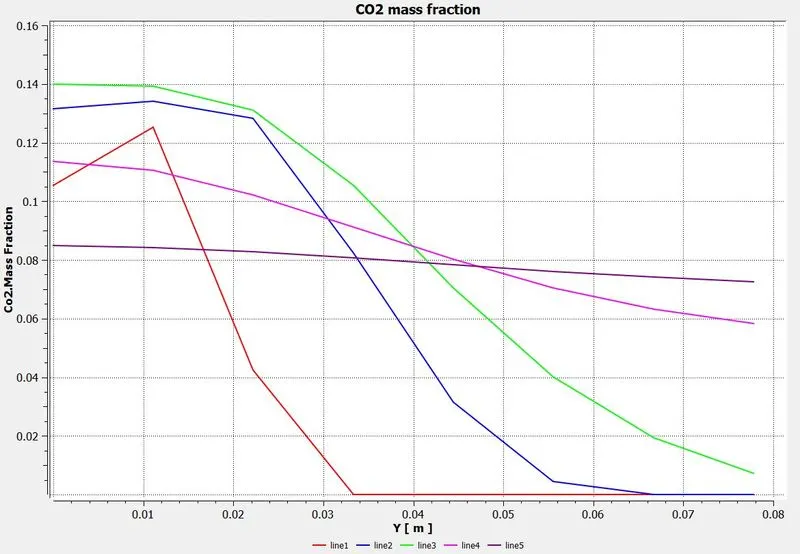
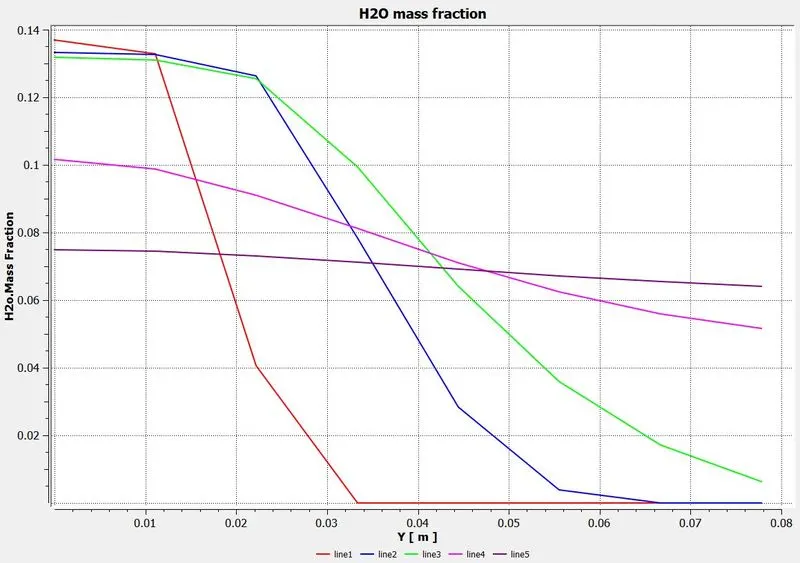
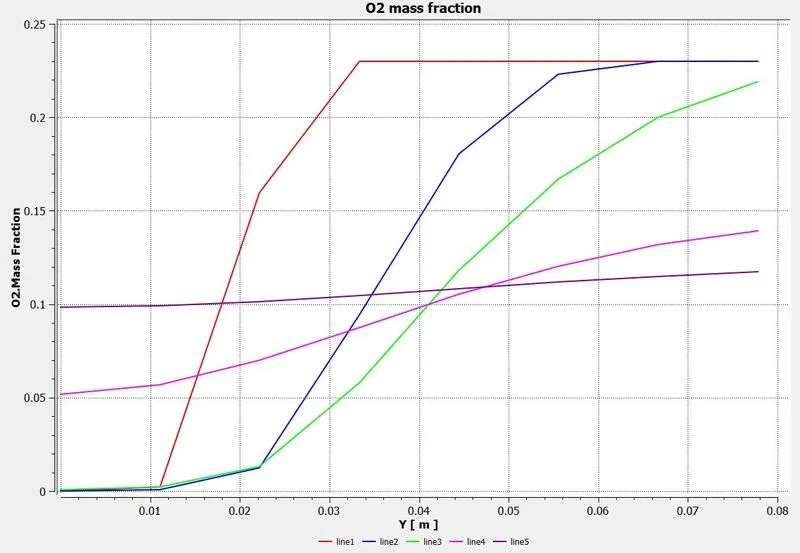
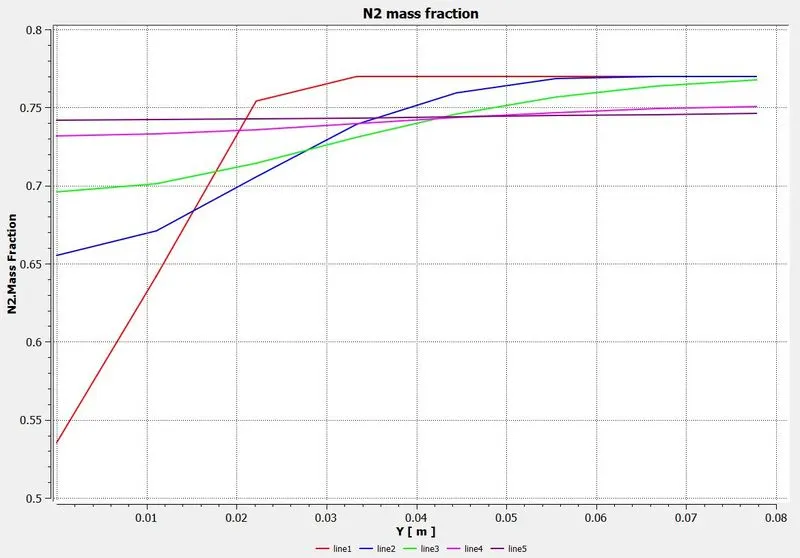
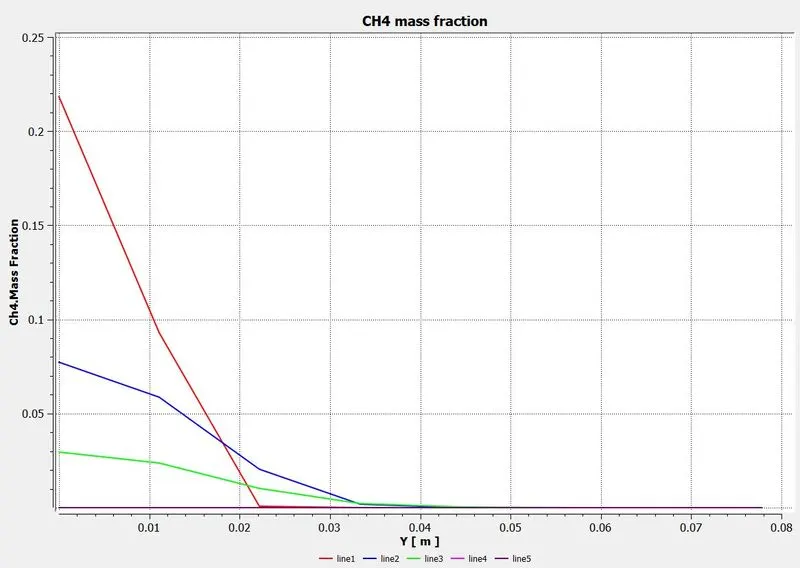
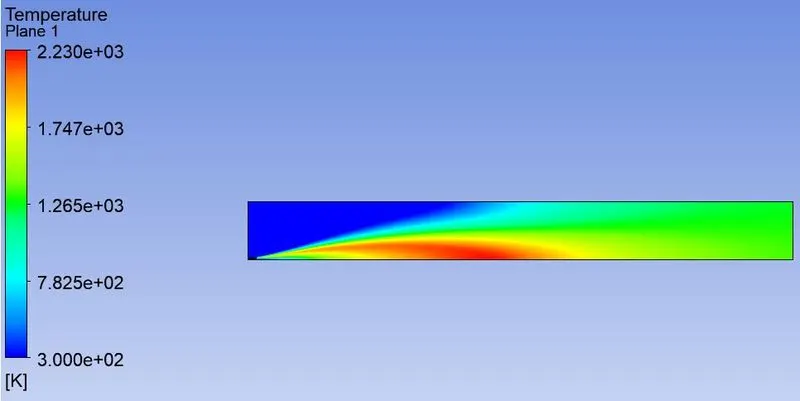
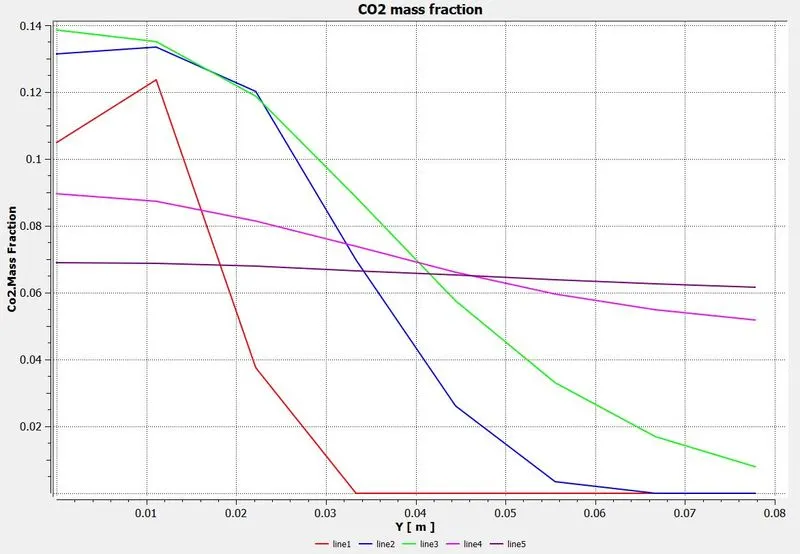
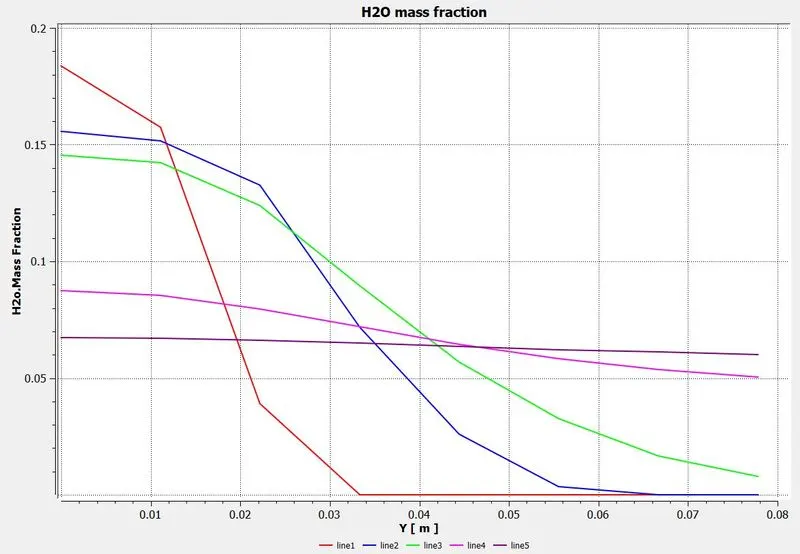
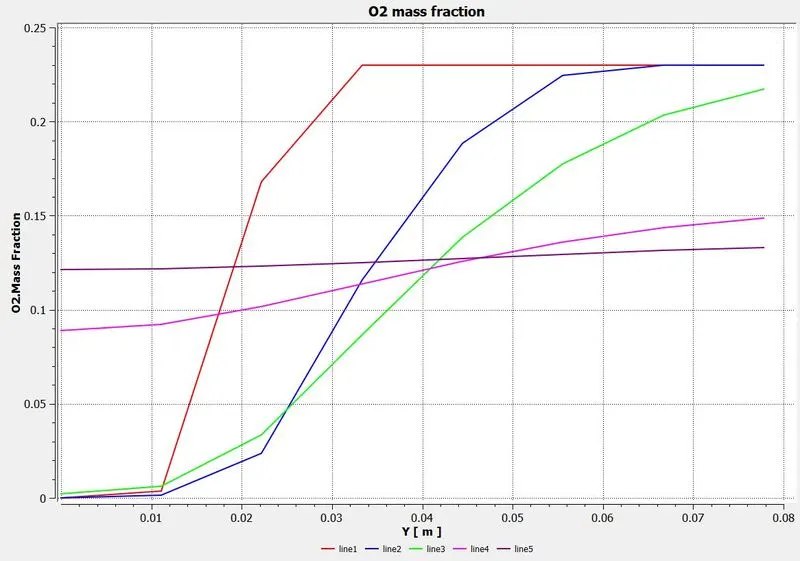
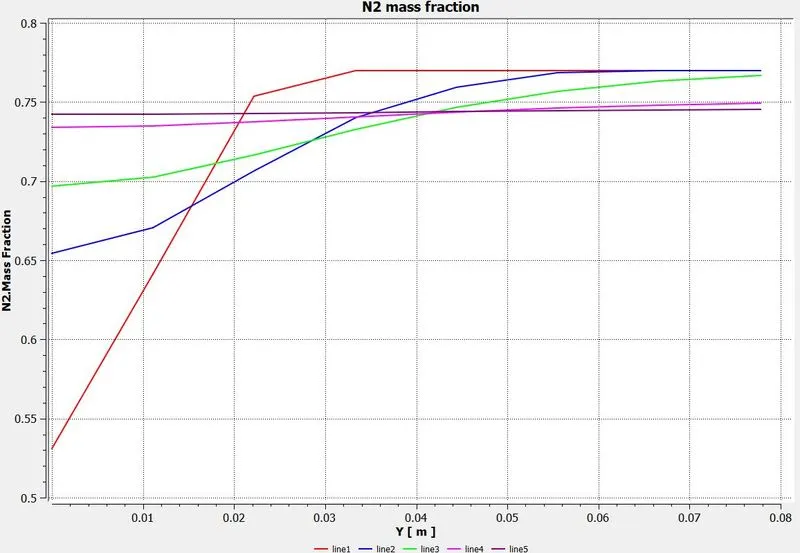
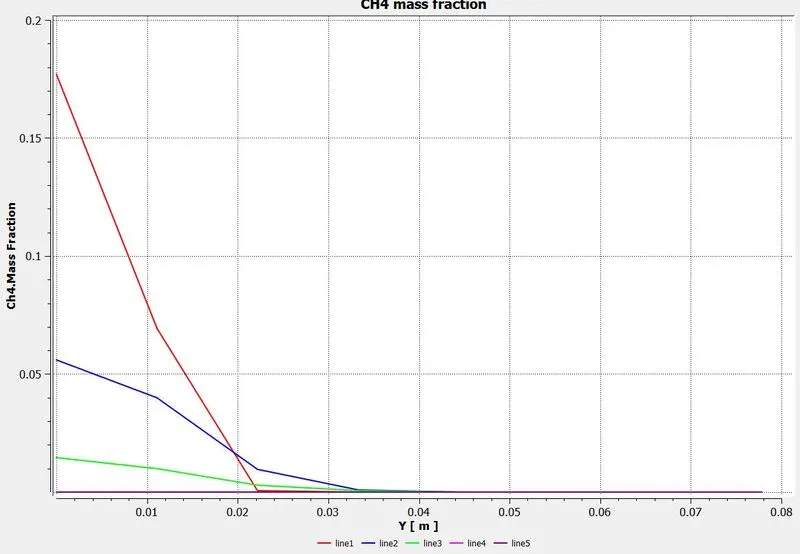
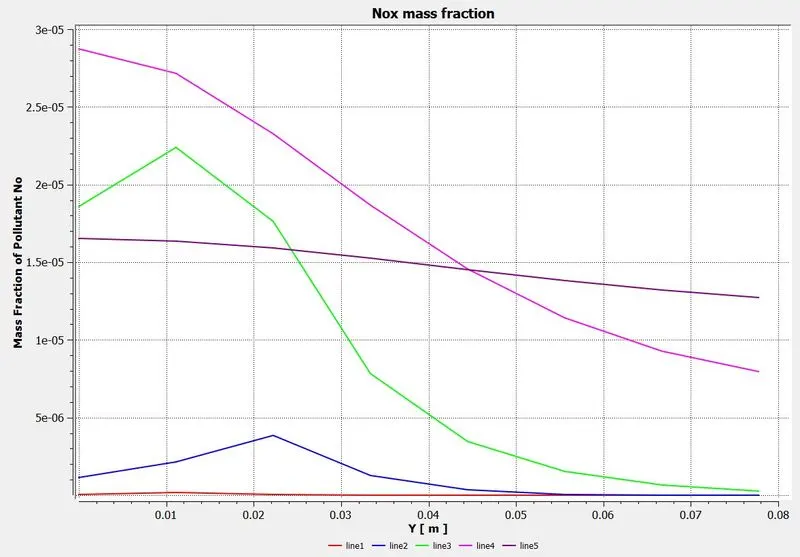
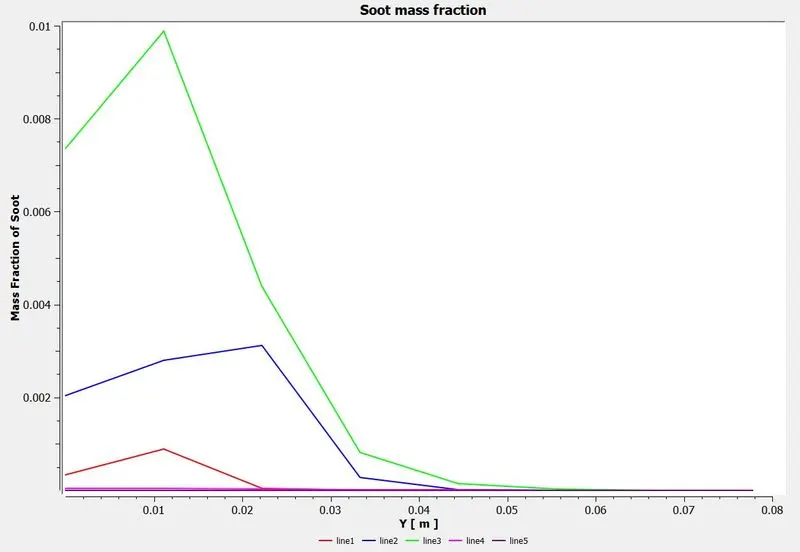
Temperature contours are created to get insights of flame front and temperature hotspots. Five probe lines were created at distance 0.1x, 0.2x, 0.3x, 0.5x, 0.7x, where x is the total distance, to inspect mass fraction of six species CO2, H2O, O2, N2, CH4 and NOx. Chart of soot formation was also plotted.
PART 1:
Air-inlet velocity = 0.5m/s, Thermal temperature=300K
Fuel-inlet velocity = 80m/s, Thermal temperature=300K
The temperature contour is shown below:
The mass fraction of different species at the given location probes are shown below:
PART 2
1) CH4 - 95% and water 5%
The mass fraction of different species are shown below:
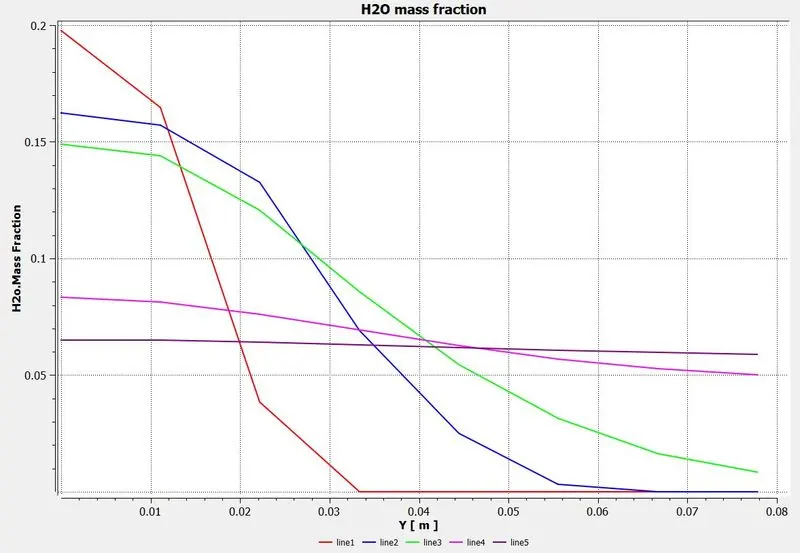
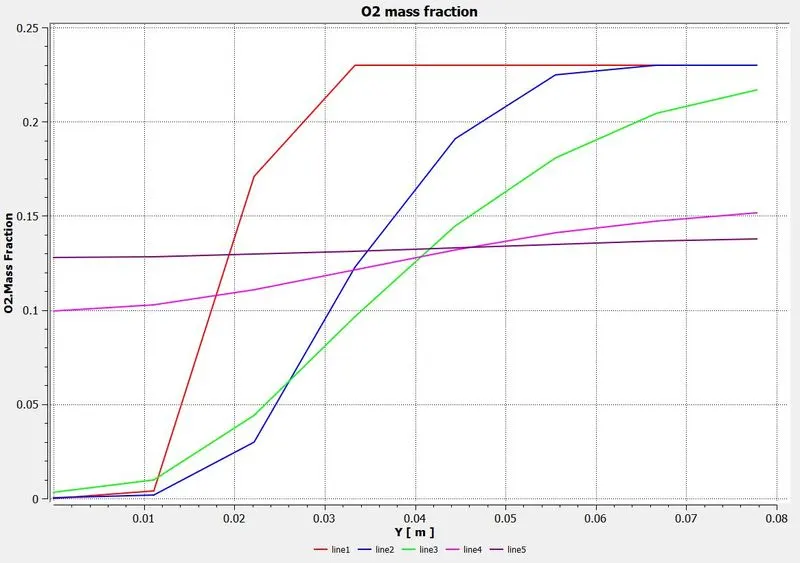
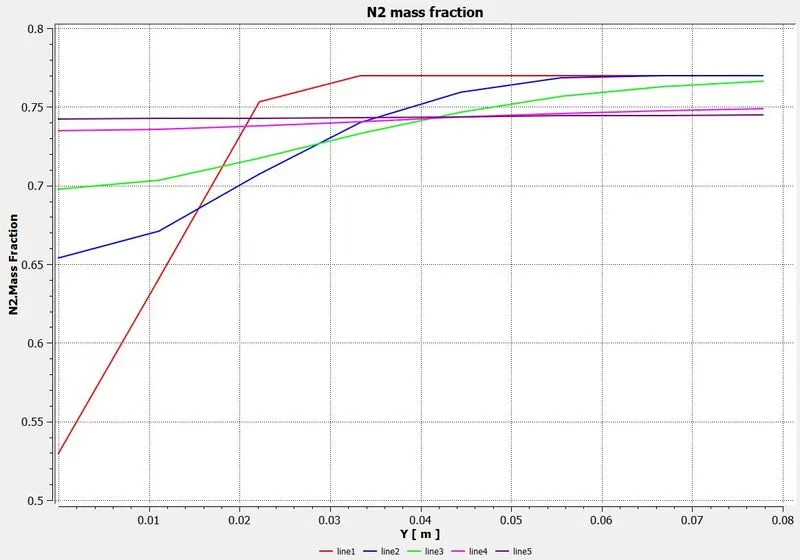
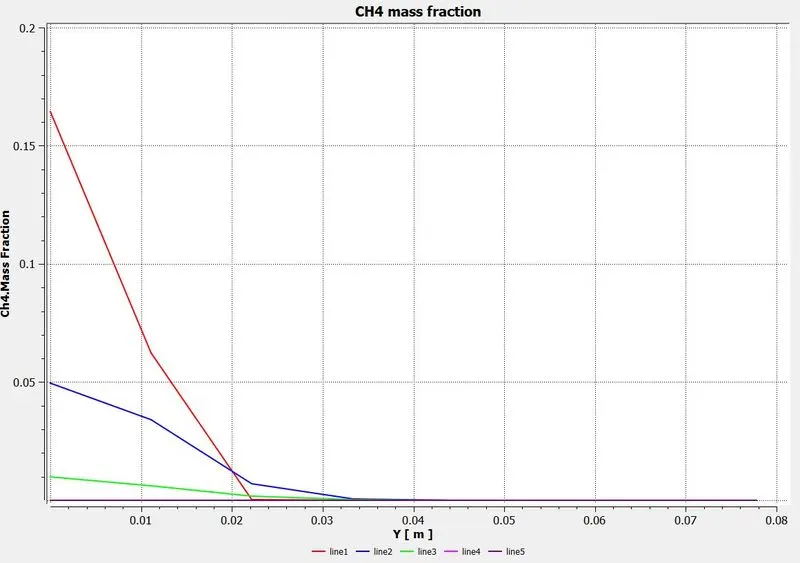
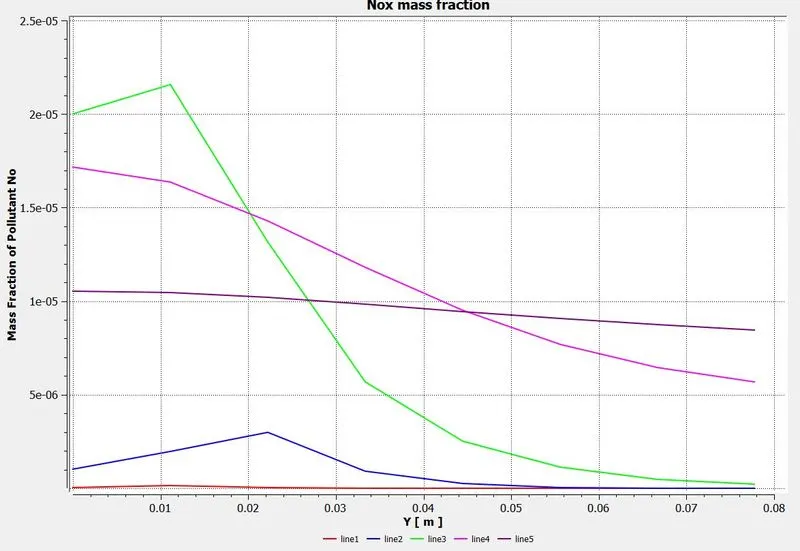
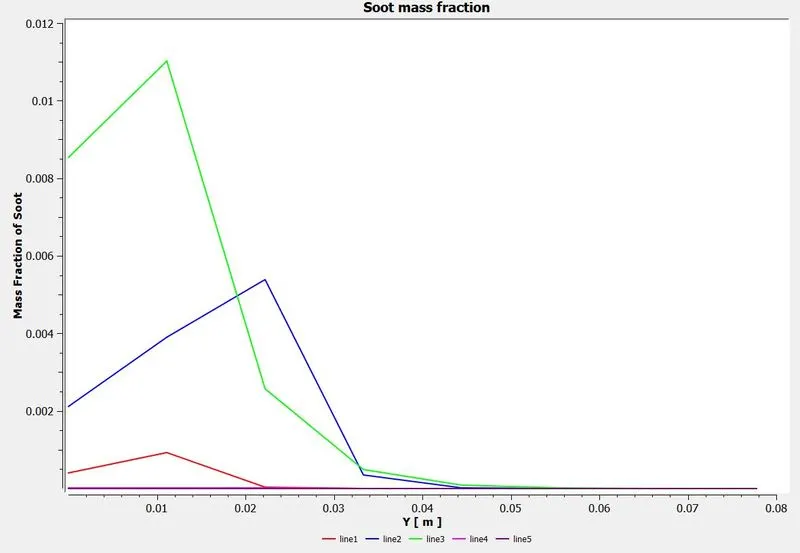
2) CH4 - 85% and water 15%
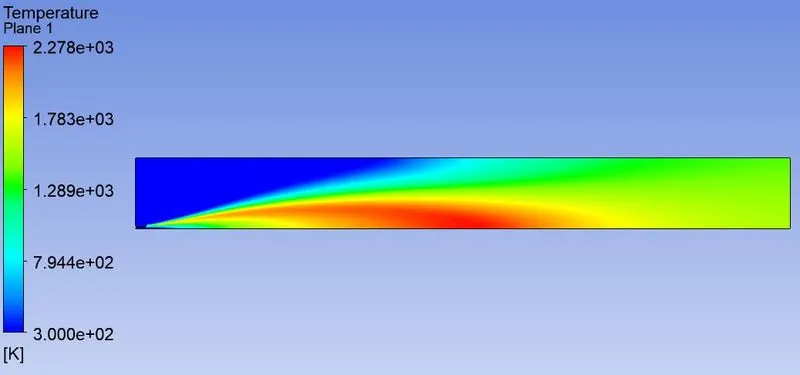
The mass fraction plots of different species are shown below:
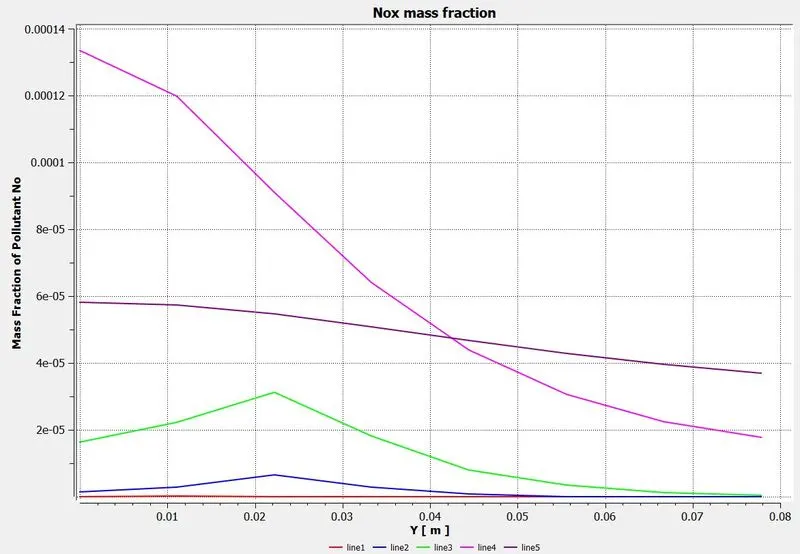
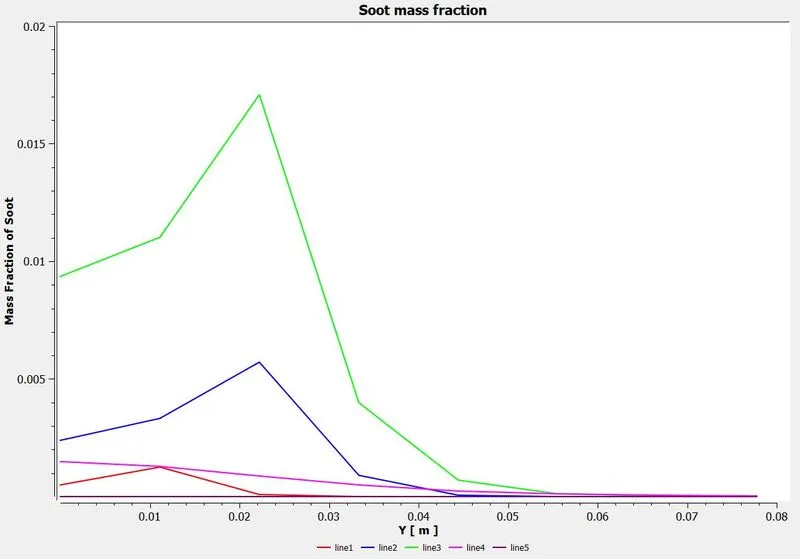
3) CH4 - 70% and water 30%
Temperature contour is shown:
The mass fraction for different species are shown:
Conclusions:
1) Adding water content in the fuel by 5% to 30% by mole leads to decrease in temperature, NOx emissions and soot formation.
2) Increase in water content decreases temeperature and increase in N2,O2.
3) Decrease in soot in presence of H2O determines the less leakage of fuel and there will be complete combustion process.
As per the research paper, few predictions about the soot reduction with respect to water addition are:
- Reduction in equivalence ratio, or enlistment. Hence, lean mixtures soot less than rich mixtures.
- Increase in unburned gas temperature or, more directly increase in flame temperature above values of 1800 K. Hence, increased temperature above typical values will reduce soot.
- Decrease in flame temperature below values of 1600 K. Hence, very-low combustion temperatures will reduce soot.