Week 10 - Simulating Combustion of Natural Gas.
Aim:
Run a simulation of combustion using methane as the fuel in the combustor model.
Objectives:
Part I:
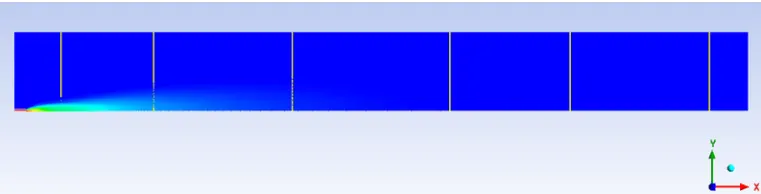
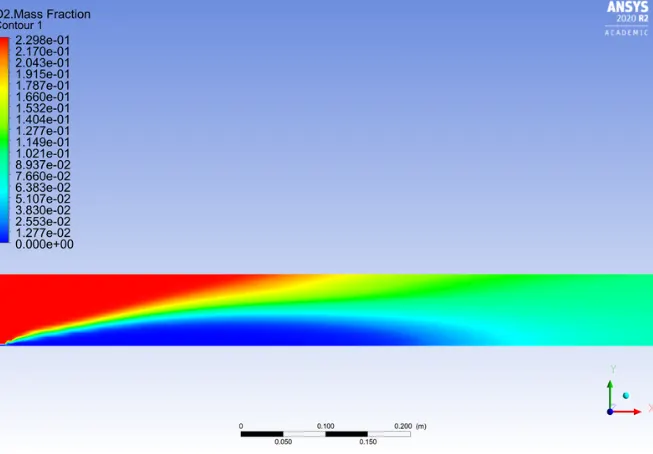
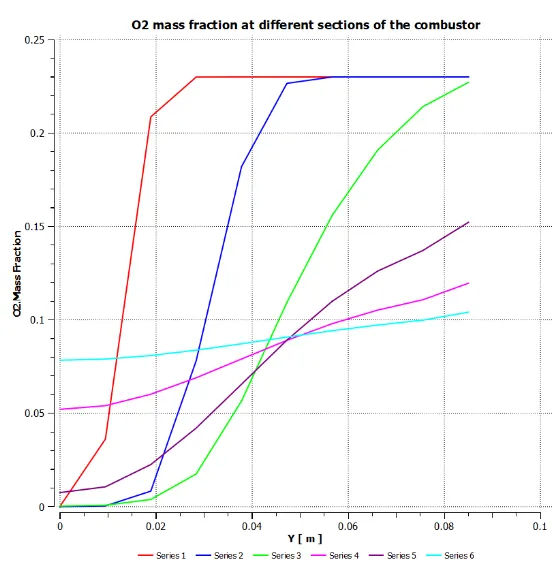
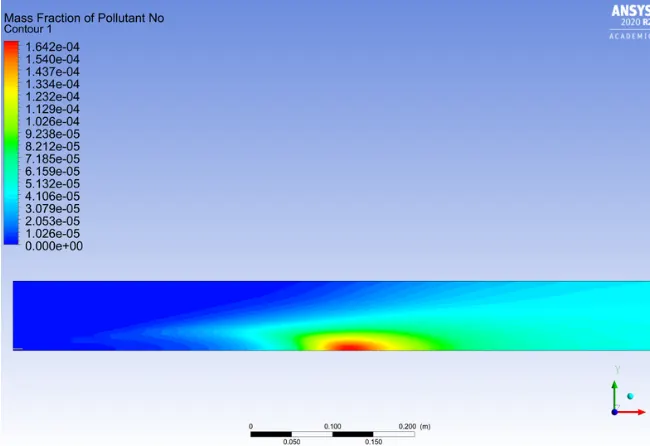
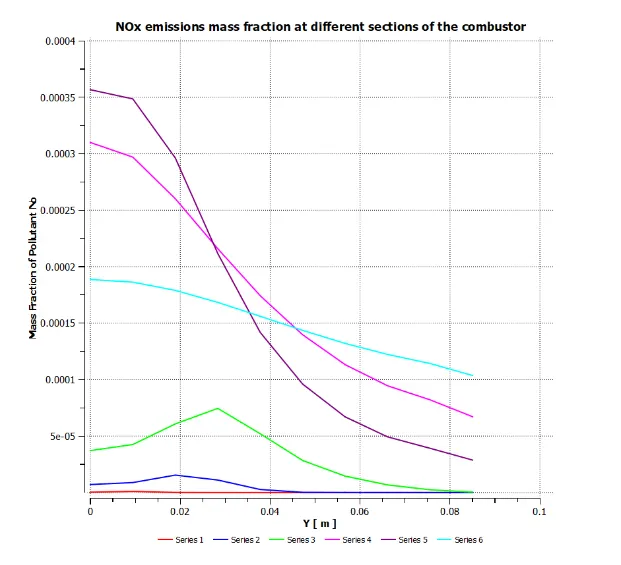
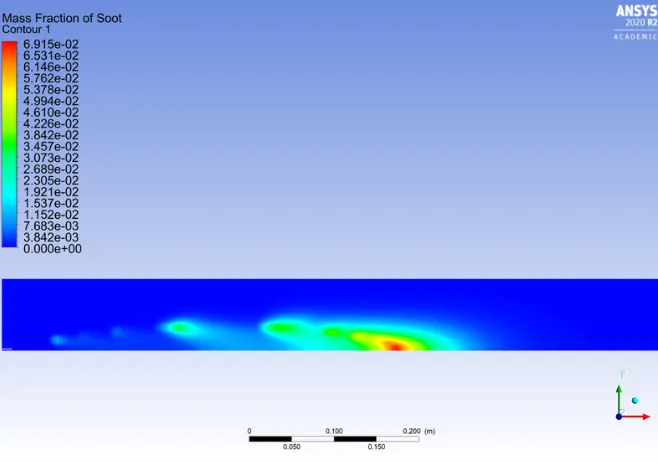
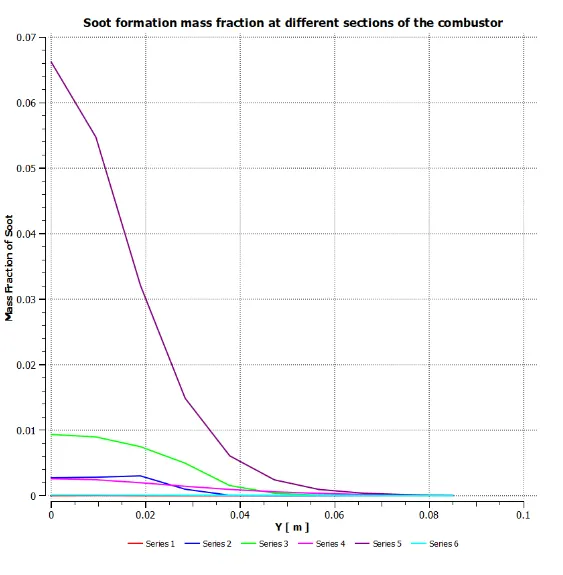
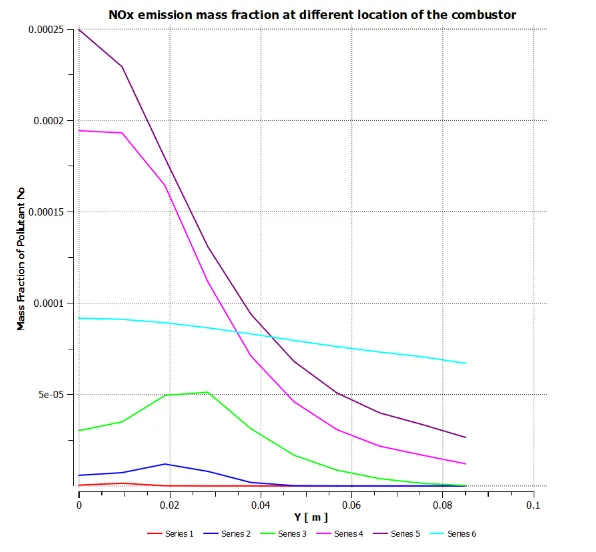
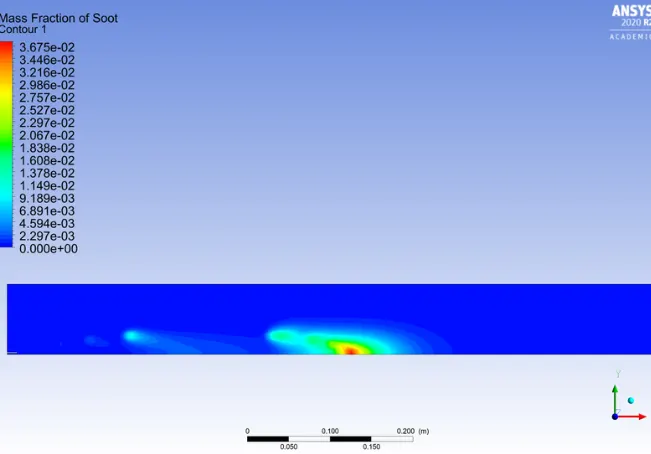
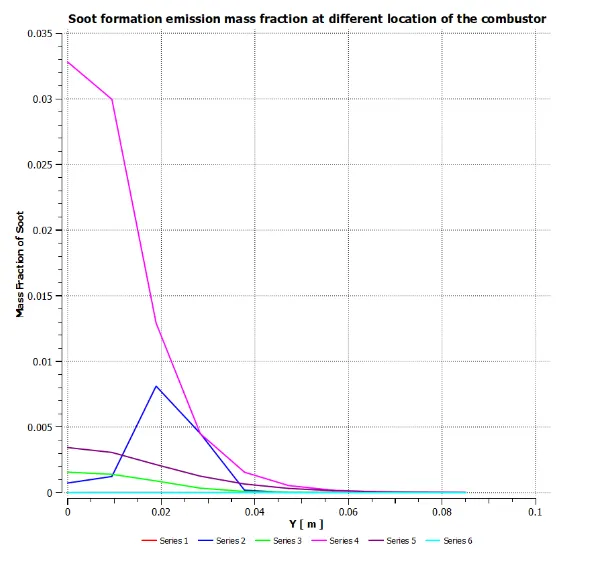
Perform a combustion simulation on the combustor model and plot the variation of the mass fraction of the different species’ in the simulation using line probes at different locations of the combustor as shown in Fig. You need to plot for CO2, H2O, CH4, N2, O2, NOx emissions & Soot formation.
Part II:
As you must have observed from the above simulation, the Nox and soot is getting formed at the outlet of the combustor. Such formation has harmful effects on the environment and humans. The stringent government norms also demand the least formation of Nox and soot and to satisfy those requirements, you need to check the effect of adding the water in the fuel.
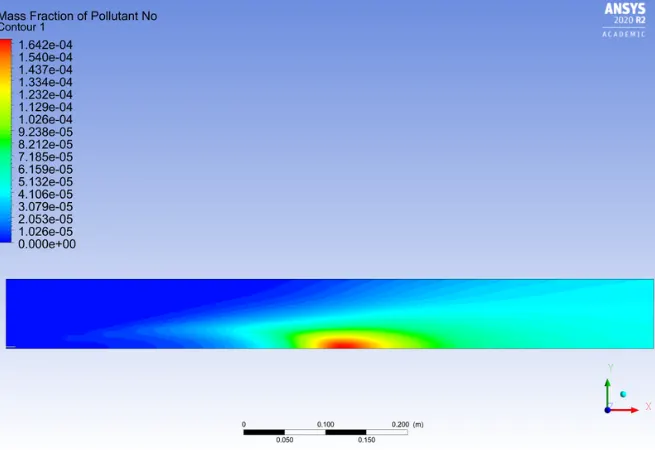
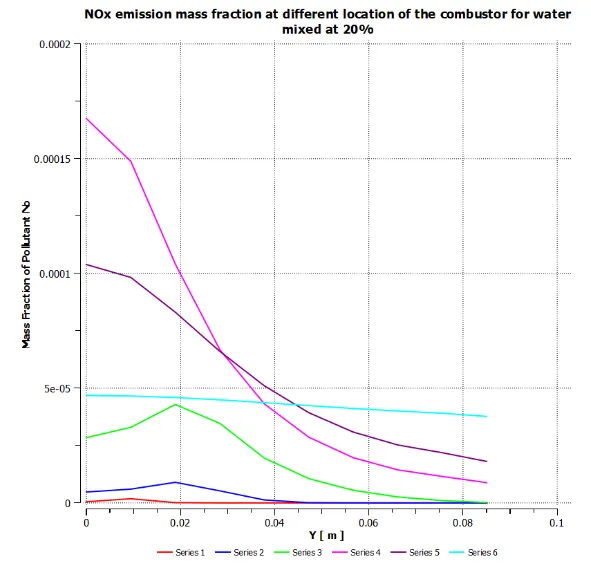
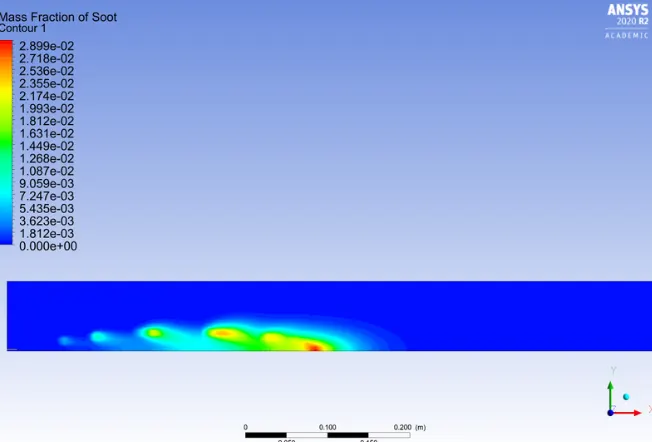
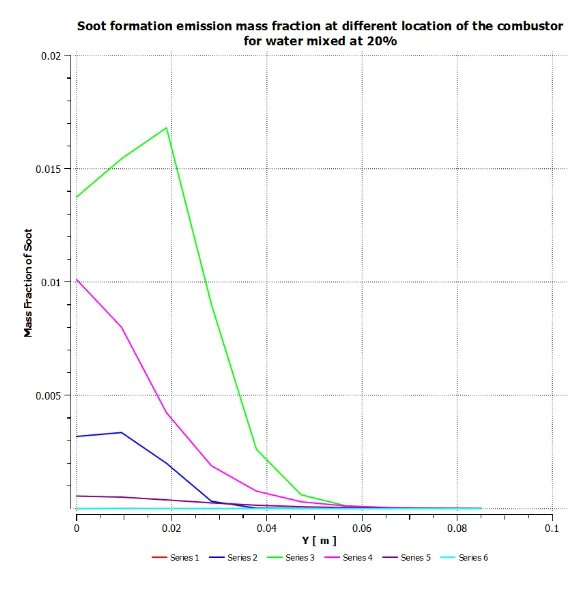
In this part, you need to add the water content in the fuel from 5% to 30% by mole and observe the effect of it on the results. It is necessary to provide line plots and contours to prove your claim.
Theory:
Combustion:
A fuel (the reductant) and an oxidant, often atmospheric oxygen, undergo a high-temperature exothermic redox chemical reaction that results in oxidised, frequently gaseous products and a mixture known as smoke. Since a flame only appears when components undergoing combustion vapourize, combustion does not always result in fire, but when it does, a flame is a distinctive sign of the event. The heat from a flame may be enough energy to make the reaction self-sustaining, even if the activation energy must be overcome to commence combustion (such as when using a lighted match to start a fire). A convoluted series of simple radical reactions frequently occurs during combustion.Endothermic pyrolysis is the process that turns solid fuels like wood and coal into gaseous fuels that may be burned to generate the heat needed to create new solid fuels. A flame or a blazing incandescent light is frequently created when combustion is hot enough. A straightforward illustration is provided by the reaction that occurs when hydrogen and oxygen are combined to form water vapour, which is frequently utilised as rocket fuel. This reaction decreases the enthalpy and emits 242 kJ/mol of heat (at constant temperature and pressure)
2H2(g) + O2(g) → 2H2O(g)
The production of the stronger bonds in the combustion products CO 2 and H2O causes energy to be released, hence burning of an organic fuel in air is always exothermic since the double bond in O2 is substantially weaker than other double bonds or pairs of single bonds.
Stoichiometric combustion of a hydrocarbon in oxygen:
Generally, the chemical equation for stoichiometric combustion of a hydrocarbon in oxygen is:

where,

For example, the stoichiometric burning of propane in oxygen is

2. Chemical Kinetics:
The area of physical chemistry that deals with comprehending the speeds of chemical processes is known as chemical kinetics, sometimes known as reaction kinetics. Contrast that with thermodynamics, which focuses on the direction in which a process takes place but says nothing about the pace of that process. Chemical kinetics is the study of how experimental circumstances affect a chemical reaction's rate and reveal details about its mechanism and transition stages. It also involves the development of mathematical models that may be used to represent the properties of a chemical process.
3. Chemical Reaction model:
Physical information is transformed into a mathematical formulation via chemical reaction models, which may then be used to simulate real-world chemical engineering issues computationally. The versatility of studying chemical processes under various circumstances is made possible by computer simulation. Convection, diffusion, and reaction source conservation equations for each species involved in the reaction must be solved when modelling it.
Series Transport Equation:

Si is the rate of addition from the dispersed phase and the user-defined source, and Ri is the net rate of formation of species I through chemical reaction. Ji is the species I diffusion flux, which is different in laminar and turbulent flows and results from concentration gradients. Computational fluid dynamics also takes the effects of turbulent diffusivity into account in turbulent flows. The total of the reaction sources over the NR reactions among the species is used to calculate the net source of chemical species I owing to reaction, Ri, which appears as the source term in the species transport equation.
Reaction rate models:
a. Laminar finite rate model:
The Arrhenius formulas are used by the laminar finite rate model to determine the chemical source terms, and turbulence fluctuations are not taken into account. Due to the very non-linear Arrhenius chemical kinetics, this model produces a correct answer for laminar flames but an erroneous one for turbulent flames, where turbulence has a significant impact on the rates of chemical reactions. For combustion with minor turbulence variations, such as supersonic flames, this model may, nonetheless, be correct.
b. Eddy dissipation model:
A turbulent-chemistry reaction model, the eddy dissipation model is based on the work of Magnussen and Hjertager. The majority of fuels burn quickly, and turbulence mixing regulates the reaction's overall rate of speed. Turbulence slowly blends the fuel and oxidizer into the reaction zones of the non-premixed flames, where they burn rapidly. In premixed flames, the turbulence gradually combines the hot products and cool reactants in the reaction zones, where the reaction proceeds quickly. When this occurs, the combustion is considered to be mixing-limited, and it is safe to ignore the intricate and frequently unknowable chemical dynamics. According to this concept, the large-eddy mixing time scale controls the chemical reaction. Anytime there is turbulence in the flow, combustion begins.
Factors affecting reaction rate:
1. Nature of reactants
2. Physical state
3. Surface area of solid-state
4. Concentration
5. Temperature
6. Catalysts
7. Pressure
8. Absorption of light
Applications:
Chemical engineers and scientists can better comprehend and explain chemical processes including food degradation, microbial development, stratospheric ozone decomposition, and the chemistry of biological systems using the mathematical models that describe chemical reaction kinetics. These models may also be used to maximise product yield, more effectively segregate products, and get rid of by-products that are bad for the environment in chemical reactor design or modification. Kinetic models may be used to determine the temperature and pressure at which the largest yield of heavy hydrocarbons into gasoline will occur while conducting catalytic cracking of heavy hydrocarbons into gasoline and light gas, for instance.
As a result of solving ordinary differential equations (ODEs) and curve-fitting, modelling in specialist software is commonly used to evaluate and investigate chemical kinetics.
4. Mass fraction:
5. Nitrogen Oxide (NOx) emissions:
6. Soot formations:
Burning hydrocarbon fuels like oil, natural gas, and wood produces soot. When gaseous molecules are burned to high temperatures, soot particles are created, and unlike heated water droplets, soot does not readily decompose back into gaseous molecules. There are numerous distinct sources of soot in the environment, all of which are products of pyrolysis in some way. They consist of soot from internal combustion engines, coal-burning power plants, hog-fuel boilers, ship boilers, central steam-heat boilers, waste incineration, small-scale field burning, home fires, forest fires, fireplaces, and furnaces. Smoking of plant matter, cooking, oil lamps, candles, quartz/halogen bulbs with accumulated dust, fires, and vehicle exhaust emissions are some examples of outdoor sources that also affect the indoor environment.
- Content:
1. Geometry:

Meshing:

Mesh Quality:
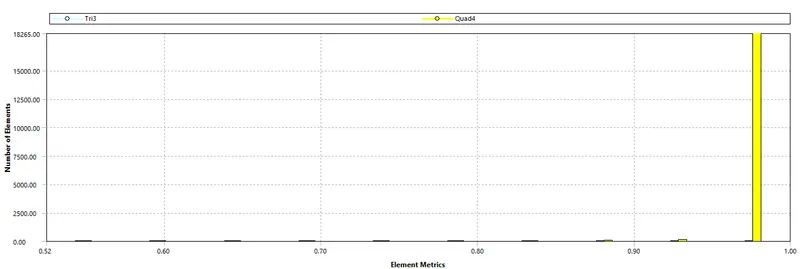
Fluent Settings:
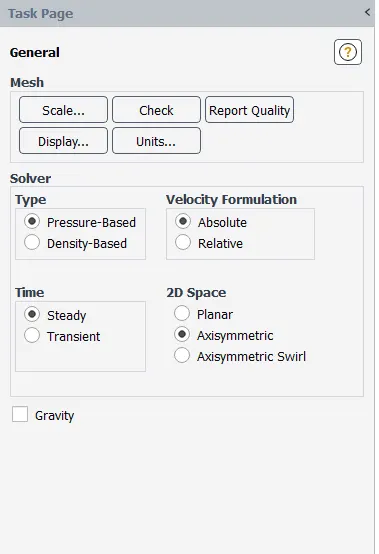
General settings:
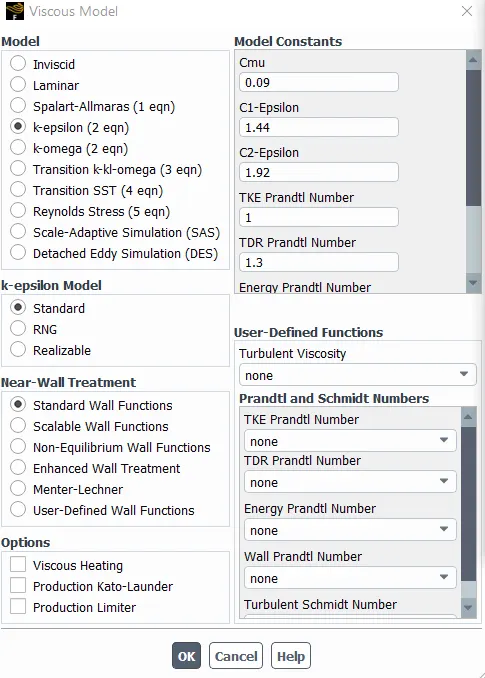
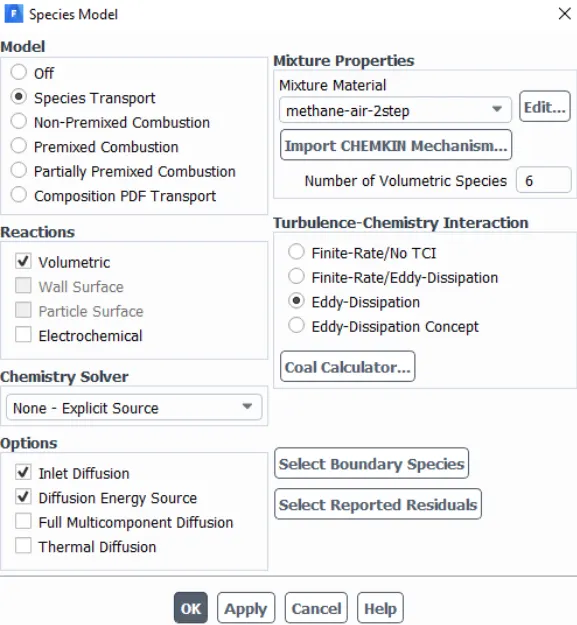
Viscous model and species:
Air inlet:
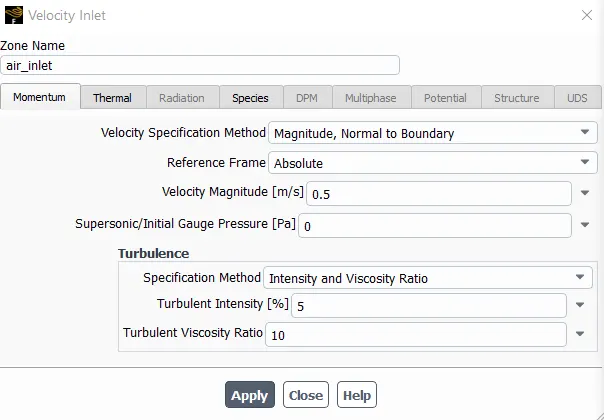
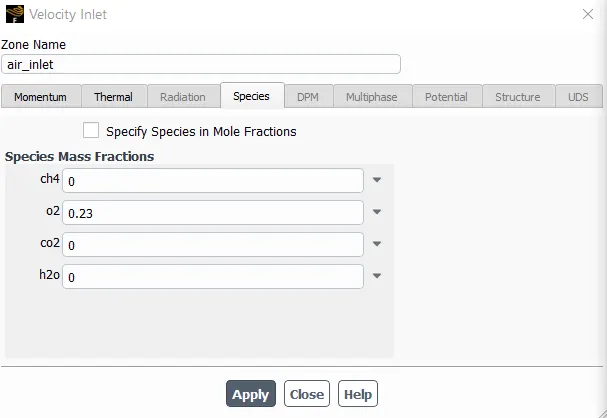
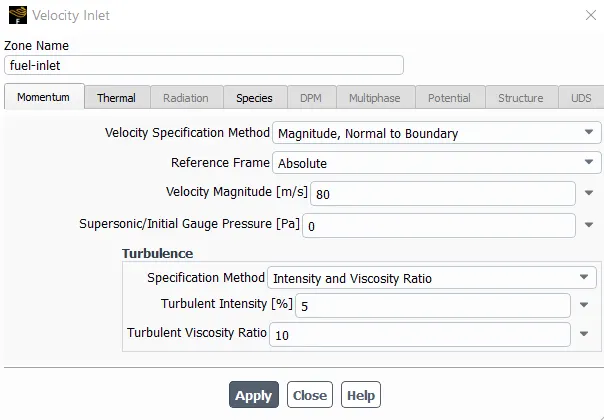
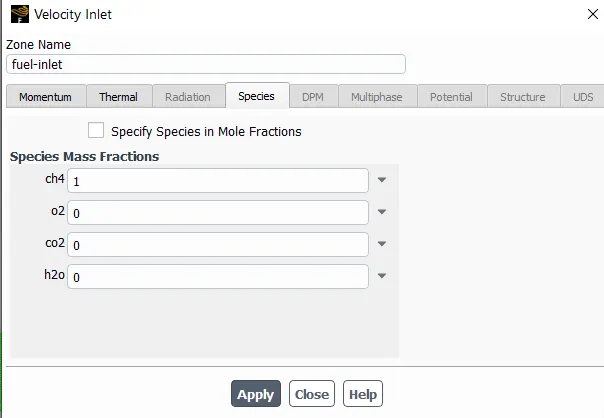
Fuel inlet:
- Result and observations:
Lines probes created at different locations in the combustor:
1. Part 1:
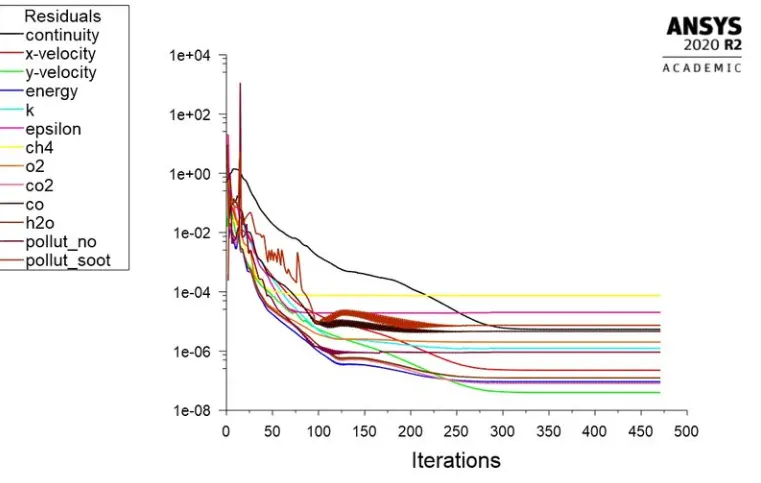
Residuals:
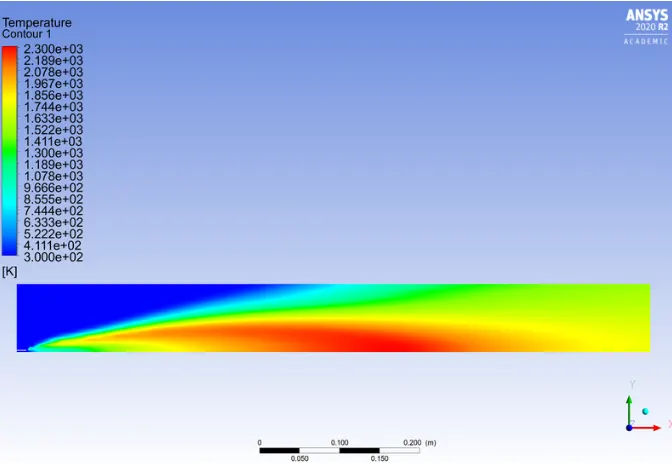
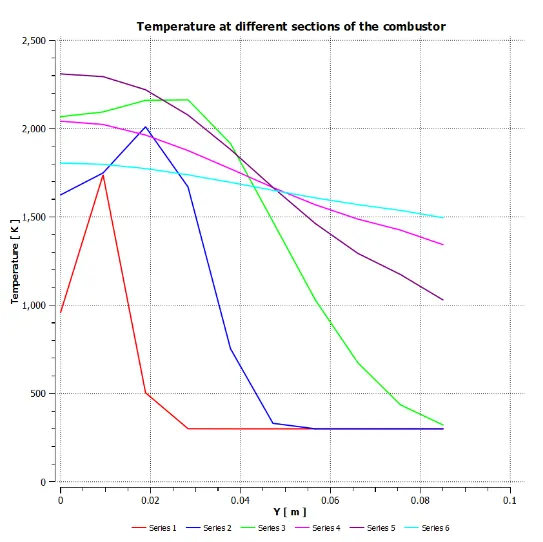
a. Temperature contour and mass fraction chart:
b. CO2 contour and mass fraction chart:
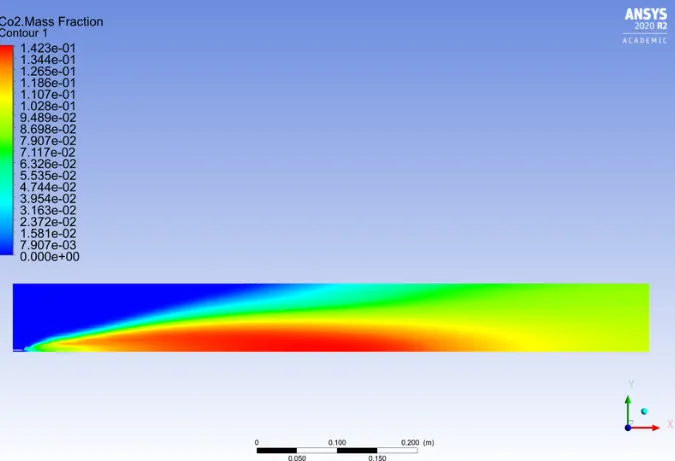
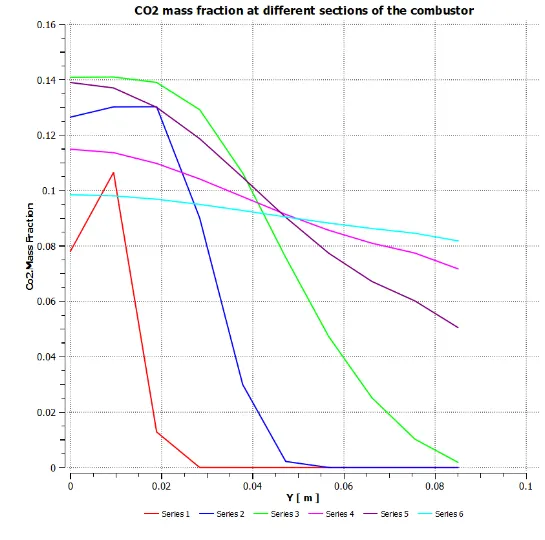
c. H2O contour and mass fraction chart:
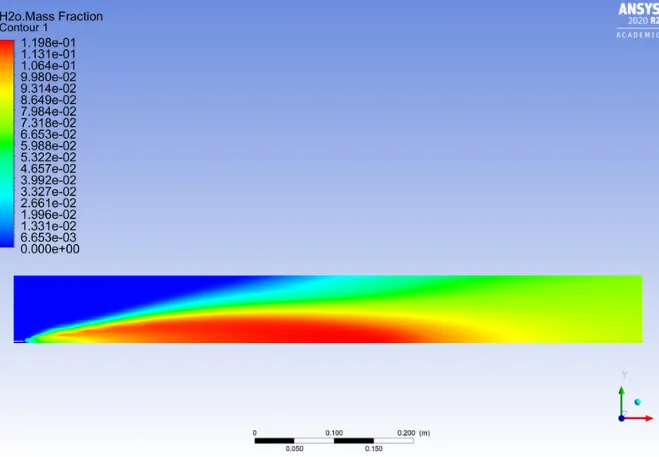
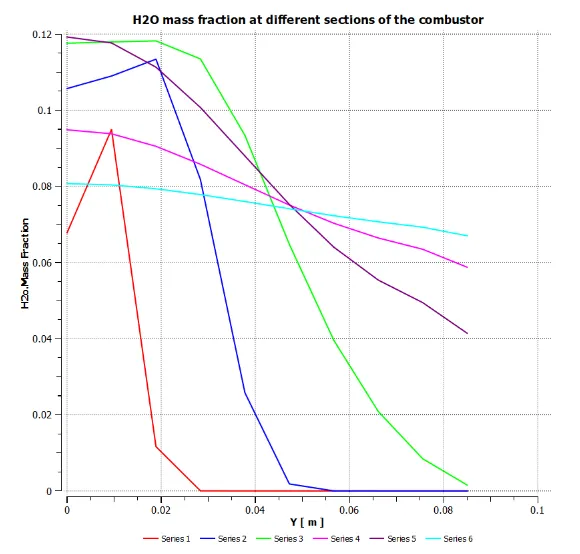
d. CH4 contour and mass fraction:
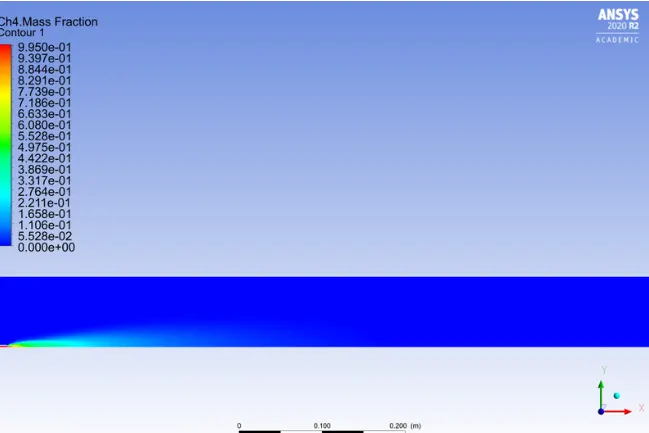
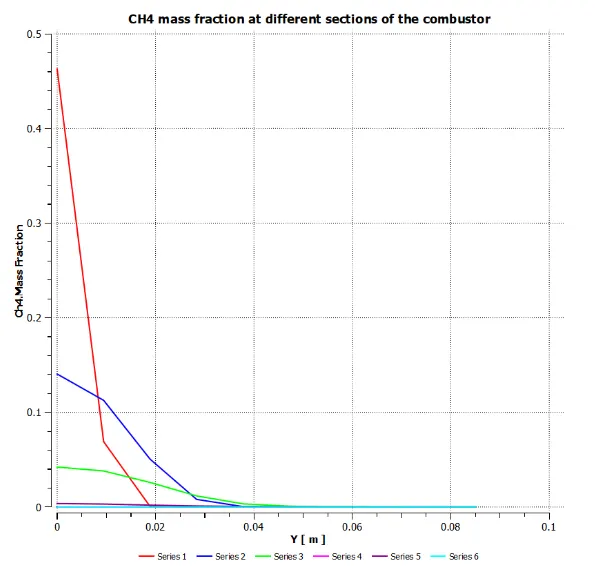
e. N2 contour and mass fraction:
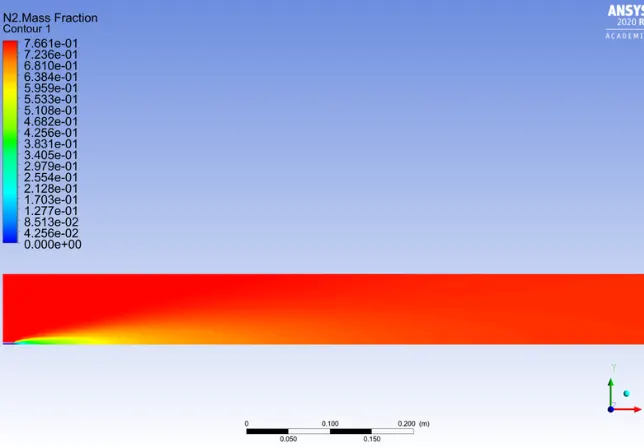
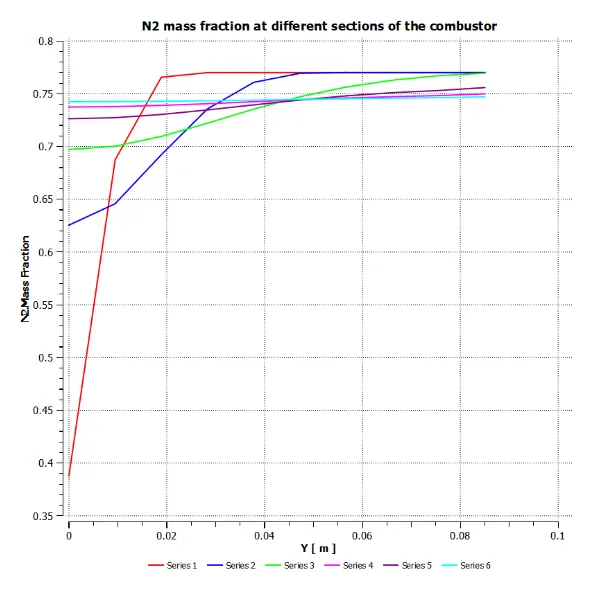
f. O2 contour and mass fraction:
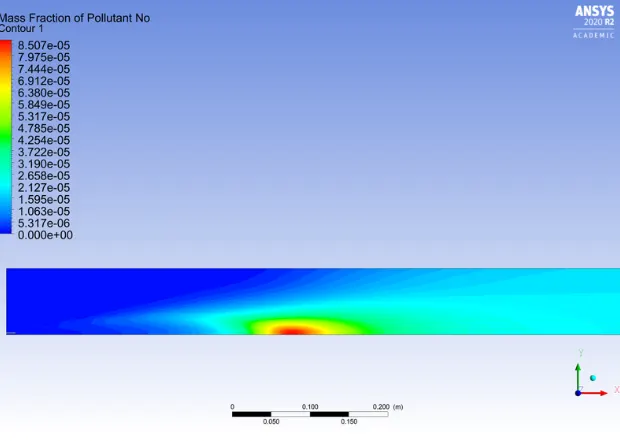
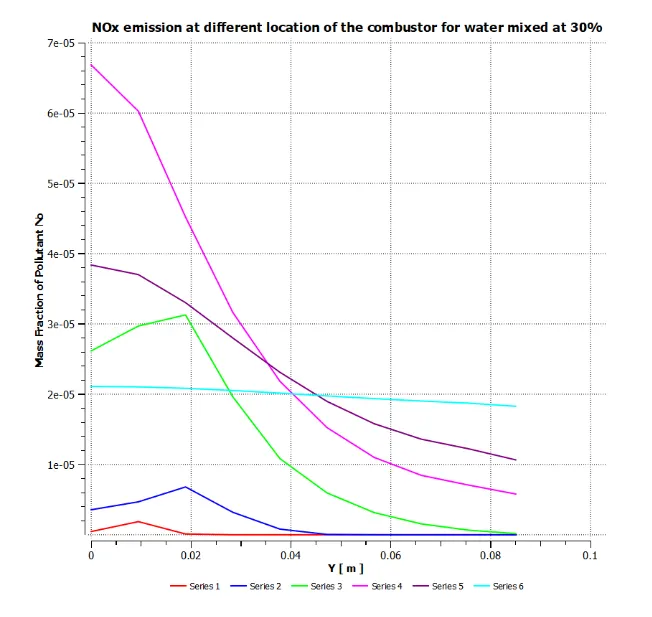
f. NOx emissions conotur and mass fraction chart:
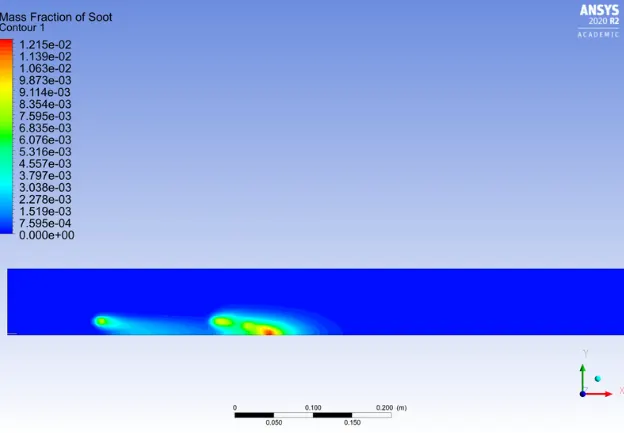
g. Soot formation contour and mass fraction chart:
2. Part 2:
For 10% water addition:
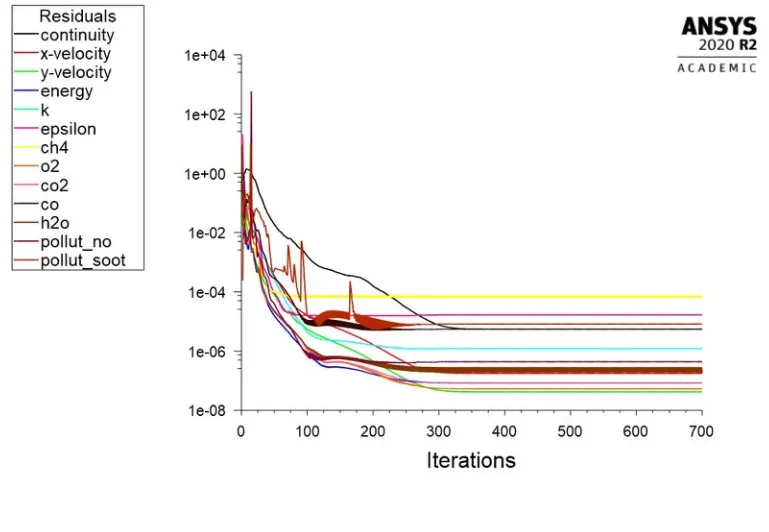
Residuals:
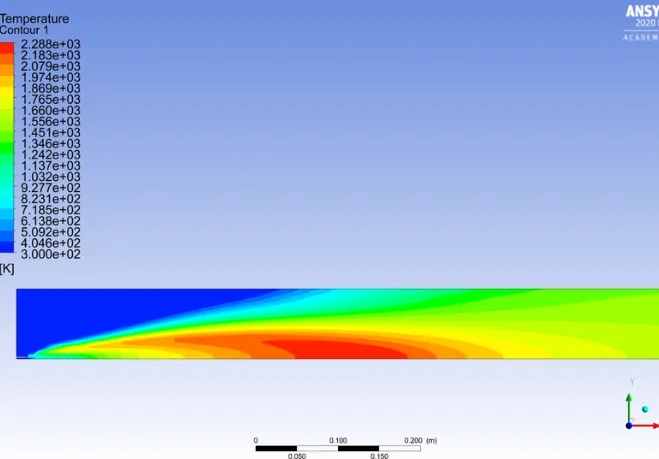
a. Temperature contour and mass fraction chart:
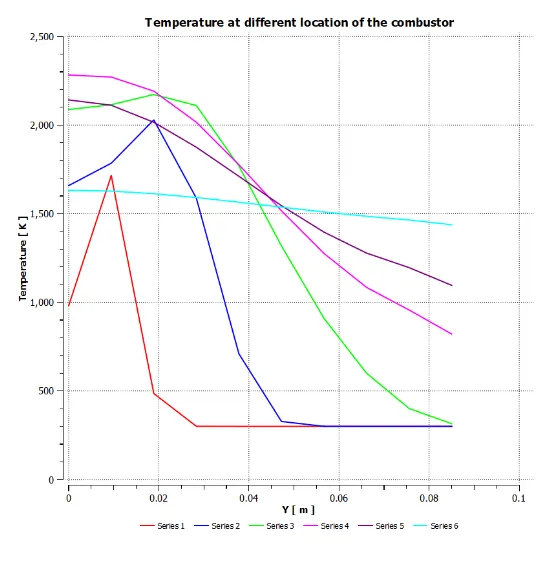
b. CO2 contour and mass fraction chart:
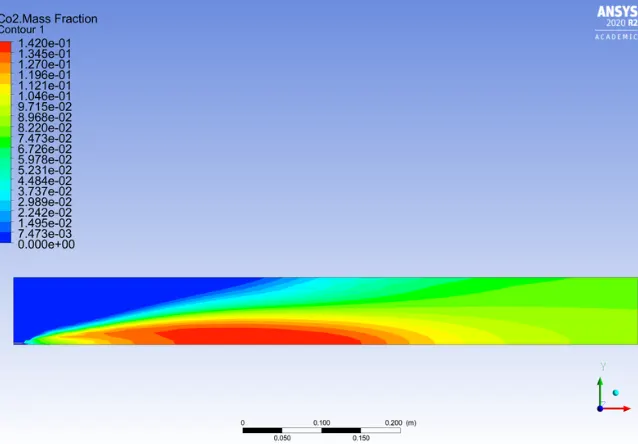
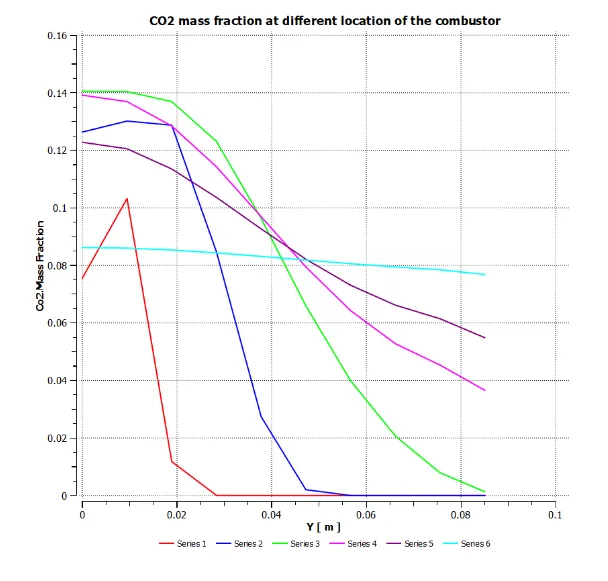
c. H2O contour and mass fraction chart:
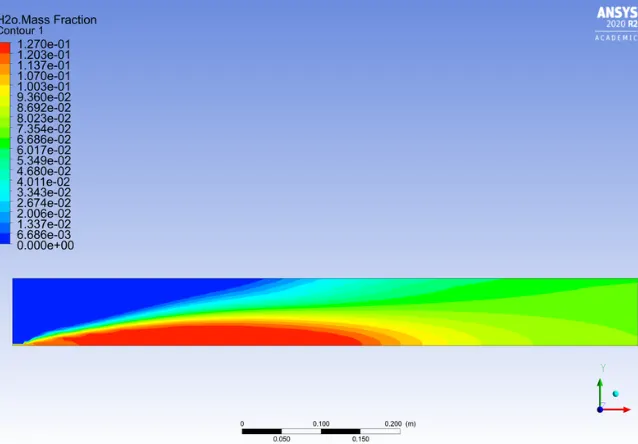
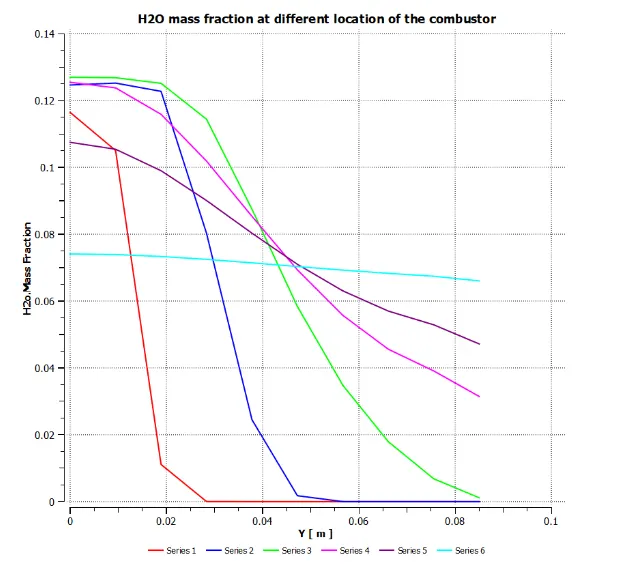
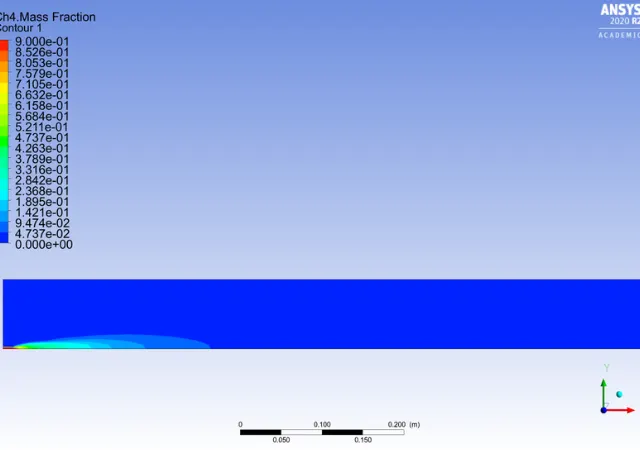
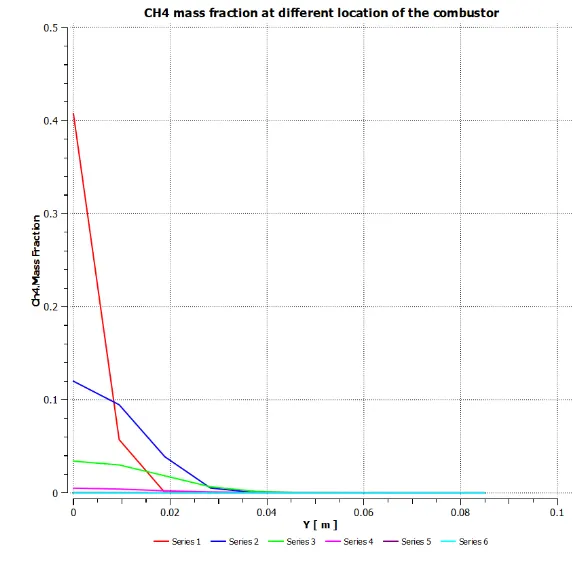
d. CH4 contour and mass fraction:
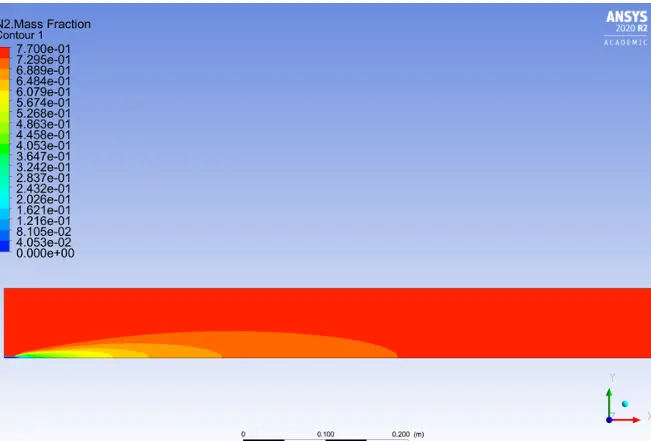
e. N2 contour and mass fraction:
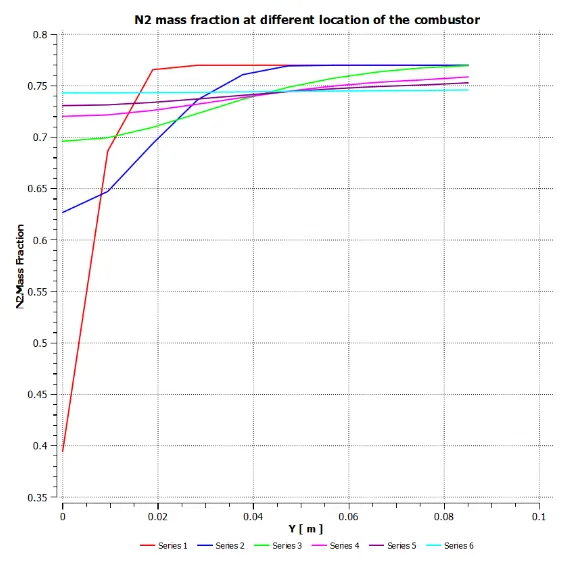
f. O2 contour and mass fraction:
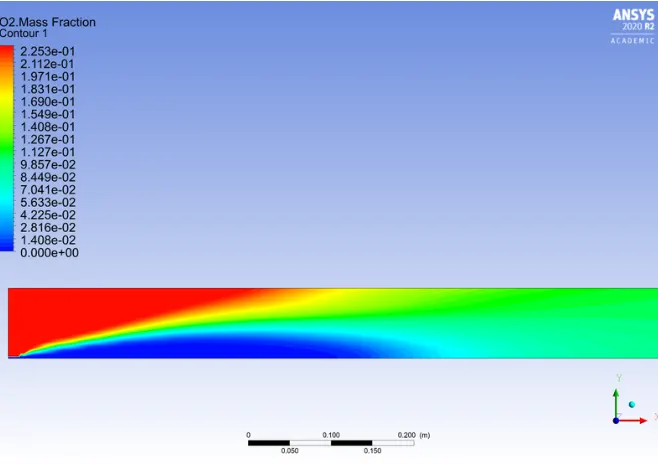
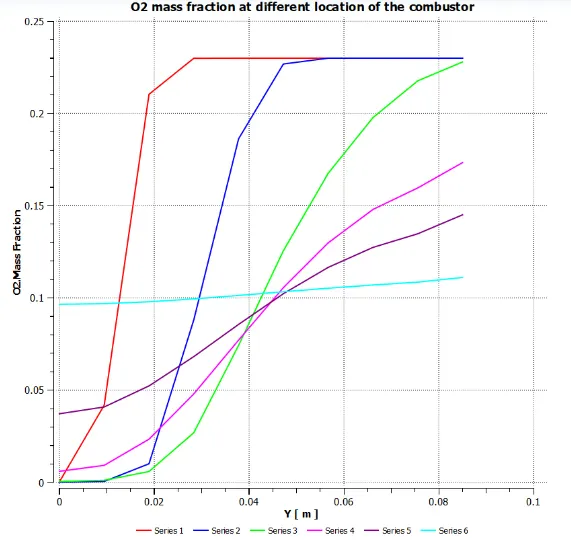
f. NOx emissions conotur and mass fraction chart:
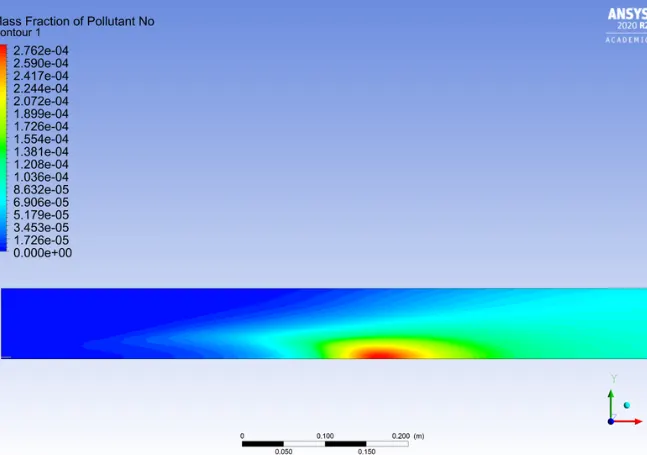
g. Soot formation contour and mass fraction chart:
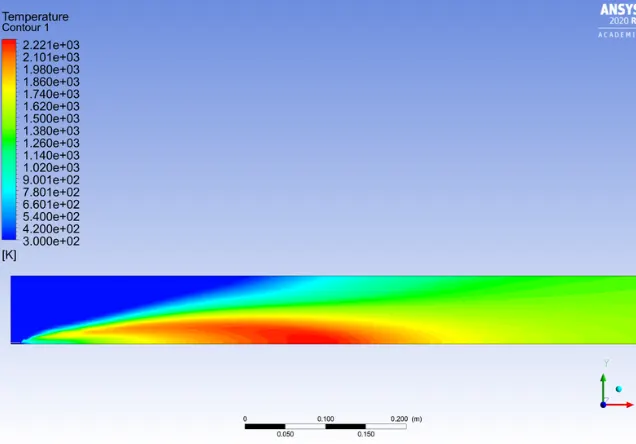
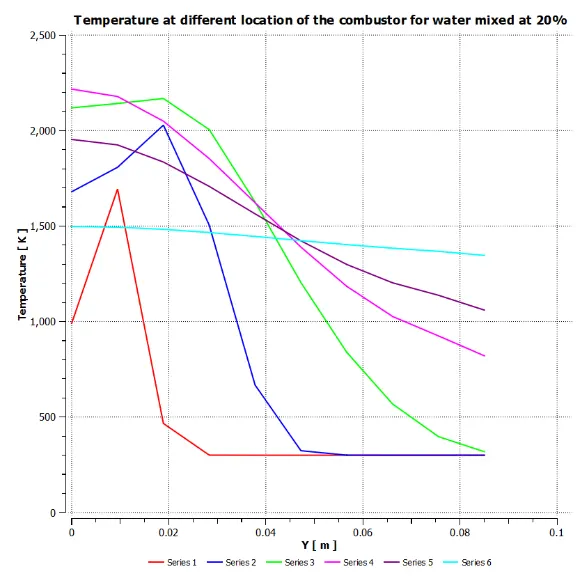
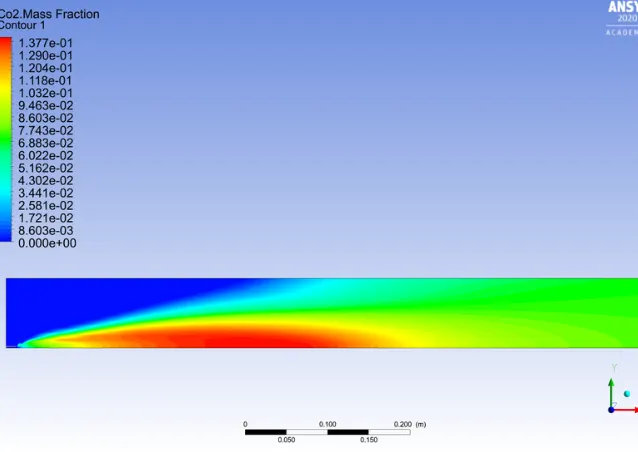
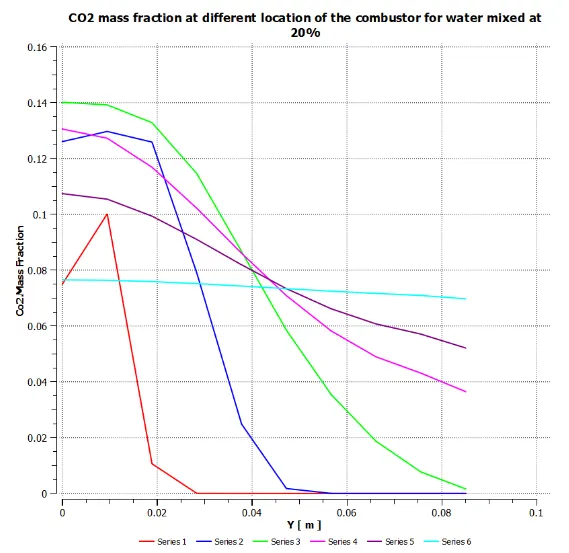
For 20% water addition:
Residuals:
a. Temperature contour and mass fraction chart:
b. CO2 contour and mass fraction chart:
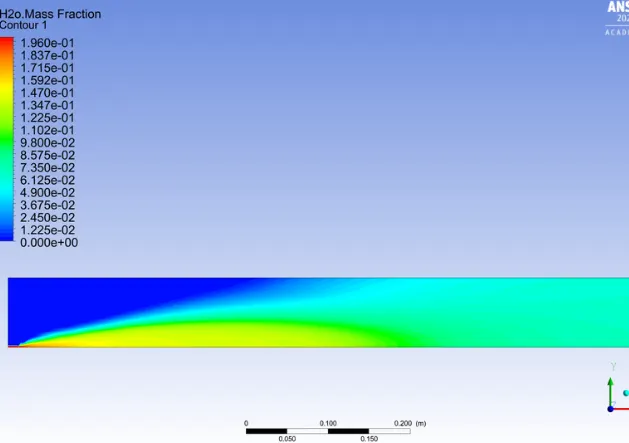
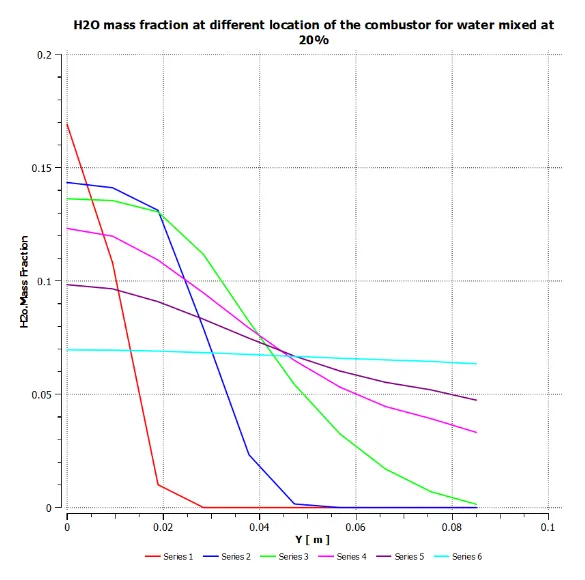
c. H2O contour and mass fraction chart:
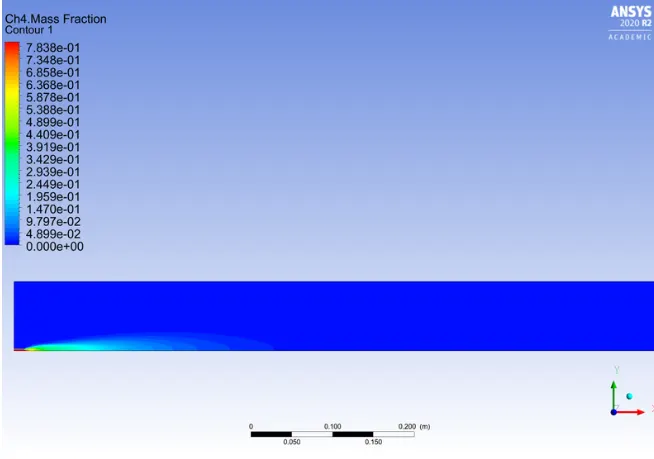
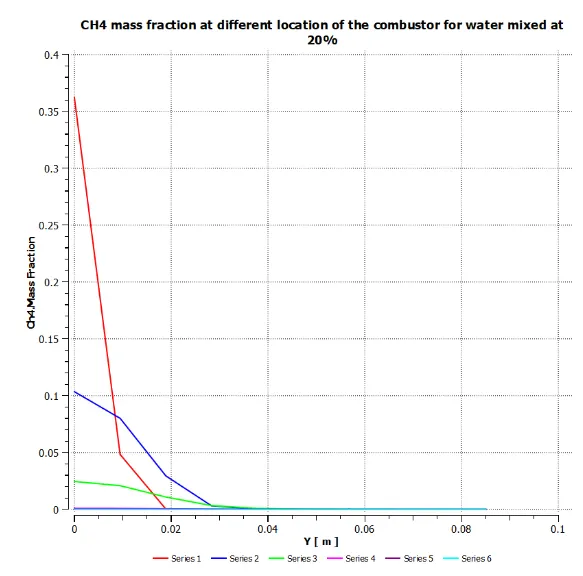
d. CH4 contour and mass fraction:
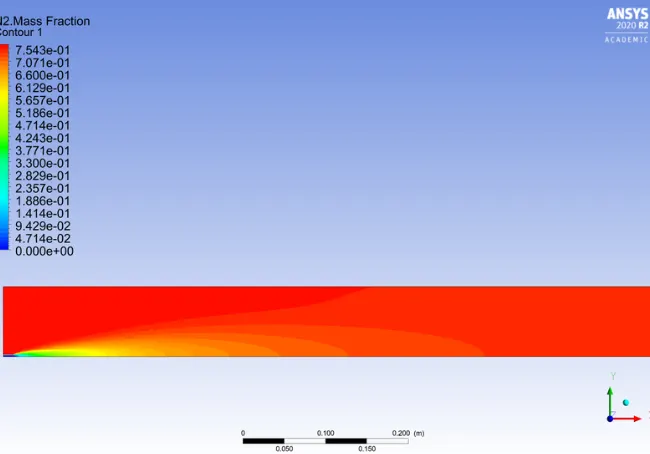
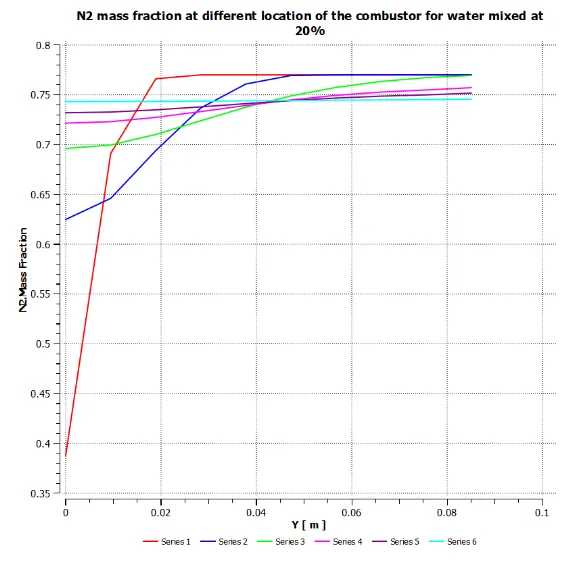
e. N2 contour and mass fraction:
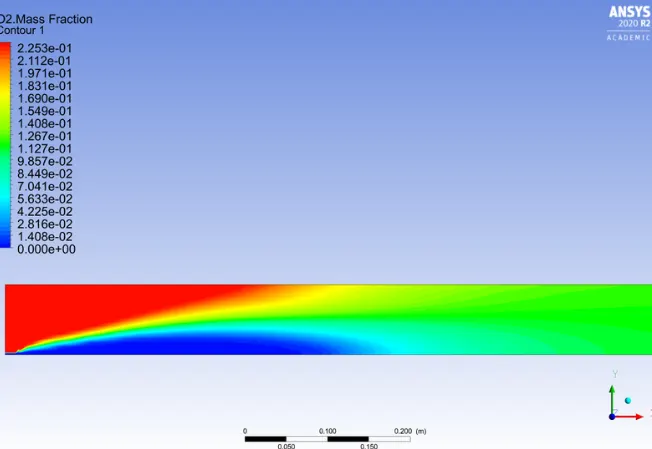
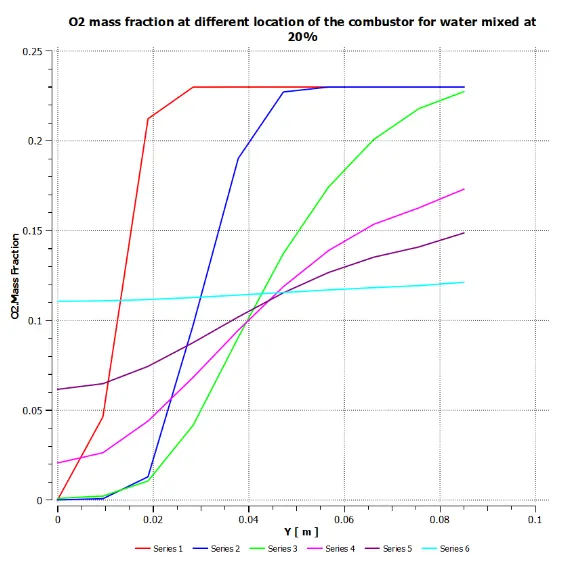
f. O2 contour and mass fraction:
g. NOx emissions conotur and mass fraction chart:
h. Soot formation contour and mass fraction chart:
For 30% water addition:
Residuals:
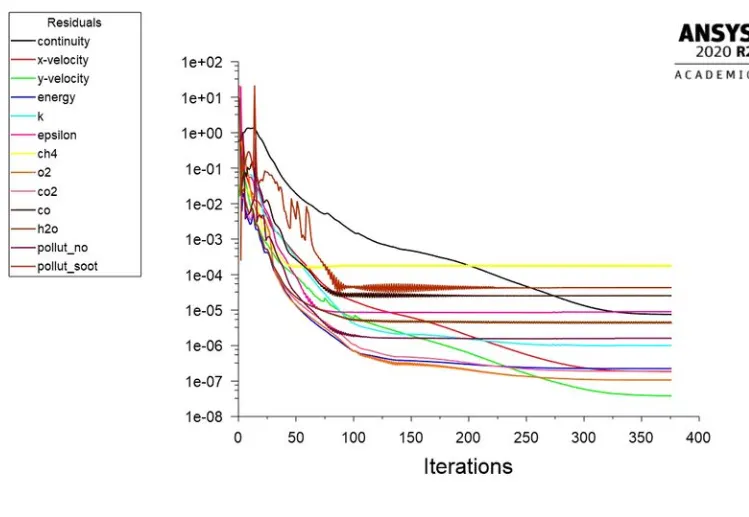
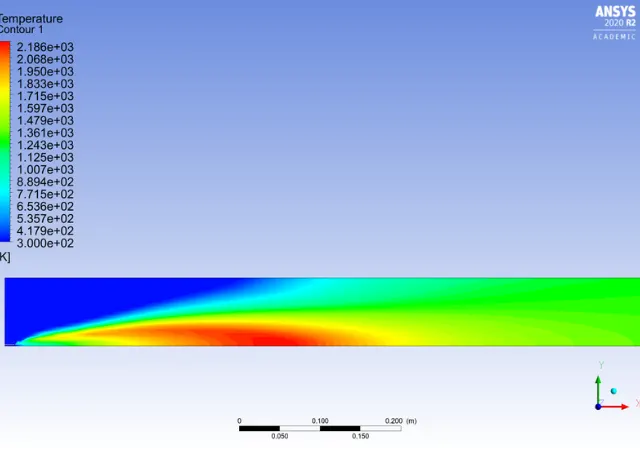
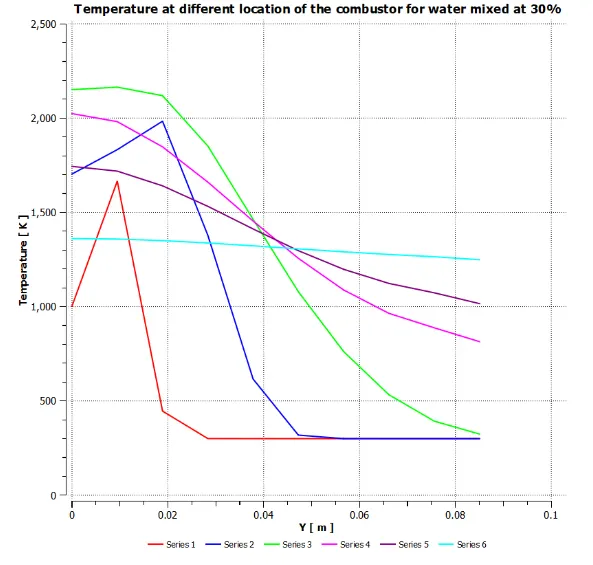
a. Temperature contour and mass fraction chart:
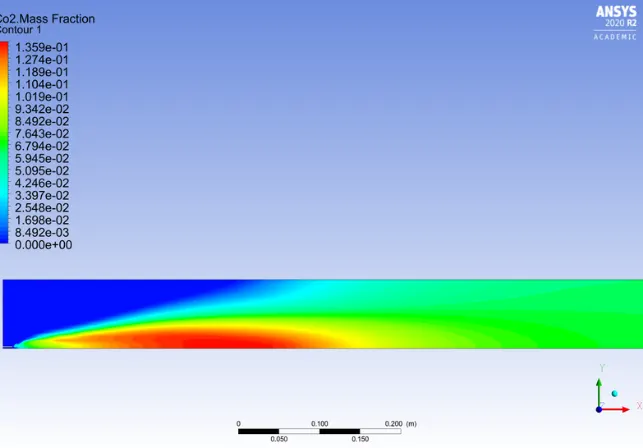
b. CO2 contour and mass fraction chart:
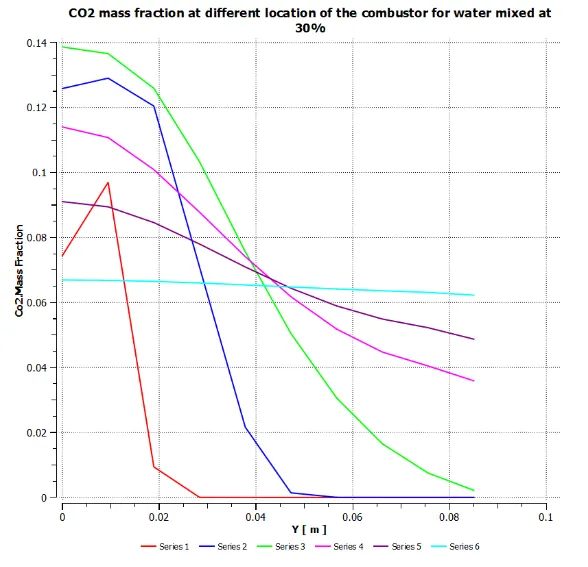
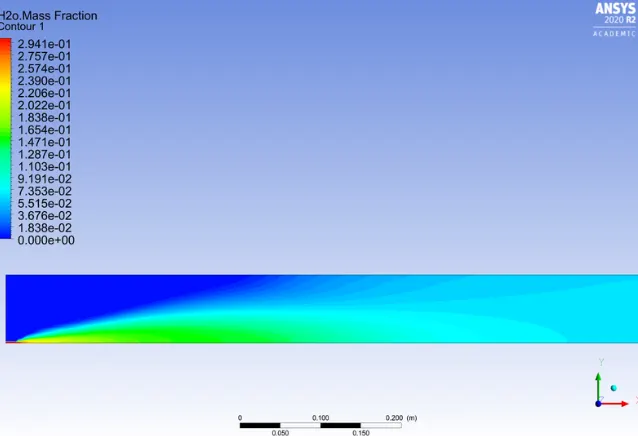
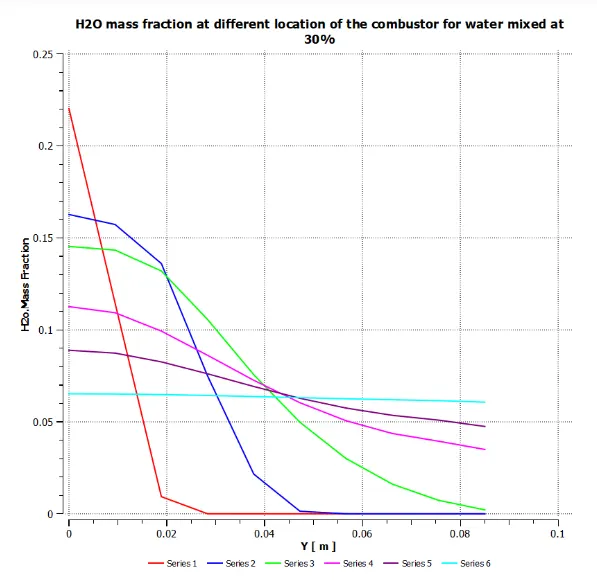
c. H2O contour and mass fraction chart:
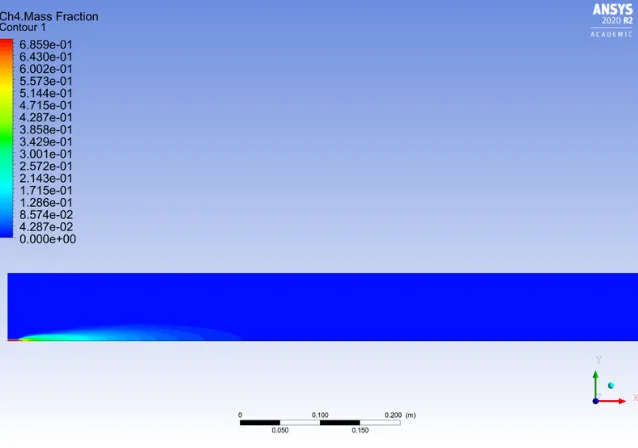
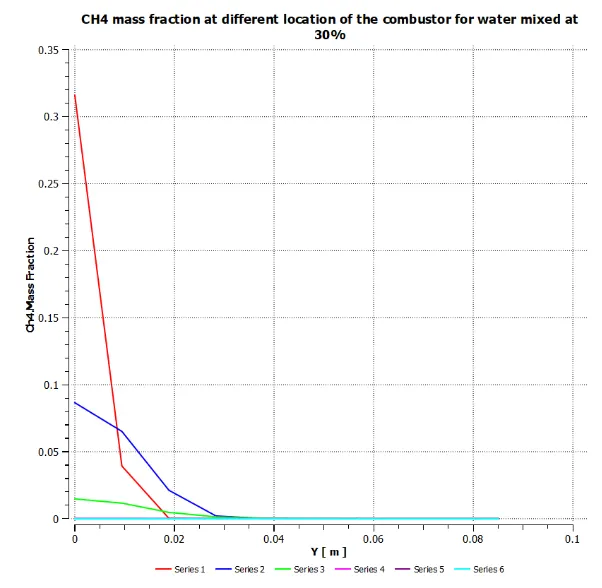
d. CH4 contour and mass fraction:
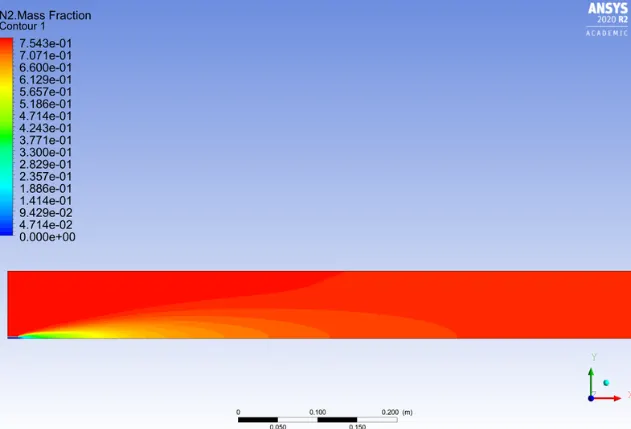
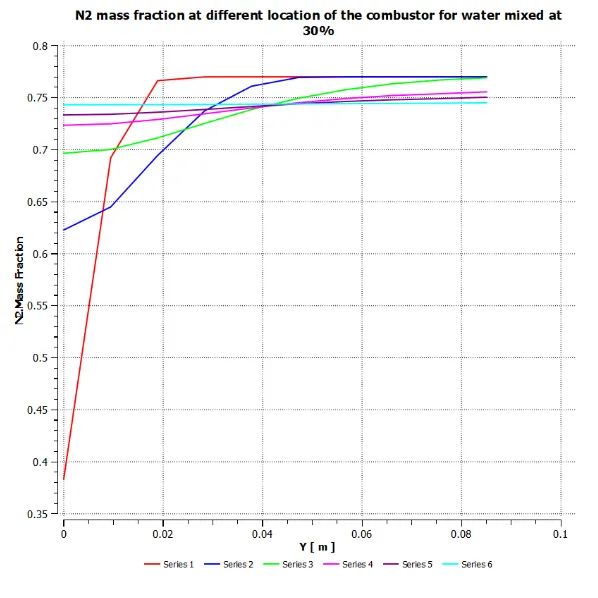
e. N2 contour and mass fraction:
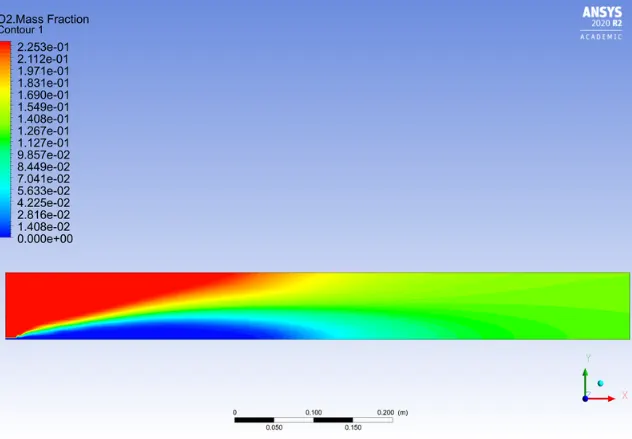
f. O2 contour and mass fraction:
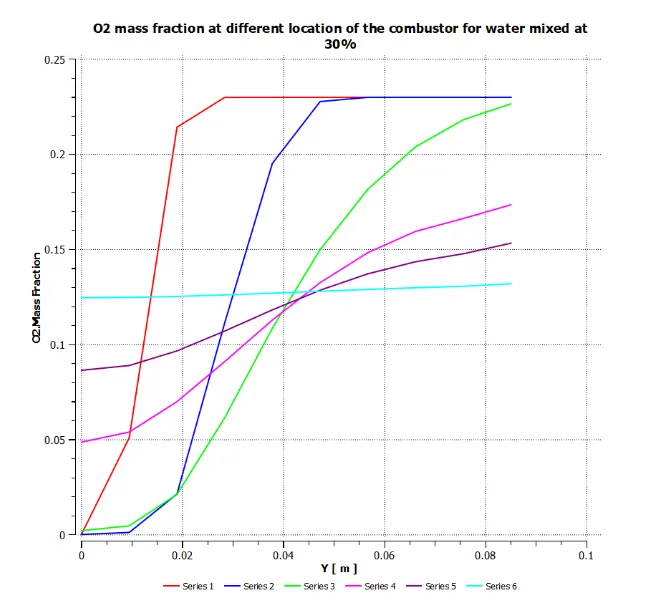
g. NOx emissions contour and mass fraction chart:
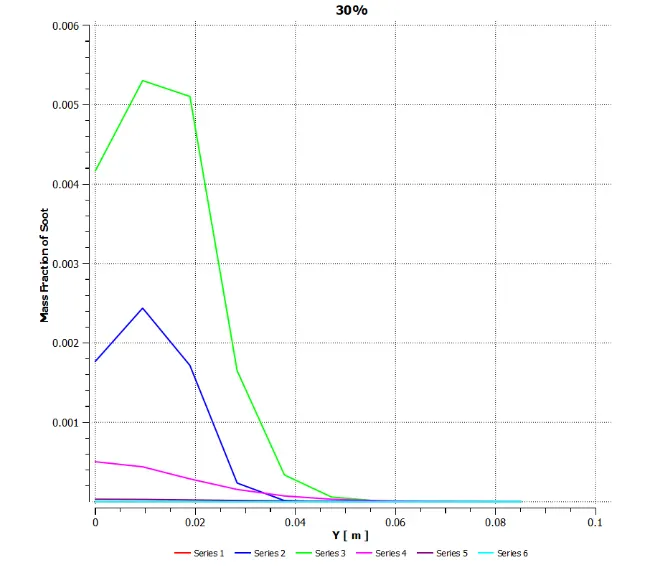
h. Soot formation contour and mass fraction chart:
Conclusion and discussions:
Comparing the NOx and soot levels for different water addition levels:
| Percentage of water addition (%) | The ratio of methane and water mixed (CH4:H2O) | Mass fraction of NOx emissions | Mass fraction of soot formations |
| 10 | 0.9:0.1 | 2.764e-04 | 3.7e-04 |
| 20 | 0.8:0.2 | 1.658e-04 | 2.94e-04 |
| 30 | 0.7:0.3 | 8.495e-04 | 1.22e-04 |