Week 10 - Simulating Combustion of Natural Gas.
Aim : To simulate combustion of natural gas.
Objective :
- Perform a combustion simulation on the combustor model and plot the variation of the mass fraction of the different species in the simulation using line probes at different locations of the combustor.
- Add the water content in the fuel from 5% to 30% by mole and observe the effect of it on the results.
Pre-processing :
Geometry :
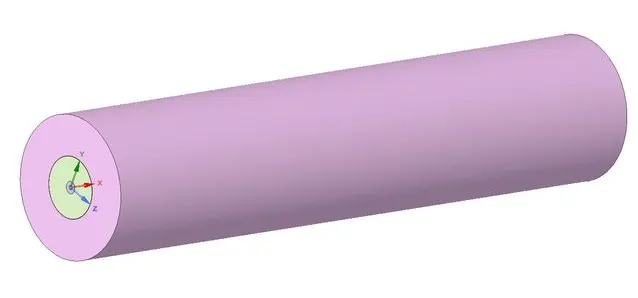
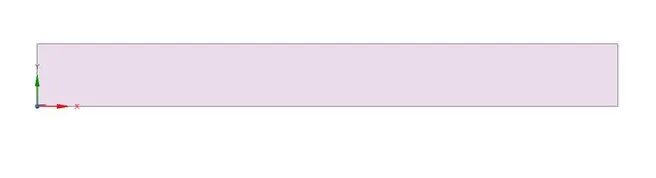
- The Geometry was initially imported onto space-claim as 3-D model
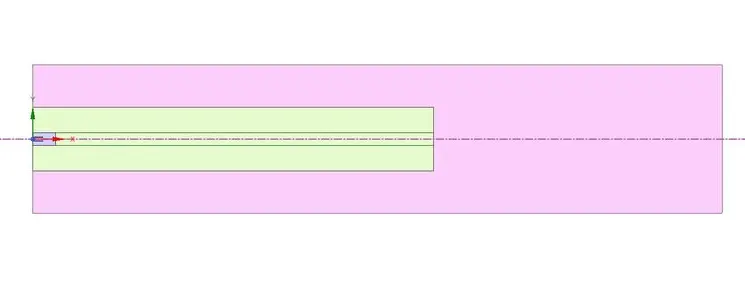
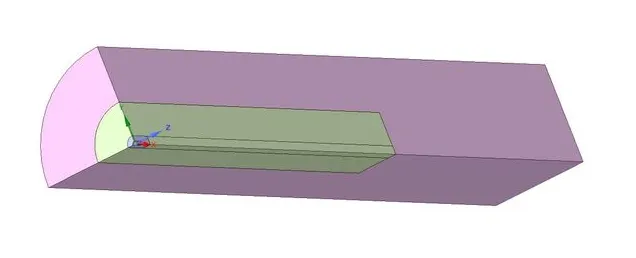
- Now, the body was split symmetrically by using split body command.
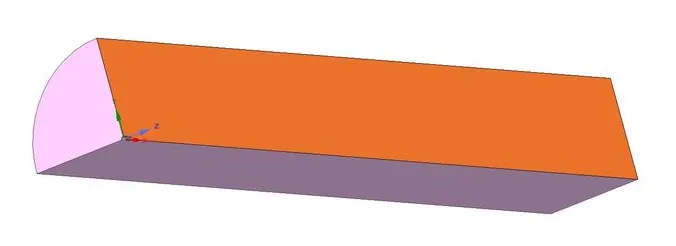
- Now the face was copied into new space-claim window and saved as a geometry.
Meshing :
- Create named selection
- Air-inlet
- Fuel-inlet
- Axis
- Outlet
- Walls
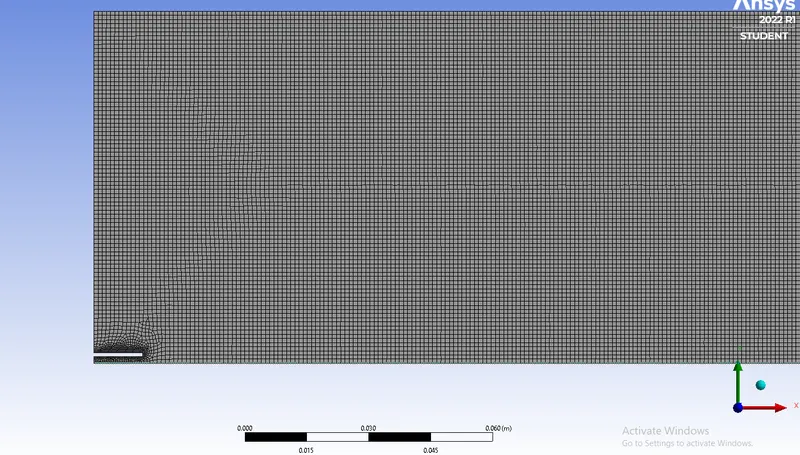
- The 2-D geometry was meshed by using Quadrilateral method.
- A body sizing was given to the geometry with and elements size of 1 mm.
- An edge sizing was given to the fuel inlet region with increased number of divisions.
Fluent Setup :
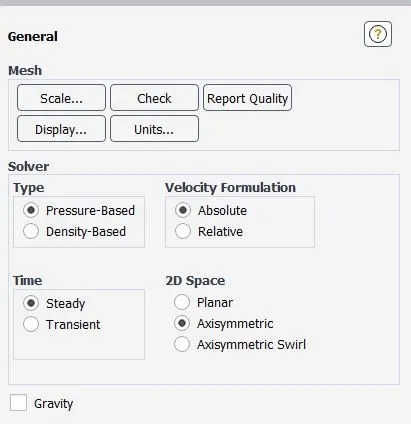
- General
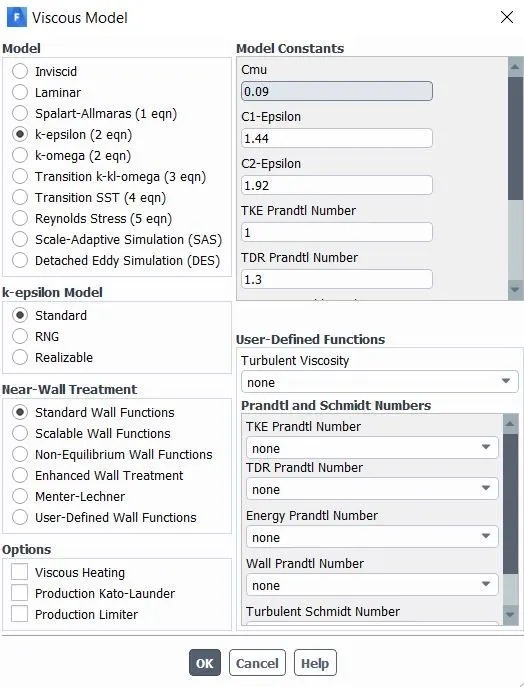
- Viscous model
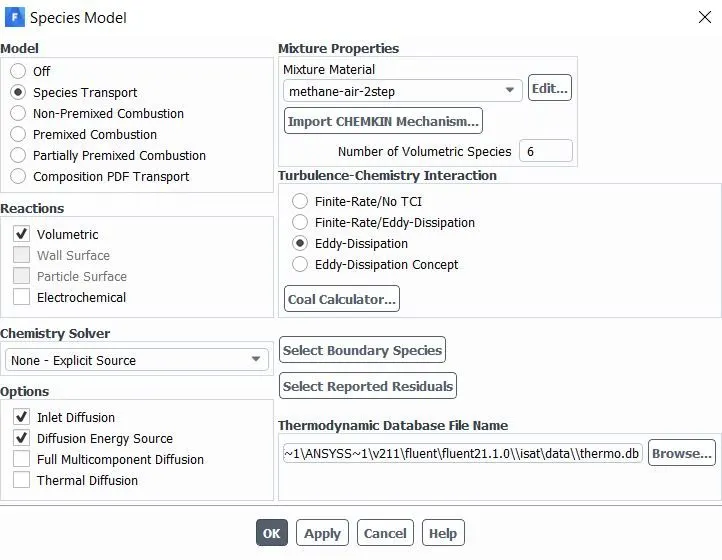
- Species setup
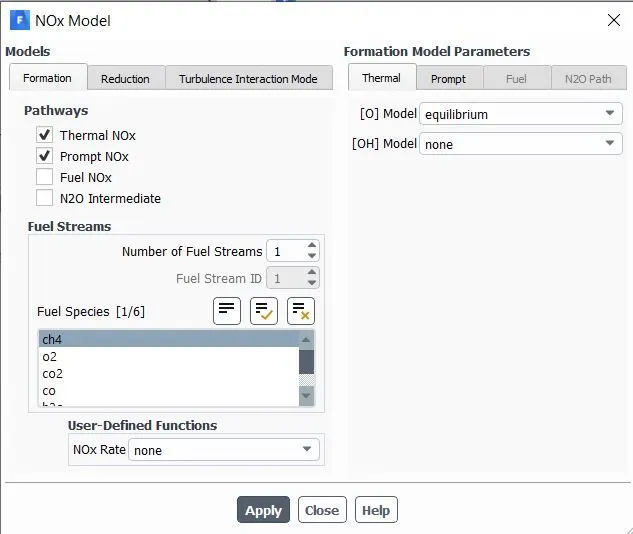
- NOx model
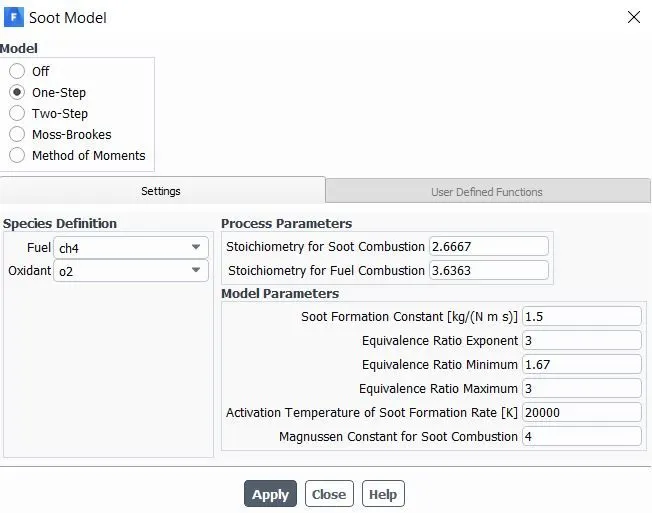
- Soot model
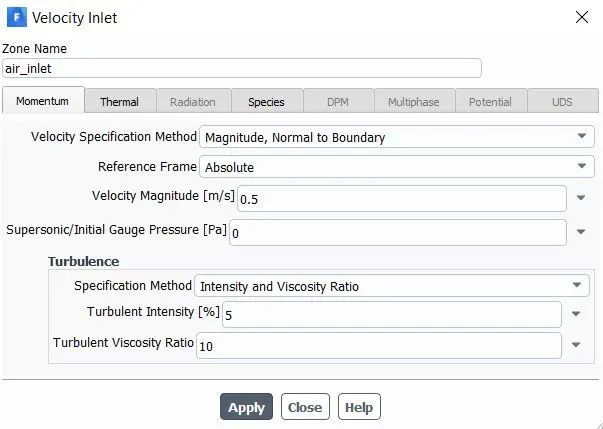
- Boundary Conditions
- Air inlet :
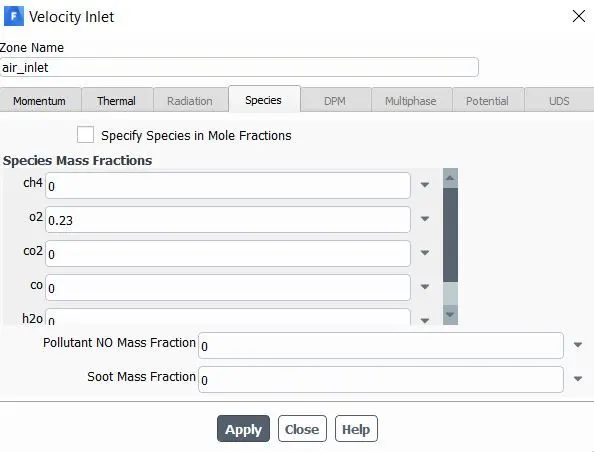
- Fuel inlet :
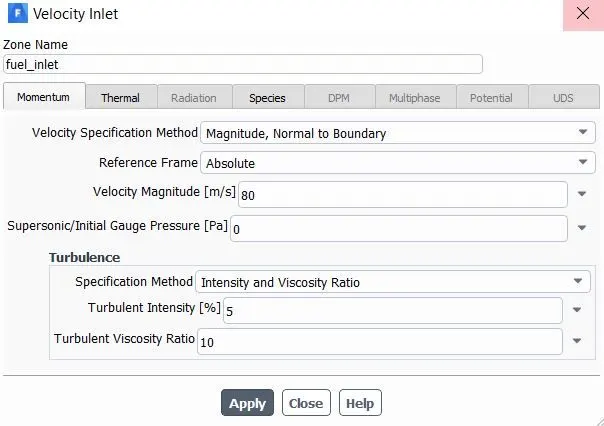
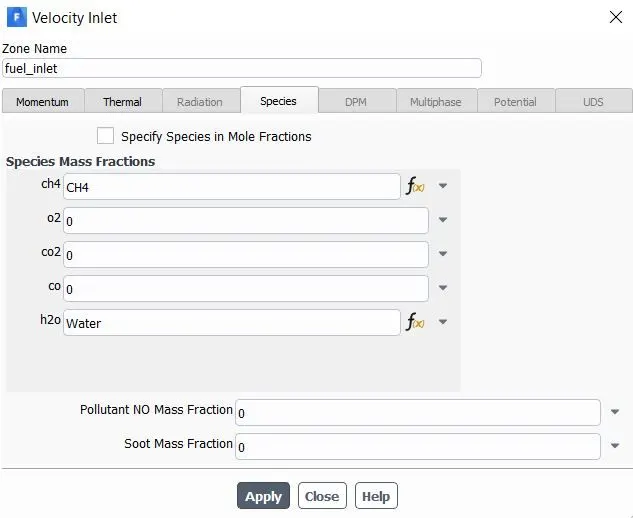
- After that initialize with Hybrid Initialization.
- Create report defination for Temperature contours, Mass fraction of Nox and Soot formation.
- Make sure that 'Create Output Parameter' must be enabled.
Results :
Part A : Perform a combustion simulation on the combustor model and plot the variation of the mass fraction of the different species in the simulation using line probes at different locations of the combustor.
Residuals :
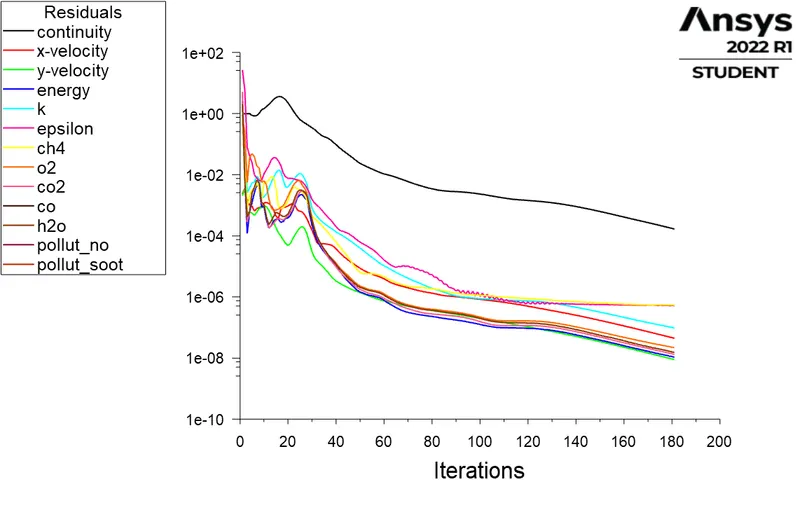
Temperature contour :
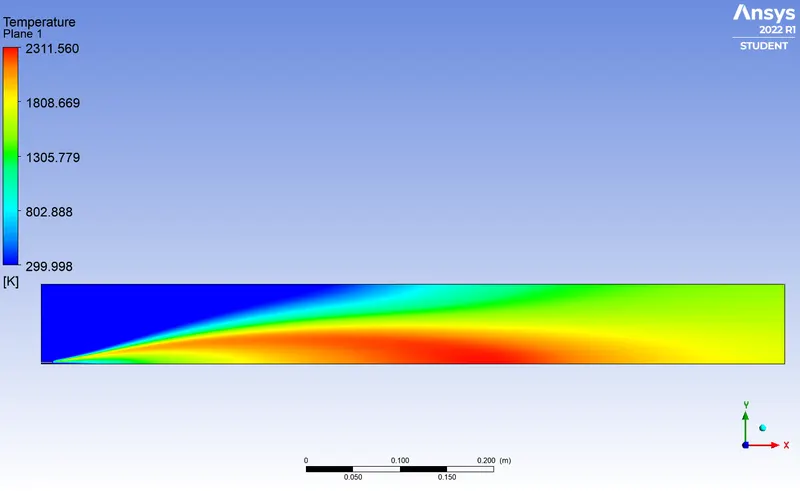
Plot of CO2 :
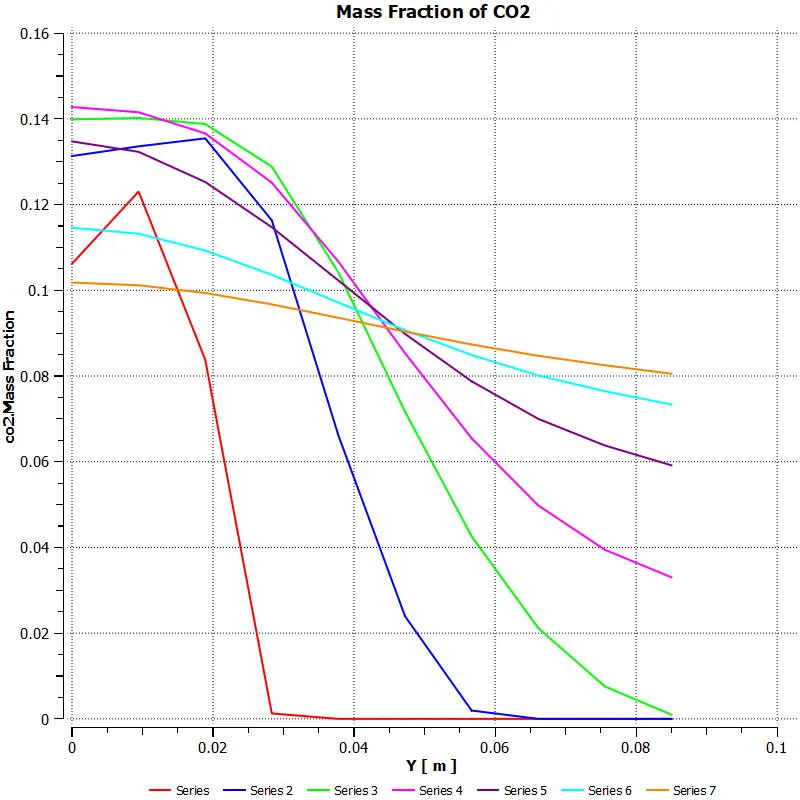
Mass fraction of CO2 :
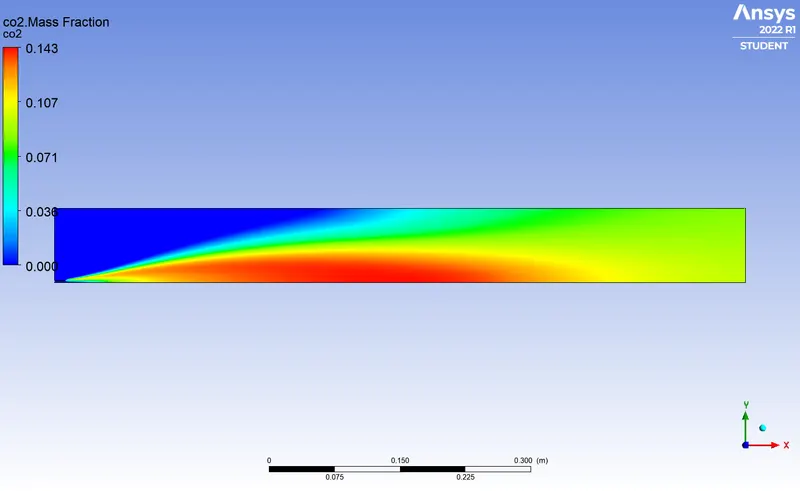
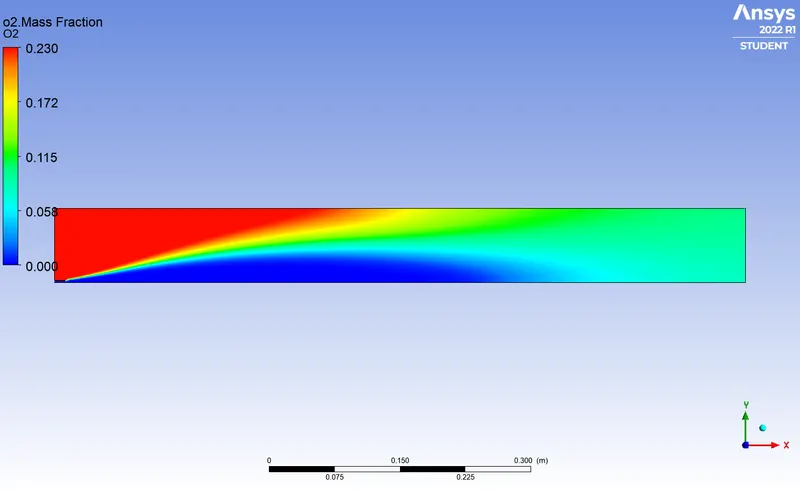
Plot of O2 :
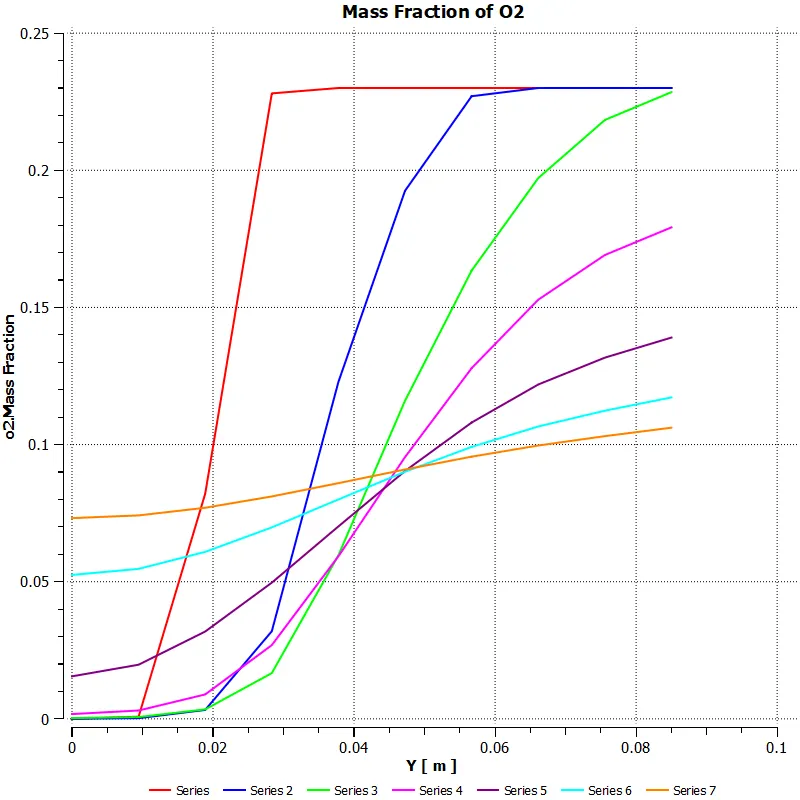
Mass fraction of O2 :
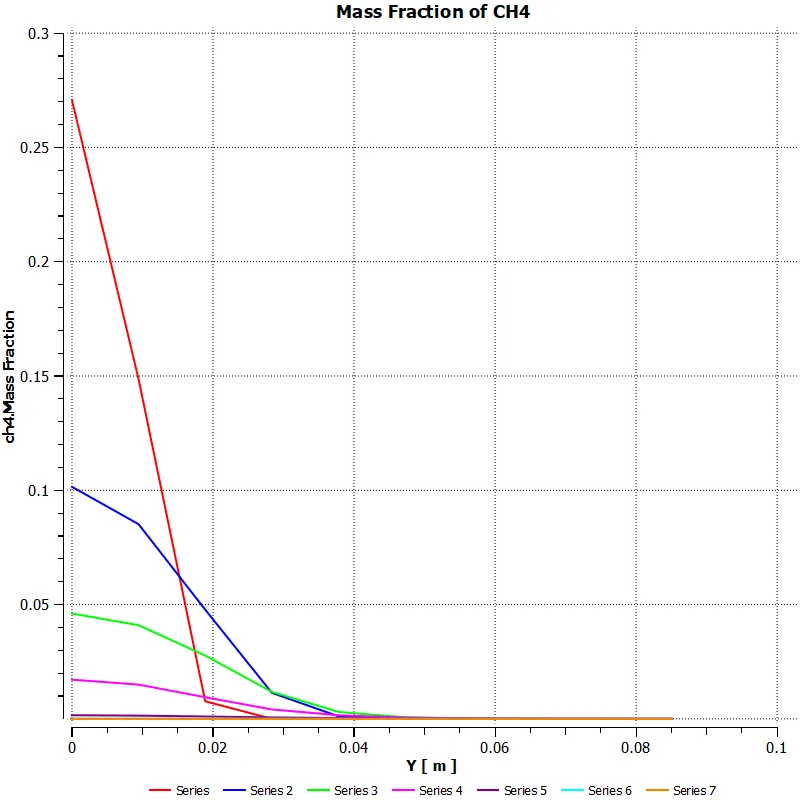
Plot of CH4 :
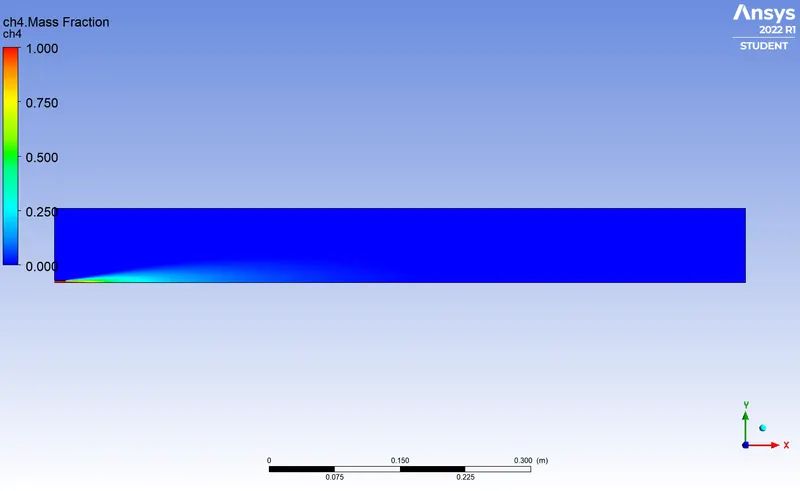
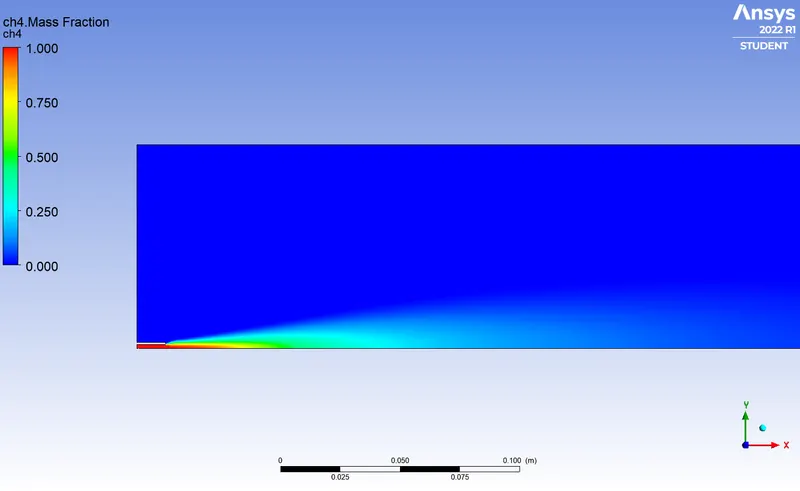
Mass fraction of CH4 :
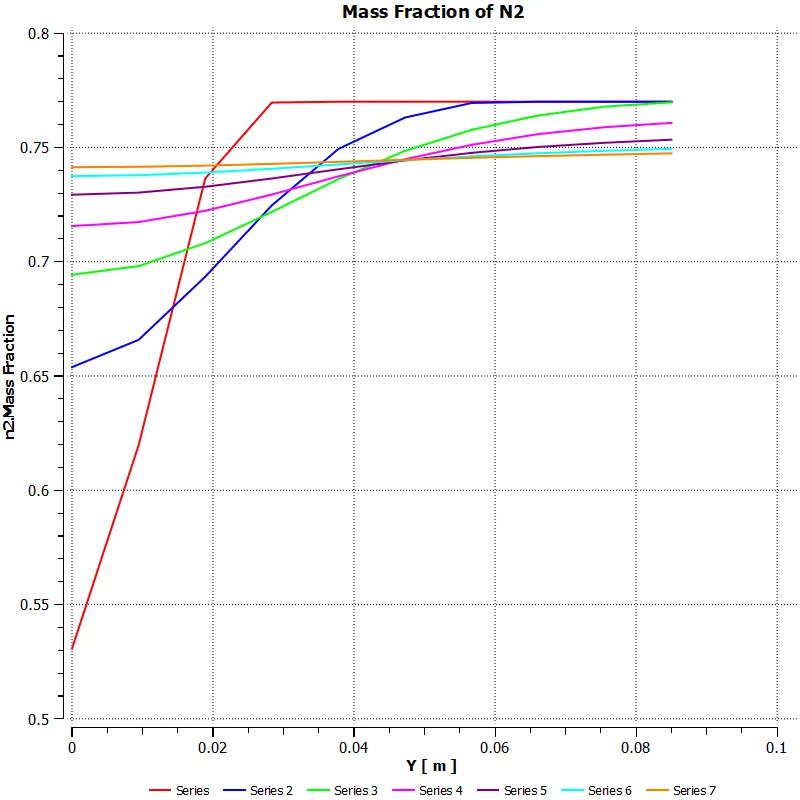
Plot of N2 :
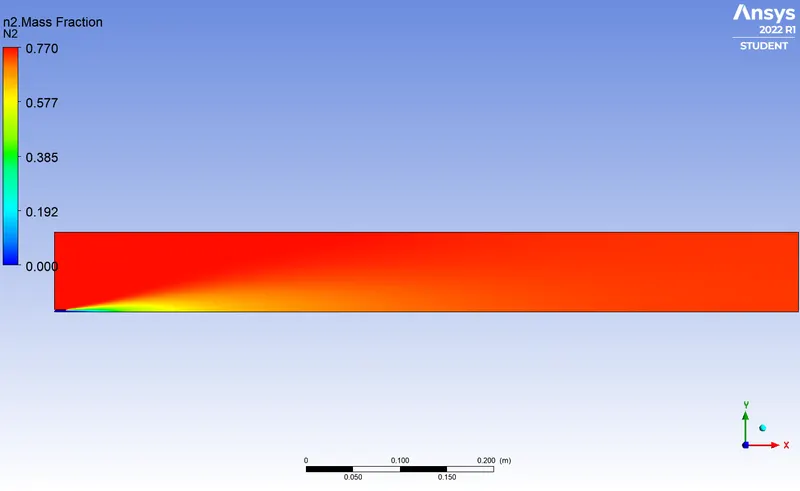
Mass fraction of N2 :
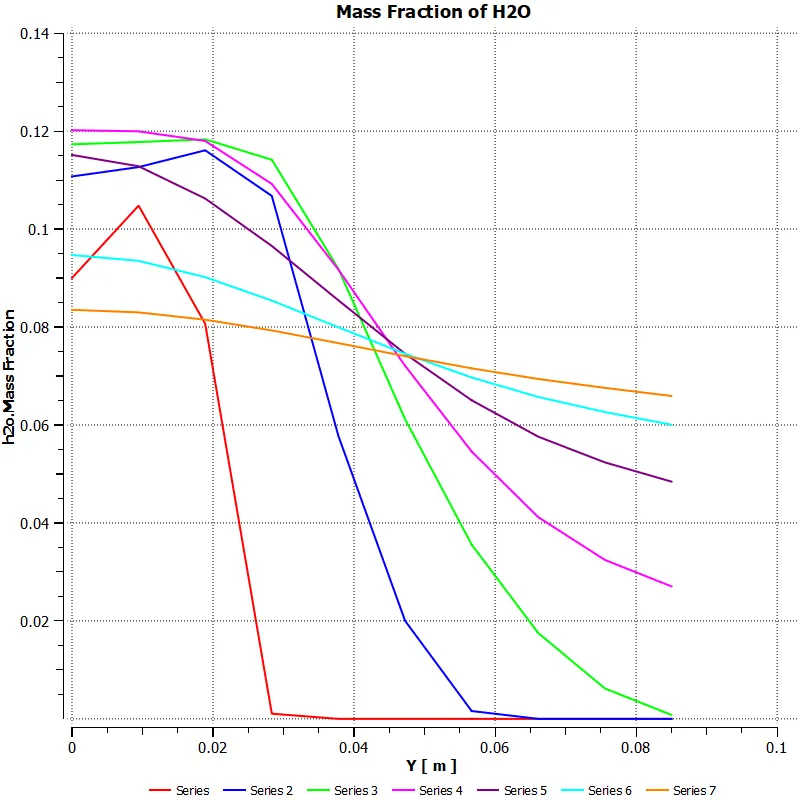
Plot of H2O :
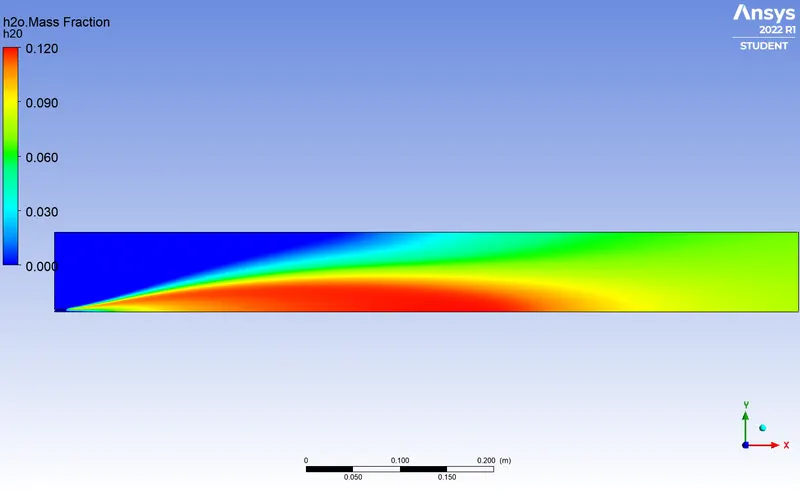
Mass fraction of H2O :
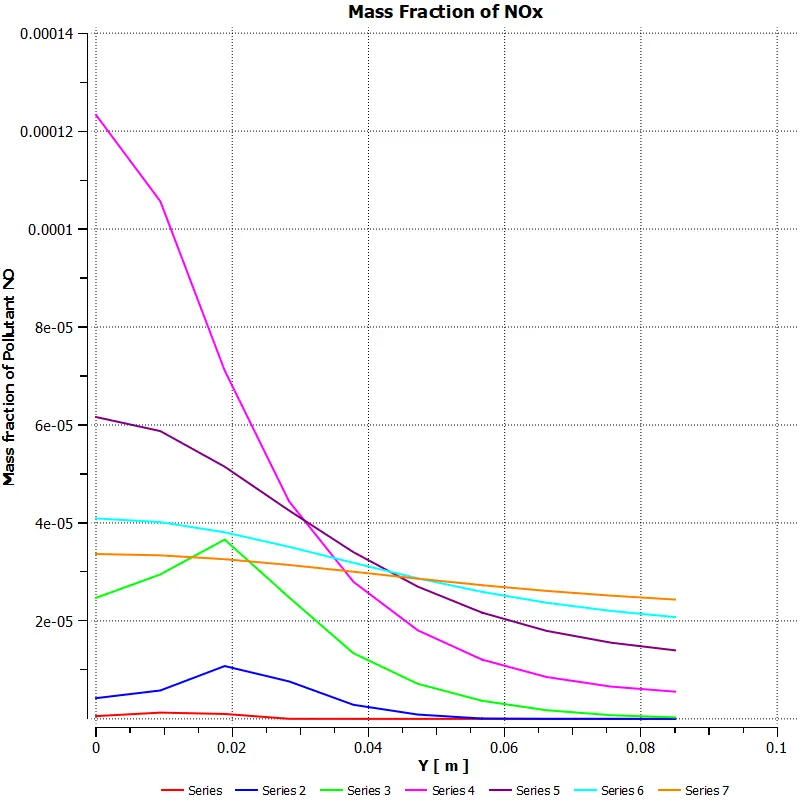
Plot of NOx :
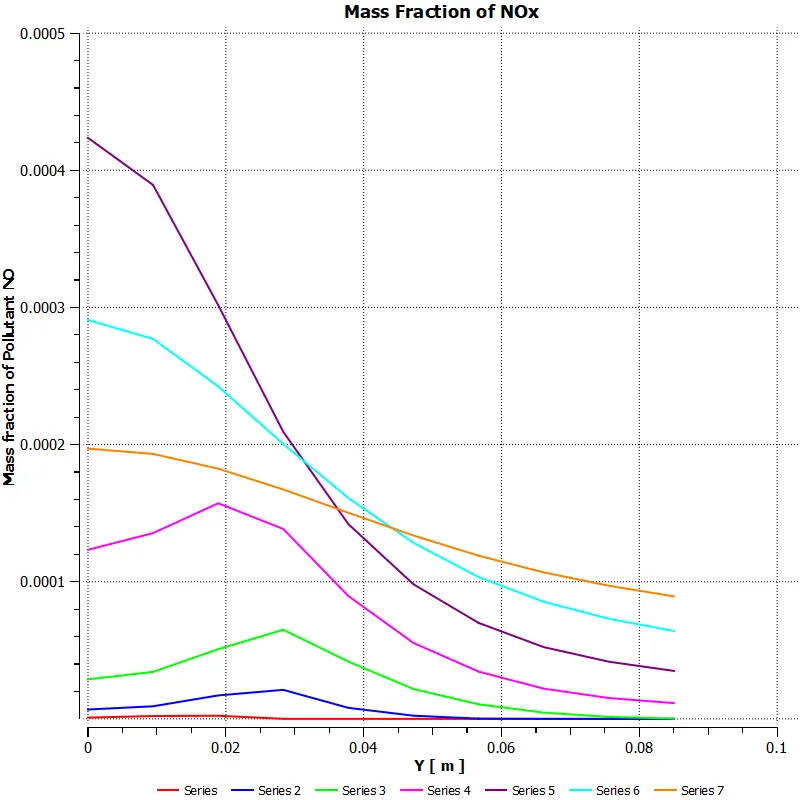
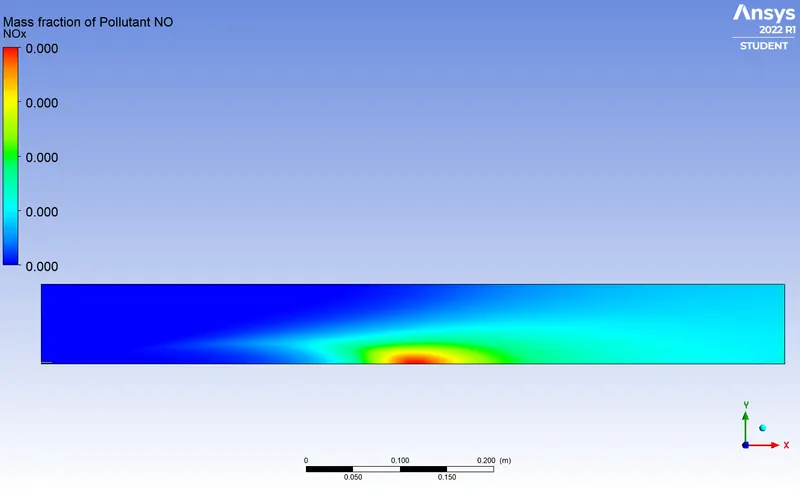
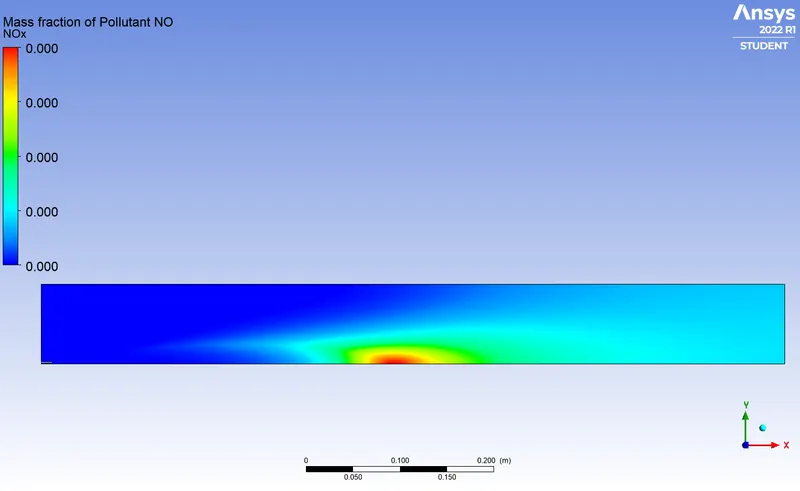
Mass fraction of NOx :
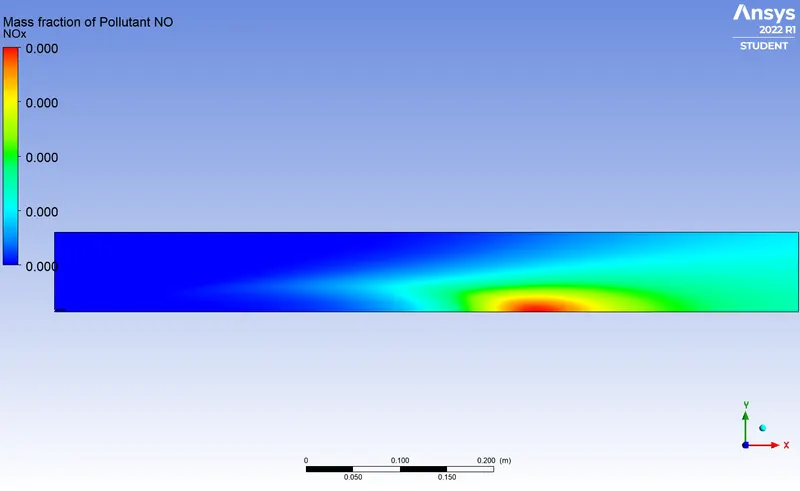
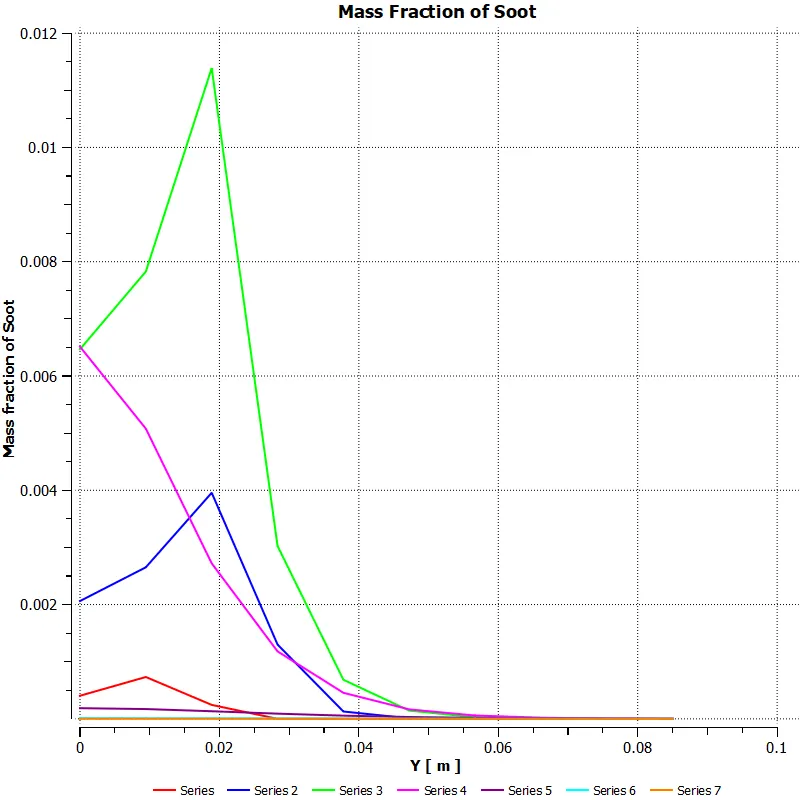
Plot of soot :
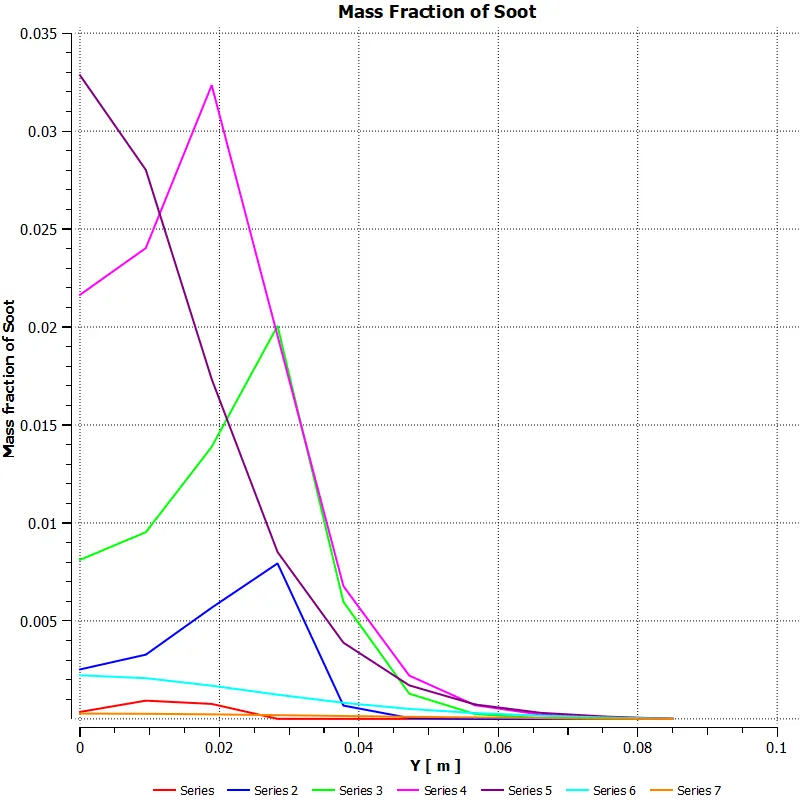
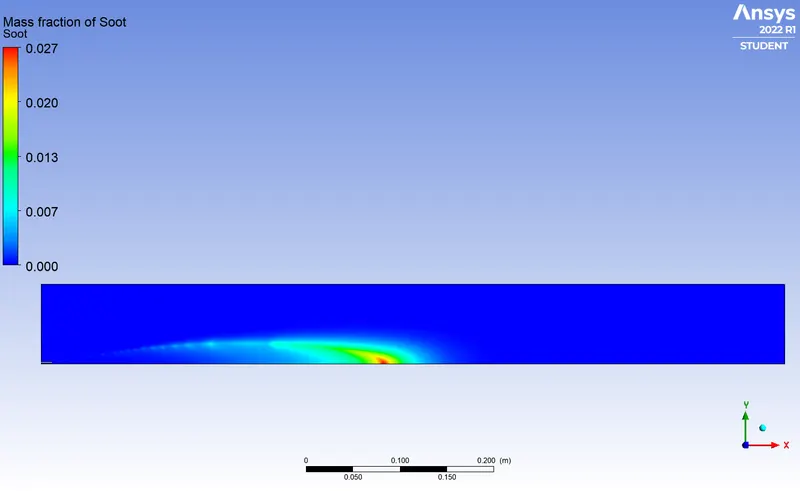
Mass fraction of soot :
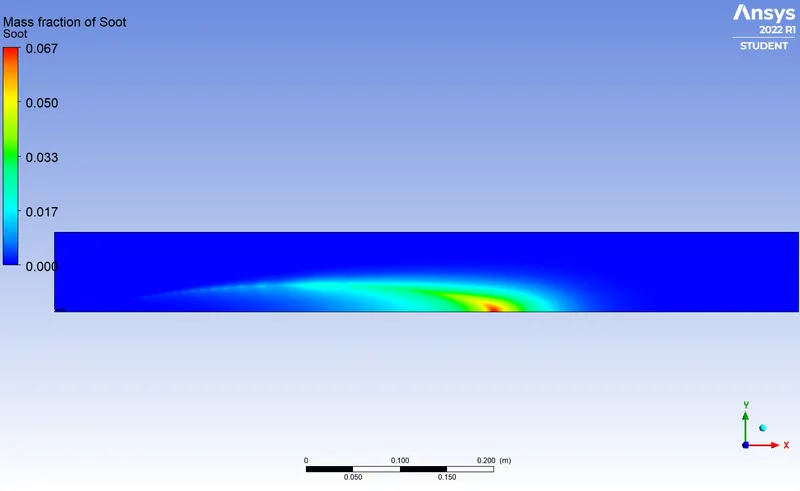
Part B : Add the water content in the fuel from 5% to 30% by mole and observe the effect of it on the results.
|
Case |
Percentage by mole of CH4 |
Percentage by mole of water |
|
1 |
95% |
5% |
|
2 |
85% |
15% |
|
3 |
75% |
25% |
|
4 |
70% |
30% |
Parametric study approach :
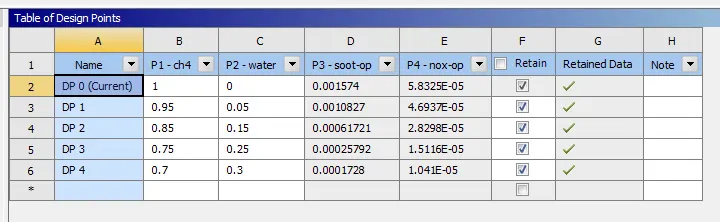
CASE 1 :
Percentage by mole of water inlet : 5%
Percentage by mole of CH4 : 95%
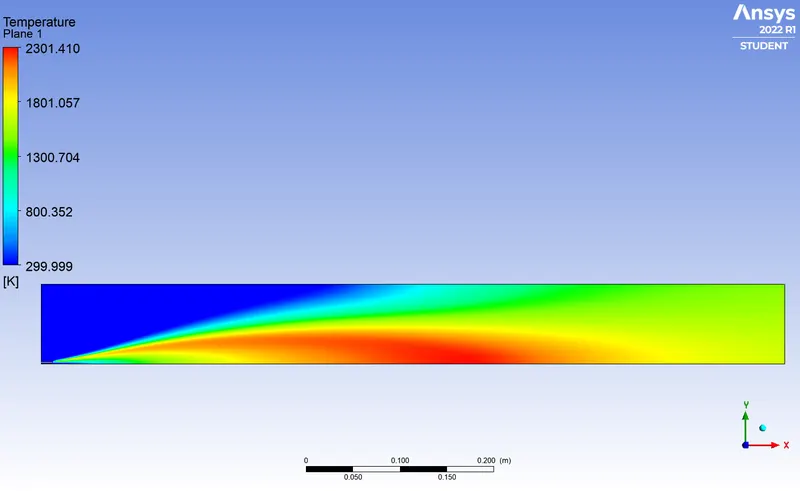
Temperature contour :
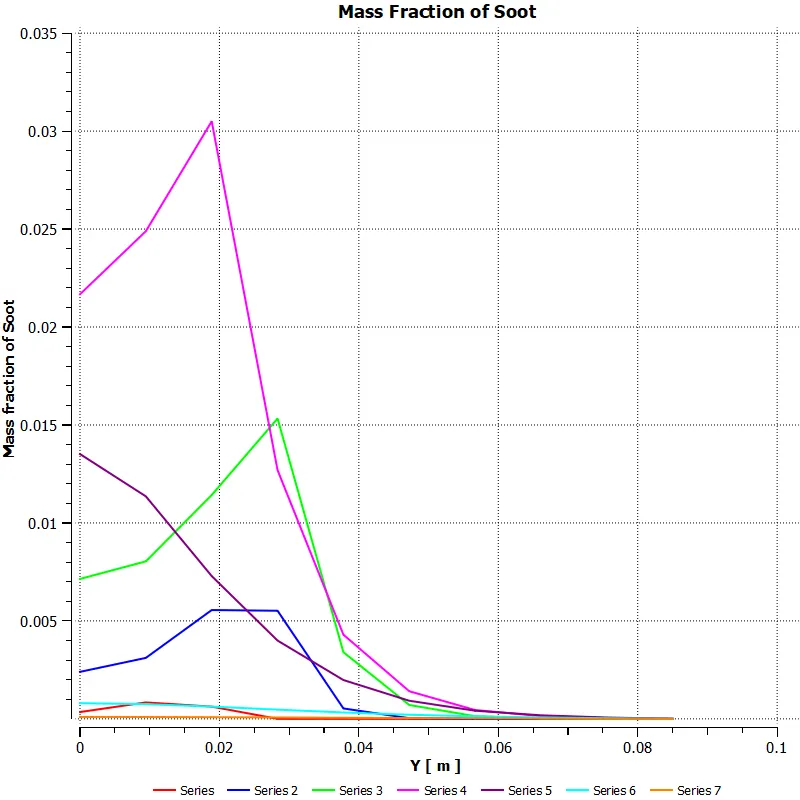
Plot of soot :
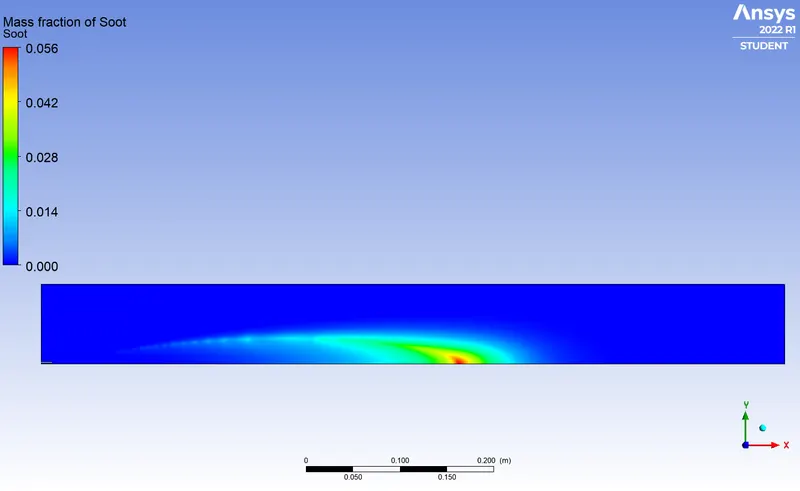
Mass fraction of soot :
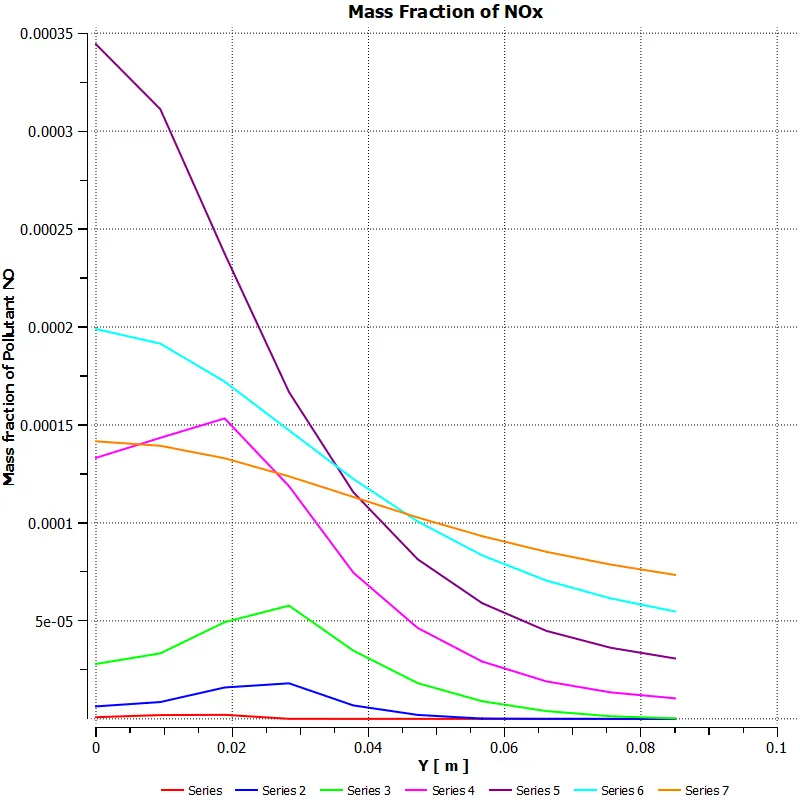
Plot of NOx :
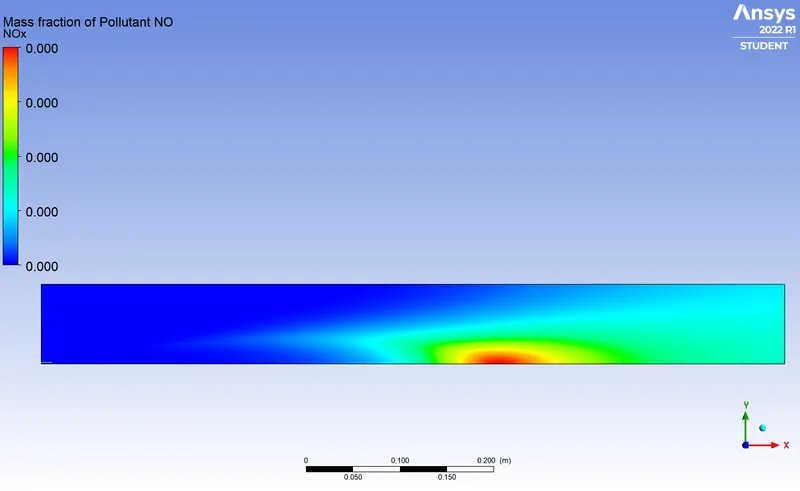
Mass fraction of NOx :
CASE 2 :
Percentage by mole of water inlet : 15%
Percentage by mole of CH4 : 85%
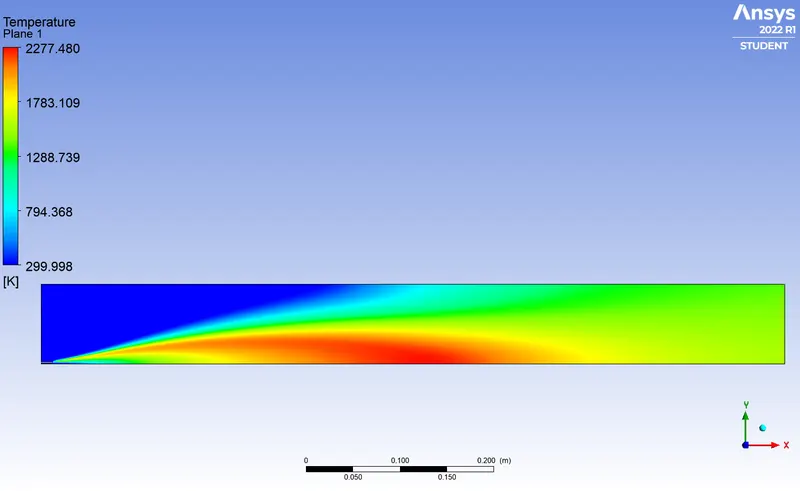
Temperature contour :
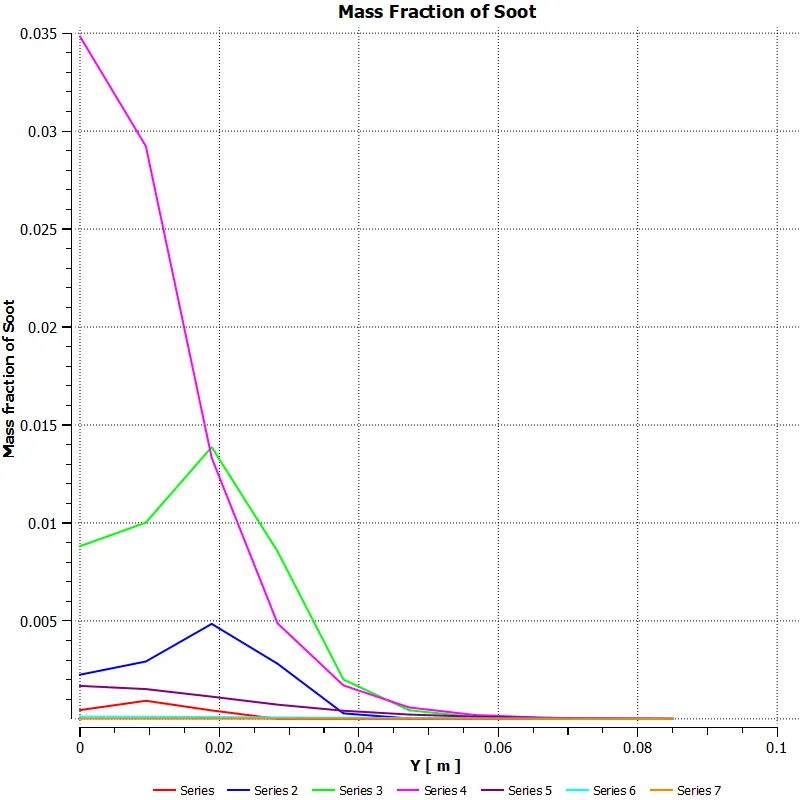
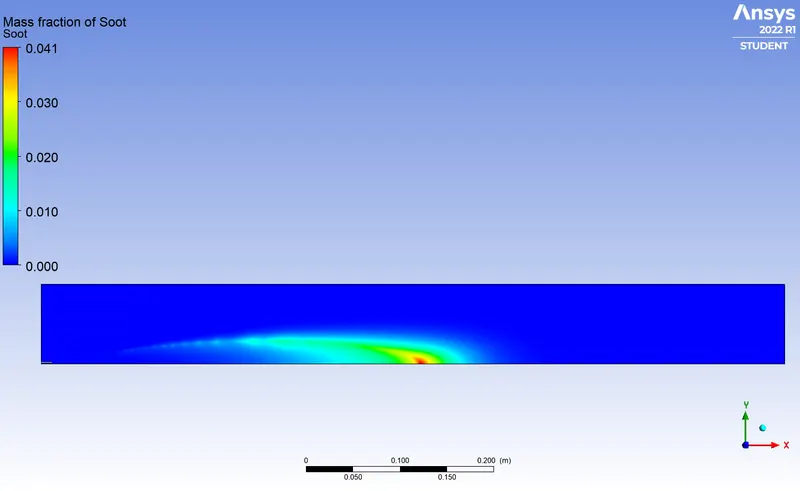
Plot of soot :
Mass fraction of soot :
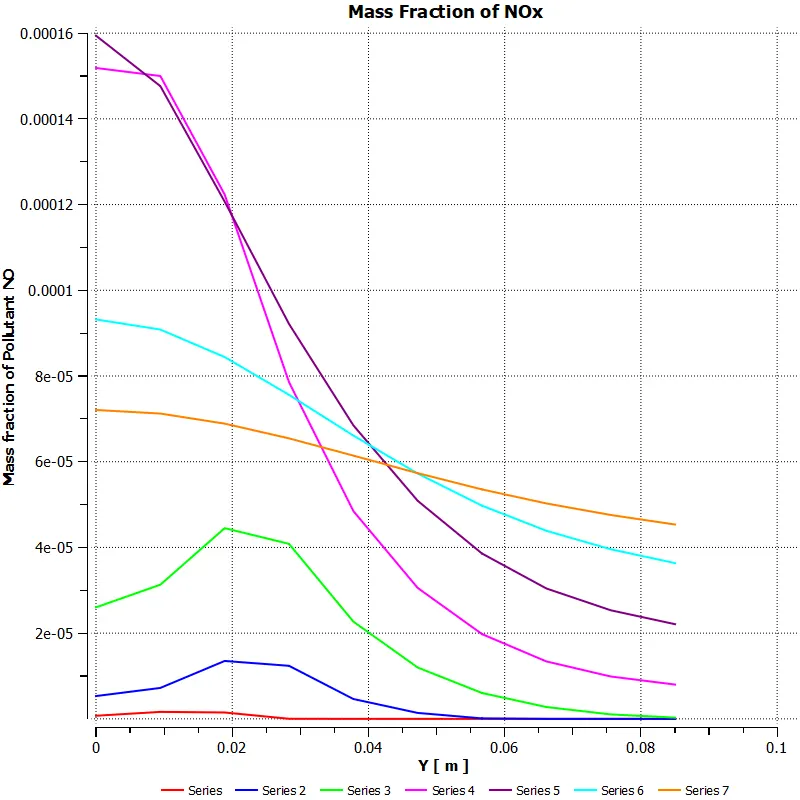
Plot of NOx :
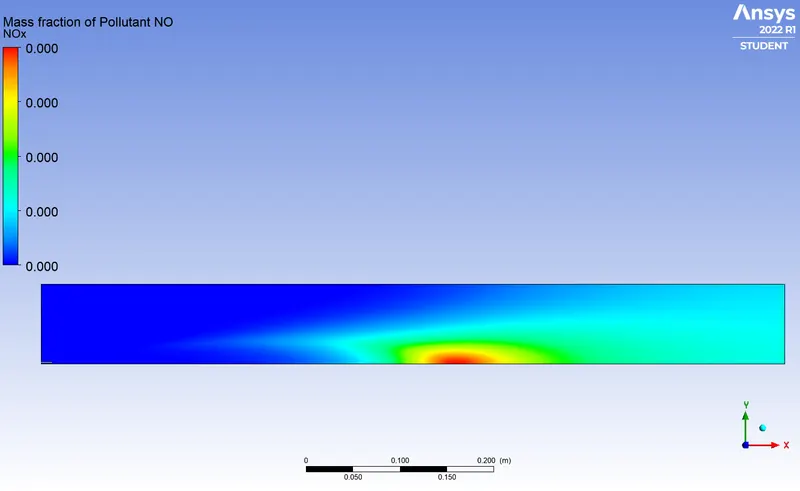
Mass fraction of NOx :
CASE 3 :
Percentage by mole of water inlet: 25%
Percentage by mole of CH4: 75%
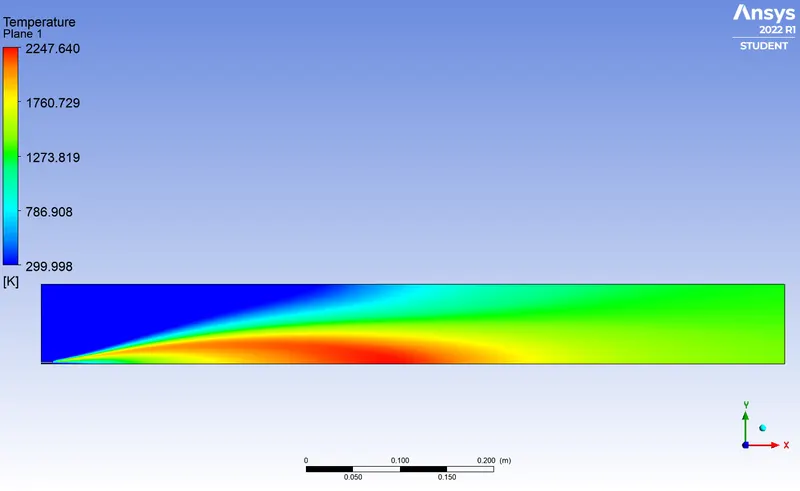
Temperature contour :
Plot of soot :
Mass fraction of soot :
Plot of NOx :
Mass fraction of NOx :
CASE 4 :
Percentage by mole of water inlet : 30%
Percentage by mole of CH4 : 70%
Temperature contour :
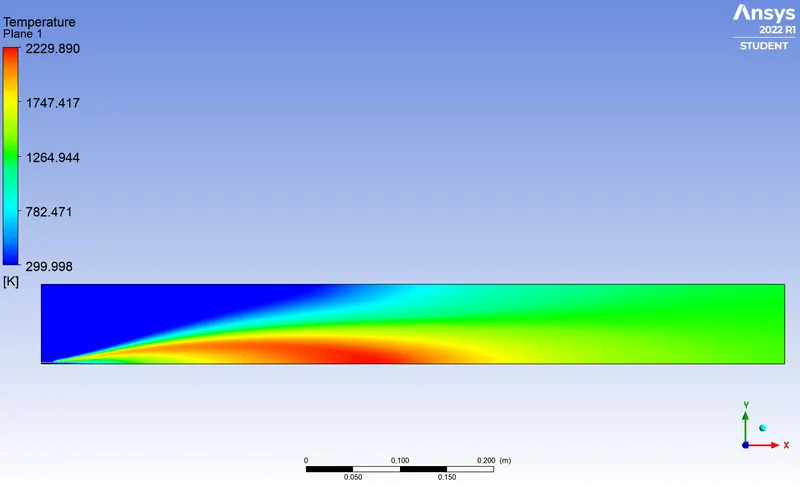
Plot of soot :
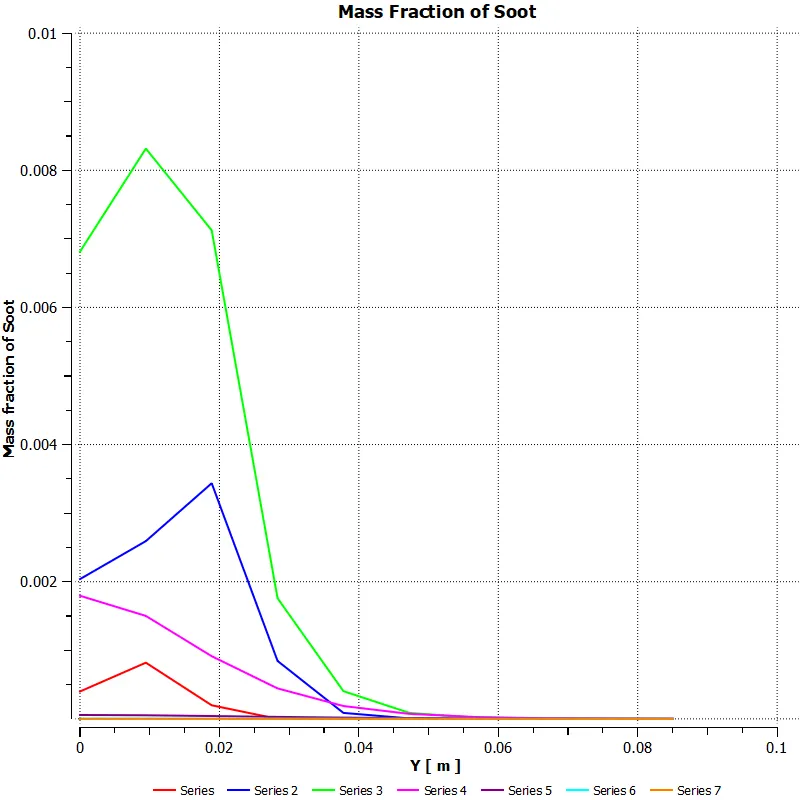
Mass fraction of soot :
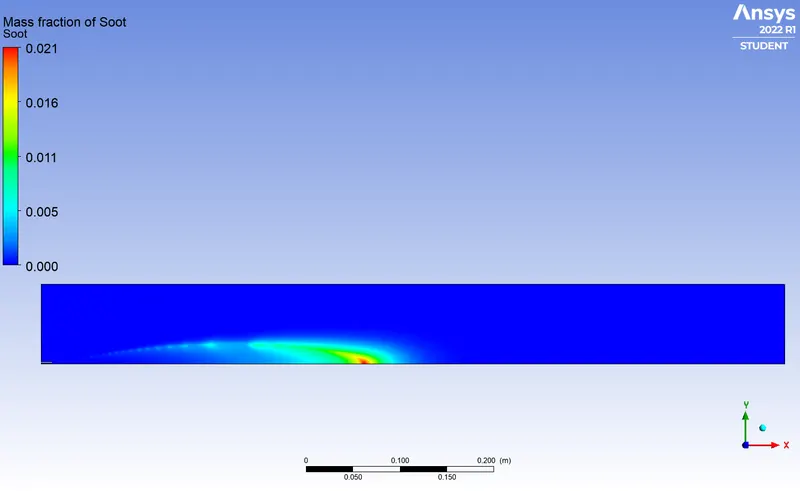
Plot of NOx :
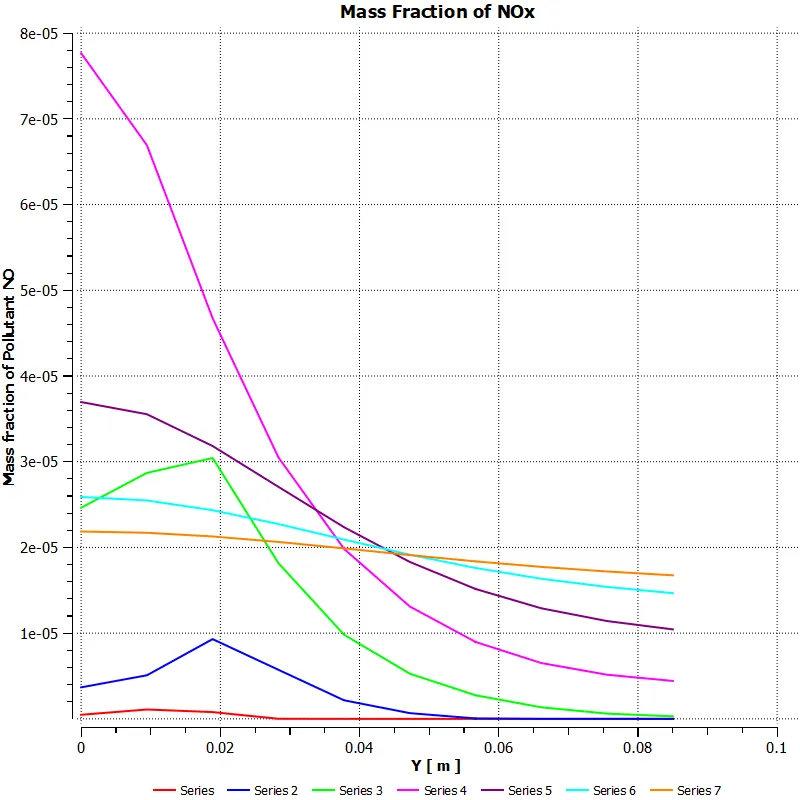
Mass fraction of NOx :
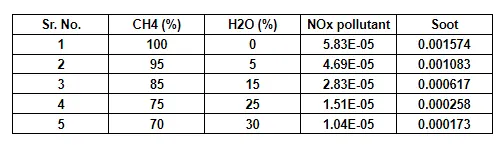
Variation of outlet Soot and NOx with increasing H2O :
Parametric method :
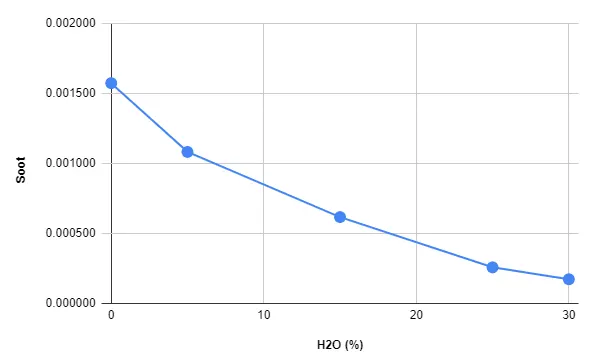
Soot Vs H2O (%) :
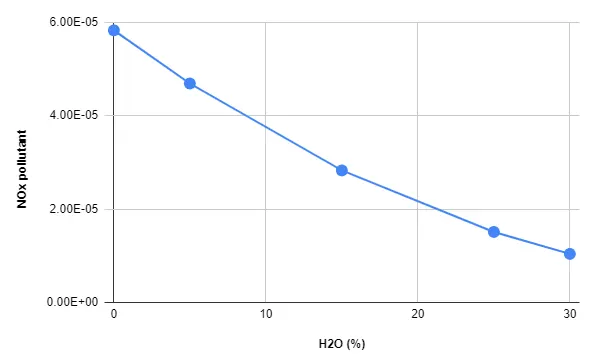
NOx pollutant Vs H2O (%) :
Conclusion:
- From the plots it can be inferred that the pollutants NOx and soot formation is decreasing by increasing percentage moles of water in the mixture.
- With addition of water we can see that the maximum temperature is decreasing, this delays the combustion which in turn help to increase the efficiency of mixing. Since the combustion take place effectively the amount of NOx formed reduces since there is no oxygen left to combine with nitrogen.
- Soot is a mass of impure carbon particles resulting from the incomplete combustion of hydrocarbons. A complete combustion take place as a result of efficient mixing of the fuel and hence no oxyggen and fuel are present after combustion to produce soot.