Week 10 - Simulating Combustion of Natural Gas.
Aim: In this simulation we are using combustion model , For a methane fuel and air . The mass fractions of soot and other products was observed at the outlet by varying amount of water composition in the fuel .
Introduction: Combustion is the chemical reaction which takes place between the fuel in the presence of the oxidizer air. Methane is used as the fuel in the simulation and the combustion is started without the aid of ignition , by using eddy dissipation.
Geometry:
In this combustion model a three dimension cylinder is converted into an surface just to reduce the computational capacity of the machine, and 2d meshing was undergone on the surface.
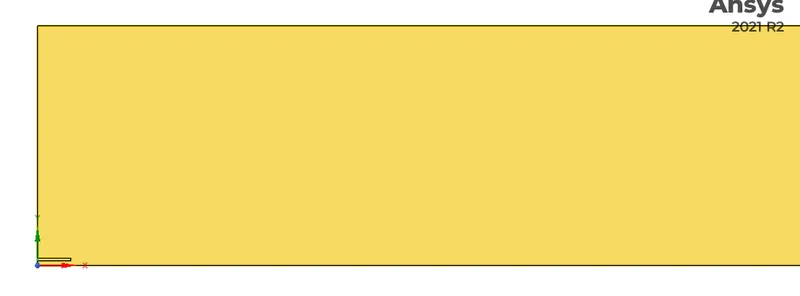
The cylinder is converted into a rectangle , by using the split command.
Mesh:
A mesh was generated by using the triangular elements for simplicity and faster computation
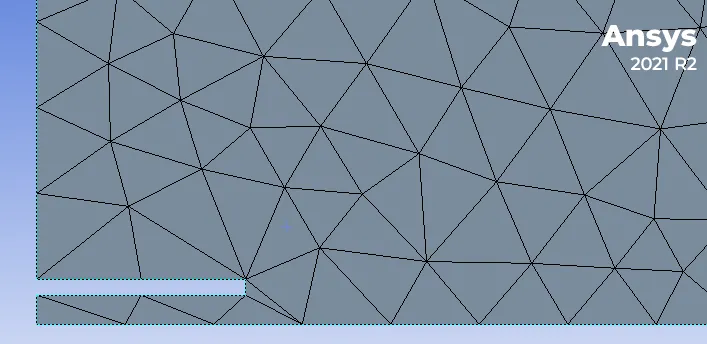
By giving the appropriate named selections we proceed to the next section After the meshing which is setting up the simulation in fluent.
Setup:
In this setup , a Steady state ,pressure based , Axisymmetric model was used , and for the turbulence a k epsilon model was used.
For species transport
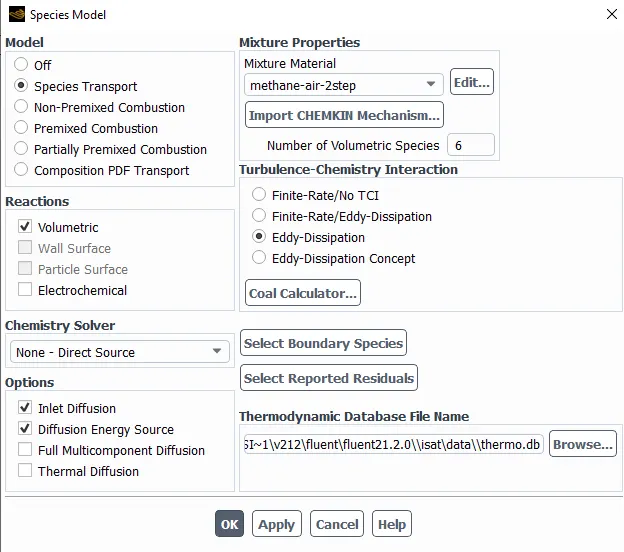
a methane -air 2 step material was selected with the eddy dissipation
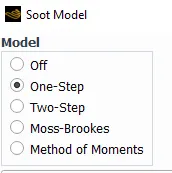
With a one step soot model
boundary conditions
air inlet
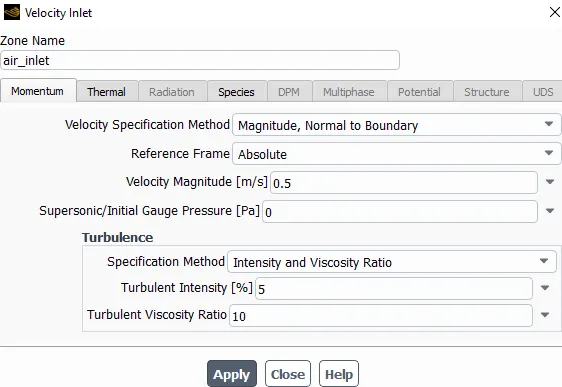
The air inlet is having a velocity of 0.5 m/s
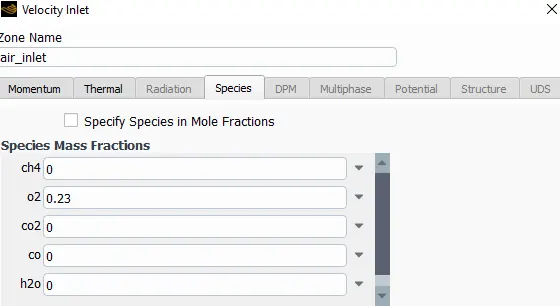
the oxygen composition of 23% is used in the air
fuel inlet
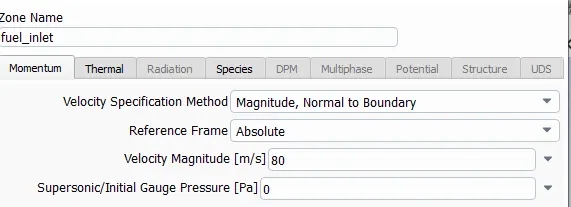
For fuel inlet velocity is of 80m/s
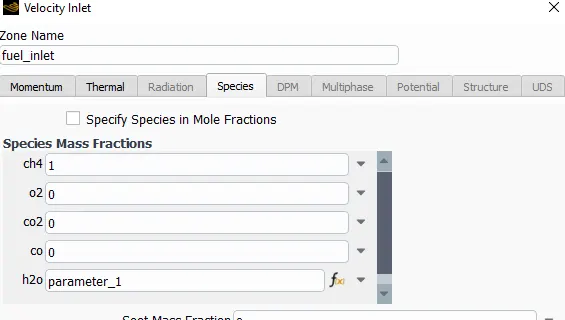
since we are using pure methane we have selected 100% as 1 , by adding h20 , which is used as a parameter for changing the h2o composition in fuel
the parameter chart is given below.
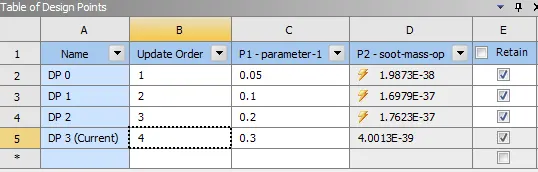
we have solved for 4 design points
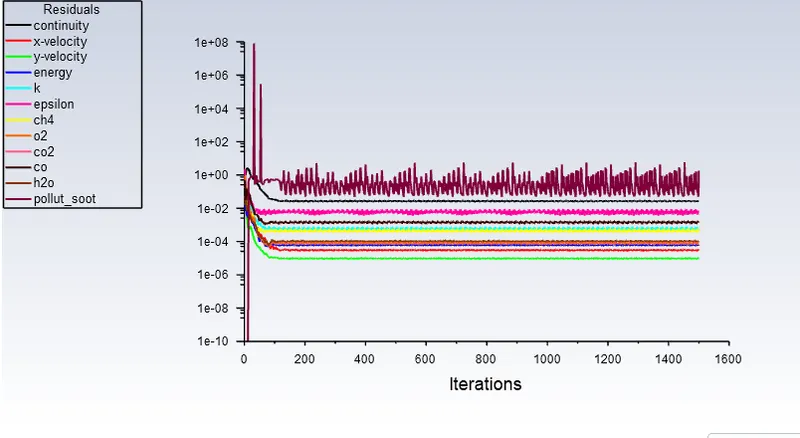
Residuals
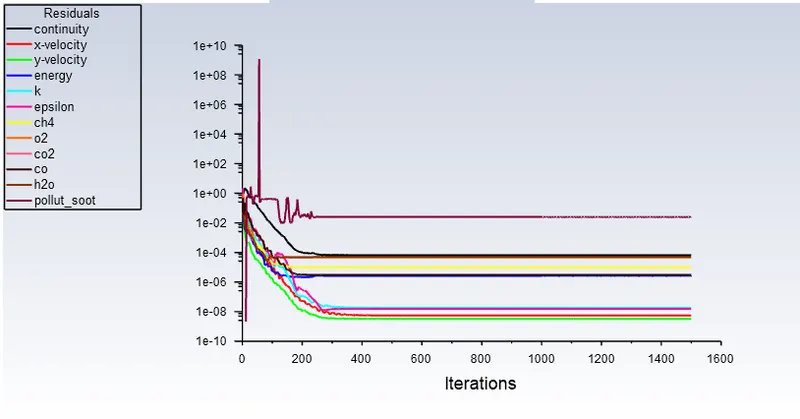
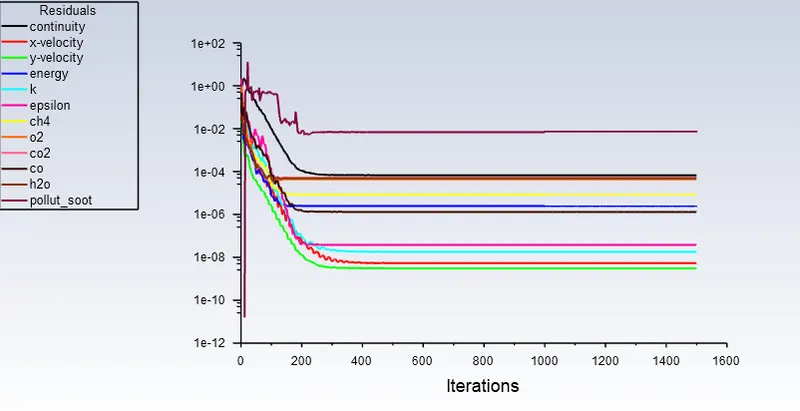
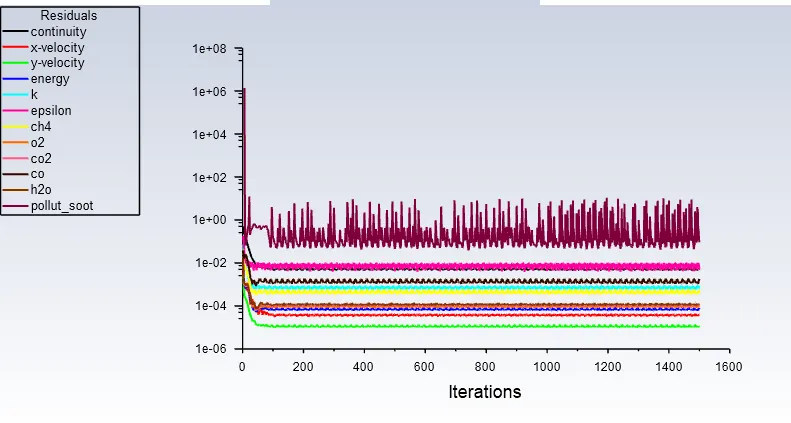
All the simulations were run until the convergence criteria is reached, and also observed the mass fraction of soot at the outlet.
with 5 % water
with 10 % water
with 20 % water
with 30 % water
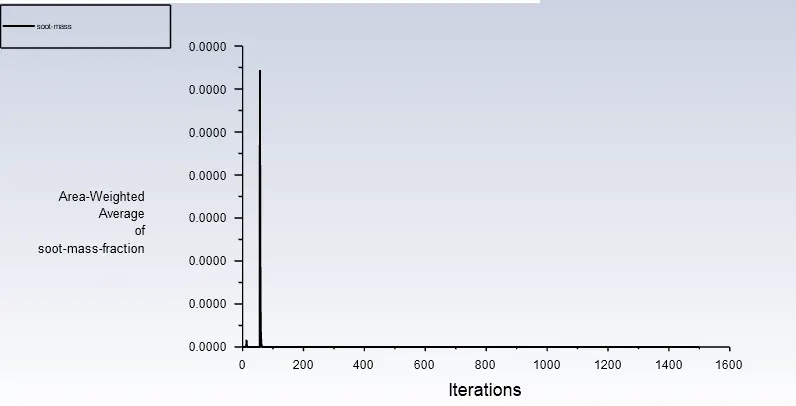
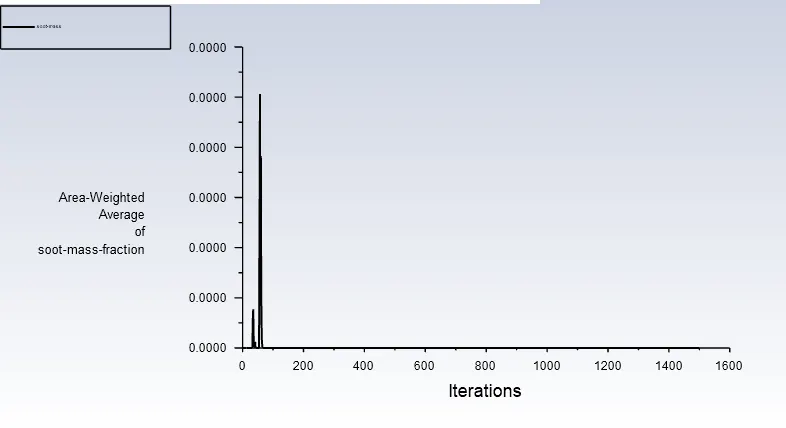
Soot Mass Fraction
with 5 % water
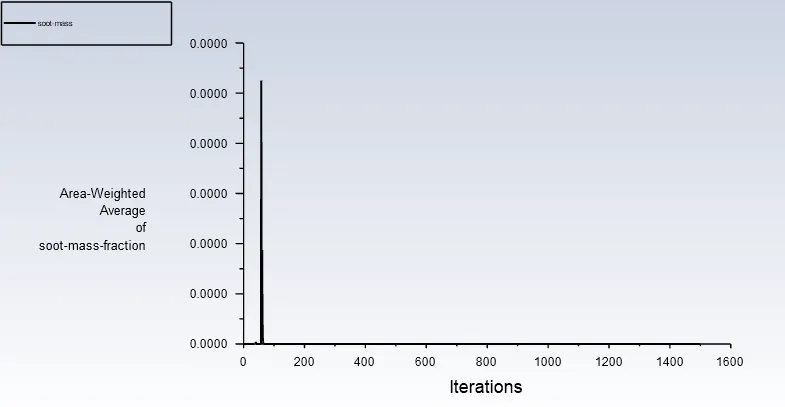
with 10 % water

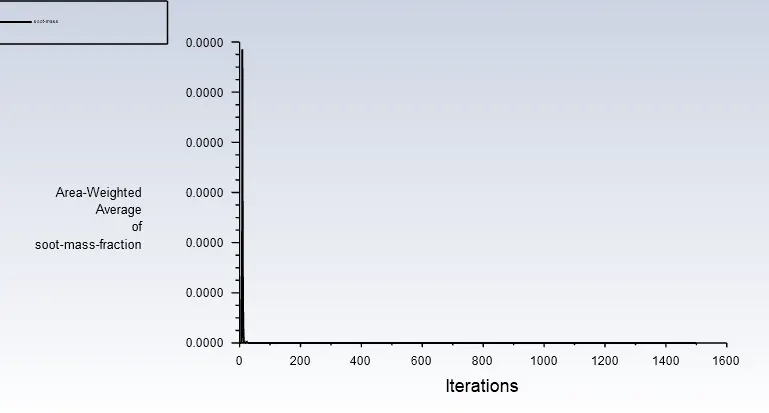
with 20 % water

with 30 % water

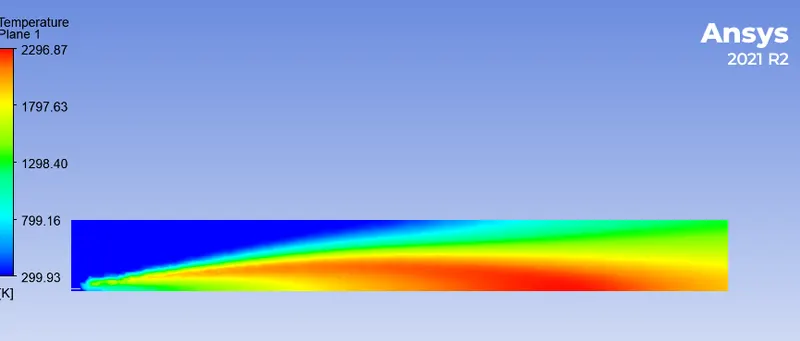
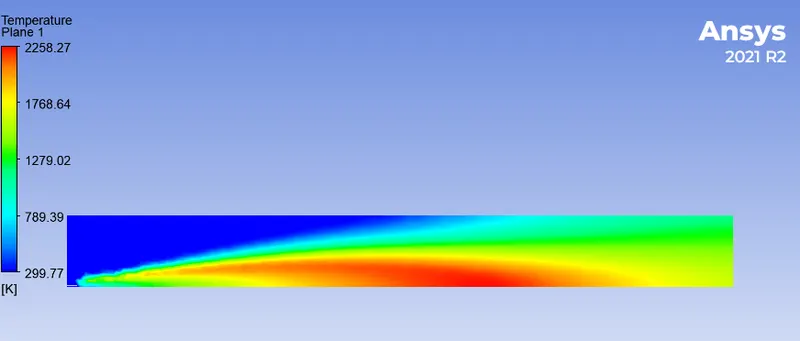
Temperature Contours
with 5 % water
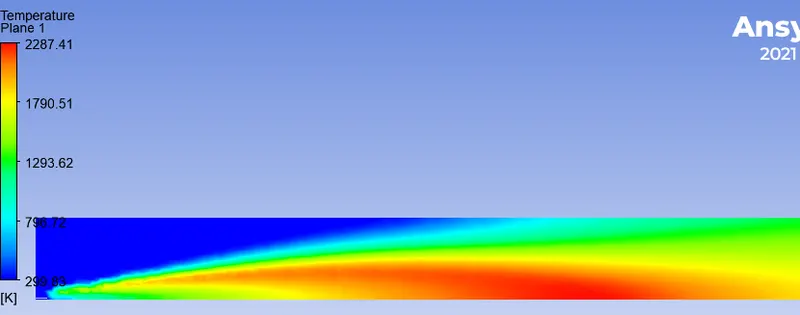
with 10 % water
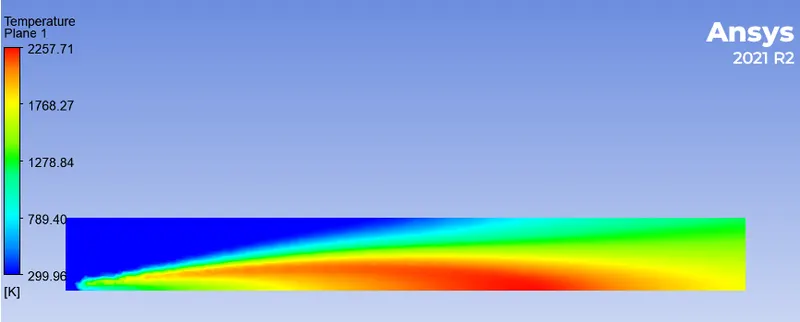
with 20 % water
with 30 % water
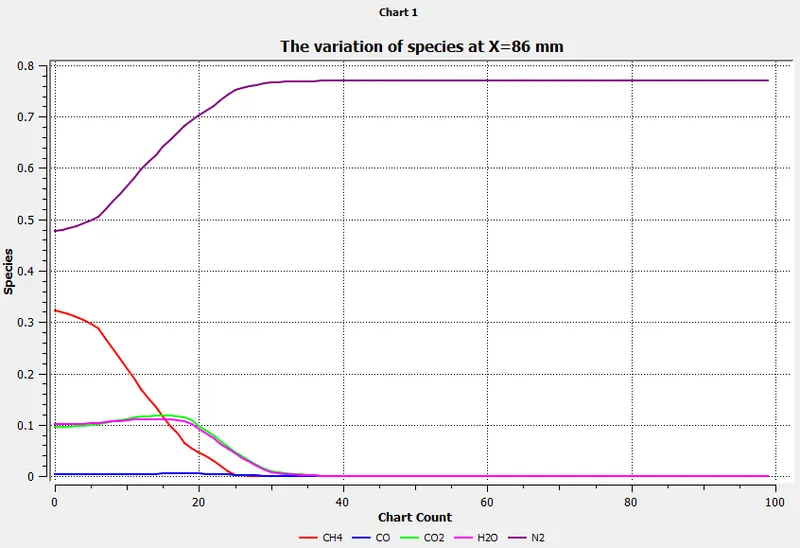
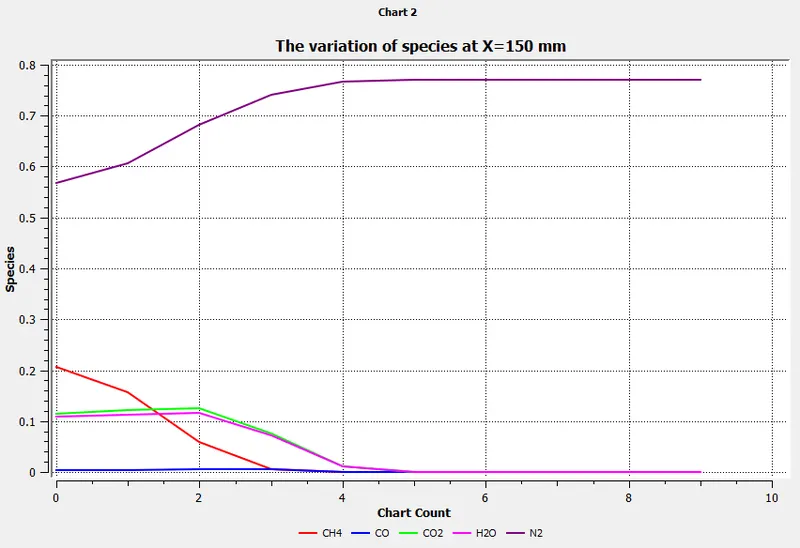
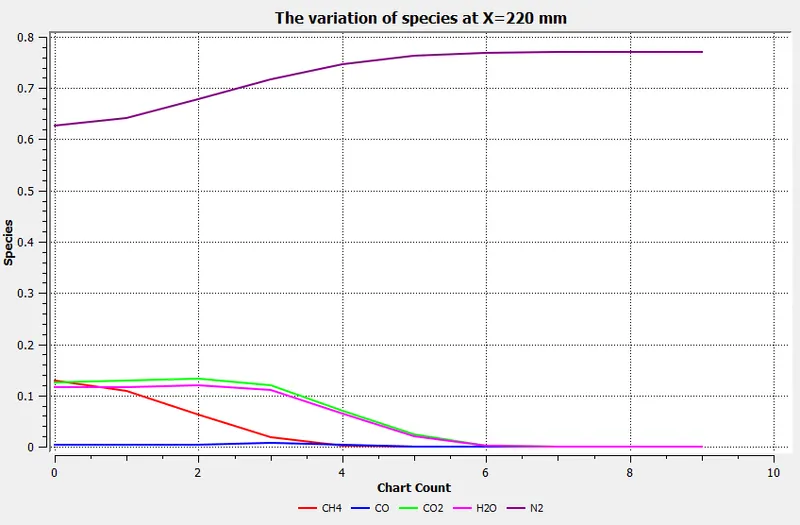
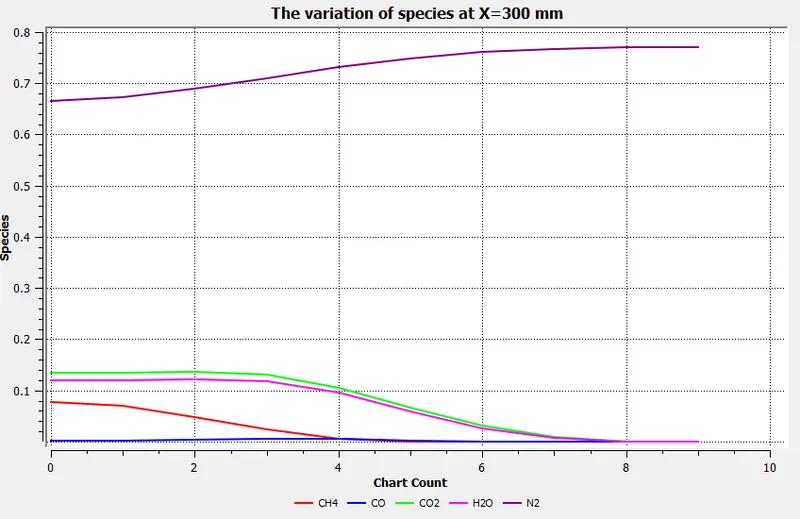
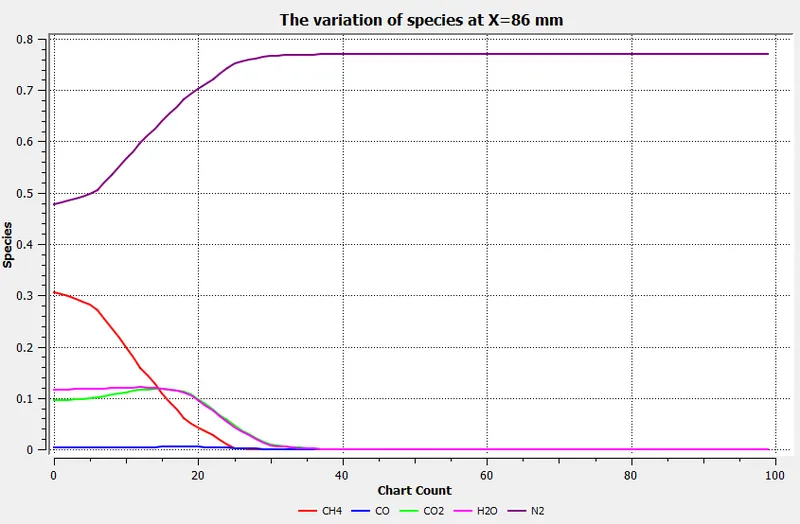
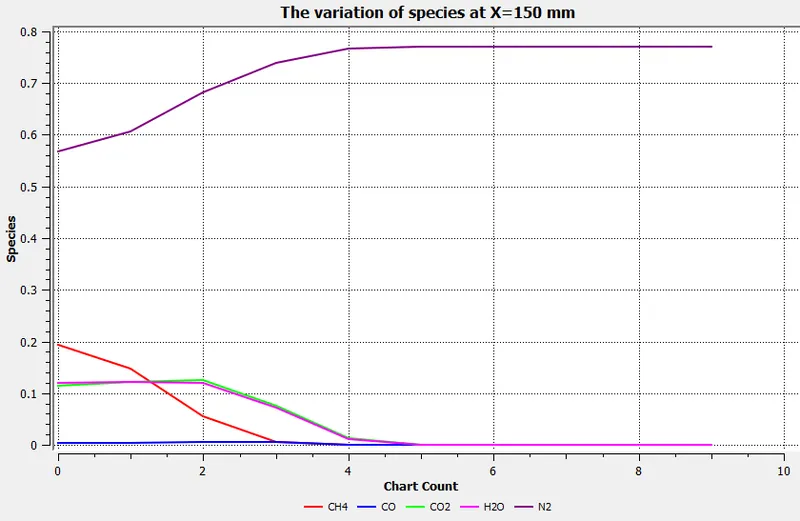
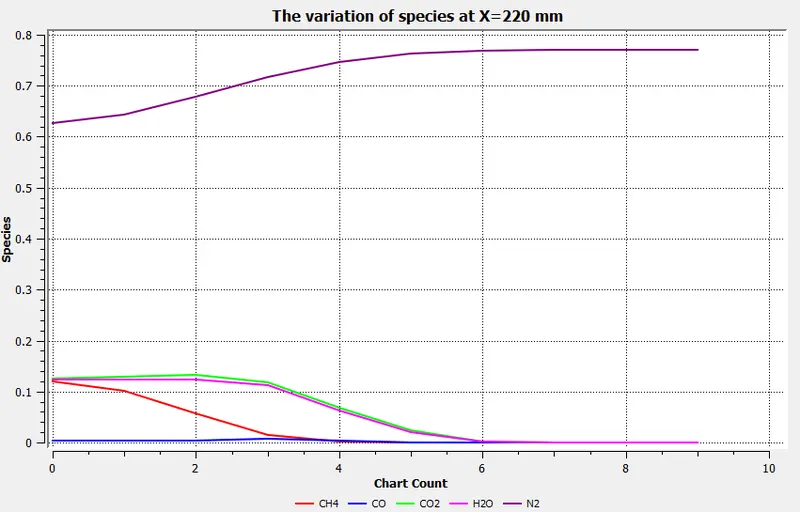
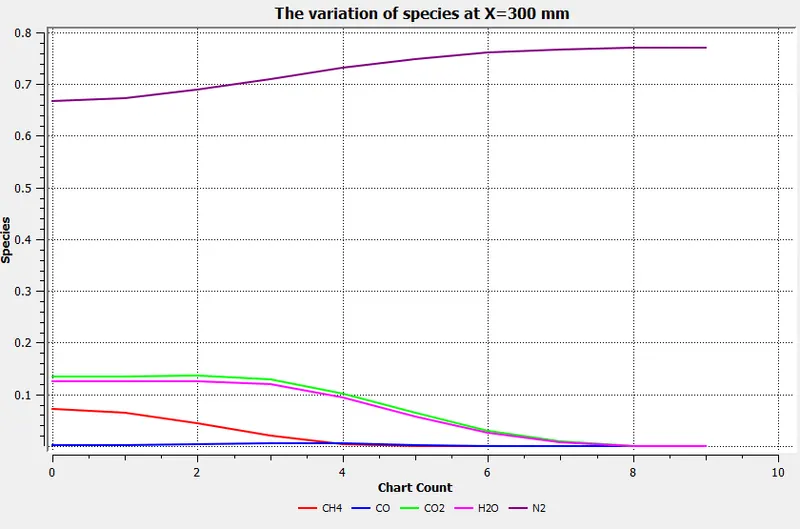
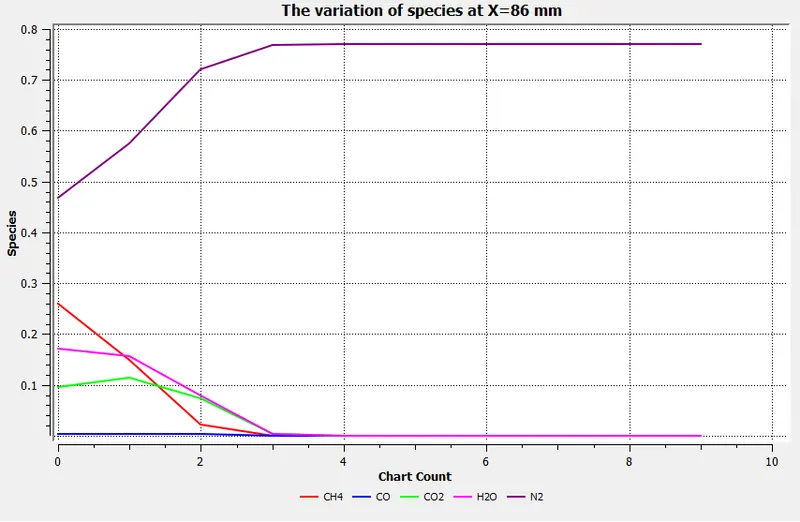
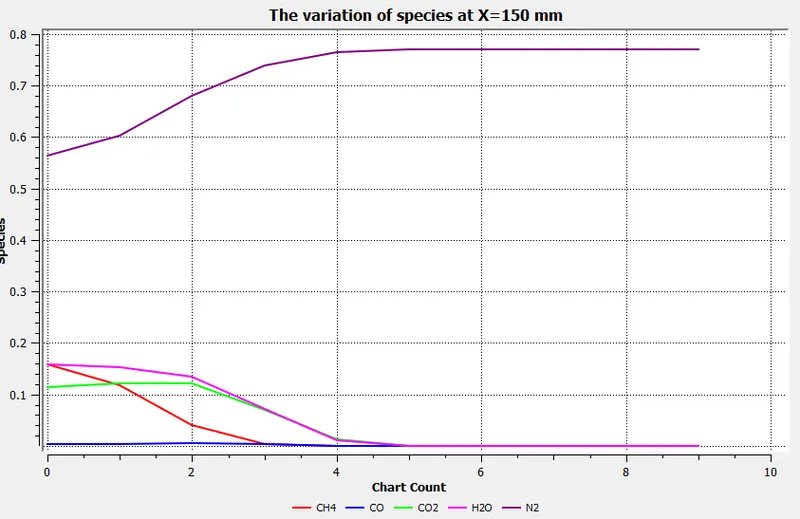
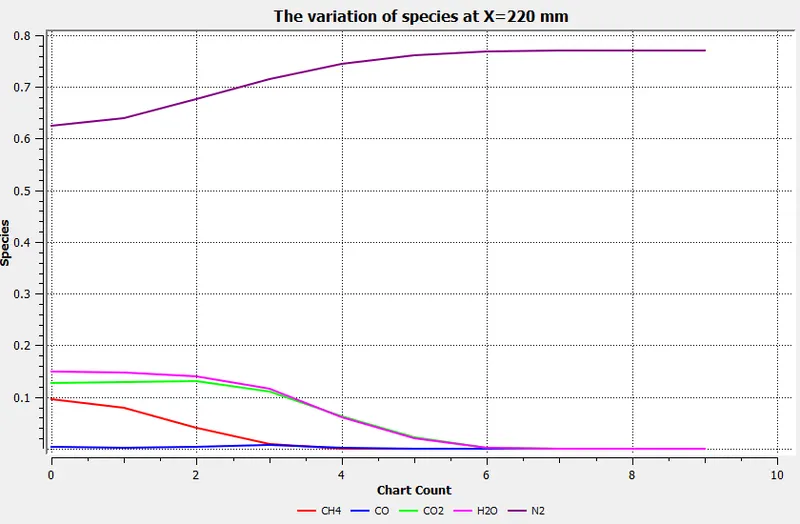
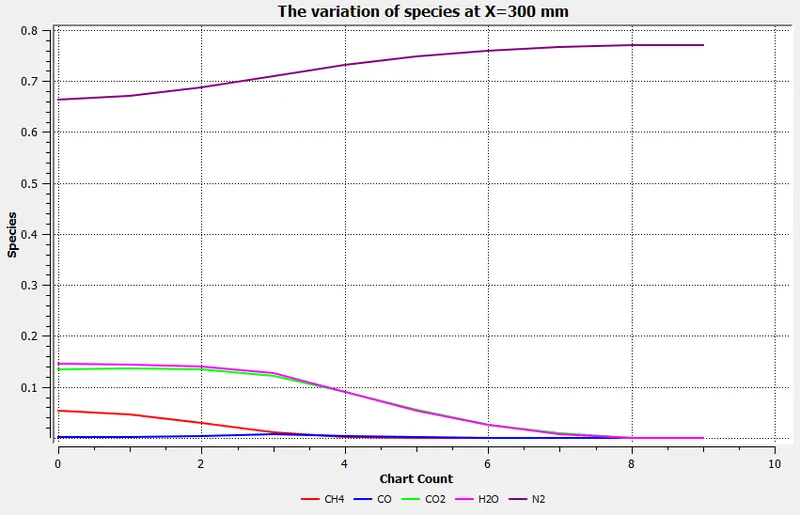
Mass fraction variation of different species
with 5 % water
with 10 % water
with 20 % water
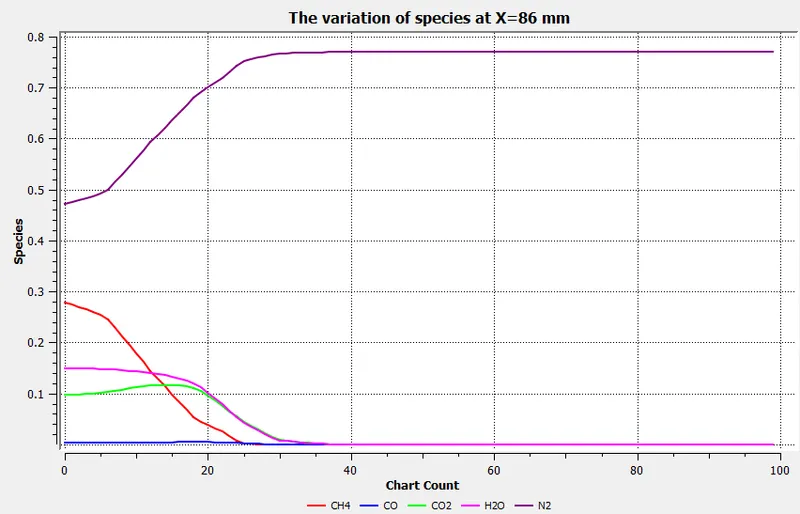
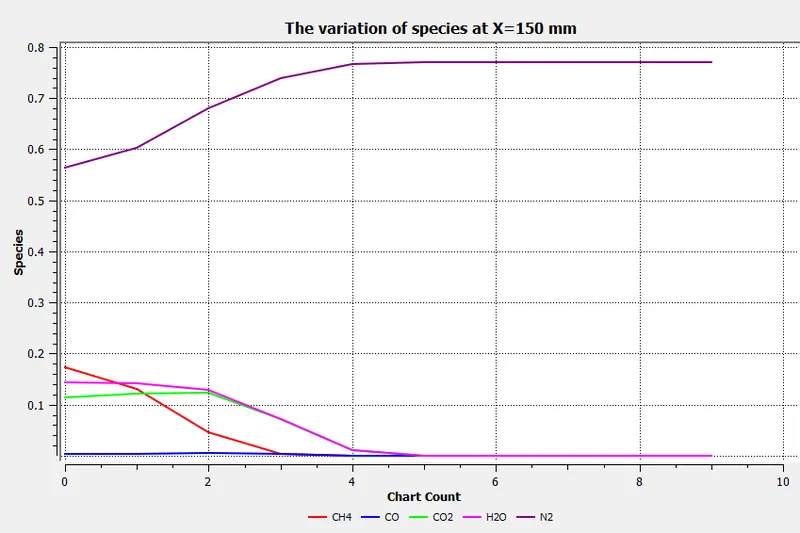
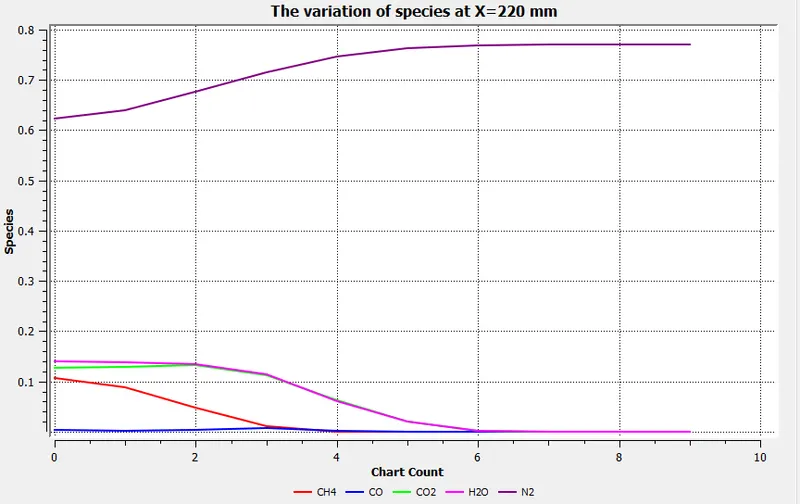
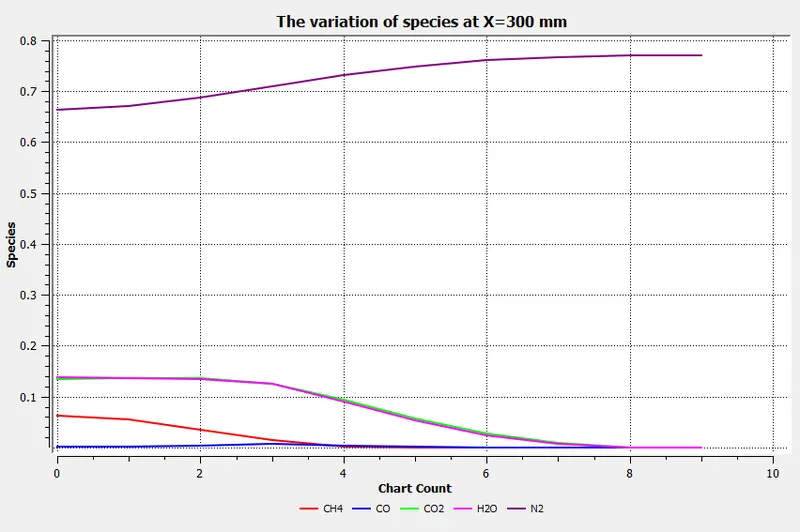
with 30 % water
Conclusions
- Its observed from the temperature profiles that as the H2O composition increases in the fuel the combustion temperature is reduced.
- Soot levels started to increase with increase in H2O composition in CH4.
- From lines placed at 4 points its observed that , the species composition is diffused in the radial direction as it is proceeds in the lengthwise.
- Its observed from the simulation the soot values dropped at 30% Compostion of H2O.
- The maximum temperature of the combustion is slightely increased at 30% H2O.
- Hence from the charts and the plots from the simulation its seen that as the H2O composition increases the soot increases , but 30% of H2O composition in fuel it reduces the soot.
- Hence effects from the soot is reduced at 30% of H2O composition in Fuel