Week - 10 Hyperelastic Material Models
Objective of the challenge: To calculate the Mooney Rivlin and Ogden material constants and compare the both using stress-strain data from a Dogbone specimen tensile test
Unit System used: g-mm-m
Keywords used for analysis:
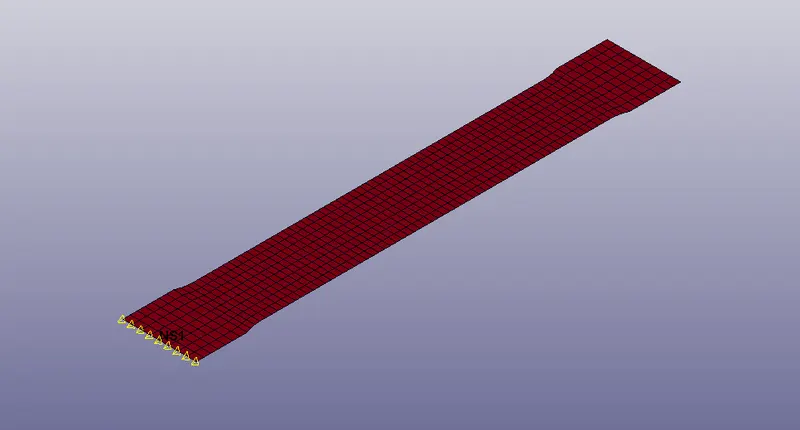
The dogbone specimen is modelled using 632 elements which are connected by 720 nodes
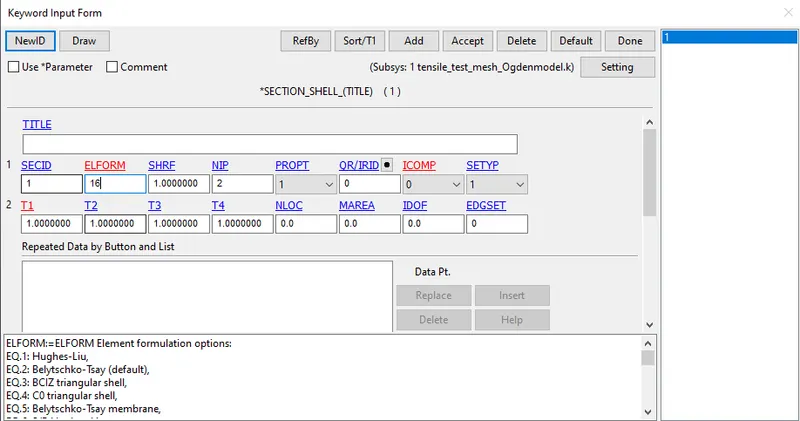
1) *SECTION
The dogbone specimen used in the analysis is modelled using shell element of thickness 1mm and elform type 16 which is fully integrated shell element
2) *MAT
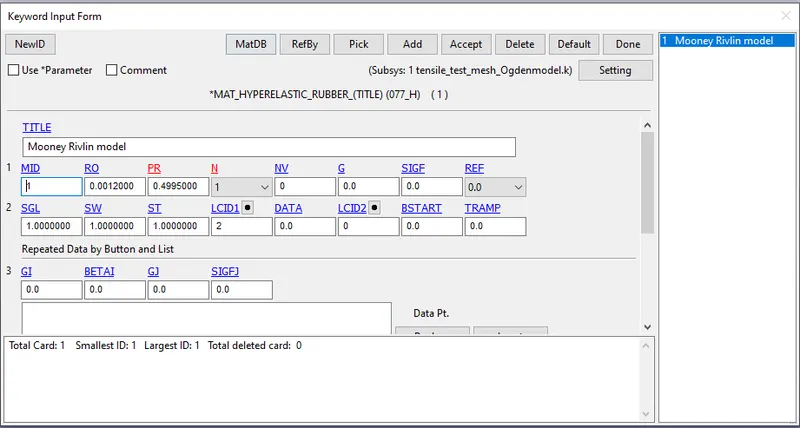
- MAT_077: Hyperelastic_Rubber
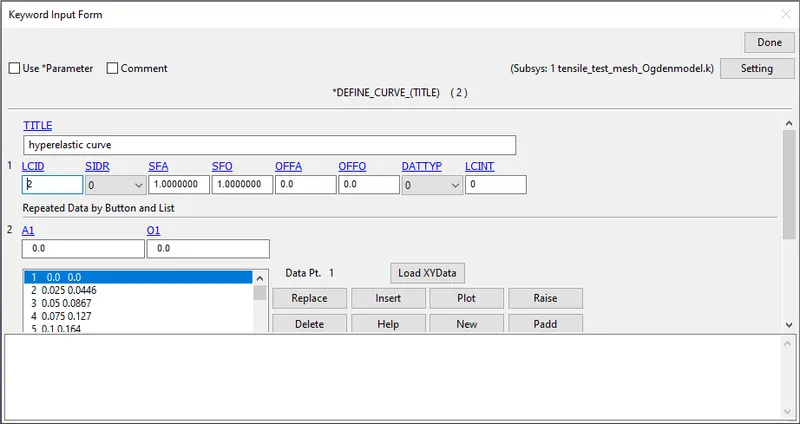
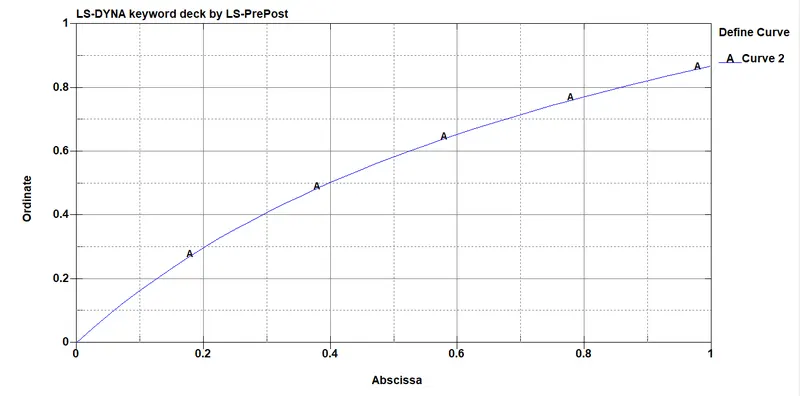
The above material card is used for defining Mooney Rivlin model by deciding the value of N to be 1 which calculates for `C_10` and `C_01` in the d3hsp file and also defining the load curve of the material by input of stress-strain graph. The gauge length, width and thickness of the specimen is input as 1 to account for LCID1 being the stress strain plot.
- MAT_077: Ogden_Rubber
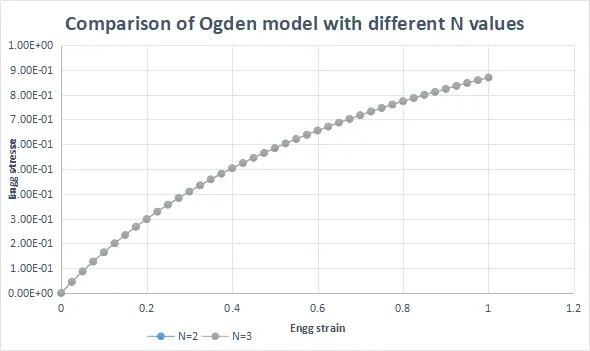
The above material card is used for defining Ogden Material model by deciding the value of N=2 initially which calculates for `mu_1`, `mu_2, alpha_1, alpha_2` and N =3 for `mu_1, mu_2, mu_3` and `alpha_1, alpha_2, alpha_3`for more accuracy in the d3hsp file and also defining the load curve of the material by input of stress-strain graph. The gauge length, width and thickness of the specimen is input as 1 to account for LCID1 being the stress strain plot.
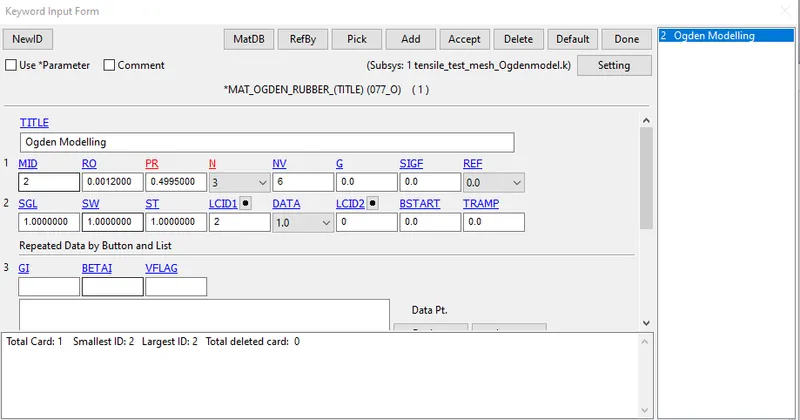
The above two materials are defined in the same *MAT keyword
3) *PART
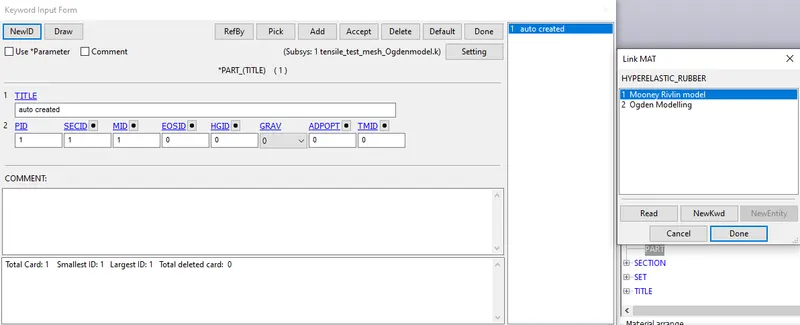
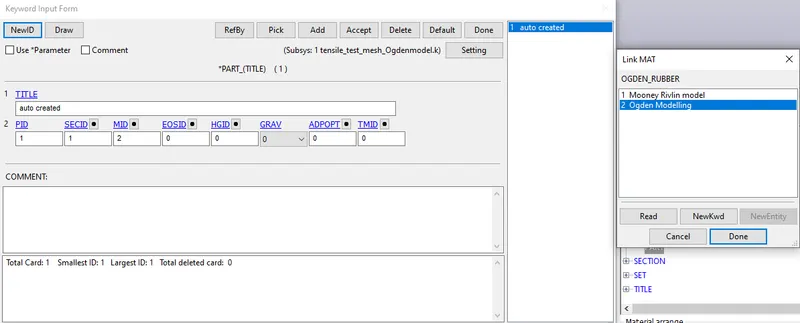
The *PART keyword is used for linking section as well as the material used for the tensile test specimen.
4) *BOUNDARY
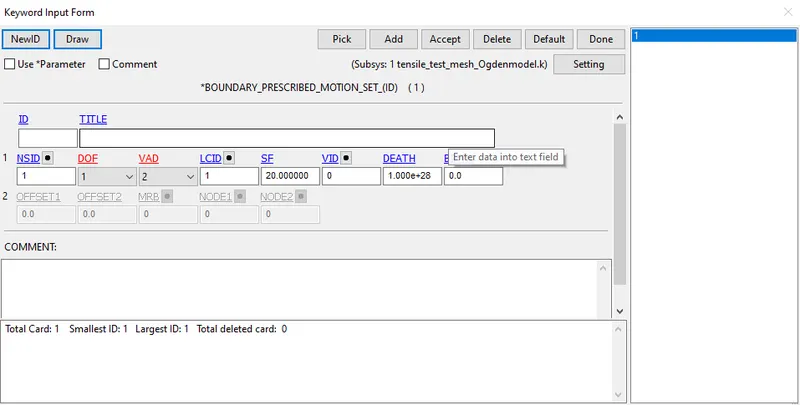
- Prescribed Motion Set
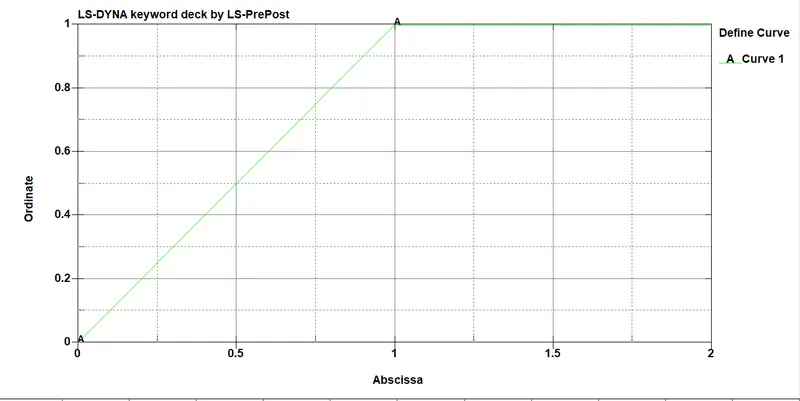
A set of nodes at one end of the dogbone is subjected to displacement, set using VAD flag as 2. The displacement is a linearly varying motion specified by load curve ID (LCID) = 1 and displaced in the x-direction specified by the DOF as 1.
- SPC_SET
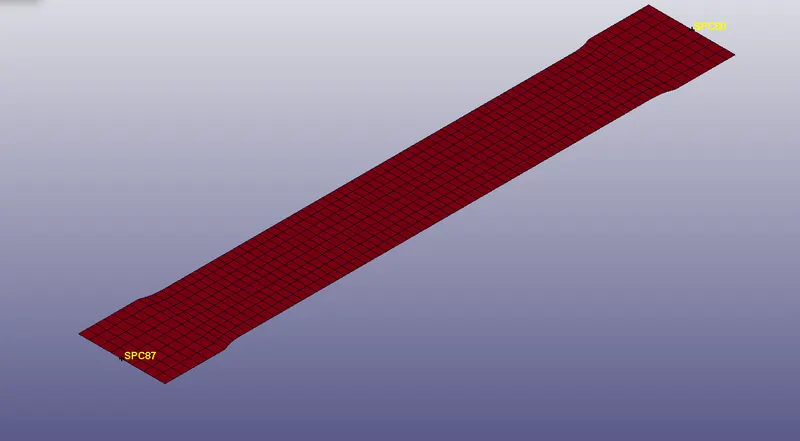
A set of nodes at the opposite end of the displaced nodes is constrained in the x and z direction using the *BOUNDARY_SPC_SET option.
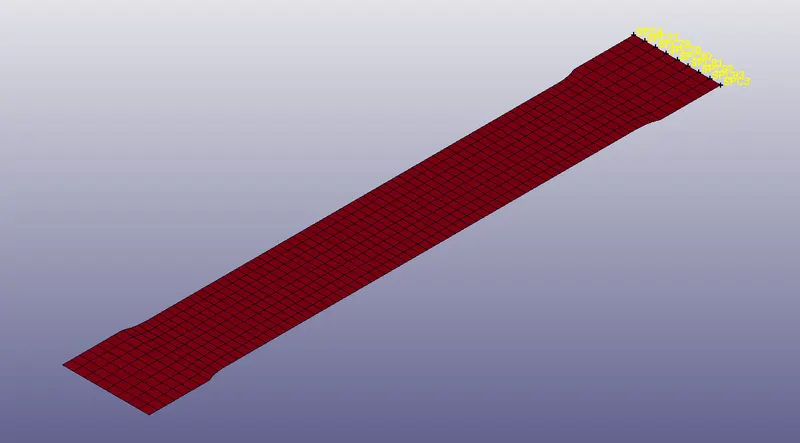
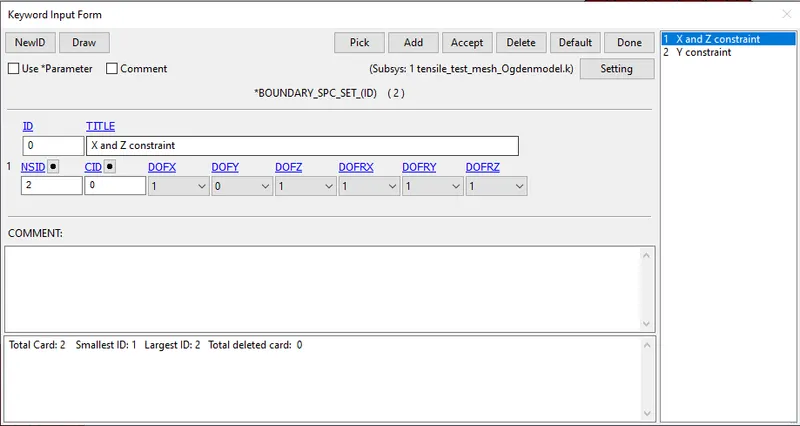
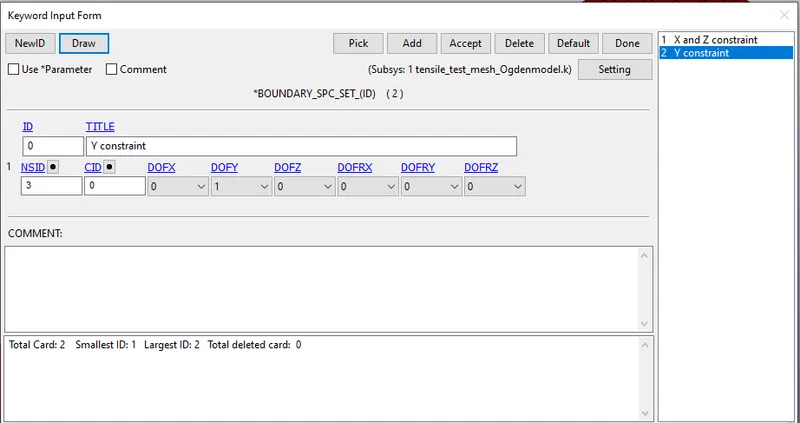
Also the centre node of both the ends (fixed end and the displaced end) is constrained along y direction so as to account for lateral strain effects accordingly as shown.
5) *CONTROL
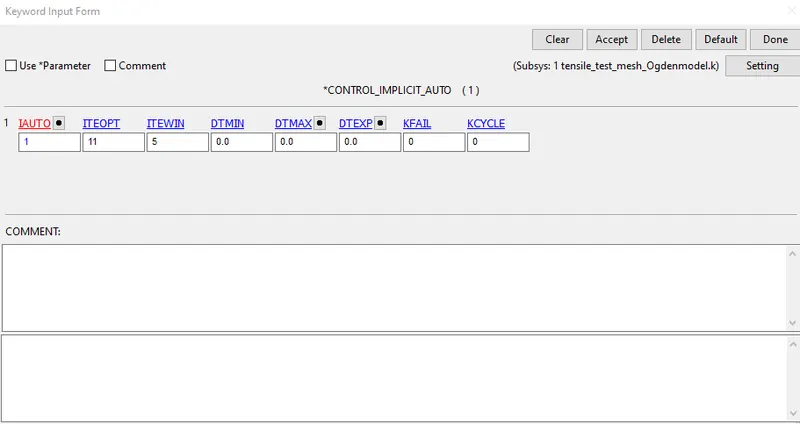
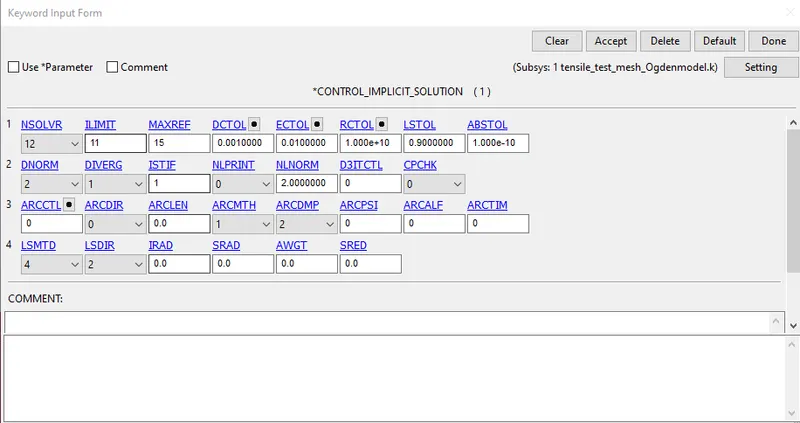
In this analysis, we are using displacment loading rather than force loading, the former will lead to more stable loading condition if the same analysis is performed for implicit analysis. Hence implicit analysis is used for this purpose
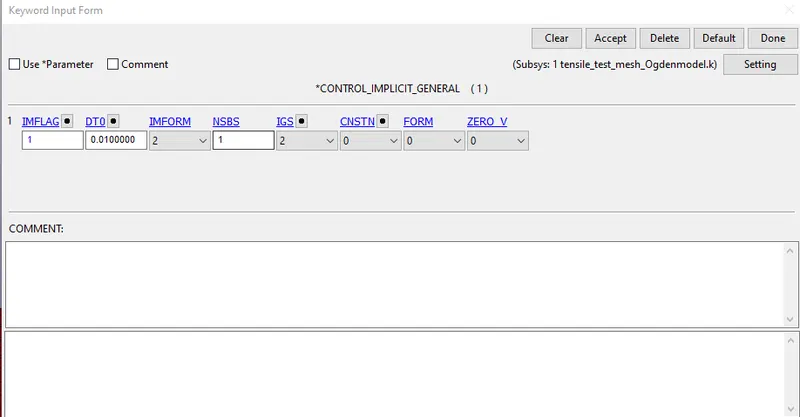
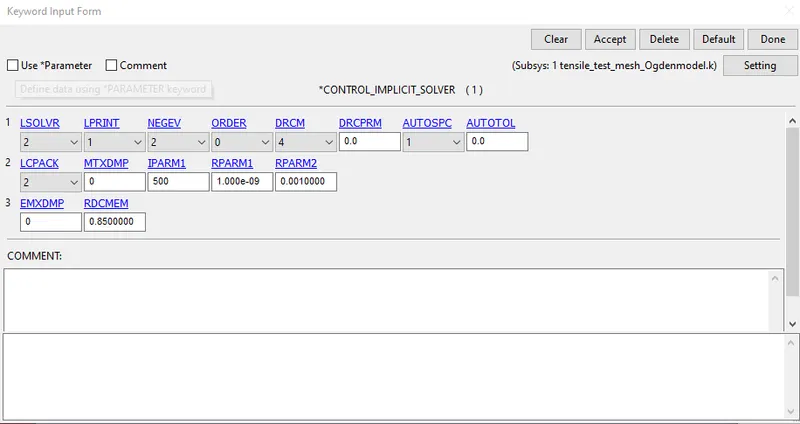
The four implicit cards used for this purpose are:
- *CONTROL_IMPLICIT_AUTO
- *CONTROL_IMPLICIT_GENERAL
- *CONTROL_IMPLICIT_SOLUTION
- *CONTROL_IMPLICIT_SOLVER
- *CONTROL_TERMINATION: The simulation is performed for an end time of 1ms.
5) *DATABASE
- BINARY_D3PLOT: The animation file is recorded for a timestep of 0.01ms
OUTPUT
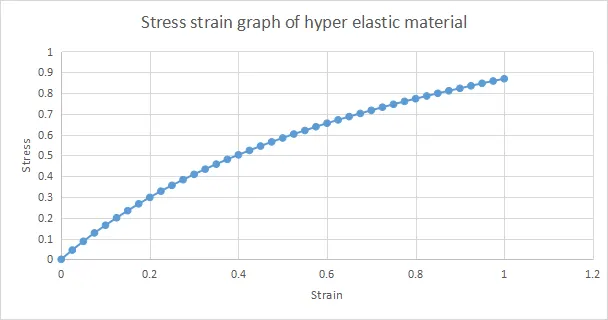
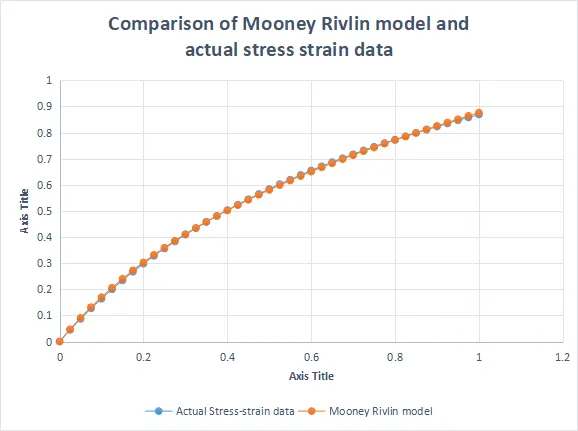
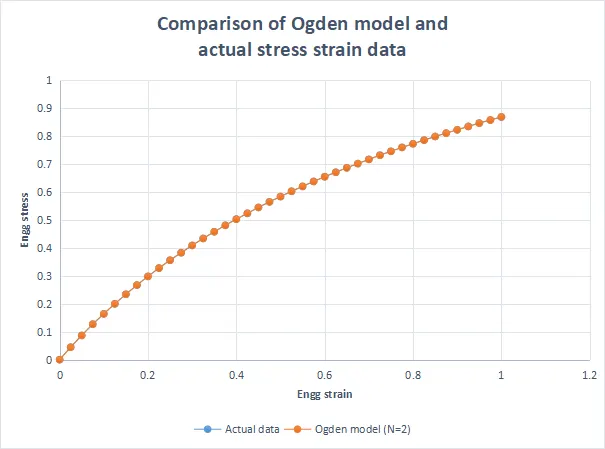
The fitted curve is verified with the given plot of engineering stress-strain of the specimen.
The extension seen in the d3hsp file is essentially the stretch ratio which needs to be converted to engineering strain using the following relation-
`lambda=1+epsilon_e`
where
`lambda` is the stretch ratio
`epsilon_e` is the engineering strain of the specimen
True stress is converted into engineering stress using the relation `sigma_t=sigma_e(1+epsilon_e)`
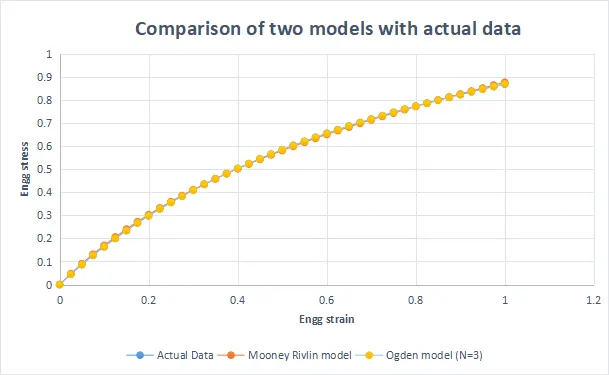
From below data the fitted data follow the given data
Mooney Rivlin model
Mooney Rivlin Constants
`C_10` = 0.1768E+00
`C_01` = 0.1474E+00
Ogden Model with N=2
Ogden Material constants
`mu_1` = 0.916
`mu_2` = 2.23
`alpha_1` = 1.34
`alpha_2` = -0.00184
Ogden Model with N=3
Ogden Material constants
`mu_1` = -0.0318
`mu_2` = 0.261
`mu_3` = 0.682
`alpha_1` = 1.93
`alpha_2` = 1.55
`alpha_3` = 1.29
Comparison of two model
Conclusion:
- The hyperelastic model is performed using Mooney-Rivlin and Ogden Rubber material models and data is validated accordingly.
- The constants found out from the material curve is valid for uniaxial stress data given.