Week 10 - Challenge 3 - Door Trim Lower with Engineering Features
REPORT ON DOOR TRIM LOCATORS AND HEAT STAKES
AIM
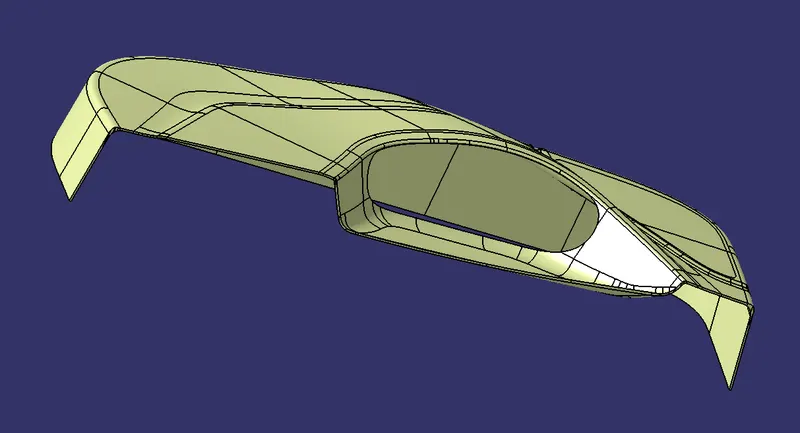
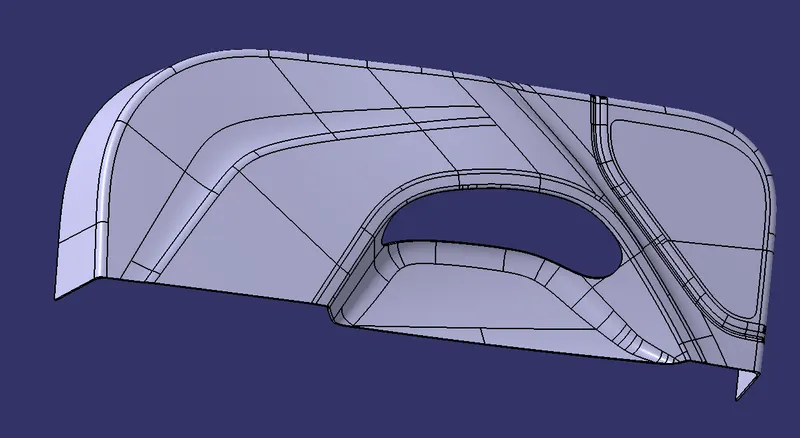
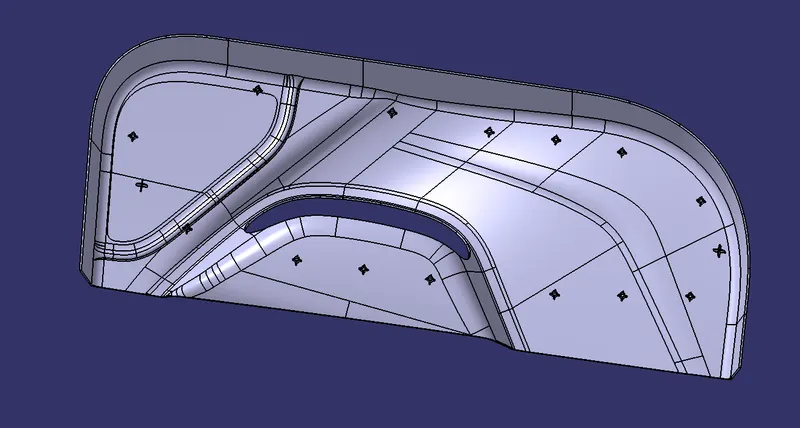
The aim of this design is to create the closed body from the given class-A surface and make them into solid body. After craetion of solid body the main objective of this design is to create the locators and heat stakes on the solid body and also do the draft analysis on the class-A surface and final component.
INTRODUCTION
Locators
Locators provide a positive stop for the workpiece. Placed against the stop, the workpiece cannot move. Clamps, on the other hand, rely only upon friction between the clamp and the clamped surface to hold the workpiece. Sufficient force could move the workpiece.
3-2-1 Principle:
Locating Process: In order to completely specify the position in space of a three-dimensional object (such as the cube that’s shown), we refer to six coordinates with total 12 degrees of freedom.
- Translational position along the X-axis
- Translational position along the Y-axis
- Translational position along the Z-axis
- Rotational position about the X-axis
- Rotational position about the Y-axis
- Rotational position about the Z-axis
These six coordinates are known as the six degrees of freedom of a three-dimensional object. As the double-headed arrows indicate, the translational and rotational positions can vary in either direction with respect to each of the three axes. To completely prevent movement, all six degrees of freedom must be restricted.
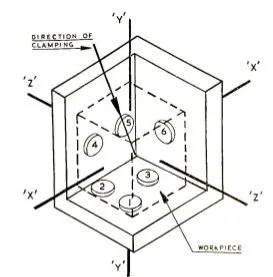
So locators are basically used to arrest the degree of freedom of the component.
There are two types of locators -
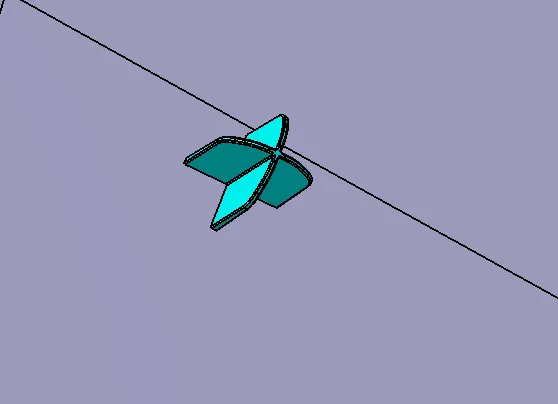
1.) 4- way locators - A round locating pin located concentrically in a hole is a common application of a 4-way pin, and helps to further secure the piece. 4-WAY LOCATORS: 4-way mean you prevent movement at 2 axes (+X, -X, +Y and -Y) on the plane. Generally, you have cylindrical pin on the fixture and circular hole at workpiece part.
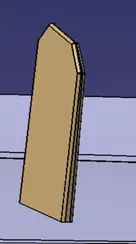
2.) 2- way locators - A 2-way locating pin restricts motion along 1 axis (or 2 degrees of Freedom), like a round pin in a slot. Likewise, a 4-way pin restricts 4 degrees of freedom along 2 axes.
Heat stakes
Heat staking also known as thermoplastic staking is the process of joining two dissimilar materials together. In heat staking we use local heating and cooling to raise the temperature of plastic components and allow plastic reforming to be carried out. This reforming can be used in a wide variety of applications.
Applications range from staking plastic bosses for assembly of car door panels to joining PCB’s to plastic housings. Benefits of this technique include; no vibration damage, no particulates, the ability to stake metalized coated applications and the capability to stake in difficult to access or restricted areas.
Advantages of Heat Staking
- Consistent, Fast & Economical Alternative to Rivets & Screws.
- Joins different materials Eg: Plastic to plastic , plastic to non-plastic or join 2 non-plastics.
- Able to handle difficult to weld plastics.
- Simple mechanism and accurate control.
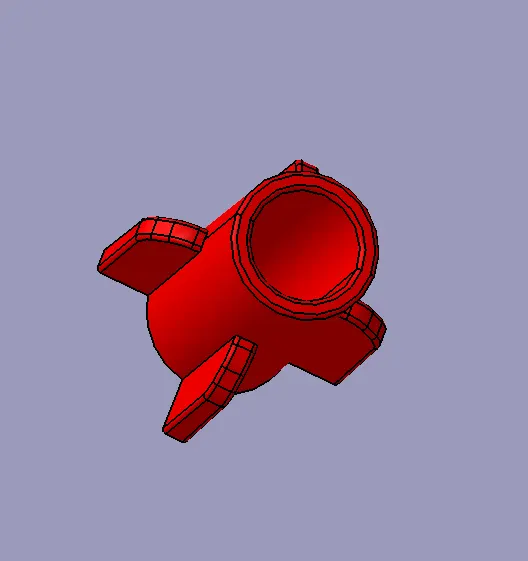
procedure to create locators and heat stakes -
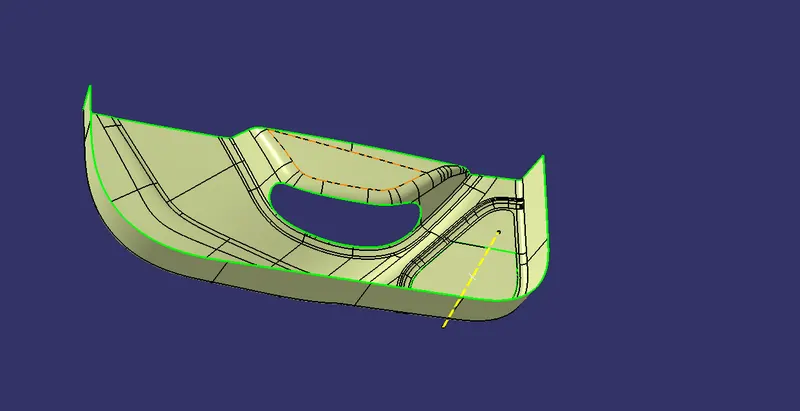
- Class-A Surface
- Tooling Axis Creation
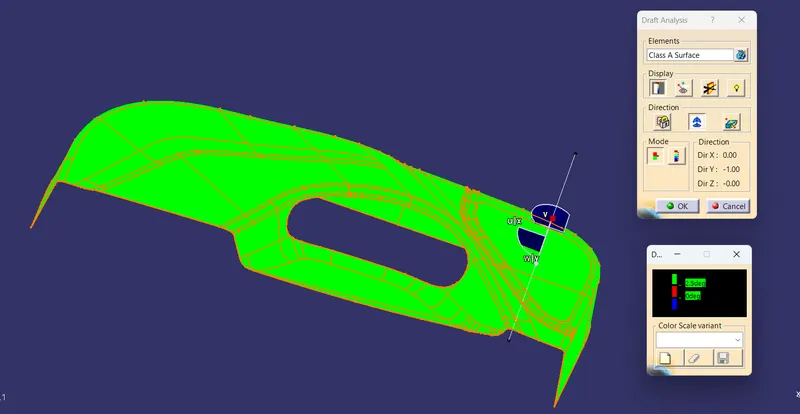
We create the tooling axis in y-direction from the given class-A surface to do draft analysis on class-A surface and final component.
- Draft Analysis on Class-A Surface
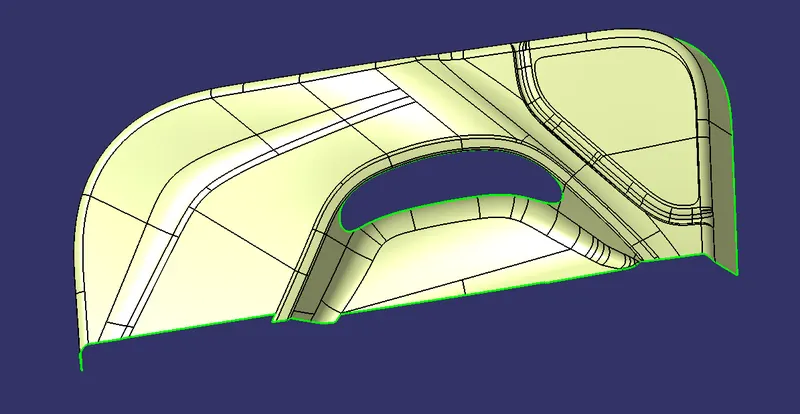
- Class-B Surface Creation
After creating the tooling axis we create the class-B surface by offsetting the class-A surface.
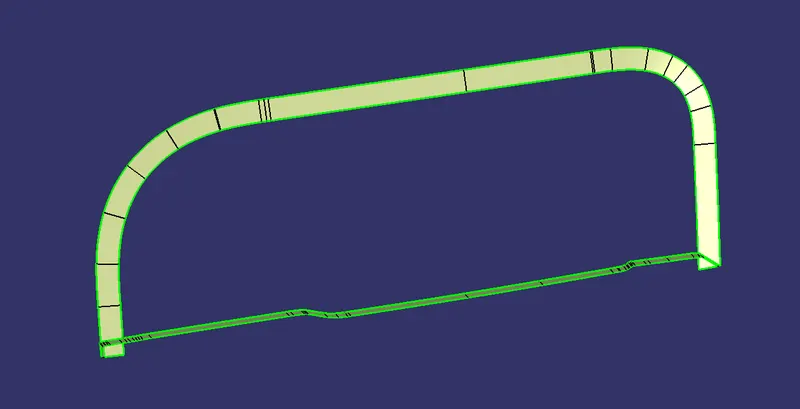
- Class-C Surface Creation
After creating class-B surface we create class-C surface from Class-A by using sweep command.
- Final Trim to get closed body
Then we do final trim of Class-A,B and C Surfaces to get closed body and make them into solid body.
- Creation of Locators and Heat Stakes
After creation of solid body from the Class-A Surface we create Locators and Heat Stakes on the solid body.
- Draft Analysis on Final Component
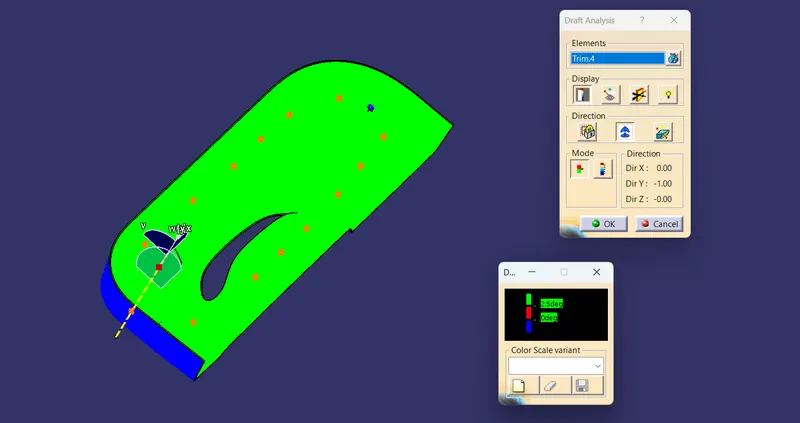
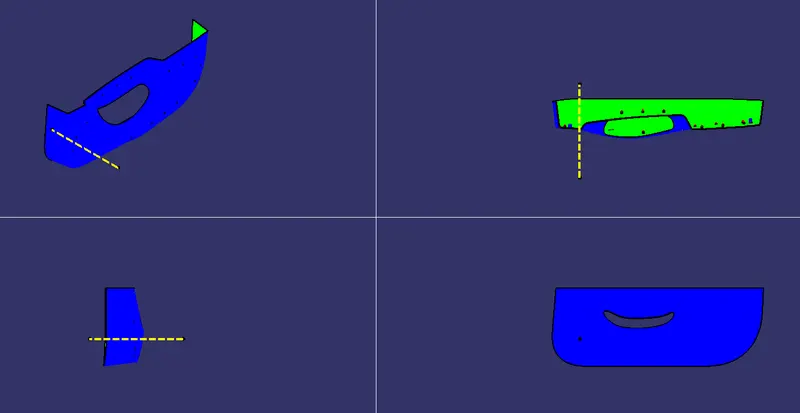
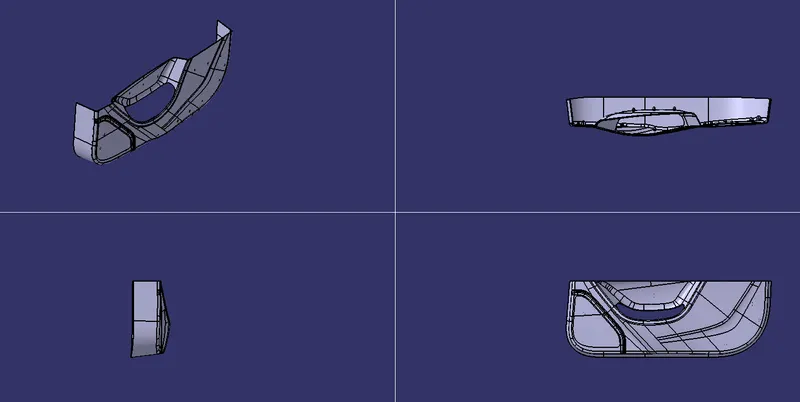
The Views from Different Orientation of the Final Component.
CONCLUSION
We discussed about the locators and heat stakes and its applications. we also discussed about the way of creation of locators and heat stakes and do the draft analysis on both Class-A Surface and Final Component.