Week 10 - Challenge 2- Attachment Feature Creation (Dog House)
Attachment Feature Creation - Challenge 2
AIM
Create the Dog House for the Door Trim considering the design rules.
INTRODUCTION
DOG HOUSE
Dog house is an engineering feature used in plastic design. Dog houses are used as support feature. Sometimes other engineering features like snaps, locators, and screw bosses are mounted on them to increase their strength.
Dog houses are subjected to draft analysis to prevent breakage of the component during ejection from the mould cavity. Dog house and other engineering components are built on the B-surface.
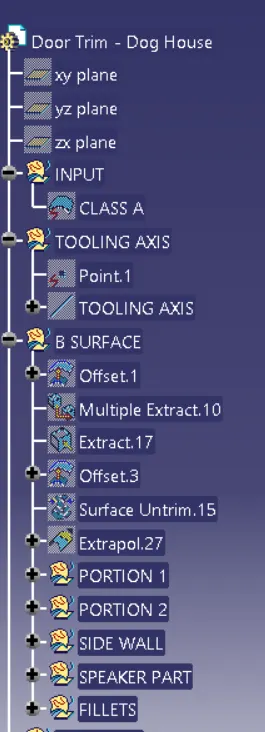
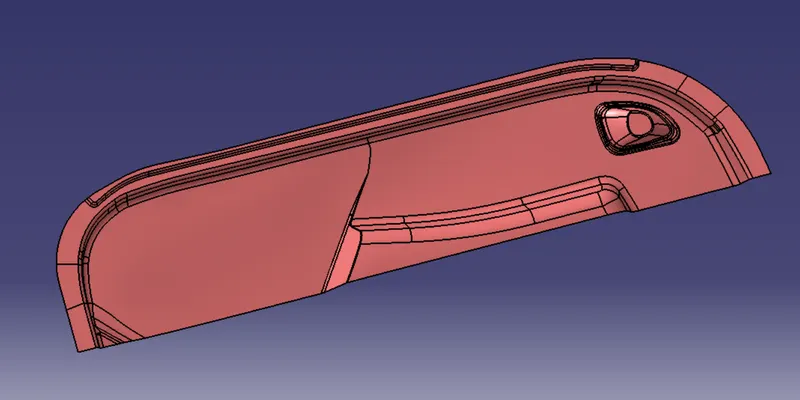
Given CLASS-A surface
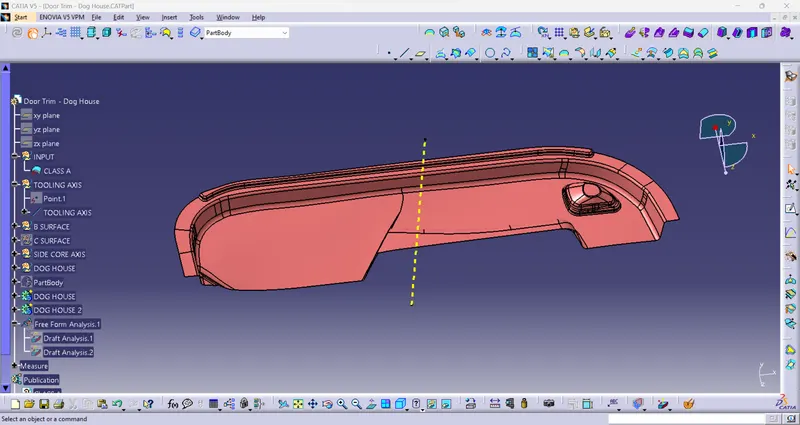
Tooling axis creation
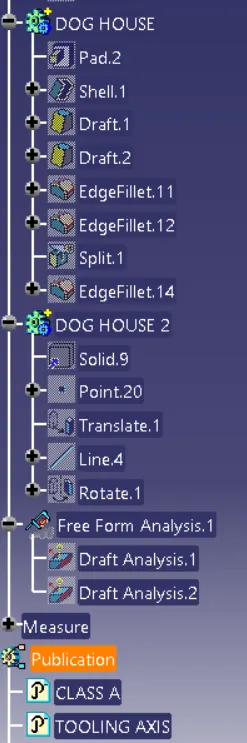
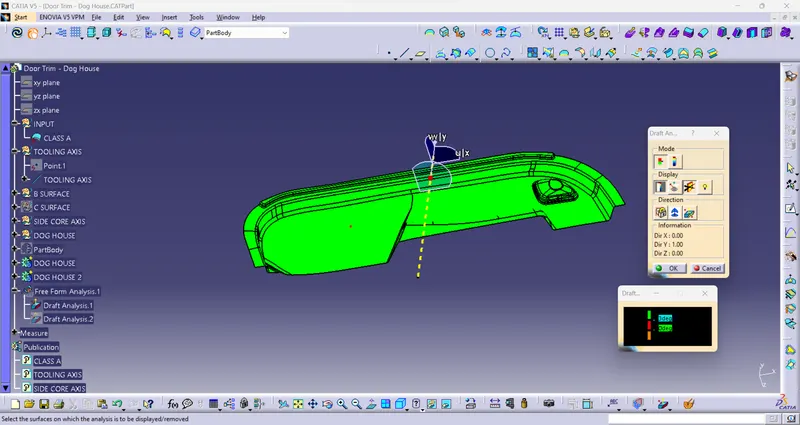
Draft analysis of CLASS-A surface
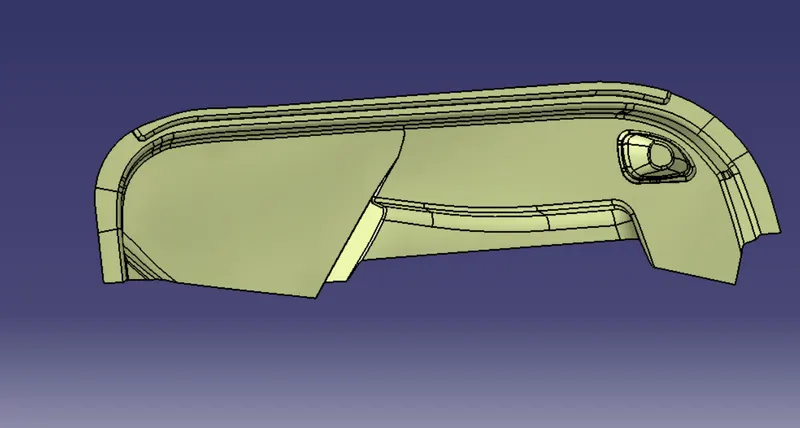
CLASS-B surface creation
Class-B surface means the thickness of a part it is not visible and is inside part. In other words, the Class-B surface is a surface below a certain thickness from the class-A surface. This is the surface that contains engineering aspects of a model.
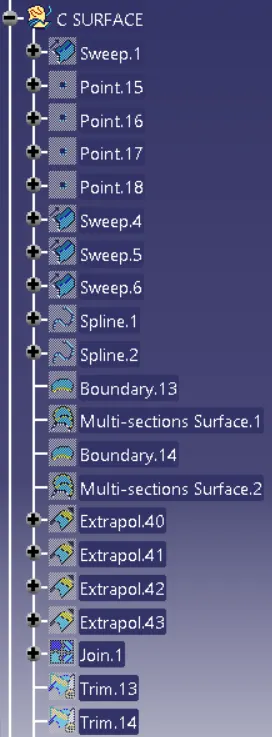
CLASS-C surface creation
The surface that joins class-A and class-B surfaarethe s is class-C surface. Class C is often specified for interior surfaces not readily visible, surfaces that will be covered by another part when assembled.
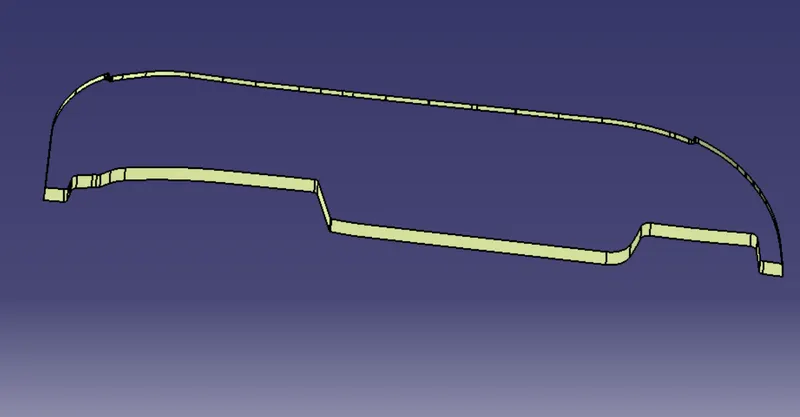
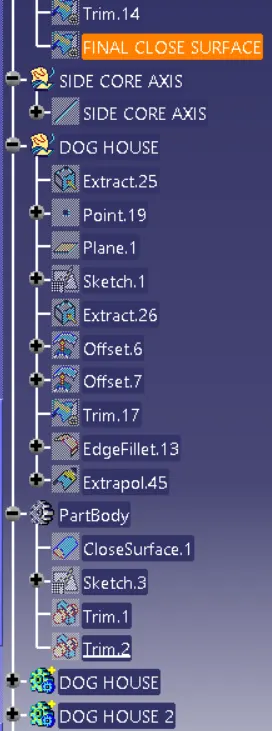
Creating the Final surface
- For creating the Finals door trim surface, join the CLASS-A and CLASS-C surfaces together.
- Then Extrapolate the B surfacea little bit outward direction to make sure that there would not be any gap when trimming with the joined surface.
- Then trim the extrapolated CLASS-B surface wthe ith Join surface (CLASS-A and CLASS-C)
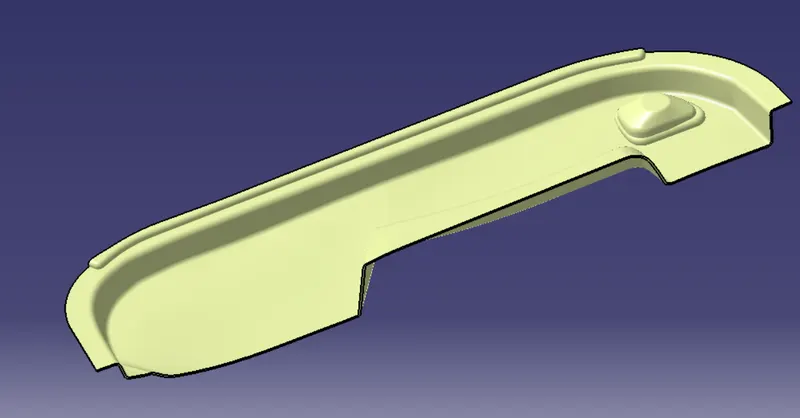
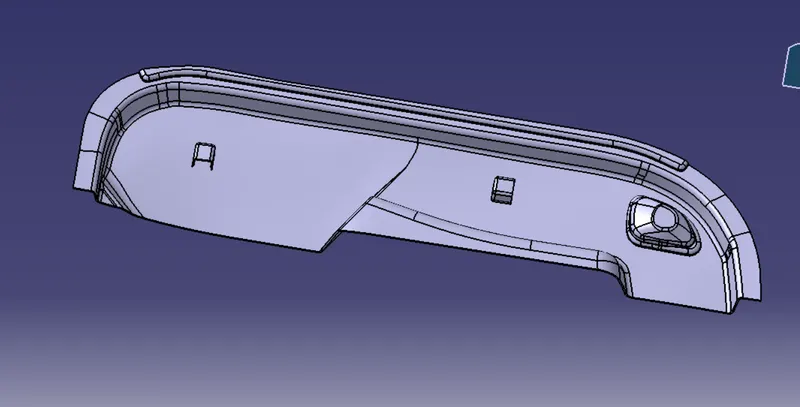
Make a solid part body using the close surface command in the part design workbench
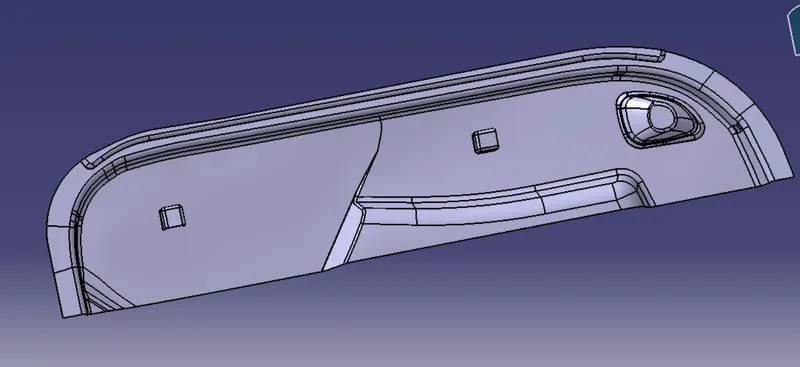
DOG HOUSE Creation
- Dog houses are designed to avoid SINK MARK created on the CLASS-A surface by screw bosses and to solve the length issues when giving screw bosses which need to be assembled to other components.
- It is also useful when perpendicular screw bosses are required on the part to the tooling direction.
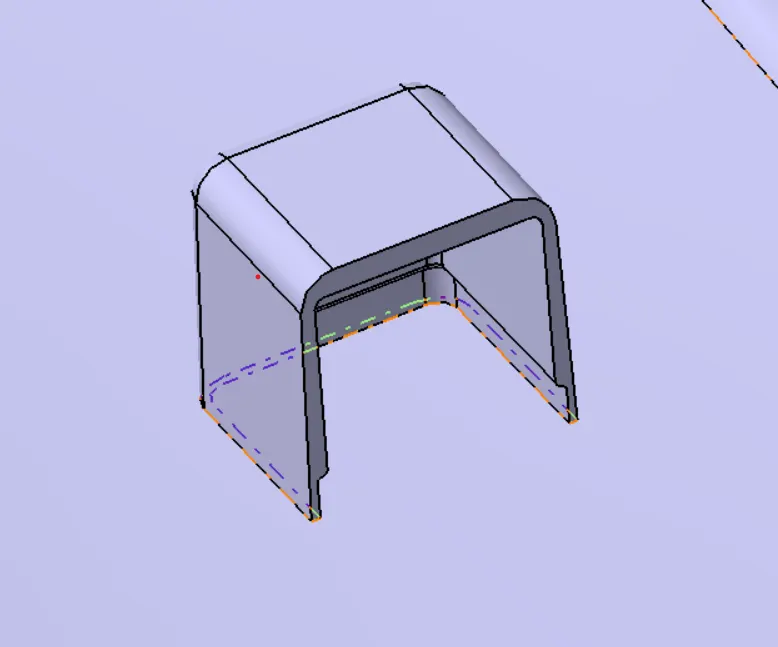
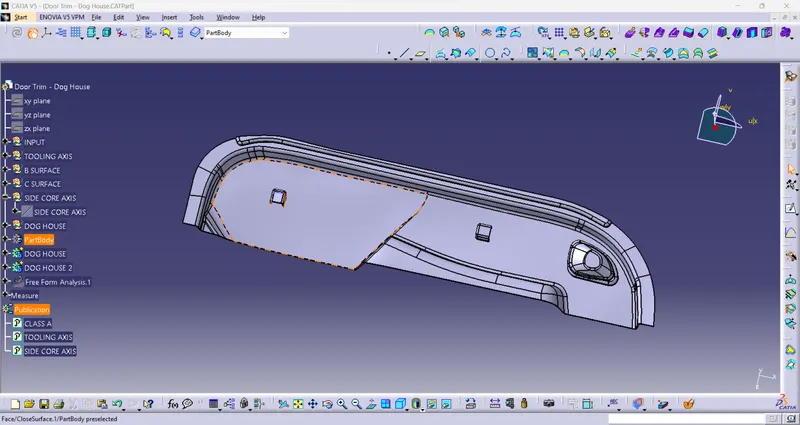
The expanded Tree Structure for the geometrical set and the Part Body