Week 10 Bullet penetrating a Bucket Challenge
SIMULATION OF A BULLET PENETRATING A BUCKET
OBJECTIVE
To perform explicit analysis for a Bullet penetrating a Bucket in ANSYS Workbench by assigning three different non-linear materials for the bucket
- Analyse their behaviour for three different cases and compare the results
MODEL SETUP
The 3D model of the setup is imported into ANSYS Space Claim. Check for any abnormalities in the Geometry.
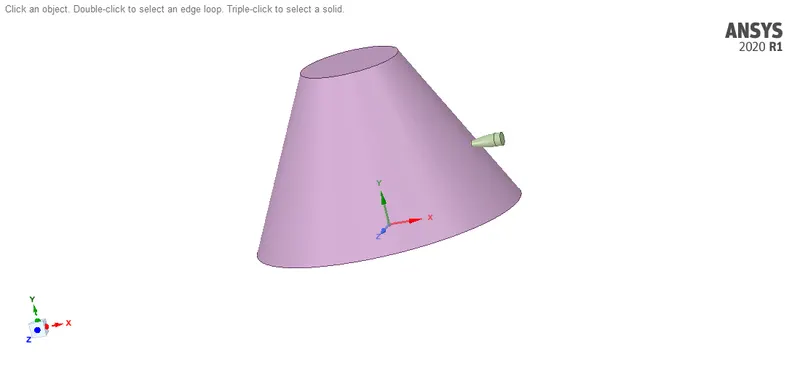
MATERIAL ASSINGMENT:
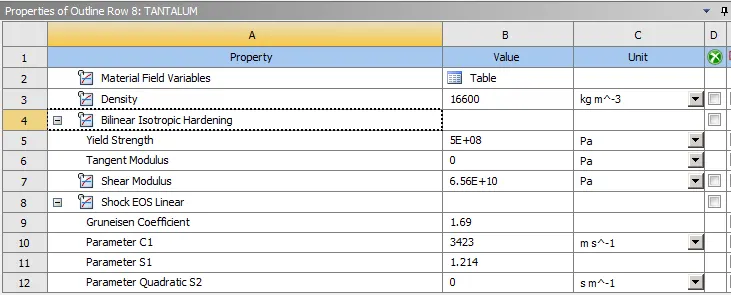
- For all the three cases, Bullet material is assigned as TANTALUM
- For the bucket, the materials used for three cases are,
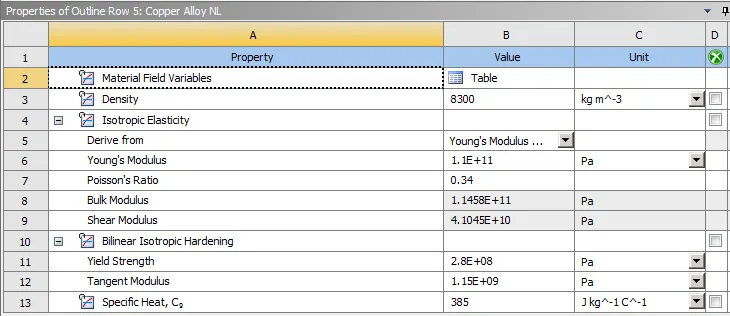
Case 1: Copper Alloy NL is assigned for the bucket
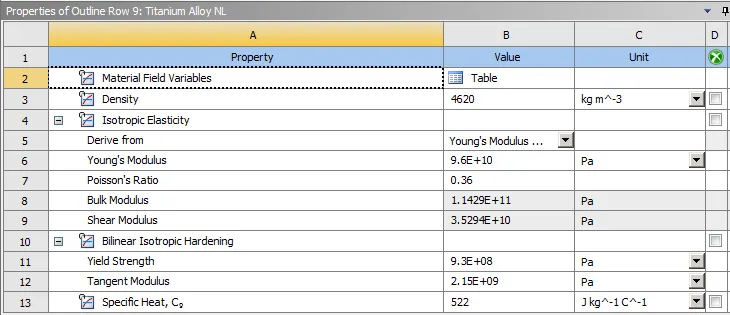
Case 2: Titanium Alloy NL is assigned for the bucket
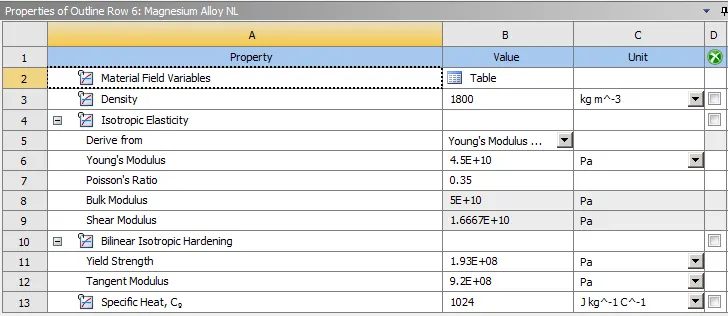
Case 3: Magnesium Alloy NL is assigned for the bucket
The properties of various materials used are shown below
- Tantalum
- Copper Alloy NL
- Magnesium Alloy NL
- Titanium Alloy NL
MODEL SETUP:
- After importing the Geometry, rename the Parts and assign respective materials for the three different cases
- Select the Stiffness behaviour for Bullet as Rigid.
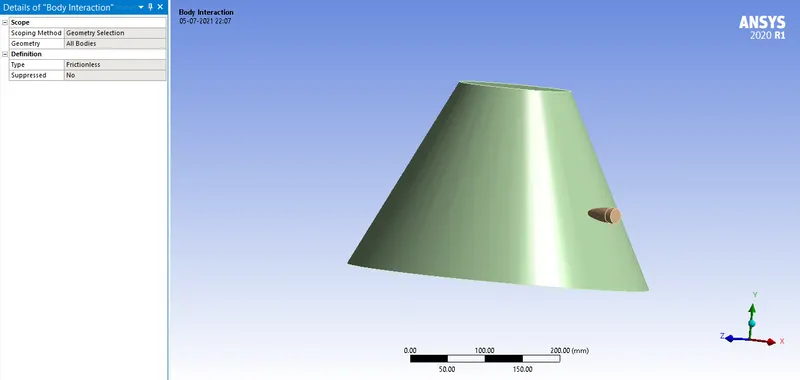
BODY INTERACTION:
The type of Body interaction assigned is Frictionless
MESHING:
The meshing is done as follows,
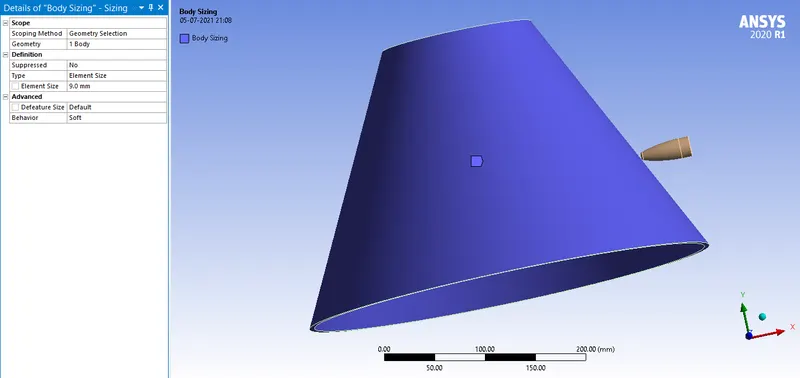
- Body sizing of element size 9mm is assigned to the bucket. The details and settings of the mesh are shown below.
FINAL MESH:
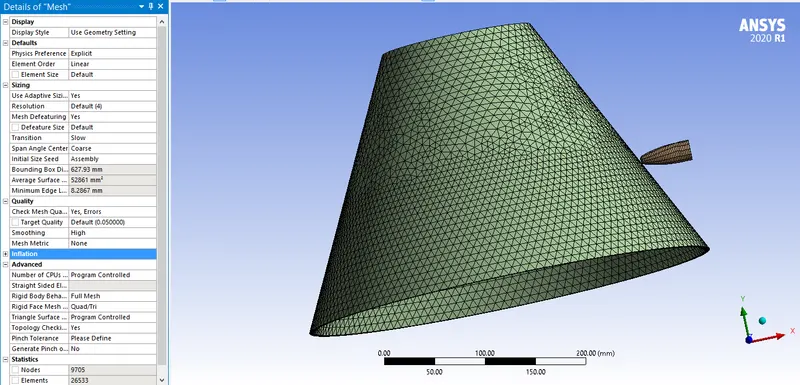
MESH QUALITY:
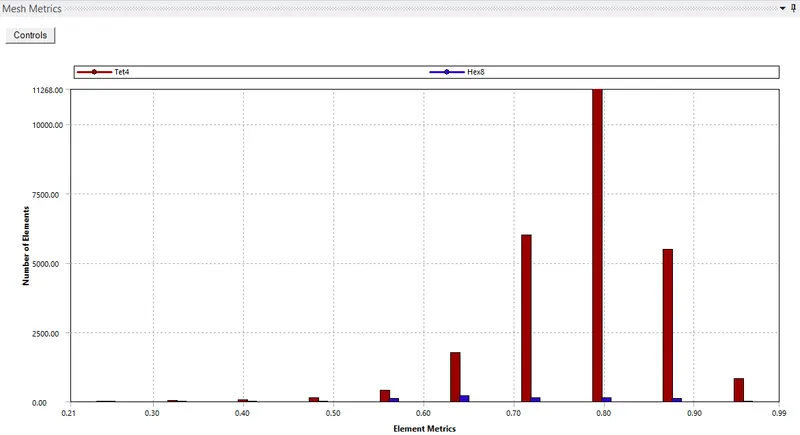
ANALYSIS SETTINGS:
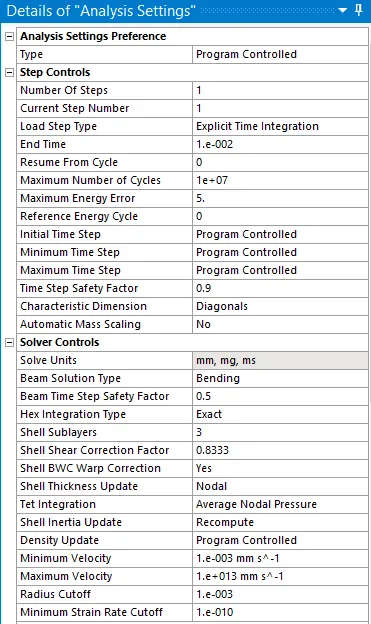
Now, the simulation is run for 1 steps. The following settings are modified
The End Time value is kept as 0.01s
Maximum Energy error is kept as 5
The time step values are kept as Program Controlled
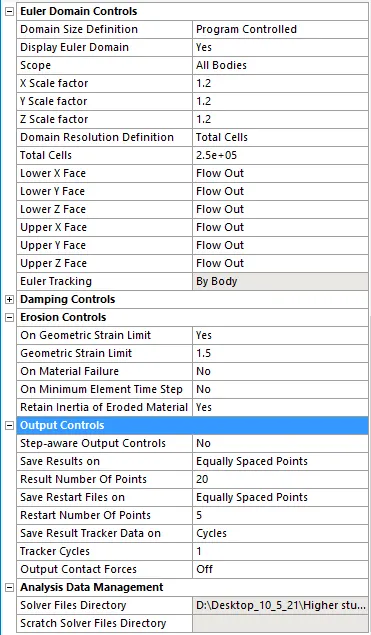
Other settings are as shown below
BOUNDARY CONDITIONS:
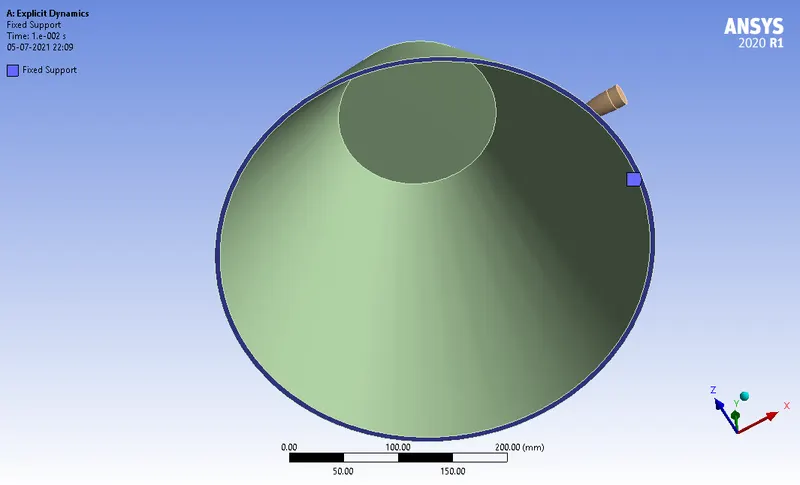
The boundary condition for this model are
- A Fixed Support to the bottom face of the Bucket :
- A Velocity of 139000 mm/s to the Bullet in the negative X-direction:
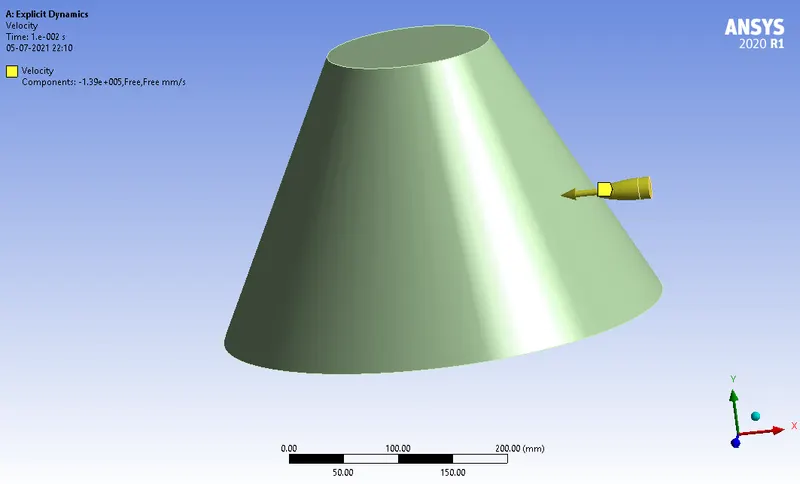
RESULTS:
CASE 1: Copper Alloy NL is assigned for the bucket
ANIMATION:
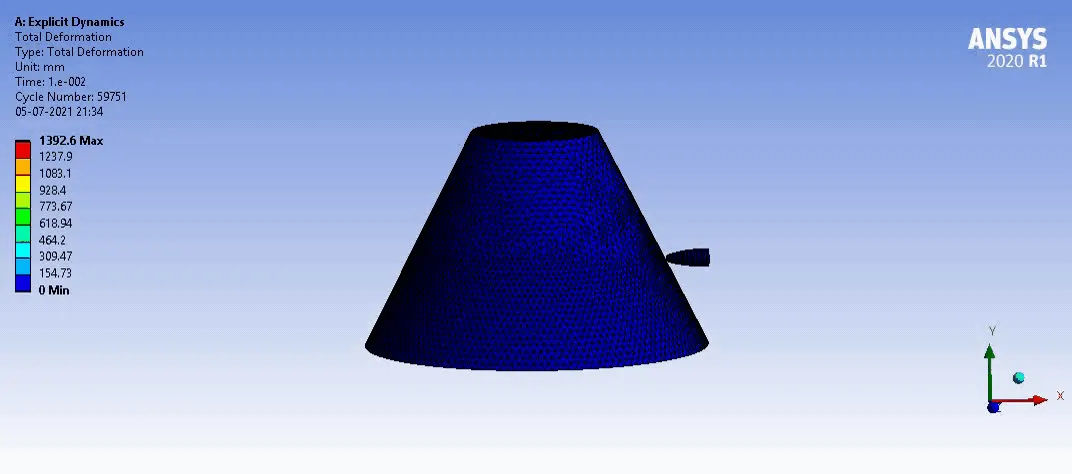
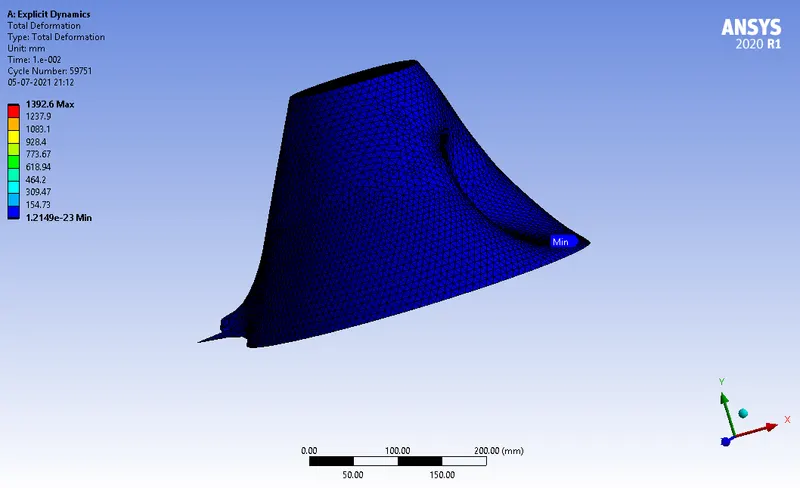
- Total deformation
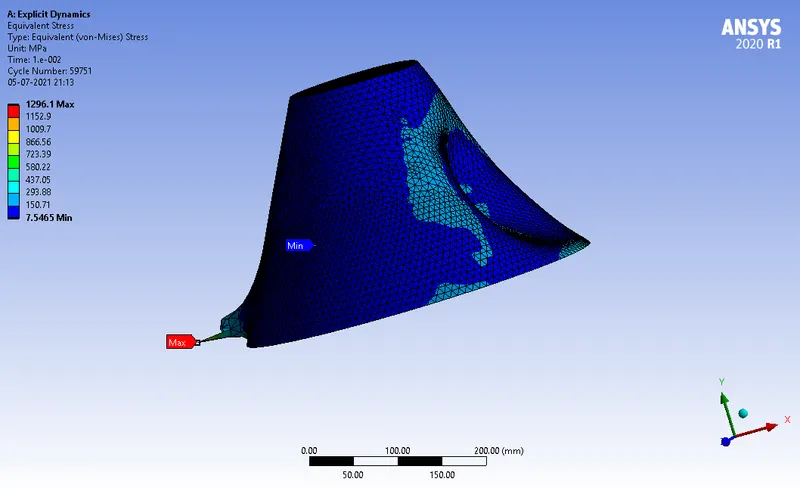
- Equivalent stress
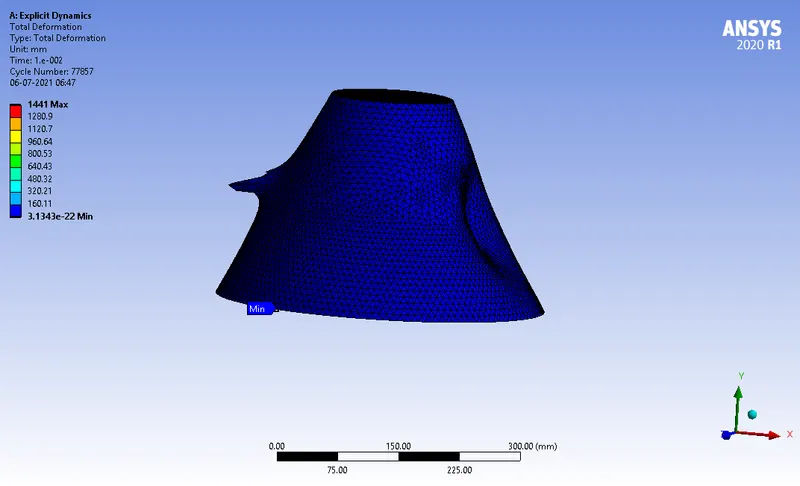
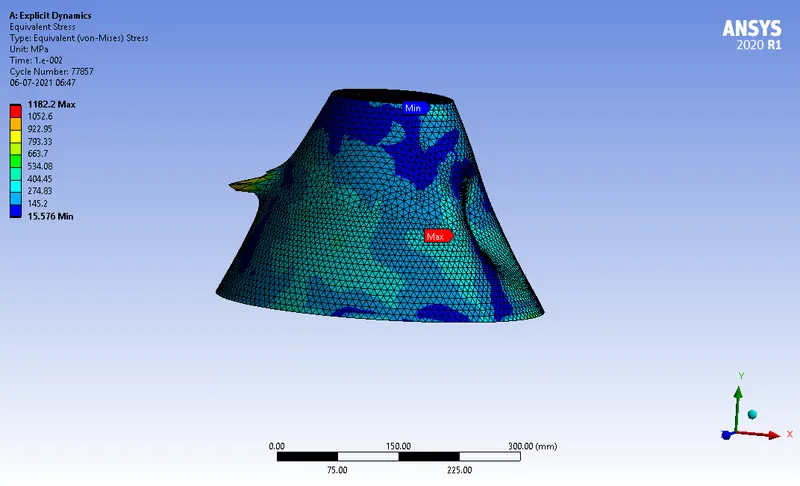
CASE 2: Titanium Alloy NL is assigned for the bucket
ANIMATION:
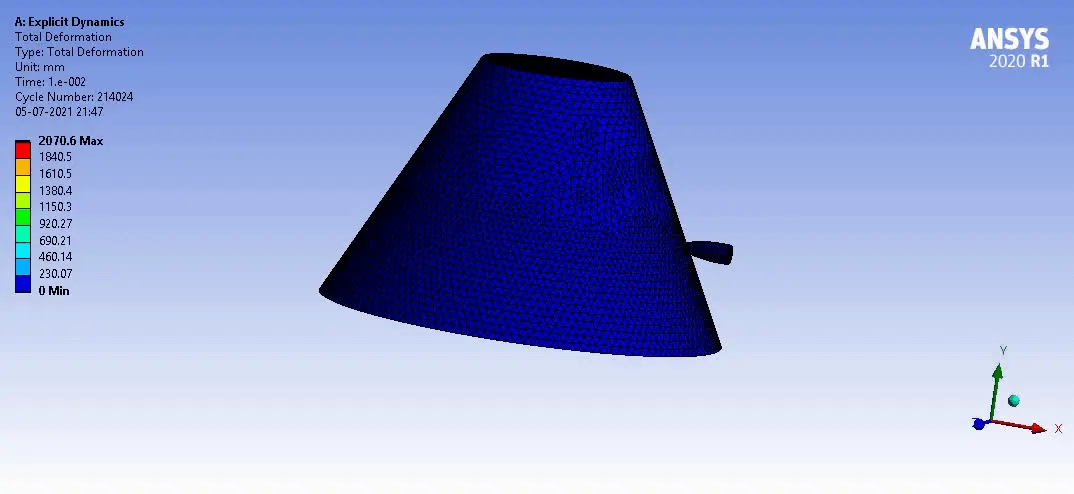
- Total deformation:
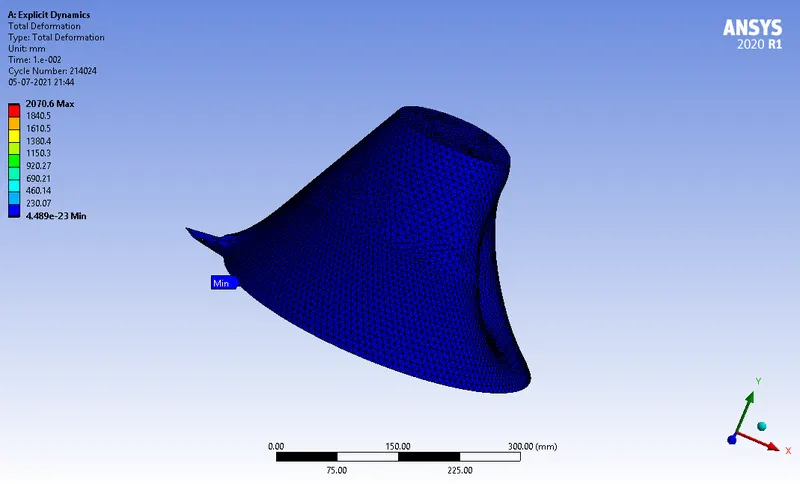
- Equivalent stress
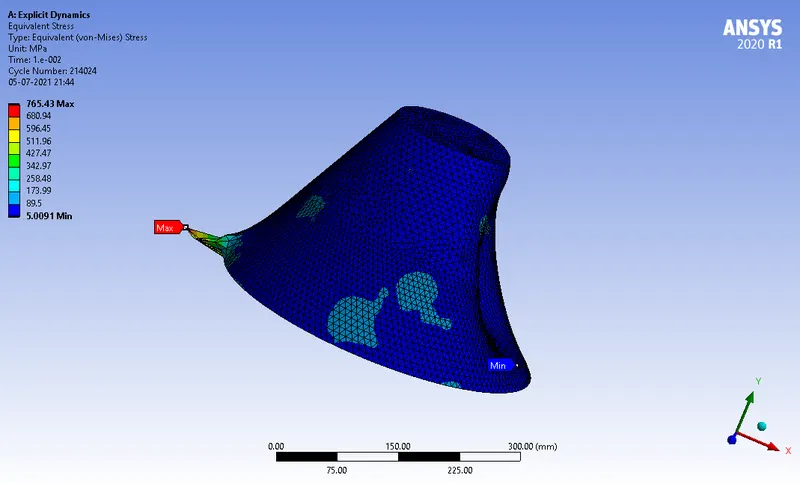
CASE 3: Magnesium Alloy NL is assigned for the bucket
ANIMATION
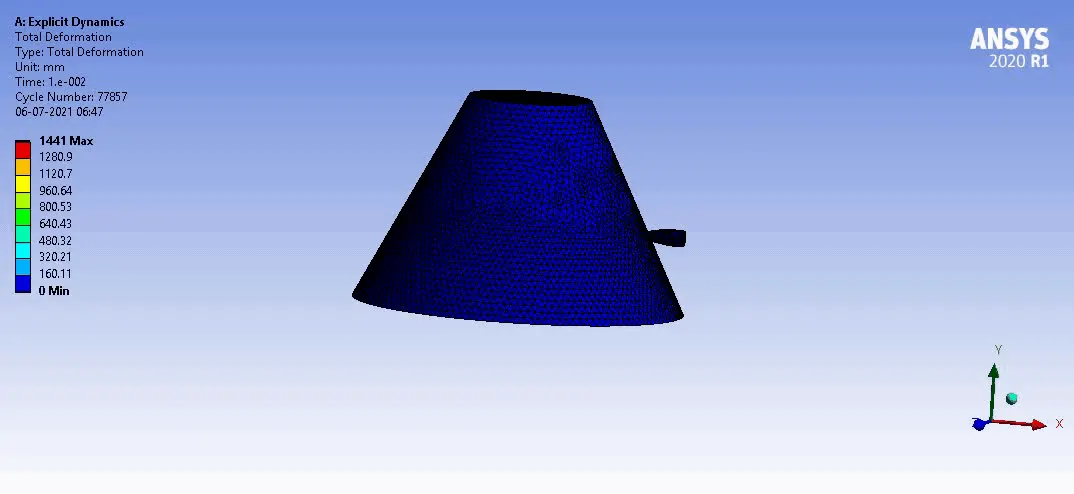
- Total deformation
- Equivalent stress
CONCLUSION:
From the results, it can be inferred that
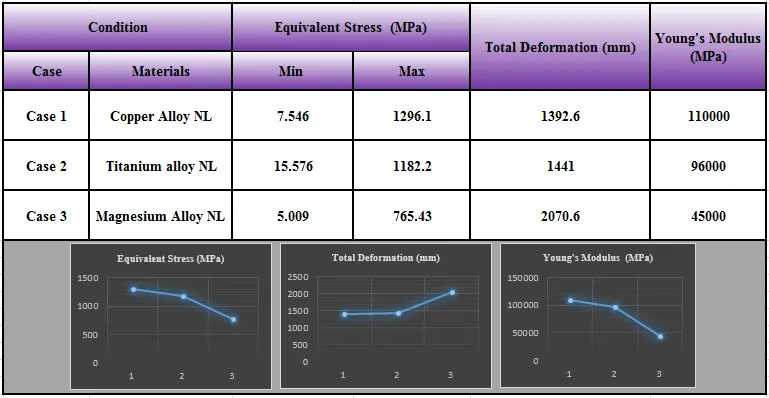
- Equvialent Stress induced on the bucket is maximum in Cu Alloy NL bucket, followed by Ti Alloy NL and Mg Alloy NL. As Young's Modulus is higher for Cu Alloy NL and hence the material is stiffer, so the bullet penetration is difficult, hence stress induced is higher.
- Total Deformation is higher in Mg Alloy NL, followed by Ti Alloy NL and Cu Alloy NL. As Young's Modulus is lower for Mg Alloy NL, deformation is higher
- Ti Alloy NL results falls in between both the cases
The simulation files are attached below