Simulation of Bullet penetrating a Bucket using Ansys-Workbench
AIM: The aim of this Simulation is to perform an Explicit analysis of a Bullet penetrating into a Bucket.
OBJECTIVE:
The objective of this simulation is to perform the above analysis with three Non-Linear Materials they are:
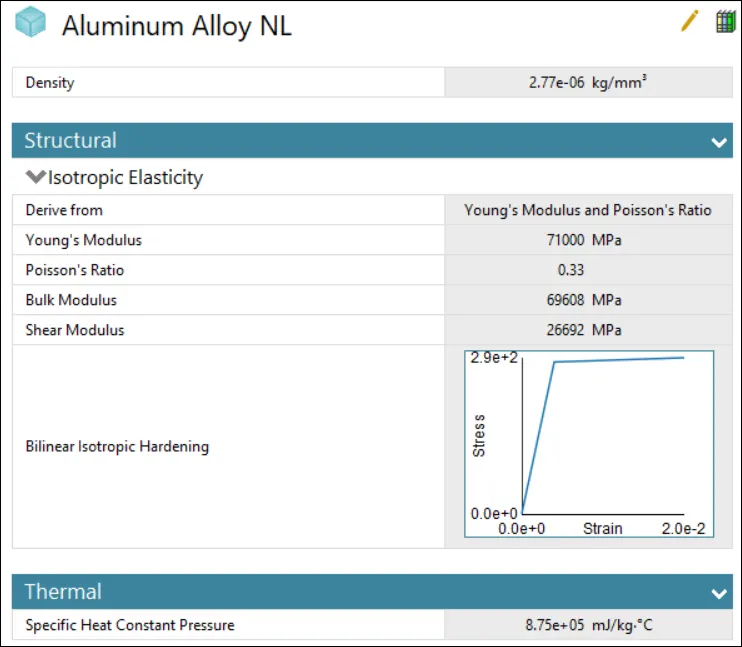
- Aluminium Alloy NL
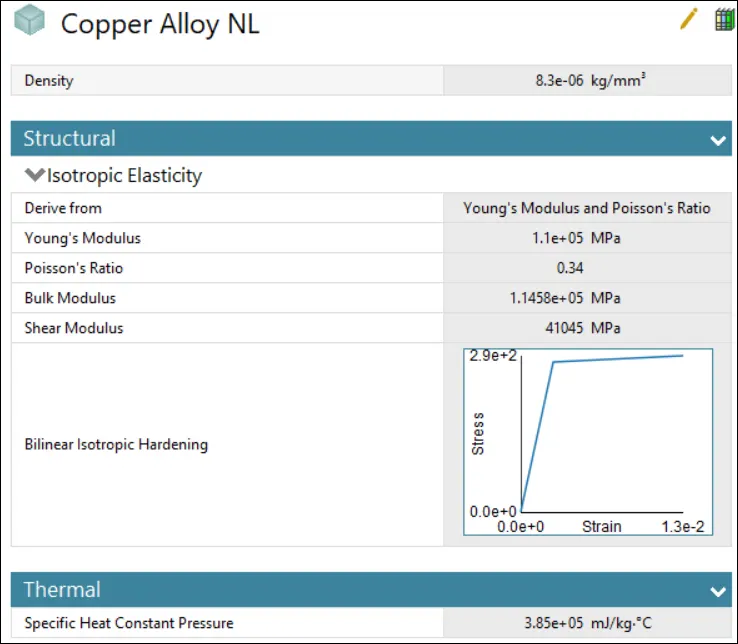
- Copper Alloy NL
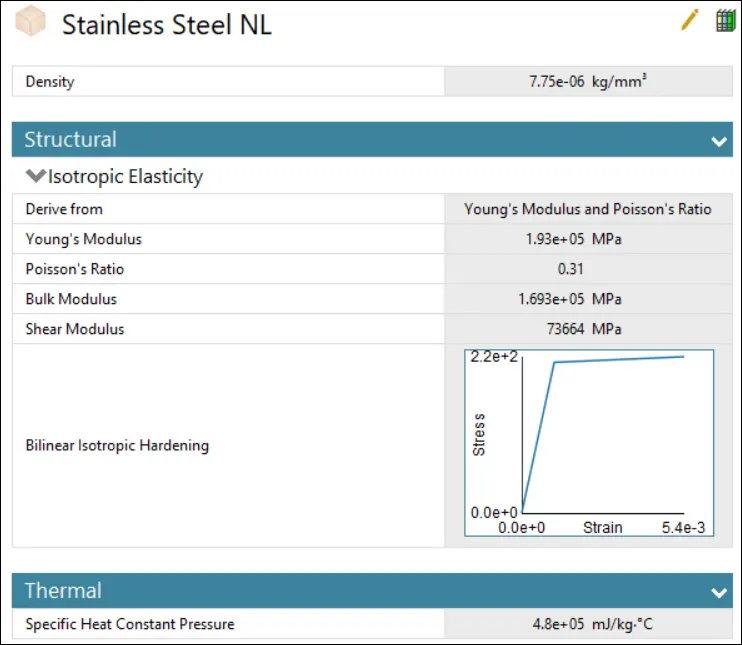
- Stainless Steel NL
PROCEDURE:
First, we have to start by setting up the Model. Before importing the model we can select the materials from the Engineering Database. For each case, we will change the materials from Aluminium Alloy NL, Copper Alloy NL, and Stainless Steel NL.
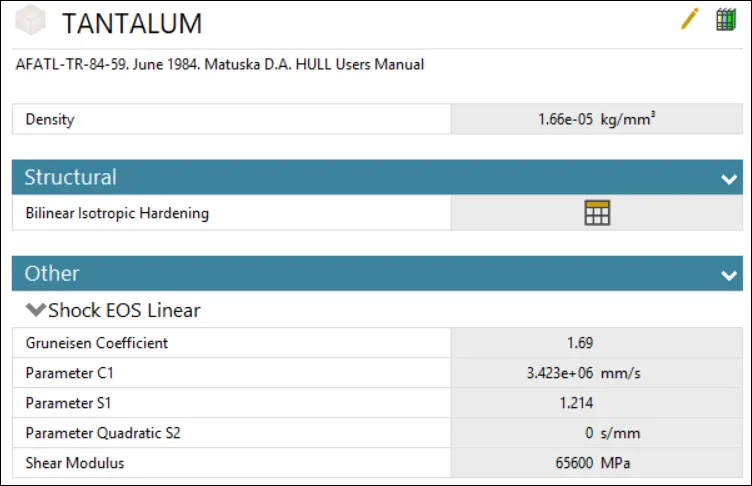
The Bullet will be given a Material called Tantalum.
Once the Materials are assigned to the parts we can select the Bullet as a Rigid body in Stiffness behaviour.
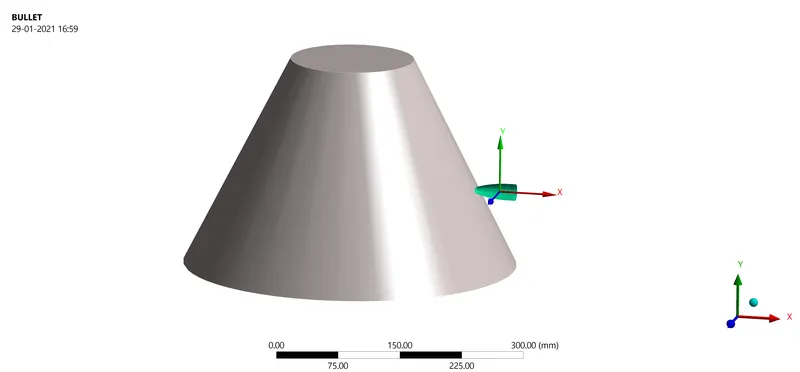
The contact behaviour between the parts will be Frictionless. We can now start with the meshing so we will be providing an edge size of 6mm to refine the region where the bullet will penetrate the Bucket.
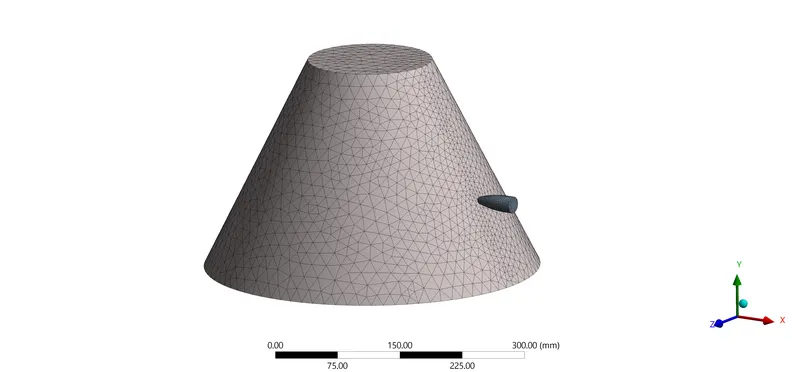
The Number of Elements is 16746 and the number of Nodes is 4777. Now we can start providing the Loading conditions and the analysis settings.
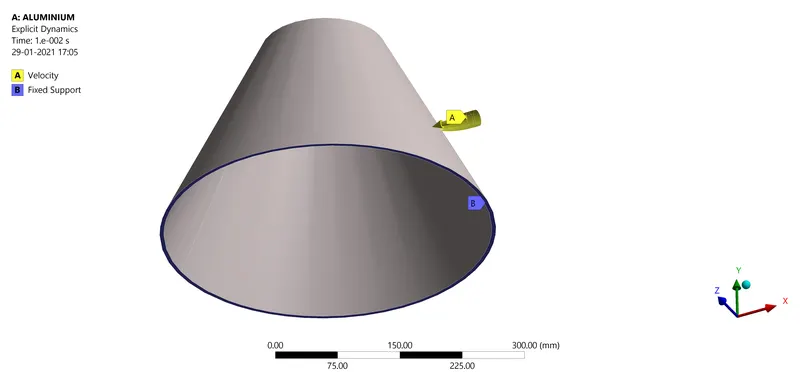
The Fixed support is given to the Blue surface and an Imposed velocity of 139000mm/s to the bullet. Here the velocity of the bullet will not change and will be constant throughout the simulation.
The end time for the Simulation can be from 0.004s to 0.01. For the first case, we have provided the end time as 0.01 but it is not necessary as the bullet will penetrate the other side by 0.004s itself. The Maximum Energy error is given as 5 so that the simulation can run.
RESULTS:
Aluminium Alloy NL:
Equivalent Stress:
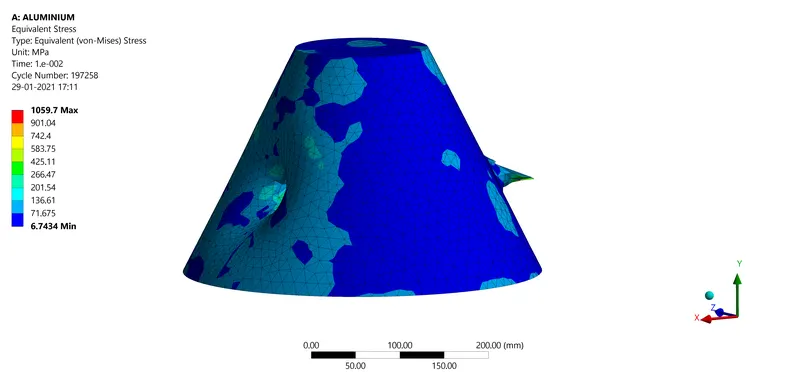
Stress Graph and Table:
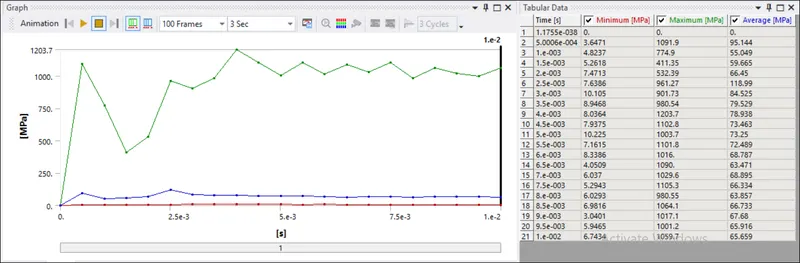
The Maximum Stress experienced in the Bucket is 1203.7MPa.
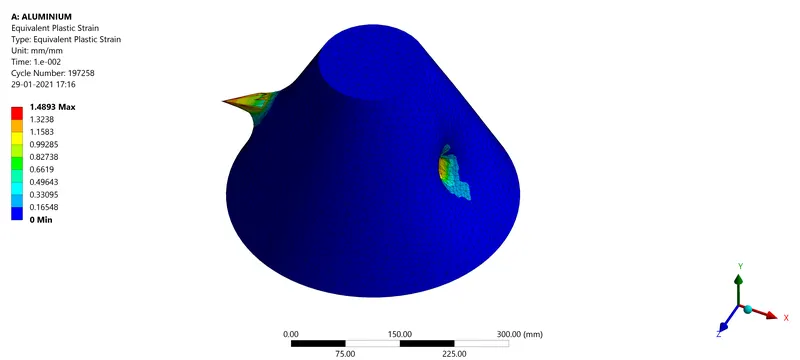
Equivalent Plastic Strain:
Plastic Strain Graph:
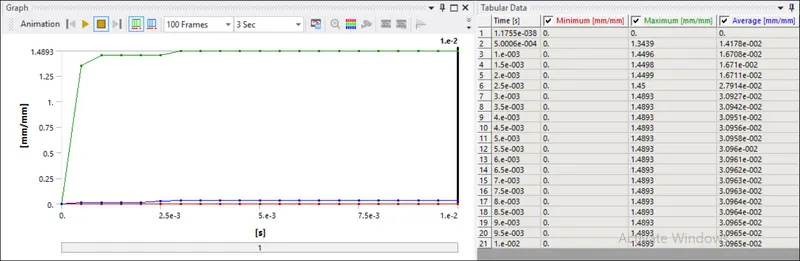
The Maximum Plastic Strain experienced in the Bucket is 1.4893 mm/mm.
Internal Energy:
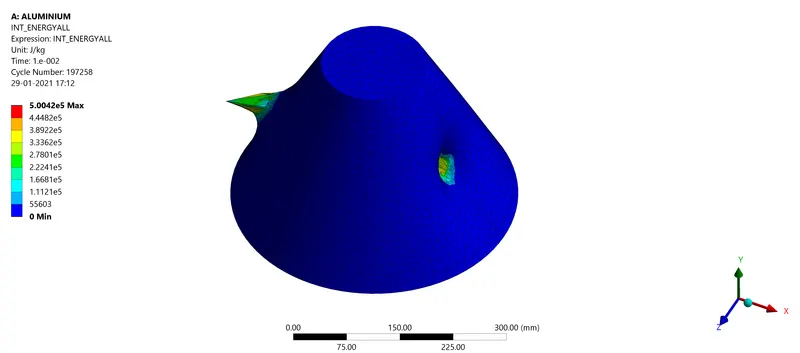
Internal Energy Graph and Table:
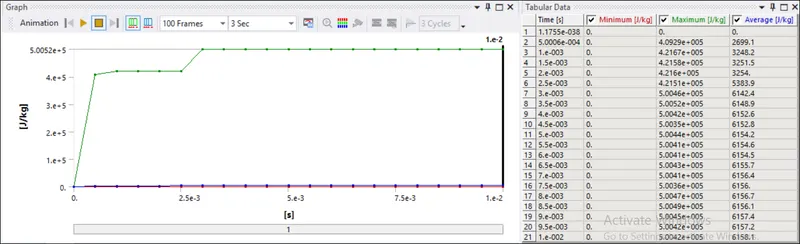
The Maximum Internal Energy experienced in the Bucket is 5.0052e5 J/kg.
The temperature of the Body:
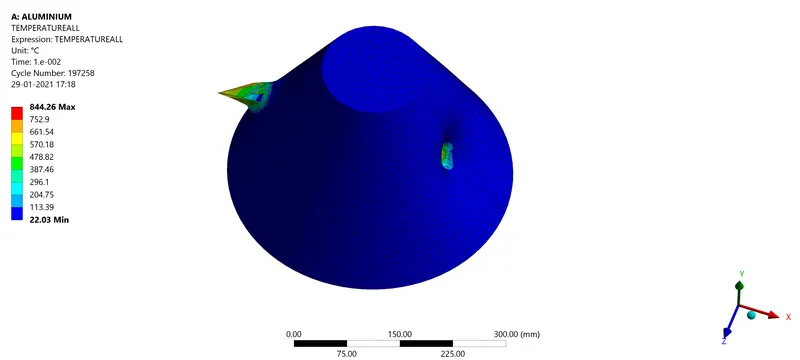
Graph and Table:
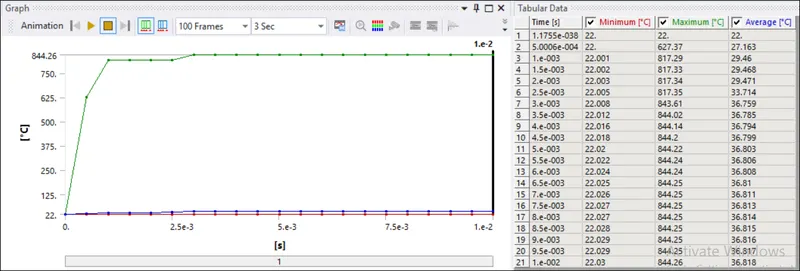
The Maximum Temperature experienced in the Bucket body is 844.26'C.
Simulation:
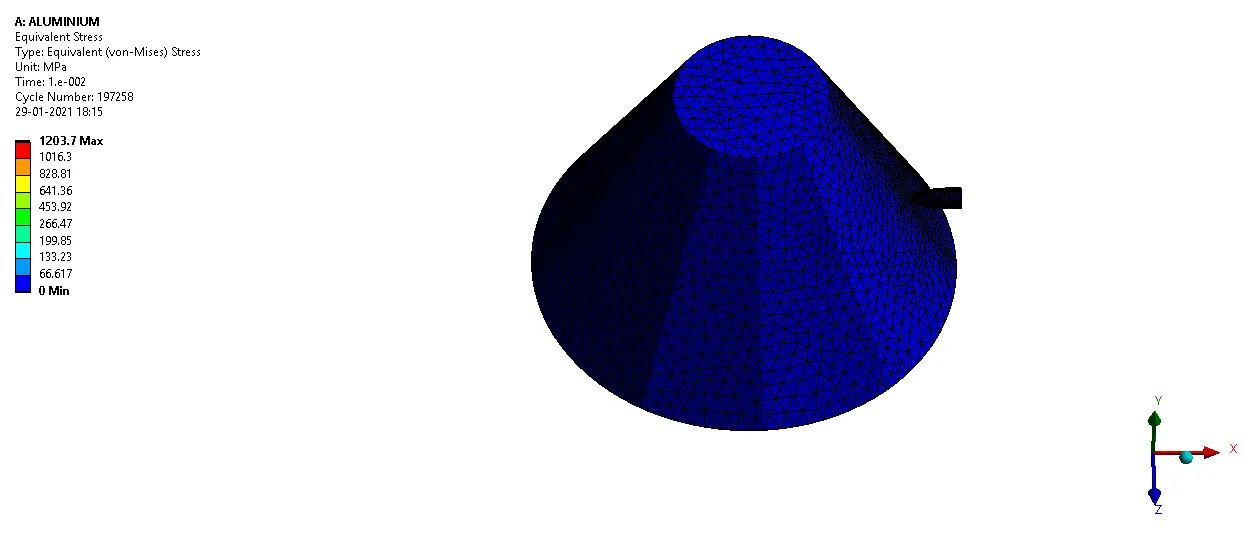
COPPER ALLOY NL:
Equivalent Stress:
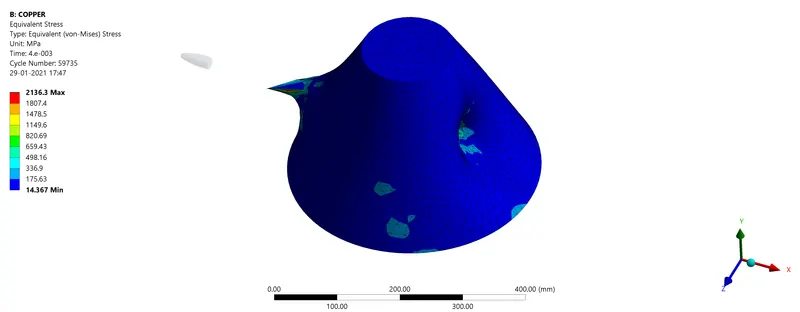
Stress Graph and Table:
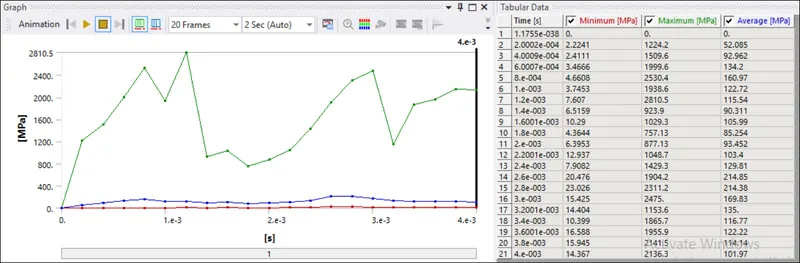
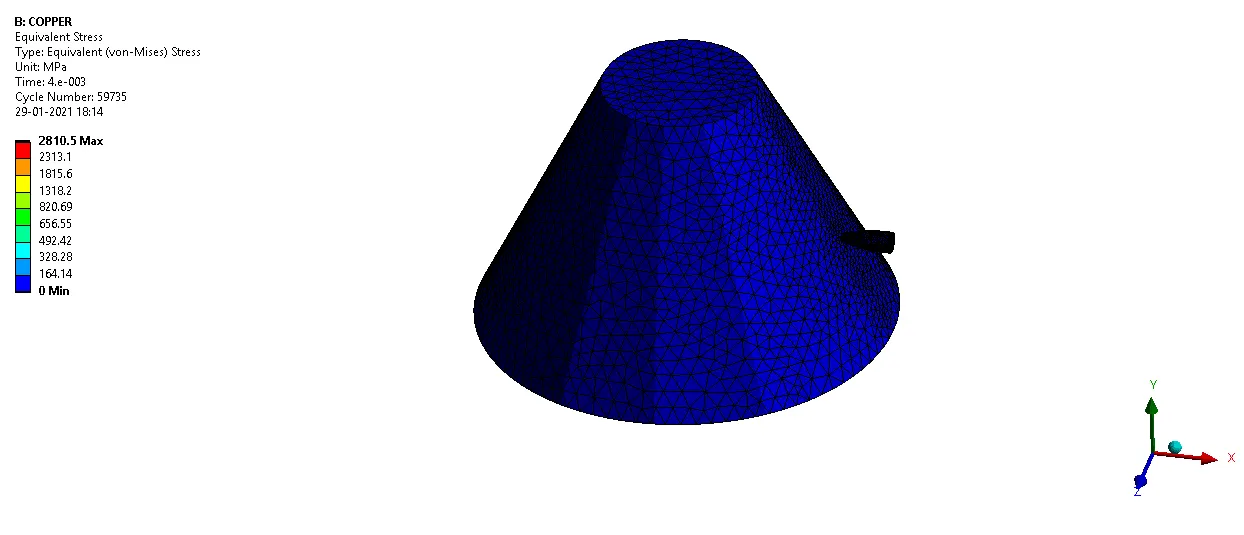
The Maximum Stress experienced in the Bucket is 2810.5 MPa.
Equivalent Plastic Strain:
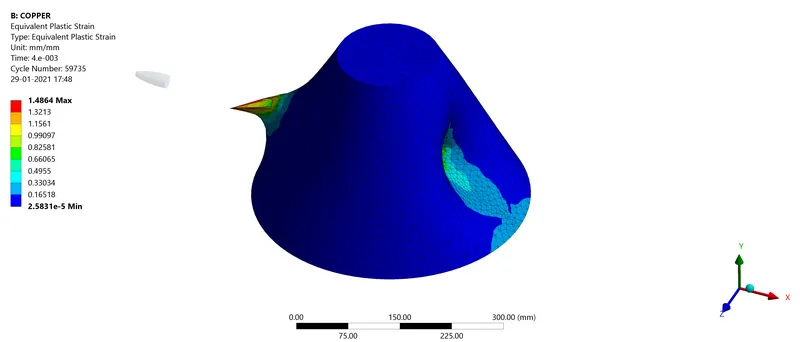
Plastic Strain Graph:
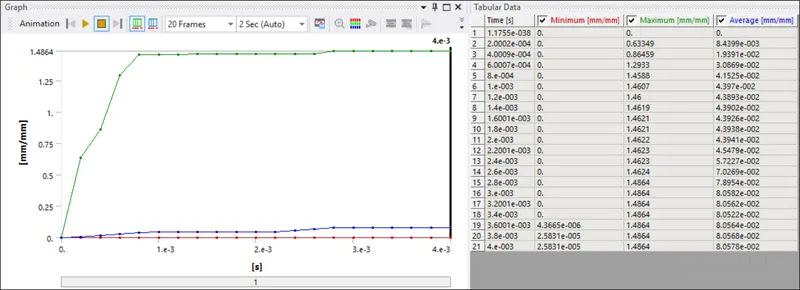
The Maximum Plastic Strain experienced in the Bucket is 1.4864mm/mm.
Internal Energy:
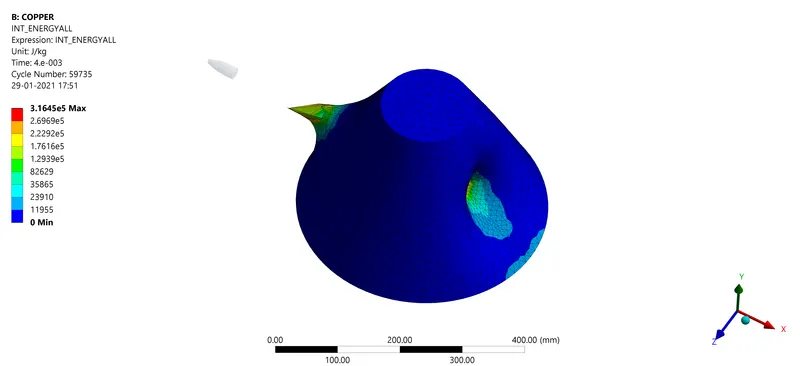
Internal Energy Graph and Table:
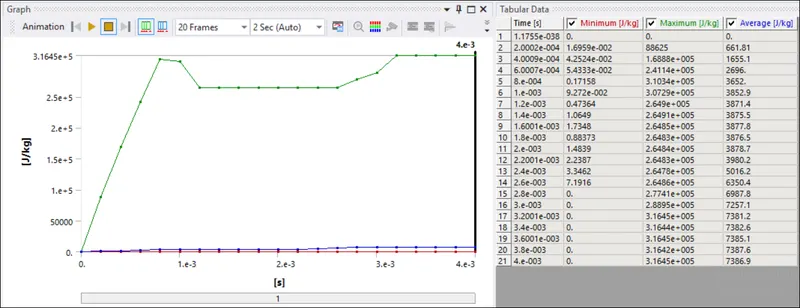
The Maximum Internal Energy experienced in the Bucket is 3.1645e5 J/kg.
The temperature of the Body:
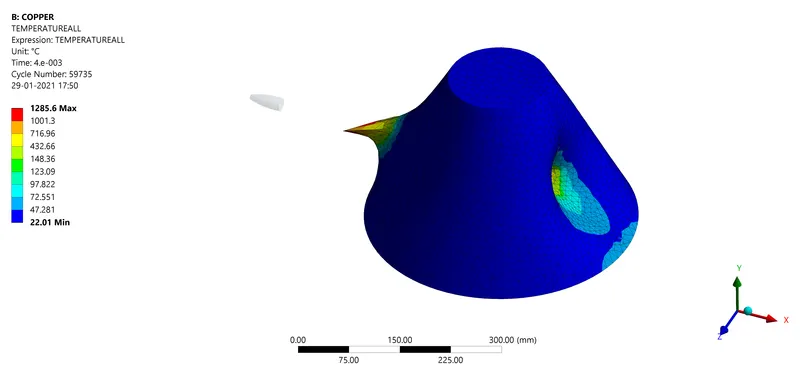
Graph and Table:
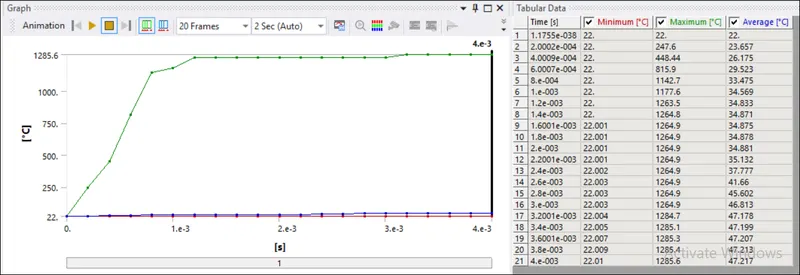
The Maximum Temperature experienced in the Bucket body is 1285.6'C.
Simulation:
STAINLESS STEEL NL:
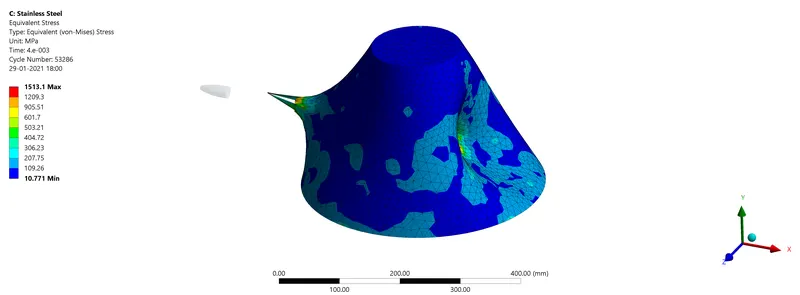
Equivalent Stress:
Stress Graph and Table:
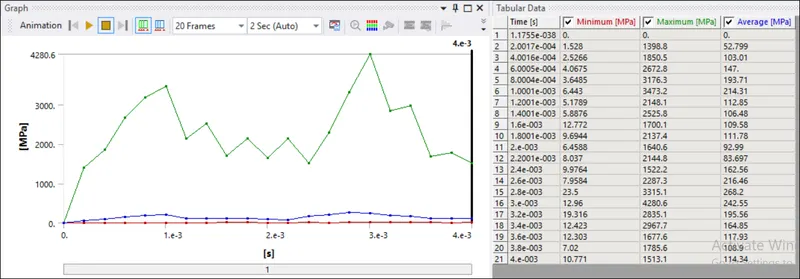
The Maximum Stress experienced in the Bucket is 4280.6 MPa.
Equivalent Plastic Strain:
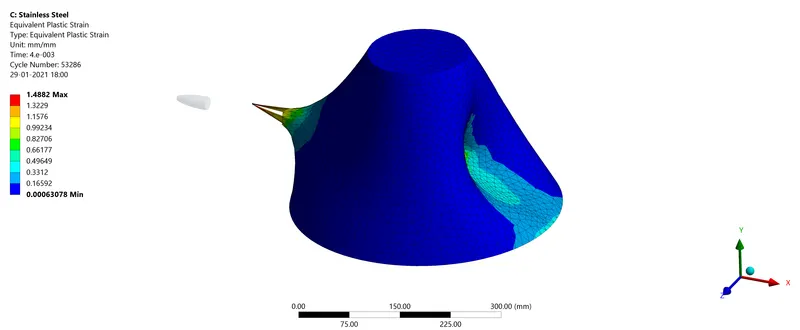
Plastic Strain Graph:
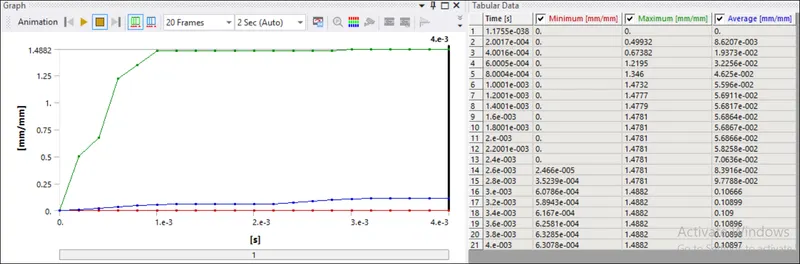
The Maximum Plastic Strain experienced in the Bucket is 1.4882 mm/mm.
Internal Energy:
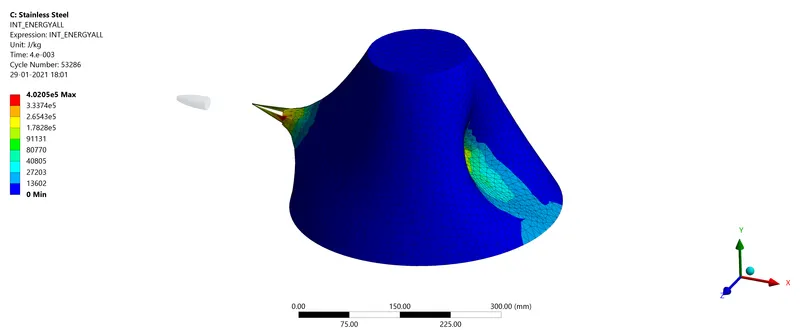
Internal Energy Graph and Table:
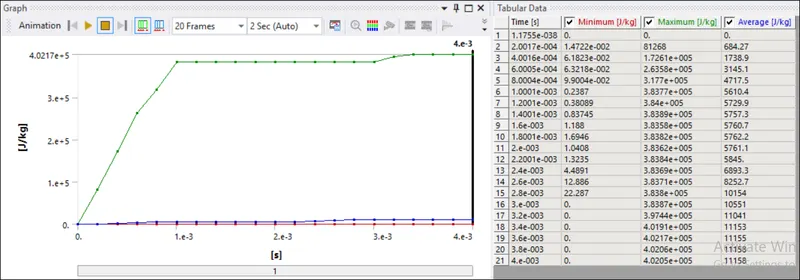
The Maximum Internal Energy experienced in the Bucket is 4.0217e5 J/kg.
The temperature of the Body:
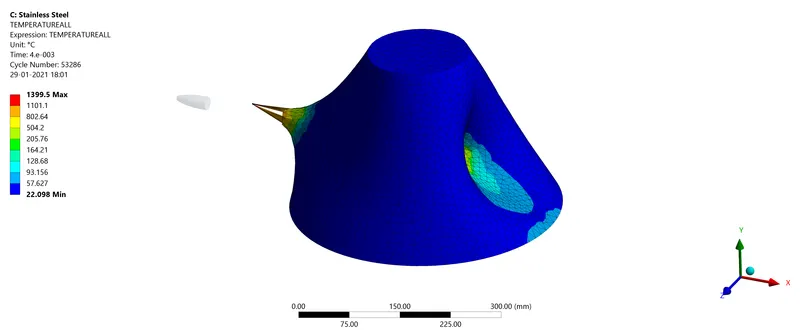
Graph and Table:
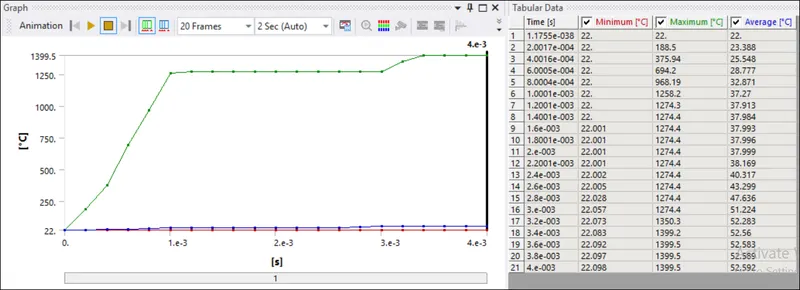
The Maximum Temperature experienced in the Bucket body is 1399.5'C.
Simulation:
CONCLUSION:
From the below table we can compare the results.

The Maximum Stress formation is seen in Stainless Steel alloy as the stress is maximum the Temperature produced is also the highest compared to the rest of the materials.
Highest internal energy is seen in Aluminium Alloy. Internal energy is the energy absorbed by the bucket during impact. Since the bucket is able to produce the highest internal energy compared to the rest of the cases the stress formed is the lowest. As the stress is low even the temperature of the bucket is also lowest compared to the other two cases.
Google Drive Link:
https://drive.google.com/file/d/1MrzhTpmg5O7tz0KOFOhpF5ErV41V0UQS/view?usp=sharing