Week 10 Bullet penetrating a Bucket Challenge
Explicit dynamics of Bullet penetration.
Case1
Material used
For Bucket, we used AL 1100, Density is 2707 Kg m^-3, Shear modulus as 27100 MPa and Specific heat is 884 J kg^-1 C^-1
For Bullet, we used Copper Alloy NL, Density is 8300 Kg m^-3 and Specific heat is 385 J kg^-1 C^-1
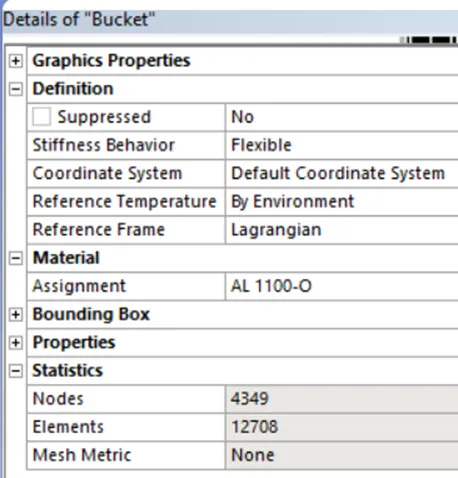
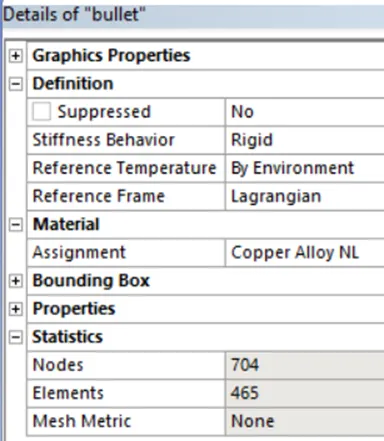
Mesh Details
For the meshing part, the object is meshed by default without any reforms. So, the generated mesh will be as described below,
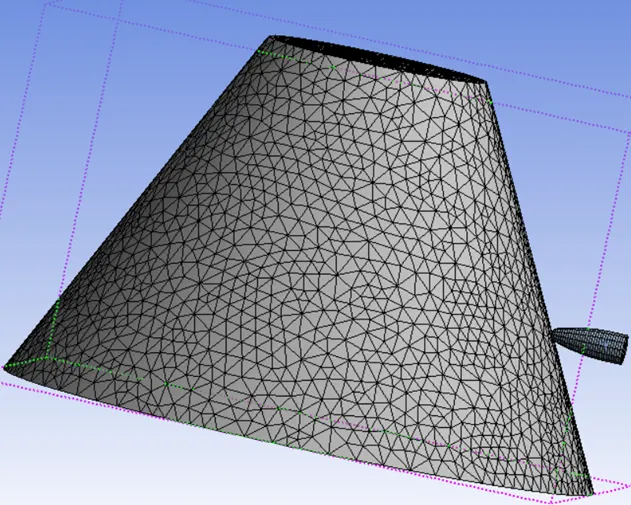
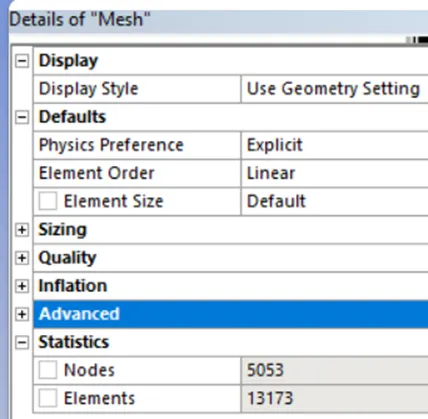
If we notice at the statistics of mesh the nodes and elements of the model is increased significantly which concludes a changeover of lower order element to higher order element (are nothing but additional nodes placed on the element to facilitate a better understanding of the element during the solving process). So mostly in commercial use linear order is highly preferred, due to the project deadline. Now using that scenario I am using linear order for this mesh as shown above.
Mesh Metrics
- Element quality.
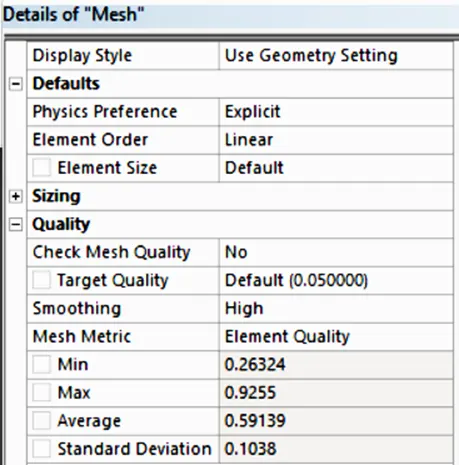
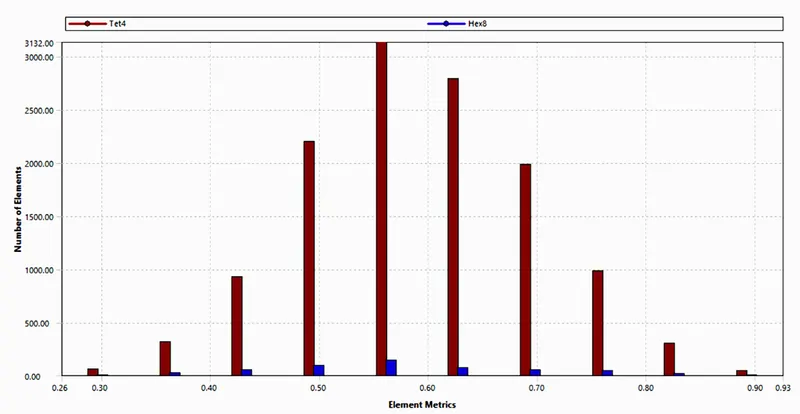
The Element quality option provides a composite quality metric that ranges between 0 and 1 and this metric is based on the ratio of the volume (or area) to the square of the edge length.
So a Value of 1 indicates a perfect cube or square or triangle or hexagon or quad while a Value of 0 indicates that the element has a zero or negative volume
|
Mesh Metric |
Element Quality |
|
Minimum |
0.52067 |
|
Maximum |
0.9972 |
|
Average |
0.88221 |
|
Standard Deviation |
0.099086 or 9.9086e-002 |
By Comparing the results we conclude that our element quality is in midst of 0 to 1 which is suggested as best suitable and not less than 0.
Aspect Ratio:
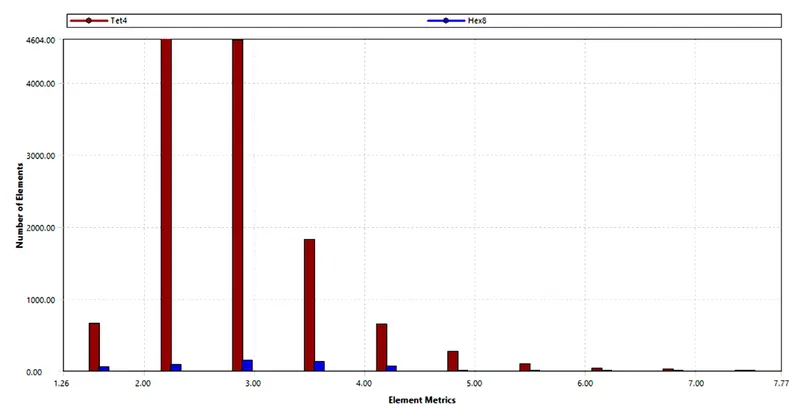
It is the ratio of longest to shortest dimension in the element or CELL STRETCHING
Aspect ratio = A/B, always try to keep the longest and shortest dimension in the element equal so that the aspect ratio is always close to value 1.
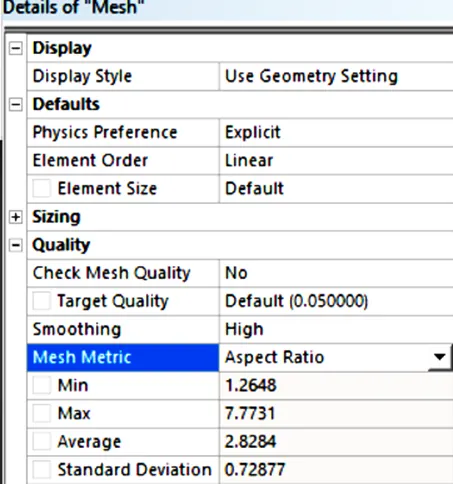
Here in our case, the value is more than 1 which is not suggested as per our case, but due to our time constraints we accepted these values
Jacobian ratio:
It is the Mathematical quality based on the determinant of the Jacobian matrix at various sampling points.
It is a scale/range of values between -1 to 1
+1 means best and -1 meaning worst.
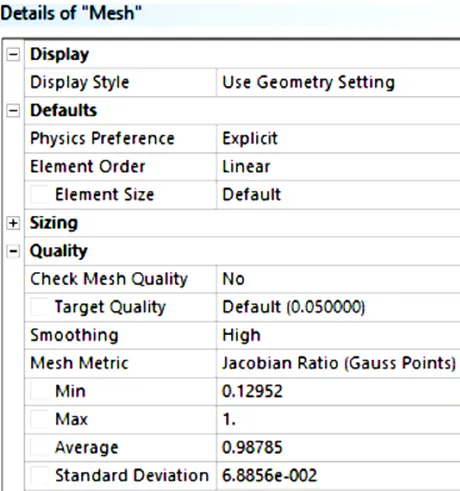
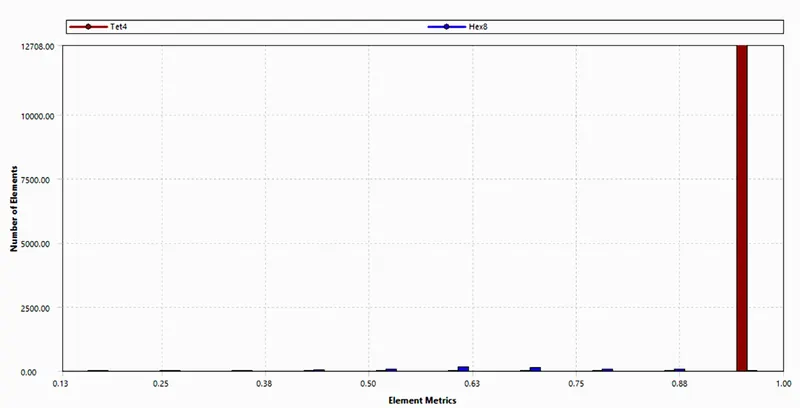
Considering the mesh quality of the Jacobian ratio we have arrived at a value of 0.98785 as average which is at the accepted range for good mesh quality practices.
Skewness
It means how close to ideal or perfect a face or cell is. It is a scale between 0 to 1. If the average value of skewness is 0 it means best and if the value is 1 meaning very bad/worst.
It is recommended that the maximum skewness does not exceed 0.9 though values up to 0.95 are acceptable.
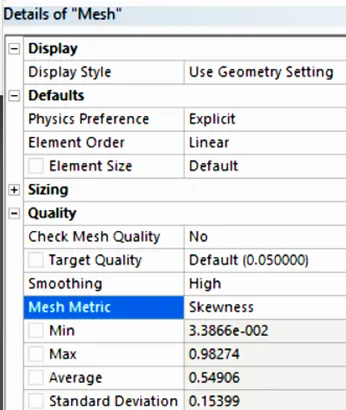
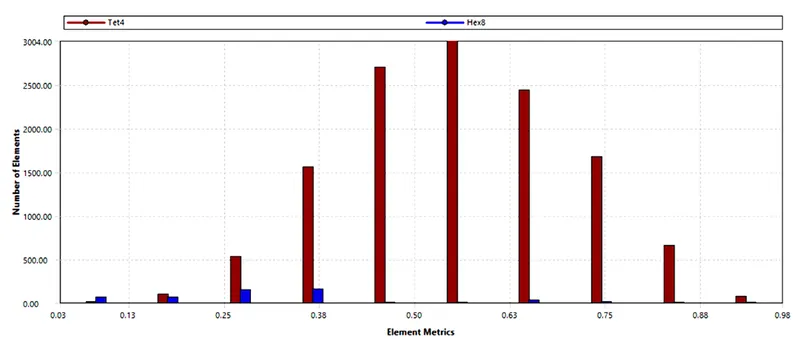
Skewness in our case is between 0 and 1 which is 0.5496 as an average value which is an accepted good quality of meshing practices.
Boundary Conditions
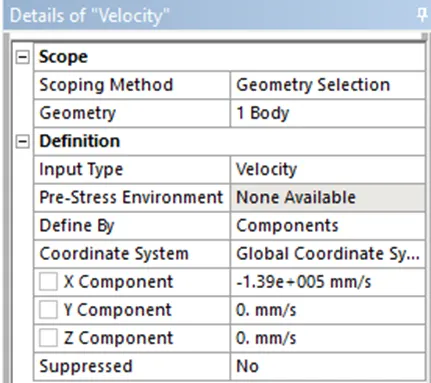
In the initial conditions, we have set the velocity at 139000mm/s at negative x direction for the materials of AL 1100 for bucket and Copper Alloy NL for bullet and when the solver has computed the result we found that the bullet is not penetrating thoroughly which it is forcefully restrained by the stress of the metal as shown below.
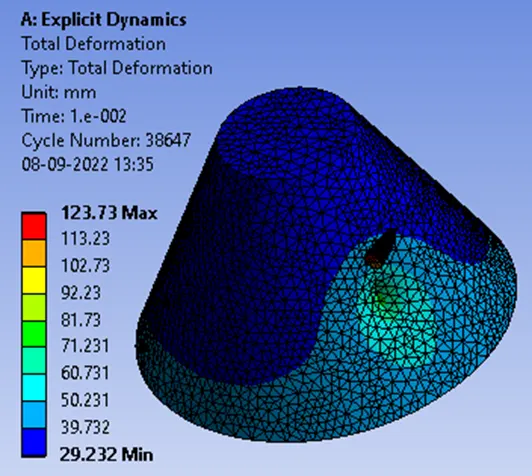
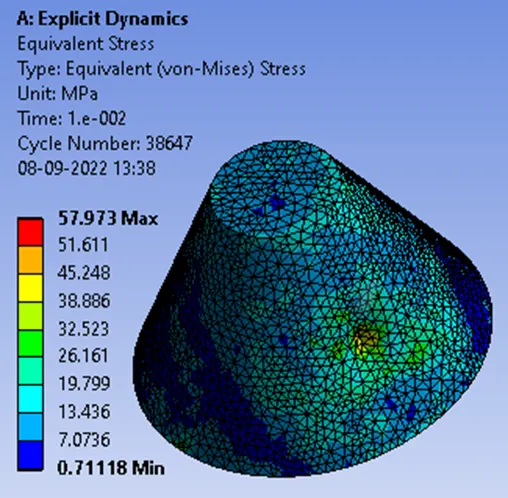
Let us now increase the velocity to 300000 mm/s for further analysis of shear forces that acts on.
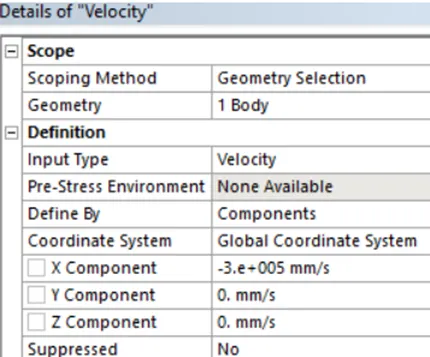
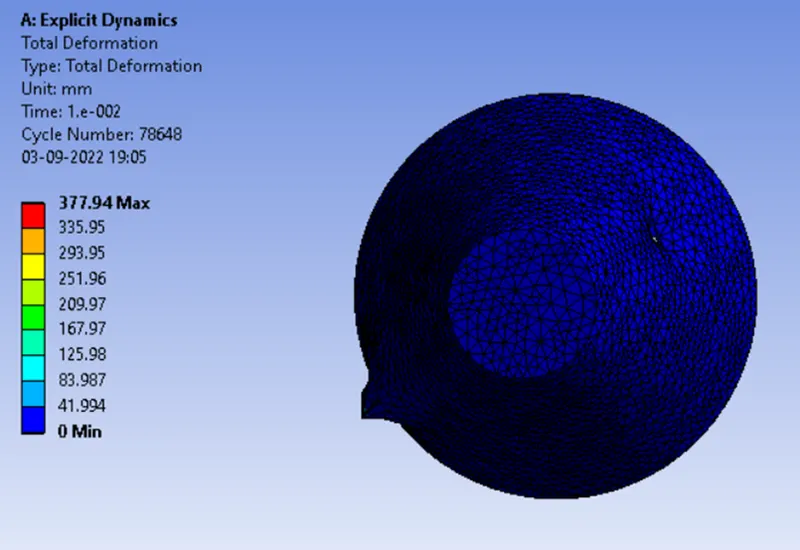
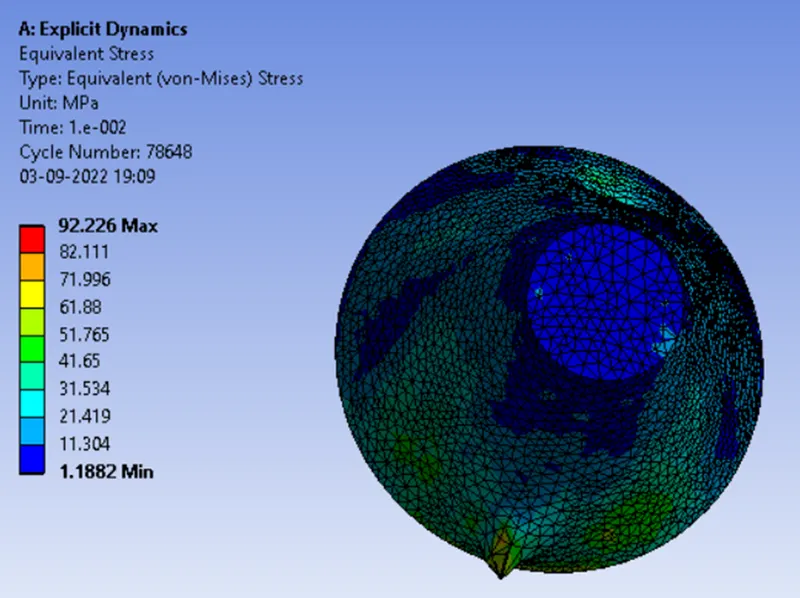
Setting the initial velocity as -300000mm/s is adequately penetrated at one side/face but the bullet is restricted on the other end, for this case it clearly shows that the materials that we used of aluminium AL 1100 for bucket and Copper alloy NL(Non-linear) material for bullet deduce the stress forces acting on the bucket that is truly resisting the initial velocity at a given rate per second which is certainly an important analysis to note for.
Let us pursue our analysis by substituting with different materials so as to predict the stress forces that are acting on the bucket material to sustain the impact of the bullet with non-linear material.
Setting the initial velocity at -400000mm/s the following results has achieved adequately.
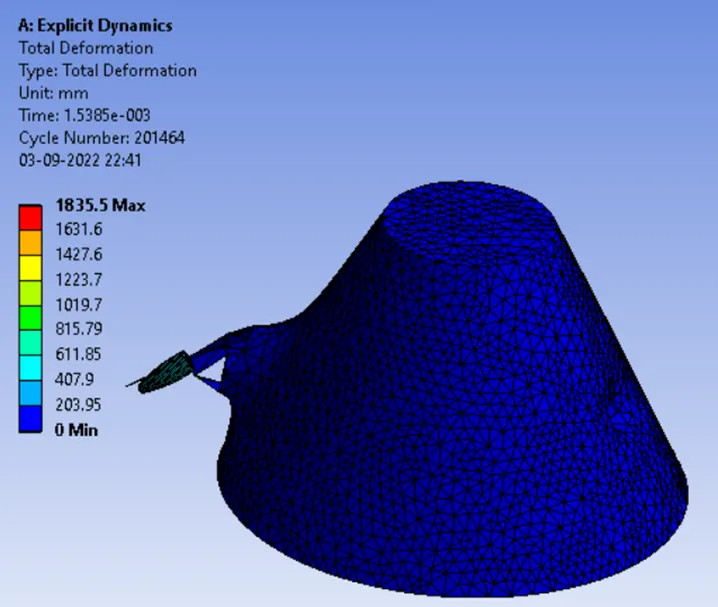
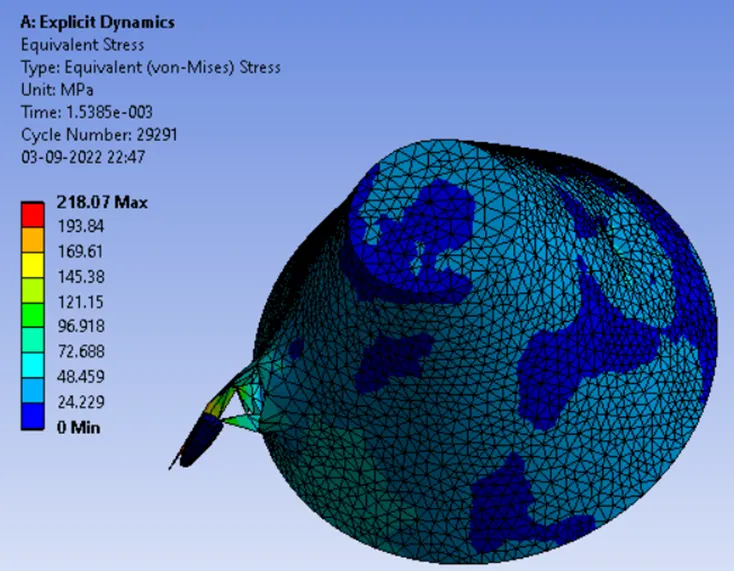
|
Material Used for the Analysis |
Velocity mm/s |
Total Deformation |
Equivalent Stress |
||
|
|
Min |
Max |
Min |
Max |
|
|
The bucket is AL 1100 The bullet is Copper Alloy NL |
-139000 mm/s |
29.232 |
123.73 |
0.71118 |
57.973 |
|
-300000 mm/s |
0 |
377.94 |
1.1882 |
92.226 |
|
|
-400000mm/s |
0 |
1835.5 |
0 |
218.07 |
|
Case 2
Material used
For Bucket, we used AL 1100 Density is 2707 Kg m^-3, Shear modulus as 27100 MPa and Specific heat is 884 J kg^-1 C^-1
For Bullet, we used Titanium Alloy NL Density is 4620 Kg m^-3 and Specific heat is 522 J kg^-1 C^-1
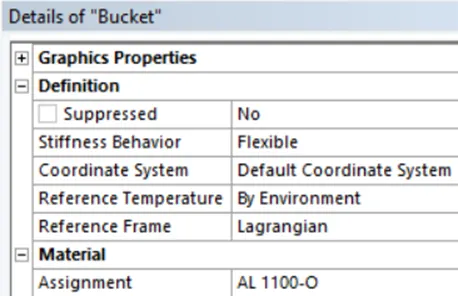
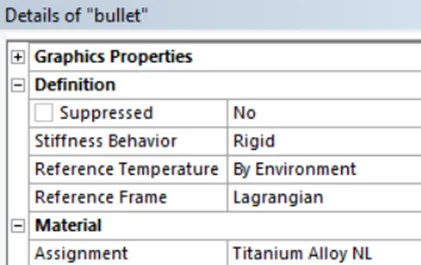
Velocity -139000 mm/s Material Bucket AL 1100 Bullet Titanium Alloy NL
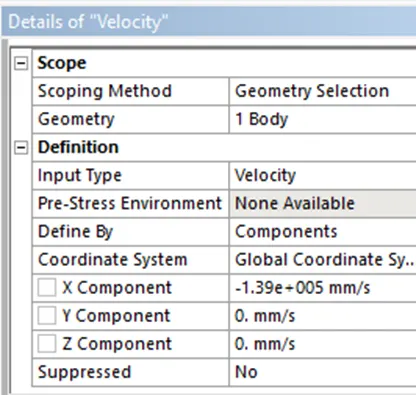
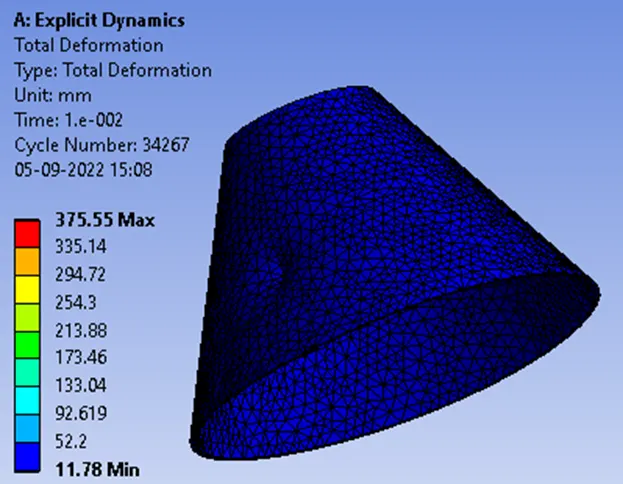
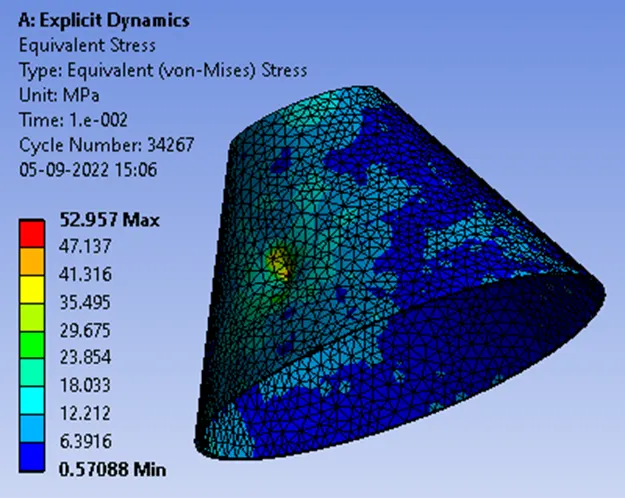
Velocity at 139000 mm/s is insufficient for the bullet to penetrate the bucket as the shear forces are strong enough to withstand such high-speed velocity.
Let us Increase the Velocity at 400000 mm/s and analyse it to see how the shear force inside the material respond to the new velocity
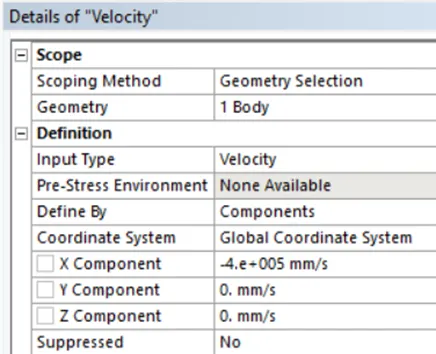
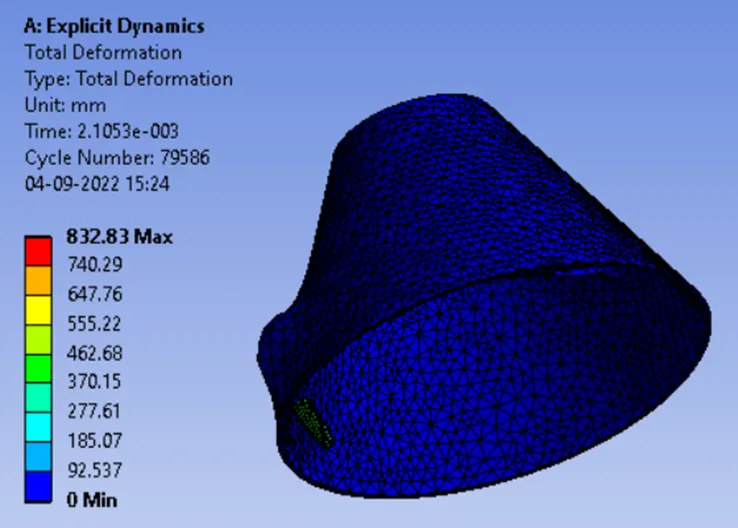
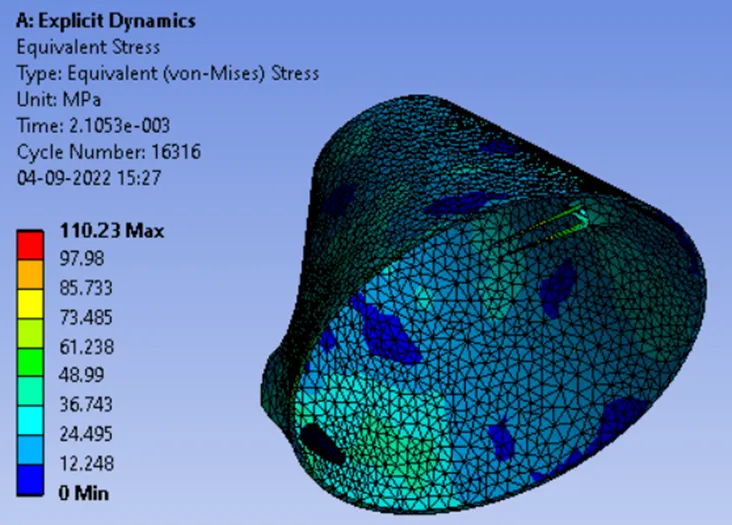
By the Ansys solver we infer from our boundary conditions that further increased velocity from 139000 mm/s to 400000 mm/s is still insufficient for the bullet to penetrate on both sides as the shear forces acting on the material is so high that it is impenetrable.
Let us alter our velocity to a much higher value of about 550000mm/s and let us analyze our results
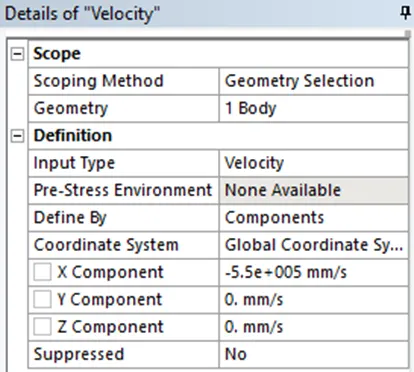
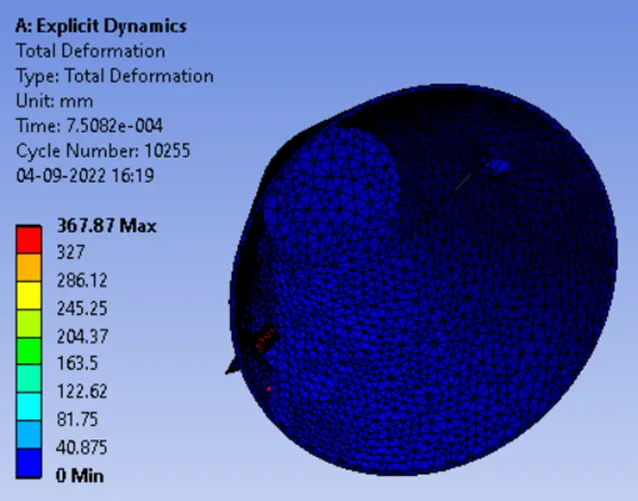
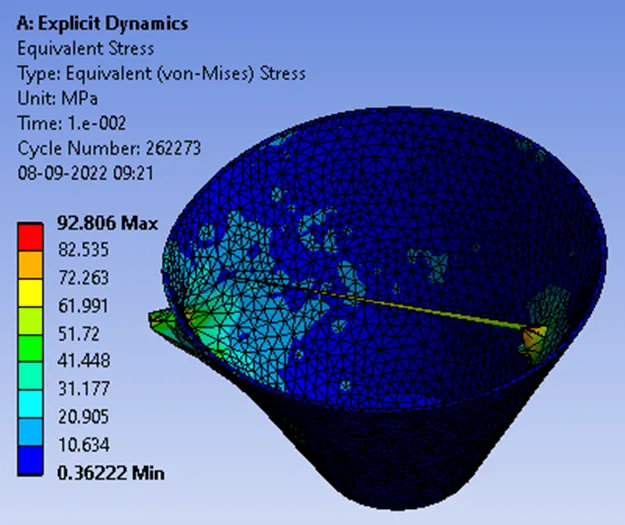
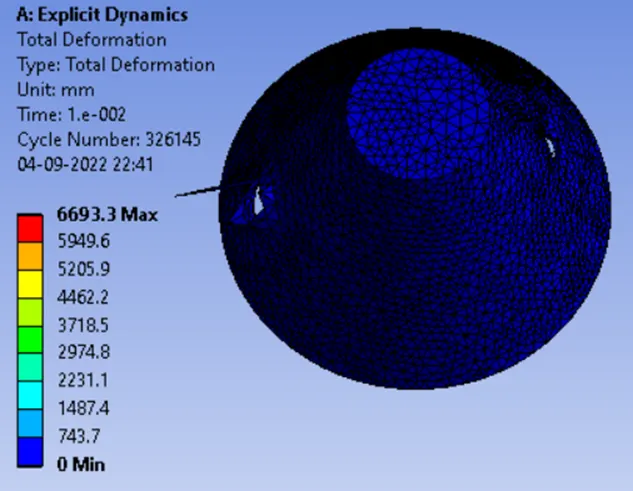
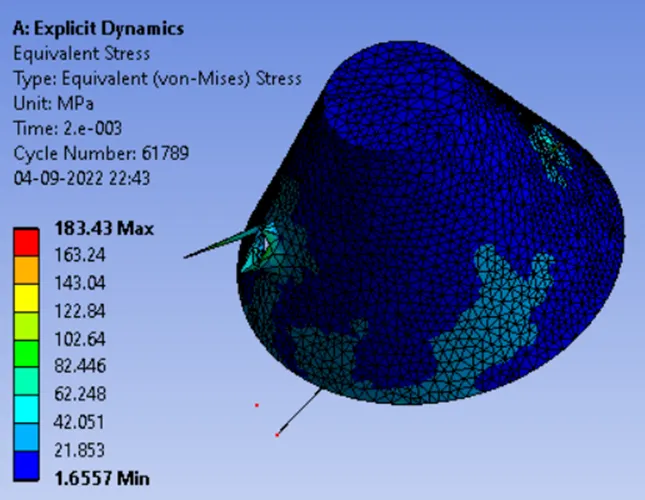
From the analysis, we arrive that the bullet is not penetrating entirely on the other end fully despite the maximum force of 550000mm/s as set.
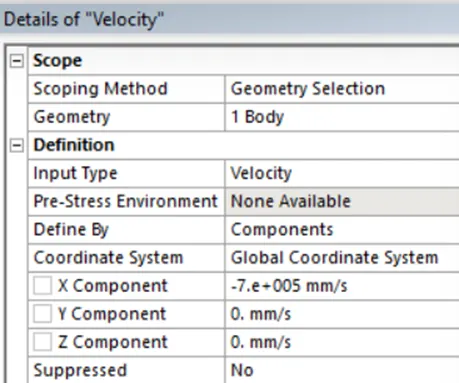
Ok, now let us try for increasing the velocity to 700000 mm/s, and analyse it,
|
Material Used for the Analysis |
Velocity mm/s |
Total Deformation |
Equivalent Stress |
||
|
|
Min (mm) |
Max (mm) |
Min (MPa) |
Max (MPa) |
|
|
The bucket is AL 1100 The bullet is Titanium Alloy NL |
-139000 mm/s |
11.78 |
375.55 |
0.57088 |
52.957 |
|
-400000 mm/s |
0 |
832.83 |
0 |
110.23 |
|
|
-550000 mm/s |
68.316 |
4627.7 |
0.36222 |
92.806 |
|
|
-700000 mm/s |
0 |
6693.3 |
1.6557 |
183.43 |
|
Case 3
Material used
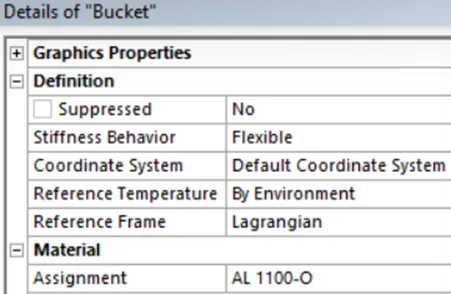
For Bucket, we used AL 1100 Density is 2707 Kg m^-3, Shear modulus as 27100 MPa and Specific heat is 884 J kg^-1 C^-1
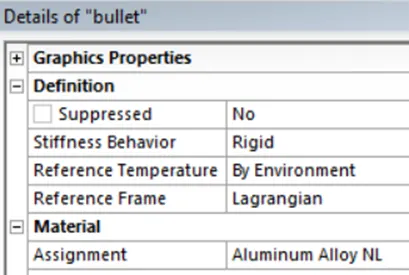
For Bullet, we used Aluminium Alloy NL Density is 2770 Kg m^-3 and Specific heat is 875 J kg^-1 C^-1
First let us set the boundary condition as initial velocity of 139000 mm/s and analyse it
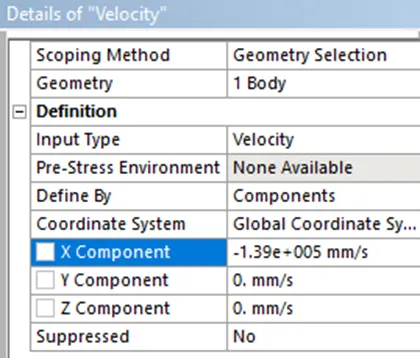
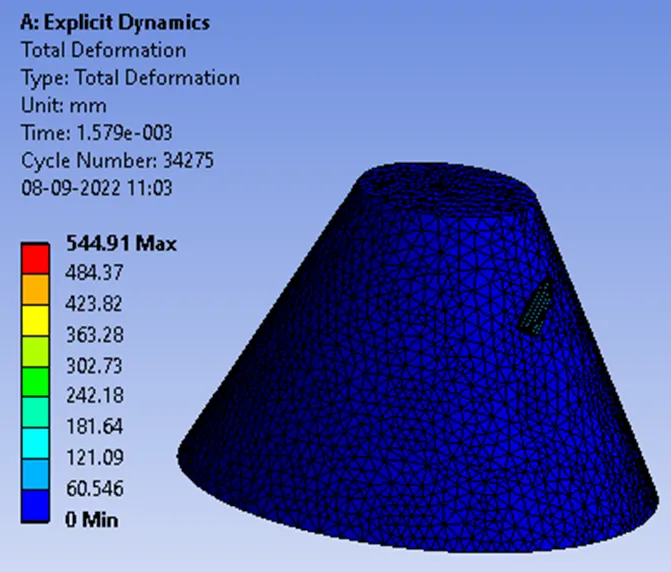
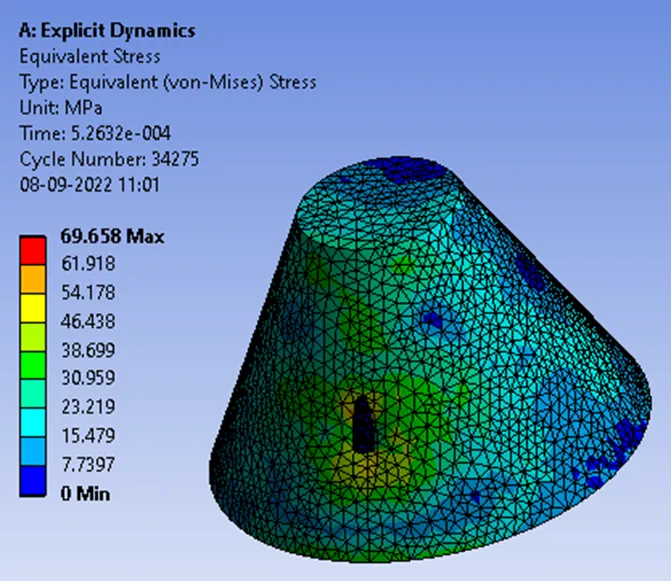
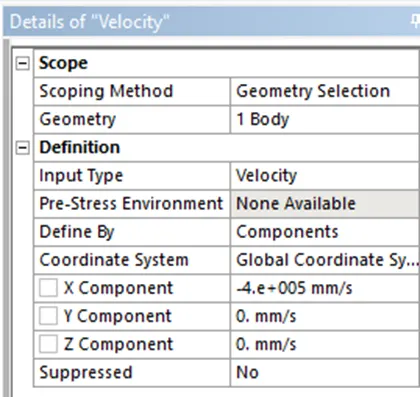
Ok, now let us try for increasing the velocity to 300000 mm/s, and analyse it for further results
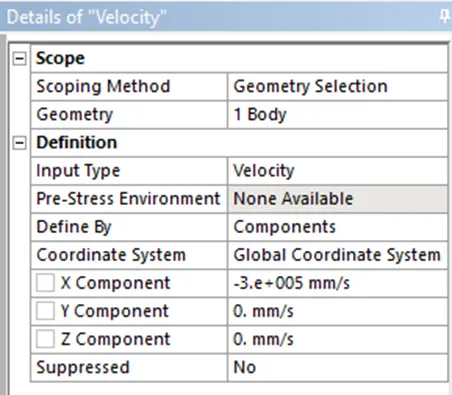
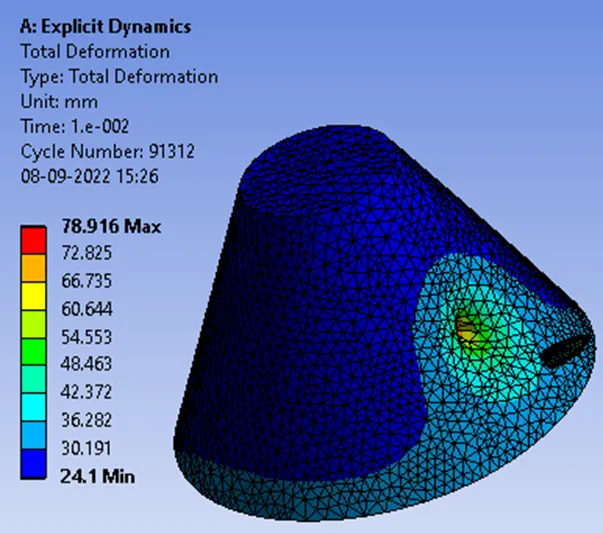
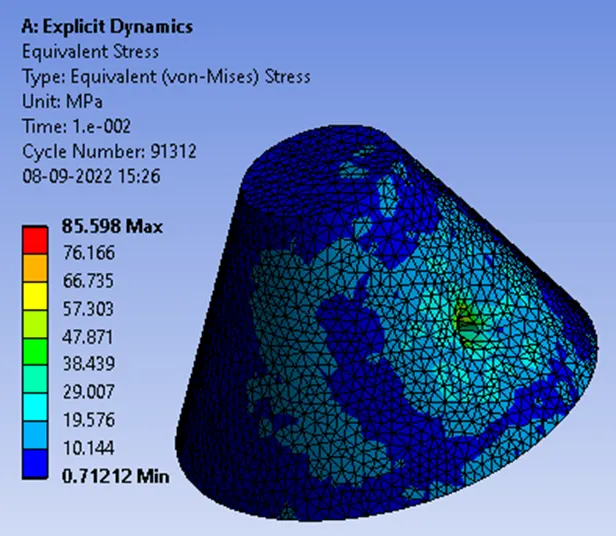
Ok, now let us try for increasing the velocity to 400000 mm/s, and analyse it for further results
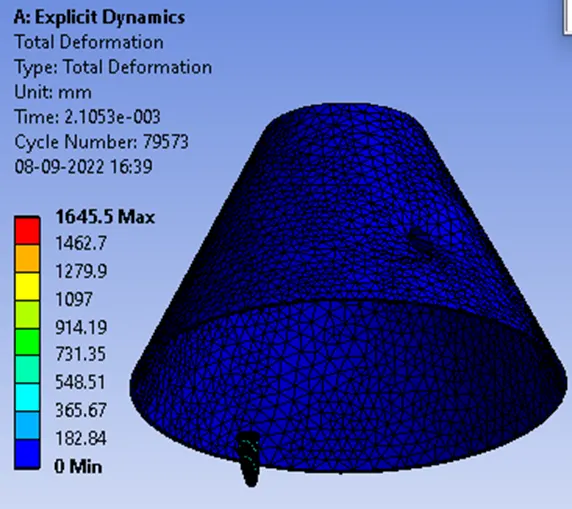
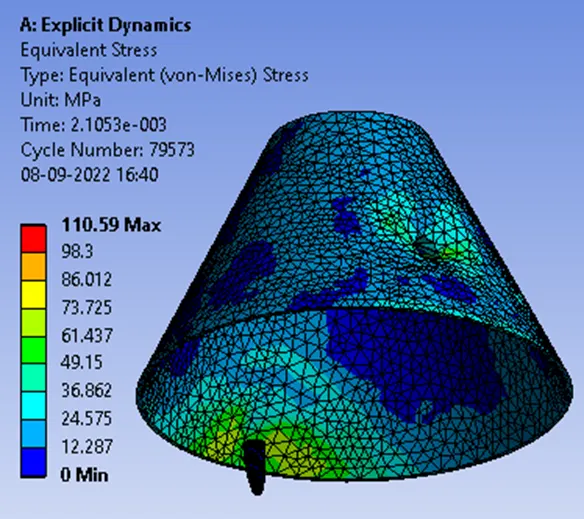
Ok, now let us try for increasing the velocity to 550000 mm/s, and analyse it for further results
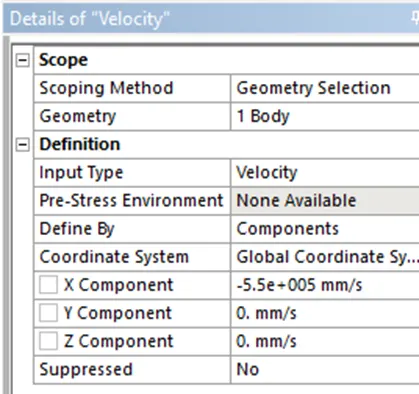
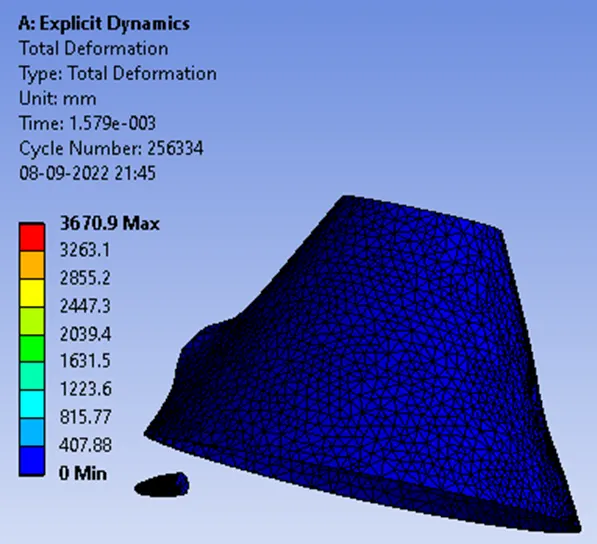
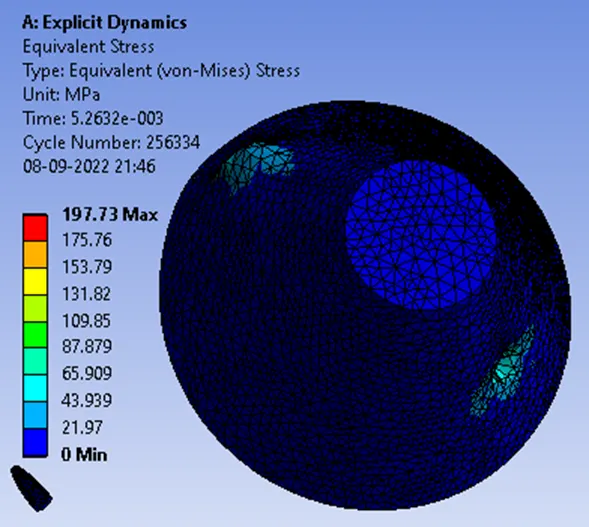
For case 3 of different non-linear material despite setting up a higher velocity the bullet is still impenetrable or impossible to penetrate thoroughly on the bucket defining that the shear forces acting on the bucket material is large enough to withstand the impact. Ok, now let us try for increasing the velocity to 700000 mm/s
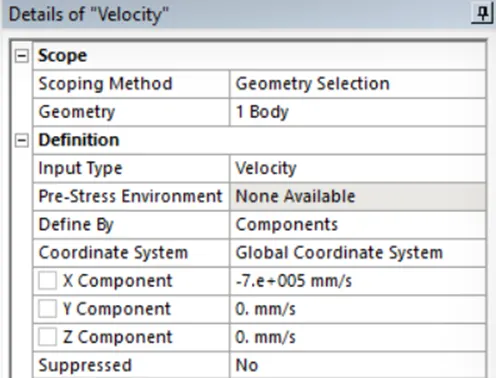
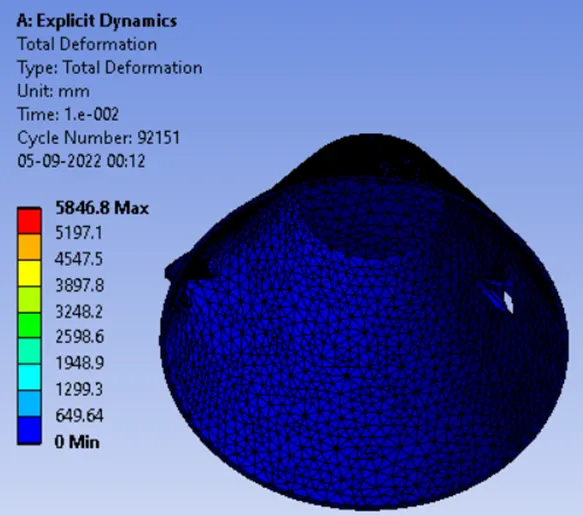
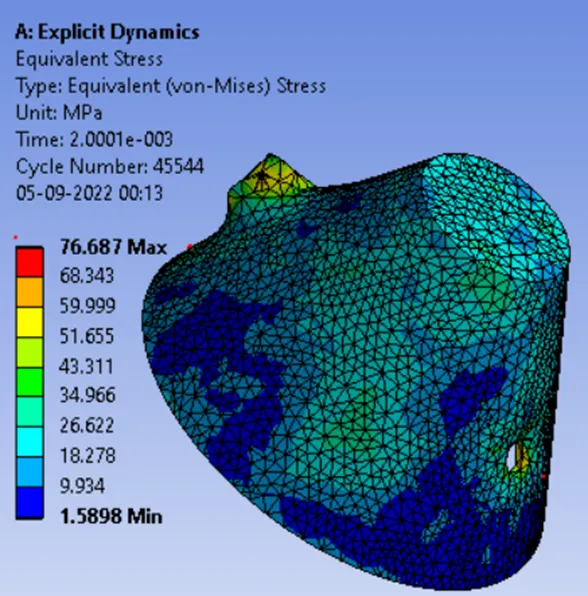
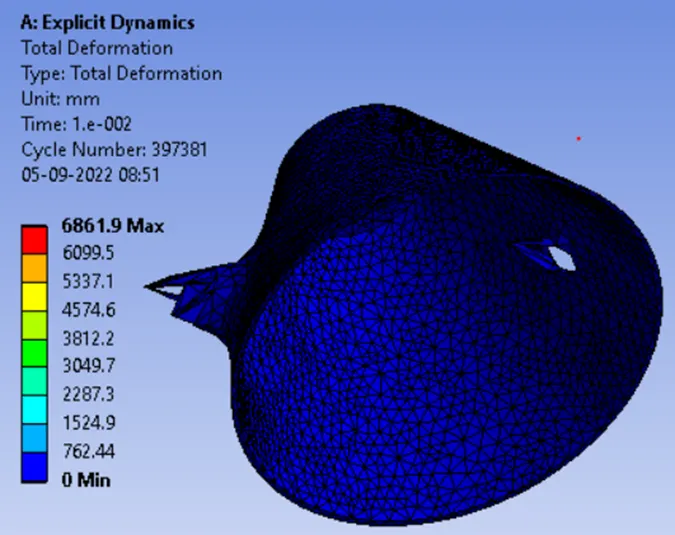
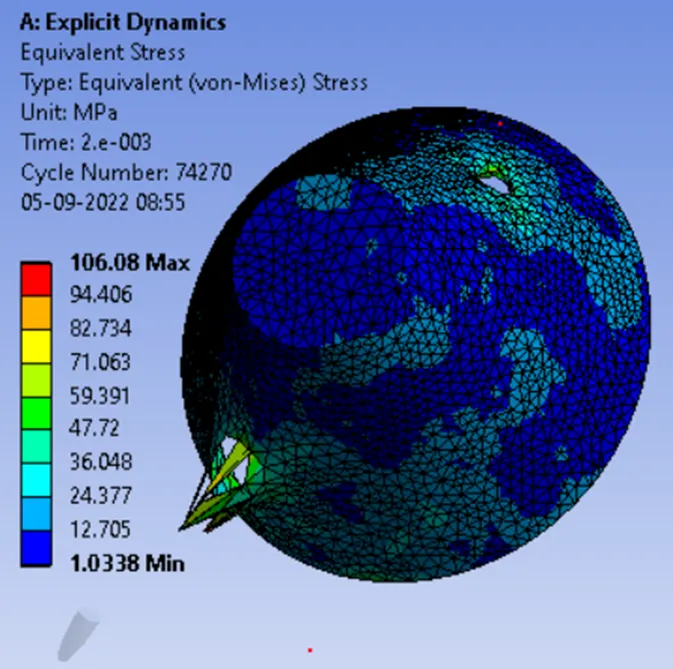
Ok, now let us try for increasing the velocity to 800000 mm/s, and analyse it for further results
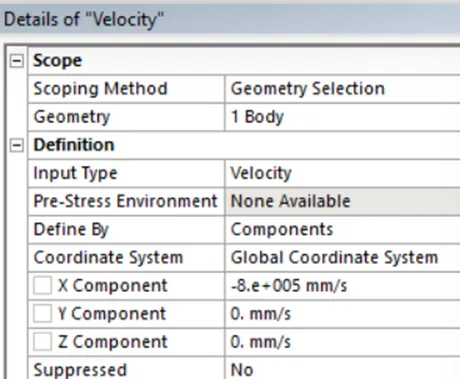
|
Material Used for the Analysis |
Velocity mm/s |
Total Deformation |
Equivalent Stress |
||
|
|
Min (mm) |
Max (mm) |
Min (MPa) |
Max (MPa) |
|
|
The bucket is AL 1100 The bullet is Aluminium Alloy NL |
-139000 mm/s |
0 |
548.19 |
0.79774 |
46.014 |
|
-300000 mm/s |
24.1 |
78.916 |
0.71212 |
85.598 |
|
|
-400000 mm/s |
0 |
1645.5 |
0 |
110.59 |
|
|
-550000 mm/s |
0 |
3670.9 |
0 |
197.73 |
|
|
-700000 mm/s |
0 |
5846.8 |
1.5898 |
76.687 |
|
|
-800000 mm/s |
0 |
6861.9 |
1.0338 |
106.08 |
|
Conclusion
Case 1
|
Material Used for the Analysis |
Velocity mm/s |
Total Deformation |
Equivalent Stress |
||
|
|
Min |
Max |
Min |
Max |
|
|
The bucket is AL 1100 The bullet is Copper Alloy NL |
-139000 mm/s |
29.232 |
123.73 |
0.71118 |
57.973 |
|
-300000 mm/s |
0 |
377.94 |
1.1882 |
92.226 |
|
|
-400000mm/s |
0 |
1835.5 |
0 |
218.07 |
|
Case 2
|
Material Used for the Analysis |
Velocity mm/s |
Total Deformation |
Equivalent Stress |
||
|
|
Min (mm) |
Max (mm) |
Min (MPa) |
Max (MPa) |
|
|
The bucket is AL 1100 The bullet is Titanium Alloy NL |
-139000 mm/s |
11.78 |
375.55 |
0.57088 |
52.957 |
|
-400000 mm/s |
0 |
832.83 |
0 |
110.23 |
|
|
-550000 mm/s |
68.316 |
4627.7 |
0.36222 |
92.806 |
|
|
-700000 mm/s |
0 |
6693.3 |
1.6557 |
183.43 |
|
Case 3
|
Material Used for the Analysis |
Velocity mm/s |
Total Deformation |
Equivalent Stress |
||
|
|
Min (mm) |
Max (mm) |
Min (MPa) |
Max (MPa) |
|
|
The bucket is AL 1100 The bullet is Aluminium Alloy NL |
-139000 mm/s |
0 |
548.19 |
0.79774 |
46.014 |
|
-300000 mm/s |
24.1 |
78.916 |
0.71212 |
85.598 |
|
|
-400000 mm/s |
0 |
1645.5 |
0 |
110.59 |
|
|
-550000 mm/s |
0 |
3670.9 |
0 |
197.73 |
|
|
-700000 mm/s |
0 |
5846.8 |
1.5898 |
76.687 |
|
|
-800000 mm/s |
0 |
6861.9 |
1.0338 |
106.08 |
|
Here the analysis had run successfully for the 3 non-linear choice of materials as Copper alloy, Titanium alloy and Aluminium alloy for bullet material and for Bucket material as AL 1100. By comparing the velocity, total deformation and Equivalent stress of above 3 cases the shear forces acting on the non-linear materials are certainly unpredictable in nature as we are unaware of the chemical composite mixture and its properties and their behaviour.
In our analysis the initial velocity that we predefined in the boundary conditions is so miniscule/too small amount, henceforth if the penetration/impact force is certainly unsatisfactory to such cases we as a result of it necessitated to increase it further enough to our prediction of strong shear forces acting on both the different materials which we set to.
The penetration at each case of 3 non-linear materials evolved as a cognitive challenge for us since it’s material properties and it’s behaviour are wholly complex and we need to rely on the initial velocity to tip off our prediction earlier so as to increase further enough to obtain satisfactory results.
The shear forces acting on these materials are too strong enough that it easily overcomes at each predefined stage of increased amount of velocity. Our results are gradual in sense that at 139000 mm/s the bullet is impenetrable (in the sense the shear forces are too strong) but at -300000 mm/s, -400000 mm/s, -550000 mm/s, -700000 mm/s and -800000 mm/s the shear forces acting on the materials is gradually eroded or weaken enough to penetrate on both sides.
Hence the gradual increase of initial velocity at each case justifies or proves to be the weakening of shear forces acting on it and thus makes the bullet material penetrable on both sides which concludes our effective analysis.