Week 1 Spur Gear Challenge
Spur Gear Challenge
Objective
The objective of the challenge or project is to Simulate static structural analysis of spur gear pairs on varied materials which are (Cast Iron(ductile), Cast Steel, and Cast Bronze) and differentiate their Total deformation, Equivalent stress, Stress intensity, and possible fracture location.
CAD Model incorporated for Analysis is shown below

Case1:
Material Used: CAST IRON (Ductile)
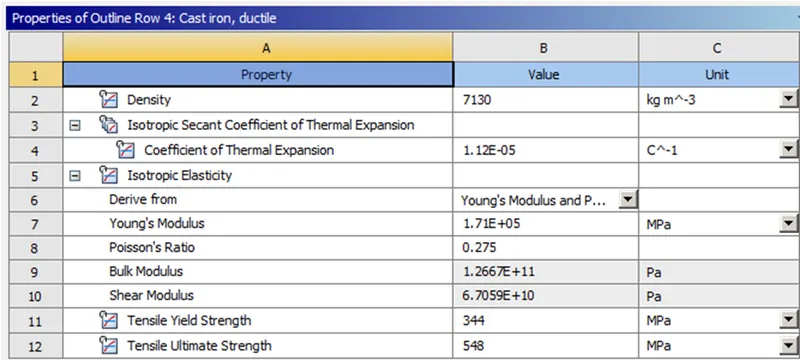
Material Properties:
Contact Settings
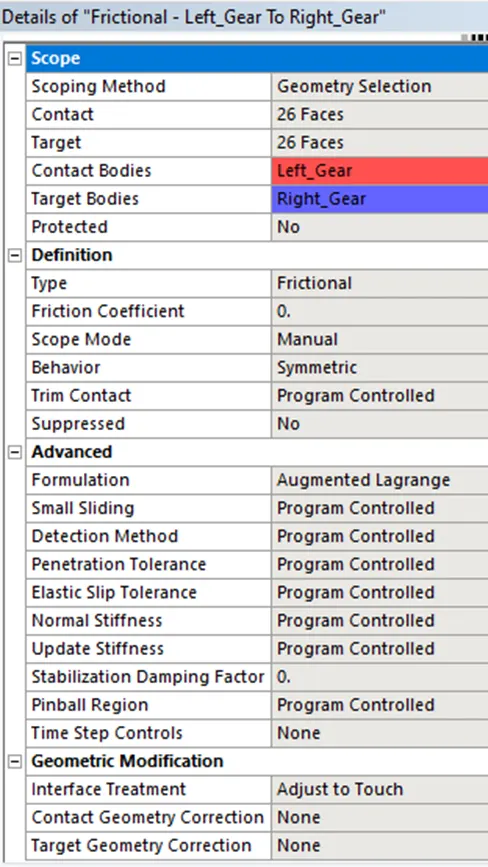
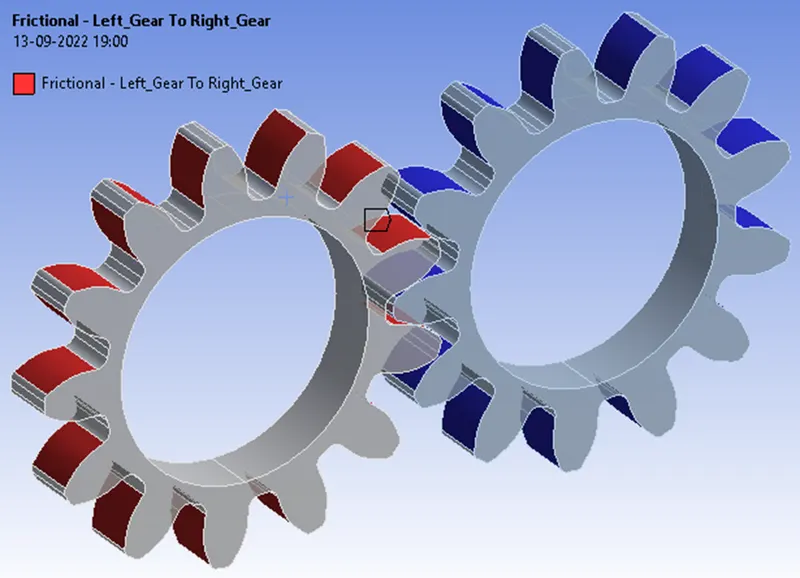
Frictional contact settings have been defined for spur gear pair where Friction coefficient is 0, behavior as symmetric, Formulation as Augmented Lagrange, and Interface treatment as Adjust to touch. These parameters are used for this particular gear and for other 2 cases same is applied.
Joints
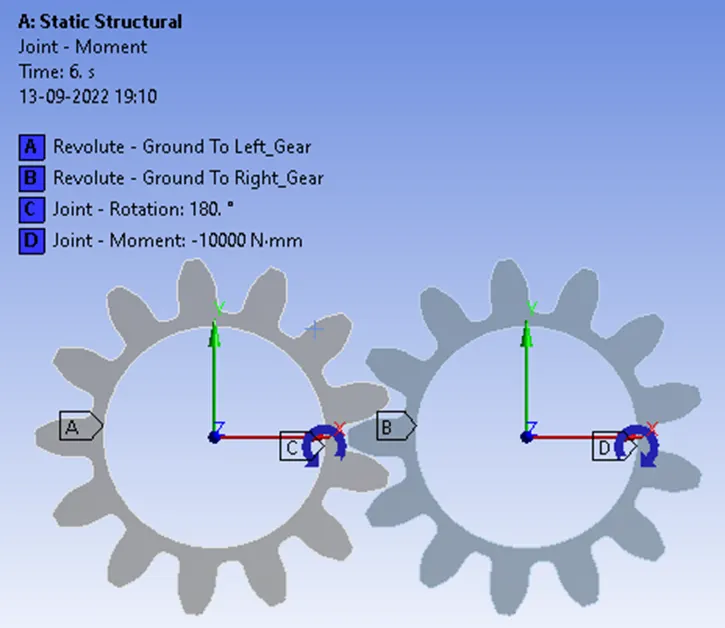
Revolute joints were set on Body-Ground type for spur gear pair. Left gear has applied the rotation of 180 deg Anticlockwise direction by incrementing at 30 deg for 6 steps while Right gear is given with equal moment of -10 Nm for rotating clockwise direction. These parameters are used for this particular gear and for the other 2 cases same is applied.
Meshing Details
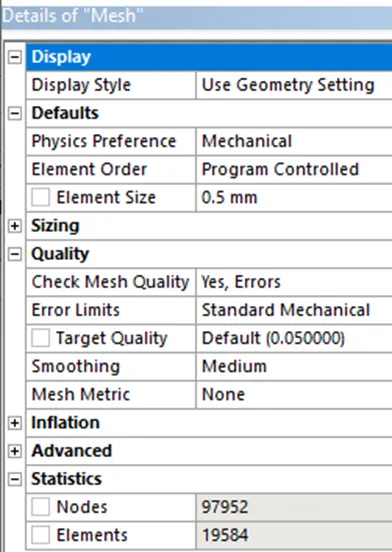
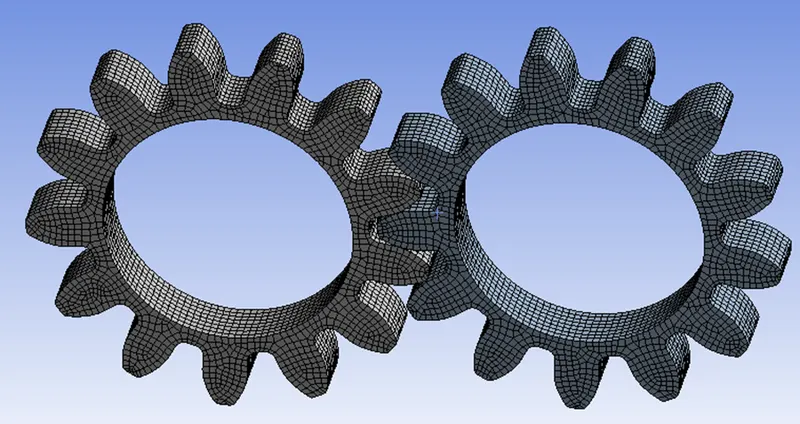
For the meshing part of default solver settings, the ANSYS solver will use default or recommended mesh value for the model. In this case since the model looks linear with less cross-section and complex geometries, hence reducing the element size to 0.5mm is set for precise simulation results for our challenge. These parameters are used for this particular gear and for the other 2 cases same is applied.
Mesh Metric:
Element Quality
The Element quality option provides a composite quality metric that ranges between 0 and 1 and this metric is based on the ratio of the volume (or area) to the square of the edge length.
So a Value of 1 indicates a perfect cube or square or triangle or hexagon or quad while a Value of 0 indicates that the element has a zero or negative volume
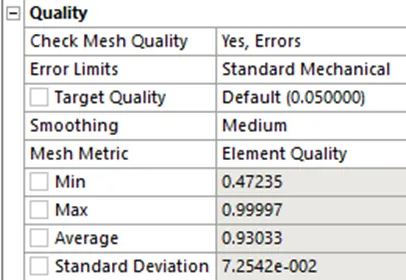
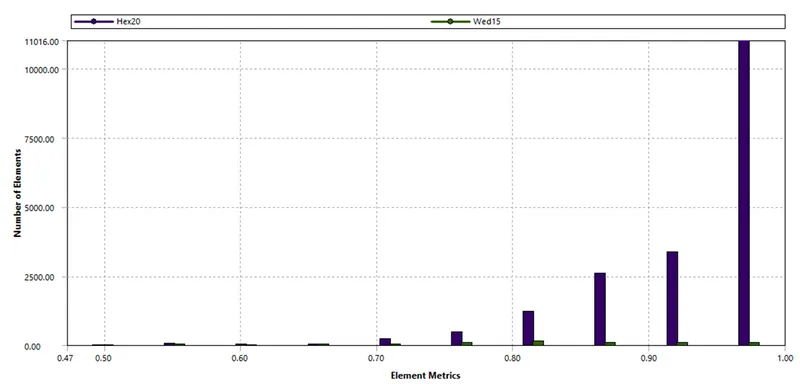
By Comparing the results we conclude that our element quality is in midst of 0 to 1 which is suggested as best suitable and not less than 0.
Simulation results
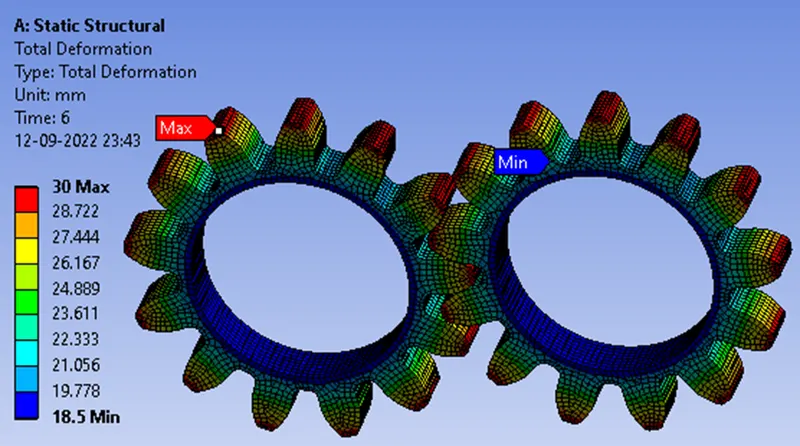
Total Deformation
Equivalent stress
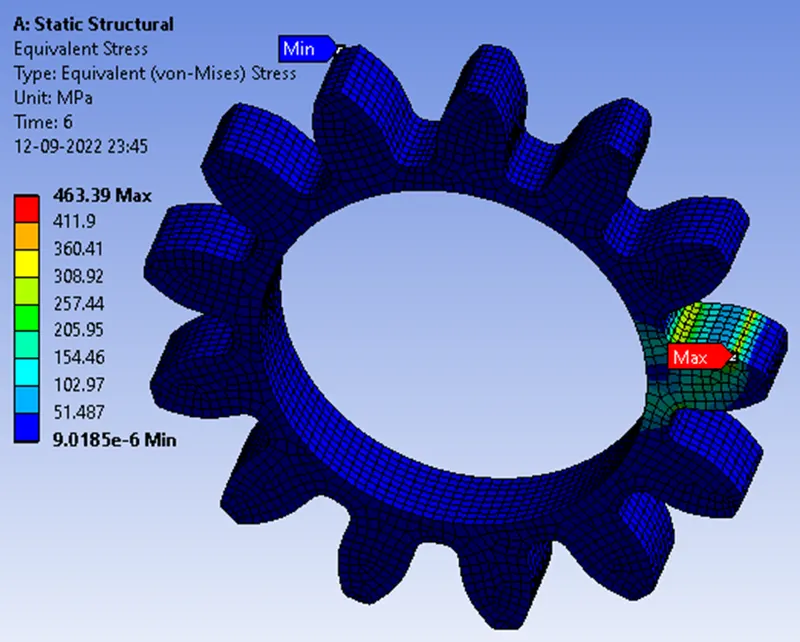
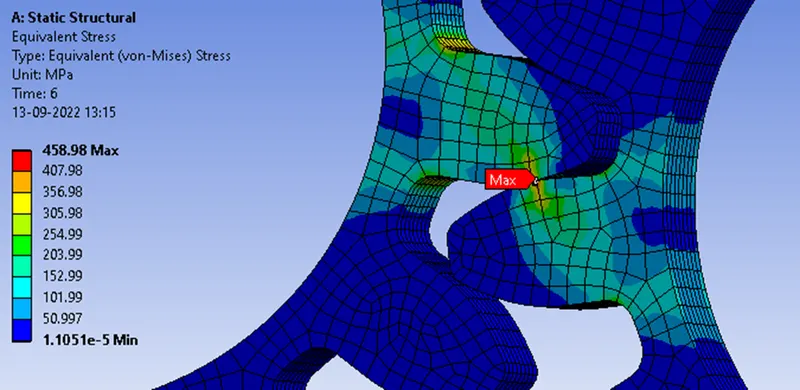
When a gear pair is designed it is important to calculate the maximum tooth stress to ensure that the teeth will not be damaged during the operation of the gear pair. Stresses in this spur gear pair are maximum at the tooth of both gears where it has constant contact with it which concludes our result as 463.39 MPa. For clear and precise observation of our results one of the spur gear pair is hidden and then computed for the Analysis.
Stress Intensity
Investigating the stress intensity has great importance in predicting fatigue damage or crack formation in the spur gears.
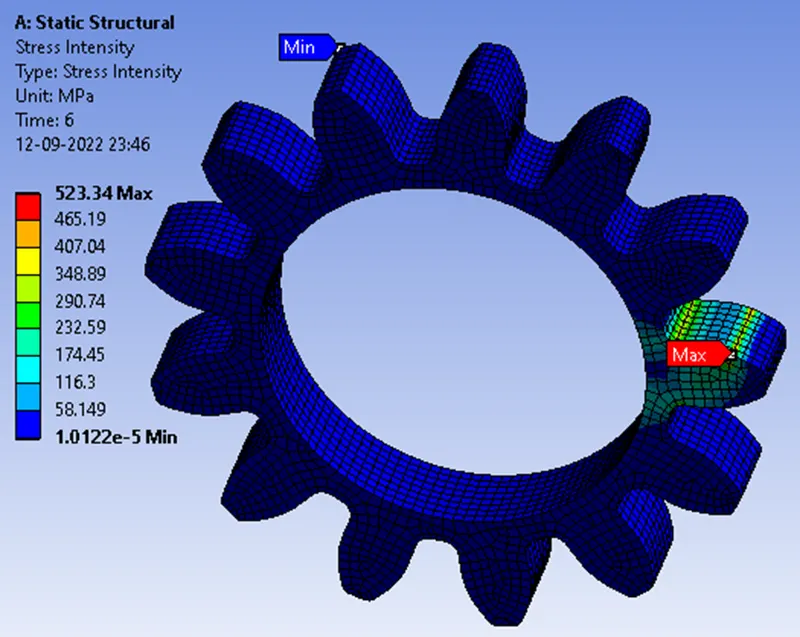
The Long working times and severe working environment in the process of operation can result in gear damage including wear, surface fatigue, plastic deformation, tooth breakage, and so on. Among them, fatigue failure caused by a material defect is one of the main gear damages. The material defects produce cracks, which decrease the actual strength of the gear and induce the growth of cracks in the gear tooth, hence it is of great importance to investigate the stress intensity for the crack to predict the fatigue damage to the spur gears.
In our case, the stress intensity for cast iron (ductile) is 523.34 MPa. For clear and precise observation of our results one of the spur gear pair is hidden and then computed for the Analysis.
Contact Tool Status
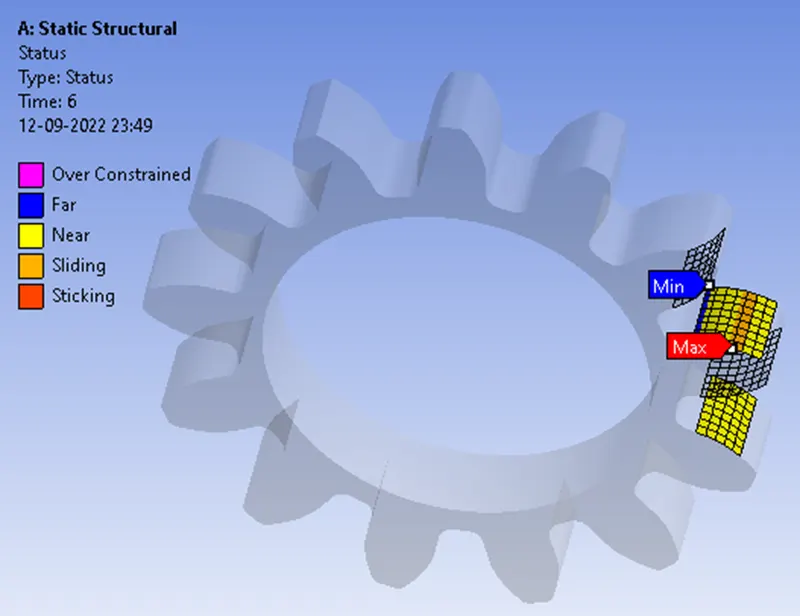
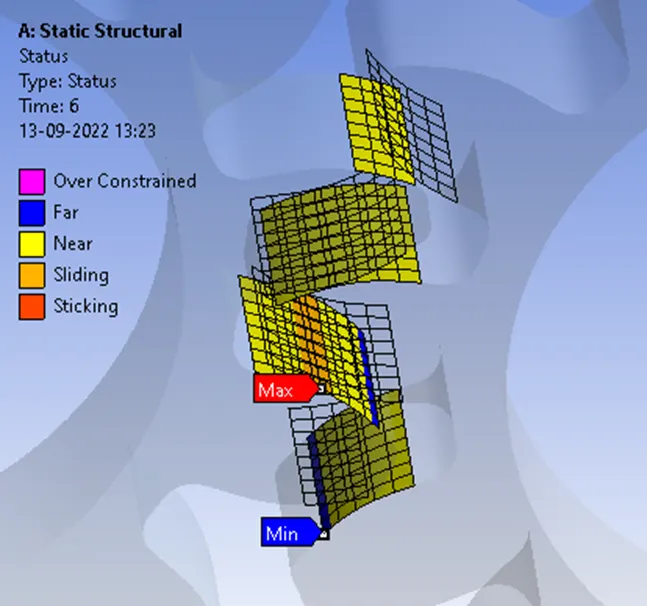
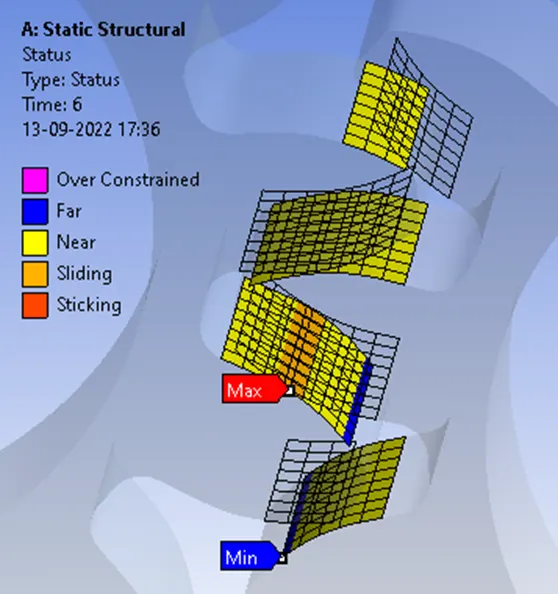
In this contact tool status, there is a near contact and sliding contact happening at the spur gear pair.
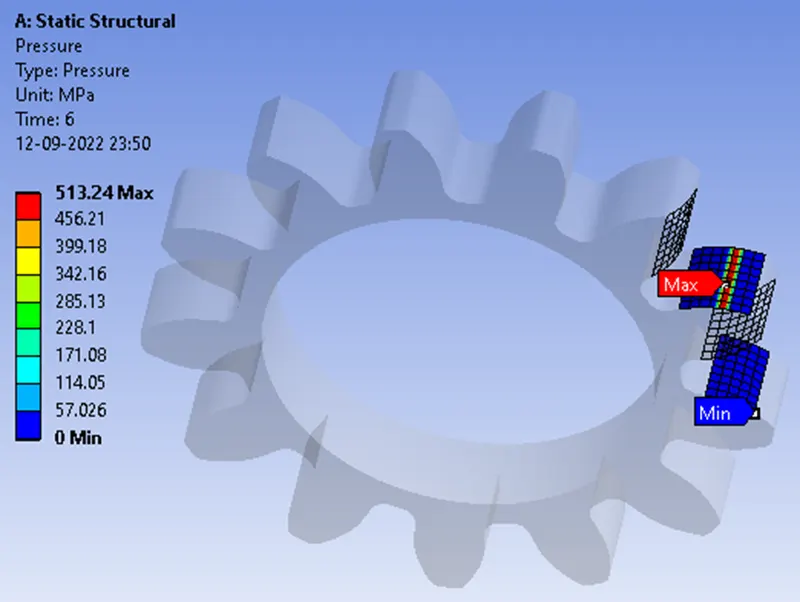
Contact tool Pressure
Case2:
Material Used: CAST STEEL
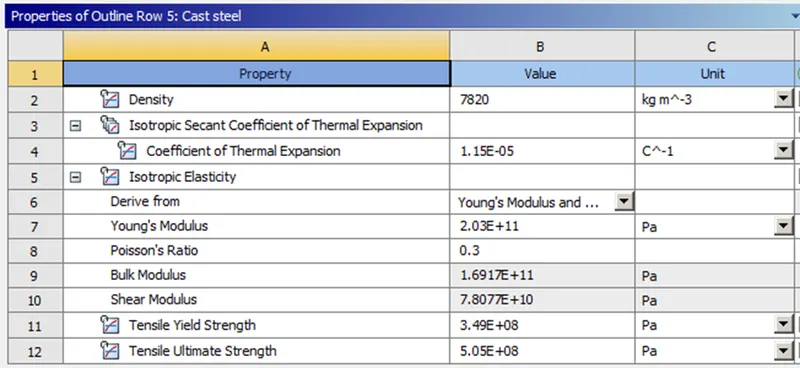
Material Properties:
Simulation results
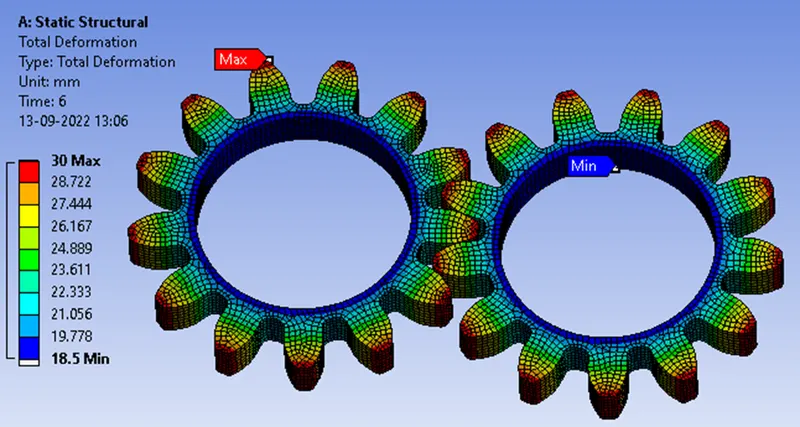
Total Deformation
Equivalent stress
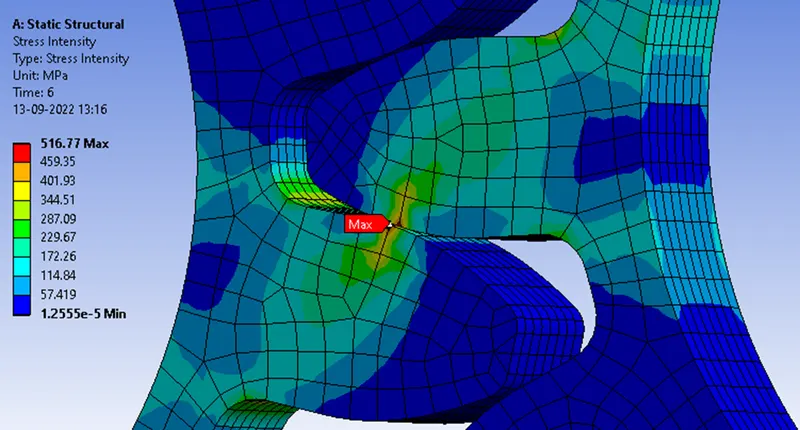
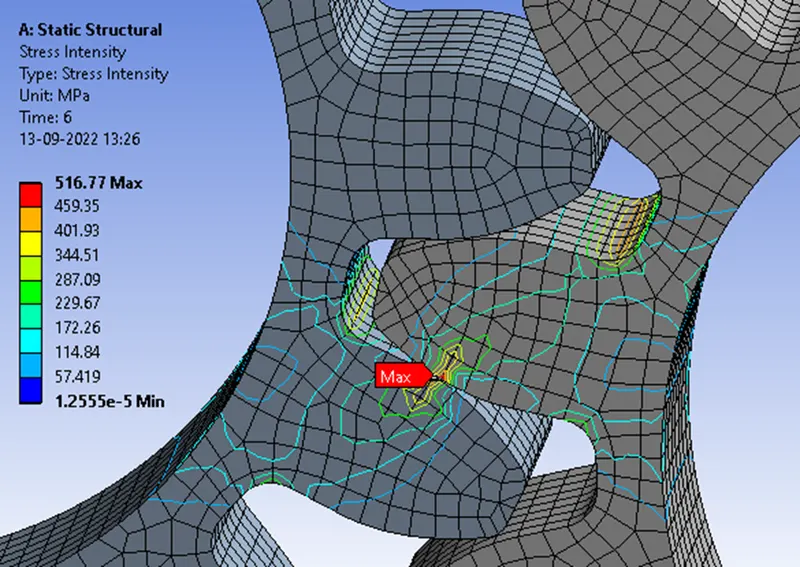
Stress Intensity
Location for Possible Fracture
Contact Tool Status
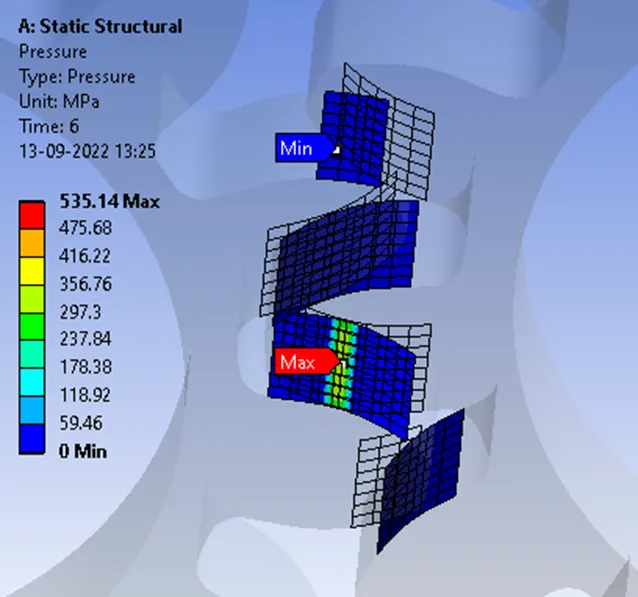
Contact Tool pressure
Case3:
Material Used: CAST BRONZE
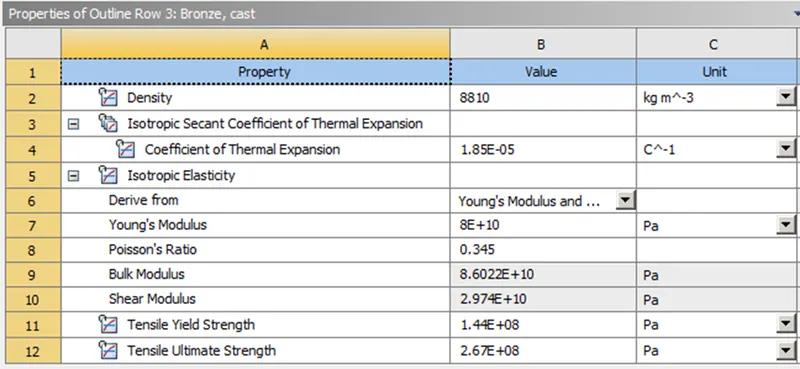
Material Properties:
Simulation Results
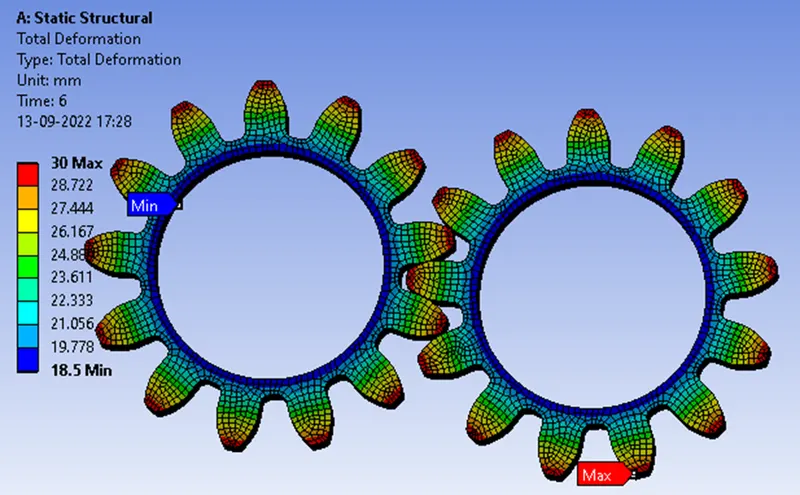
Total Deformation
Equivalent Stress
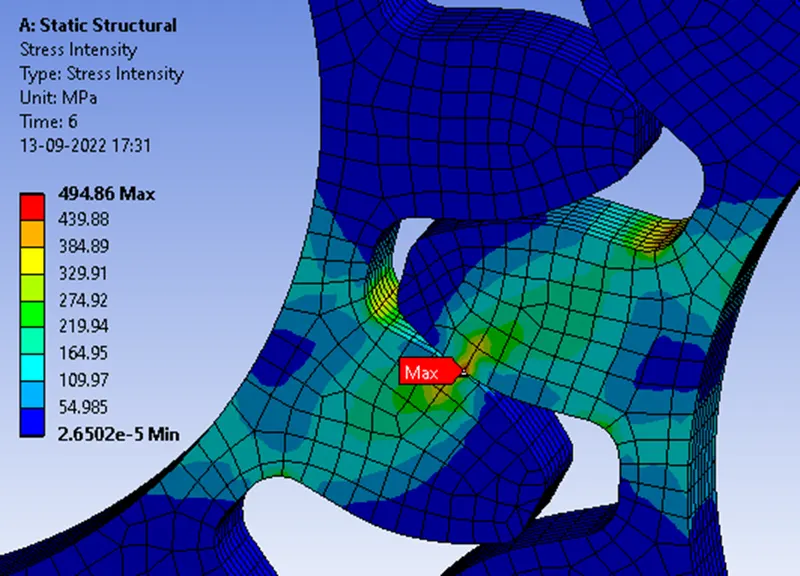
Stress Intensity
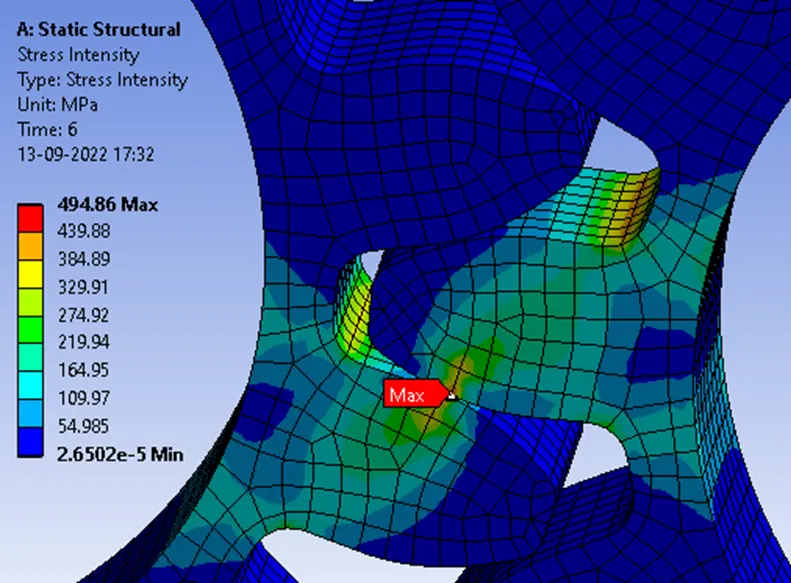
Location for Possible Fracture
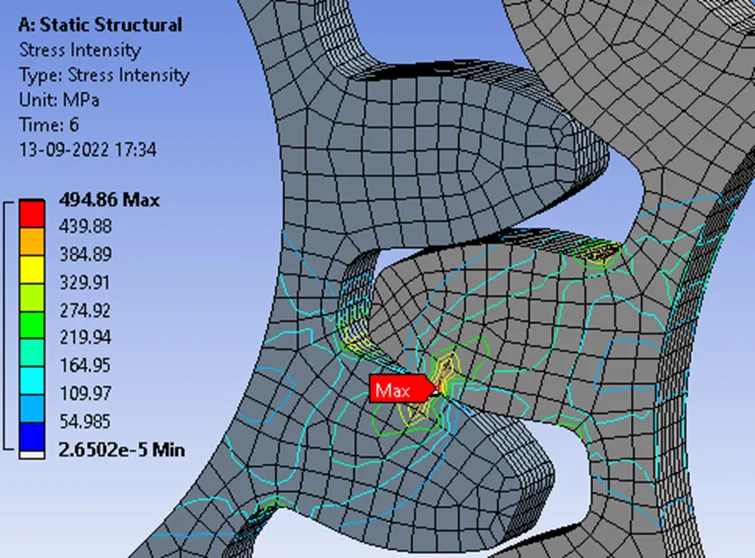
Contact Tool Status
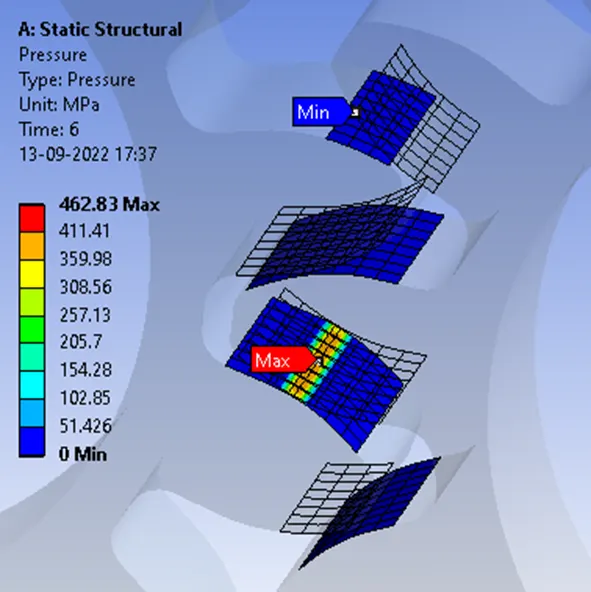
Contact Tool pressure
Conclusion
The Comparison table for all the 3 cases with respect to Total deformation, Stress, and Stress intensity has been tabulated below
|
Material |
Total Deformation (mm) |
Equivalent Stress [MPa] |
Stress Intensity [MPa] |
Tensile yield strength [MPa] |
Tensile ultimate strength [MPa] |
|
Case 1: Cast Iron (ductile) |
30 max |
463.39 max |
523.34 max |
344 |
548 |
|
Case 2: Cast Steel |
30 max |
458.98 max |
516.77 max |
349 |
505 |
|
Case 3: Cast Bronze |
30 max |
494.86 max |
494.86 max |
144 |
267 |
In all the cases the equivalent stress has exceeded in comparison to the tensile yield strength which clearly shows that the material is deformed and is in the plastic region where it begins to deform permanently which we obtained in total deformation as a result.
Maximum stress has been achieved at the Right Spur gear where the tensile stress in this gear is much higher often responsible for tooth damage caused by a tooth load on the face of the tooth. If this tensile stress is too large fatigue cracks will be formed in the fillet and the tooth will eventually fracture. Thus, it can be said that the possible location of fracture would be at the point with maximum tensile stress or maximum von-mises stress in all cases.
There is contact stress which occurs at the points where the meshing teeth are in contact. If the contact stress is too high the tooth surface becomes pitted with small holes as this pitting may not be harmful so as long as the pits remain small, but if they become larger the tooth surface is eventually destroyed.
|
Material |
Contact Stress [MPa] |
Tensile yield strength [MPa] |
Tensile ultimate strength [MPa] |
|
Case 1: Cast Iron (ductile) |
513.24 max |
344 |
548 |
|
Case 2: Cast Steel |
535.14 max |
349 |
505 |
|
Case 3: Cast Bronze |
462.83 max |
144 |
267 |
In order, the determination of fracture toughness and to ascertain the further spreading of cracks and pits stress intensity factor is compared with the contact stress and tensile stress for the factor of safety.
Material Recommendation – CAST IRON (Ductile)
Considering the cognitive analysis of the above three cases cast iron(ductile) is satisfactorily recommended over cast steel and cast bronze because the stress intensity of cast iron (ductile) is reportedly lower than the ultimate strength of all the 3 cases