Week 10- Assembly Workbench
Week 10- Assembly Workbench
Assembly
Putting components together to create a machine or other product is called assembly. The parts were produced and prepared for assembly. For simplicity of assembly, the device is provided in kit form. Putting components together to create a machine or other product is called assembly.
In this chellenge we have to design and assemble the cv joint and quick return mechanism
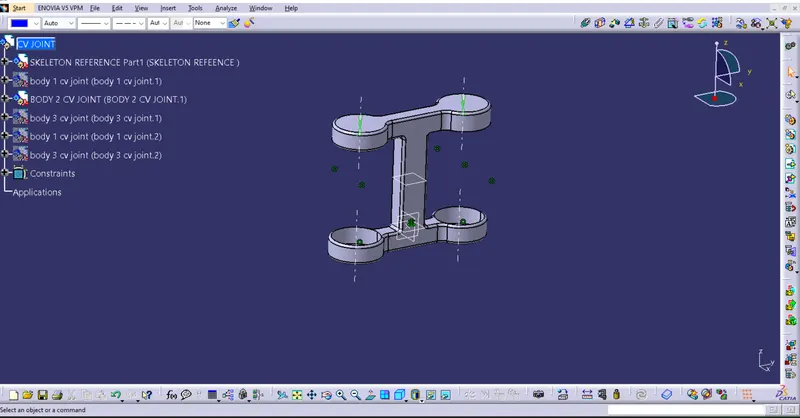
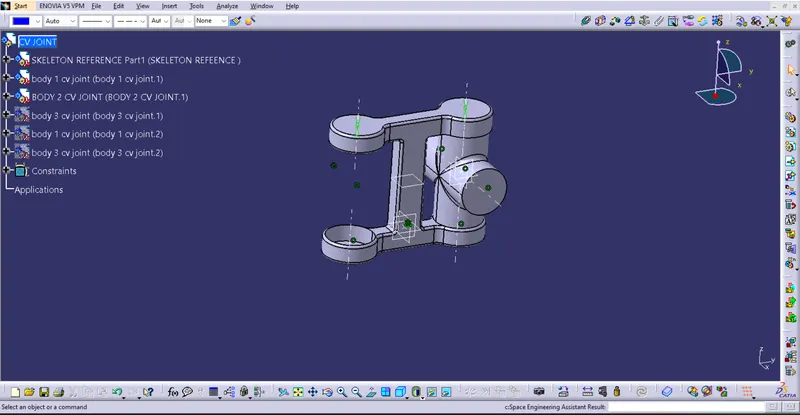
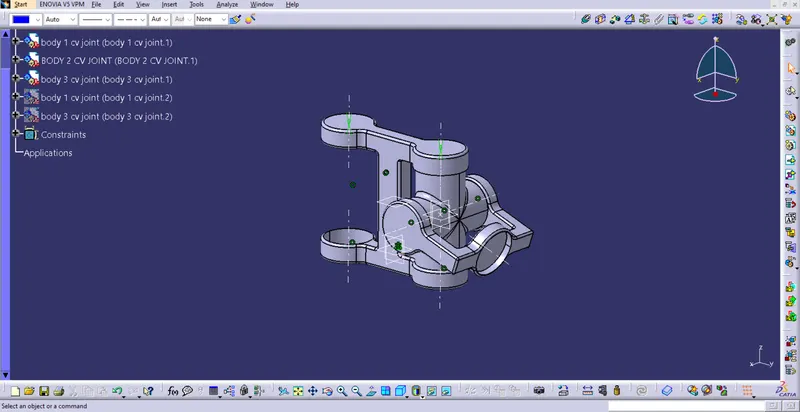
CV joint
Constant-velocity joints are mechanical joints that enable a driving shaft to transmit power over a changeable angle. They are sometimes referred to as homokinetic or CV joints.
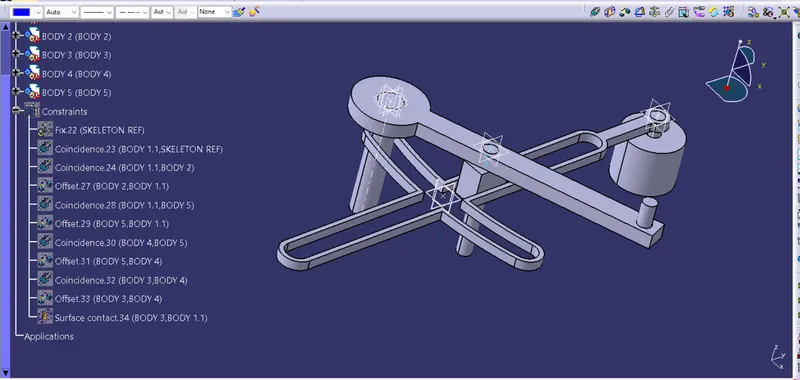
Quick Return mechansim
the time it takes to move backward is shorter than the time it takes to travel ahead. It utilises a system of links with three turning pairs and a sliding pair and is propelled by a circular motion source (usually a motor of some type).
To create the CV joint and quick return mechansim we have to design each part in the Part workbench according the given dimention and save each component seperately. once all the components has been designed in part workbench we need to assemble the compoenent in the Assembly workbenche.
first create the part and name it as a skeleton assembly and fixed it. provide the reference axis and refereence point to the each and every component so that we can give coincidence constrain to each and every point and axis. call the component using existing component comand in the assembly workbench. Using the coincidence constrain, offset constrain and contact constrain we can assemble each and every component.
To ensure that our compoent is fixed properly or not we need to explode the assembly and update it if comes to the original assembly structure then our assembly is correct.
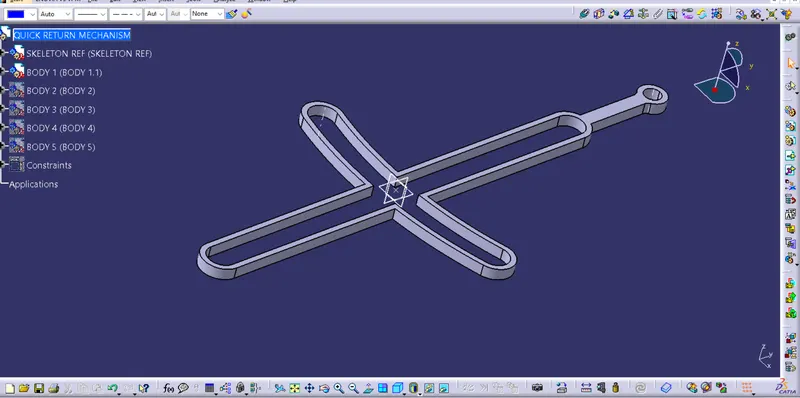
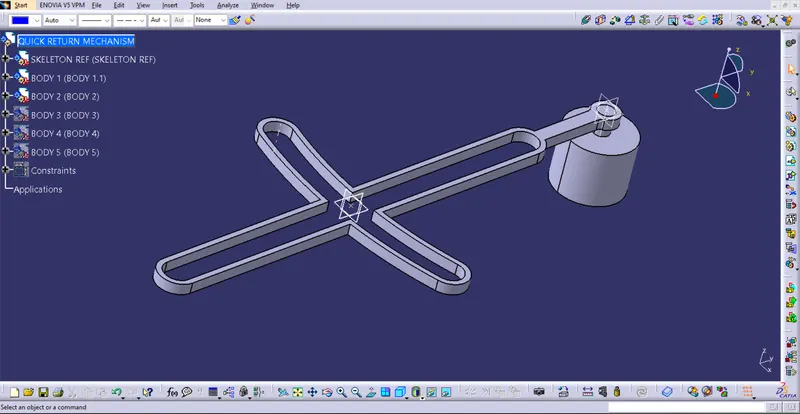
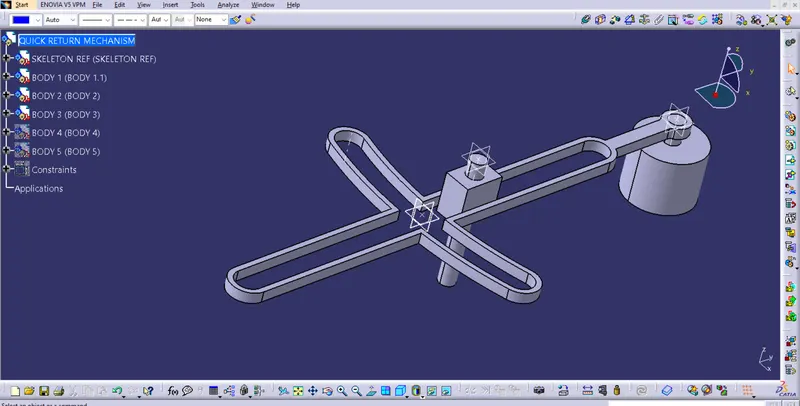
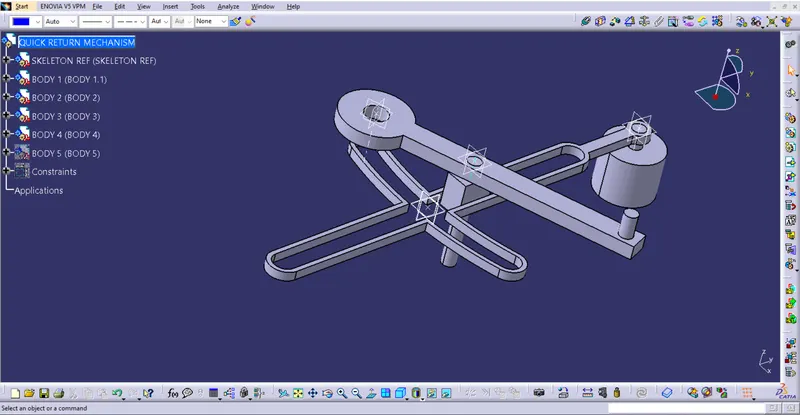
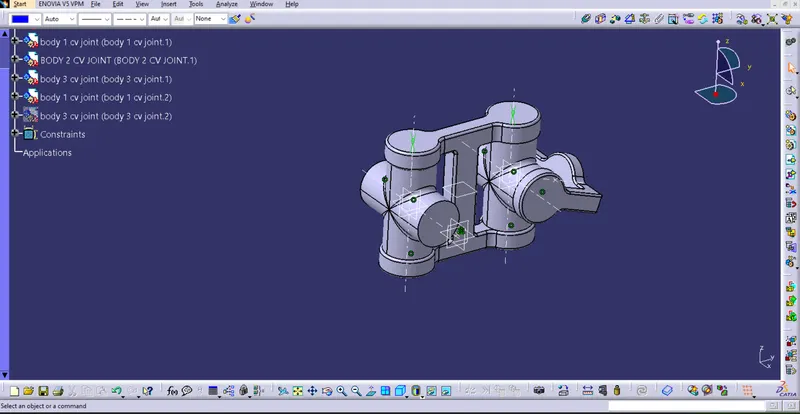
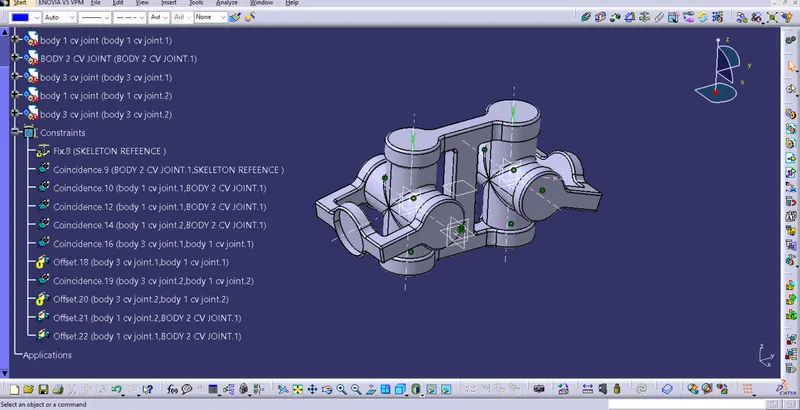
The below images shows the spet by step assembly of the cv joint and quick return mechanism.
CV Joint
QUICK RETURN MECHANISM