Week 1 Understanding Different Battery Chemistry
Understanding Different Battery Chemistry
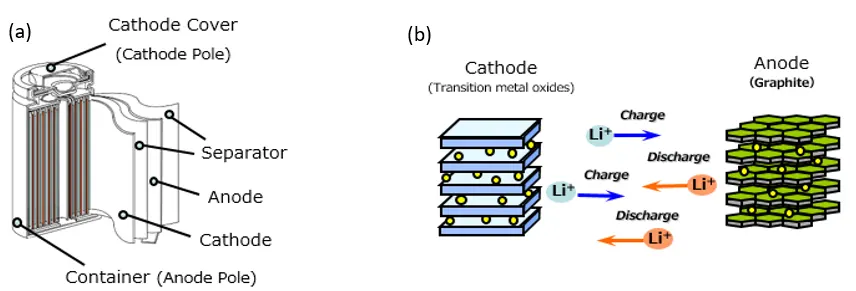
A battery is made up of an anode, cathode, separator, electrolyte and two current collectors (Positive and negative). The anode and cathode store the lithium. The electrolyte carries positively charged lithium ions from the anode to the cathode and vice versa through the seperator.
Batteries are a collection of one or more cells whose chemical reactions create a flow of electrons in a circuit. All batteries are made up of three basic components: an anode (the '-' side), a cathode (the '+' side), and some kind of electrolyte (a substance that chemically reacts with the anode and cathode).
1) Prepare a table which includes materials & chemical reactions occurring at the anode and cathode of LCO, LMO, NCA, NMC, LFP and LTO type of lithium ion cells.Give your detailed explanation on it.
The battery is discharging and providing an electric current, the anode releases lithium ions to the cathode, generating a flow of electrons from one side to the other. When plugging in the device, the opposite happens: Lithium ions are released by the cathode and received by the anode.
Each of the six different types of lithium-ion batteries has a different chemical composition. The anodes of most lithium-ion batteries are made from graphite. Typically, the mineral composition of the cathode is what changes, making the difference between battery chemistries.
The metal that frees more electrons develops a positive charge, and the other metal develops a negative charge. If an electrical conductor, or wire, connects one end of the battery to the other, electrons flow through the wire to balance the electrical charge. Energy is stored and released as lithium ions travel between these electrodes through the electrolyte. The charger passes current to the battery. Lithium ions move from the cathode to the anode through the electrolyte. The battery is charged by a potential difference between the two electrodes.
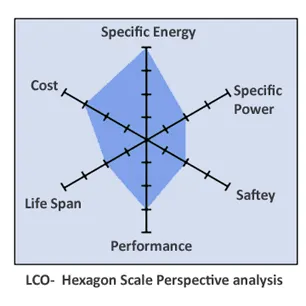
Lithium Cobalt Oxide(LiCoO2) — LCO :
The battery consists of a cobalt oxide cathode and a graphite carbon anode. The cathode has a layered structure and during discharge, lithium ions move from the anode to the cathode. The flow reverses on charge. ischarge (C-rate): 1C; 2.50V cut off. Discharge above 1C shortens battery life. Note: Charge current above 1C shortens life of LCO battery. The most popular technology of the battery sector currently is the lithium ion battery. Relative to other types of batteries, lithium ion batteries have better energy, power density and higher cycling ability. These qualities are extremely important in the use in modern applications like electrical and hybrid vehicles and most importantly energy storage systems which are used in the renewable energy applications.The lithium ion batteries chemistry is the same across the different lithium-ion battery types; during discharge, Lithium-ions are moved to the positive cathode from the negative anode through the organic electrolyte. The anodes in all various technologies of lithium ion are all made from graphite. The differences are the cathode which contains changing cobalt, nickel or manganese concentrations. All various cathode types allow high lithium insertion and intercalation levels which result in large energy storage quantities.
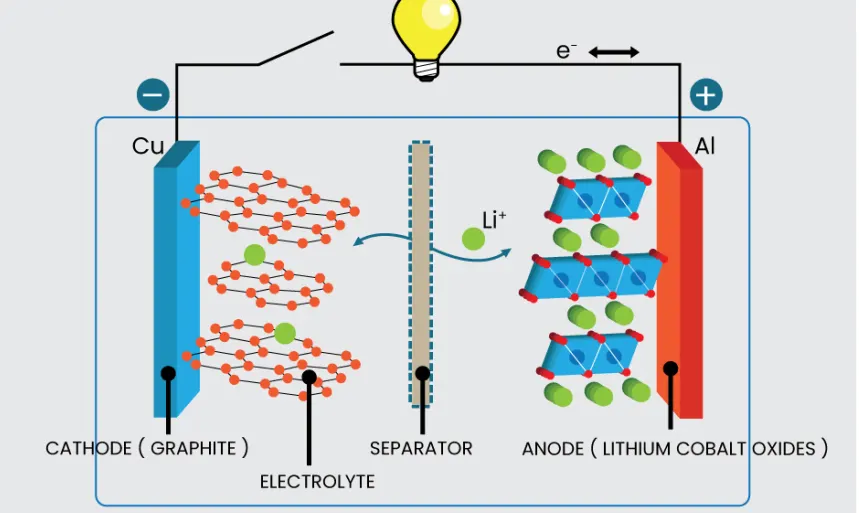
The main advantages of the LCO batteries are:
1.High energy density.
2.Long runtime making it optimum for new technologies
The main disadvantages of the LCO batteries are:
1. It has a relatively low discharge current so high load can lead to pack overheat
2. The safety circuit of the LCO battery is typically limited to a 1C for charging and discharging.
The internal resistance increases with cycling and aging. This high internal resistance can cause the battery to become unserviceable due to a large voltage drop under the load after a couple of years of use.
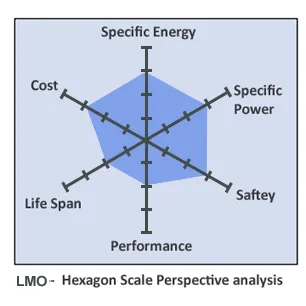
lithium ion manganese oxide battery (LMO) :
A lithium ion manganese oxide battery (LMO) is a lithium-ion cell that uses manganese dioxide, MnO2, as the cathode material. They function through the same intercalation/de-intercalation mechanism as other commercialized secondary battery technologies, such as LiCoO2. Cathodes based on manganese-oxide components are earth-abundant, inexpensive, non-toxic, and provide better thermal stability.
Lithium Nickel-Cobalt-Aluminum Oxide (NCA) :
Lithium Nickel-Cobalt-Aluminum Oxide (NCA) is used as the cathode material for lithium ion secondary batteries, and is mainly used in electric automobiles. Lithium Nickel-Cobalt-Aluminum Oxide (NCA) is used as the cathode material for lithium ion secondary batteries, and is mainly used in electric automobiles. Due to a high nickel content of the Lithium Nickel-Cobalt-Aluminum Oxide (NCA) manufactured by the company, the capacity of batteries can be increased, which contributes to a longer distance that can be covered with a single-time charging. The company’s strength lies in integrated production from the nickel raw material up to the battery material.
Lithium iron NMC :
NMC batteries offer a combination of nickel, manganese, and cobalt. They are sometimes called lithium manganese cobalt oxide batteries. luminous batteries have very high specific energy or power.
Lithium iron phosphate batteries (LiFePO4 or LFP) :
Lithium iron (LiFePO4) batteries are designed to provide a higher power density than Li-ion batteries, making them better suited for high-drain applications such as electric vehicles. Lithium iron phosphate batteries (LiFePO4 or LFP) offer lots of benefits compared to lead-acid batteries and other lithium batteries. Longer life span, no maintenance, extremely safe, lightweight, improved discharge and charge efficiency, just to name a few.
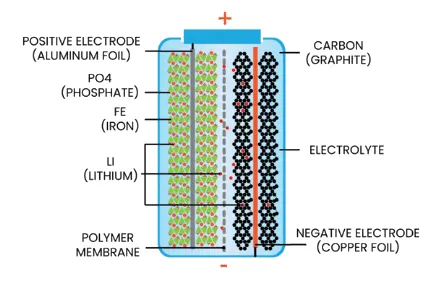
Lithium-titanate or lithium-titanium-oxide (LTO) :
The lithium-titanate or lithium-titanium-oxide (LTO) battery is a type of rechargeable battery which has the advantage of being faster to charge than other lithium-ion batteries but the disadvantage of having a much lower energy density. With applications in many sectors, with a primary focus on high speed charging and energy storage, Lithium Titanate Oxide (lithium titanium oxide) technology is the future of battery-powered technology. Let's see the key benefits and advantages of the LTO battery technology.
2.Compare the differences between each type of Li+ion batteries based on their characteristics :
There are two types of lithium-based batteries, Primary Lithium (metal) and Rechargeable Lithium Ion. Lithium Primary batteries are starting to replace the commonly used alkaline batteries because they are longer lasting.
1: Lithium Nickel Manganese Cobalt Oxide (NMC)
2: Lithium Nickel Cobalt Aluminum Oxide (NCA)
3: Lithium Iron Phosphate (LFP)
4: Lithium Cobalt Oxide (LCO)
5: Lithium Manganese Oxide (LMO)
6: Lithium Titanate (LTO)
Comparisons of different types of Li-ion batteries used in EVs from the following perspectives: specific energy (capacity), specific power, safety, performance, life span, and cost (the outer hexagon is most desirable). Lithium Nickel Manganese Cobalt Oxide (NMC), Lithium Iron Phosphate (LiFePO4) and Lithium Manganese Oxide stand out as being superior among these six candidates.