Week 1 Understanding Different Battery Chemistry
1.
| Electrochemistry | Negative electrode | Positive electrode | Electrolyte | Chemical Reactions |
|
LCO |
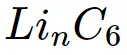 |
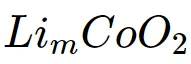 |
Ethylene carbonate |
Anode: Cathode: |
| LMO | |
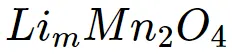 |
Ethylene carbonate |
Anode: Cathode: where x = m - n |
| NCA | |
 |
Ethylene carbonate |
Anode: Cathode: |
| NMC | |
 |
Ethylene carbonate |
Anode: Cathode: |
| LFP | |
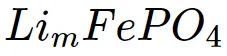 |
Ethylene carbonate |
Anode: Cathode: |
| LTO | |
 |
Ethylene carbonate |
Anode: Cathode: |




LCO: During discharge, lithium is oxidized from Li to Li+ (0 to +1 oxidation state) in the lithium graphite anode through the following reaction:

These lithium ions migrate through the electrolyte medium to the cathode, where they are incorporated into lithium cobalt oxide through the following reaction, which reduces cobalt from +4 to +3 oxidation state:

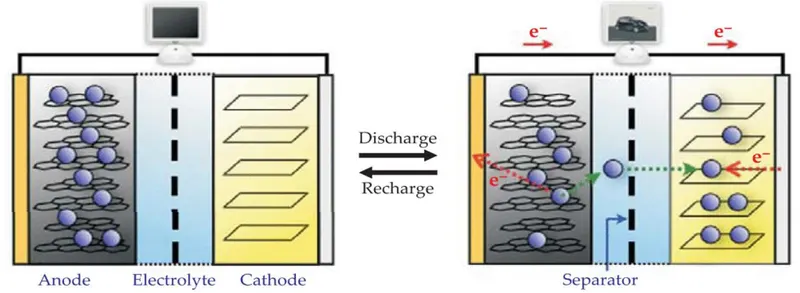
These reactions can be run in reverse to recharge the cell. In this case, the lithium ions leave the lithium cobalt oxide and migrate back to the anode, which is reduced to neutral lithium and reincorporated into the graphite network.
LMO: LMO Batteries were first commercialized in 1975 by the Sanyo company, making it one of the first Li-ion batteries to be used commercially. Newer LMO batteries contain a 3D spinel structure to improve the diffusion of lithium ions, allowing them to have high thermal stability, low cost, and environmental affinity. However, LMO batteries suffer from severe capacity fading due to the surface dissolution of manganese in the electrolyte at temperatures above 60 deg C.
NCA: NCA batteries share many similarities with NMC batteries as they share a layered cathode structure. However, NCA batteries replace the manganese of the NMC batteries with aluminium. This improves the specific energy and lifespan when compared to its NMC counterpart. NCA batteries are known to have a long lifespan. The main disadvantage of NCA batteries is that they are not as safe as other battery types. These batteries require special safety monitoring measures in applications such as electric vehicles.
LFP: When LFP batteries discharge, lithium molecules from the negative electrode detach from layered graphene, becoming lithium ions and electrons. The electrons travel out of the battery as lithium ions move across a separator, and both integrate into iron phosphates at the positive electrode. Lithium separates from iron phosphate during charge, generating lithium ions and electrons. The lithium ions and electrons transfer to the positive electrode and integrate into the graphene structure. The reaction occurs from right to left. The electrochemical reactions are shown below:
Anode: 
Cathode: 
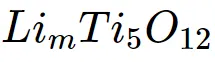
LTO: One of the candidates to replace graphite as an anode material in lithium-ion batteries is lithium-titanium oxide (LTO) of spinel structure. It shows excellent cyclability due to negligible volume change during intercalation reactions (so-called "zero-strain" electrode material). A high operating potential of 1.55 V is responsible for LTO's enhanced safety due to hindering the formation of a Solid Electrolyte Interface (SEI) layer on the electrode's surface. However, some research groups reported SEI creation due to spontaneous reactions with electrolytes or migration of SEI components formed on counter electrodes. LTO has an acceptable specific capacity of 175 mAh/g when charged/discharged in the potential range of 1-3 V. All mentioned properties make LTO a good material for the next generations of Li-ion batteries. However, due to the low electric conductivity of LTO, its widespread application is still limited.
2.
| Lithium-ion Battery Types | Specific Power | Specific Energy | Safety | Lifespan | Cost | Performance |
| Lithium Cobalt Oxide | Low | High | Low | Low | Low | Moderate |
| Lithium Manganese Oxide | Moderate | Moderate | Moderate | Low | Low | Low |
| Lithium Nickel Manganese Cobalt Oxide | Moderate | High | Moderate | Moderate | Low | Moderate |
| Lithium Iron Phosphate | High | Low | High | High | Low | Moderate |
| Lithium Nickel Cobalt Aluminium Oxide | Moderate | High | Low | Moderate | Moderate | Moderate |
| Lithium Titanium Oxide | Moderate | Low | High | High | High | High |
- LCO has high specific energy compared to the other batteries, making it the preferred choice for laptops and mobile phones. It also has a low cost and a moderate performance. However, it is highly unfavourable in all aspects compared to other lithium-ion batteries. It has a low specific power, low safety, and a low lifespan.
- LMO has moderate specific power, moderate specific energy, and a moderate level of safety when compared to the other types of lithium-ion batteries. It has the added advantage of a low cost. The downsides are its low performance and low lifespan. It is usually used in medical devices and power tools.
- NMC has two significant advantages as compared to the other batteries. The first one is its high specific energy, which makes it desirable in electric powertrains, electric vehicles, and electric bikes. The other is its low cost. It is moderate regarding specific power, safety, lifespan, and performance compared to other lithium-ion batteries. It can be optimized to have high specific power or high specific energy.
- LiFeSO4 only has one major disadvantage compared to other types of lithium-ion batteries: its low specific energy. Besides that, it has moderate to high ratings in all the other characteristics. It has high specific power, offers a high level of safety, has a high lifespan, and comes cheaply. The performance of this battery is also moderate. It is often employed in electric motorcycles and other applications that require a long lifespan and high safety.
- NCA offers one substantial advantage over the five other batteries: high specific energy. It is pretty moderate in other characteristics like performance, cost, specific power, and lifespan. The only downside to this battery type is its low level of safety. Its high specific energy and moderate lifespan make it a good candidate for electric powertrains.
- LTO offers high safety, high performance, and a high lifespan, essential features every battery should have. Its specific energy is low compared to the five other lithium-ion batteries, but it compensates for this with moderate specific power. The only major disadvantage of lithium titanate compared to other lithium-ion batteries is its extremely high cost. Another essential feature of this battery is its speedy recharge time. It can be used for storing solar energy and creating intelligent grids.