Week 1 Understanding Different Battery Chemistry
AIM:
- To prepare repare a table that includes materials & chemical reactions occurring at the anode and cathode of LCO, LMO, NCA, NMC, LFP and LTO type of lithium-ion cells. Give your detailed explanation on it.
- Compare the differences between each type of Li-ion battery based on their characteristics.
1.Table shows below the cathode material and their chemical reactions:
Comparision Table:
| Li - ion cell Type | Cathode | Anode | Electrolyte | Seperator | Overall Reaction at Cathode & Anode | Application |
| LCO | Graphite | Lithium Cobalt Oxide | Ethylene Carbonate + Li salt |
Polyolefin | Li1-xCoO2(s) + x Li+ + x e- → LiCoO2(s) | Mobile phones, laptops and digital cameras |
| LMO | lithium manganese oxide | Graphite carbon | Methyl carbonate + Li salt | Polyolefin |
Mn2+ + 2 LiC6 → Mn + 2 Li++ graphite |
Power tools, medical devices, electric powertrains |
| NCA | Comprised of Nickel cobalt & Aluminium | Graphite carbon | Propylene carbonate + Li salt | Polyolefin |
Li(1−x)NiO2 → (2 − x)Li(1−x)/(2−x)Ni1/(2−x)O + x/2O2 |
Medical devices, industrial, electric powertrain (Tesla) |
| NMC | Comprised of Nickel cobalt & Manganese | Lithium metal Graphite | Methyl carbonate + Li salt | Polyolefin | Li(x)MO2(s) → Li+(org) + Li(x-1)MO2(s) + e-. | E-bikes, medical devices, EVs, industrial |
| LFP | Comprised of Lithium, Iron & Phosphate | Graphite Carbon | Propylene carbonate + Li salt | Polyolefin |  |
Portable and stationary needing high load currents and endurance |
| LTO | Comprised of Nickel cobalt & Manganese |
Lithium–titanium oxide |
Propylene carbonate + Li salt | Polyolefin | Li4Ti5O12 + 3Li+ + 3e → 4 Li7Ti5O12 | UPS, electric powertrain (Mitsubishi i-MiEV, Honda Fit EV), solar-powered street lighting |
2.Li-ion Cell
Lithium-ion cells are rechargeable cells, they use lithium as one of the key components in the construction of the cell. The development of Li-ion cells started in the early 70s, and their advancement and potential to catapult the energy storage systems making the adoption of EV’s a reality caused its inventors to win a Nobel Prize in Chemistry in 2019. These are rechargeable cells commonly used in portable electronics to something as large as Discoms for storing energy produced from renewable energy. There is a tremendous amount of research going on in the Li-ion batteries which cause the capacity of battery to increase drastically in the coming future. In the past 3 decades, the cost of battery has decreased by 97% and since the last decade, it has fallen by 88%.
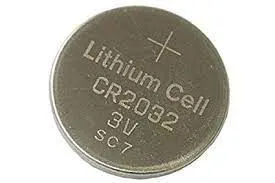
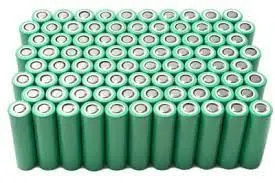
Components of Li-ion Cell
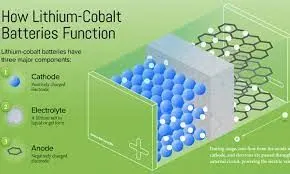
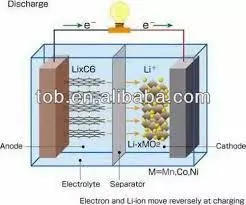
Like any other cell, Li-ion cells are also made up of different components. These internal components help in shaping the features and other characteristics of a Li-ion cell. The Li-ion cell has 4 main components that are Cathode, Anode, Electrolyte, and Separator. The image below shows the different components of a Li-ion cell.
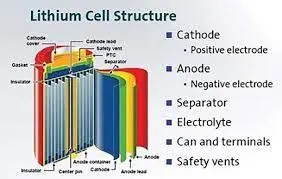
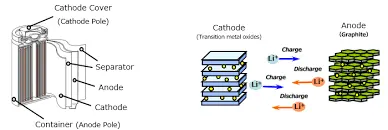
Lithium Cobalt Oxide:
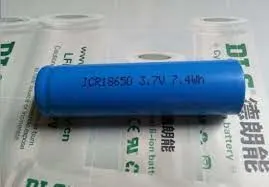
* This battery has the highest energy density. The specific energy is in the range of 150 to 200 Wh/Kg.
* The limitation is thermal instablitiy the anode can overheat. At high temp the cathode can decompose and produce oxygen SOmetimes the electrolute used is diethyl carbonate which is flammable in nature hence, this type of battery can catch fire due to overheating the thermal runaway occurs at 150 degree c
* It has a short life span due to formation of solid Electrolyte Layer (SEI) at anode and lithium plating due to fast charging and charging at low temp.
TYpically it has life span of 500 to 1000 cycles
* It has limited load capabilities since it cannot be charged or discharged beyond its C-rate should be maintained in the range of 0.7 c to 1c.
Lithium Manganese Oxide:
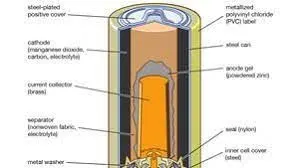
* The spinel structure (AB2O4 Structure) of Lithium manganese enables this type of battery to have better thermal stability so it is better in terms of safety The high charge promotes thermal runaway at a high temp of 250c
* The Spinel structure promotes the ion flow within the electrolyte and this reduces the internal resistance of the battery
* The limitation is that it loses the battery power over time
* It has shorter lifetime of 300-700 cycles and lower capacity The specific energy of this battery is 100-150 Wh/kg
* it has ability to charge and discharge at higher C-rate, So it is used for a high current boost on acceleration in EV.
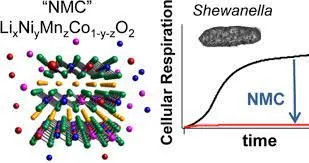
Lithium Nickel Manganese Cobalt Oxide:
* This type of battery has the advantage of Lithium cobalt oxide. & Lithium Manganse Oxide
* Thermal runaway occurs at a high temp of 210c
* It has a life span of 1000 to 2000 cycles
* This combination has a mixture of one third nickel, one third Cobalt, and one third Manganese, Cobalt is expensive and limited in supply. Hence the proportion of cobalt in the recent batteries
* This battery is preferred for electric vehicles due to its low self heating rate
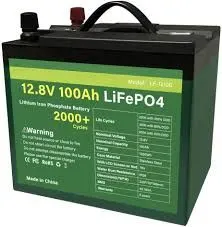
Lithium Iron Phosphate:
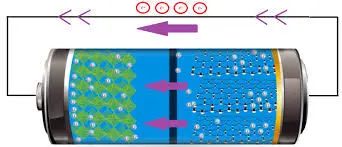
* This battery has a high discharge rate because of low internal resistance made possible by nano scale phosphate cathode material
* Due to the presence of phosphate (PO4) that can cope up with high temp At cathode Phosphate anions are bonded with iron cations. This structure holds the oxygen molecules tightly and give cathode chemical stability This battery has good thermal stability Thermal runaway is caused at 270 c
* It can be used for higher number of discharge cycles as high as 2000
* It has higher self discharge rate
* This battery is more tolerant to full charge and less stressed when kept at full voltage for prolonged period.
Lithium Nickel Cobalt Aluminium Oxide:
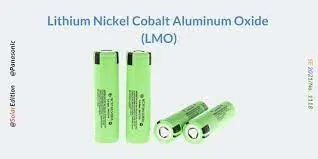
* It is a further development of lithium Nickel oxide Adding Auminium to the chemistry gives the battery greater stability
* It has feature similar to NMC Battery high specific energy (200-260 Wh/kg) Good specific power and a long life span
Lithium Titanate:
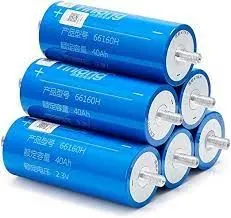
In this battery Graphite as anode is replaced by Lithium Titanate formed into a spinel strcture
* It has fast charge capability and a high discharge curent of 10c which is 10 times the usual capacity
* This battery is safe it has good low temp. discharge capability and can acheive c charger level of 80% atv -30 c
* It is advantage over lithium cobalt oxide because ther is no solid Electrolyte interface formation or lithium plating while fast charging or discharging at low temp
* It has a greater life span than any other Lithium-ion battery It can go up to 5000 Cycles.
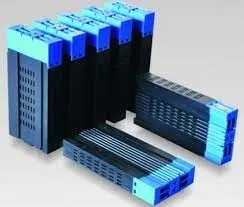
Battery Comparison
The battery is compared on many parameters like voltage, weight of the battery, specific energy. The chart below compares data of different chemistry of Li-cells.
|
|
Lithium Titanate (Li2TiO3) — LTO |
Lithium Nickel Manganese Cobalt Oxide (LiNiMnCoO2) — NMC |
Lithium Iron Phosphate(LiFePO4) — LFP |
Lithium Nickel Cobalt Aluminum Oxide (LiNiCoAlO2) — NCA |
Lithium Cobalt Oxide(LiCoO2) — LCO |
|
Voltages Nominal (Volt) |
2.40V |
3.70V |
3.30V |
3.70V |
3.70V |
|
Typical operating range (V/cell) |
1.8V–2.85V |
3.0V–4.2V |
2.5V–3.65V |
3.0 V–4.2V |
3.0 V–4.2V |
|
Specific energy (Wh/kg) |
50–80Wh/kg |
150–220Wh/kg |
90–120Wh/kg |
200-260Wh/kg |
150–200Wh/kg. |
|
Charge (C-rate) |
1C typical; 5C maximum, charges to 2.85V |
0.7–1C, charges to 4.20V |
1C typical, charges to 3.65V |
0.7C, charges to 4.20V, fast charging possible with some cells |
0.7–1C, charges to 4.20V |
|
Discharge (C-rate) |
10C possible, 30C 5s pulse |
1C, 2C possible on some cells |
1C, 25C on some cells |
1C |
1C |
|
Cycle life |
3,000–7,000 |
1000–2000 |
5000-7000; up to 12000 possible in some cells |
500 |
500–1000 |
|
Thermal runaway |
200°C + |
210°C (410°F) |
270°C (518°F) |
150°C (302°F) |
150°C (302°F) |
|
Cost (per kWh) |
~$1,005 |
~$420 per |
~$580 |
~$350 |
- |
|
Application |
Electric vehicles, UPS, etc |
E-bikes, E-Rikshaw, industrial equipment, etc |
E-bikes, E-Rikshaw, Battery Energy storage system for discoms, offices and homes |
Medical devices, industrial equipment, electric vehicles |
Smart watches, mobile phones, tablets, laptops, cameras |
Thankyou