Week 1 Understanding Different Battery Chemistry
Our Objective is divided into 2 parts:-
1) Prepare a table which includes materials & chemical reactions occurring at the anode and cathode of LCO, LMO, NCA, NMC, LFP and LTO type of lithium ion cells.
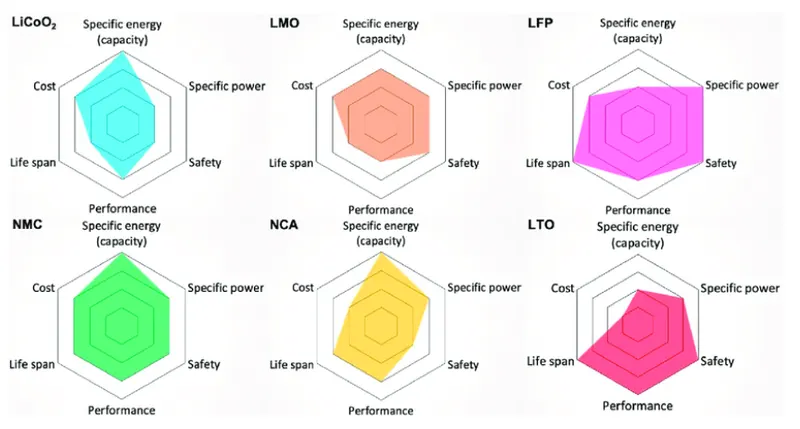
2) Compare the differences between each type of Li+ion batteries based on their characteristics.
Starting with First part i.e Making table then explanation on it.
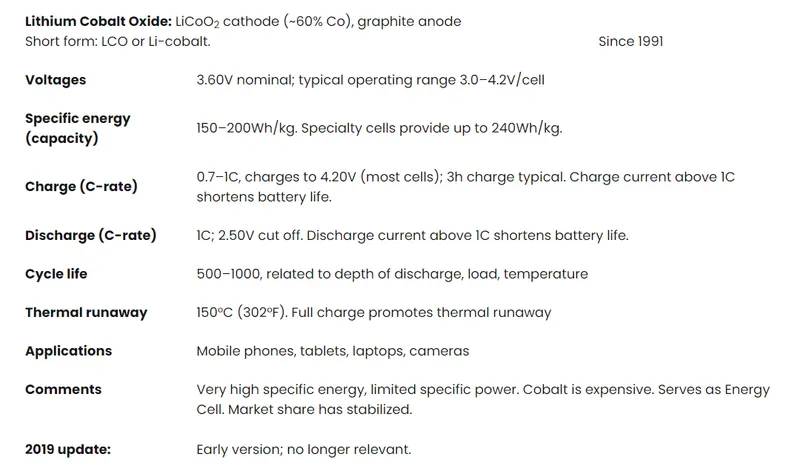
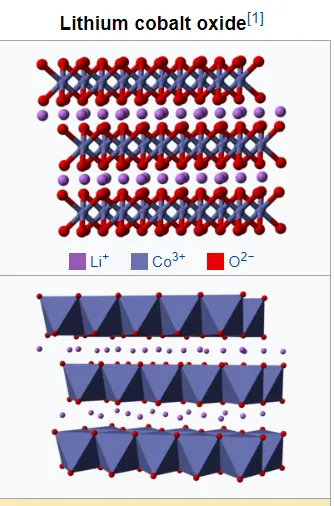
CELL:- LCO (Lithium Cobalt Oxide)
MATERIALS:- Lithium cobalt oxide, sometimes called lithium cobaltate or lithium cobaltite, is a chemical compound with formula LiCoO. The cobalt atoms are formally in the +3 oxidation state, hence the IUPAC name lithium cobalt(III) oxide. Lithium cobalt oxide is a dark blue or bluish-gray crystalline solid, and is commonly used in the positive electrode of lithium-ion-batteries.
REACTION:- During discharge, lithium is oxidized from Li to Li+ (0 to +1 oxidation state) in the lithium-graphite anode through the following reaction:C6Li -> 6 C(graphite) + (Li+) + e-.
&
These lithium ions migrate through the electrolyte medium to the cathode, where they are incorporated into lithium cobalt oxide through the following reaction,which reduces cobalt from a +4 to a +3 oxidation state :
Li(1-x)CoO2(s) + xLi+ + x e- -> LiCoO2(s)
EXPLANATION:- Lithium ion batteries are batteries that function based on the transfer of lithium ions
between a cathode and an anode.
Lithium ion batteries have higher specific energies than batteries made from other
materials such as zinc and lead due to the relatively light weight and low density of
lithium. Lithium batteries are also more stable over charge/recharge cycles due to
the small radii of lithium ions, which causes fewer disruptions of the electrode
structure during ion transfer. Lithium ion batteries commonly use graphite and cobalt
oxide as additional electrode materials.
Lithium ion batteries work by using the transfer of lithium ions and electrons from the
anode to the cathode. At the anode, neutral lithium is oxidized and converted to Li+.
These Li+
ions then migrate to the cathode, where they are incorporated into LiCoO2.
This results in the reduction of Co(IV) to Co(III) when the electrons from the anode
reaction are received at the cathode. Because lithium is involved in the reactions at
both electrodes, the battery can be recharged by running the reactions in reverse.
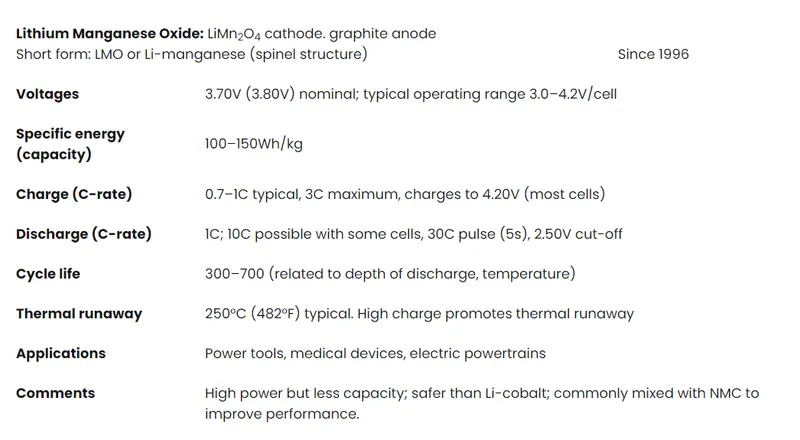
CELL:- LMO(lithium ion manganese oxide)
MATERIALS:- A lithium ion manganese oxide battery is a lithium-ion-cell that uses manganese dioxide, MnO, as the cathode material. They function through the same intercalation/de-intercalation mechanism as other commercialized secondary battery technologies, such as LiCoO. Cathodes based on manganese-oxide components are earth-abundant, inexpensive, non-toxic, and provide better thermal stability.
REACTION:-

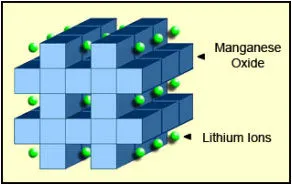
EXPLANATION:- The most popular technology of the battery sector currently is the of the lithium ion battery. Relative to other types of batteries, lithium ion batteries have better energy, power density and higher cycling ability. These qualities are extremely important in the use in modern applications like electrical and hybrid vehicles and most importantly energy storage systems which are used in the renewable energy applications.The lithium ion batteries chemistry is the same across the different lithium-ion battery types; during discharge, Lithium-ions are moved to the positive cathode from the negative anode through the organic electrolyte. The anodes in all various technologies of lithium ion are all made from graphite. The differences are the cathode which contains changing cobalt, nickel or manganese concentrations. All various cathode types allow high lithium insertion and intercalation levels which result in large energy storage quantities.
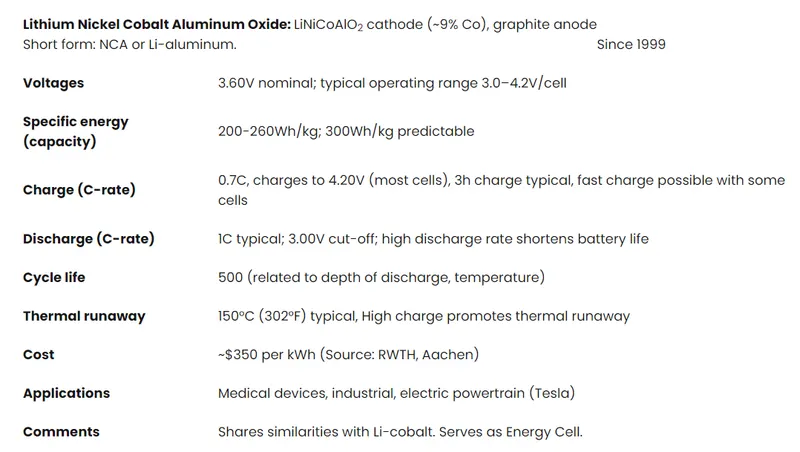
CELL:- NCA(nickel cobalt aluminium oxides)
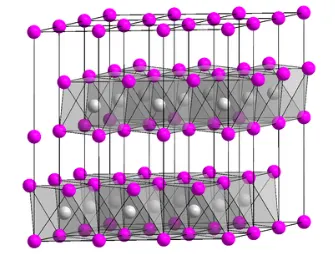
MATERIAL:- The lithium nickel cobalt aluminium oxides (NCAs) are a group of mixed metal oxides. Some of them are important due to their application in lithium ion batteries. NCAs are used as active material on the positive pole (which is the cathode when the battery is discharged). NCAs are composed of the cations of the chemical elements lithium, nickel, cobalt and aluminium. The most important representatives as of this date have the general formula LiNixCoyAlzO2 with x + y + z = 1.
REACTION:-

EXPLANATION:-
The usable charge storage capacity of NCA is about 180 to 200 mAh/g. This is well below the theoretical values; for LiNi0,8Co0,15Al0,05O2 this is 279 mAh/g. However, the capacity of NCA is significantly higher than that of alternative materials such as lithium cobalt oxide LiCoO2 with 148 mAh/g, lithium iron phosphate LiFePO4 with 165 mAh/g and NMC 333 LiNi0,33Mn0,33Co0,33O2 with 170 mAh/g. Like LiCoO2 and NMC, NCA belongs to the cathode materials with layer structure. Due to the high voltage, NCA enables batteries with high energy density. Another advantage of NCA is its excellent fast charging capability. Disadvantages are the high costs and the limited resources of cobalt and nickel.
The two materials NCA and NMC have related structures, quite similar electrochemical behaviour and show similar performance, in particular relatively high energy densities and relatively high performance. It is estimated that the NCA battery of Model 3 contains between 4.5 and 9.5 kg of cobalt and 11.6 kg of lithium.
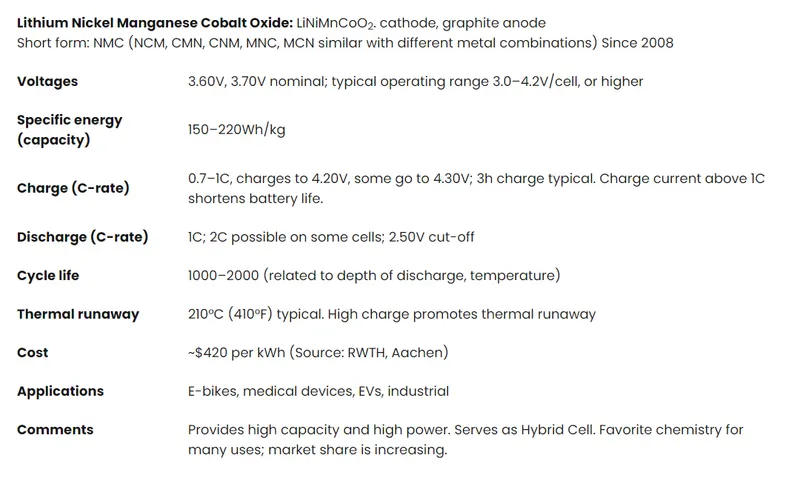
CELL:- NMC(nickel manganese cobalt oxides)
MATERIAL:- Lithium nickel manganese cobalt oxides (abbreviated Li-NMC, LNMC, NMC or NCM) are mixed metal oxides of lithium, nickel, manganese and cobalt. They have the general formula LiNixMnyCozO2. The most important representatives have a composition with x + y + z that is near 1, with a small amount of lithium on the transition metal site. In commercial NMC samples, the composition typically has < 5% excess lithium. Structurally materials in this group are closely related to lithium cobalt oxide (LiCoO2) and have a layered structure but possess an ideal charge distribution of Mn(IV), Co(III), and Ni(II) at the 1:1:1 stoichiometry. For more nickel-rich compositions, the nickel is in a more oxidized state for charge balance. NMCs are among the most important storage materials for lithium ions in lithium ion batteries. They are used on the positive side, which acts as the cathode during discharge.
REACTION:-
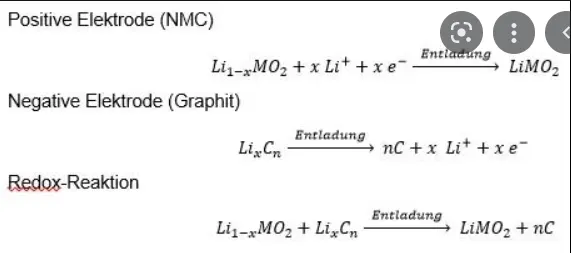
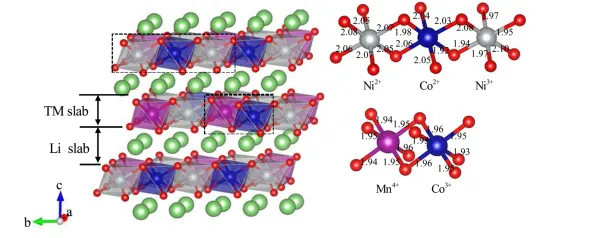
EXPLANATION:- NMC can exist in several different stoichiometric ratios between the Ni, Mn, and Co atoms, and these different compositions can affect various properties of NMC, such as structural stability, chemical stability, and capacity. In addition to having a number of possible stoichiometric compositions, NMC is often made up of polycrystalline particles that vary in size and crystal orientation and have many grain boundaries. Subsequently, even for a single composition of NMC, structural degradation, chemical destabilization, and the heterogeneity of the NMC are all intertwined. Unlike chemical composition, variations in crystallinity and size are often more complex to control during material synthesis, and their impact on battery performance has so far been less clear.
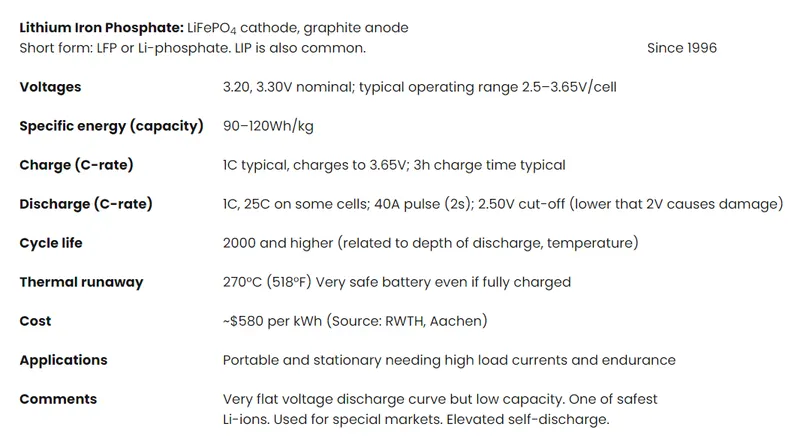
CELL:- LFP(lithium iron phosphate)
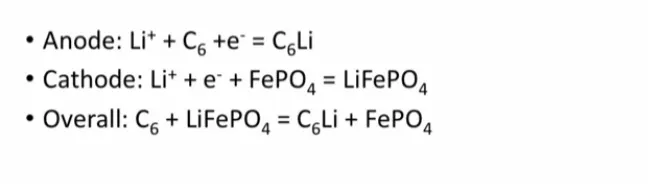
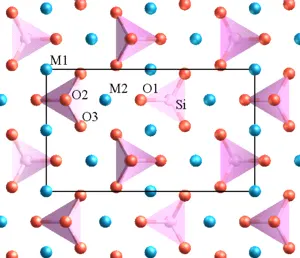
MATERIAL:- The lithium iron phosphate battery (LiFePO4 battery) or LFP battery (lithium ferrophosphate) is a type of lithium ion battery using lithium iron phosphate (LiFePO4) as the cathode material, and a graphite carbon electrode with a metallic backing as the anode.
REACTION:-
EXPLANATION:-
The lithium iron phosphate battery (LiFePO4 battery) or LFP battery (lithium ferrophosphate) is a type of lithium ion battery using lithium iron phosphate (LiFePO4) as the cathode material, and a graphite carbon electrode with a metallic backing as the anode. The energy density of an LFP battery is lower than that of other common lithium ion battery types such as Nickel Manganese Cobalt (NMC) and Nickel Cobalt Aluminum (NCA), and also has a lower operating voltage; CATL's LFP batteries are currently at 125 (Wh) per kg, up to possibly 160 Wh/kg with improved packing technology, while BYD's LFP batteries are at 150 Wh/kg, compared to over 300 Wh/kg for the highest NMC batteries. Notably, the energy density of Panasonic’s “2170” batteries used in 2020 in Tesla’s Model 3 is around 260 Wh/kg, which is 70% of its "pure chemicals" value.
Because of its lower cost, high safety, low toxicity, long cycle life and other factors, LFP batteries are finding a number of roles in vehicle use, utility scale stationary applications, and backup power LFP batteries are cobalt-free. As of Q1 2021, LFP type battery market share reached 24.1%, with chinese manufacturer holding a near monopoly, and is expected to rise further to surpass NMC type batteries in 2028.
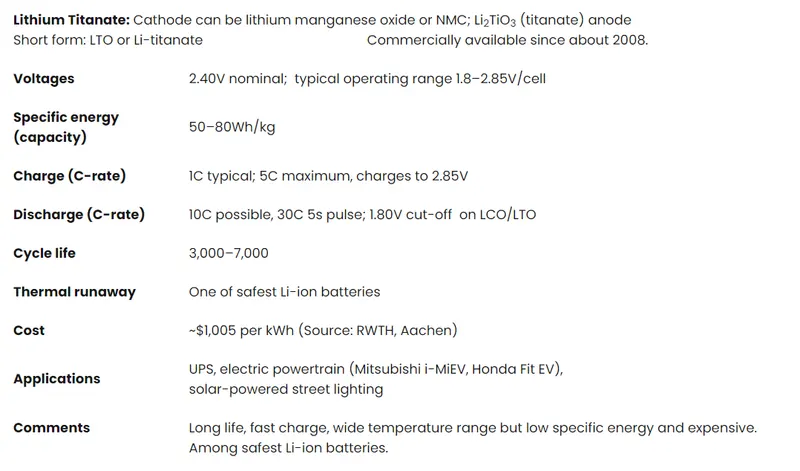
CELL:- LTO(lithium-titanium-oxide)
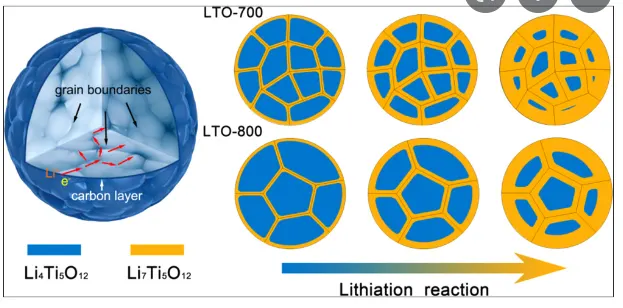
MATERIAL:- A lithium-titanate battery is a modified lithium-ion battery that uses lithium titanate nanocrystal, instead of carbon, on the surface of its anode. This gives the anode a surface area of about 100 square meters per gram, compared with 3 square meters per gram for carbon, allowing electrons to enter and leave the anode quickly. Also, the redox potential of Li+ intercalation into titanium oxides is more positive than that of Li+ intercalation into graphite.
REACTION:- 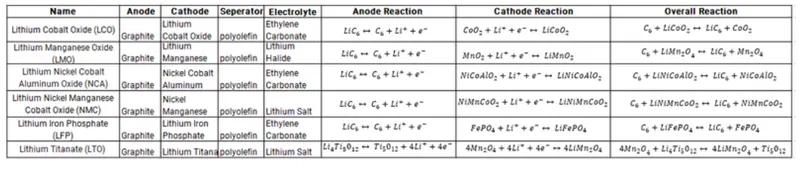
EXPLANATION:-
A lithium-titanate battery is a modified lithium-ion battery that uses lithium-titanate nanocrystals, instead of carbon, on the surface of its anode. This gives the anode a surface area of about 100 square meters per gram, compared with 3 square meters per gram for carbon, allowing electrons to enter and leave the anode quickly. Also, the redox potential of Li+ intercalation into titanium oxides is more positive than that of Li+ intercalation into graphite. This leads to fast charging (higher charging current) being much safer in the case of the titanate, than in the case of carbon, since lithium dendrites are less likely to form in the former case. Lithium-titanate cells last for 3000 to 7000 charge cycles; a life cycle of ~1000 cycles before reaching 80% capacity is possible when charged and discharged at 55 °C (131 °F), rather than the standard 25 °C (77 °F).
A disadvantage of lithium-titanate batteries is their lower inherent voltage (2.4 V), which leads to a lower specific energy (about 30–110 Wh/kg) than conventional lithium-ion battery technologies, which have an inherent voltage of 3.7 V. Some lithium-titanate batteries, however, have an energy density of up to 177 Wh/L.
Moving towars Second part i.e Compare the differences between each type of Li+ion batteries based on their characteristics