Week 1 Understanding Different Battery Chemistry
1. Prepare a table which includes materials & chemical reactions occurring at the anode and cathode of LCO, LMO, NCA, NMC, LFP and LTO type of lithium ion cells.Give your detailed explanation on it.
Answer:
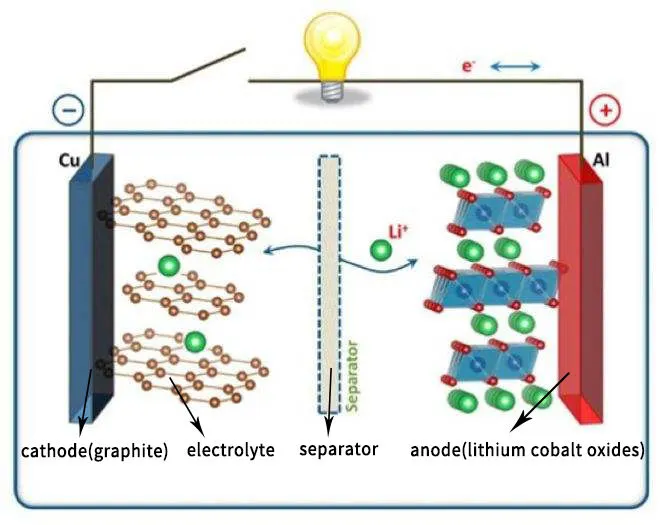
Lithium Cobalt Oxide (LiCoO2):
- Its high specific energy makes Li-cobalt popular for mobile phones, laptops, and digital cameras.
- The battery consists of a cobalt oxide cathode and a graphite carbon anode.
- The cathode has a layered structure; lithium ions move from the anode to the cathode during discharge. The flow reverses on charge.
- The drawback of Li-cobalt is its relatively short life span, low thermal stability, and limited load capabilities (specific power).
- Li-cobalt should not be charged and discharged at a current higher than its C-rating.
Lithium Manganese Oxide (LiMn2O4):
- Li-manganese is used for power tools, medical instruments, as well as hybrid and electric vehicles.
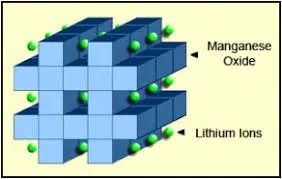
- Li-ion cell with lithium manganese oxide as cathode material and a graphite carbon anode.
- The architecture forms a three-dimensional spinel structure that improves ion flow on the electrode, which results in lower internal resistance and improved current handling.
- A further advantage of spinel is high thermal stability and enhanced safety, but the cycle and calendar life is limited.
- Low internal cell resistance enables fast charging and high-current discharging.
Lithium Nickel Cobalt Aluminium Oxide (LiNiCoAlO2):
- Lithium nickel cobalt aluminium oxide battery, or NCA, has been around since 1999 for special applications.
- It offers high specific energy, reasonably good specific power, and a long life span.
- Less flattering are safety and cost.
- NCA is a further development of lithium nickel oxide; adding aluminium gives the chemistry more excellent stability.
Lithium Nickel Manganese Cobalt Oxide (LiNiMnCoO2):
- One of the most successful Li-ion systems is a cathode combination of nickel-manganese-cobalt (NMC). Similar to Li-manganese, these systems can be tailored to serve as energy cells or power cells.
- Silicon added to graphite has the drawback that the anode grows and shrinks with charge and discharge, making the cell mechanically unstable.
- NMC is the battery of choice for power tools, e-bikes and other electric powertrains.
- The cathode combination is typically one-third nickel, one-third manganese and one-third cobalt, also known as 1-1-1.
- This offers a unique blend that also lowers the raw material cost due to reduced cobalt content. Another successful combination is NCM with 5 parts nickel, 3 parts cobalt and 2 parts manganese (5-3-2).
- Other combinations using various amounts of cathode materials are possible.
Lithium Iron Phosphate (LiFePO4):
- In 1996, the University of Texas (and other contributors) discovered phosphate as a cathode material for rechargeable lithium batteries.
- Li-phosphate offers good electrochemical performance with low resistance. This is made possible with nano-scale phosphate cathode material.
- The key benefits are high current rating and long cycle life, besides good thermal stability, enhanced safety and tolerance if abused.
Lithium Titanate (Li2TiO3):
- Batteries with lithium titanate anodes have been known since the 1980s.
- Li-titanate replaces the graphite in the anode of a typical lithium-ion battery and the material forms a spinel structure.
- The cathode can be lithium manganese oxide or NMC.
- Li-titanate has a nominal cell voltage of 2.40V, can be fast charged and delivers a high discharge current of 10C, or 10 times the rated capacity.
- The cycle count is said to be higher than that of a regular Li-ion. Li-titanate is safe, has excellent low-temperature discharge characteristics and obtains a capacity of 80% at –30°C (–22°F).
| Names | Cathode | Anode | Seprator | Electrolyte | Cathode Reaction | Anode Reaction | Overall Reaction |
| Lithium Cobalt Oxide (LiCoO2)- LCO | Cobalt Oxide | Graphite | polyolifin | Ethelene Carbonate | LiCoO2 ↔ Li++ CoO2 + e- | LiC6 ↔ Li+ + C6 + e- | C6 +LiCoO2 ↔ LiC6 + CoO2 |
| Lithium Manganese Oxide (LiMn2O4)- LMO | Manganese Oxide | Graphite | polyolifin | Lithium Halide | LiMnO2 ↔ Li+ + MnO2 + e- | LiC6 ↔ Li+ + C7 + e- | C6 + LiMn2O4 ↔ LiC6 + Mn2O4 |
| Lithium Nickel cobalt Aluminum Oxide (LiNiCoAlO2)- NCA | Nickel Cobalt Aluminum Oxide | Graphite | polyolifin | Ethylene Carbonate | LiNiCoAlO2 ↔ Li+ + NiCoAlO2 + e- | LiC6 ↔ Li+ + C8 + e- | C6 + LiNiCoAlO2 ↔ LiC6 + NiCo AlO2 |
| Lithium Nickel Manganese Cobalt Oxide (LiNiMnCoO2)- NMC | Nickel Manganese Cobalt Oxide | Graphite | polyolifin | Lithium Salt | LiNiMnCoO2 ↔ Li+ +NiMnCoO2 + e- | LiC6 ↔ Li+ + C9 + e- | C6 + LiNiMnCoO2 ↔ LiC6 + NiMnCoO2 |
| Lithium Iron Phosphate (LiFePO4)- LFP | Iron Phosphate | Graphite | polyolifin | Ethelene Carbonate | LiFePO4 ↔ Li+ + FePO4 + e- | LiC6 ↔ Li+ + C10 + e- | C6 + LiFePO4 ↔ LiC6 + FePO4 |
| Lithium Titanate (Li2TiO3)- LTO | Manganese Oxide | Lithium Titanate | polyolifin | Lithium Salt | 4LiMn2O4 ↔ 4Mn2O4 + 4Li+ + e- | Li4Ti5O4 ↔ Ti5O4 + 4Li+ + 4e- | 4Mn2O4 + Li4Ti5O12 ↔ 4LiMn2O4 + Ti5O12 |
An excel sheet has been attached for reference "battery-reaction-details".
2. Compare the differences between each type of Li+ion batteries based on their characteristics.
Answer:
LCO:
- Very high specific energy
- limited specific power.
- Cobalt is expensive.
- Serves as Energy Cell.
- Market share has stabilized.
- Early version; no longer relevant.
LMO:
- High power but less capacity
- safer than Li-cobalt
- commonly mixed with NMC to improve performance.
- Less relevant now
- limited growth potential.
NMC:
- Provides high capacity and high power.
- Serves as Hybrid Cell.
- Favorite chemistry for many uses
- market share is increasing.
- Leading system; dominant cathode chemistry
LFP:
- Very flat voltage discharge curve but low capacity.
- One of the safest Li-ions.
- Used for special markets.
- Elevated self-discharge.
- Used primarily for energy storage.
- moderate growth
NCA:
- Shares similarities with Li-cobalt.
- Serves as Energy Cell.
- Mainly used by Panasonic and Tesla.
- growth potential.
LTO:
- Long life, fast charge, wide temperature range but low specific energy, and expensive.
- Among safest Li-ion batteries.
- Ability to ultra-fast charge.
- high-cost limits to a special application.
| Name | Specific Energy (Wh/Kg) | Charge (C-Rate) | Discharge (C-Rate) | Cycle Life | Thermal Runway (℃) | Application |
| LCO | 150-200 | 07.-1.0 | 1; 2.50V Cutt off | 500-1000 | 150 | Mobile Phones, tablets, Laptops, Cameras |
| LMO | 100-150 | 0.7-1.0; 3C max. | 1; 10C Possible with some cell. 30C pulse(5s); 2.50V Cutt off | 300-700 | 250 | Power tools, Medical devices, Electric powertrain |
| NMC | 150-220 | 0.7-1.0C | 1C, 2C Possible for some cell | 1000-2000 | 210 | E-bikes, Medical Dvices, EVs, Industrial |
| LFP | 90-120 | 1C, 3hr charge | 1C, 25C on some cell, 40A pulse(2s) | >2000 | 270 | Portable and stationary needing high load current & endurance |
| NCA | 200-260 | 0.7, 3hr charge typical; Fast charging possible | 1C typical, 3.00V cutt off | 500 | 150 | Medical Devices, Industrial, Electric Powertrain(Tesla) |
| LTO | 50-80 | 1C , typical 5C max. | 10C, Possible 30C(5s) pulse | 3000-7000 | Safest Battery | UPS, Electric power train( Mitsubishi, Honda Fit EV), Solar power street lightning |
An excel sheet has been attached for reference "battery-compare".