Project 2 Thermal modeling of battery pack
EV Live Batch-21
Question> For a 10 cell series lithium ion battery model, simulate the thermal effects and compare life cycle performance at various temperatures, charge & discharge rates using MATLAB.
Ans.
Objective:
For a 10-cell series lithium-ion battery model, simulate the thermal effects and compare life cycle performance at various temperatures, and charge & discharge rates using MATLAB.
Theory:
Lithium-ion cells' performance depends on both the temperature and the operating voltage. lithium-ion cells work well when operating within limited voltage and temperature otherwise, the damage will occur to the cells and will be irreversible.
In an overvoltage situation, the charging voltage exceeds the bearable cell voltage, resulting in excessive current flows and at the same time, it causes two problems.
The battery temperature should be controlled within temperature limits to avoid thermal issues and improve performance. The temperature range affects the battery power and battery cycle life, at the same time, the temperature distribution should be even to guarantee the battery performance and lifetime that is also the reason why the thermal management system is necessary to the battery system.
When the temperature ranges from 20 degrees to 40 degrees centigrade, battery power reaches the maximum,
The cycle life goes down slowly below 10 degrees because of anode plating and drops off quickly above 60 degrees centigrade due to the breakdown of electrode materials.
Generally, the temperature must be controlled between 20 degrees to 40 degrees centigrade to ensure performance and cycle life.
MATLAB Model explanation:
Here we use a lithium-ion battery, cell 1 to 10, control temperature block, state of charge estimation scope, UDDS current profile given to circuit, temperature sensor and convective heat transfer block & powergui. 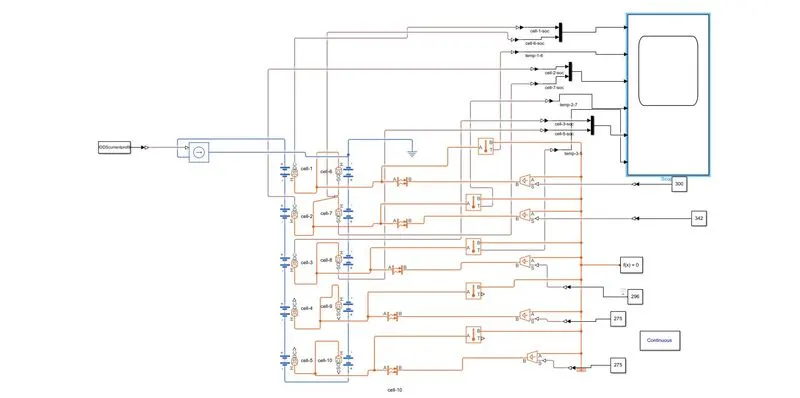
UDDS Current Profile:
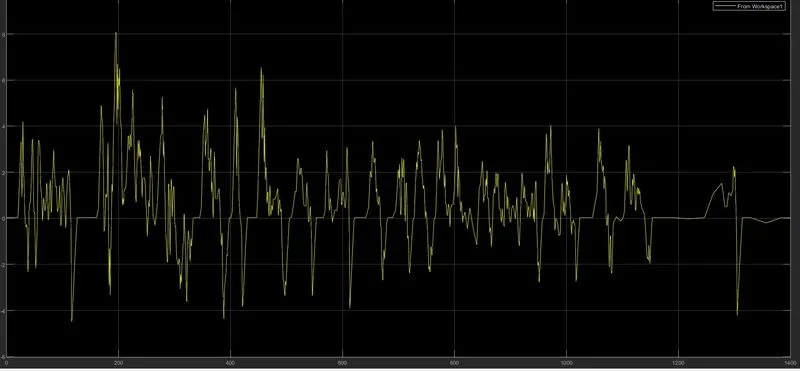
UDDS stands for urban dynamometer driving schedule and refers to the united state environmental protection agency's mandated dynamometer test on fuel economy that represents city driving conditions which are used for vehicle testing. UDDS current profile is charge, discharge data or the current profile data obtained for a particular vehicle running on battery following the UDDS drive cycle. The following plot represents the current profile.
Controlled temperature source:
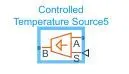
This block represents an ideal energy source in a thermal network that can maintain a controlled temperature difference regardless of the heat flow rate. The temperature difference is set by the physical signal port S. A positive temperature difference causes the temperature at port B to be greater than the temperature at port A.
Convective heat transfer:

This block models heat transfer in a thermal network by convection due to fluid motion. The rate of heat transfer is proportional to the temperature difference, heat transfer coefficient, and surface area in contact with the fluid.
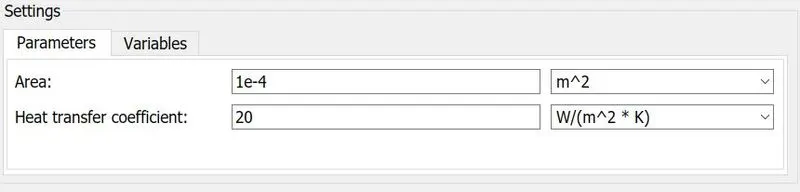
This parameter setting of convective heat transfer is set for all battery cells.
Temperature sensor:
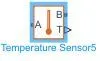
This block measures temperature in a thermal network. There is no heat flow through the sensor. The physical signal port T reports the temperature difference across the sensor. The measurement is positive when the temperature at port A is greater than the temperature at port B.
Battery: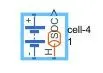
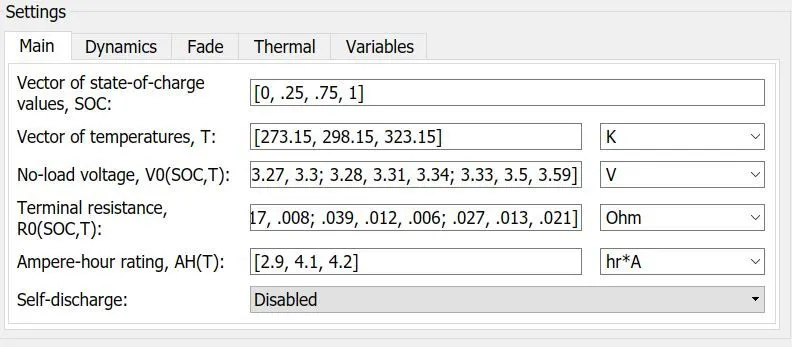
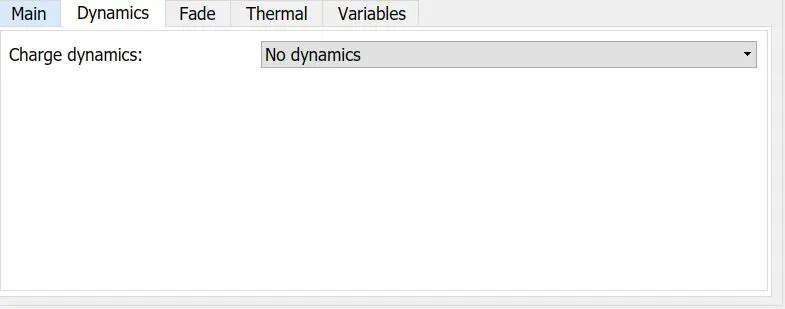
This block model a battery based on tabulated characteristics as functions of the state of charge (SOC) and temperature (T).
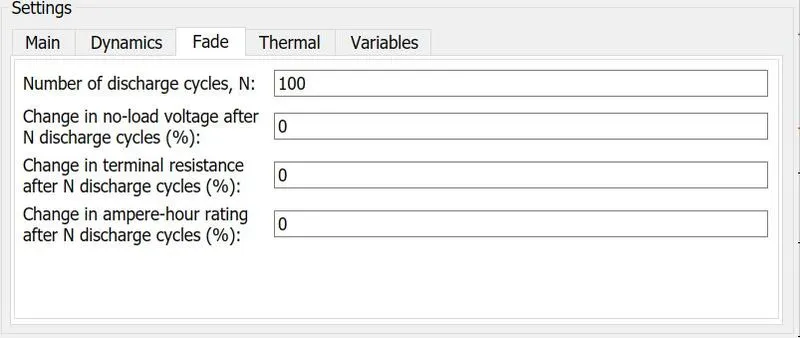
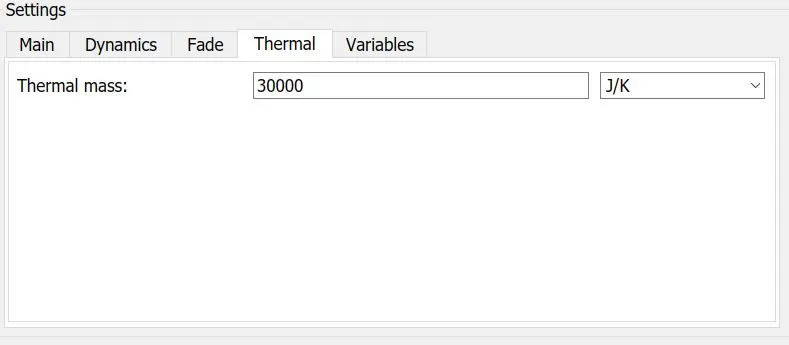
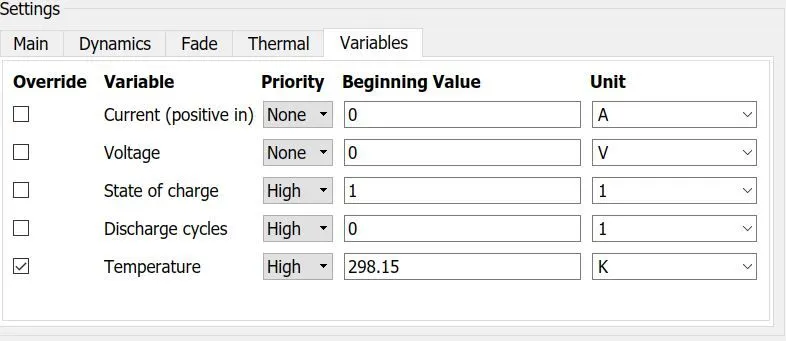
Simulation Results:
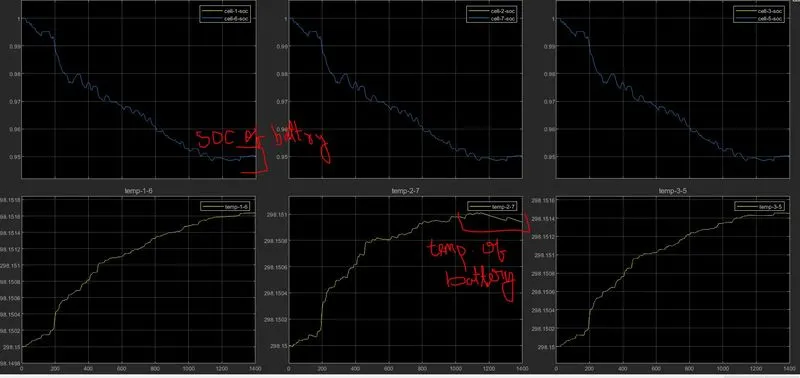
from the figure, we can see that the SOC of the battery pack is about 95% when cells have been tested at different temperatures, from the model, we can see that here we used a constant block to set the temperature of the battery, cell-1 and cell-6 is set at 300K(25 degrees C), cell-2 and cell-7 are set at 285K(10 degrees C), cell-3 and cell-8 are set at 296K(21 degrees C). These are the normal operating temperature.
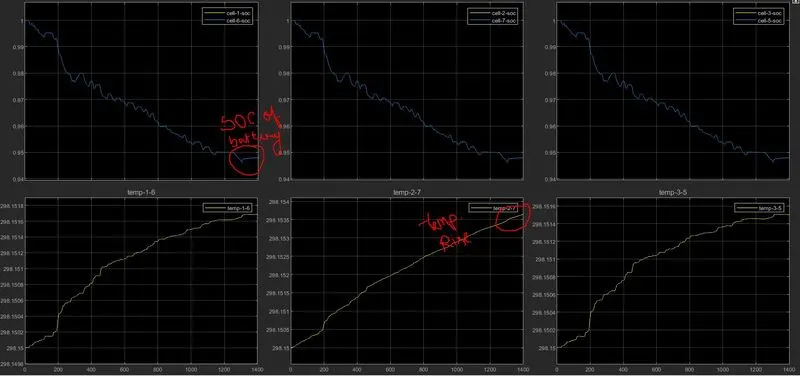
from the above figure, we can see that our SOC has decreased from 95% due to our cell-2 and cell-7 temperature rising from 300k(10 degrees C) to 342K( 67 degrees C), this is one of the causes of decreasing SOC and cycle life of the battery.