Week 1 Understanding Different Battery Chemistry
Week 1 Challenge
Understanding Different Battery Chemistry
Abhishek Patil | 15/04/2022
Objective
1.Prepare a table which includes materials & chemical reactions occurring at the anode and cathode of LCO, LMO, NCA, NMC, LFP and LTO type of lithium-ion cells. Give your detailed explanation on it
2.Compare the differences between each type of Li+ion batteries based on their characteristics
What is a Battery?
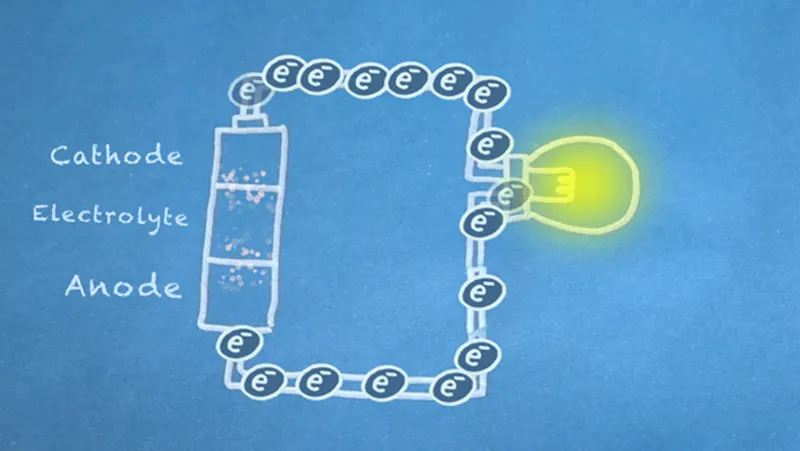
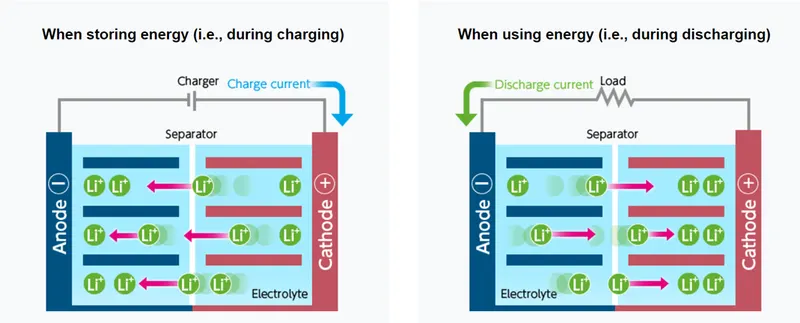
Batteries are a collection of one or more cells whose chemical reactions create a flow of electrons in a circuit. All batteries are made up of three basic components: an anode (the '-' side), a cathode (the '+' side), and some kind of electrolyte (a substance that chemically reacts with the anode and cathode).
Batteries that must be thrown away after use are known as primary batteries. Batteries that can be recharged are called secondary batteries.
Components
Anode
In a battery, the chemical reaction between the anode and electrolyte causes a build up of electrons in the anode.
Cathode
Electrons flow into the cathode in a device connected to a circuit. This means that conventional "current" flows out from a cathode. In batteries, the chemical reaction in or around the cathode uses the electrons produced in the anode.
Electrolyte
The electrolyte is the substance, often a liquid or gel, that is capable of transporting ions between the chemical reactions that happen at the anode and cathode. The electrolyte also inhibits the flow of electrons between the anode and cathode so that the electrons more easily flow through the external circuit rather than through the electrolyte.
Separator
Separators are porous materials that prevent the anode and cathode from touching, which would cause a short circuit in the battery. Separators can be made from a variety of materials, including cotton, nylon, polyester, cardboard, and synthetic polymer films. Separators do not chemically react with either the anode, cathode, or electrolyte.
Lithium-ion Batteries
A lithium-ion battery is a type of rechargeable battery that is charged and discharged by lithium ions moving between the negative (anode) and positive (cathode) electrodes.
Because lithium-ion batteries are suitable for storing high-capacity power, they are used in a wide range of applications, including consumer electronics such as smartphones and PCs, industrial robots, production equipment and automobiles.

Types of Li-ion batteries
|