Week 1 Understanding Different Battery Chemistry
1.Prepare a table which includes materials & chemical reactions occurring at the anode and cathode of LCO, LMO, NCA, NMC, LFP and LTO type of lithium ion cells.Give your detailed explanation on it.
soluction:
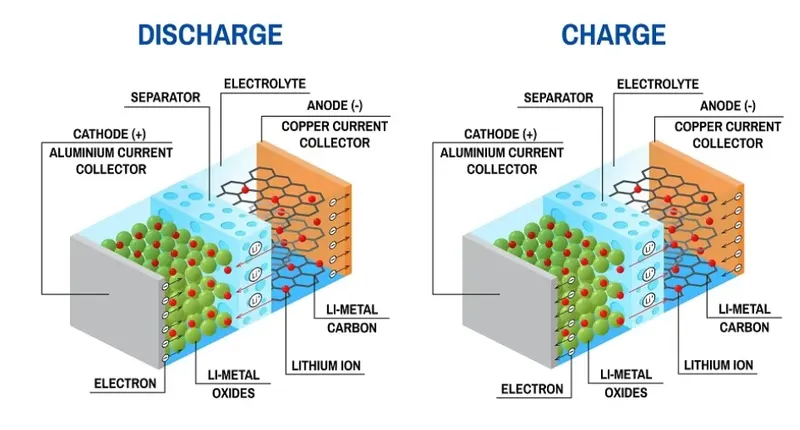
LITHUM-IONBATTERY:


TYPES OF LITHUM ION BATTERYS:
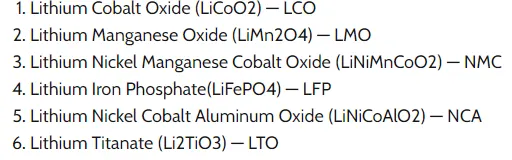
TABLE:
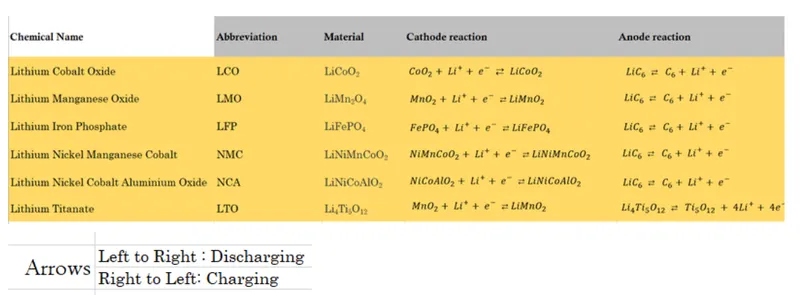
CONCLUSION:

2.Compare the differences between each type of Li+ion batteries based on their characteristics.
The biggest difference between Lithium batteries and Lithium-ion batteries is that Lithium batteries feature a single cell construction, meaning that they are single-use and cannot be recharged once empty. On the other hand, Lithium-ion batteries can be used time after time, they are rechargeable and can be charged and emptied hundreds of times.
If they’re sitting on a shelf unused, then Lithium batteries actually last much longer. A lithium battery can last for 10 to 12 years while retaining its charge, whilst Lithium-ion batteries only last from 2 to 3 years. You might not know that these two aren’t actually the only types of Lithium batteries you can get; check out our article on the BATTERYS.
Although Lithium-ion batteries might seem much better, especially from a waste point of view, there are still some properties that make Lithium batteries incredibly useful. They have a much higher energy density than lithium-ion batteries, meaning they hold more charge in comparison to their size. Lithium batteries can provide power from a single charge, even if it’s the only charge they’ll ever have. Unfortunately, there is no safe or effective way to recharge Lithium batteries, which is why Lithium-ion batteries were invented in the first place. Additionally, Lithium batteries are cheaper and easier to manufacture, meaning they cost less to purchase.
There are many different uses for batteries, as anything which needs a portable power source uses them. The kind of battery which is better depends entirely on your use, that’s why both types of battery are still produced and used all over the world today. Modern life depends heavily on batteries for portable power, they’re vital to our personal electronics, cars and transport, even our medical care.
Lithium batteries are the better choice for powering devices where long battery life is imperative. Examples include watches, film cameras, pacemakers, hearing aids, remote controls, calculators, and smoke detectors. All of these items need a long-lasting source of power without needing to be plugged into mains electricity all of the time, so a Lithium battery is an ideal choice.
The cases where Lithium-ion batteries are much more favorable require frequent recharging to be convenient. The Lithium-ion battery in your mobile phone generally lasts around a day, but you can recharge it every day for years without losing too much function. Devices like laptops, digital cameras, solar power storage, portable power packs, and any sort of wireless technology all rely on rechargeable Lithium-ion batteries to function. They need the ability to recharge without replacing parts because of their incredibly frequent use.
Neither type of battery should be exposed to hot temperatures, as this could risk permanent damage and can even be dangerous. Store your batteries in a cool, dry place at regular room temperature. For more information, read our article.

Lithium and lithium-ion batteries are both incredibly useful and make huge contributions to most people’s daily lives. Their applications are endless, from lifesaving medical technology to remote control toy cars, it’s hard to imagine a modern world without them. Both these types of batteries provide a form of portable power, they will provide charge to a compatible electric circuit no matter where you are.
The difference between lithium and lithium-ion batteries is that one is not rechargeable (primary cell) and the other can be recharged (secondary cell). In addition to this, Lithium batteries have a shelf life up to four times longer than lithium-ion batteries and are also much cheaper and easier to make. This goes for your cell phone, your digital camera, and even your electric toothbrush.
Conversely, the items we rely on to hold their charge for extended periods of time are best powered using Lithium batteries. Whether it’s a medical pacemaker or safety features like a smoke alarm, Lithium batteries are preferred as they last for so much longer. And, although we’d like to point out that it’s very rare, Lithium-ion batteries have been known to catch fire and explode, a feature we thankfully don’t see from Lithium batteries.