Week 1 Understanding Different Battery Chemistry
1.Prepare a table which includes materials & chemical reactions occurring at the anode and cathode of LCO, LMO, NCA, NMC, LFP and LTO type of lithium ion cells.Give your detailed explanation on it
------------------------------------------------------------------------------------------------------------------------------------------------------------
ANS:
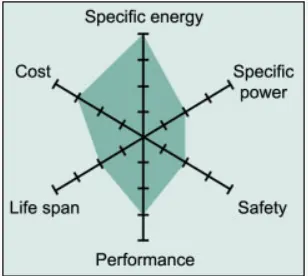
LCO(LITHIUM COBALT OXIDE(LiCoO2):
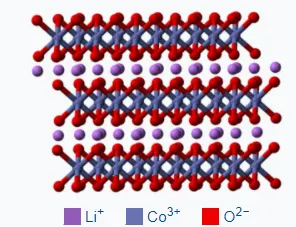
Anode structure: LiCoO2(lithium Cobalt oxide) conductive agent =acetylene black collector /anode=aluminum foil
Cathode structure: graphite conductive agent =acetylene black) collector /cathode=copper foil
Charging process Equation: Anode: LiCoO2 = Li1-xCoO2+xLi++xe-
Discharging Process:
LMO(LITHIUM MANGANATE OXIDE(LiMn2O4):
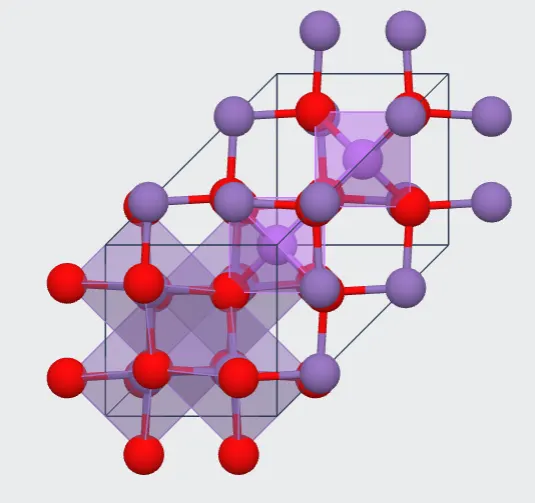
Anode structure: LiMn2O4(lithium manganate oxide) conductive agent =acetylene black collector /anode=aluminum foil) anode
Cathode structure: graphite conductive agent =acetylene black) collector /cathode=copper foil
Charging process Equation:
When the battery is charged by the power source, the electron on the anode runs to the cathode from the external circuit. The lithium ion (Li+) goes into the electrolyte from the anode, passes through the small winding hole in the separator, reaches the cathode, and combines with the electrons that have already come over.
The reaction on the anode: LiMn2O4==Li1-xMn2O4+Xli++Xe(electron)
The reaction on the cathode: 6C+XLi+Xe==LixC6
Discharging Process:
When the battery discharges, the electron on the cathode runs from the external circuit to the anode, and the lithium ion goes into the electrolyte from the cathode, passes through the small winding hole in the separator runs to the anode, and combines with the electrons that have already come over.
The reaction on the anode Li1-xMn2O4+xli++xe(electron)==LiMn2O4
The reaction on the cathode LixC6==6C+xLi+xe
Aplication: Power tools, medical devices, electric powertrains
Performance graph:
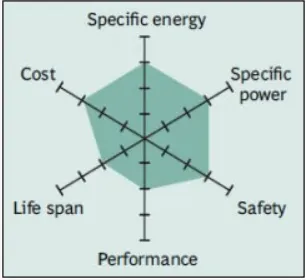
NCA(LITHIUM NICKEL COBALT ALUMINIUM OXIDE):
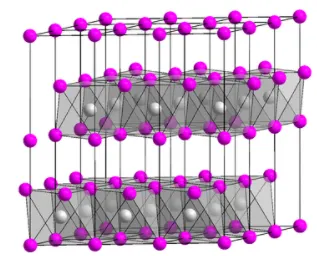
Anode structure: LiCoO2(lithium Cobalt Aluminium oxide) conductive agent =acetylene black collector /anode=aluminum foil
Cathode structure: graphite conductive agent =acetylene black) collector /cathode=copper foil
Aplication: Medical devices, industrial, electric powertrain (Tesla)
Performance graph:
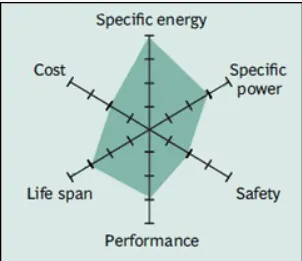
Anode structure: LiCoO2(lithium Cobalt Aluminium oxide) conductive agent =acetylene black collector /anode=aluminum foil
Cathode structure: graphite conductive agent =acetylene black) collector /cathode=copper foil
Charging process Equation: Charge: Li1-tNixMnyCozO2+tLi++te→LiNixMnyCozO2
Discharging Process:
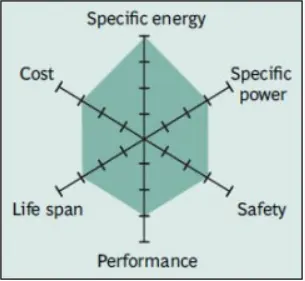
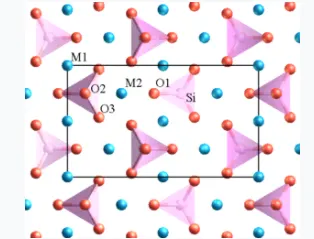
Anode structure: LiFePO4(Lithium Iron Phosphate) conductive agent =acetylene black collector /anode=aluminum foil
Cathode structure: graphite conductive agent =acetylene black) collector /cathode=copper foil
Charging process Equation: Charge:FePO4 + xLi+ + xe− → xLiFePO4 + (1 − x)FePO4
Discharging Process:
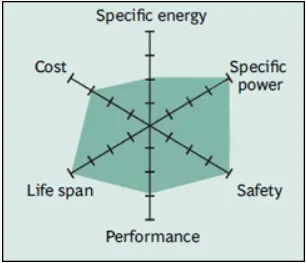
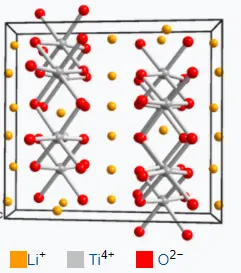
Anode structure: (Lithium Titanate Oxide) conductive agent =acetylene black collector /anode=aluminum foil
Cathode structure: graphite conductive agent =acetylene black) collector /cathode=copper foil
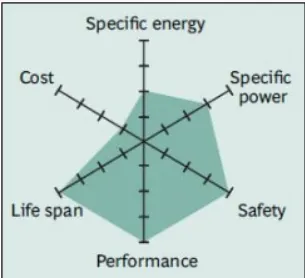
| Item | LCO | LMO | NCM | NCA | LFP | LTO |
| Chemical formula | LiCoO2 | LiMn2O4 | LiNiCoMnO2 | LiNiCoAlO2 | LiFePO4 | Li2TiO3 |
| Theoretical capacity(mAh/g) | 274 | 148 | 275 | 275 | 170 | 175 |
| Actual Capacity(mAh/g) | 140 | 120 | 160-220 | 180 | 150 | 160 |
| Tap density(g/cm3) | 2.8 | 2.2 | 2.6 | 2.6 | 1 | 1.68 |
| Compaction density(g/cm3) | 4.2 | 3 | 3.6 | 3.6 | 2.2 | 2.43 |
| Voltage (V) | 3.7 | 4 | 3.5 | 3.5 | 3.3 | 2.4 |
| Life cycle | Better | worse | Normal | Normal | Best | Better |
| Transition metal | Scarce | Most abundant | More abundant | More abundant | Most abundant | Shortage |
| Material Cost | More expensive | Cheap | Expensive | Expensive | Cheap | Expensive |
| Environmental Protection | Contain Cobalt | non-toxic | Contain nickel and cobalt | Contain nikel and cobalt | non-toxic | non-toxic |
| Sefty Protection | Bad | Good | Better | Better | Best | Better |