Week 1 Understanding Different Battery Chemistry
Theory:
A lithium-ion battery or Li-ion battery is a type of rechargeable battery. Lithium-ion batteries are commonly used for portable electronics and electric vehicles and are growing in popularity for military and aerospace applications. In the batteries, lithium ions move from the negative electrode through an electrolyte to the positive electrode during discharge, and back when charging. Li-ion batteries use an intercalated lithium compound as the material at the positive electrode and typically graphite at the negative electrode. The batteries have a high energy density, no memory effect (other than LFP cells) and low self-discharge. They can however be a safety hazard since they contain flammable electrolytes, and if damaged or incorrectly charged can lead to explosions and fires.
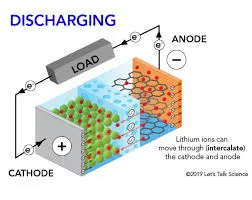
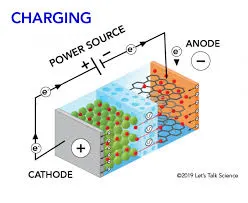
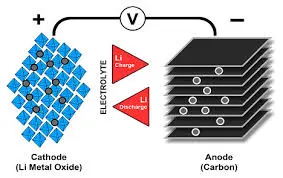
Chemistry, performance, cost and safety characteristics vary across types of lithium-ion batteries. Handheld electronics mostly use lithium polymer batteries (with a polymer gel as electrolyte), a lithium cobalt oxide (LiCoO2) cathode material, and a graphite anode, which together offer a high energy density. Lithium iron phosphate (LiFePO4), lithium manganese oxide (LiMn2O4 spinel, or Li2MnO3-based lithium rich layered materials (LMR-NMC)), and lithium nickel manganese cobalt oxide (LiNiMnCoO2 or NMC) may offer longer lives and may have better rate capability. Such batteries are widely used for electric tools, medical equipment, and other roles. NMC and its derivatives are widely used in electric vehicles.
Research areas for lithium-ion batteries include extending lifetime, increasing energy density, improving safety, reducing cost, and increasing charging speed, among others. Research has been under way in the area of non-flammable electrolytes as a pathway to increased safety based on the flammability and volatility of the organic solvents used in the typical electrolyte. Strategies include aqueous lithium-ion batteries, ceramic solid electrolytes, polymer electrolytes, ionic liquids, and heavily fluorinated systems.
Construction:
The three primary functional components of a lithium-ion battery are the positive and negative electrodes and electrolyte. Generally, the negative electrode of a conventional lithium-ion cell is made from carbon. The positive electrode is typically a metal oxide. The electrolyte is a lithium salt in an organic solvent. The electrochemical roles of the electrodes reverse between anode and cathode, depending on the direction of current flow through the cell.
The most common commercially used anode (negative electrode) is graphite, which in its fully lithiated state of `LiC_6` correlates to a maximal capacity of 372 mAh/g. The positive electrode is generally one of three materials: a layered oxide (such as lithium cobalt oxide), a polyanion (such as lithium iron phosphate) or a spinel (such as lithium manganese oxide). Recently, graphene containing electrodes (based on 2D and 3D structures of graphene) have also been used as components of electrodes for lithium batteries.
The electrolyte is typically a mixture of organic carbonates such as ethylene carbonate or diethyl carbonate containing complexes of lithium ions. These non-aqueous electrolytes generally use non-coordinating anion salts such as lithium hexafluorophosphate (LiPF6), lithium hexafluoroarsenate monohydrate (LiAsF6), lithium perchlorate (LiClO4), lithium tetrafluoroborate (LiBF4), and lithium triflate (LiCF3SO3). Depending on materials choices, the voltage, energy density, life, and safety of a lithium-ion battery can change dramatically. Current effort has been exploring the use of novel architectures using nanotechnology have been employed to improve performance. Areas of interest include nano-scale electrode materials and alternative electrode structures. Pure lithium is highly reactive. It reacts vigorously with water to form lithium hydroxide (LiOH) and hydrogen gas. Thus, a non-aqueous electrolyte is typically used, and a sealed container rigidly excludes moisture from the battery pack. Lithium-ion batteries are more expensive than NiCd batteries but operate over a wider temperature range with higher energy densities. They require a protective circuit to limit the peak voltage.
The battery pack of a laptop computer, for each lithium-ion cell, will contain
- a temperature sensor
- a voltage regulator circuit
- a voltage tap
- a charge-state monitor
- a mains connector
These components
- monitor the charge-state and current flow
- record the latest, full-charge capacity
- monitor the temperature
Their design will minimize the risk of short circuits.
The reactants in the electrochemical reactions in a lithium-ion cell are materials of anode and cathode, both of which are compounds containing lithium atoms. During discharge, an oxidation half-reaction at the anode produces positively charged lithium ions and negatively charged electrons. The oxidation half-reaction may also produce uncharged material that remains at the anode. Lithium ions move through the electrolyte, electrons move through the external circuit, and then they recombine at the cathode (together with the cathode material) in a reduction half-reaction. The electrolyte and external circuit provide conductive media for lithium ions and electrons, respectively, but do not partake in the electrochemical reaction. During discharge, electrons flow from the negative electrode (anode) towards the positive electrode (cathode) through the external circuit. The reactions during discharge lower the chemical potential of the cell, so discharging transfers energy from the cell to wherever the electric current dissipates its energy, mostly in the external circuit. During charging these reactions and transports go in the opposite direction: electrons move from the positive electrode to the negative electrode through the external circuit. To charge the cell the external circuit has to provide electric energy. This energy is then stored as chemical energy in the cell. Both electrodes allow lithium ions to move in and out of their structures with a process called insertion (intercalation) or extraction (deintercalation), respectively.
The positive electrode (cathode) half-reaction in the lithium-doped cobalt oxide substrate is

The negative electrode (anode) half-reaction for the graphite is

The full reaction (left to right: discharging, right to left: charging) being

The overall reaction has its limits. Overdischarging supersaturates lithium cobalt oxide, leading to the production of lithium oxide, possibly by the following irreversible reaction:

Overcharging up to 5.2 volts leads to the synthesis of cobalt(IV) oxide, as evidenced by x-ray diffraction:

In a lithium-ion battery, the lithium ions are transported to and from the positive or negative electrodes by oxidizing the transition metal, cobalt (Co), in Li1-xCoO2 from Co3+ to Co4+ during charge, and reducing from Co4+ to Co3+ during discharge.
Types of Li-ion battery:
- Lithium cobalt oxide (LiCoO2 or LCO)
- Lithium manganese oxide (LiMn2O4 or LMO)
- Lithium nickel manganese cobalt oxide (LiNiMnCoO2 or NMC)
- Lithium iron phosphate (LiFePO4 or LFP)
- Lithium nickel cobalt aluminium oxide (LiNiCoAlO2 or NCA)
- Lithium titanate (Li2TiO3 or LTO)
|
Chemistry |
Lithium Cobalt Oxide |
Lithium Manganese Oxide |
Lithium Nickel Manganese Oxide |
Lithium Iron Phosphate |
Lithium Nickel Cobalt Aluminum Oxide |
Lithium Titanate Oxide |
|
Short form |
Li-cobalt |
Li-manganese |
NMC |
Li-phosphate |
Li-aluminum |
Li-titanate |
|
Abbreviation |
LiCoO2 |
LiMn2O4 |
LiNiMnCoO2 (NMC) |
LiFePO4 |
LiNiCoAlO2 (NCA) |
Li2TiO3 (common) |
|
Cathode |
Lithium Cobalt Oxide (LiCoO2) |
Lithium manganese oxide (LiMn2O4) |
Lithium nickel manganese cobalt oxide (LiNiMnCoO2) |
Lithium iron Phosphate (LiFePO4) |
Lithium Nickel Cobalt Aluminium Oxide (LiNiCoAlO2) |
Lithium manganese oxide (LiMn2O4) or Lithium nickel Manganese cobalt oxide (LiNiMnCoO2) |
| Anode | Graphite (C6) | Graphite (C6) | Graphite (C6) | Graphite (C6) | Graphite (C6) | Titanate (Ti5O12) |
| Electrolyte salt | Lithium hexafluorophosphate (LiPF6) | Lithium hexafluorophosphate (LiPF6) | Lithium hexafluorophosphate (LiPF6) | Lithium hexafluorophosphate (LiPF6) | Lithium hexafluorophosphate (LiPF6) | Lithium hexafluorophosphate (LiPF6) |
| Electrolyte sovent | Ethylene Carbonate | Ethylene Carbonate | Ethylene Carbonate | Ethylene Carbonate | Ethylene Carbonate | Ethylene Carbonate |
|
Nominal voltage |
3.60V |
3.70V (3.80V) |
3.60V (3.70V) |
3.20, 3.30V |
3.60V |
2.40V |
|
Full charge |
4.20V |
4.20V |
4.20V (or higher) |
3.65V |
4.20V |
2.85V |
|
Full discharge |
3.00V |
3.00V |
3.00V |
2.50V |
3.00V |
1.80V |
|
Minimal voltage |
2.50V |
2.50V |
2.50V |
2.00V |
2.50V |
1.50V (est.) |
|
Specific Energy |
150–200Wh/kg |
100–150Wh/kg |
150–220Wh/kg |
90–120Wh/kg |
200-260Wh/kg |
70–80Wh/kg |
|
Charge rate |
0.7–1C (3h) |
0.7–1C (3h) |
0.7–1C (3h) |
1C (3h) |
1C |
1C (5C max) |
|
Discharge rate |
1C (1h) |
1C, 10C possible |
1–2C |
1C (25C pule) |
1C |
10C possible |
|
Cycle life (ideal) |
500–1000 |
300–700 |
1000–2000 |
1000–2000 |
500 |
3,000–7,000 |
|
Thermal runaway |
150°C (higher when empty) |
250°C (higher when empty) |
210°C(higher when empty) |
270°C (safe at full charge) |
150°C (higher when empty) |
One of safest |
|
Packaging (typical) |
18650, prismatic and pouch cell |
prismatic |
18650, prismatic and pouch cell |
26650, prismatic |
18650 |
prismatic |
|
History |
1991 (Sony) |
1996 |
2008 |
1996 |
1999 |
2008 |
|
Applications |
Mobile phones, tablets, laptops, cameras |
Power tools, medical devices, powertrains |
E-bikes, medical devices, EVs, industrial |
Stationary with high currents and endurance |
Medical, industrial, |
UPS, EV, solar street lighting |
|
Comments |
High energy, limited power. Market share has stabilized. |
High power, less capacity; safer than Li-cobalt; often mixed with NMC to improve performance. |
High capacity and high power. Market share is increasing. Also NCM, CMN, MNC, MCN |
Flat discharge voltage, high power low capacity, very safe; elevated self-discharge. |
Highest capacity with moderate power. Similar to Li-cobalt. |
Long life, fast charge, wide temperature range and safe. Low capacity, expensive. |
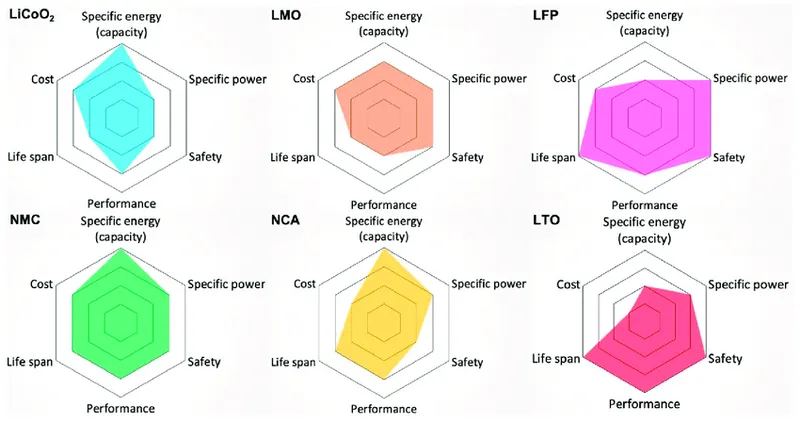
Below are the performance curves of the different types of Li-ion cells based on the different characteristics like cost, performance, safety, life span, Specific power and specific energy.
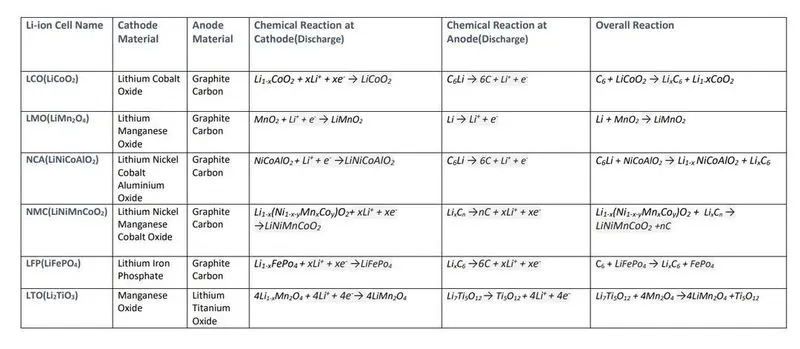
Below are the reactions at cathode, anode and the overall reaction for the Li-ion cell types.
Conclusion: Hence, we studied the different types of lithium ion cells and their characterics and composition.