Week 1 Stress Concentration on a Plate with hole
Stress Concentration on a Plate with hole
Objective
To compare the deformations on a simple steel plate with a single hole to that with smaller holes for stress concentration control
Procedure
- Create a new static structural project in workbench
- Make sure structural steel is selected in engineering data
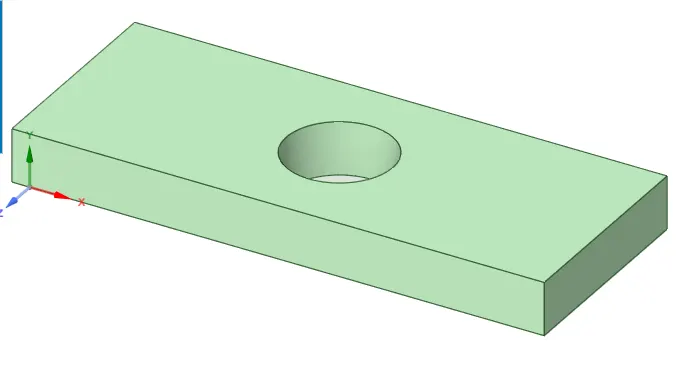
- Create the simple plate ,300mmx120mm, with a central hole of 60mm diameter using rectangle and circle commands
- Extrude it to a 30mm thicknesss
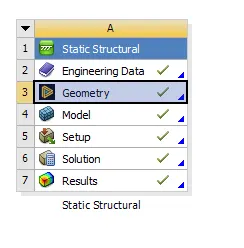
- Save the file and open it in Ansys Mechanical, double click the model icon.
- In Ansys mechanical, make sure that any and all surfaces are suppressed as we are only concerned with the generated solid for meshing.
Note:Make sure units are consistent as mechanical and space claim may have different unit systems.
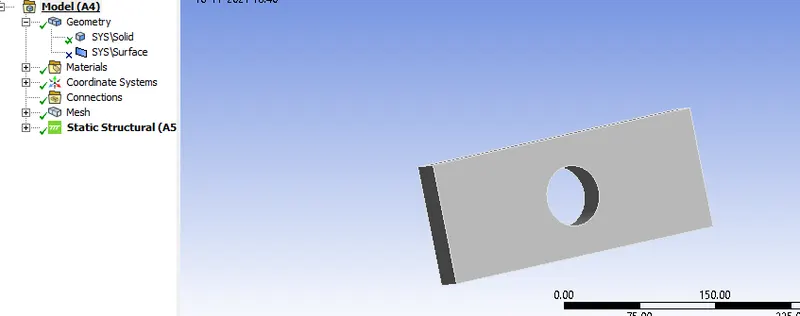
Note:Ignore the connections bar as ansys automatically created them for the surface.
- In the mesh tab, insert sizing and body forming options
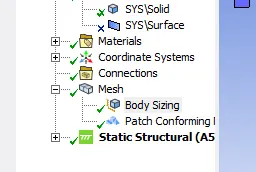
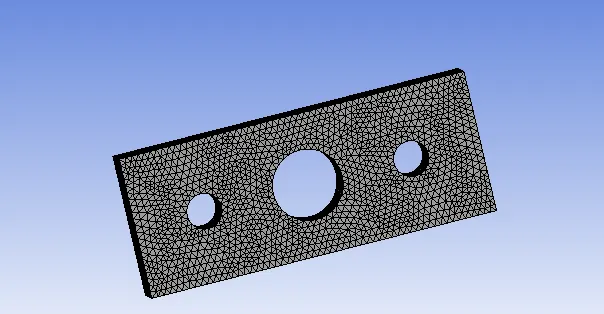
- Set the element size to 5mm and element type to tetrahedron elements and then generate your mesh.
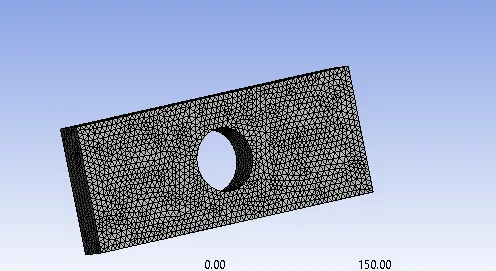
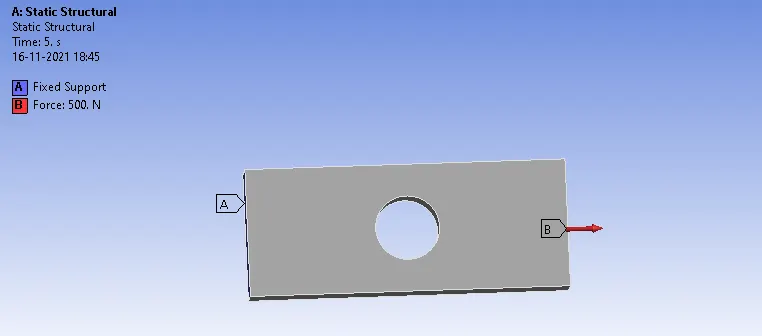
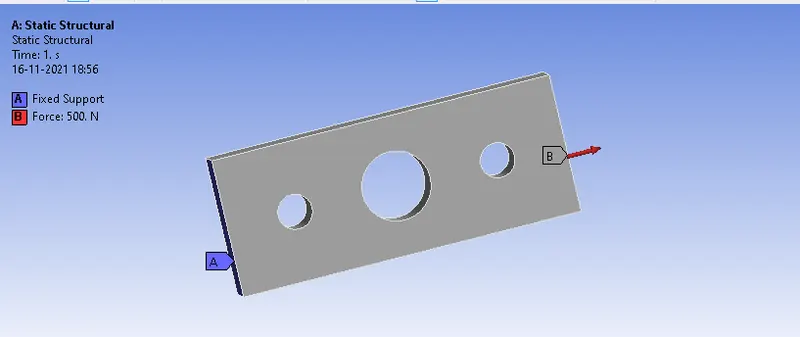
- Create a fixed support on one end and a force of 500N in an appropriate axis.
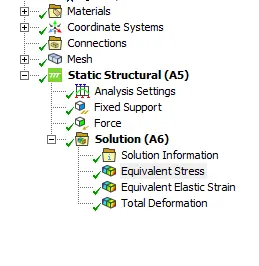
- Create the output blocks for Stress, Strain and total deformation.
- You can create them after the simulation as well without having to rerun it.
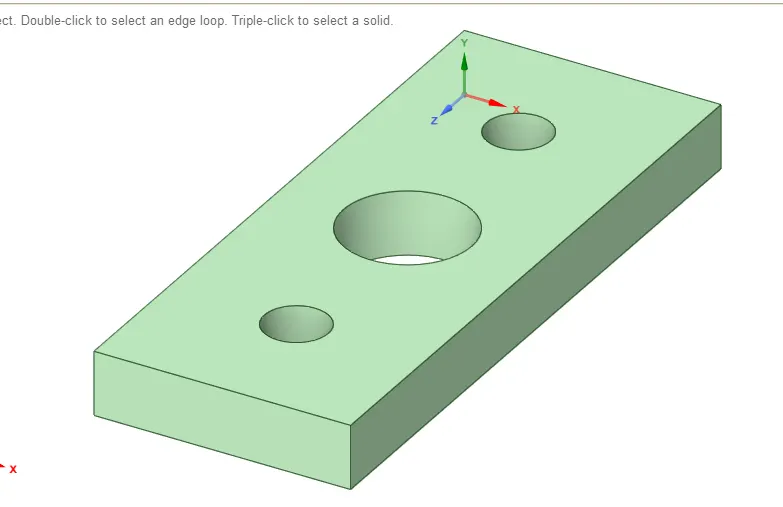
Create the same for the plate with 2 holes near the central hole.
Post Processing
In case1
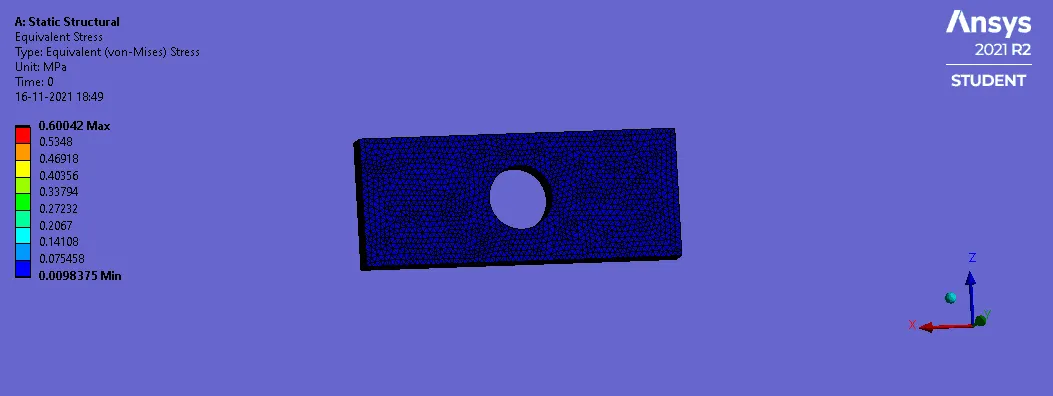
Stress
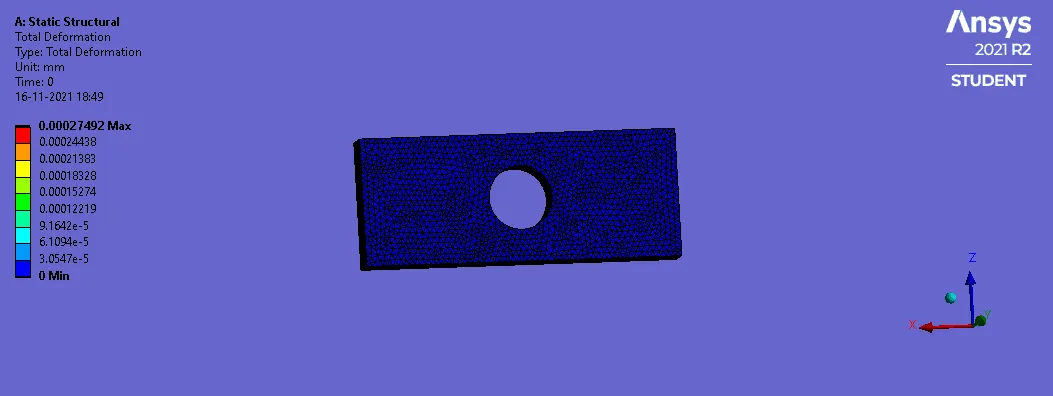
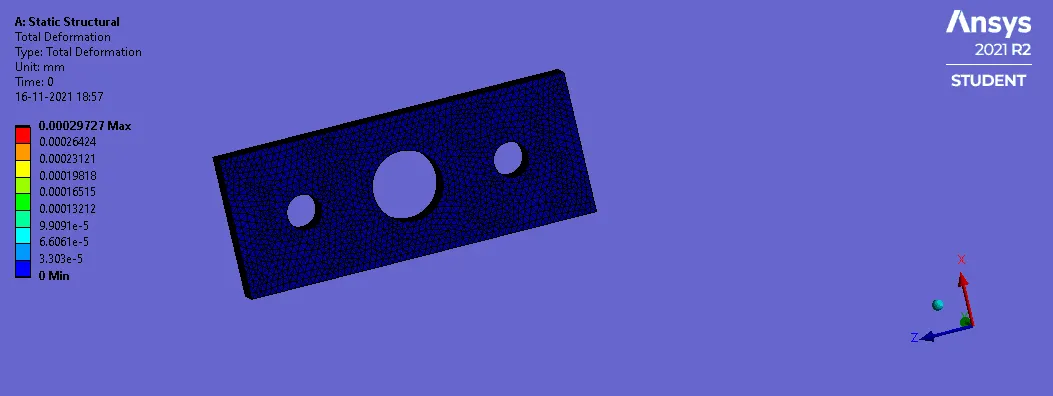
Deformation
Case 2:
Stress
 \
\
Deformation
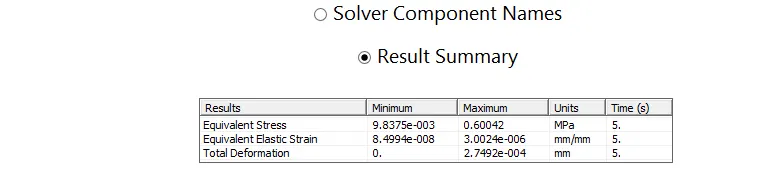
From looking at the tabulated results generated by Ansys for each case,
Case1
Case2
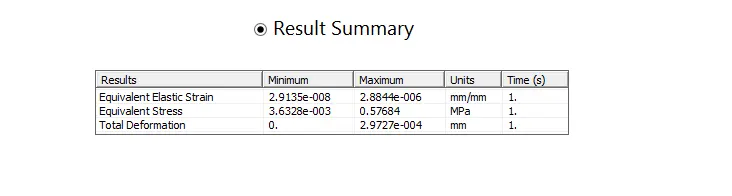
It can be seen clearly that the presence of the 1 smaller holes reduce the stress and strain experienced by the component.However, the total deformation is a bit higher in case 2.
This increase in deformation can be seen as insignificant (~0.2x10^-04 mm) , especially with the much more significant decrease in stress and strain observed (especially the minimum stress and strain).
However it should be noted that this may not be the same in case of more complicated components where the increase in deformation may be too high and may require the use of much smaller holes and increase the number of holes instead to reduce the stress concentration as larger holes lead to much higher stress concentrations.
Fron an analyst Point of view, the decrease in overall stress and strain is significant enough to go with the design in case 2.Further iterations can involve a reduced hole dia to further decrease the effects of stress concentration near the central hole and perhaps a smaller central hole provided it is not a critical feature of the main assembly.
From a manufacturing perspective it can lead to much more significant increase in costs ,due to labour and material costs, as the number of holes increases and it is preferred to keep the number of holes to a minimum.Manufacturing costs can significantly increase the overall cost of the product as they involve bulk operations and must be taken into account by the design team for a cost effective solution to the problem.
Conclusion
The stress concentrations observed due to the presence of large holes can significantly affect the life and viability of a component and it is the responsibility of the designer to make sure that the component has suitable life for a given task while not compromising its functionality.
In this project, a simple pull case was observed for a plate with a structural steel material property with and without the smaller holes near the central hole.It was observed that there was a decrease in the stress and strain observed due to the presence of these miniature holes.However the total deformation was marginally higher which could be to the high dia of the holes compared to the total size of the plates.It is recommended to have more number of holes with a smaller dia compared to a single large hole to help control stress concentration.
However, the increase in manufacturing cost as the number of holes increases should not be ignored as they can significantly increase the overall cost of any product.It is the responsibility of any designer to take into account this increase and come up with cost efficient solutions to any design problem in the industry.