Week 1 Spur Gear Challenge
Objective 1:
- Case 1:
Using Cast Iron(ductile) as a material, carry out a static structural analysis to find out Equivalent stress, Total deformation and Stress intensity(Learn about what stress intensity is). Find location for possible fracture
- Case 2:
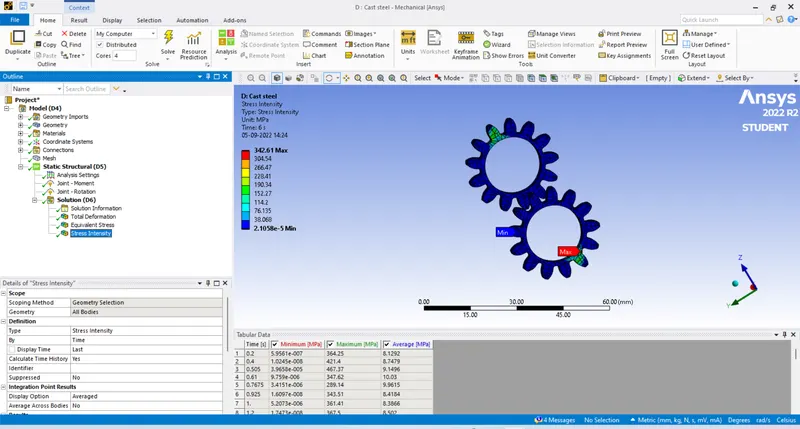
Using Cast Steel as material, perform the same analysis for the results as in Case 1.
- Case 3:
Using Cast Bronze as material, perform the same analysis for the results as in Case 1.
PROCESS:
- As this is a static we select static structural & open geometry
- open the Downloaded model and import into ansys geometry
- Select the material from Engineering Data
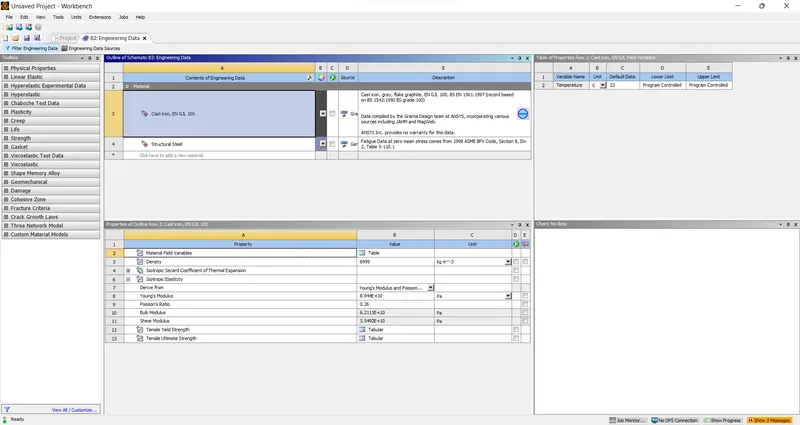
- Now refresh & update the model before opening it
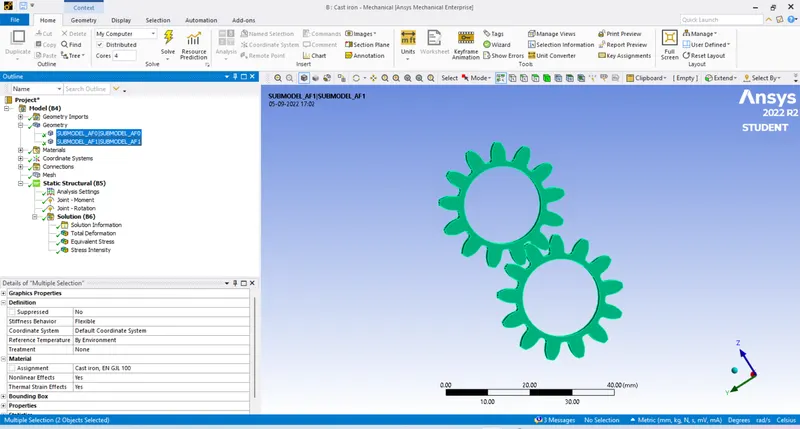
- After opening check the material for both the gears in geometry section
- Keep the stifness behivaour as Flexiable as this is gone a rotate
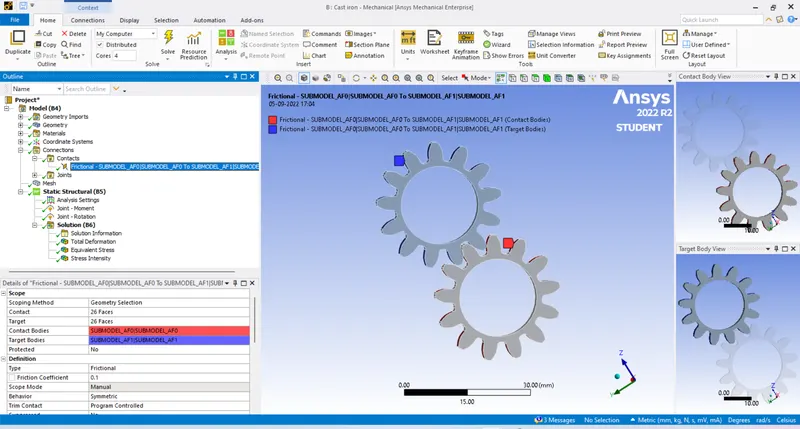
- Connections are made using contacts & Joints
- Select the faces in contacts between gears
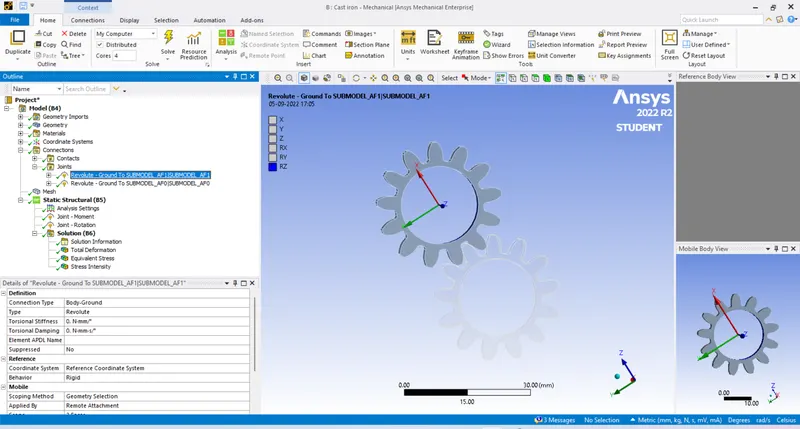
- In joints create body-Ground for both as they will rotate
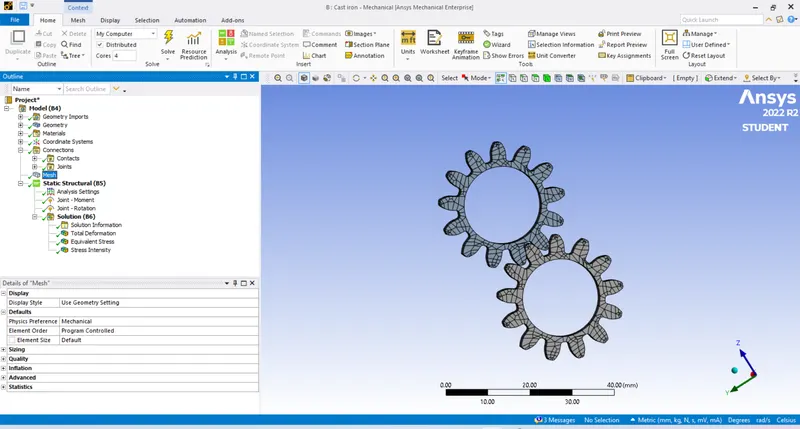
- Check for the mesh
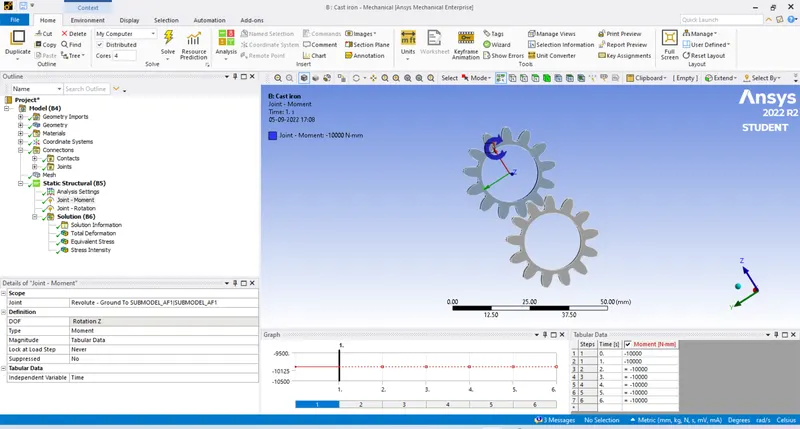
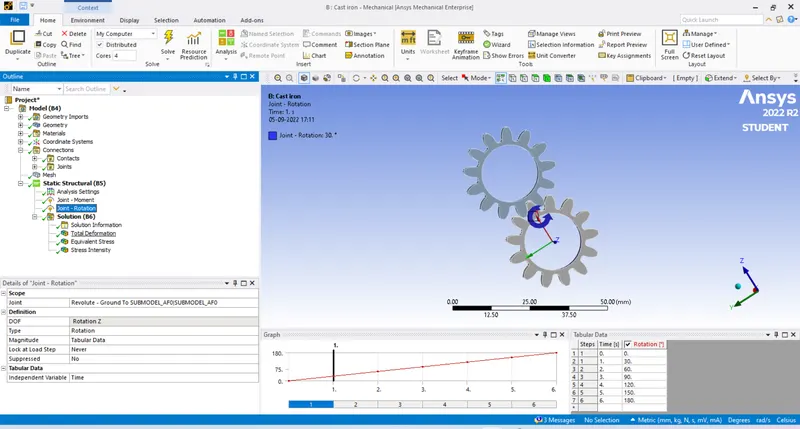
- For one gear give moment and for the other give rotation (Make sure that these are in different/opposite direction)
- In the solution insert the required analysis and go for solve
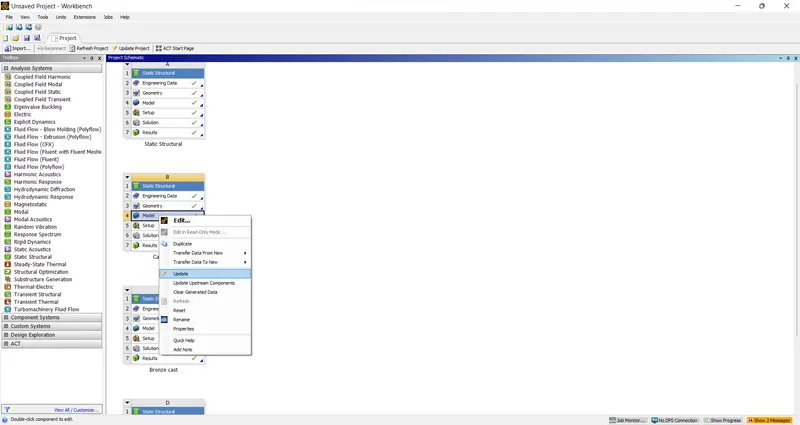
- For the other two materials we duplicate it in the workbench and create the other materials data
- Update the Model
- In the geometry section Just change the material
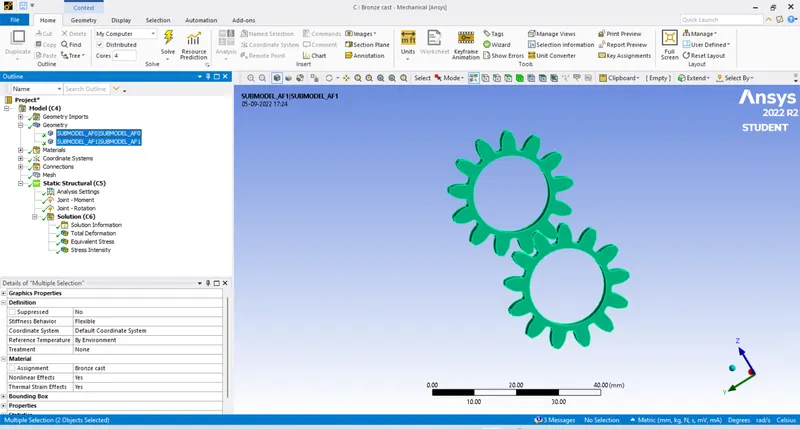
- Clear the data in solutions and go for solve for the results,the results of all three are in Objective 2,Kindly go through that
Animation for all three:
Cast Iron
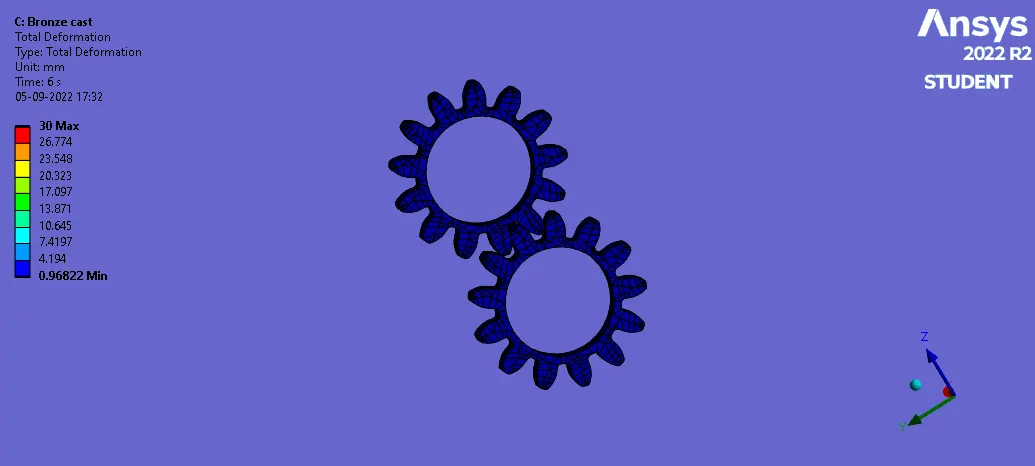
Total Deformation
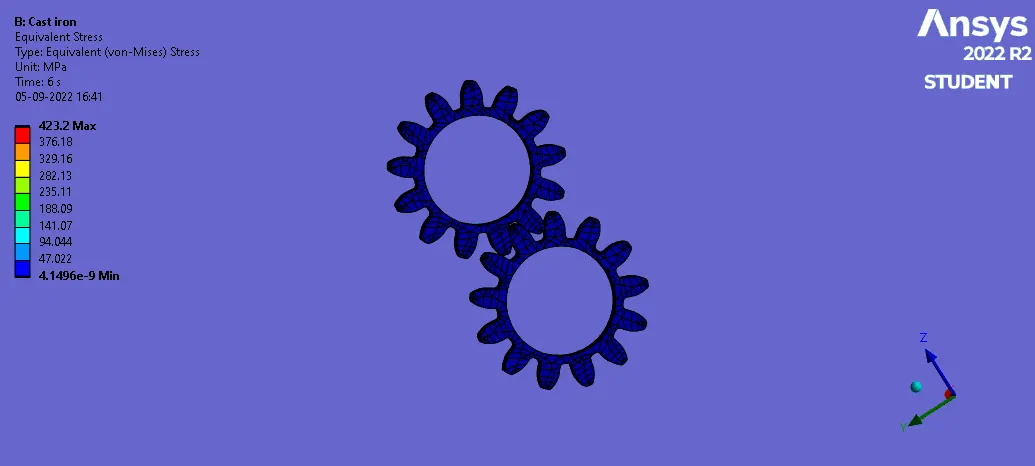
EQUIVALENT STRESS
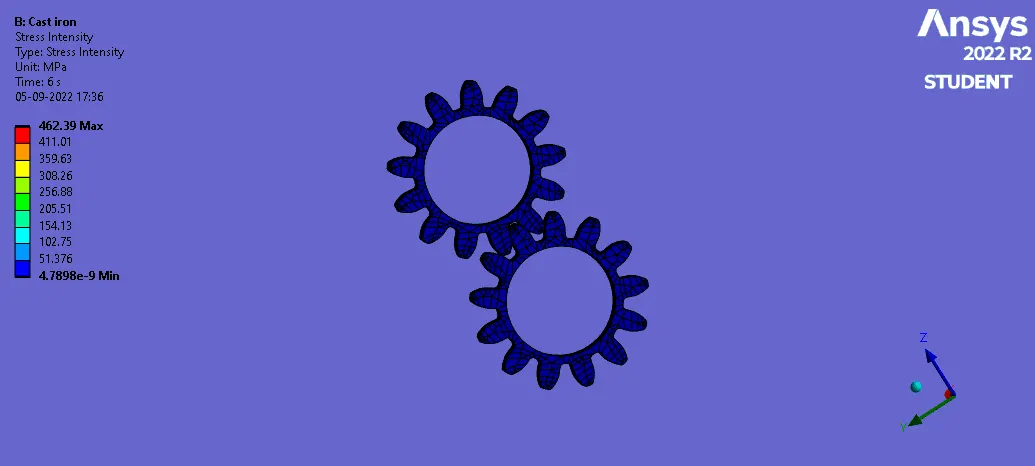
STRESS INTENSITY
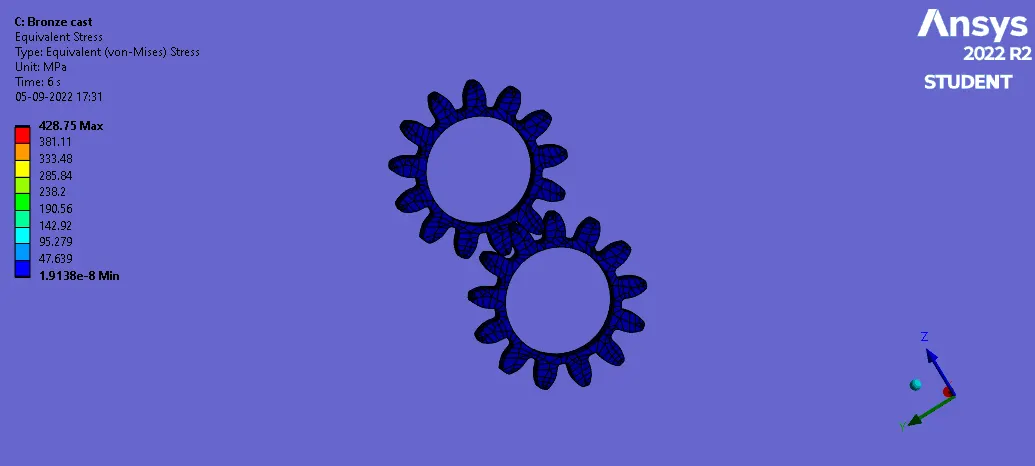
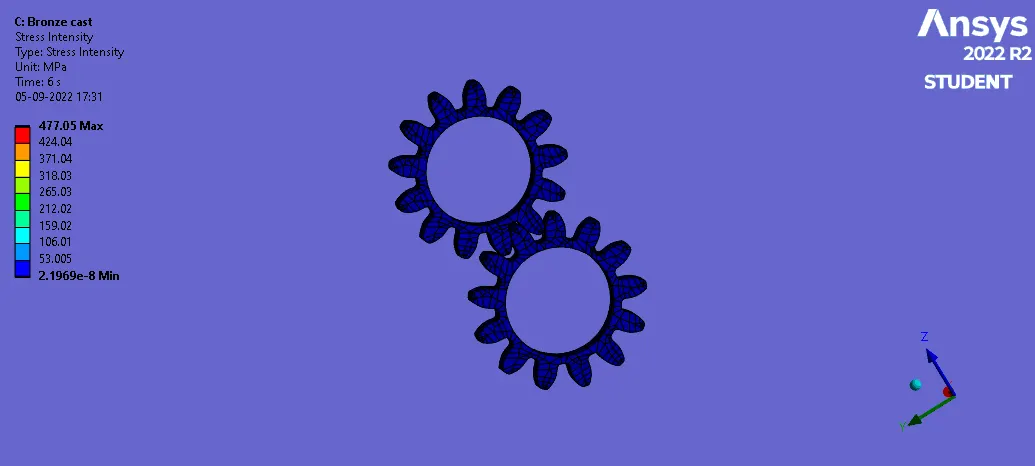
Cast Bronze:
Total Deformation
EQUIVALENT STRESS
STRESS INTENSITY
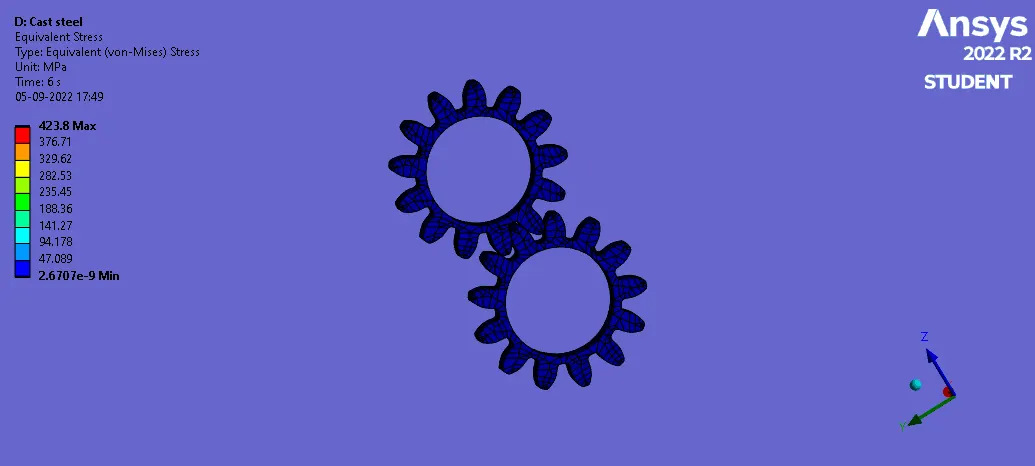
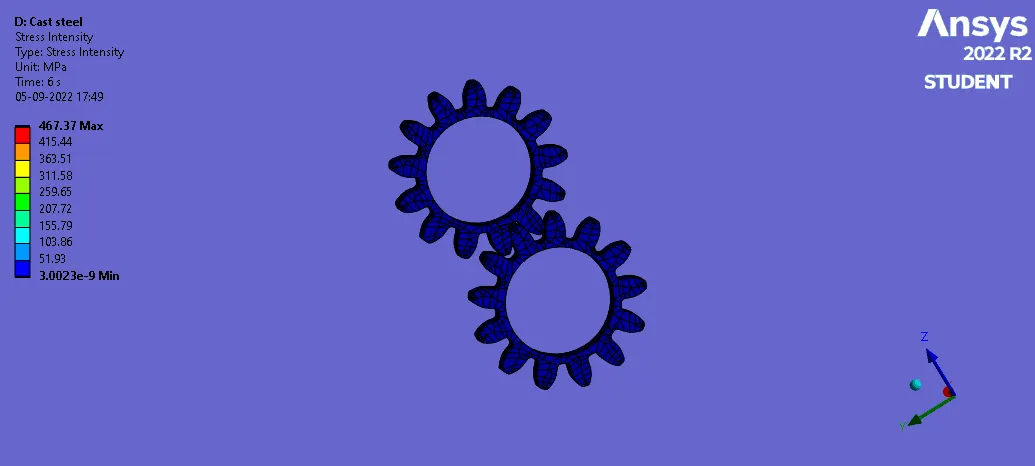
Cast Steel:
Total Deformation
EQUIVALENT STRESS
STRESS INTENSITY
Objective 2:
Write a detailed report comparing the results of the three cases and conclude which material would you recommend based on these results.
ANS:
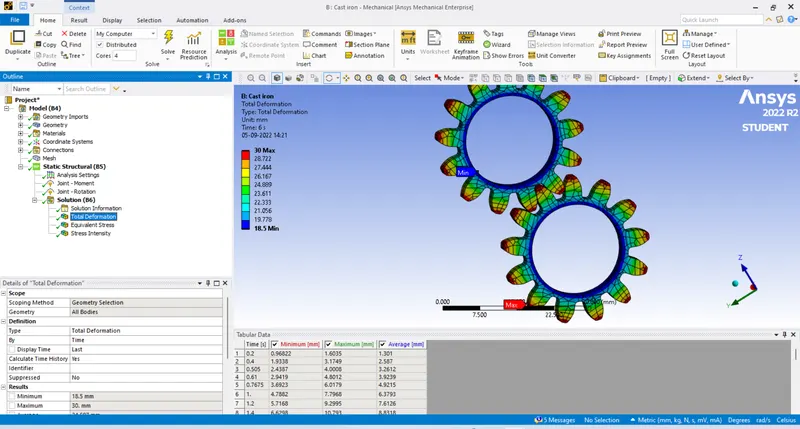
CAST IRON
TOTAL DEFORMATION
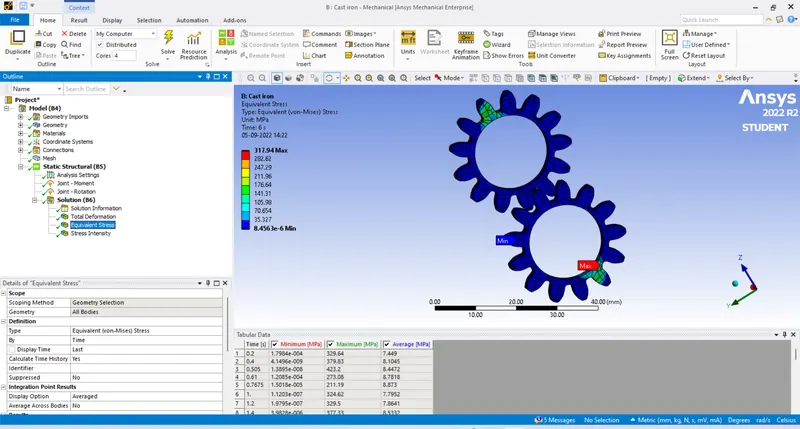
EQUIVALENT STRESS
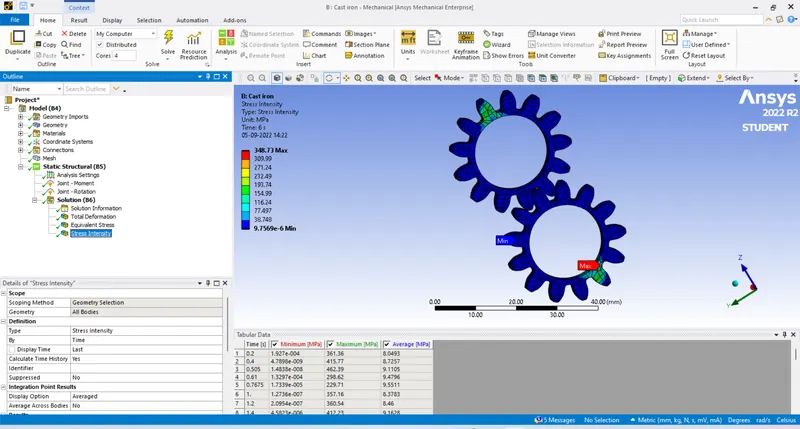
STRESS INTENSITY
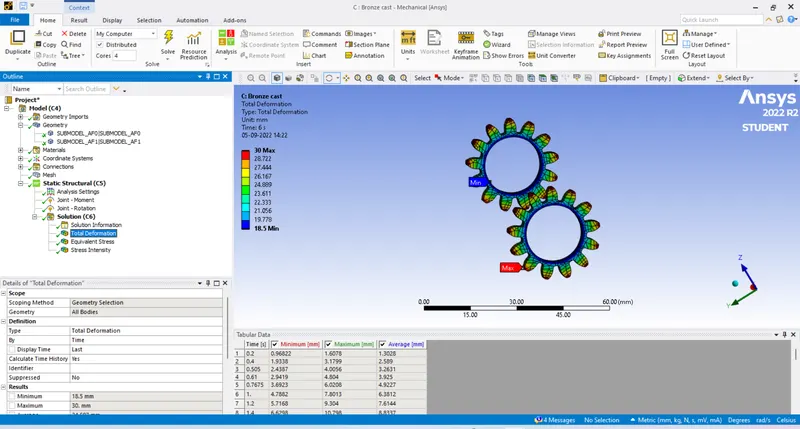
BRONZE CAST
TOTAL DEFORMATION
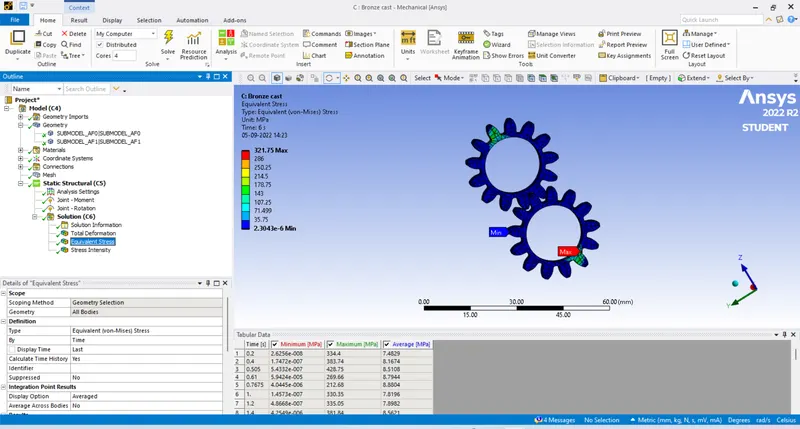
EQUIVALENT STRESS
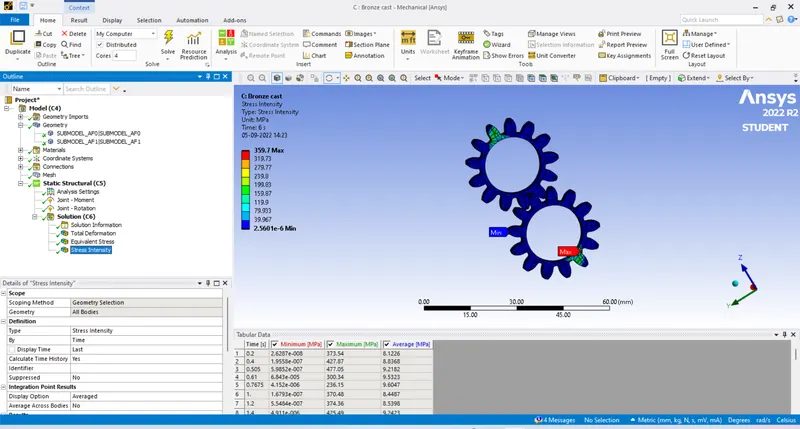
STRESS INTENSITY
CAST STEEL
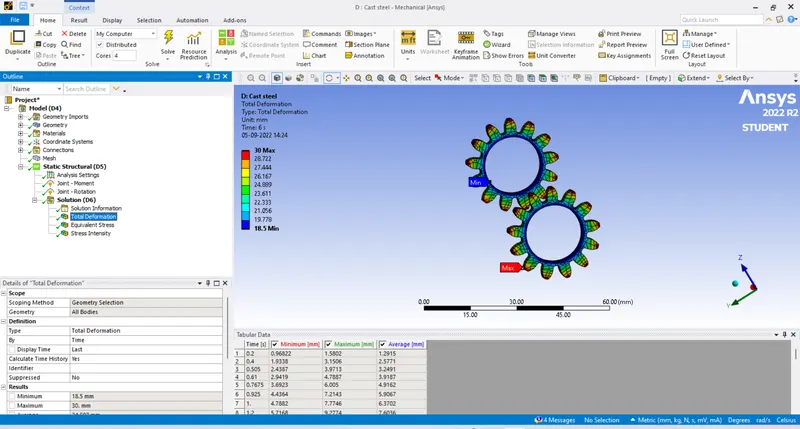
TOTAL DEFORMATION
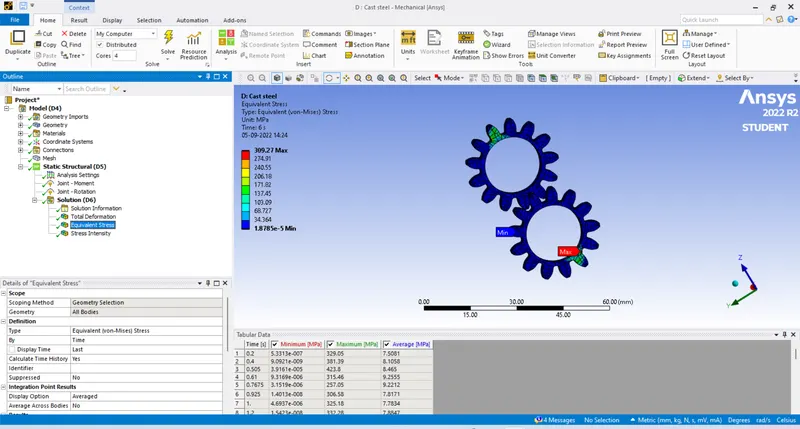
EQUIVALENT STRESS
STRESS INTENSITY
| TOTAL DEFORMATION | EQUIVALENT STRESS | stress intensity | |
| CASE 1 (CAST IRON) | 30MM | Iron has 317.94Mpa | Iron has 348.73Mpa , |
| CASE 2 (CAST BRONZE) |
30MM |
Bronze has 321.75Mpa | Bronze has 359.7Mpa , |
| CASE 3 (CAST STEEL) | 30MM | steel has 309.27Mpa | steel has 342.61Mpa |
| CONCLUSION | By comparing Total deformation of all three there is no much difference ,so on this aspect all materials have same deformation |
EQUIVALENT STRESS is based on von Mises yield criterion.So,lower the value of it much safer it is . By comparing all three data ,Thus we can say Cast steel is much prefered based on safety than Iron and Bronze |
The stress intensity factor is used to predict the stress state near the tip of a crack or notch caused by a remote load or residual stresses. By comparing all three data So,Cast steel has low fracture rate & preferable compared to Iron and Bronze |
FINAL CONCLUSION:BY LOOKING ALL THREE DATAS WE CAN SAY CAST STEEL CAN BE MADE A BETTER CHOICE THAN CAST IRON AND THEN CAST BRONZE