Week 1 Spur Gear Challenge
OBJECTIVE :- Write a detailed report comparing the results of the given three cases and conclude which material would you recommend based on these results.
- Case 1:
Using Cast Iron(ductile) as a material, carry out a static structural analysis to find out Equivalent stress, Total deformation and Stress intensity(Learn about what stress intensity is). Find location for possible fracture
- Case 2:
Using Cast Steel as material, perform the same analysis for the results as in Case 1.
- Case 3:
Using Cast Bronze as material, perform the same analysis for the results as in Case 1.
CASE SETUP:-
case1
- MATERAL - Cast Iron
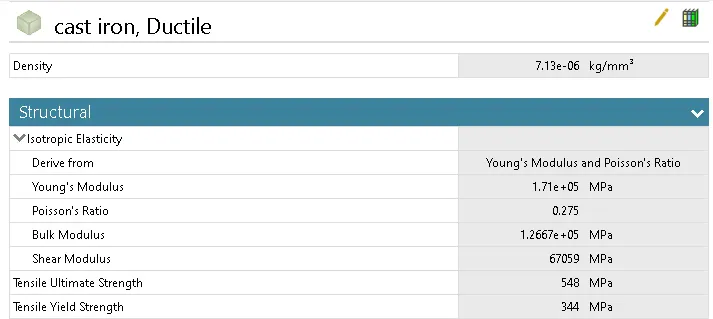
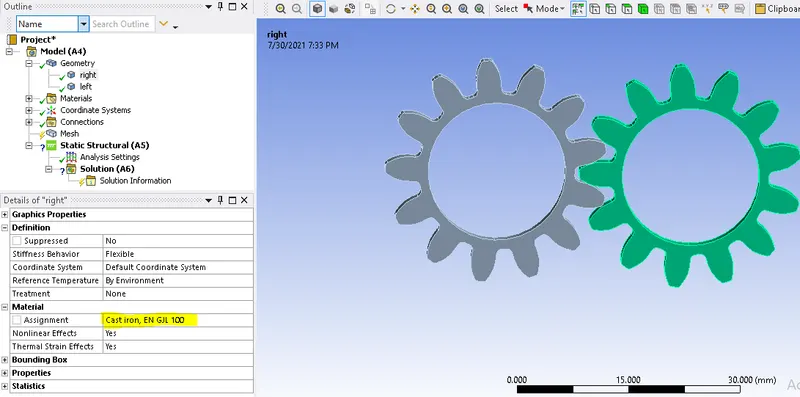
- Assign material to the both components (LEFT & RIGHT)
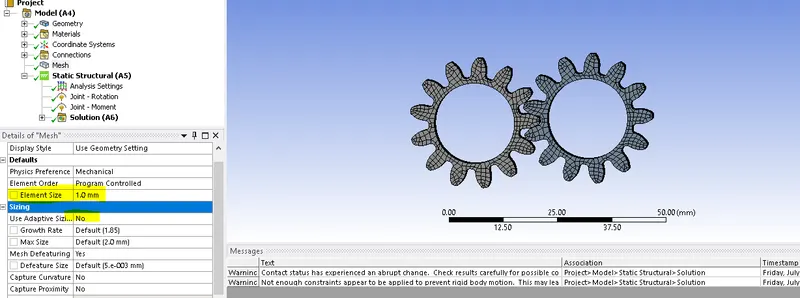
- MESH - Created a mesh with 1mm
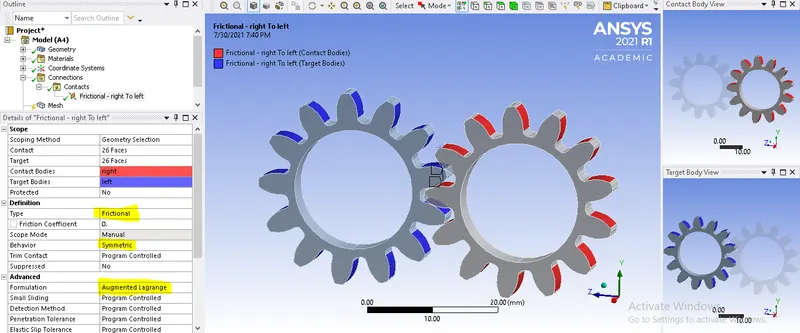
- CONTACTS - A frictional contact has to be set between the two spur gears, two avoid unnecessary complexity select necessary faces that comes into contact during simulation.
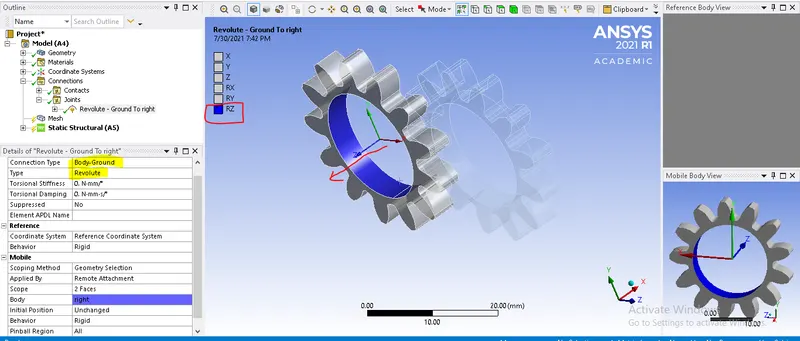
- JOINTS - Revolute joints are setup for the two gears w.r.t. ground. These joints needs to be apply boundary conditions to the gears.
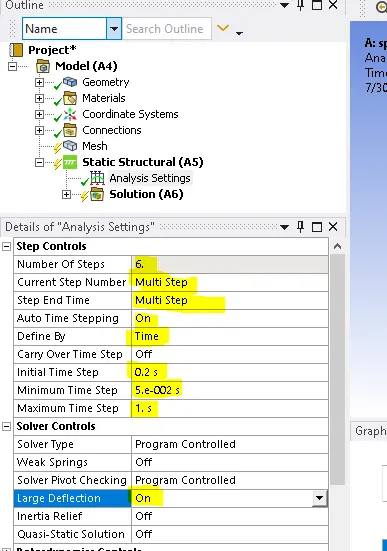
- ANALYSIS SETTINGS - The analysis is setup for 6 steps. this doesn't control the time step, but it is only an indication of points where boundary conditions change. The time step is auto controlled by specifyng initial , minimum and maximum time steps.
- BOUNDARY CONDITIONS
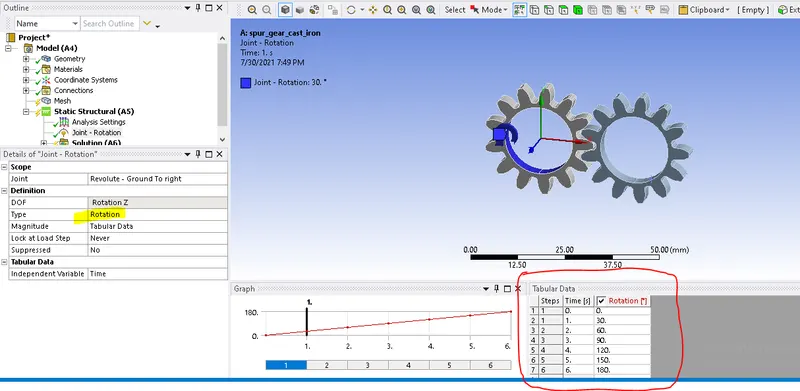
A joint rotation is given to one revolution joint in increment of 30degrees for 6 steps.
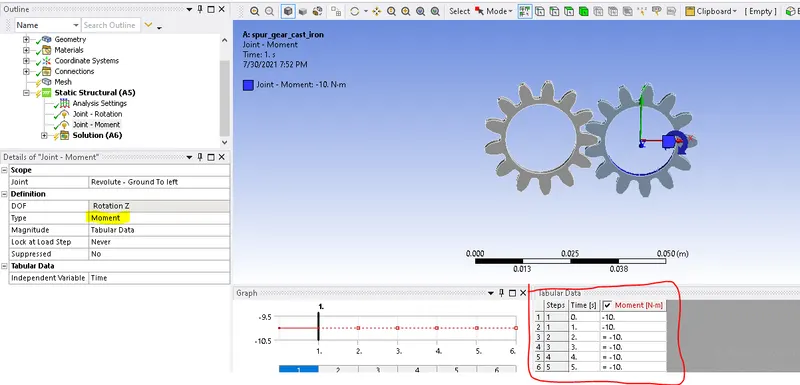
this joint rotates against a moment load (10N-m) in the other revolute joint
- Follow the same procedure for case setup of case 2&3 ,use cast steel and cast bronze as materials for remainng cases
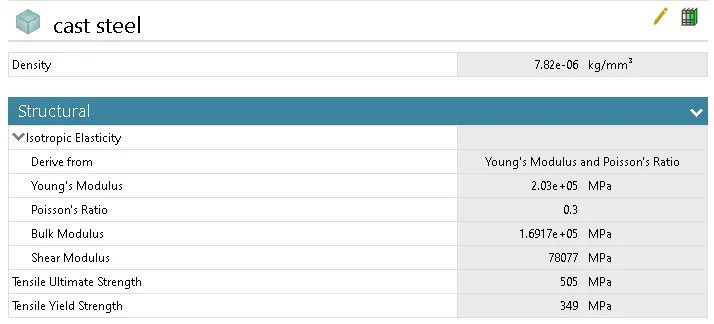
properties of cast steel
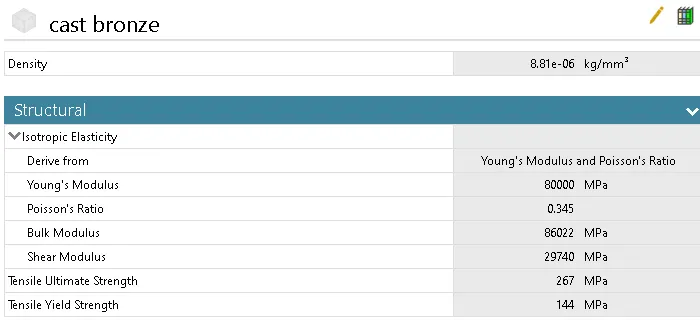
properties of cast bronze
RESULTS
case1- cast iron ,ductile
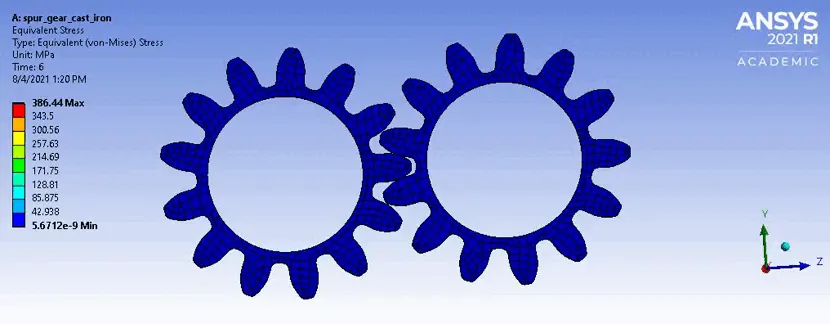
equivalent stress
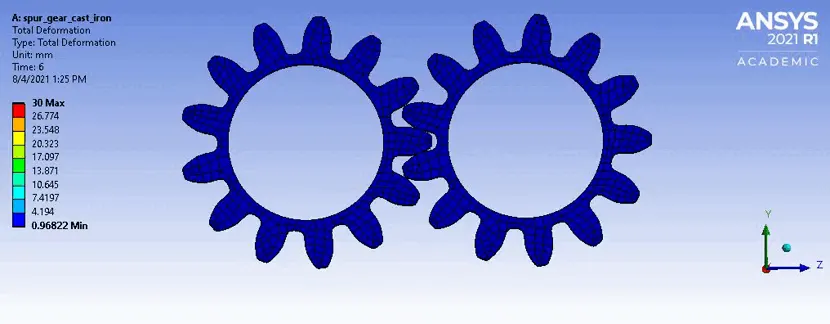
total deformation
stress intensity
- stress intensity used in fracture mechanics. it predicts stress intensity near the tip of a crack caused by a remote load or residual stresses.
- stress intensity is defined as the absolute values of σ1-σ2, σ2-σ3, σ3-σ1
- The magnitude of stress intensity factor (K) depends on sample geometry, size and location of crack,magnitude and distribution of load.
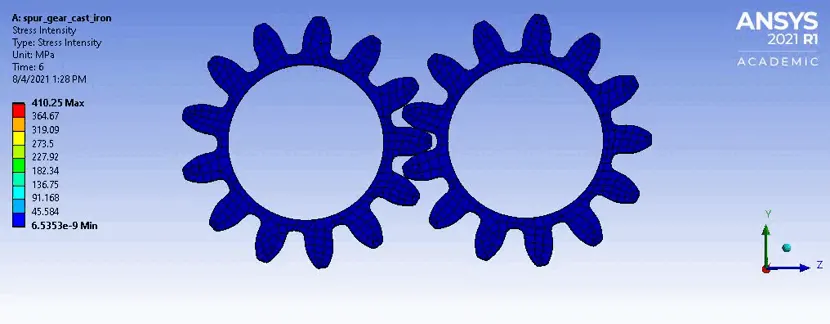
stress intensity
case 2 - cast steel
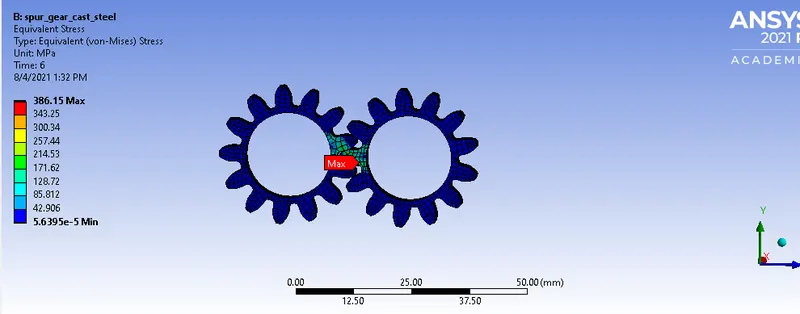
equivalent stress
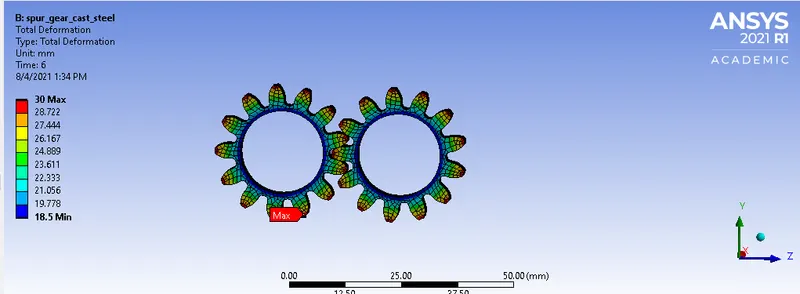
total deformation
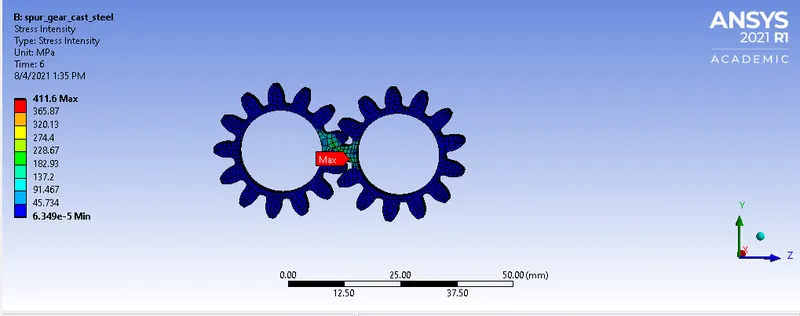
stress intensity
case 3 - cast bronze
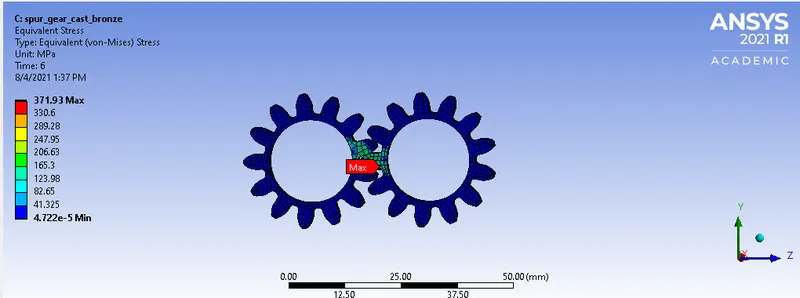
equivalent stress
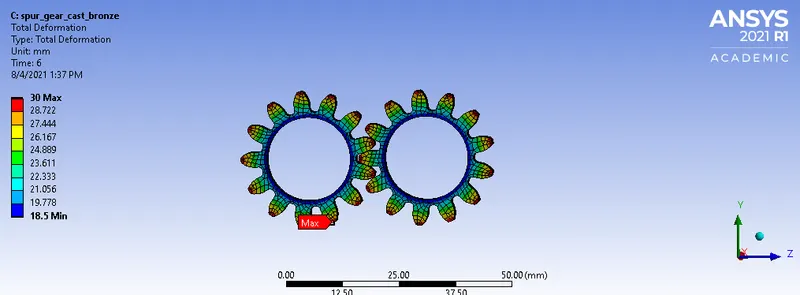
total deformation
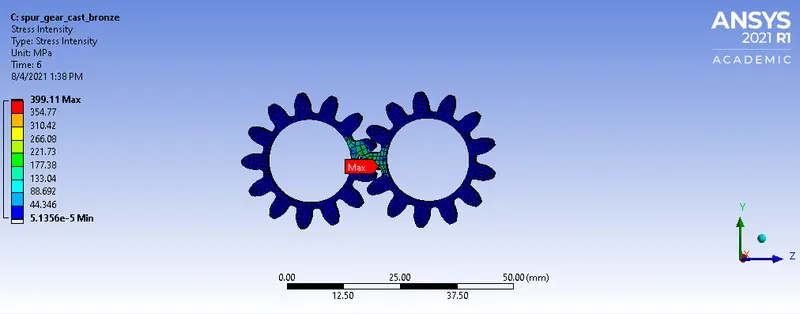
stress intensity
Comparing the results of the three cases
| Equivalent stress | Total deformation | Stress intensity | |
| case 1- cast iron ,ductile | 386.44 | 30 | 410.25 |
| case 2- cast stel | 386.15 | 30 | 411.6 |
| case 3 - cast bronze | 371.93 | 30 | 399.11 |
Factor of safety :-
| cast iron ,ductile | cast stel | cast bronze | |
| FOS - w.r.t. ultimate strength | 1.418 | 1.307 | 0.717 |
| FOS - w.r.t. tensile strength | 0.89 | 0.9 | 0.387 |
- FOS is one of the key parameter for selection of material
- FOS < 1 is fail
- FOS between 2 to 5 is acceptable
- From the above table we can see that for all the cases the Equivalent stress has exceeded maximum yield strength (FOS < 1 ), which is where plastic deformation occurs.
- By considering the FOS data we can recommend cast iron ,ductile among remainng materials.
Google link
https://drive.google.com/file/d/1NGndtGiTLZ4xFJkn22u_eM5rmf9TcwLJ/view?usp=sharing