Week 1 Spur Gear Challenge
AIM: The aim of this week challenge is to perform a spur gear test for various material and explain the result for various stress and strain plots and also find the location of possible fracture.
PROCEDURE:
CASE 1: CAST IRON
step 1: Open the ansys workbench module and select the static structural analysis.
step 2: First need to change the material from structural steel to cast iron.
step 3: Double click on engineering data --> engineering data sources --> general material --> add cast iron.
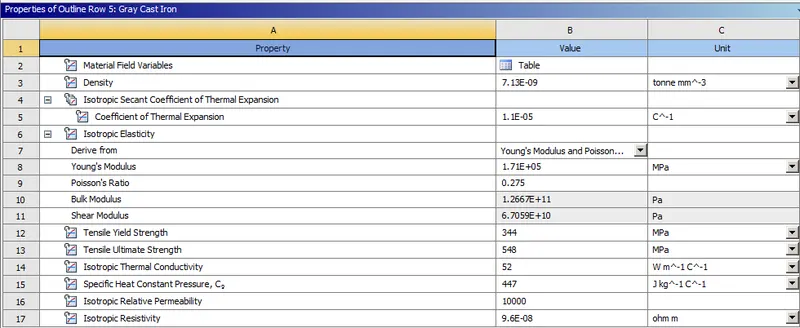
step 4: Right click the geomentry tab and select import geomentry --> browse --> select the file --> open.
step 5: Open ansys structural mechanical model.
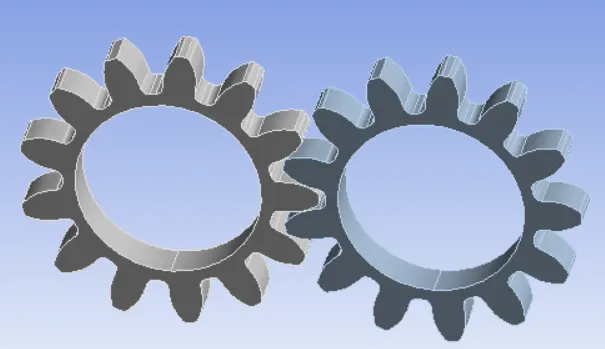
step 6:Assign the created material for both the parts.
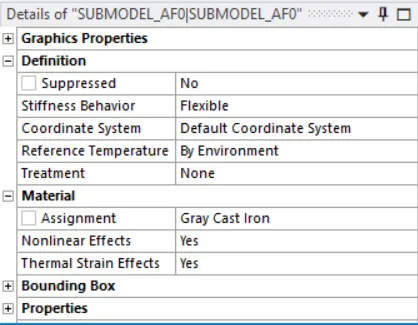
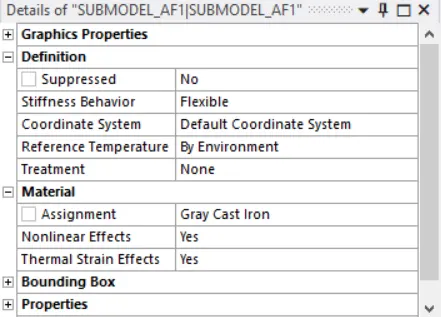
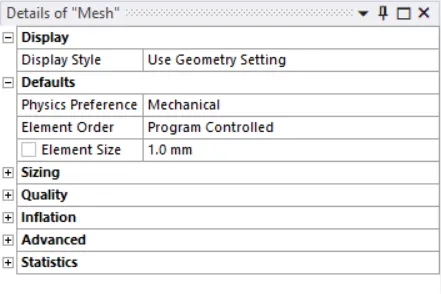
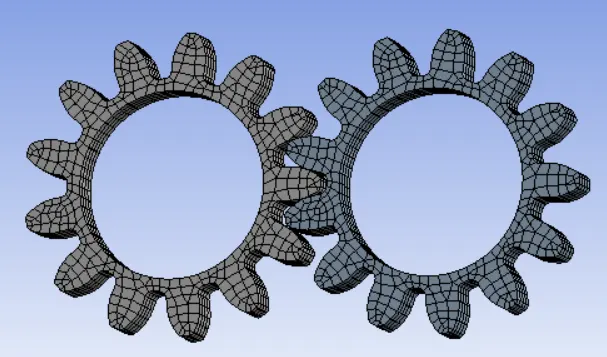
step 7: Now change the mesh size of the element to 1mm and mesh the model.
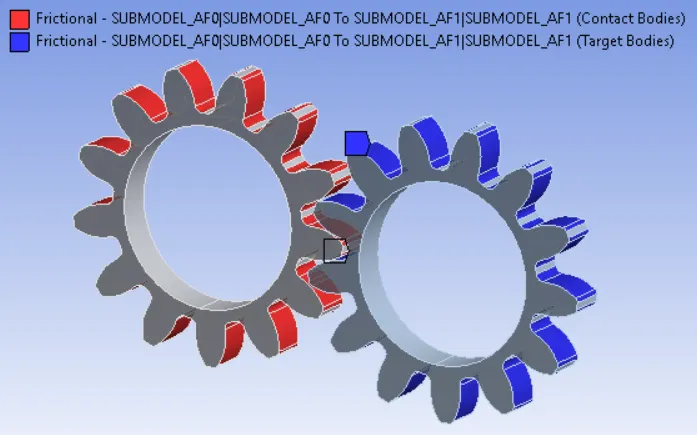
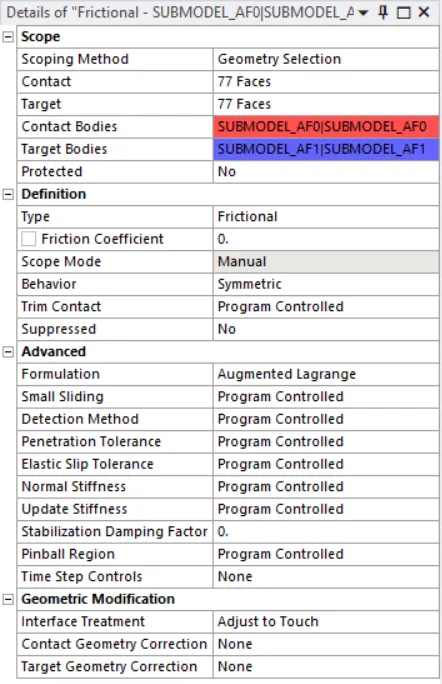
step 8:Now create the contact between two contact.
step 9: Now create a revolute joint for both the gears.
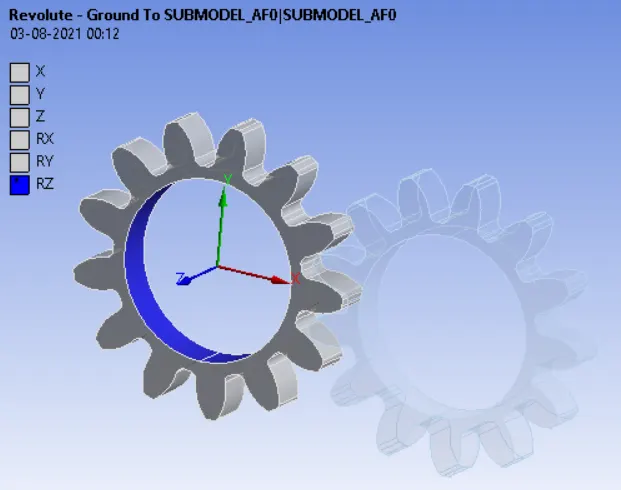
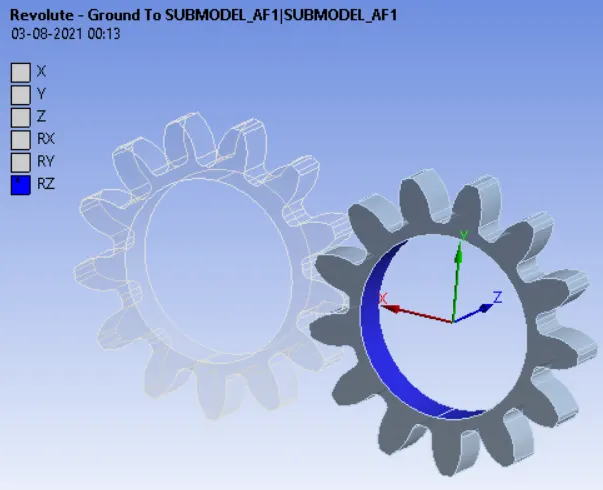
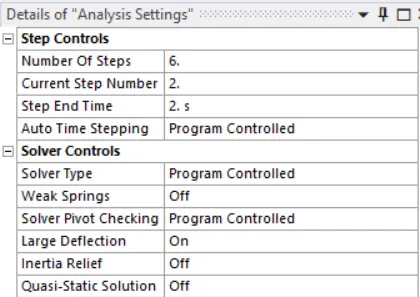
step 10: Now change the analysis settings and ON the large deflection.
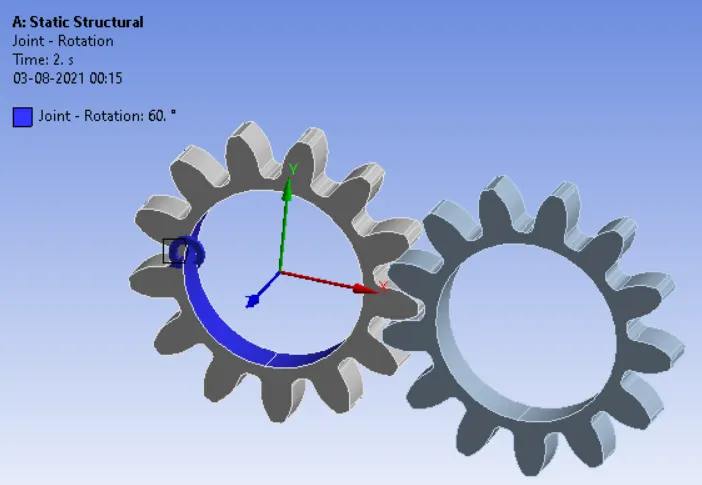
step 11: Now give the boundary condition of joint load for both the gears.
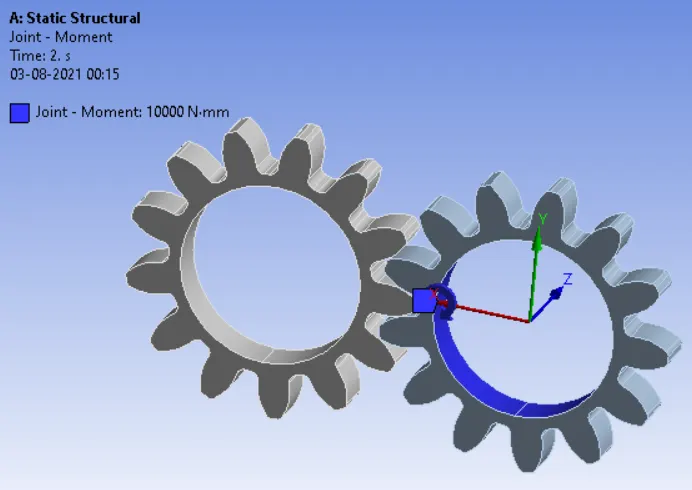
step 12: Now run the simulation.
step 13: Now include the total deformation,Equivalent stress and stress intensity in output files.
CASE 2: CAST STEEL
step 1: Open the ansys workbench module and select the static structural analysis.
step 2: First need to change the material from structural steel to cast iron.
step 3: Double click on engineering data --> engineering data sources --> general material --> add new material.
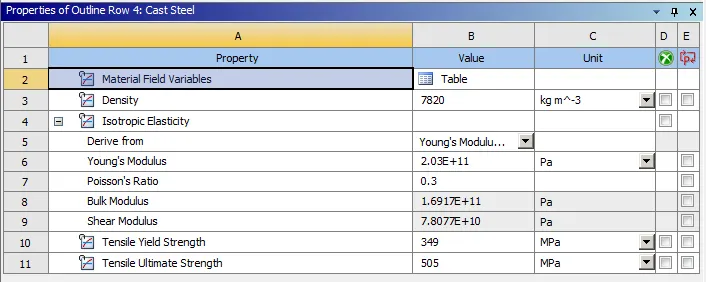
step 4: Right click the geomentry tab and select import geomentry --> browse --> select the file --> open.
step 5: Open ansys structural mechanical model.
step 6:Assign the created material for both the parts.
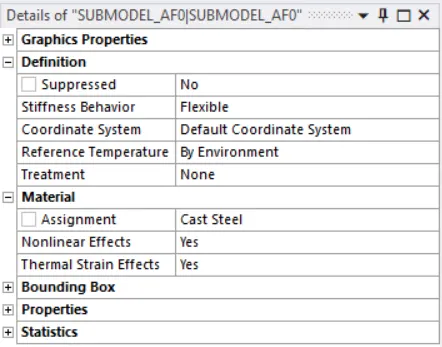
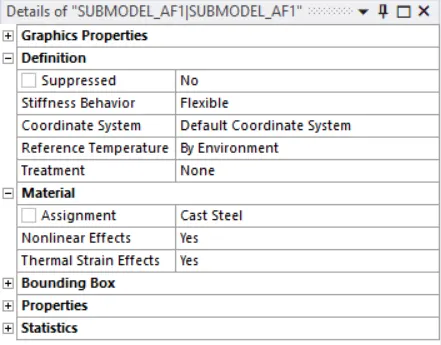
step 7: Now change the mesh size of the element to 1mm and mesh the model.
step 8:Now create the contact between two contact.
step 9: Now create a revolute joint for both the gears.
step 10: Now change the analysis settings and ON the large deflection.
step 11: Now give the boundary condition of joint load for both the gears.
step 12: Now run the simulation.
step 13: Now include the total deformation,Equivalent stress and stress intensity in output files.
CASE 3: CAST BRONZE
step 1: Open the ansys workbench module and select the static structural analysis.
step 2: First need to change the material from structural steel to cast iron.
step 3: Double click on engineering data --> engineering data sources --> general material --> add new material.
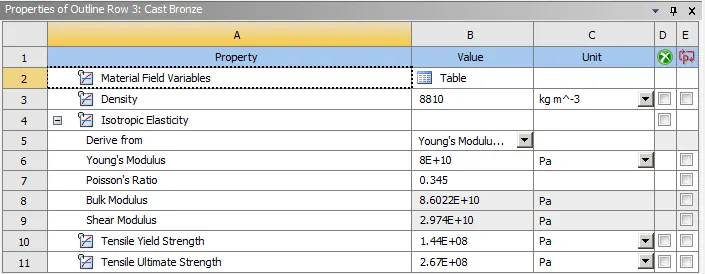
step 4: Right click the geomentry tab and select import geomentry --> browse --> select the file --> open.
step 5: Open ansys structural mechanical model.
step 6:Assign the created material for both the parts.
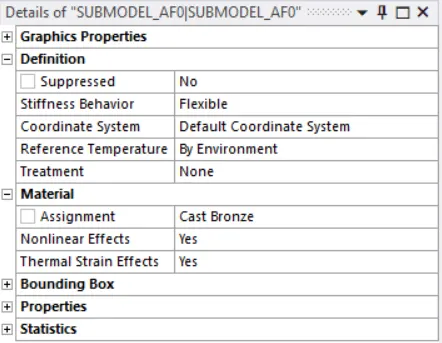
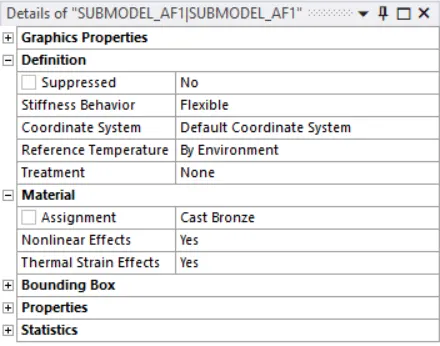
step 7: Now change the mesh size of the element to 1mm and mesh the model.
step 8:Now create the contact between two contact.
step 9: Now create a revolute joint for both the gears.
step 10: Now change the analysis settings and ON the large deflection.
step 11: Now give the boundary condition of joint load for both the gears.
step 12: Now run the simulation.
step 13: Now include the total deformation,Equivalent stress and stress intensity in output files.
OUTPUT FILES:
DEFORMATION STRESS:
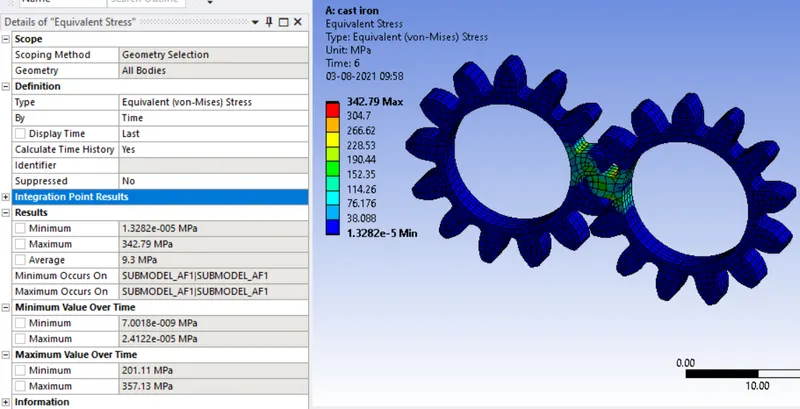
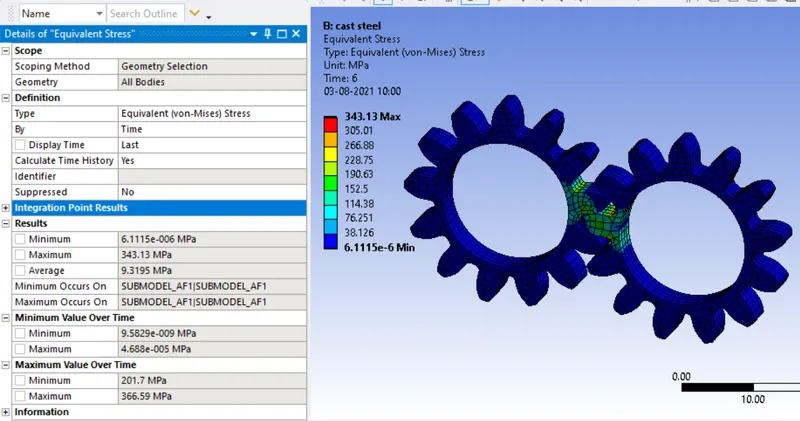
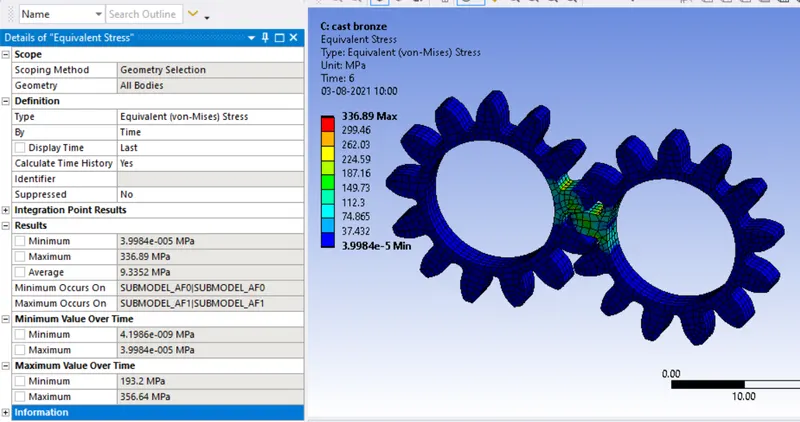
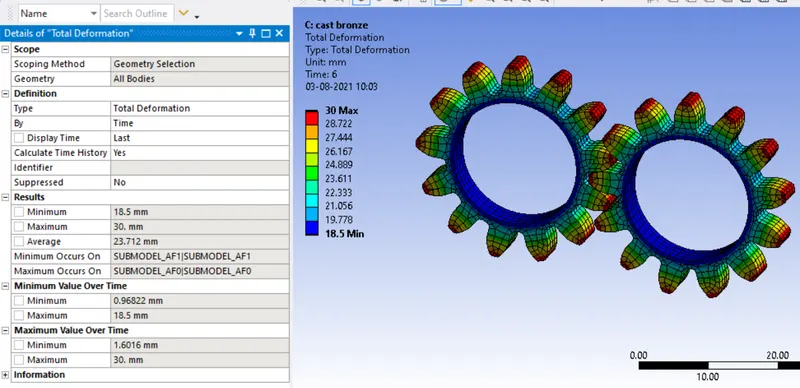
TOTAL DEFORMATION:
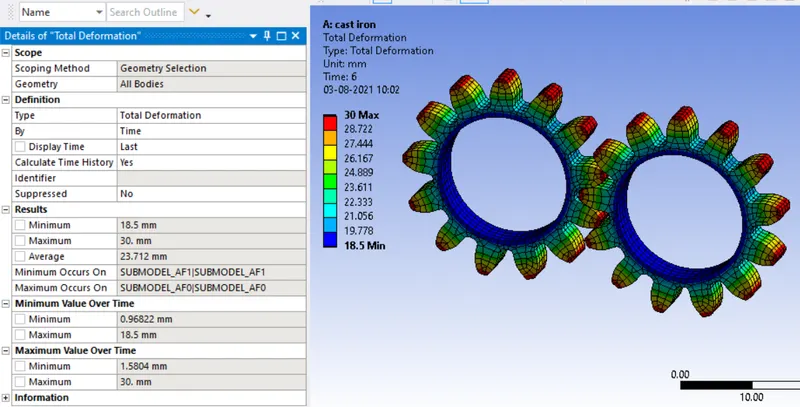
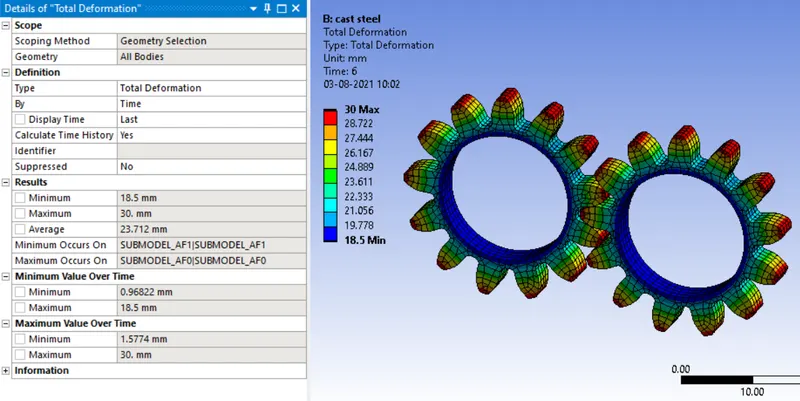
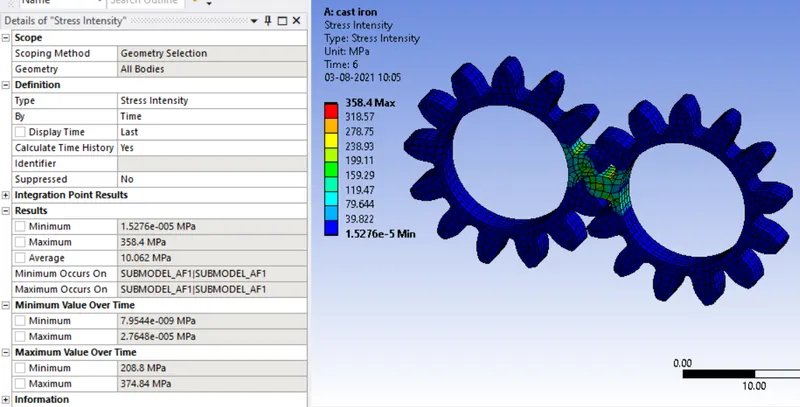
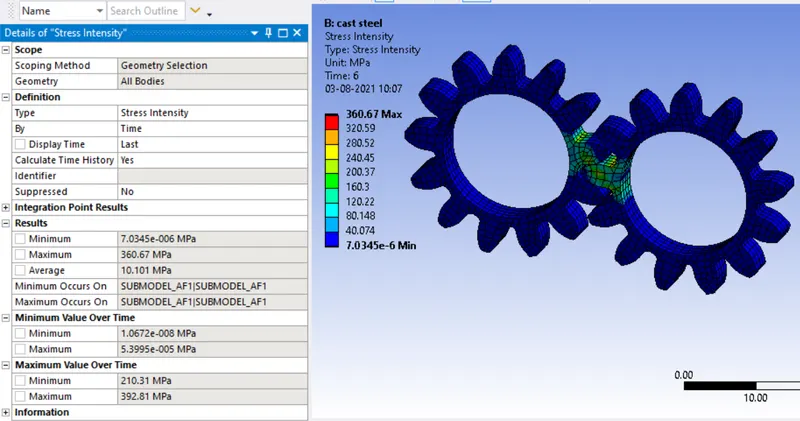
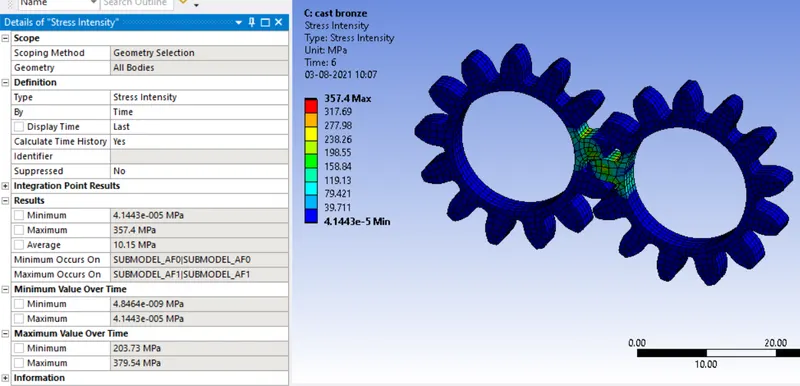
STRESS INTENSITY:
Stress intensity is the stress at a point in a structure due to pressure resulting from combined tension (positive) stresses and compression (negative) stresses.
CONCLUSION:
| Equivalent Stress in Mpa | Total Deformation in mm | Stress Intensity in Mpa | ||||
| Maximum Value | Minimum Value | Maximum Value | Minimum Value | Maximum Value | Minimum Value | |
| Cast iron | 342.79 | 1.32E-05 | 30 | 18.5 | 358.4 | 1.52E-05 |
| Cast steel | 343.13 | 6.11E-06 | 30 | 18.5 | 360.67 | 7.03E-06 |
| Cast bronze | 336.89 | 3.99E-05 | 30 | 18.5 | 357.4 | 4.14E-05 |
After analysing and comparing the above result, Equivalent stress is maximum in cast steel and total deformation is the same in all the three cases.The stress intensity is also maximum in cast steel.
Since the yeild and ultimate stress are less when compared to other material hence the fracture occours first at cast bronze and then for cast steel since steel has less ultimate stress than cast iron.Therefore, from above results we can say that, everthough Equivalent stresses generated is higher in CI(Ductile), it is the most suited material for this application as its ultimate strength is higher which will result in its operation till rupture.