Week 1 Spur Gear Challenge
Aim: To study and compare the characteristics like Equivalent stress, Total deformation and Stress intensity for given Spur Gear model by giving different material inputs like Cast Iron (Ductile), Bronze cast and Cast Steel.
Procedure:
- Open Ansys Workbench and select static structural. In the Engineering Data create the materials with the following specifications and add it to the library.
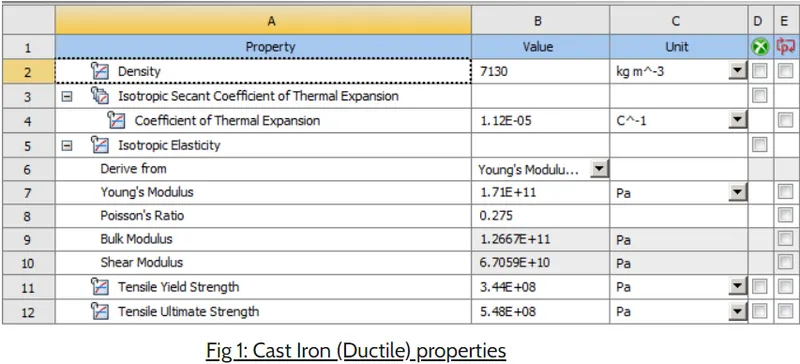
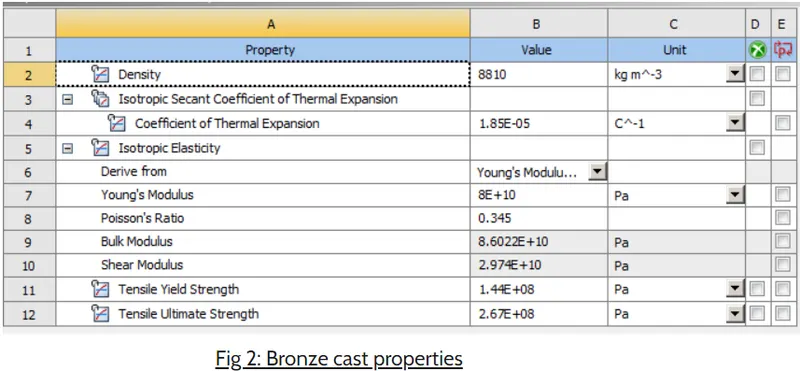
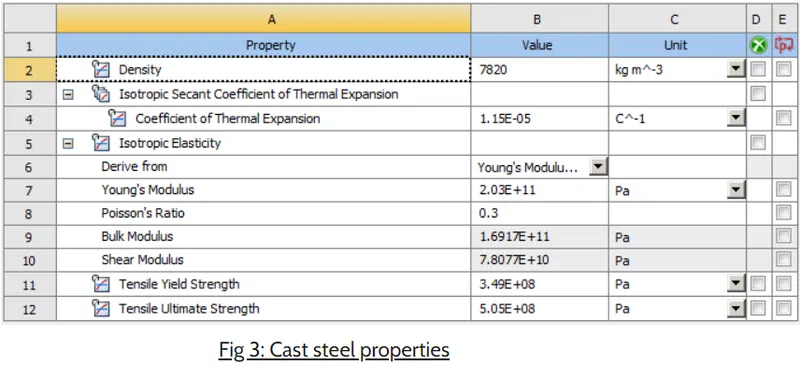
- Import the given Spur Gear CAD model in geometry and update it in model. Right click on model and select edit.
- Once is model is opened, rename both the gears and assign anyone of the three materials in geometry to both the gears.
- In the connections tab, open contacts, select the contact and target faces of right and left gears respectively and assign the following boundary conditions for frictional contact between the gears.
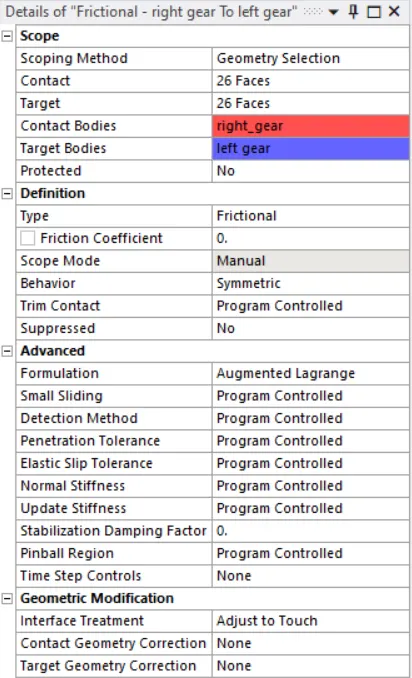
- Insert Joints in Connections tab and assign the boundary conditions for revoulte joints as mentioned below.
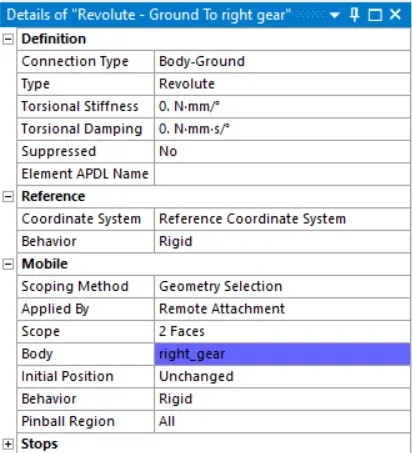
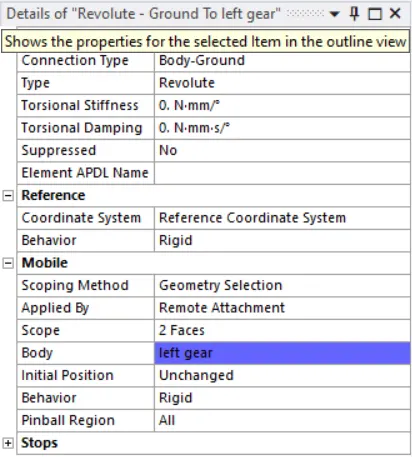
- Change the element size of mesh to 0.8mm.( Due to nodes restriction in academic version of Ansys)
- In the Static Structural, change the boundary conditions in analysis settings as mentioned below for step and solver controls.
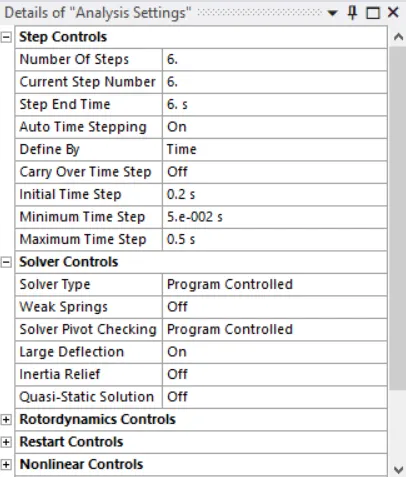
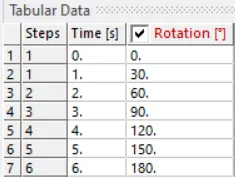
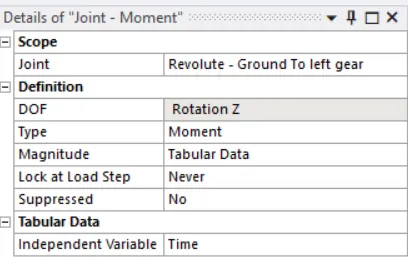
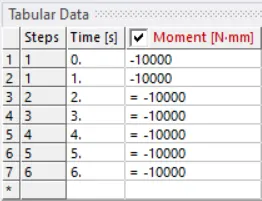
- Insert Joint load in Static structural to apply a kinematic driving condition to a single degree of freedom with the following boundary conditions.
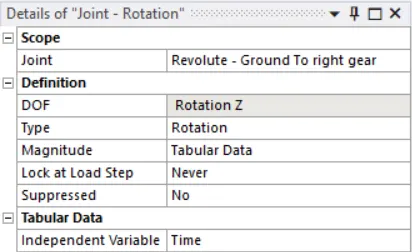
- Lastly, in the Solution tab, insert Equivalent stress, Total deformation and stress intensity and click solve to get the required values.
Results:
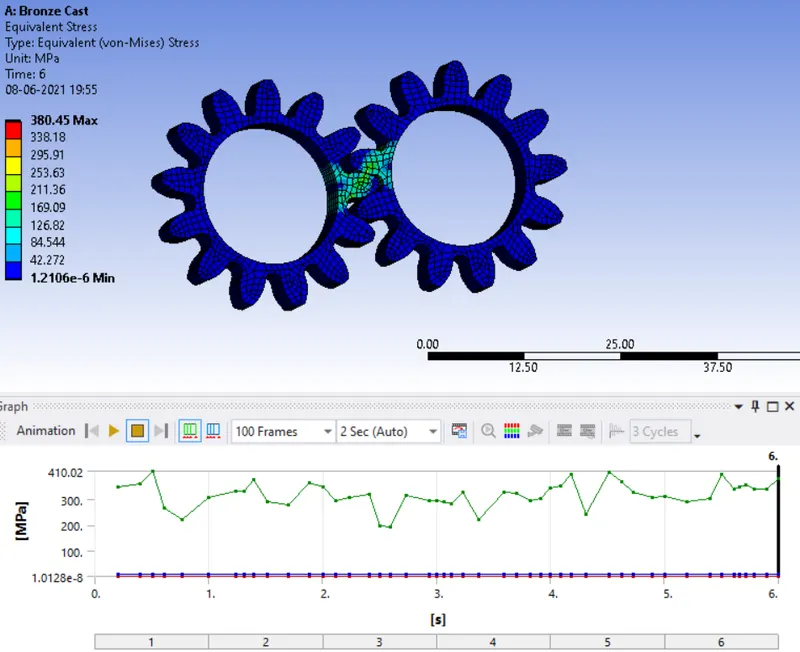
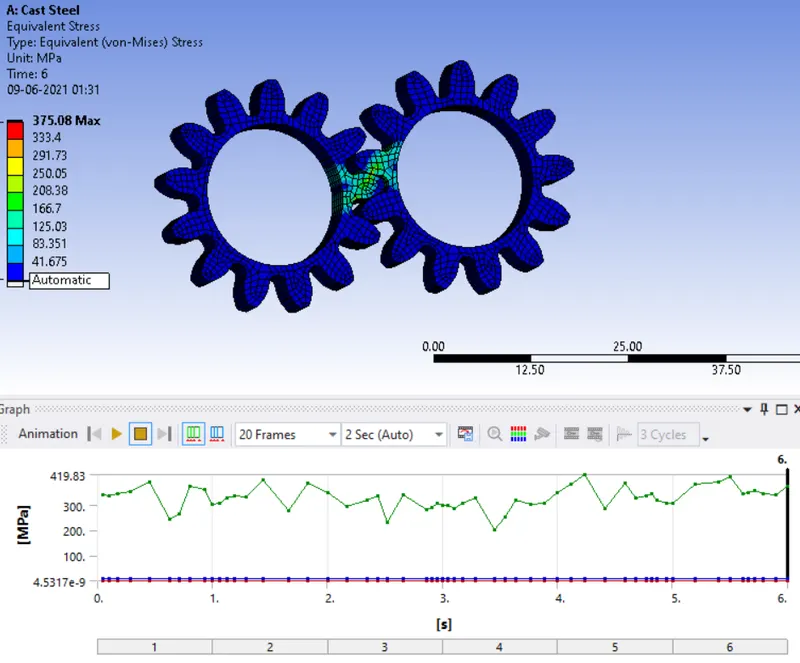
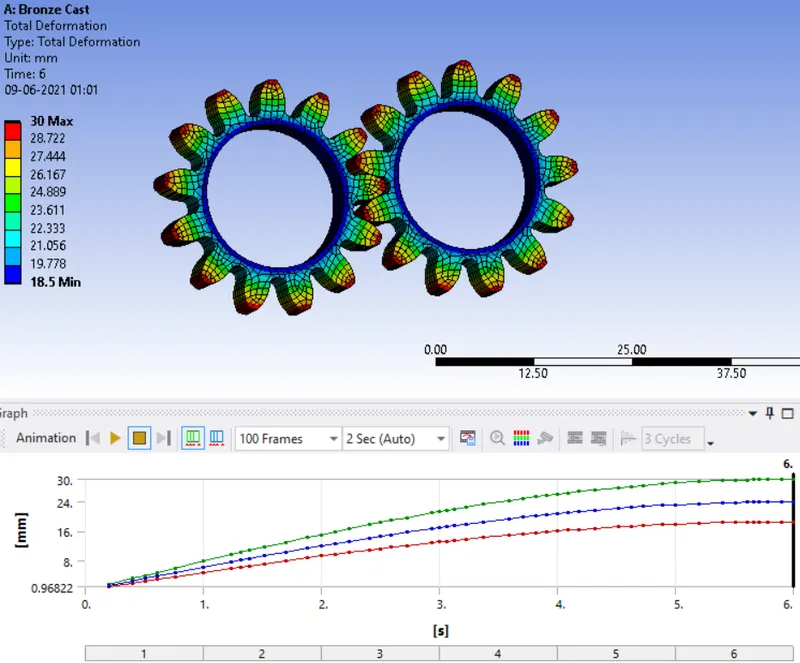
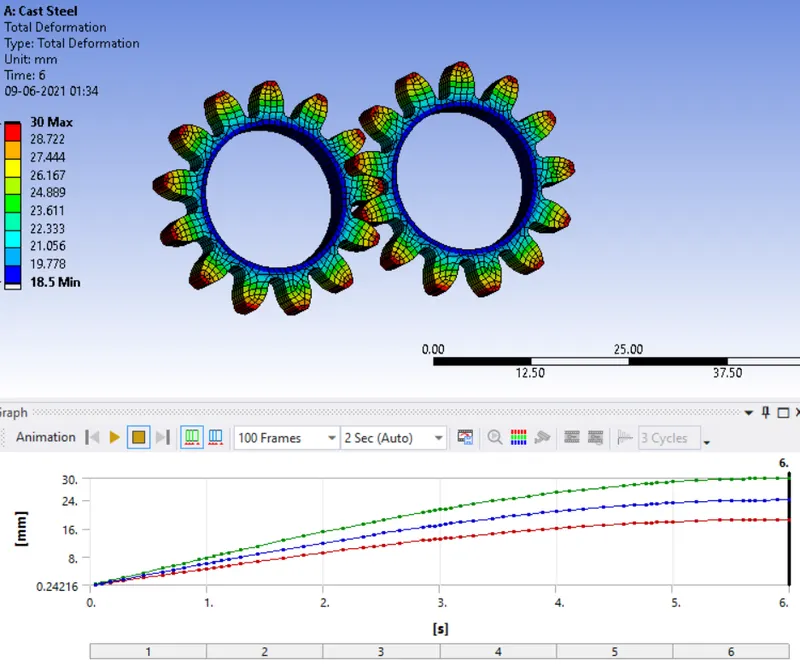
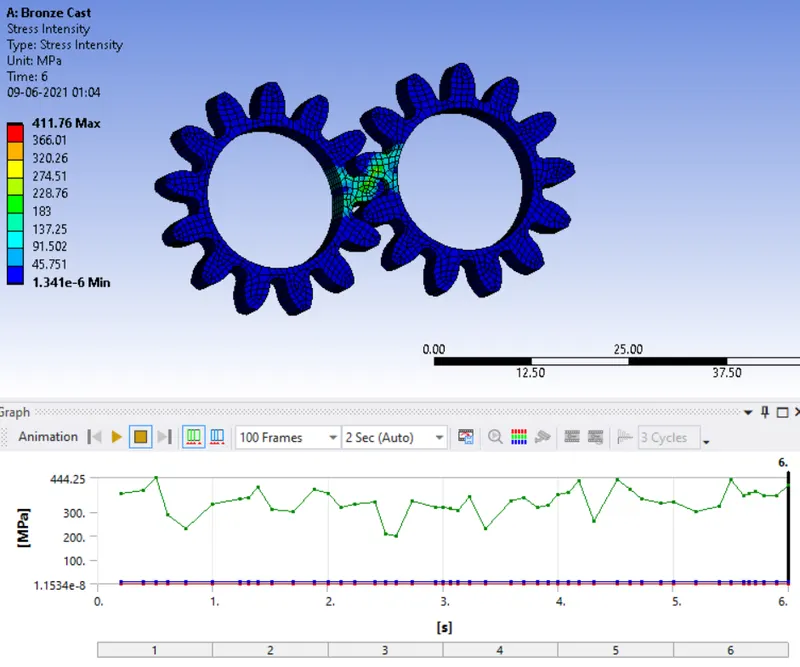
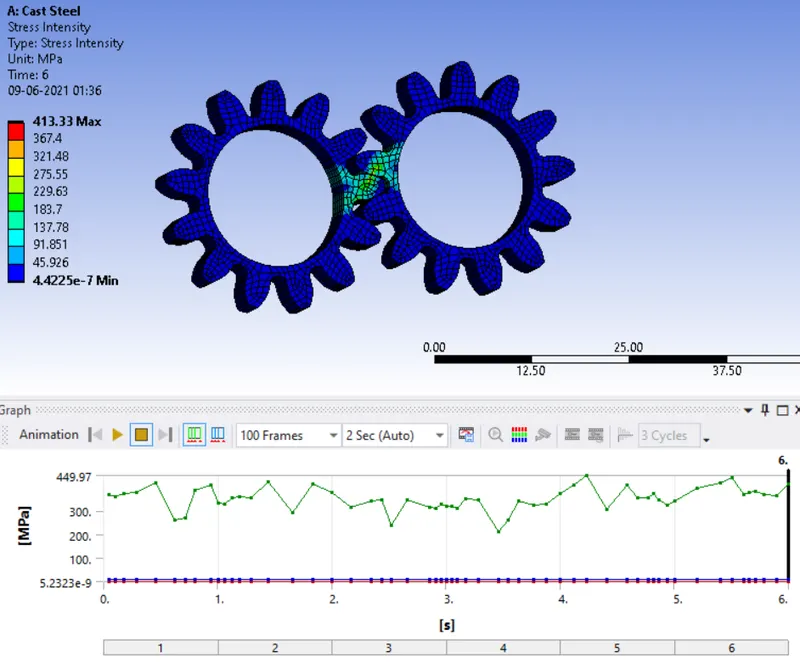
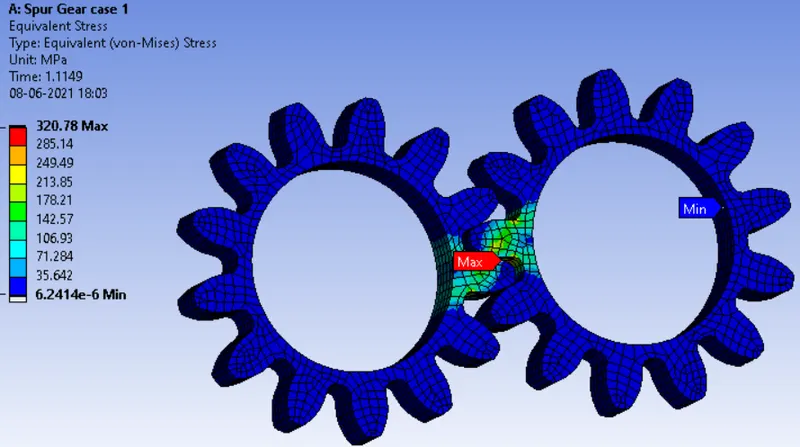
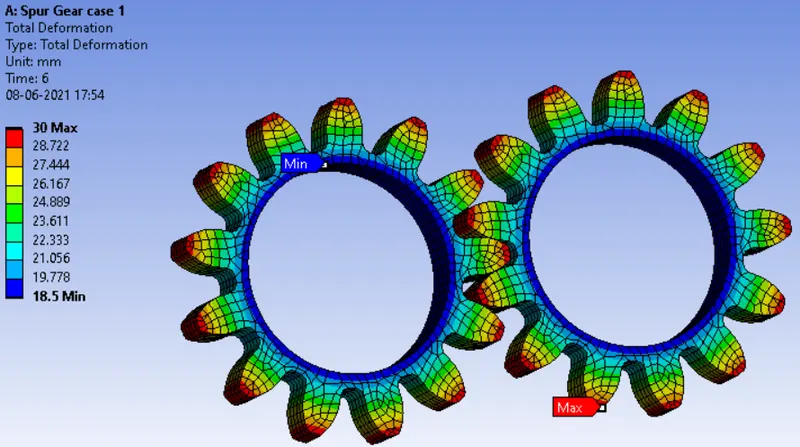
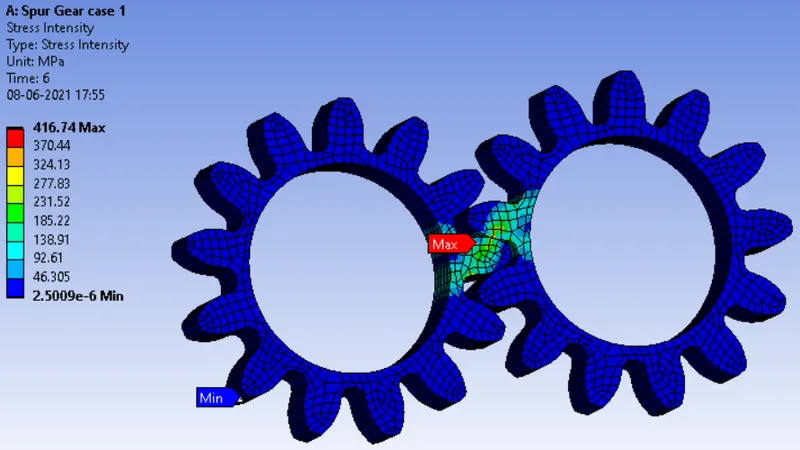
The following table shows the comparision of characteristics for three different materials.
| Title | Case 1 (Cast Iron(Ductile)) | Case 2 (Bronze Cast) | Case 3 (Cast Steel) |
| Equivalent Stress |
|
 |
 |
| Total Deformation |
|
 |
 |
| Stress Intensity |
|
 |
 |


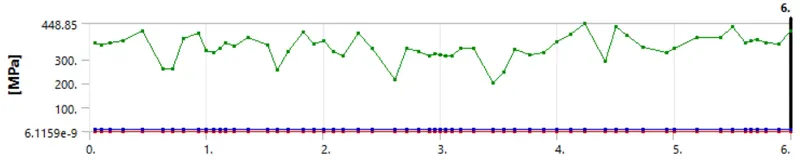
Conclusion:
- Max stress value is higher for Bronze Cast and lower for Cast Iron (Ductile).
- Total deformation is almost same for all the three materials.
- Stress intensity is higher for Cast Iron (Ductile) and lower for Bronze cast.
Stress intensity is a concept of fracture mechanics to predict the stress near the tip of cracks caused by remote load or residual stress. It is usually studied for brittle materials, like cast materials.
Gears made of Cast Iron (Ductile) is better because it has the lowest max stress value among all three.
Note: Find find the animations uploaded herewith because I'm not able to attach it with the report writing space.