Week 1- Mixing Tee
Objective:-
To simulate the air flow in Mixing Tee and understand the effect of length of pipe and momentum ratio of velocity for mixing air by four different cases.
Selection of Turbulence Model:-
We have to select one turbulenece model from k- epsilon and k- omega. As, k- epsilon model predicts well far from the wall boundaries and k- omega model predicts well near wall. In this case we do not require to capture turbulence near wall, Hence we can select k- epsilon as turbulence model for simulation the mixing tee cases.
Case-1 ( Short length Mixing Tee with Momentum ratio 2)
1.Fluid Volume Extracted:-
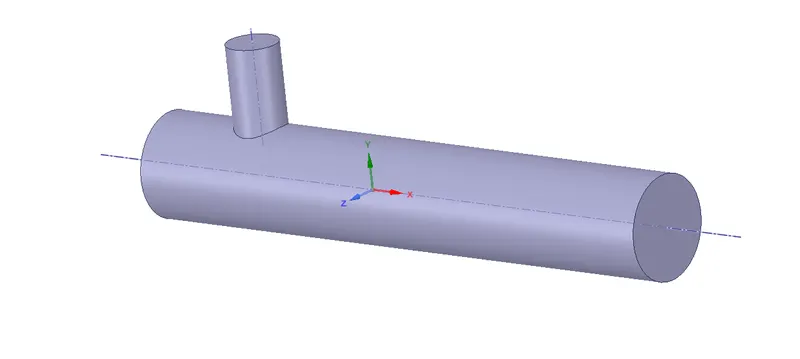
Mesh Genration:- (Using Cutcell Method)
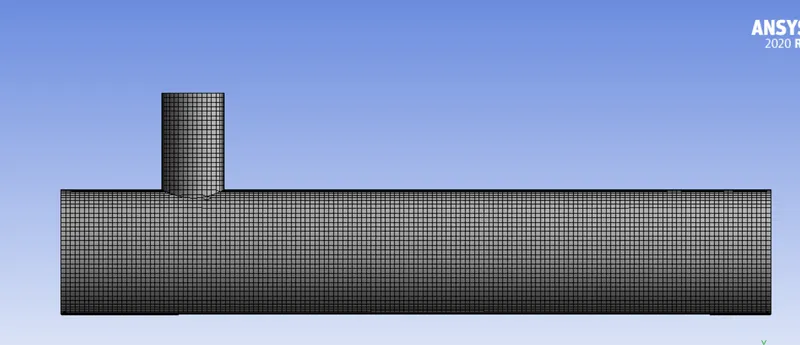
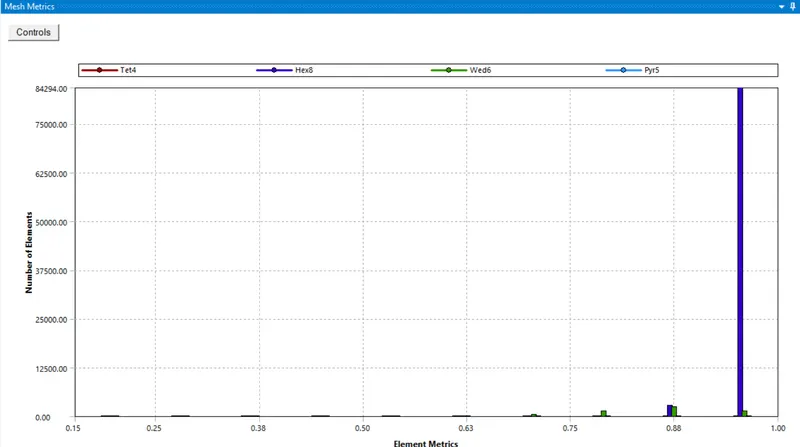
Mesh Quality:-
Boundary Conditions:-
Inlet-X (Hot air inlet) = 3 m/s (Velocity Inlet), Temperature = 36 C
Inlet-Y (Cold air inlet) = 6 m/s (Velocity Inlet), Temperature = 19 C
Outlet = Pressure outlet
Solution:-
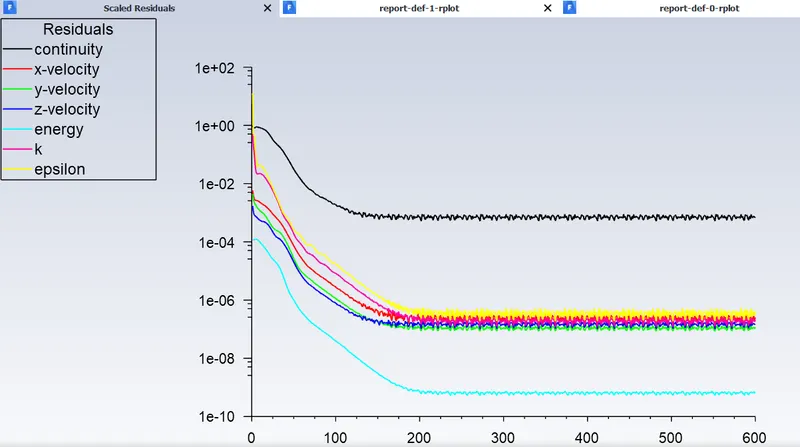
Residual Plot:-
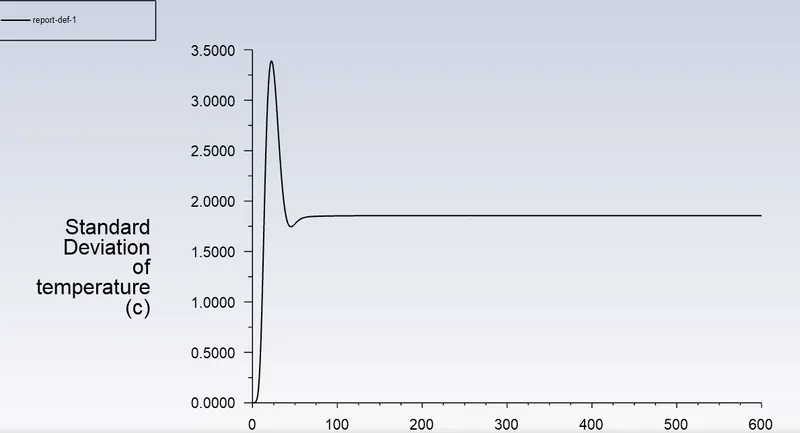
Standard Deviation of Temperature:-
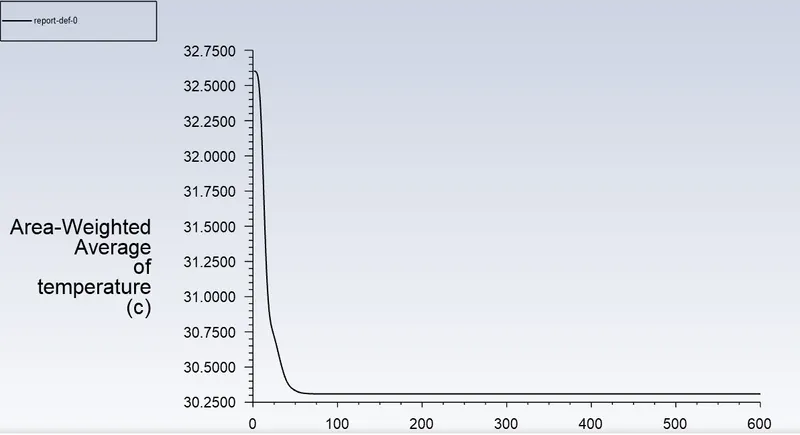
Area weighted average of Temperature:-
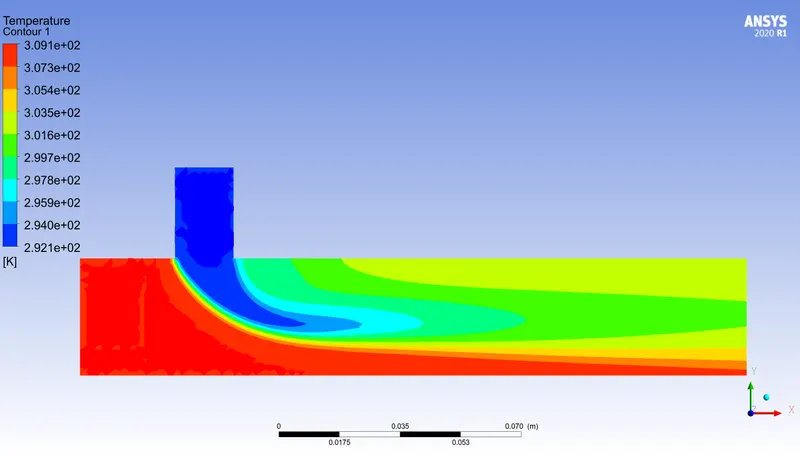
Temperature Profile:-
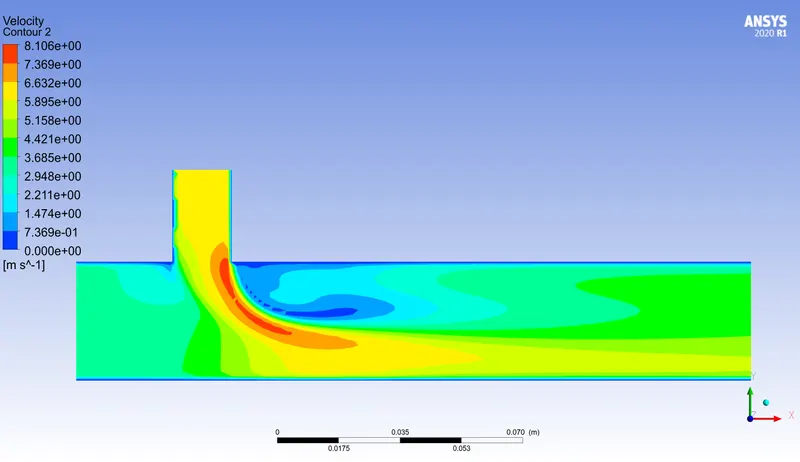
Velocity Profile:-
Case-2 ( Short length Mixing Tee with Momentum ratio 4)
1.Fluid Volume Extracted:-
Mesh Genration:- (Using Cutcell Method)
Mesh Quality:-
Boundary Conditions:-
Inlet-X (Hot air inlet) = 3 m/s (Velocity Inlet), Temperature = 36 C
Inlet-Y (Cold air inlet) = 12 m/s (Velocity Inlet), Temperature = 19 C
Outlet = Pressure outlet
Solution:-
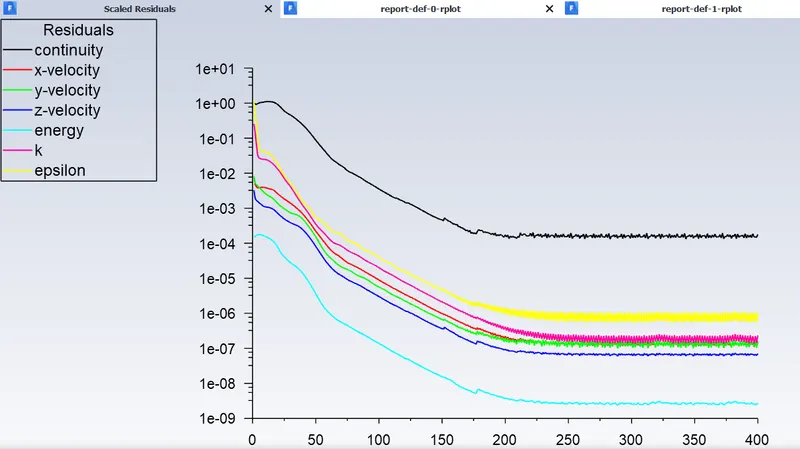
Residual Plot:-
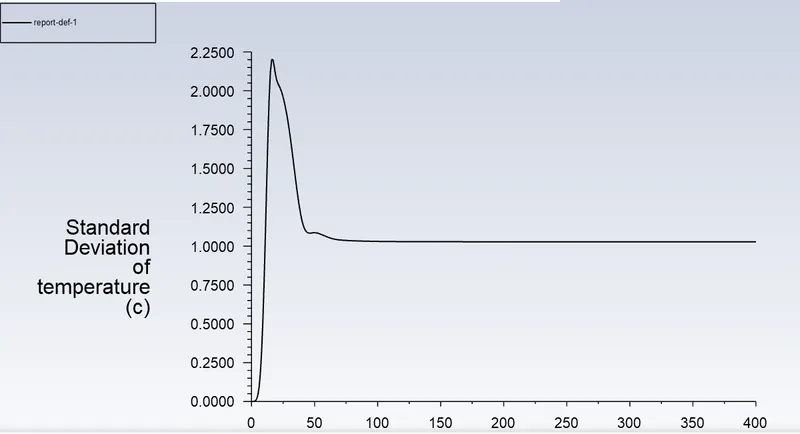
Standard Deviation of Temperature:-
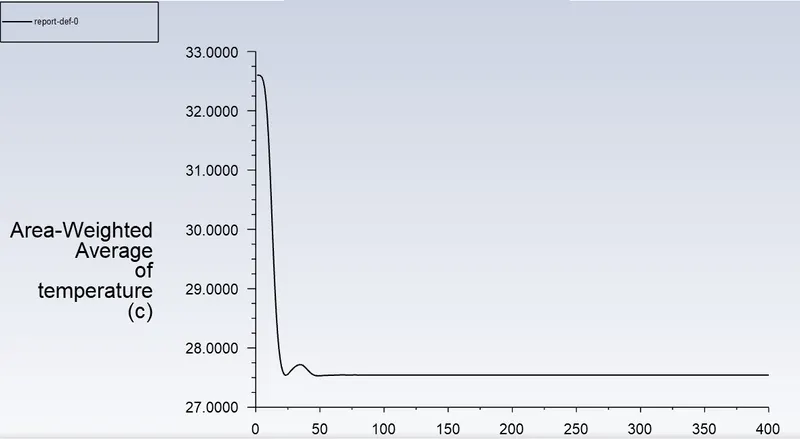
Area weighted average of Temperature:-
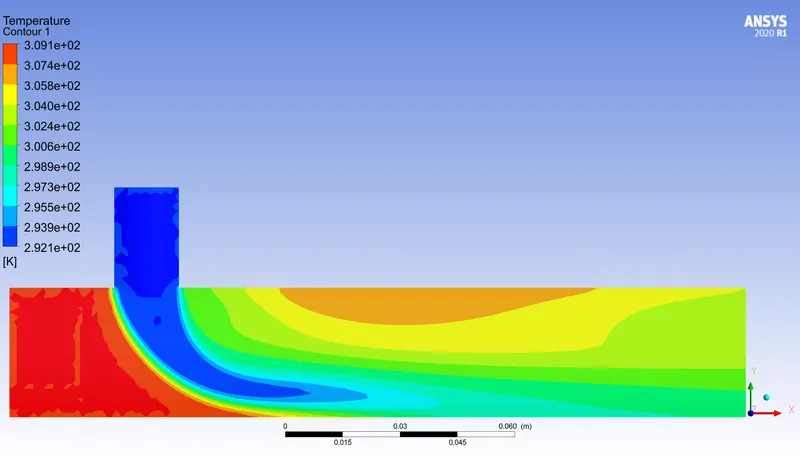
Temperature Profile:-
Velocity Profile:-
Case-3 ( Long length Mixing Tee with Momentum ratio 2)
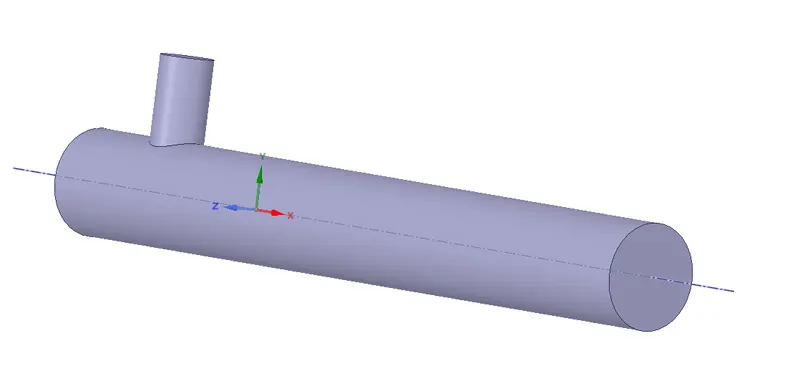
1.Fluid Volume Extracted:-
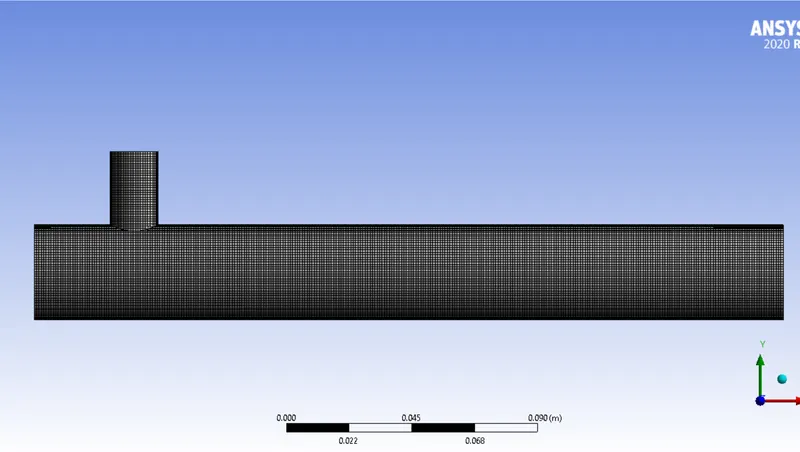
Mesh Genration:- (Using Cutcell Method)
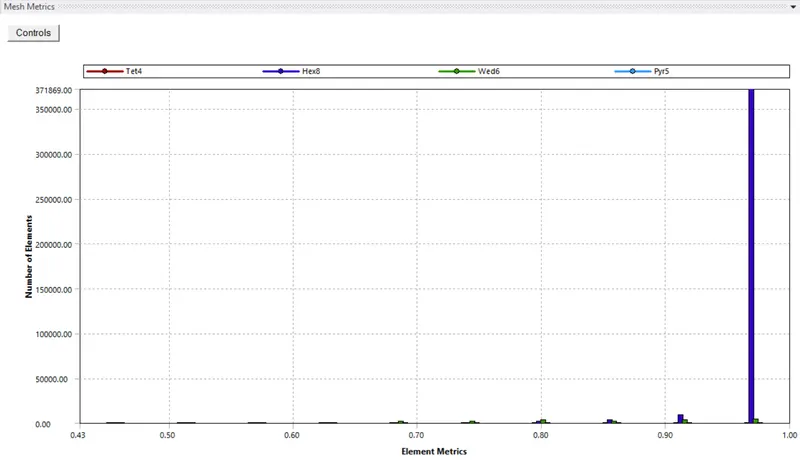
Mesh Quality:-
Boundary Conditions:-
Inlet-X (Hot air inlet) = 3 m/s (Velocity Inlet), Temperature = 36 C
Inlet-Y (Cold air inlet) = 6 m/s (Velocity Inlet), Temperature = 19 C
Outlet = Pressure outlet
Solution:-
Residual Plot:-
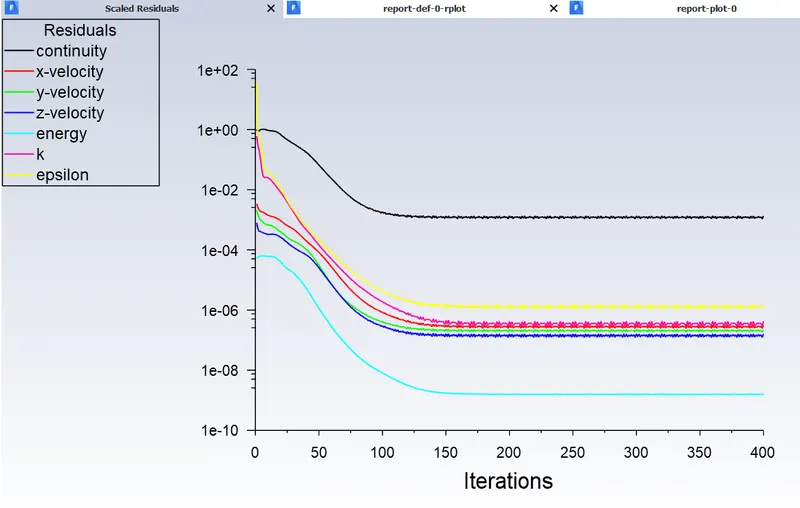
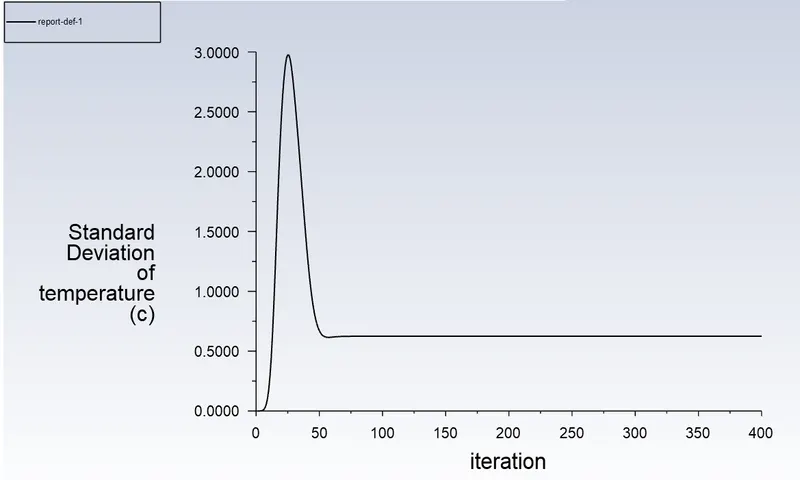
Standard Deviation of Temperature:-
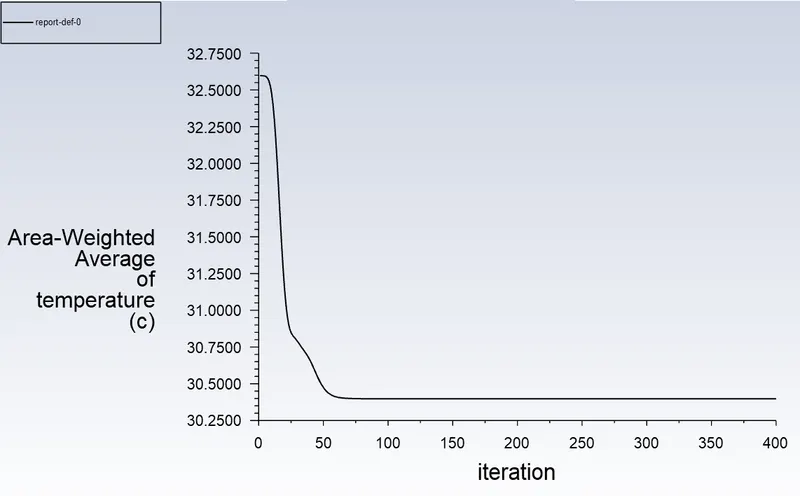
Area weighted average of Temperature:-
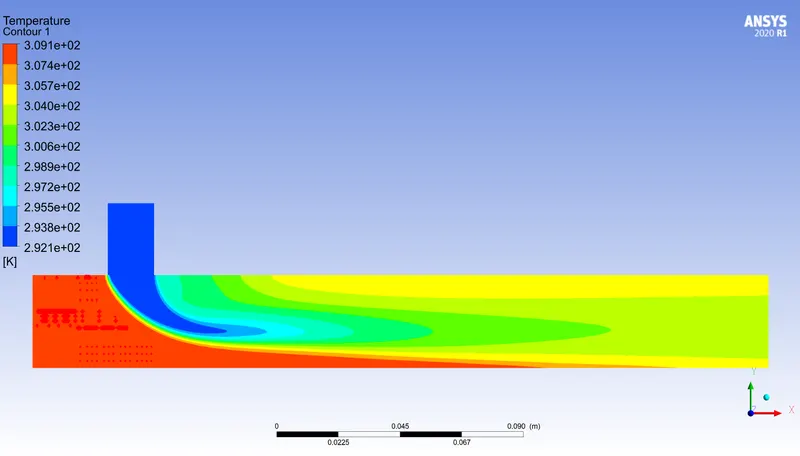
Temperature Profile:-
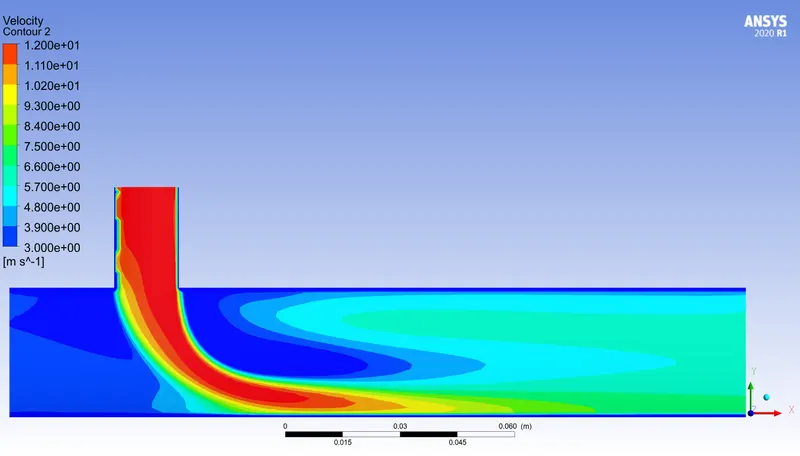
Velocity Profile:-
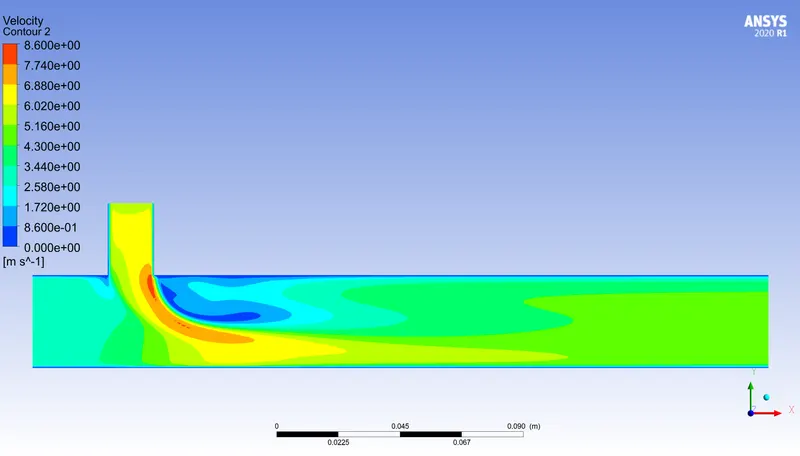
Case-4 ( Long length Mixing Tee with Momentum ratio 4)
1.Fluid Volume Extracted:-
Mesh Genration:- (Using Cutcell Method)
Mesh Quality:-
Boundary Conditions:-
Inlet-X (Hot air inlet) = 3 m/s (Velocity Inlet), Temperature = 36 C
Inlet-Y (Cold air inlet) = 12 m/s (Velocity Inlet), Temperature = 19 C
Outlet = Pressure outlet
Solution:-
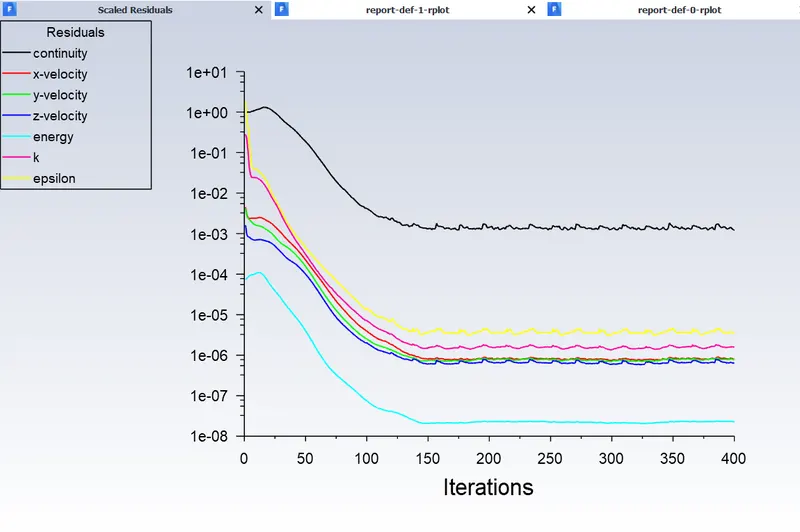
Residual Plot:-
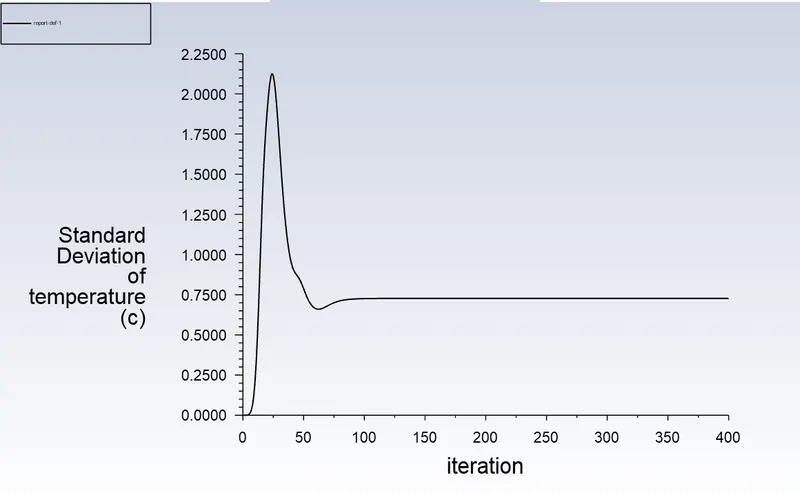
Standard Deviation of Temperature:-
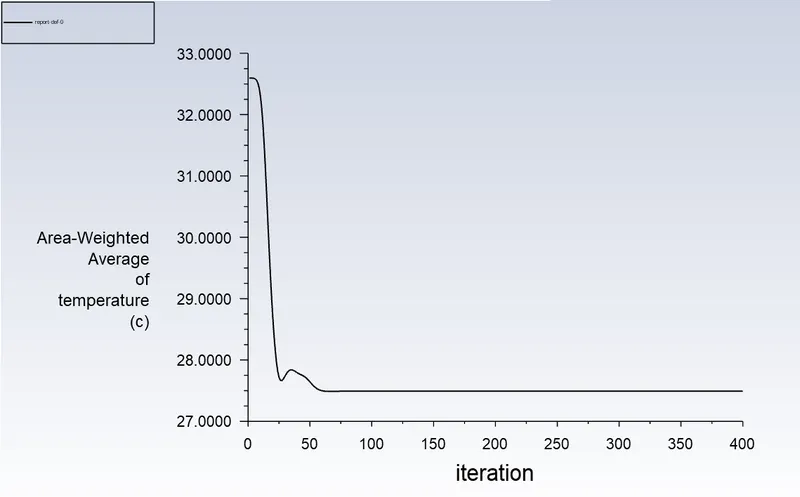
Area weighted average of Temperature:-
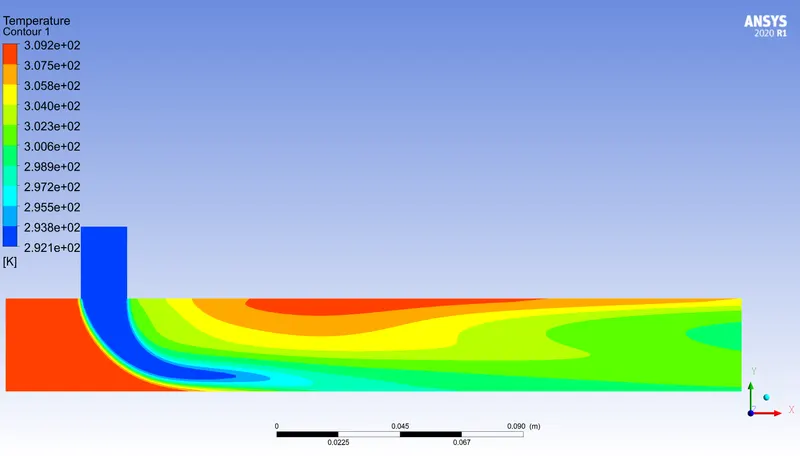
Temperature Profile:-
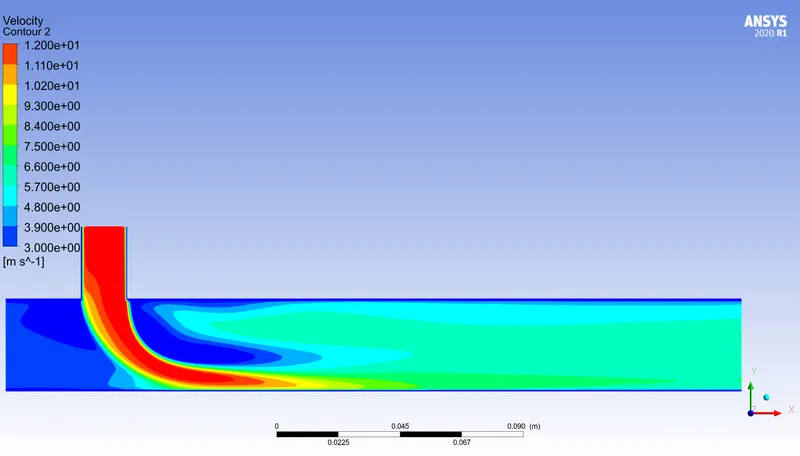
Velocity Profile:-
Conclusion:-
1. Increasing length of the model did not affect much to outlet temperature, rather higher momentum ratio result in decrease in outlet temperature.
2. Long mixing tee and higher momentum ratio is best option in this case as it gives uniform temprature at outlet with minimum standers deviation.