Week 1- Mixing Tee
Aim:-
To Resolving the problem of hot and cold water at same velocity mixing in tee pipe to analyse by using ansys fluent (Mixing Tee).
Abstract:-
Mixing Tee in which two fluid streems with different physical properties mix, which are widely used in petrochemical industries. When there is a large temp. difference between two streams, large metal temp. fluctuation can occurs in the metal can leads to thermal fatigue difference of the pressure boundary piping.
For improving the mixing of tees two stream to reduce the temperature fluctuation through redesigning of piping system and we can analyse by using k-`epsilon`and k-`omega`model in SST, in ansys system of ansys fluent. From the mixindg of tee we can predict the fluid temp. fluctuation at mixing point as well as characterised the corresponding temp. variation in pipe wall by CFD modeling wall resolve large eddy simulation (LES), after that we provide accurate prediction of mixing behavior including velocity, density and temperature field in mixing tee.
Application of Mixing Tee:-
- Wastewater treatment.
- Blending of some oils (injection of additives).
- petrochemical products.
- catalytic reactors.
Hot air flowing in a main pipe is mixed with Cold air flowing through a tee. The temperature is measured with analytically and by simulation to find out Average Temp.
In this we have created two model run for longer mixing tee than Short mixing tee.
To set up for steady-state simulations to compare the mixing effectiveness when hot inlet temperature is 360C & the Cold inlet is at 190C.
- Case 1
- Short mixing tee with a hot inlet velocity of 3m/s.
- Momentum ratio of 2, 4.
- Case 2
- Long mixing tee with a hot inlet velocity of 3m/s.
- Momentum ratio of 2, 4
Case Setup:-
- Pre-processing
Selection of ansys fluent drang and drop in box and open the file.
which is opening in the space claim clean and prepair the geometry after edge selection.
Mesh Processing :-
which is applying the boundary layer name (Inlet, Outlet and Wall.)
Meshing of Mixing tee and cell Counting to displaying the control chart.
- Case 1
- Short mixing tee with a hot inlet velocity of 3m/s.
- Momentum ratio of 2, 4.
Using `k-omega`SST File.
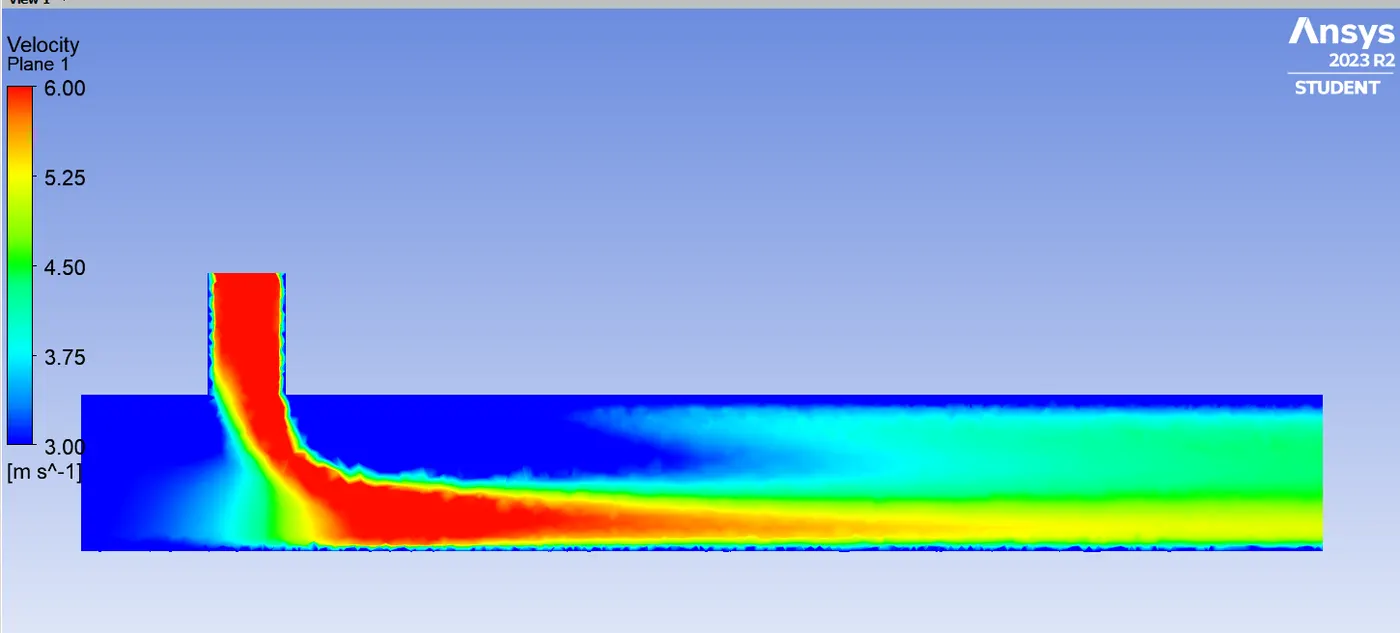
If Momentum Ration = 2,
`Momentum__ratio =(V_(cold)/V_(hot))`
`2=(V_(cold)/3)`
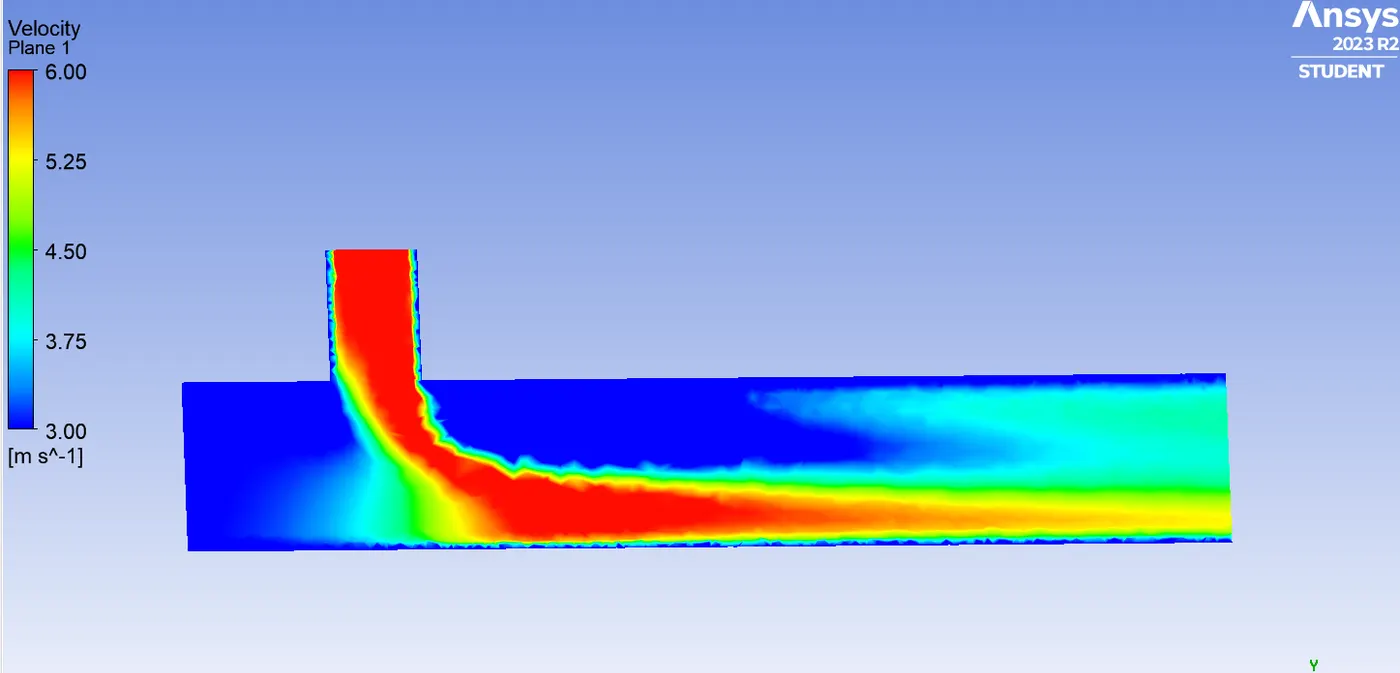
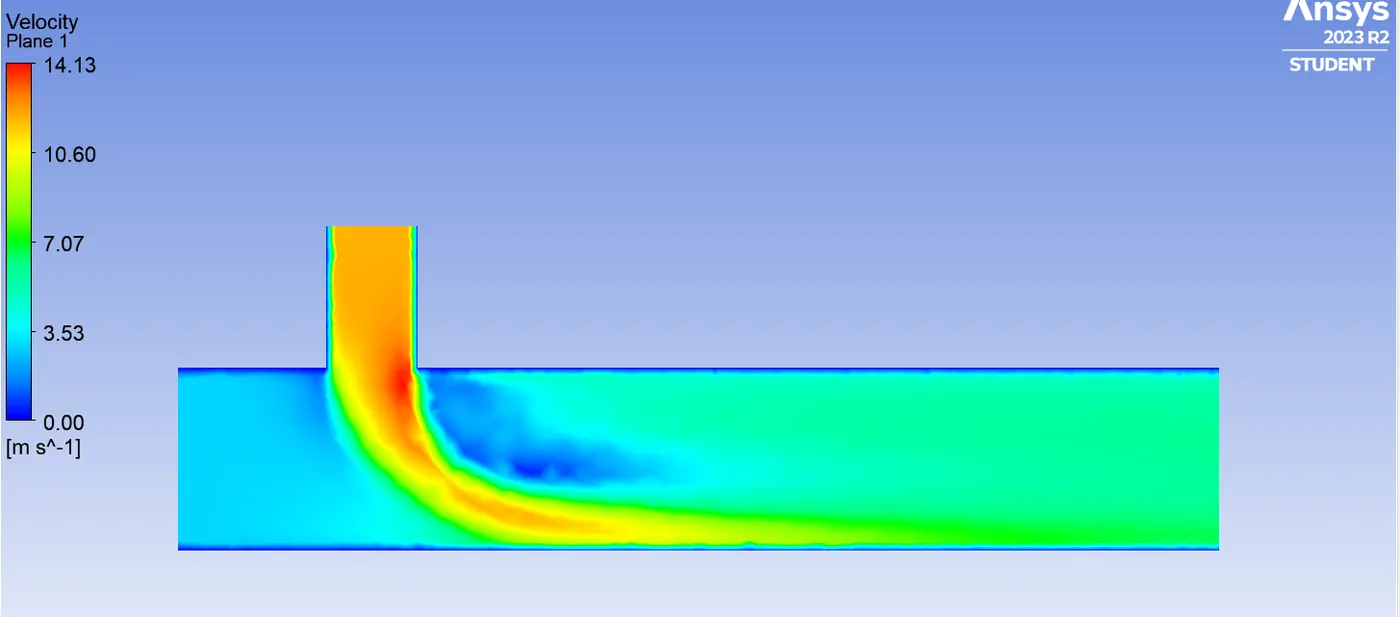
`V_(cold)=6m/s`
`T_(mixture) =((m_(hot)*T_(hot))+(m_(cold)*T_(cold)))/((m_(hot)+m_(cold)))`
Analytical Solution of Temp at outlet of mixture air
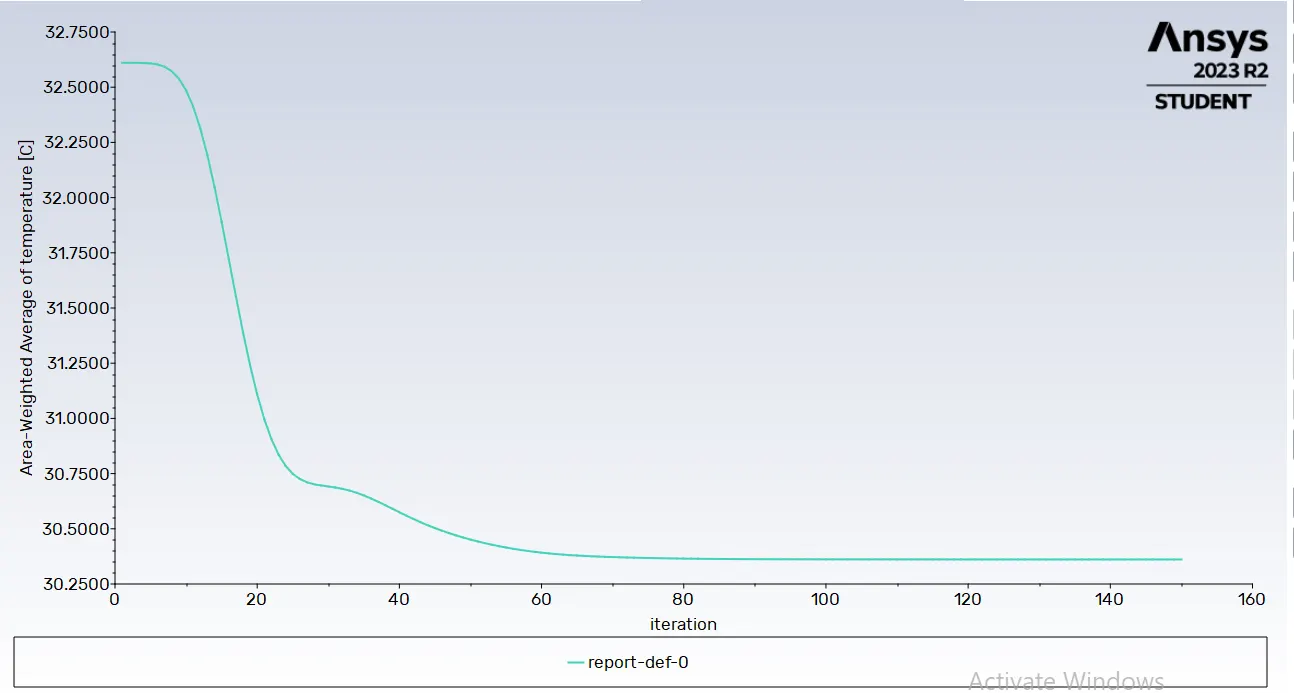
`T_(mixture) = 30.219`
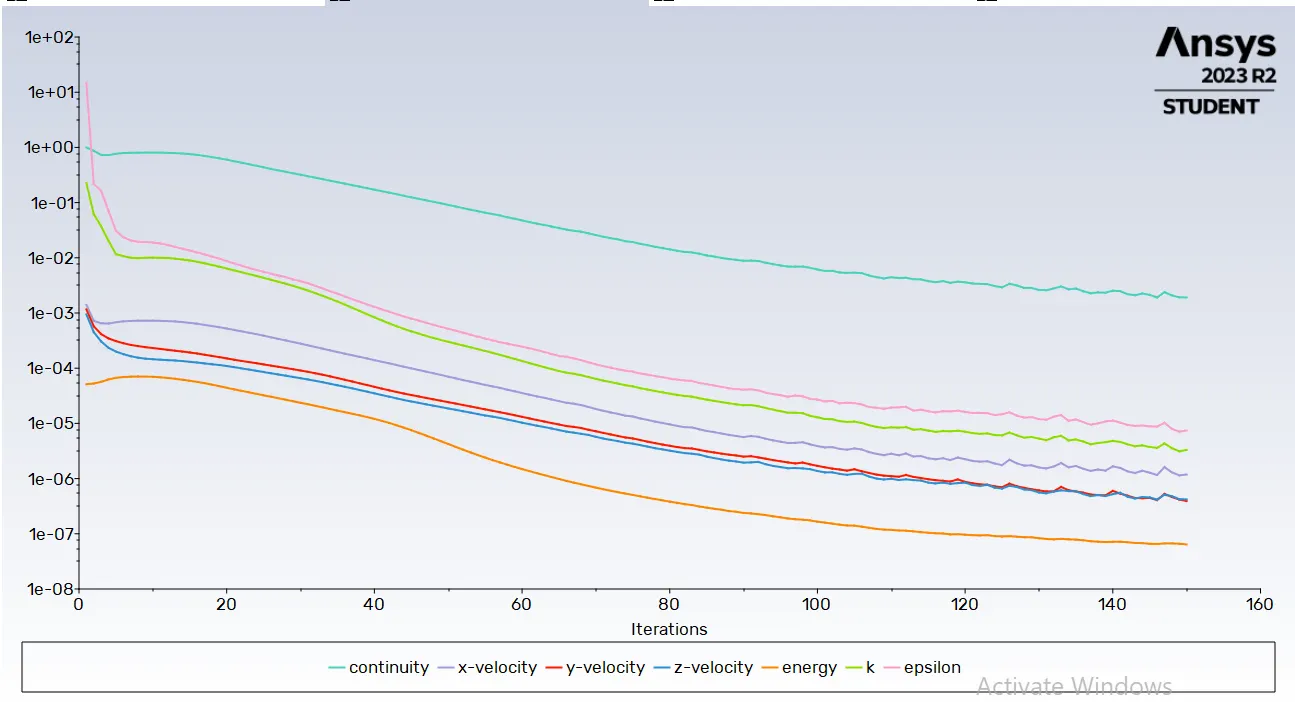
- Residual scale
From the residual we have obsrve the solution is Converge
the no of iteration at 150 the solution has stop.
- Average Temp
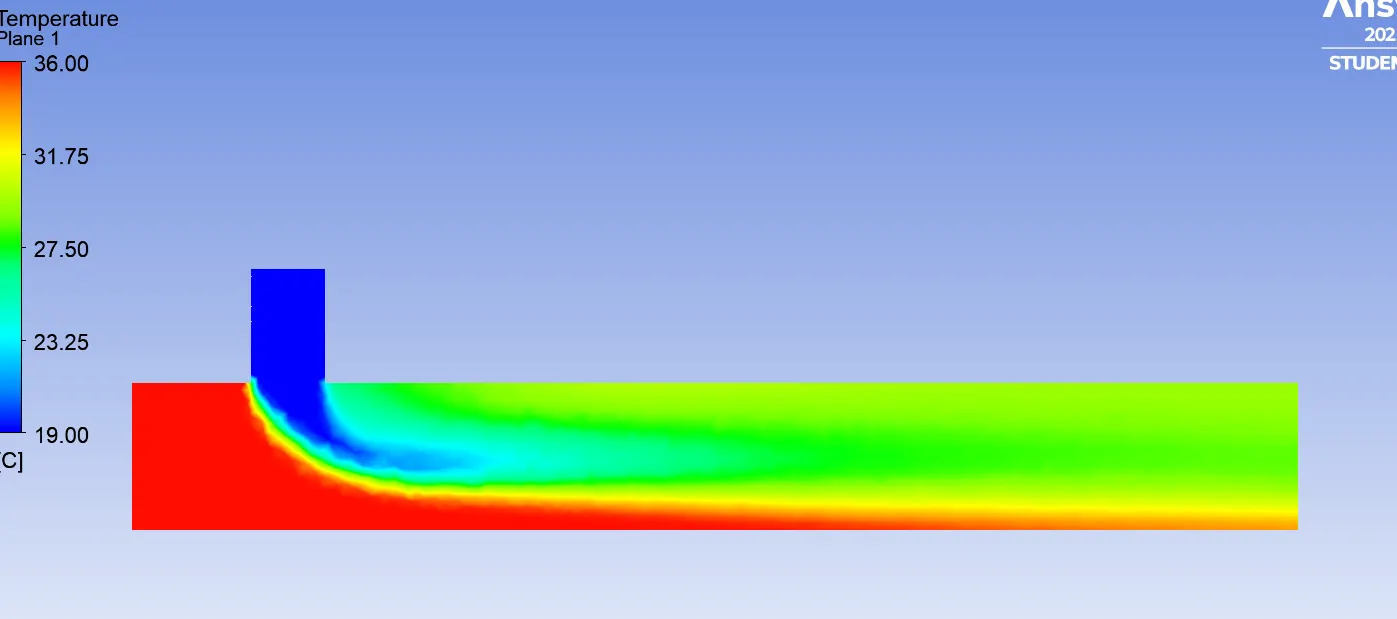
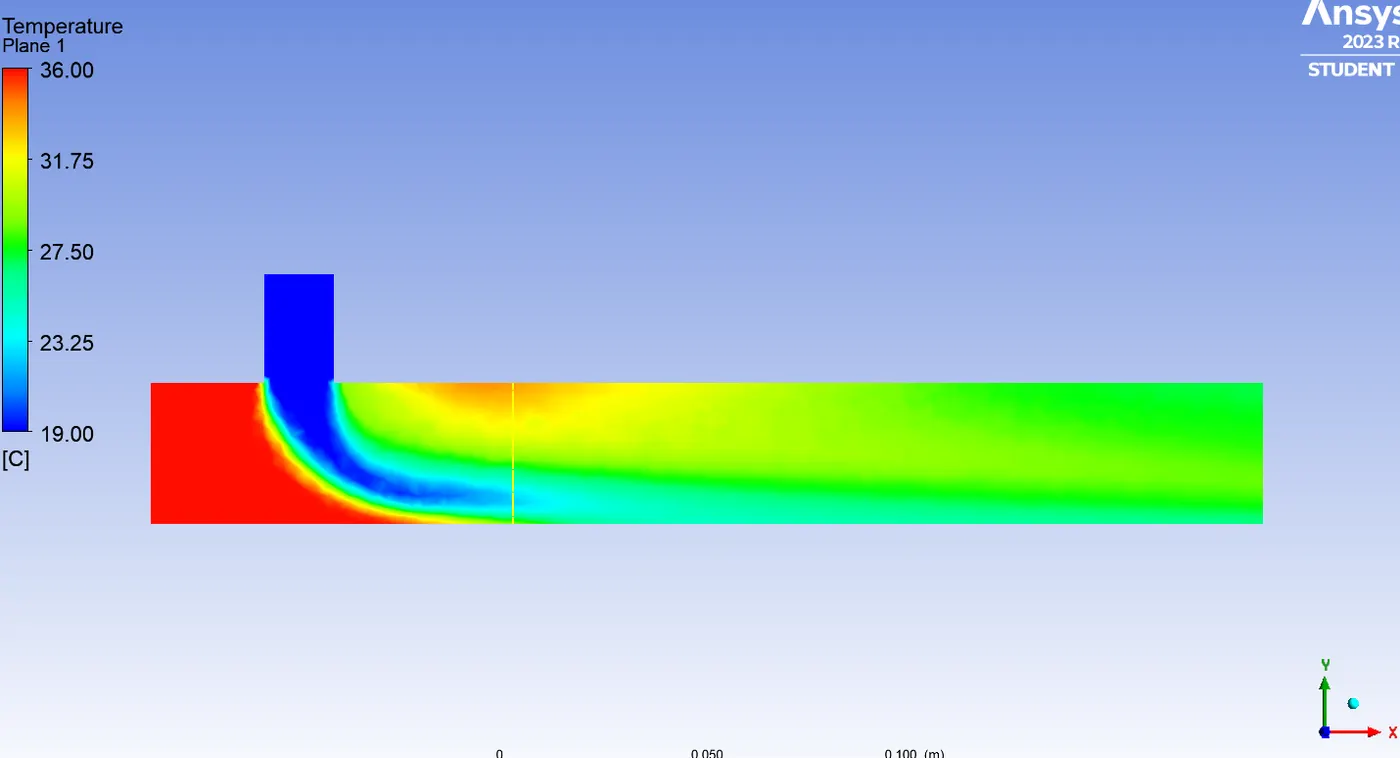
- Temp Contour Plot at MR=2 Temp Contour Plot at MR=4
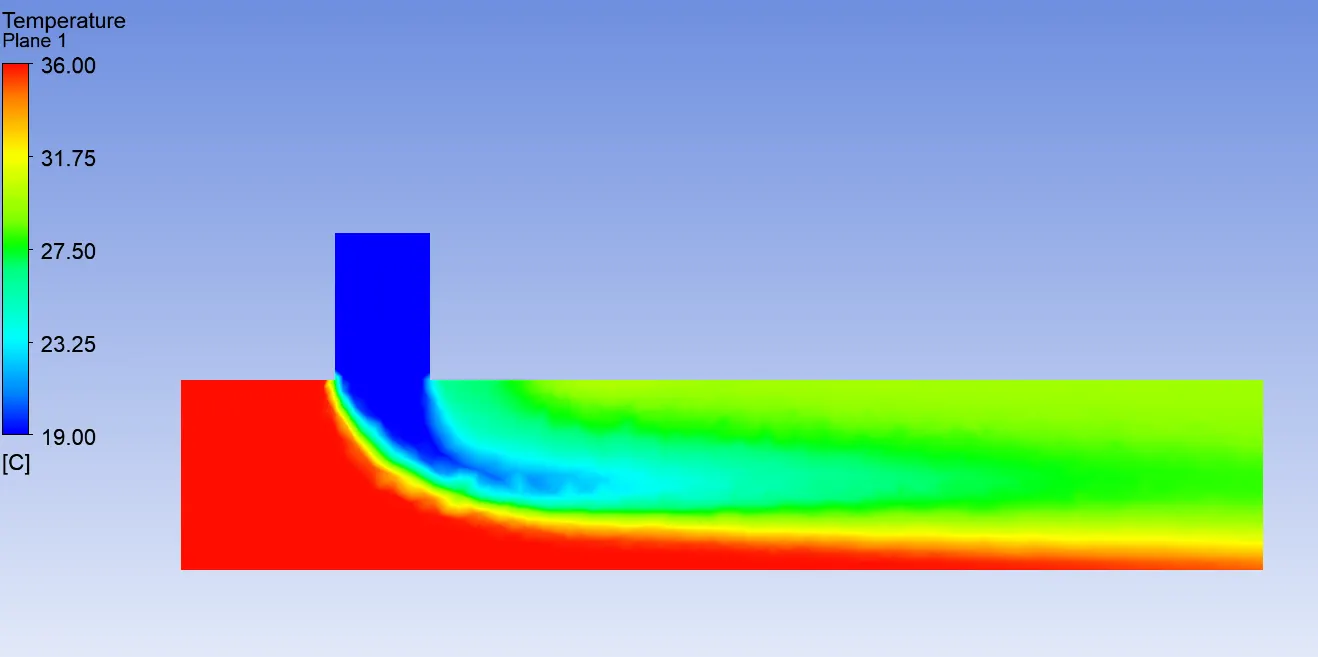
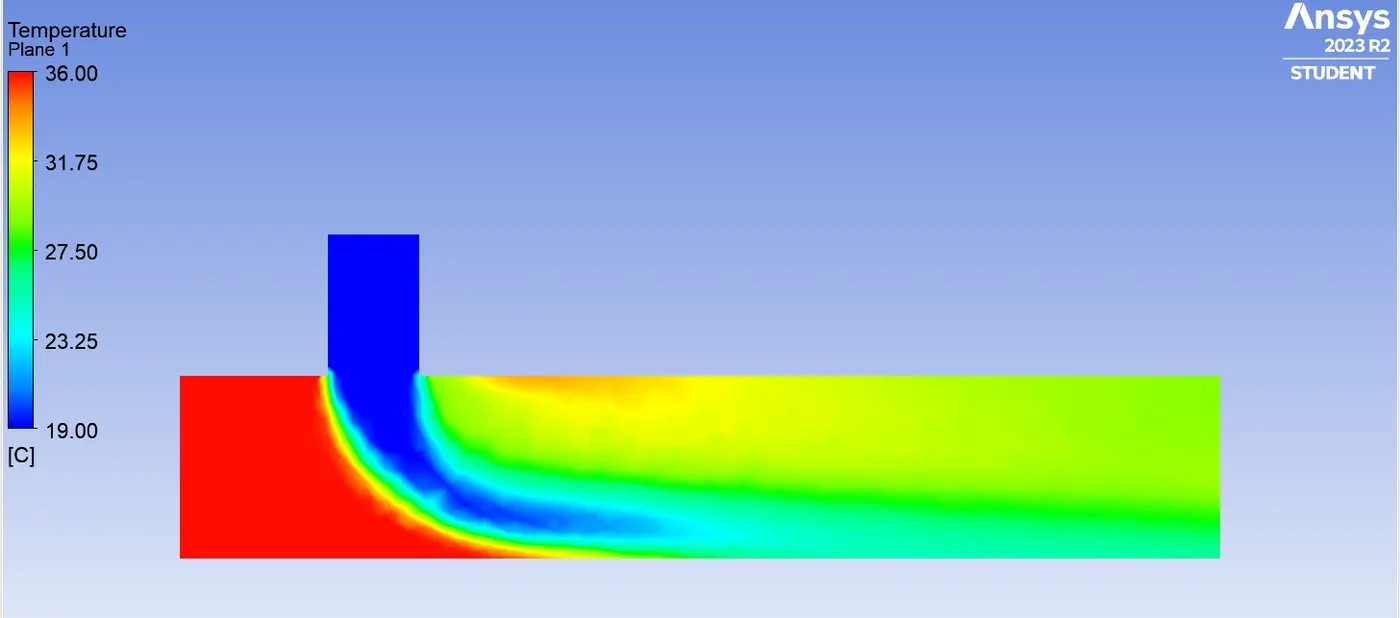
- Velocity Contour MR=2 Velocity Contour MR=4
- Case 2
- Long mixing tee with a hot inlet velocity of 3m/s.
- Momentum ratio of 2, 4.
Using `k-omega`SST File.
If Momentum Ration = 2,
`Momentum__ratio =(V_(cold)/V_(hot))`
`2=(V_(cold)/3)`
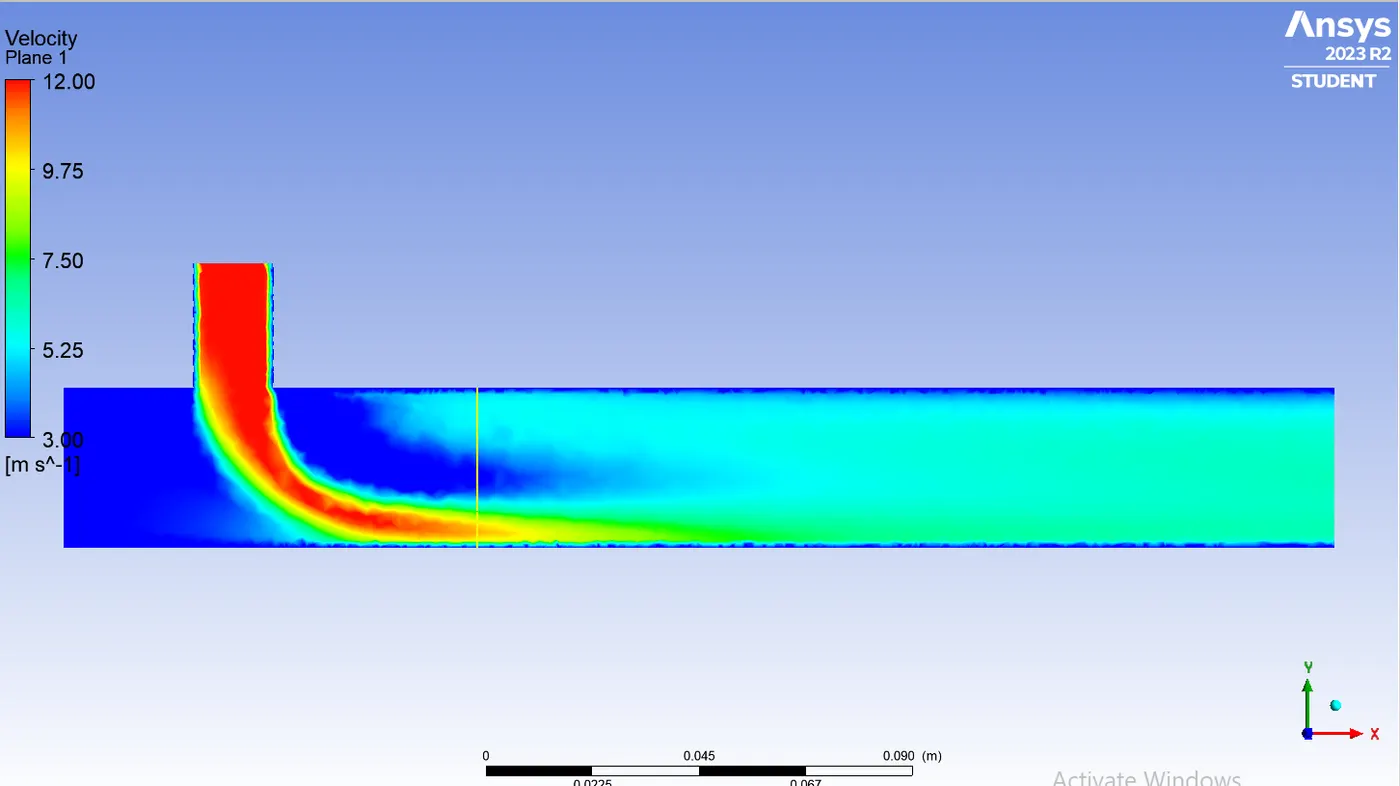
`V_(cold)=6m/s`
`T_(mixture) =((m_(hot)*T_(hot))+(m_(cold)*T_(cold)))/((m_(hot)+m_(cold)))`
Analytical Solution of Temp at outlet of mixture air
`T_(mixture) = 30.219
- Residual scale
- Average Temp
- Temp Contour Plot at MR=2 Temp Contour Plot at MR=4
- Velocity Contour MR=2 Velocity Contour MR=4
| Pipe Type | Momentum Ratio (MR) | Nodes | Elements | Iteratio | Temp at Outlet |
| Short Tee | 2 | 21457 | 106587 | 150 | 30.29 |
| Short Tee | 4 | 21457 | 106587 | 180 | 27.57 |
| Long Tee | 2 | 28407 | 140811 | 150 | 30.36 |
| Long Tee | 4 | 28407 | 140811 | 150 | 27.49 |
- Conclusion
- From above table we conclude For better result in mixing which is better use longer pipe
- Temp drop along the length of the pipe which is drop in the more pipe.
- I will be observe when the no nodes/element increase then not change in steady state temp at Outlet the grid independancy will achieve.
- The momentum ratio will be affected at the final output result temp.