Week 1- Mixing Tee
Aim:
To created two versions of the mixing tee. One of them is longer than the other. To set up steady-state simulations to compare the mixing effectiveness when hot inlet temperature is 360C & the Cold inlet is at 190C.
Governing equation:
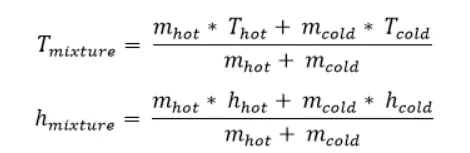
Objective:
To created two versions of the mixing tee and also set up a steady-state simulations to compare the mixing effectiveness when hot inlet temperature is 360C & the Cold inlet is at 190C. with the two cases as shown in below
Case 1
- Short mixing tee with a hot inlet velocity of 3m/s.
- Momentum ratio of 2, 4.
Case 2
- Long mixing tee with a hot inlet velocity of 3m/s.
- Momentum ratio of 2, 4.
Where momentum ratio is nothing but
Momentum ratio = velocity at cold inlet / velocity at hot inlet
Body of content:
To perform the analysis first we have to load the geometry in Ansys workbench 19.2 in fluent analysis as shown in below figure all the analysis is done and, in this report, we will discuss step wise how we perform analysis and geometry cleaning.
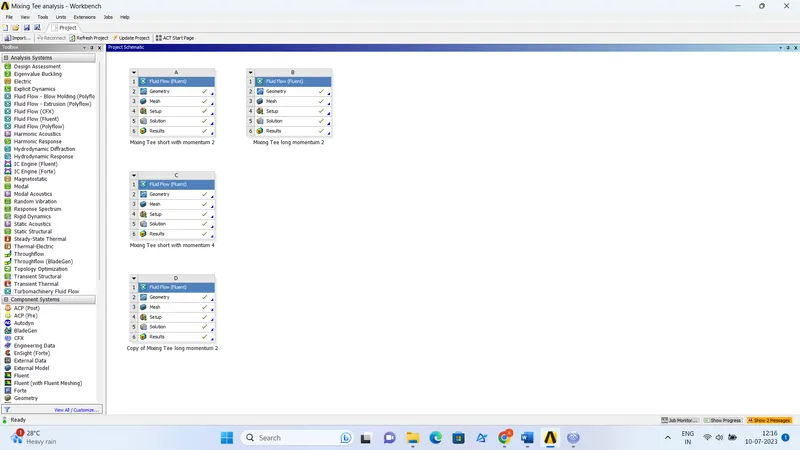
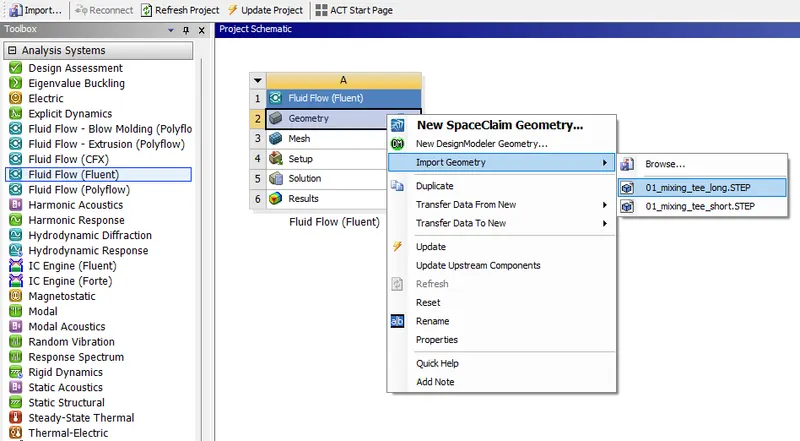
At first, we load our geometry in Ansys fluent as shown in below figure.
Now we were going to open spaceclaim and perform the geometry cleaning as shown below, as we required only the internal volume of mixing Tee, we will surprise all other parts for physics.
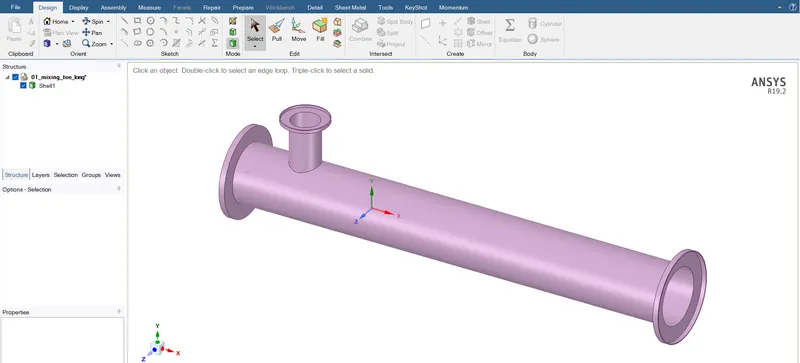
With the help of volume extraction option in prepare we were able to extract the volume from the cylinder as shown in below figure
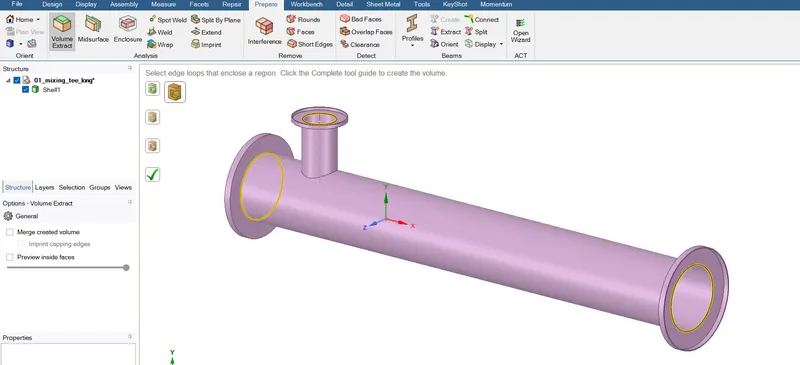
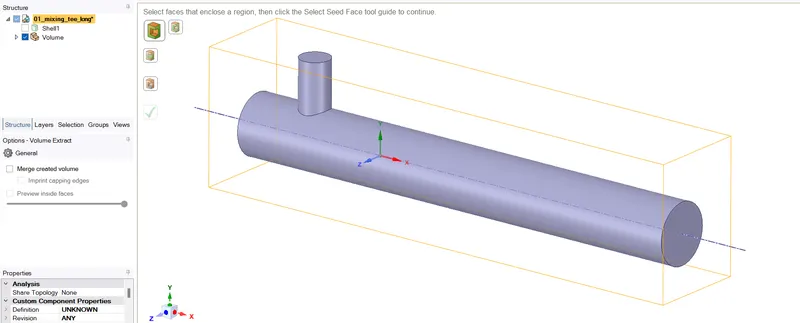
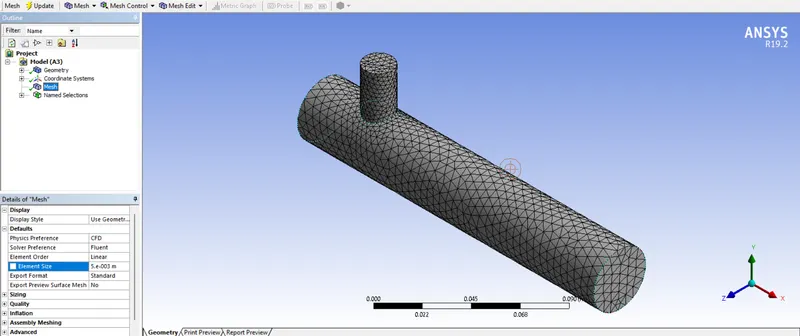
Now our next step is to give name selection and meshing for the mixing tee. As shown in below figure we go to mesh in our fluent module and from there we first perform mesh of element size 0.005, so that it captures the overall geometry for analysis.
Now after that we given the named selection for the inlet and outlet of the air. As shown in below figure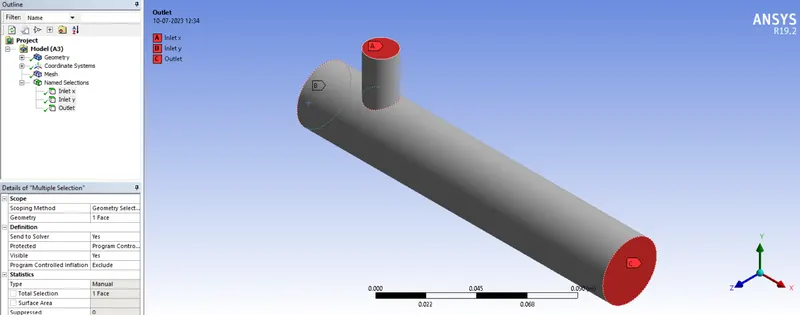
This procedure is same for both mixing tee short and mixing tee long. Now after meshing our next focus is on setup for the boundary condition and to solve the mixing tee.
Here we have given two cases, in cases one of short tee the velocity of cold inlet is unknown but the momentum ratio is given i.e., 2 and 4.
So according to equation we know.
Momentum ratio = velocity at cold inlet / velocity at hot inlet
So therefore,
Velocity at cold inlet = momentum ratio x velocity at hot inlet
As they provided the velocity of hot inlet which is 3 m/s common in long tee and short tee.
Therefore,
Velocity of cold inlet during momentum ratio is 2
Velocity at cold inlet = 2 x 3
Velocity at cold inlet = 6 m/s
Velocity of cold inlet during momentum ratio is 4
Velocity at cold inlet = 4 x 3
Velocity at cold inlet = 12 m/s.
And also the material is same in both of the mixture i.e. air as shown in below figure.
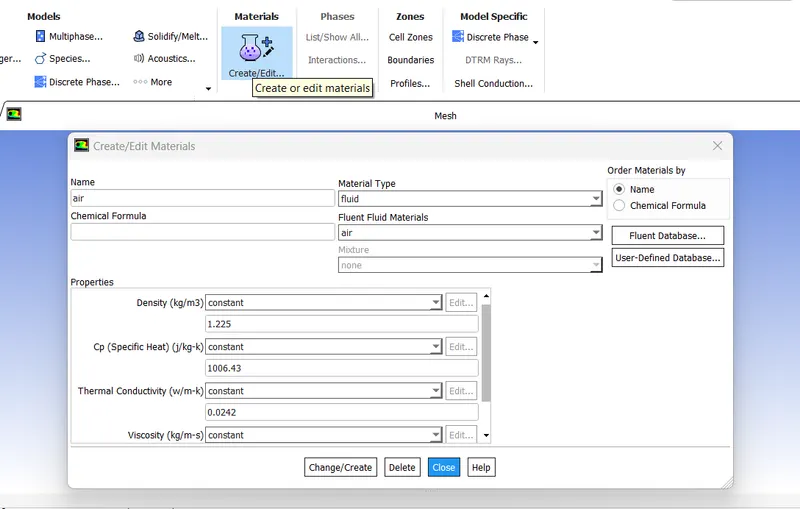
Now proceeding to the given cases mention in objective we were going to perform fluent flow analysis on mixing tee.
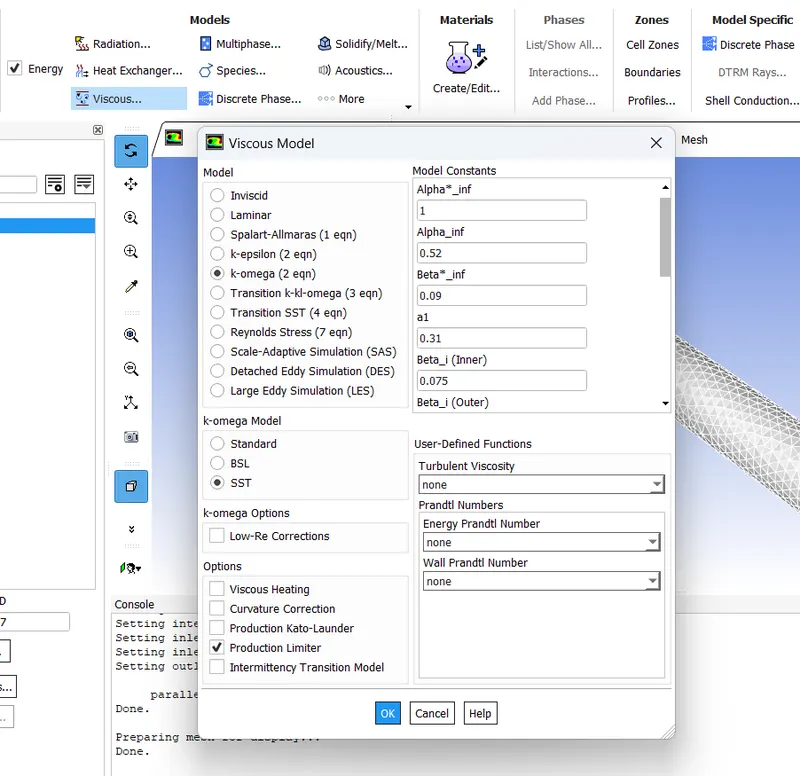
And for the energy equation we are going to use the k-omega equation with sst for the better performance as shown in below figure.
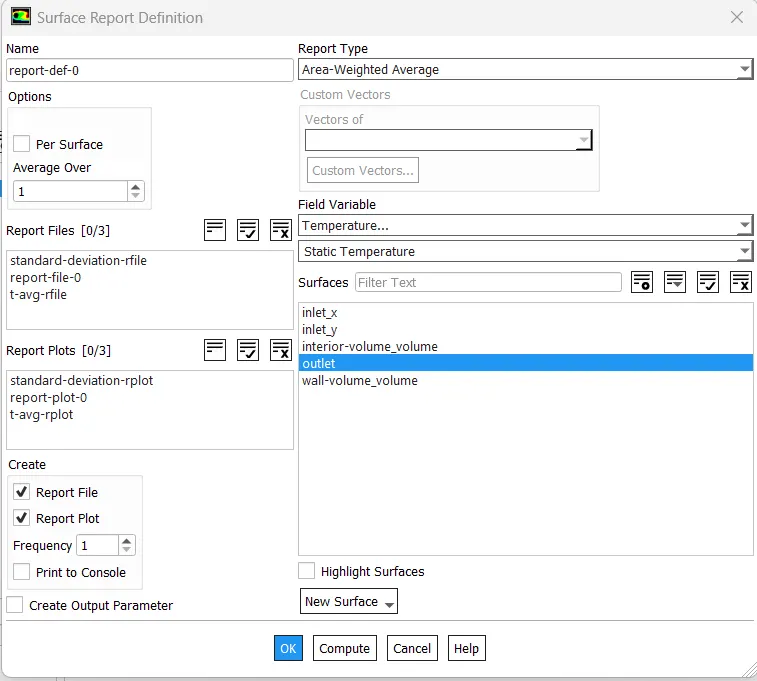
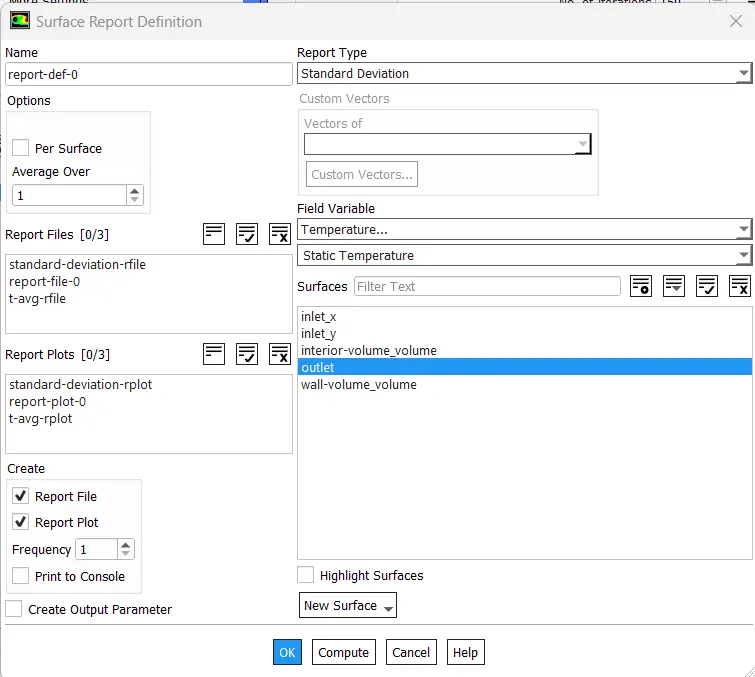
As per the objective for the temperature at outlet we provide a definition of average temperature through area weightage option in definition and standard deviation as shown in below figure.

Were we set that we want average temperature report and plot and standard deviation report and plot as shown in below figure.
Case 1
Taking short mixing Tee when velocity of cold inlet is 6m/s
Below is the detail figure of mixing tee in setup mode of Ansys 19.2 workbench.
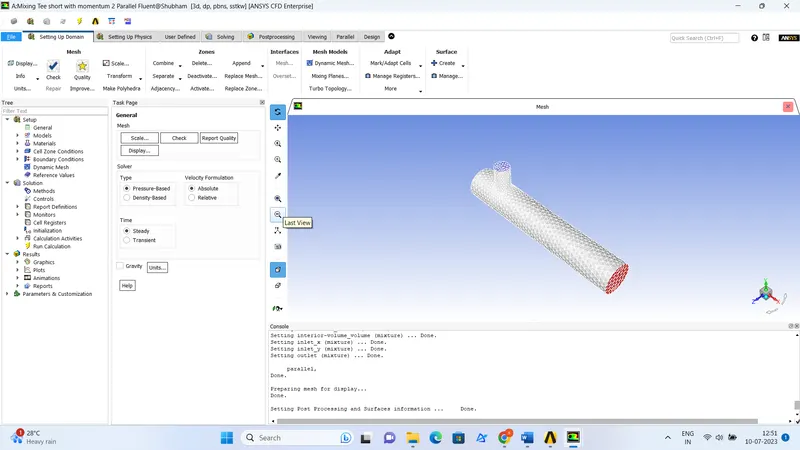
To mention the parameter, we go to the setting up physics and find boundaries, as shown in below figure.
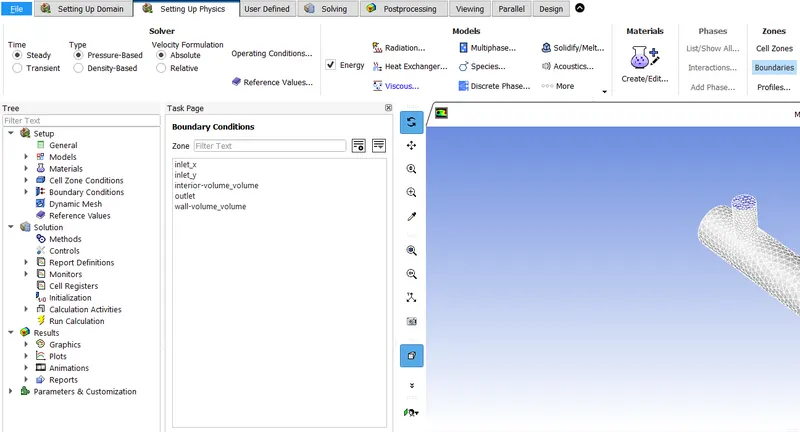
In which we give the inlet x the velocity of 3 m/s and temperature of 36 degree Celsius, as shown in below figure respectively.
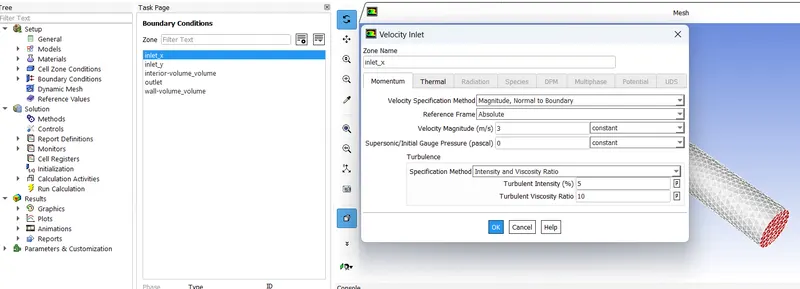
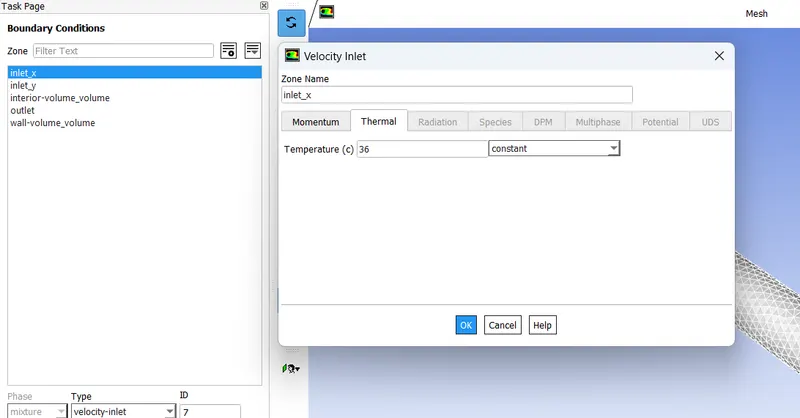
Now the next step is to provide the boundary condition of cold inlet which is 6m/s velocity and 19-degree Celsius temperature as shown in below figure respectively.
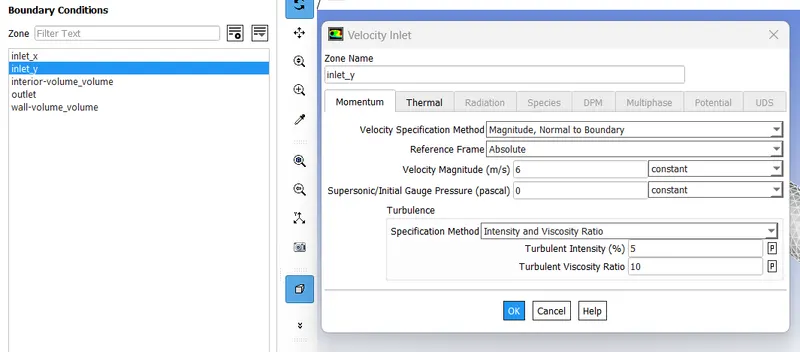
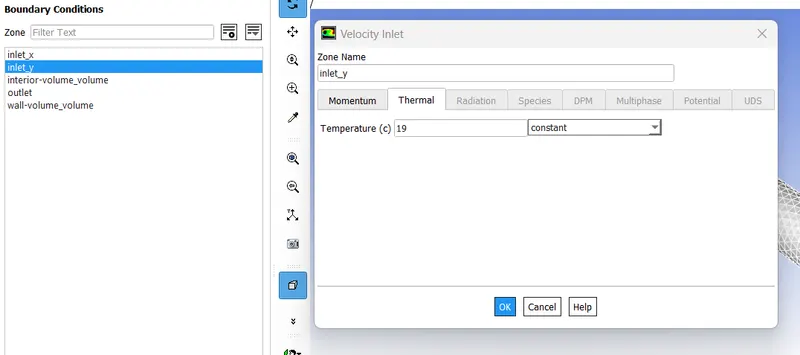
Now we are going to hybrid initialize the equation as shown in below figure.
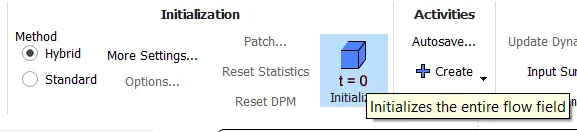
Which gives the initial value as shown in below figure.
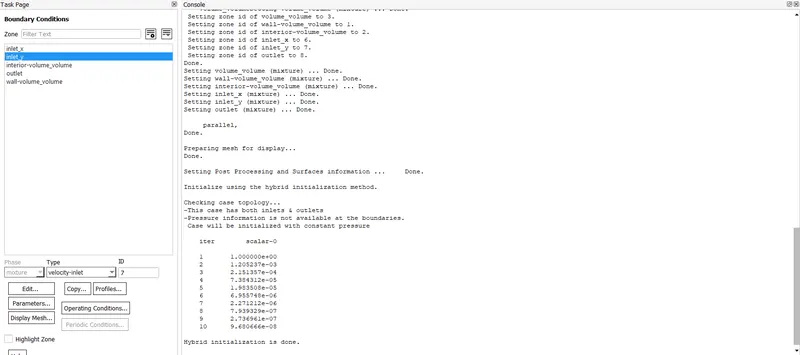
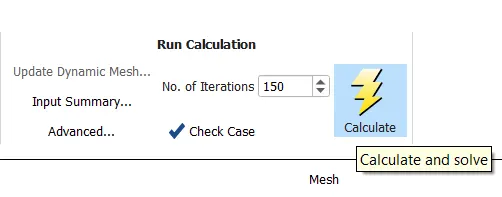
Now we are going to calculate the solution for 150 iterations as shown in below figure.
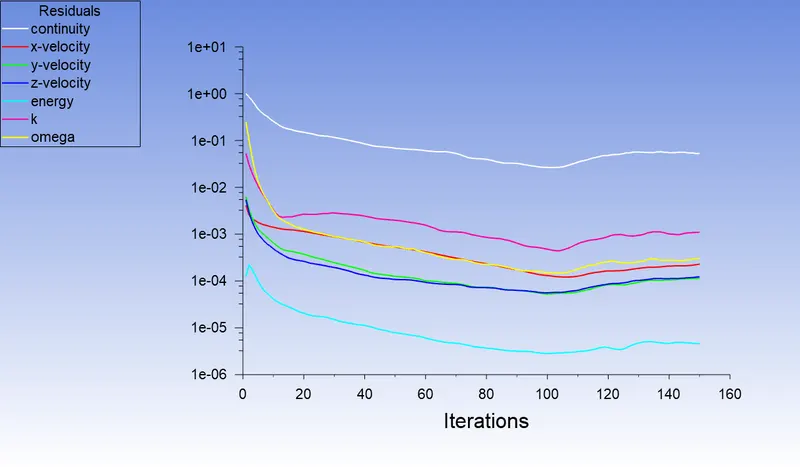
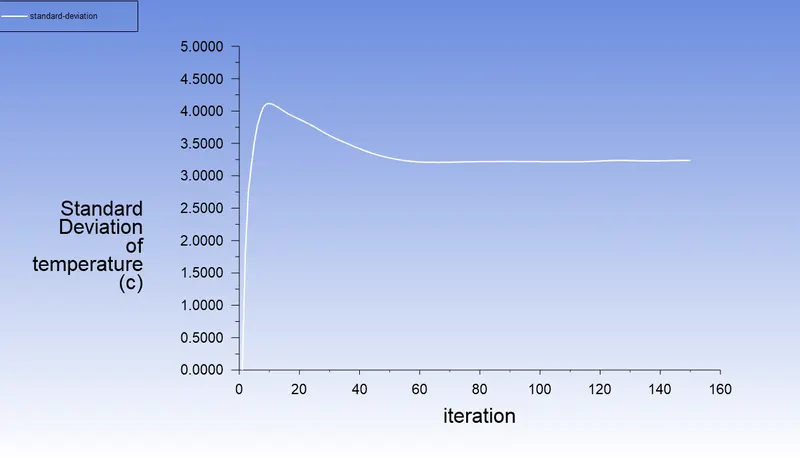
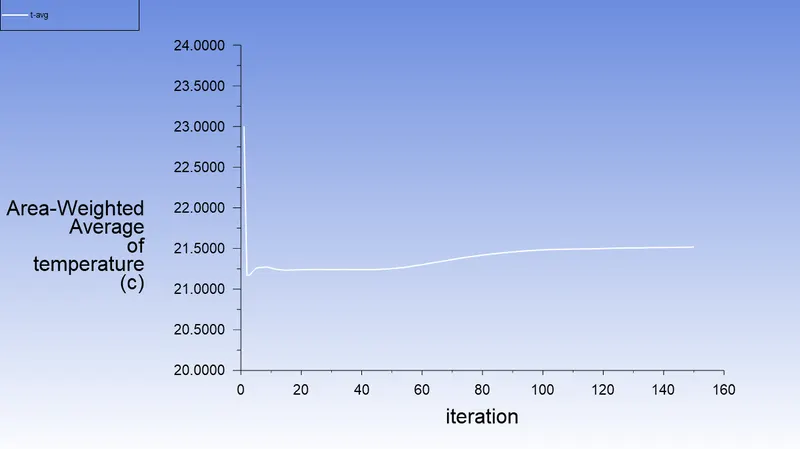
Which gives residual plot, standard deviation and t-average as shown in below figure.
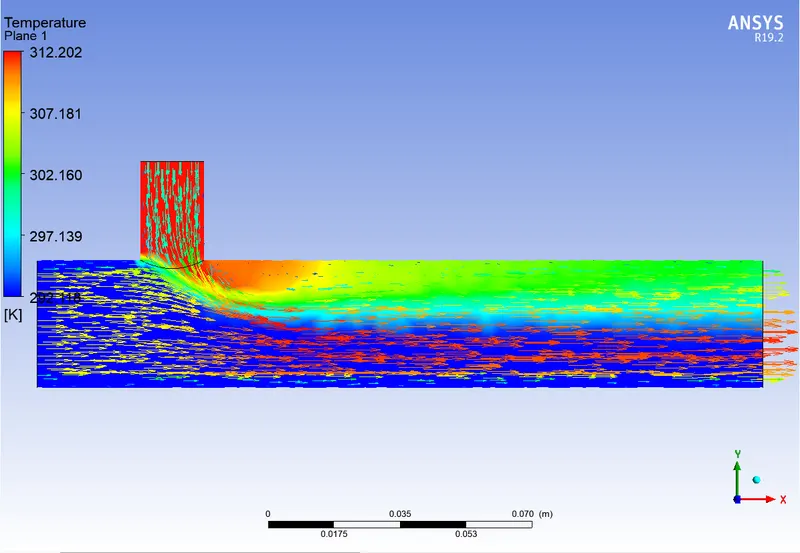
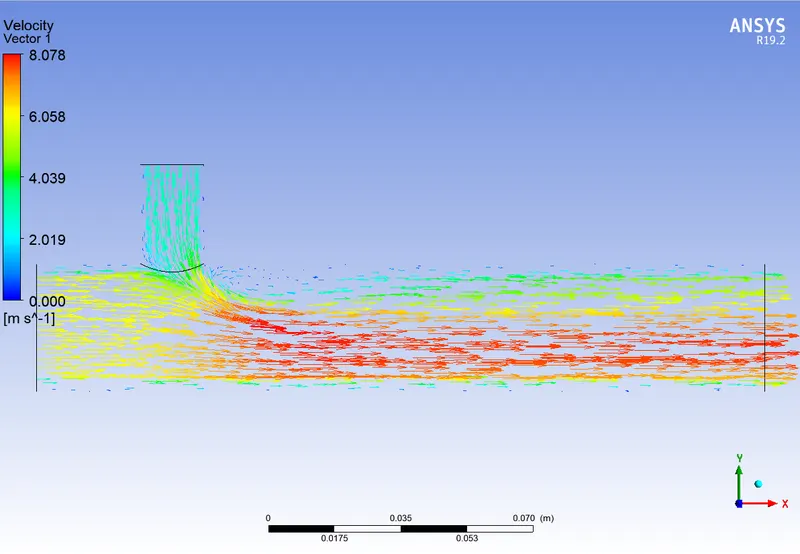
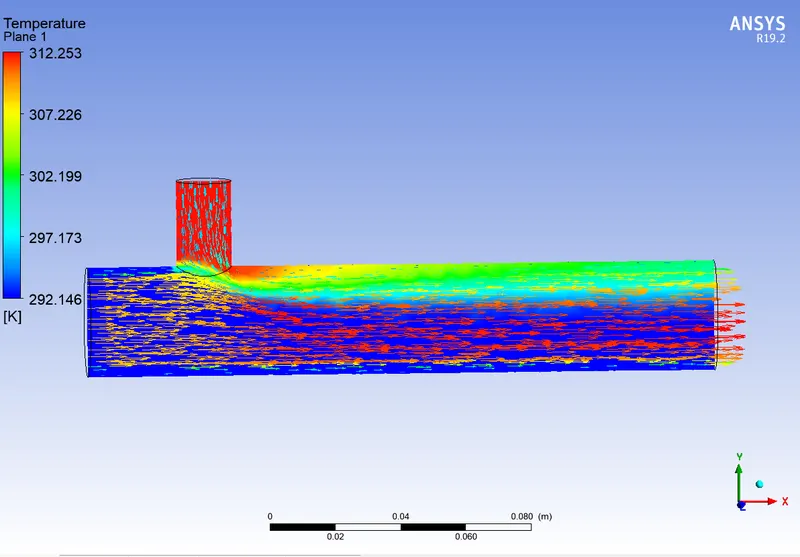
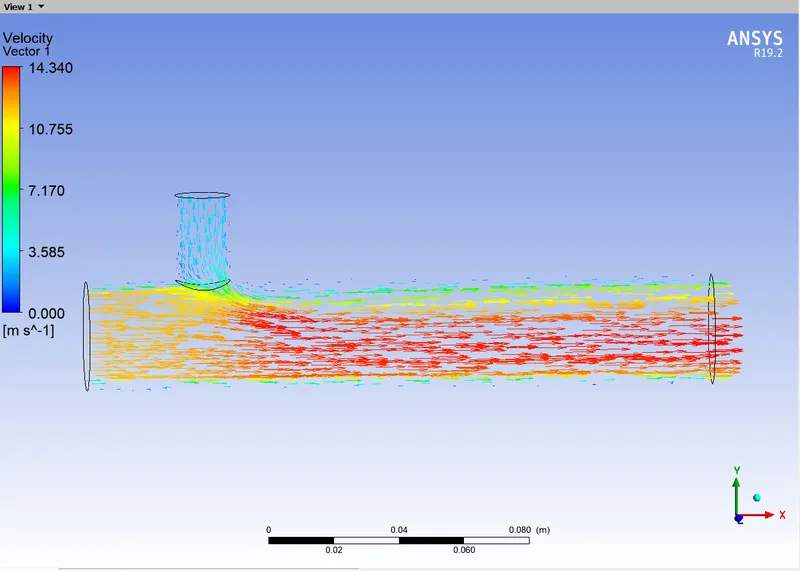
Now after getting the solution, it’s time to generate result from the above solution as shown in below figure, there is a temperature and velocity result in figure respectively.
Now,
Taking short mixing Tee when velocity of cold inlet is 12m/s
Below is the detail figure of mixing tee in setup mode of Ansys 19.2 workbench
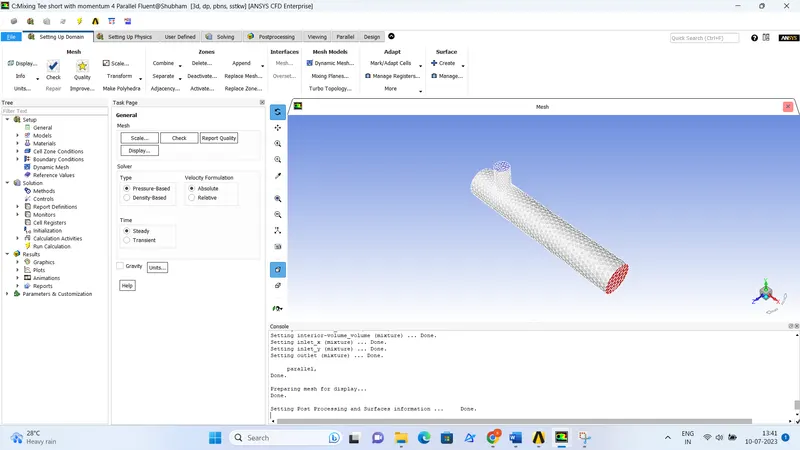
To mention the parameter, we go to the setting up physics and find boundaries, as shown in below figure.
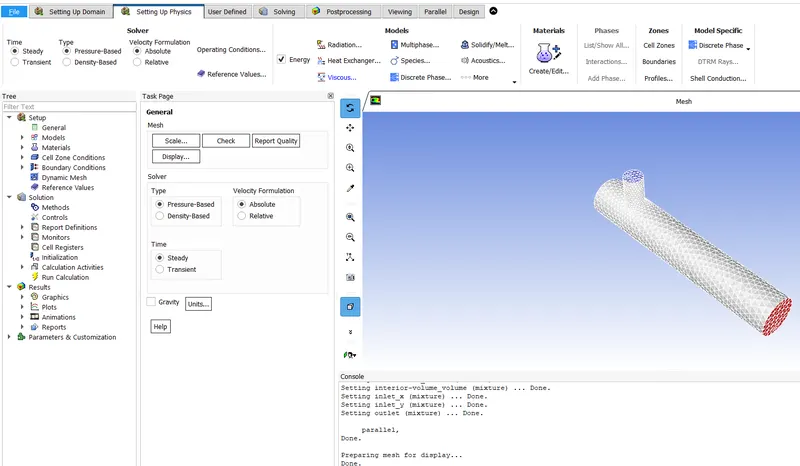
In which we give the inlet x the velocity of 3 m/s and temperature of 36 degree Celsius, as shown in below figure respectively.
Now the next step is to provide the boundary condition of cold inlet which is 12m/s velocity and 19-degree Celsius temperature as shown in below figure respectively.
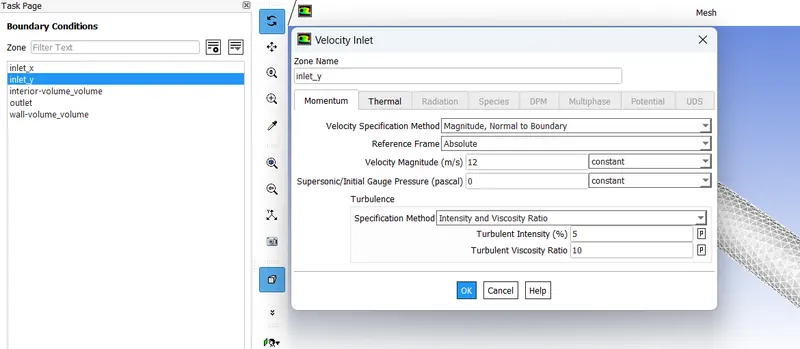
Now we are going to hybrid initialize the equation as shown in below figure.
Which gives the initial value as shown in below figure.
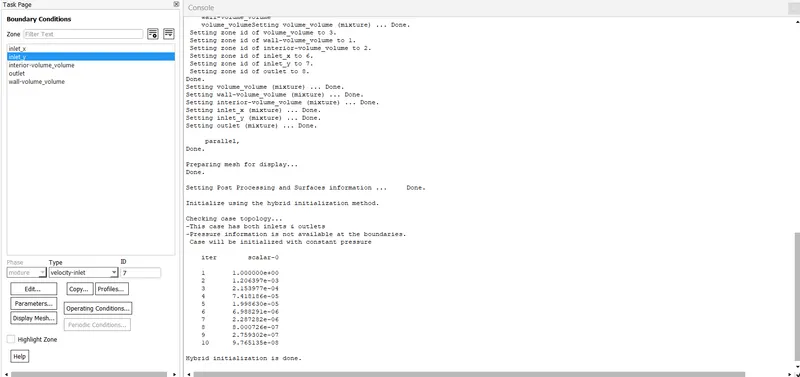
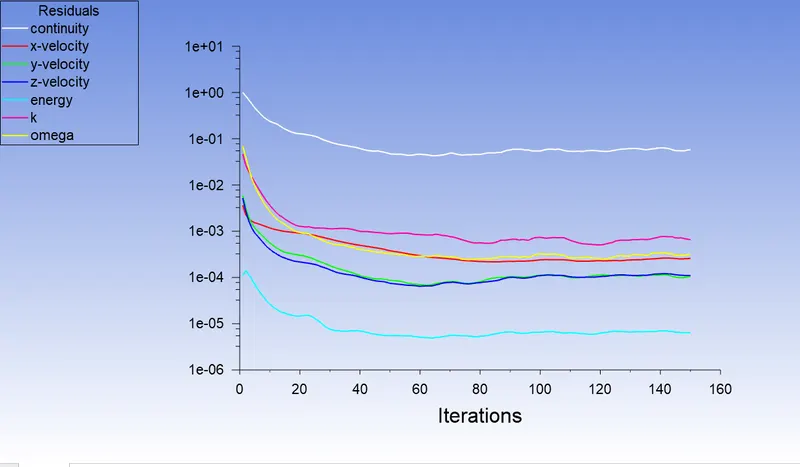
Now we are going to calculate the solution for 150 iterations as shown in below figure.
Which gives residual plot, standard deviation and t-average as shown in below figure.
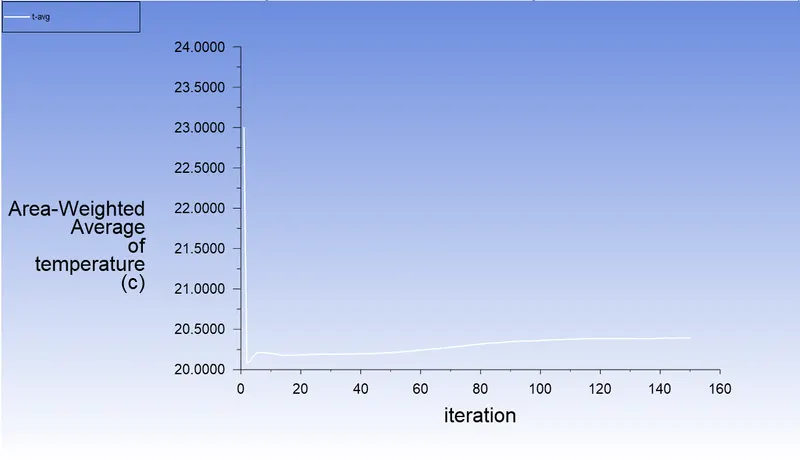
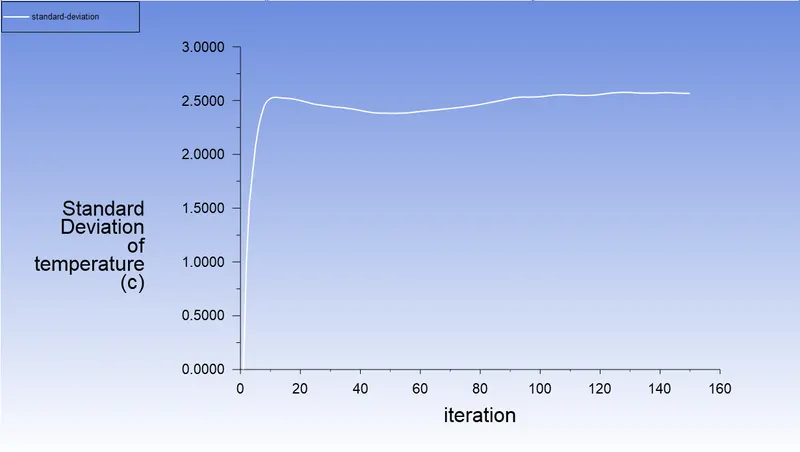
Now after getting the solution, it’s time to generate result from the above solution as shown in below figure, there is a temperature and velocity result in figure respectively.
Case 2
Taking long mixing Tee when velocity of cold inlet is 6m/s
Below is the detail figure of mixing tee in setup mode of Ansys 19.2 workbench.
To mention the parameter, we go to the setting up physics and find boundaries, as shown in below figure.
In which we give the inlet x the velocity of 3 m/s and temperature of 36 degree Celsius, as shown in below figure respectively.
Now the next step is to provide the boundary condition of cold inlet which is 6m/s velocity and 19-degree Celsius temperature as shown in below figure respectively.
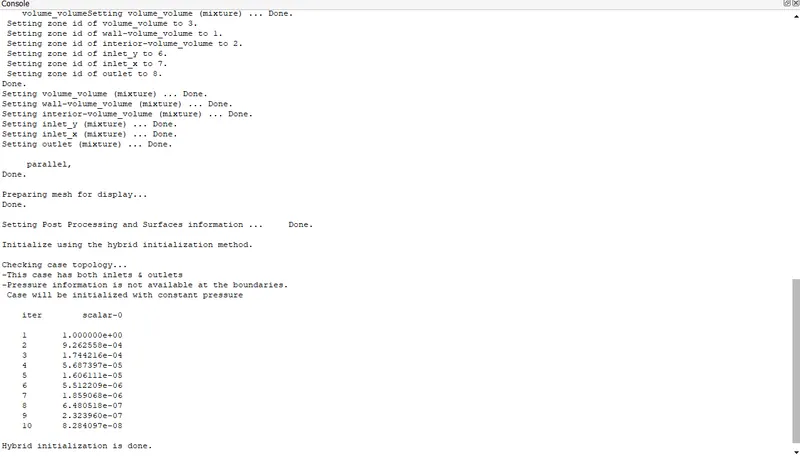
Now we are going to hybrid initialize the equation as shown in below figure.
Which gives the initial value as shown in below figure.
Now we are going to calculate the solution for 150 iterations as shown in below figure.
Which gives residual plot, standard deviation and t-average as shown in below figure.
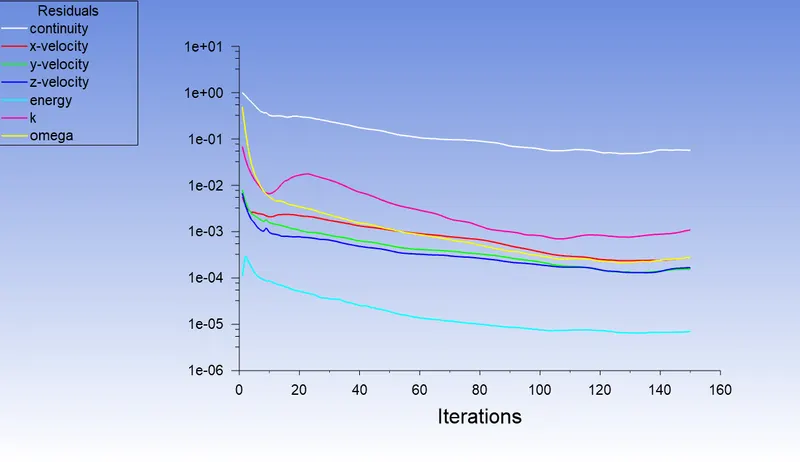
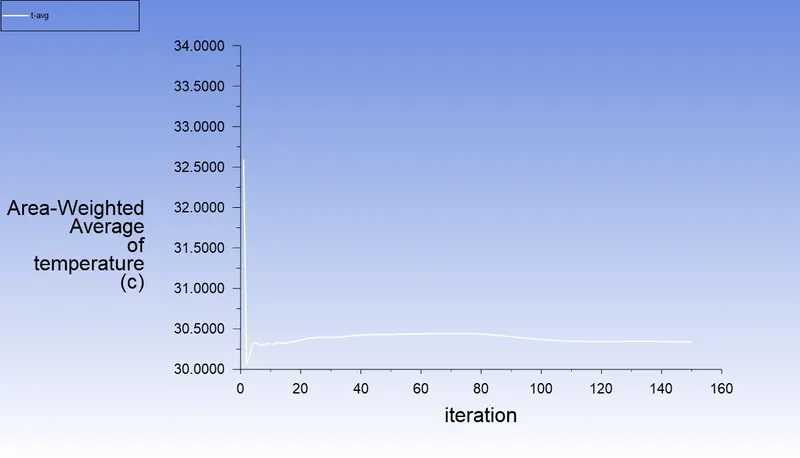
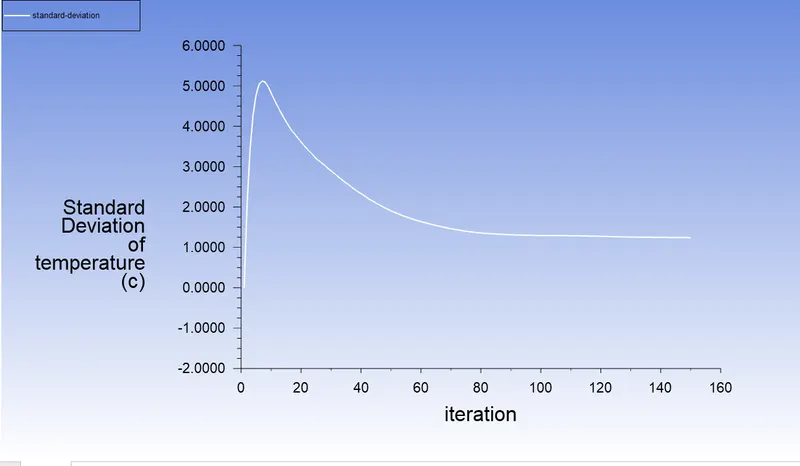
Now after getting the solution, it’s time to generate result from the above solution as shown in below figure, there is a temperature and velocity result in figure respectively.
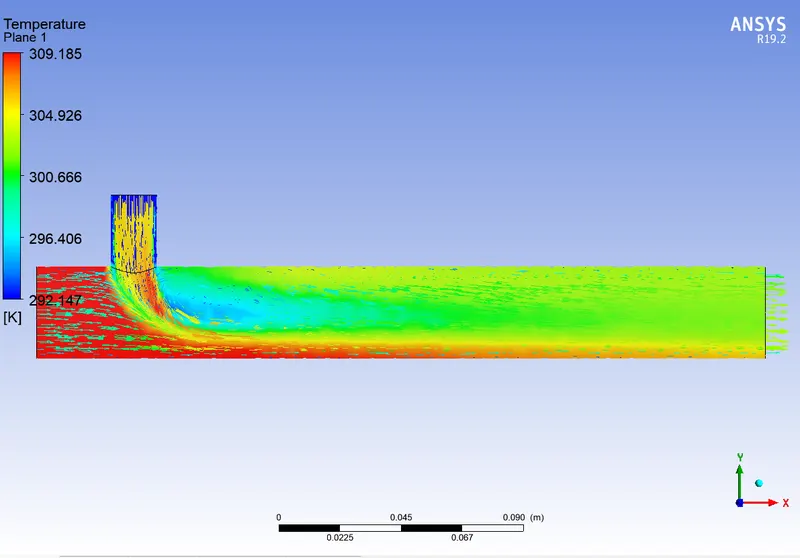
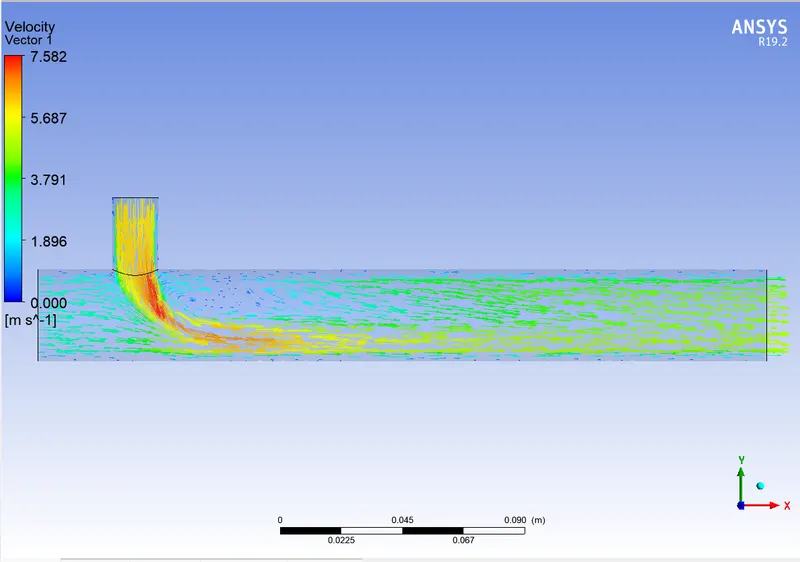
Now,
Taking long mixing Tee when velocity of cold inlet is 12m/s
Below is the detail figure of mixing tee in setup mode of Ansys 19.2 workbench
To mention the parameter, we go to the setting up physics and find boundaries, as shown in below figure.
In which we give the inlet x the velocity of 3 m/s and temperature of 36 degree Celsius, as shown in below figure respectively.
Now the next step is to provide the boundary condition of cold inlet which is 12m/s velocity and 19-degree Celsius temperature as shown in below figure respectively.
Now we are going to hybrid initialize the equation as shown in below figure.
Which gives the initial value as shown in below figure.
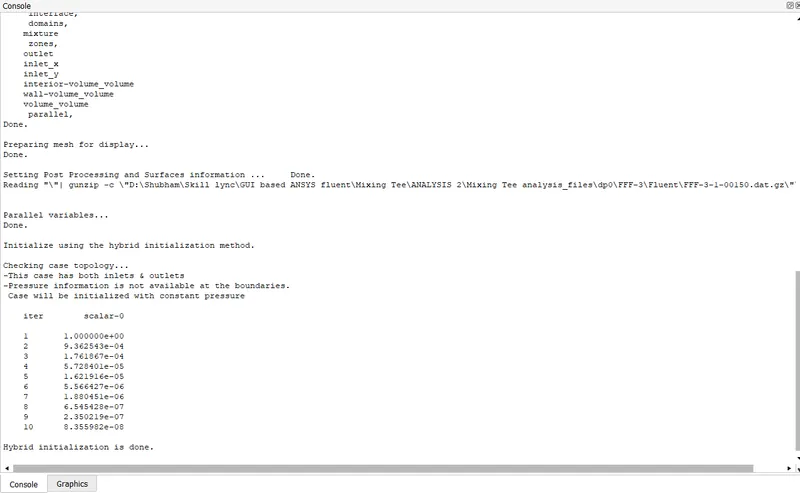
Now we are going to calculate the solution for 150 iterations as shown in below figure.
Which gives residual plot, standard deviation and t-average as shown in below figure.
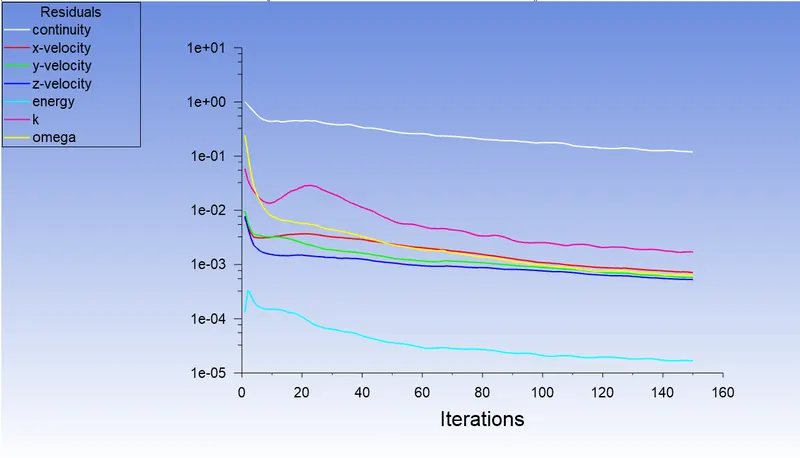
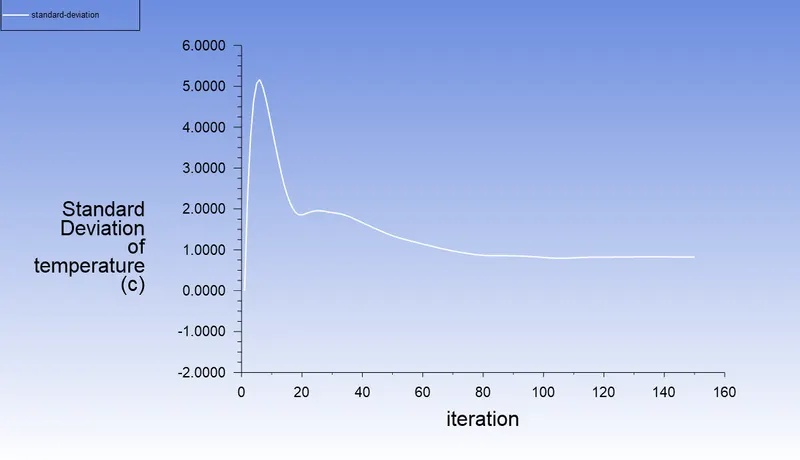
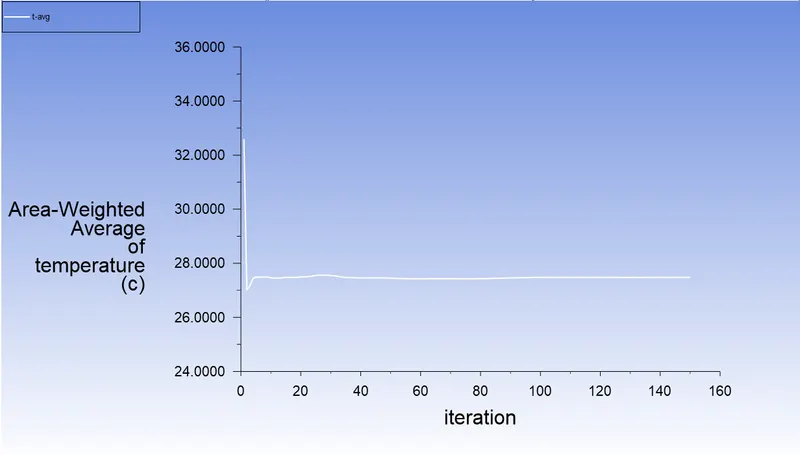
Now after getting the solution, it’s time to generate result from the above solution as shown in below figure, there is a temperature and velocity result in figure respectively.
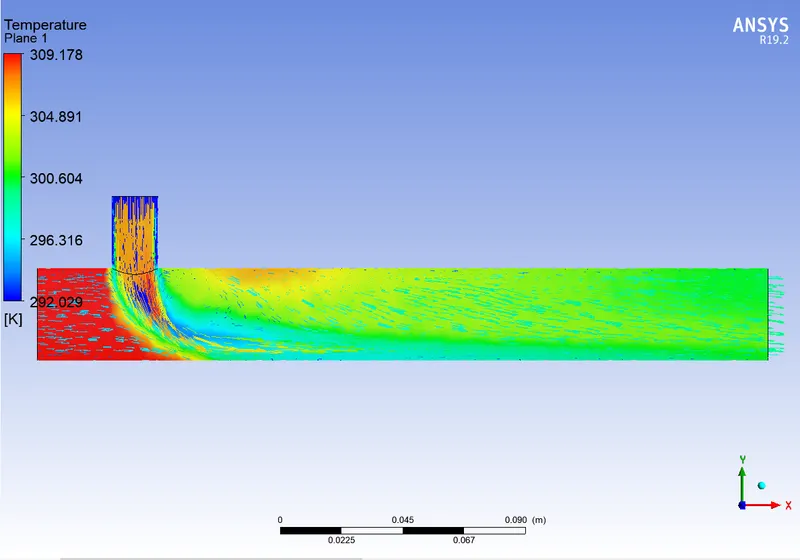
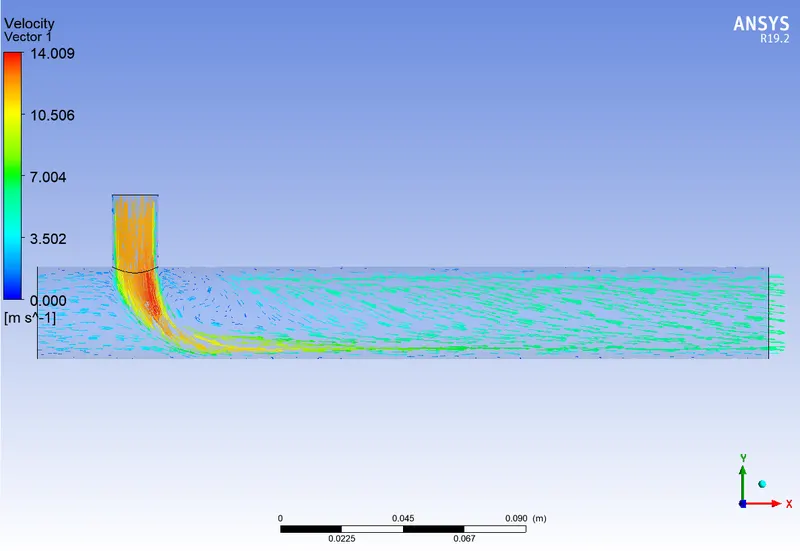
The above is the process to solve the mixing tee in ansys workbench 19.2.
Now as per the objective result,
- Velocity and temperature contour plots planes along and across the pipe.
Below is the contour plane of temperature along the pipe.
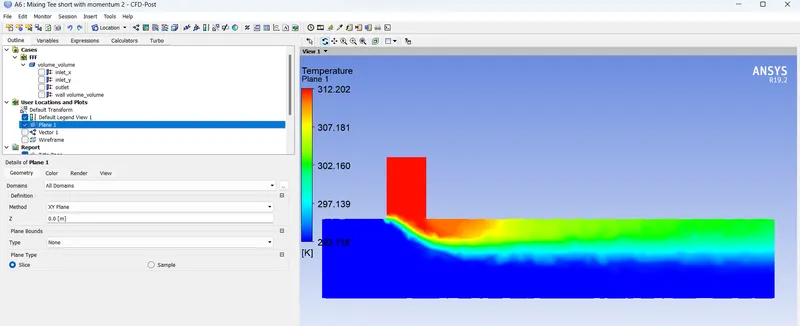
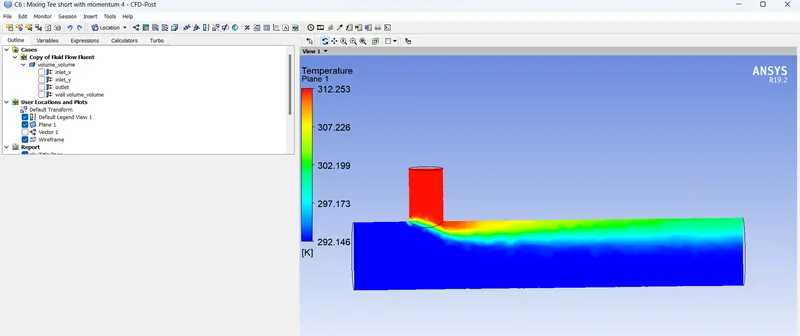
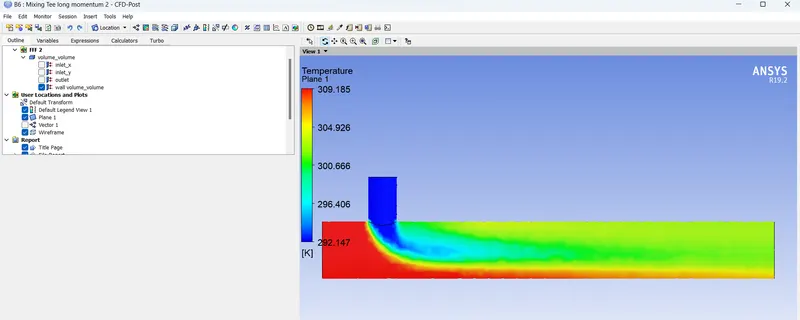
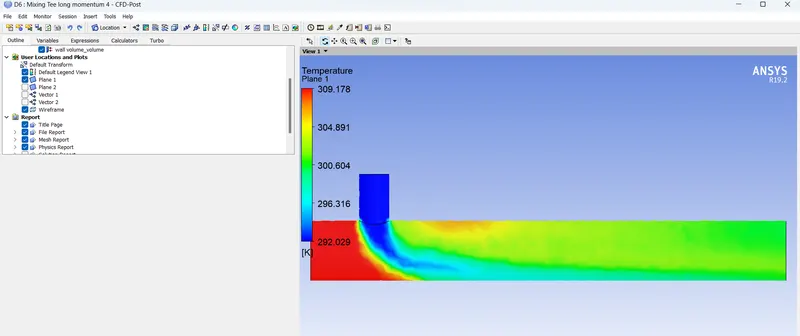
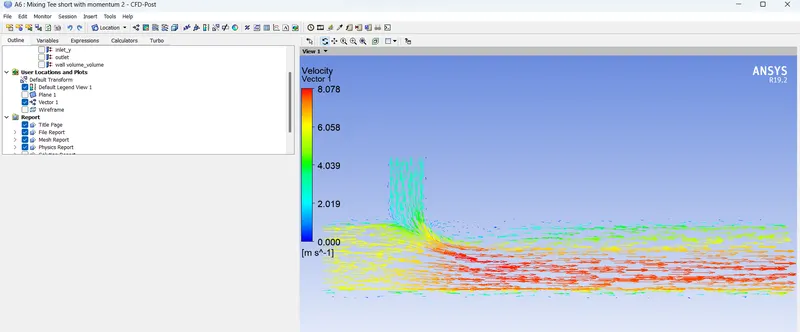
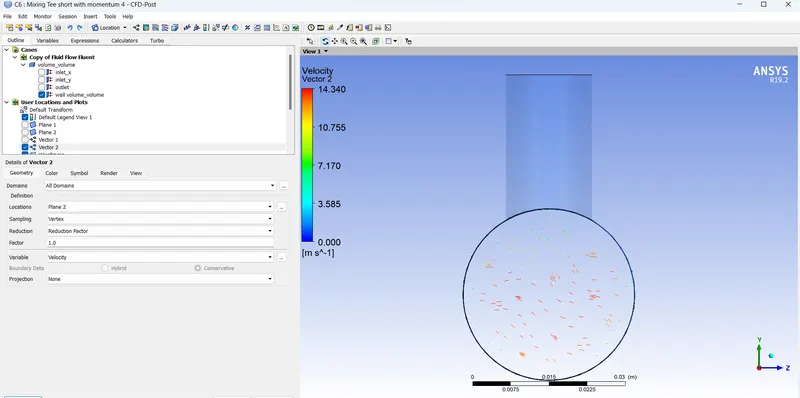
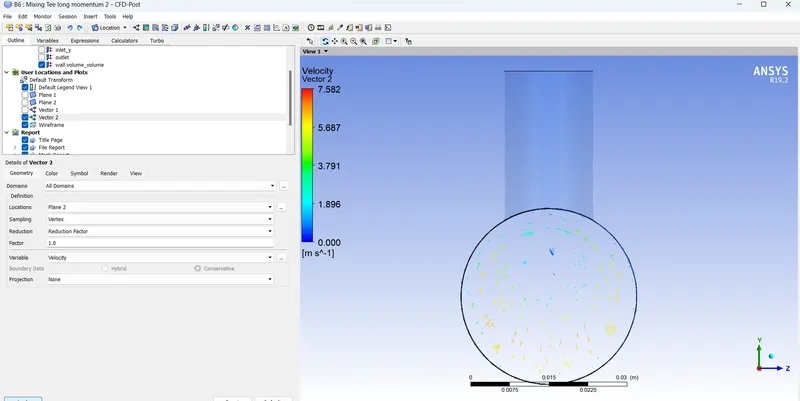
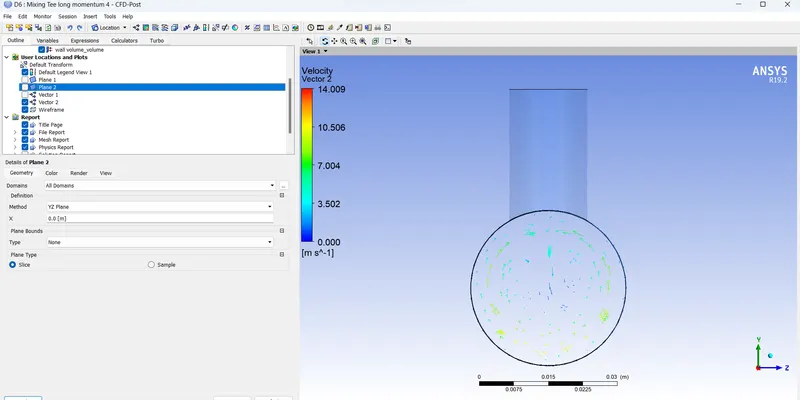
Below is the contour plane of velocity along the pipe.
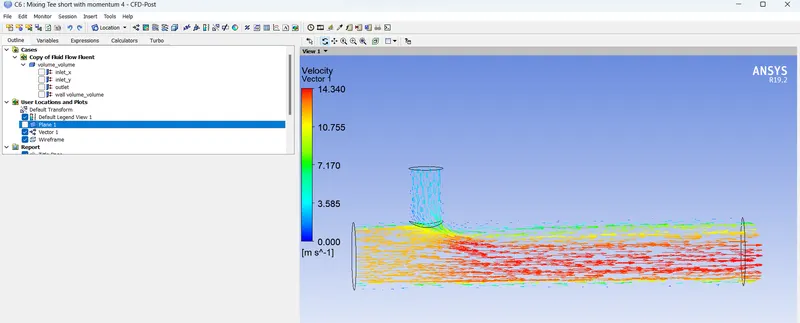
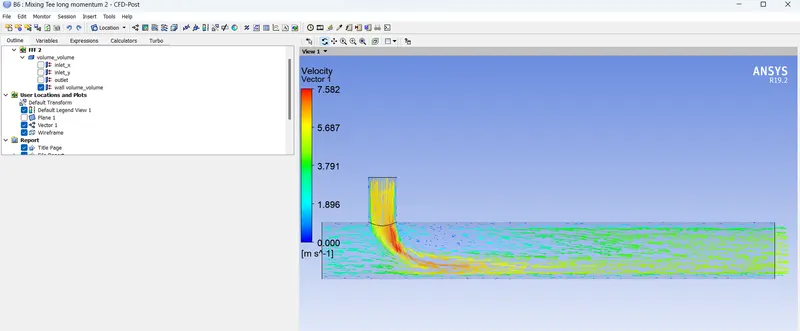
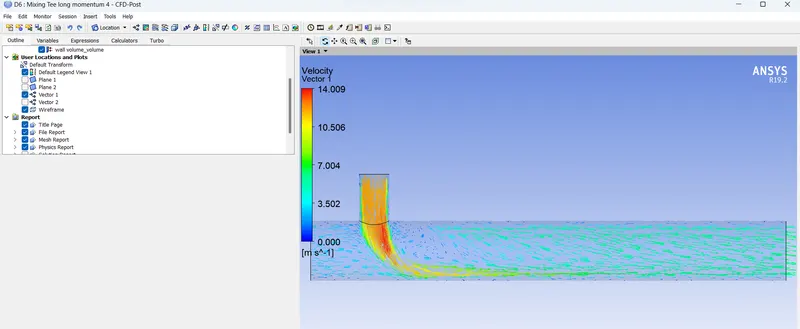
Below is the contour plane of temperature across the pipe.
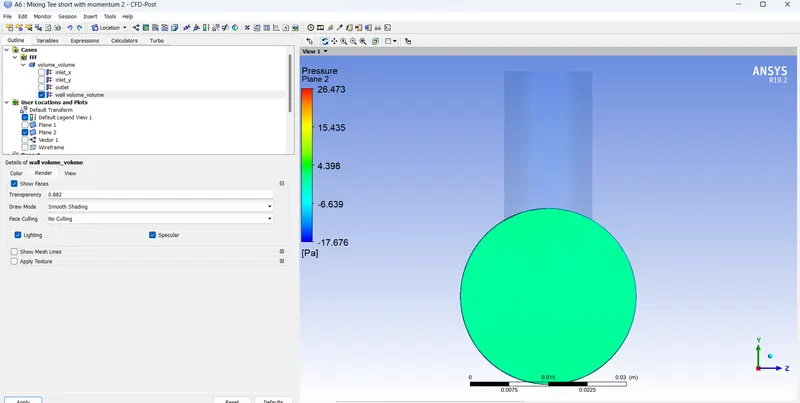
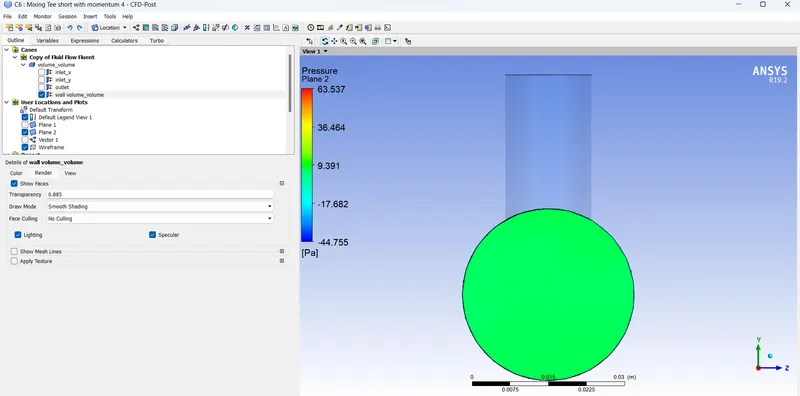
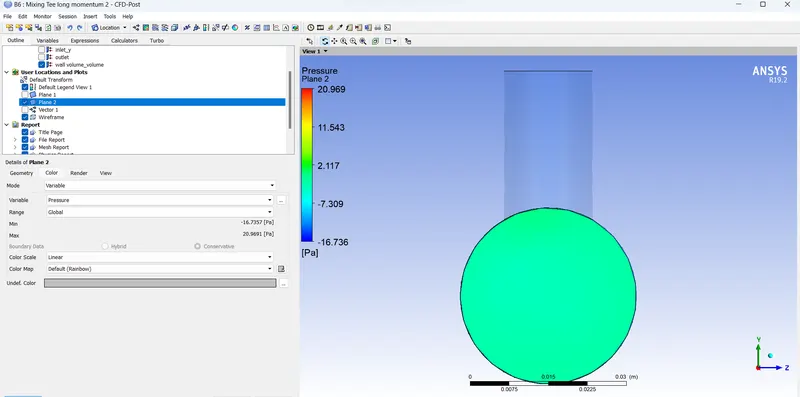
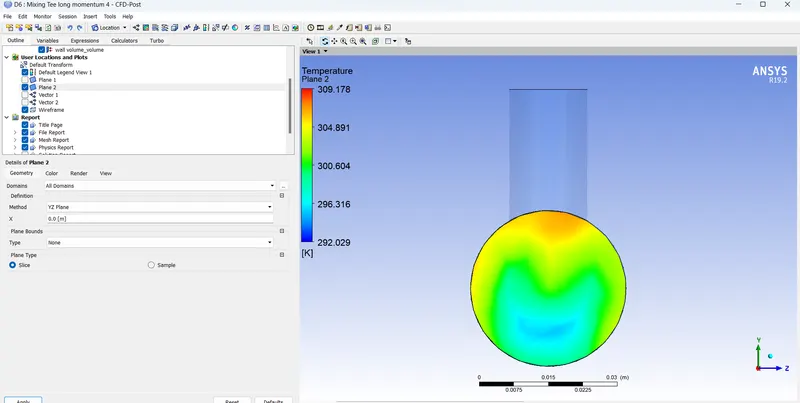
Below is the contour plane of velocity across the pipe
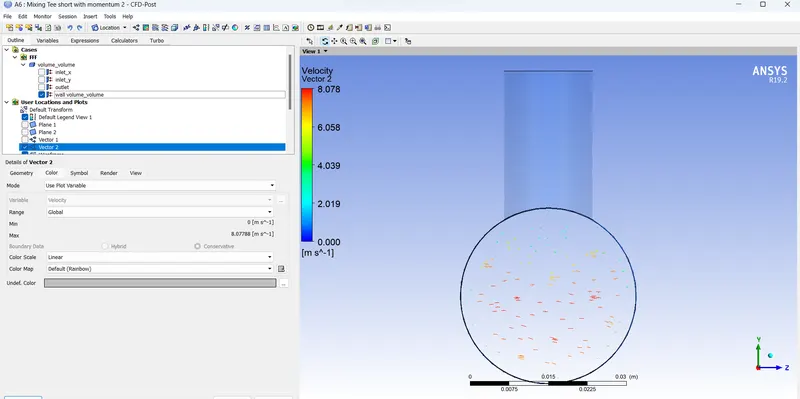
2. Velocity and temperature line plots along and across the length of the pipe.
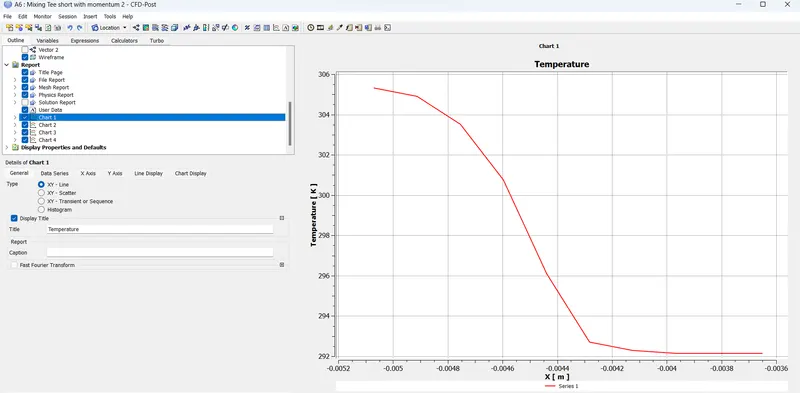
Below is the line plot of temperature along the pipe
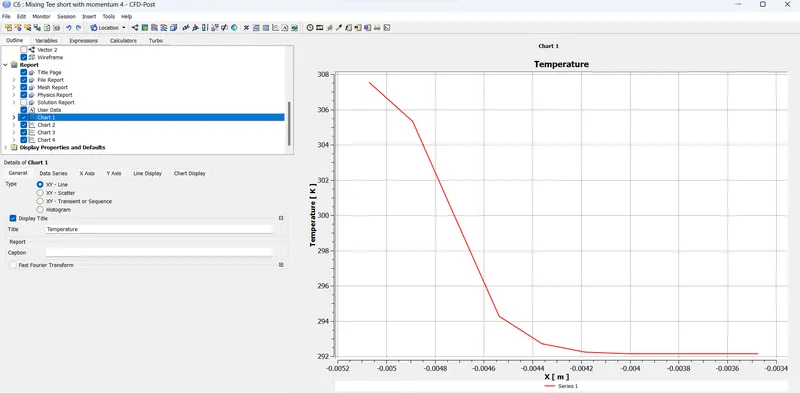
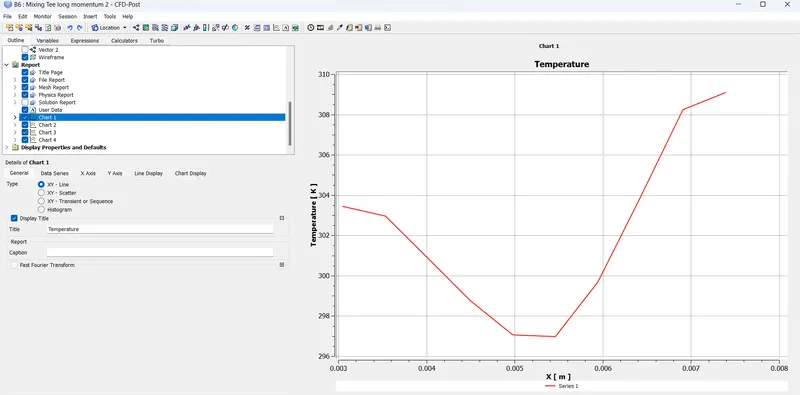
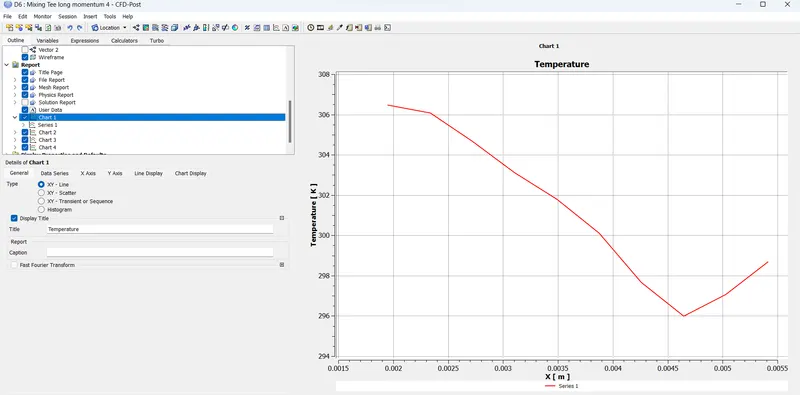
Below is the line plot of velocity along the pipe.
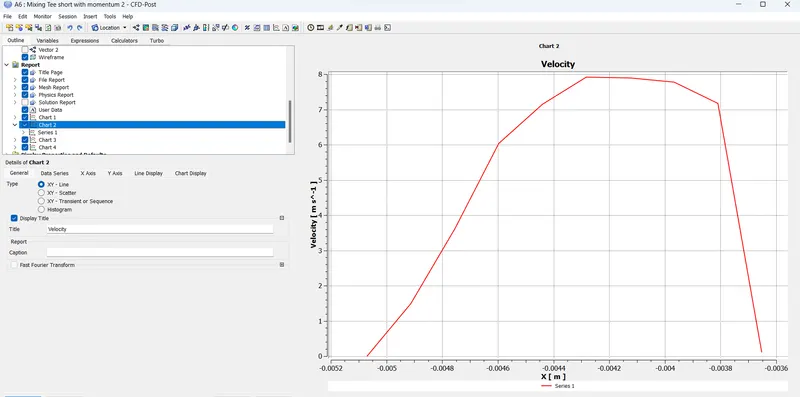
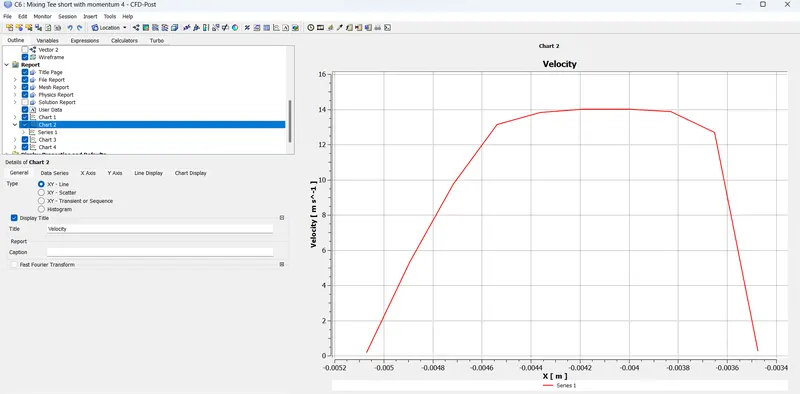
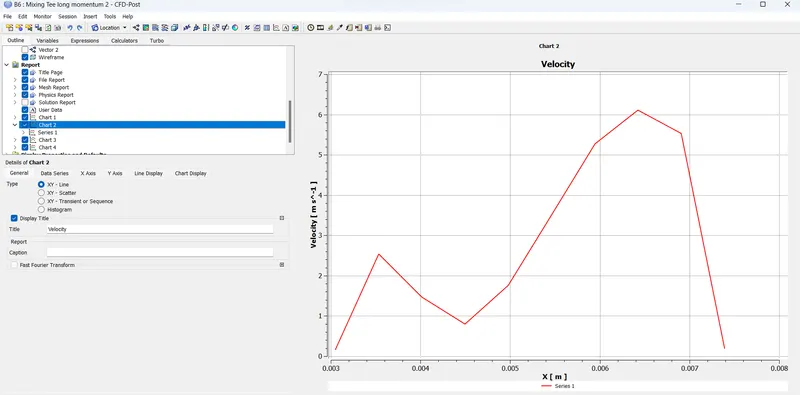
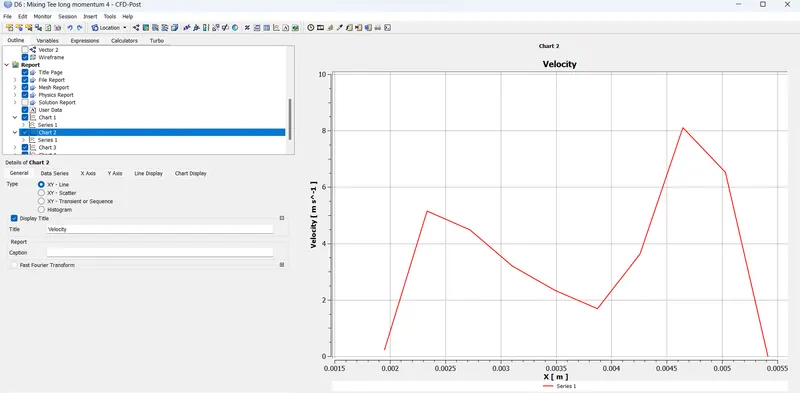
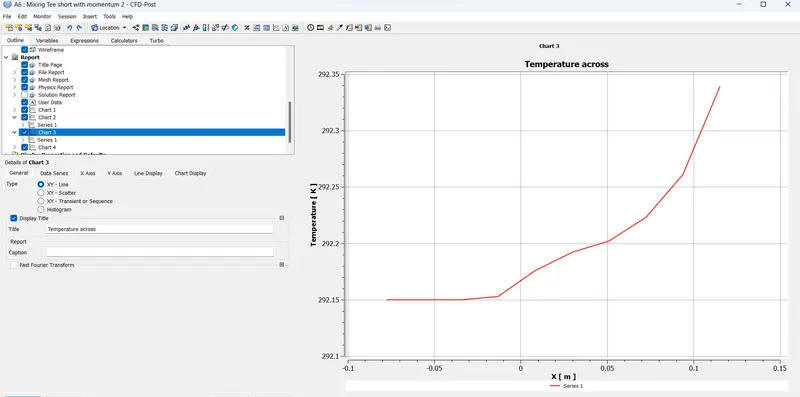
Below is the line plot of temperature across the pipe.
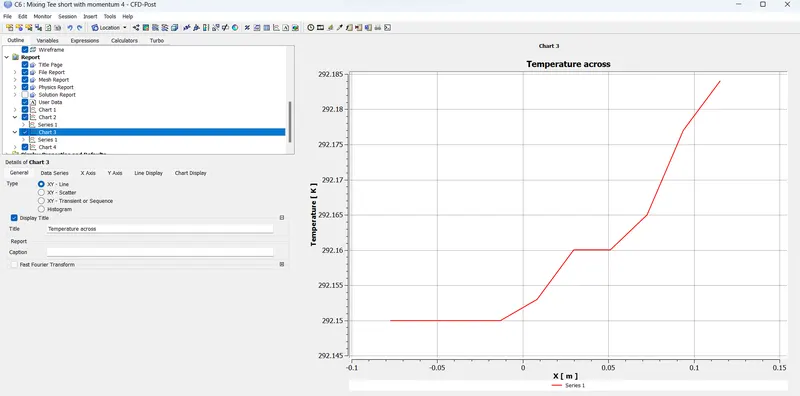
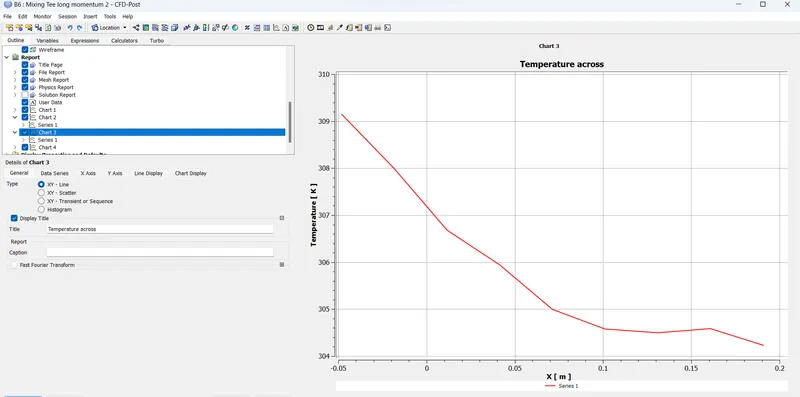
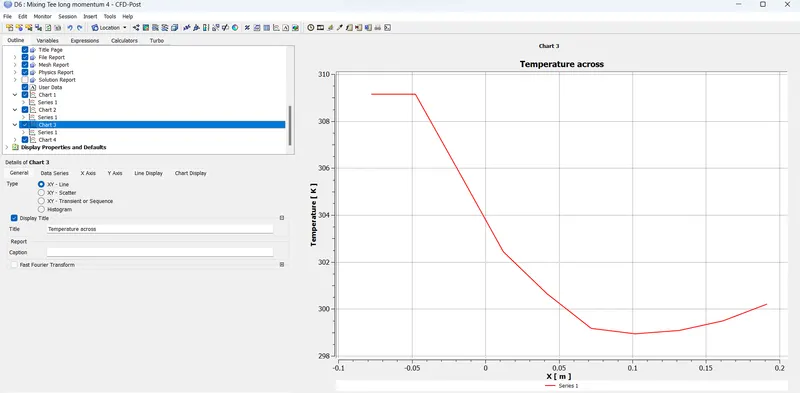
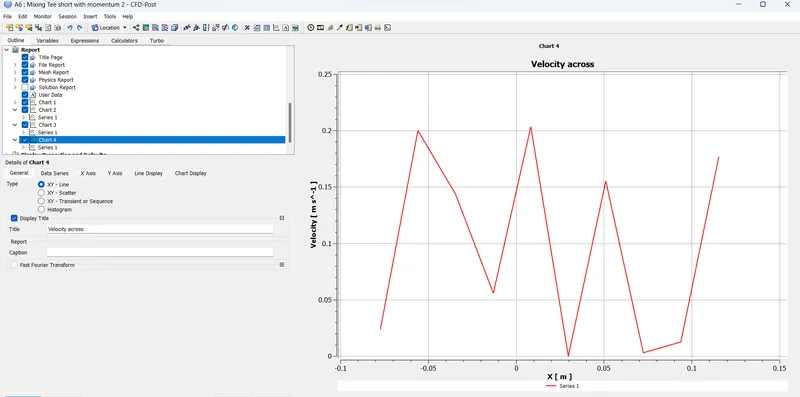
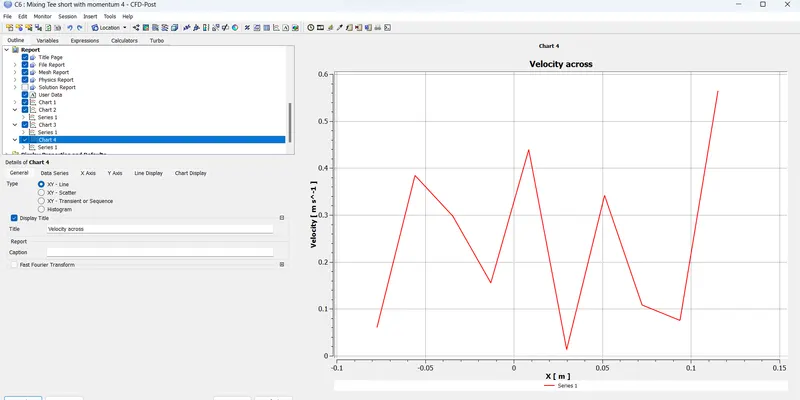
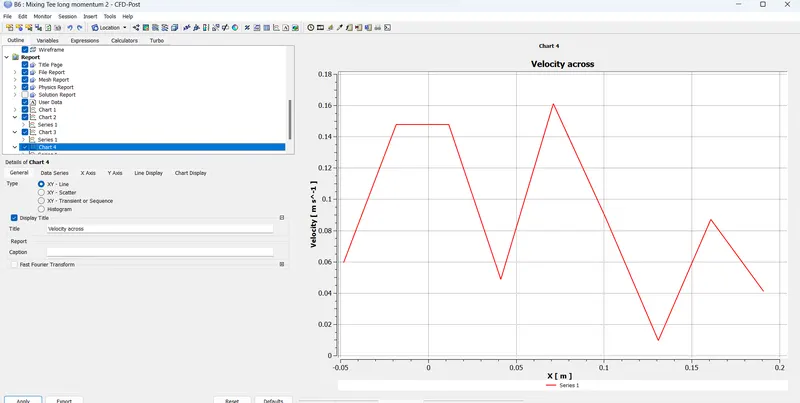
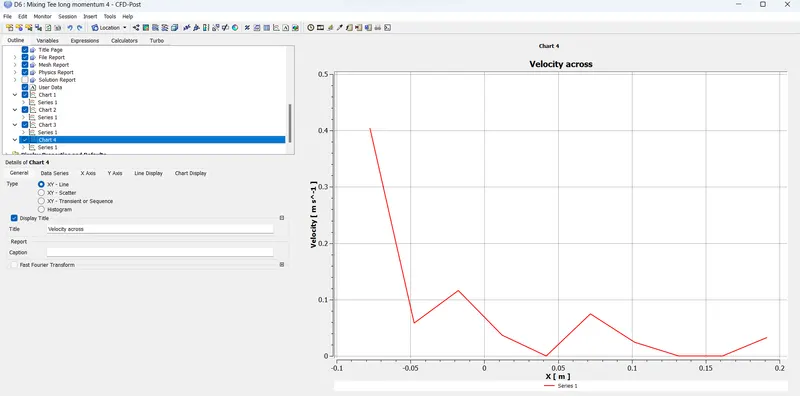
Below is the line plot of velocity across the pipe.
3. Perform Mesh independent study for any one case
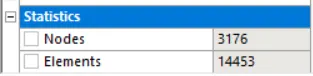
As shown in below figure we have done a mesh independent study on short mixing tee, with element size of 0.005 m.
And below is the quality criteria graph of mesh element quality.
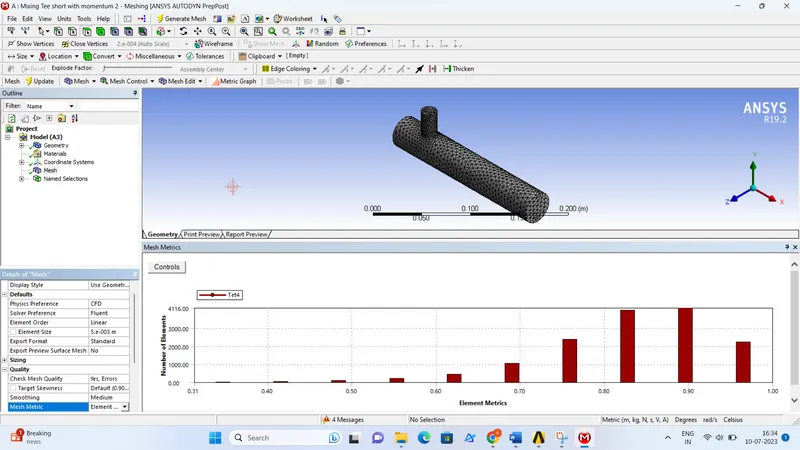
And the number of nodes and element
Conclusion:
Below is the table of the above two cases
|
Cell count |
Average outlet temperature |
Number of iterations for convergence |
|
|
Short Mixing Tee |
14453 |
309.194 k |
150 |
|
Long Mixing Tee |
18180 |
309.185 |
150 |
The flow of mixing tee is performed in Ansys workbench 19.2.
The motive of these analysis is to see the mixing of two different fluid and there temperature and velocity effect on the outlet.