Week 1- Mixing Tee
Mixing Tee Simulation
AIM
The following project is about the flow simulation through a Tee pipe which will have a hot and a cold entrance and, the flow at the outlet will throw the mixing of those both flows combined. Tee pipe is a configuration pipe used for acconditioning the enviromental temperature in different places; this one only uses the mixing of a hot fluid along with a cold fluid, that together should make the air zone would be adequate to the user requirements.
OBJECTIVES
- Use ANSYS fluent software to simulate a flow passing into two different Tee pipe geometries.
- Determine the flow behavior along the pipes and the values of primitive parameters at the outlet of each one.
- Show the flow behavior in each pipe test and conclude the results obtained regarding each type of Tee pipe assessed.
ENGINEERING DEVELOPMENT
In this project will be analyzed two different length of pipes, and also it will be taken two different speed values in order to see how the air velocity affects the inner pipe conditions, the final velocity and temperature result at the outlet of the pipe. Cold inner velocity will depend on the momentum ratio, which will be 2 and 4 respectively in each case and, the initial velocity at the hot inlet section will always be equal to `3 m/s`.
Furthermore, the fluid inside the pipe will be air at standar conditions; the standard conditions of the air are:
`rho=1.225 (Kg)/m^3`
`vartheta=1.57*10^-5 (m^2)/s`
`T_o=25°C`
`P_o=101325 Pa`
All the simulations will be performed using steady function. Short mixing tee will firstly be analyzed using k-Epsilon and k-Omega in order to determine the best turbulence equation to carry out the long mixing tee pipe analysis.
SHORT MIXING TEE PIPE
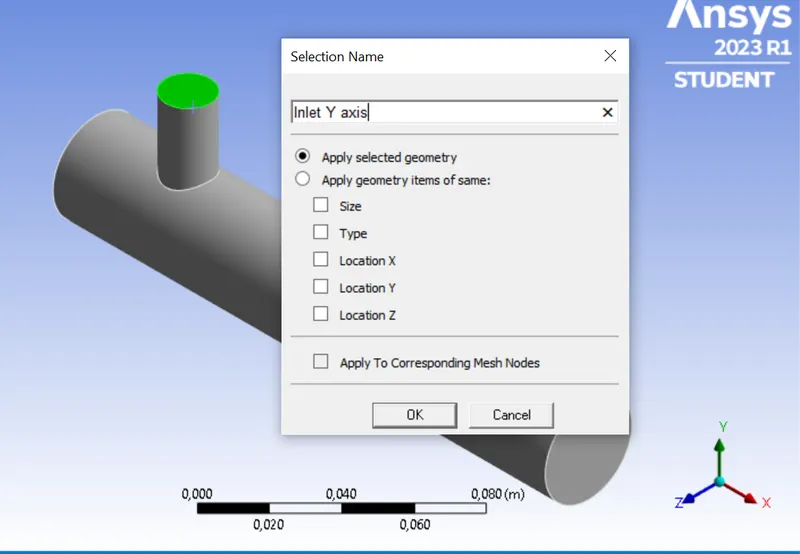
The geometry is provided by the project challenge statements, so, this one is only refined and it is taken to the mesh field. To get the mesh over the geometry, each geometry face is named depending on the function which will accomplish in the simulation. The next image shows how the upper face is named using the function "Create named selection".
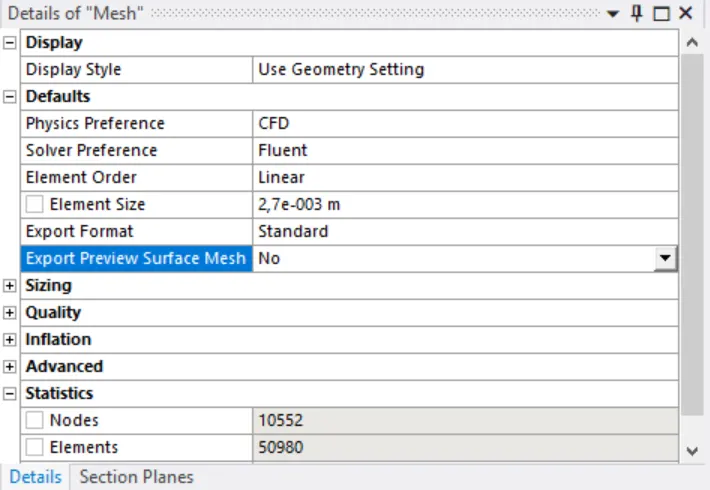
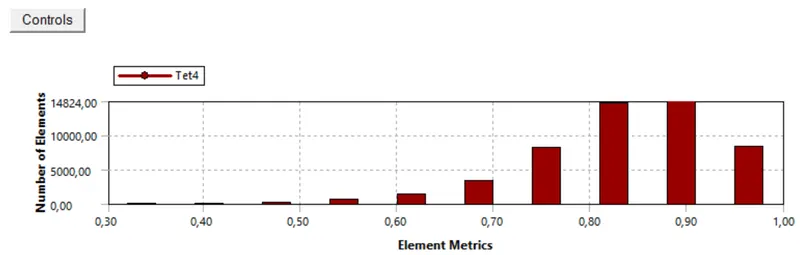
Once all the faces have been named, the next step is to update and refine the mesh, taking into account ANSYS student just allows to generate a mesh with 52100 elements maximum. The mesh features will be:
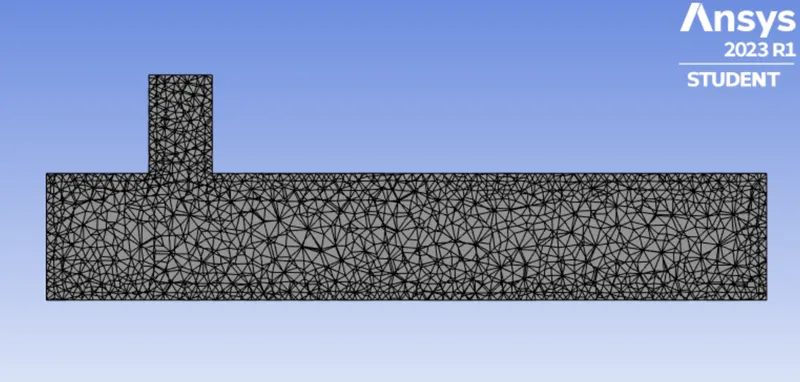
The results expected will be the results at the center surface from the geometry, where the mesh will look like:
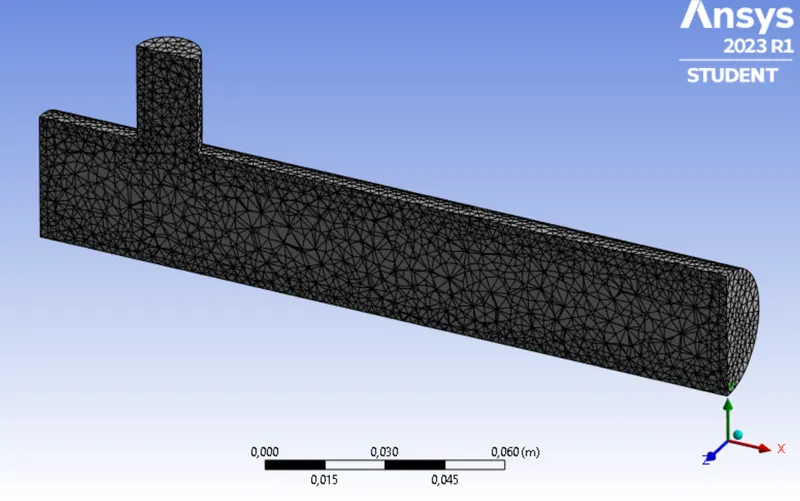
The mesh on the longitudinal surface is an unstructured mesh, due to the cylindrical geometry that the pipe has.
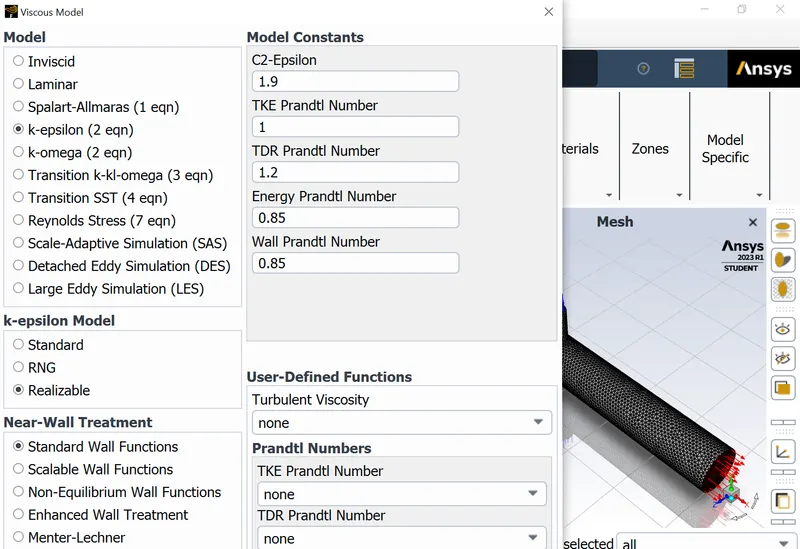
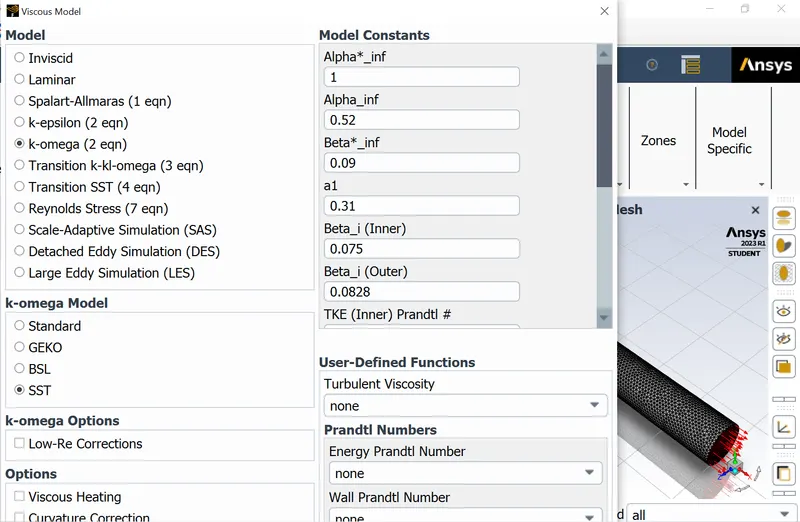
Also, knowing the velocities for each case, to inisializate the program, it will be selected firstly k-epsilon and then, k-omega, watching the flow behavior with these two types of turbulence models. It is normally recomended to use k-epsilon because of the turbulence model with this function will take the mesh grids away from the wall in comparison to k-omega, that it takes the near-wall mesh grids and just approaches the values near from the viscous sublayer.
K-Epsilon
K-Omega
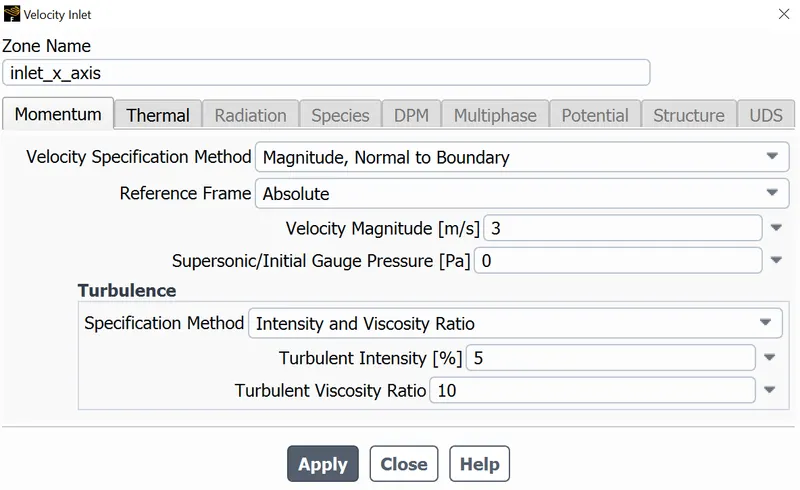
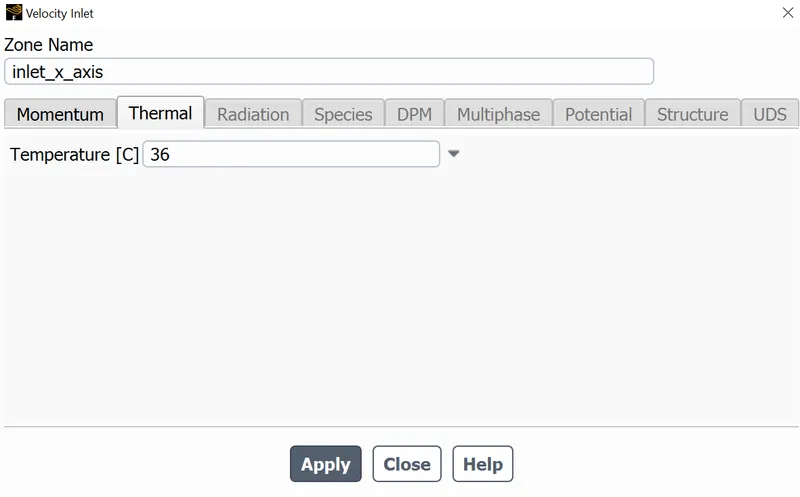
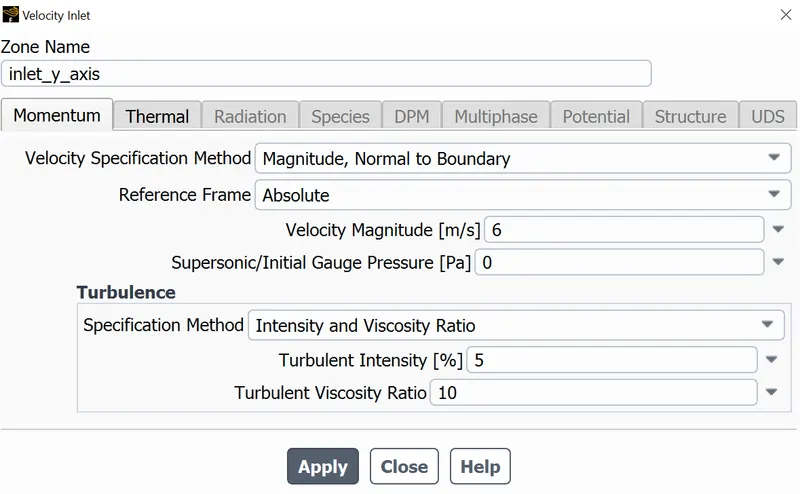
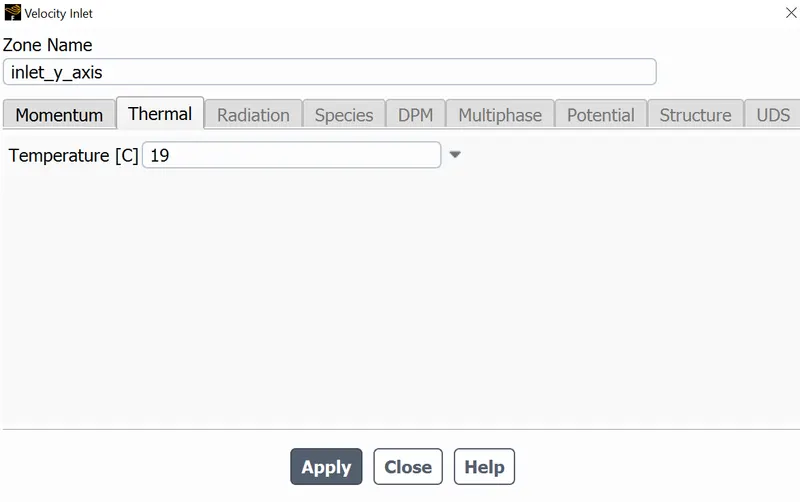
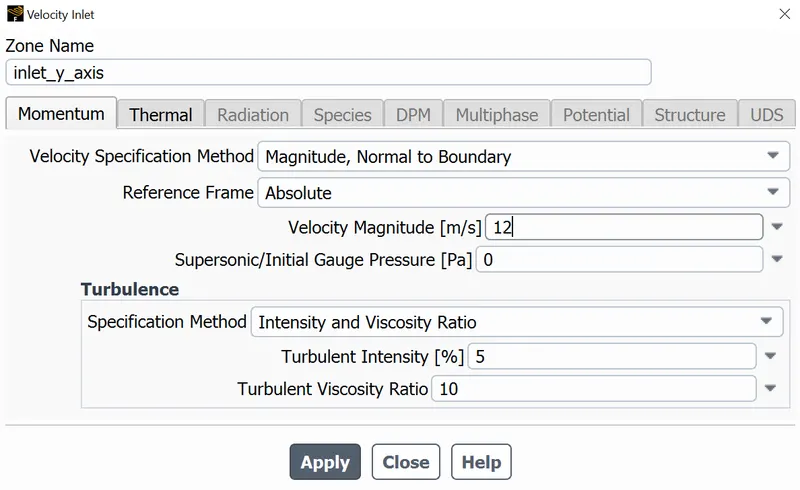
Velocity and temperature are entered using the function boundaries from Ansys Setup. The velocity values at the x-axis inlet or hot inlet will never change, but the velocity and temperature at the y axis inlet or cold inlet values for each momentum ratio will be:
Pipe's hot inlet entrance:
Pipe's cold inlet entrance:
MOMENTUM ASPECT OF 2
MOMENTUM ASPECT OF 4
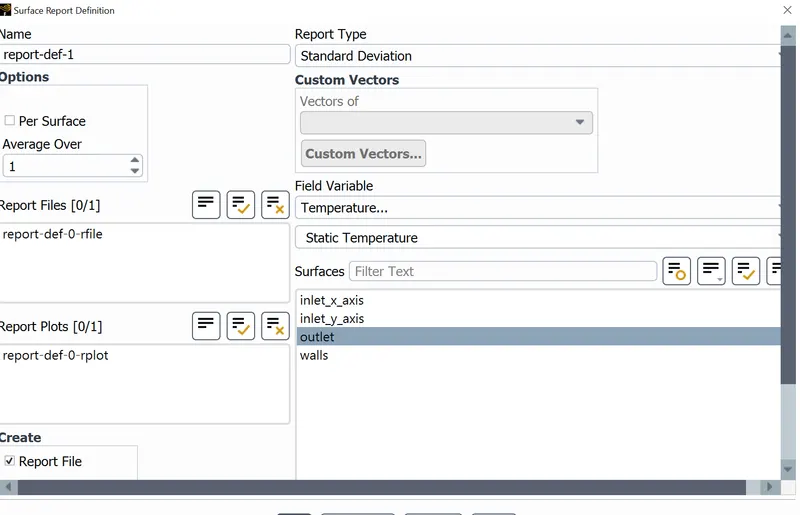
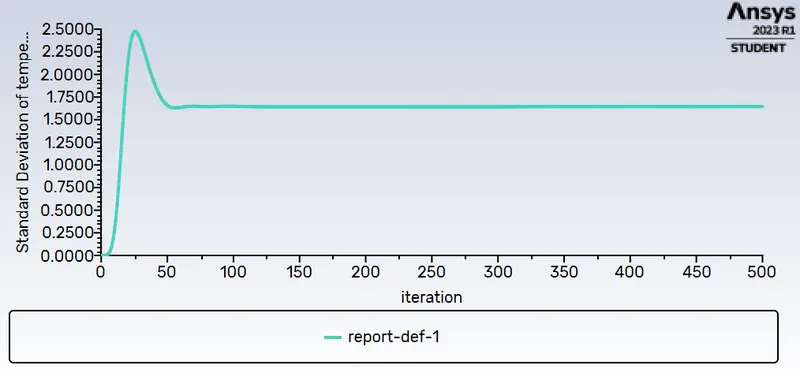
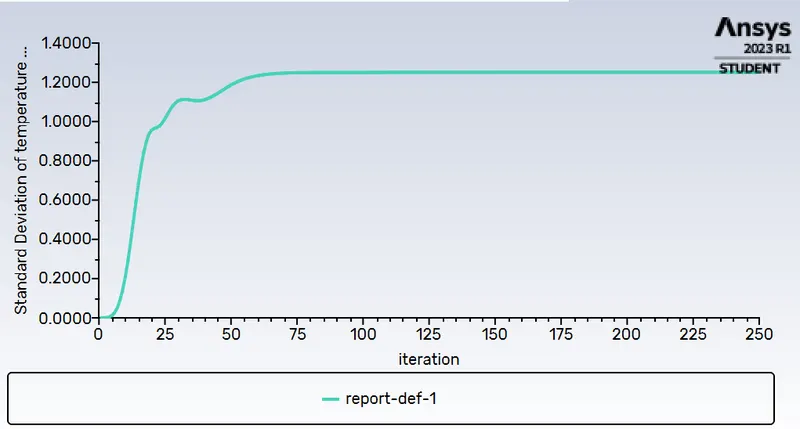
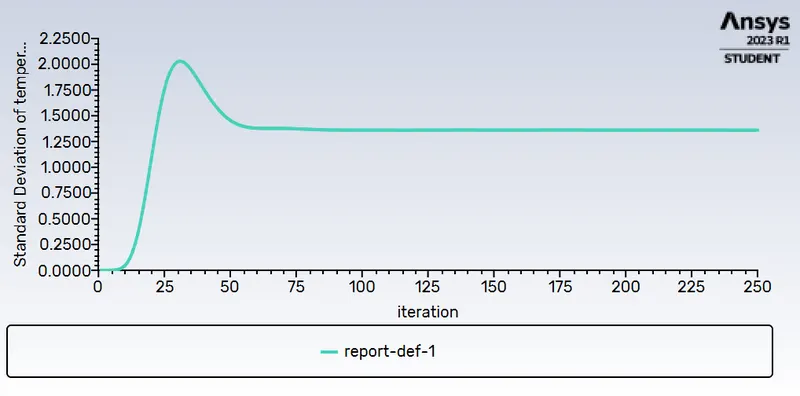
Likewise, to get the deviation temperature values in a chart, the function report is used for obtaining these plots. It will be called the standard temperature deviation to watch the difference between the analytical value and the numerical value; Furthermore, the average temperature along the outlet cross area will be pollet too.
Reports:
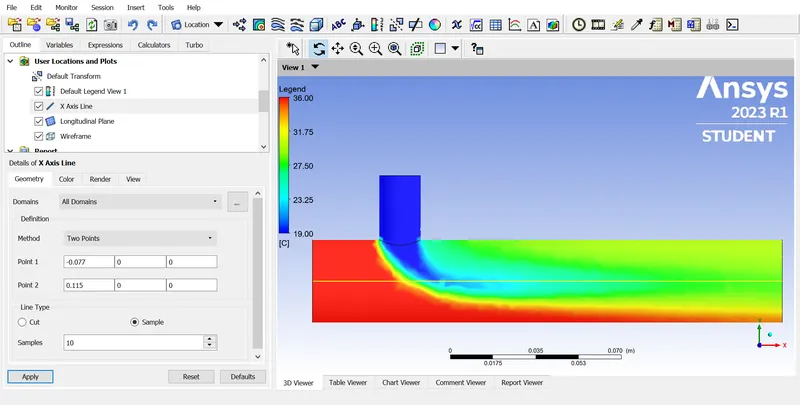
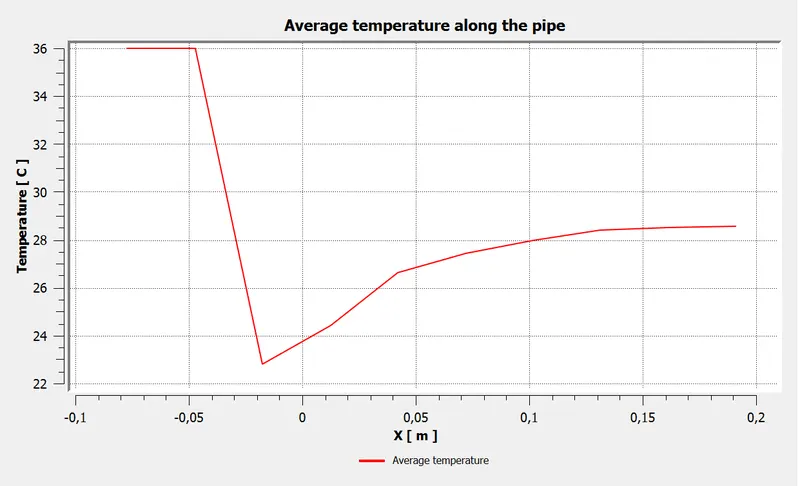
Finally, to create the contours that shows in clearer way the flow behavior inside the pipe, it must be created a surface that it is located in the longitudinal section from the pipe. Also, the line shows in the image below serves for create the charts that will show the average temperature and velocity along the pipe length. The points shown at the left bottom of the picture are the points where the entrance and exit of the pipe starts and finish respectively.
LINE CREATION
LONG MIXING TEE PIPE
Following the previous steps done to obtain the initial geometry and the meshing renifing, the final mesh over the long mixing tee pipe is going to be:
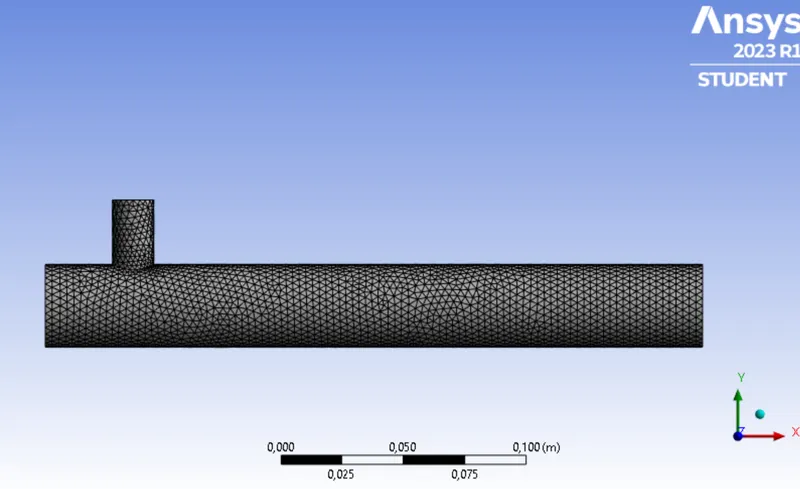
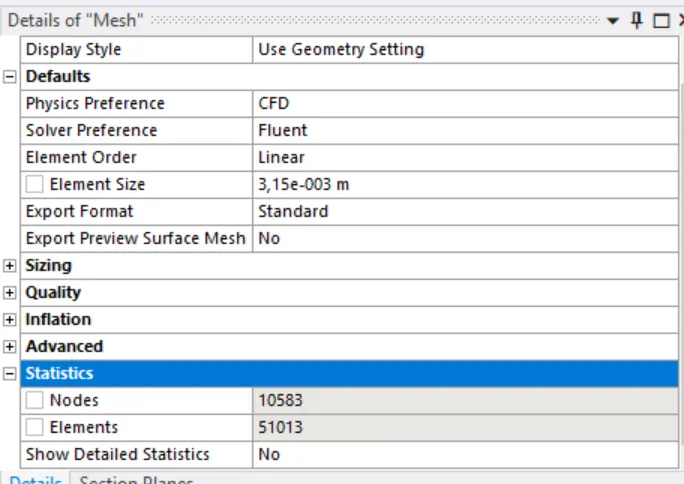
The mesh details vary from the short mixing tee pipe, due to the length increasing of this pipe and it can be seen the mesh size is even bigger in this case, the elements have been greater than the previous case though.
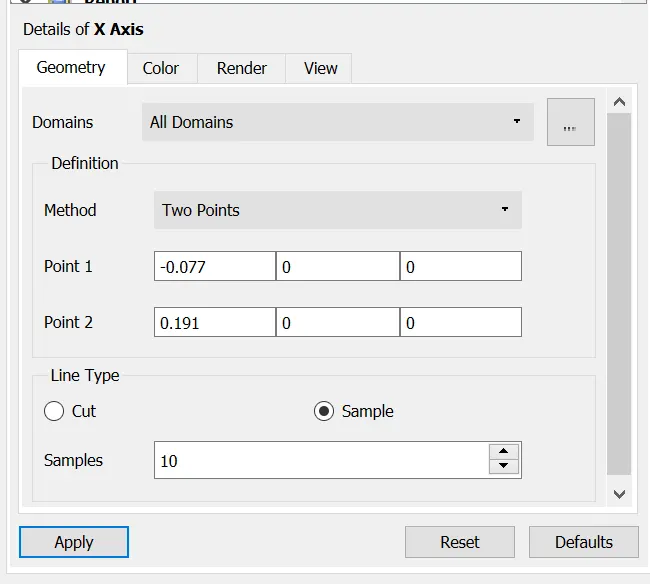
After defining the initial and boundary conditions at the Ansys project setup and ran-up the simulation, it is now necessary to add a line across the pipe length in order to watch the temperature and velocity average as it can be done in the short mixing tee simulation. The inlet and outlet points are:
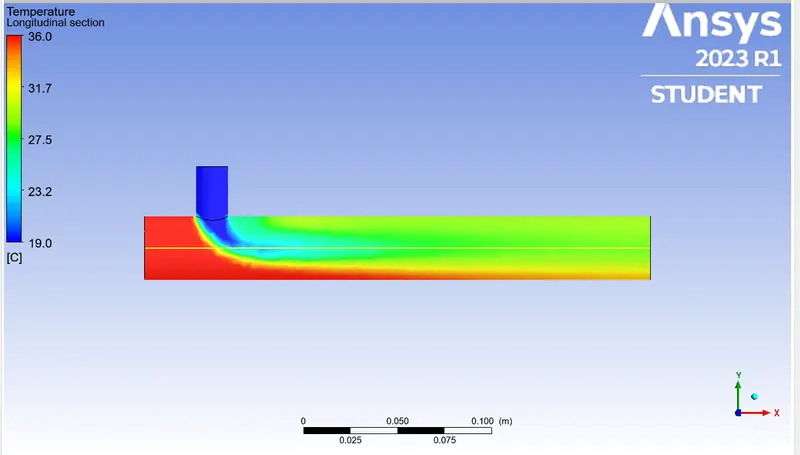
The yellow line will get the average primitive parameters requested by the project challenge, this line will look like:
RESULTS
Analytical can be obtained using the following formula:
`T_(mixture)=(m_(hot)T_(hot)+m_(cold)T_(cold))/(m_(hot)+m_(cold))`
This temperature value refers the average temperature once the cold and hot temperatures have shocked each other. The values are:
Momentum ratio = 2
`T_(mixture)=30.332 °C`
Momentum ratio = 4
`T_(mixture)=27.5 °C`
These values will be taken to explain the difference found in k-Epsilon and k-Omega and also, they will explain why one of these two models was chosen to simulate the behavior along the long mixing tee pipe.
Short mixing tee
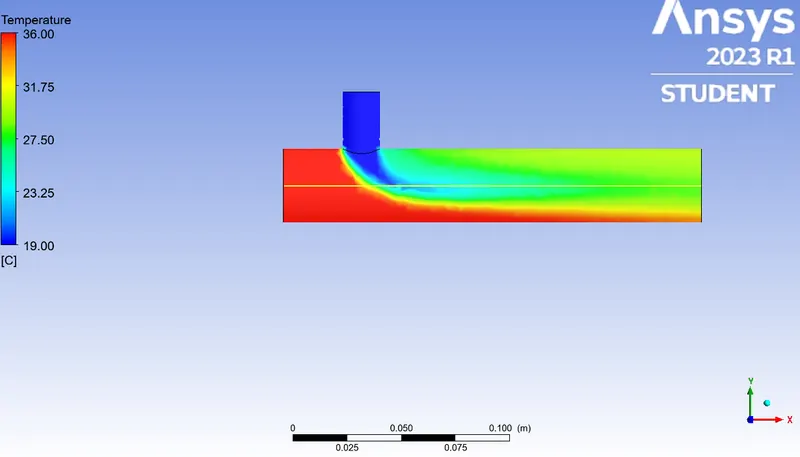
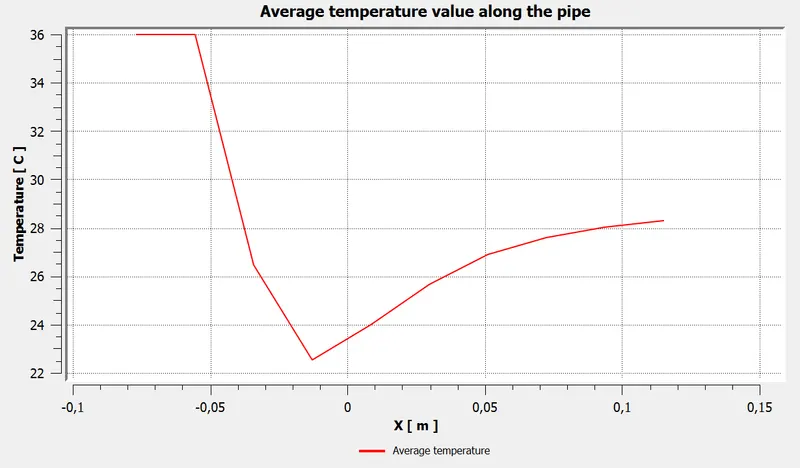
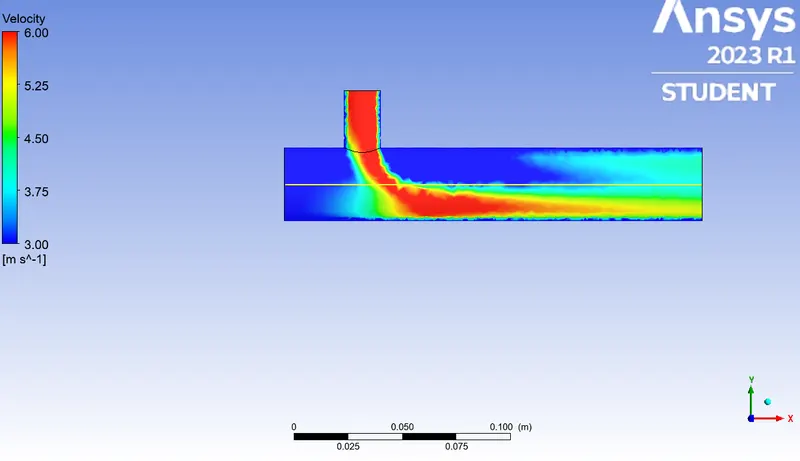
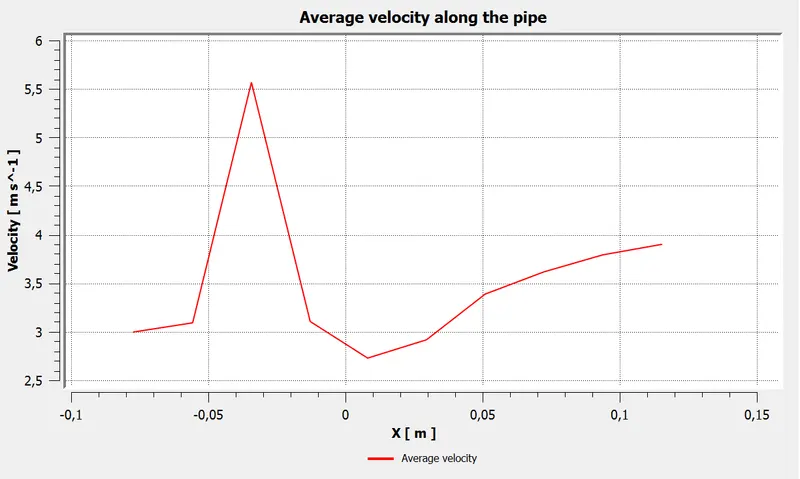
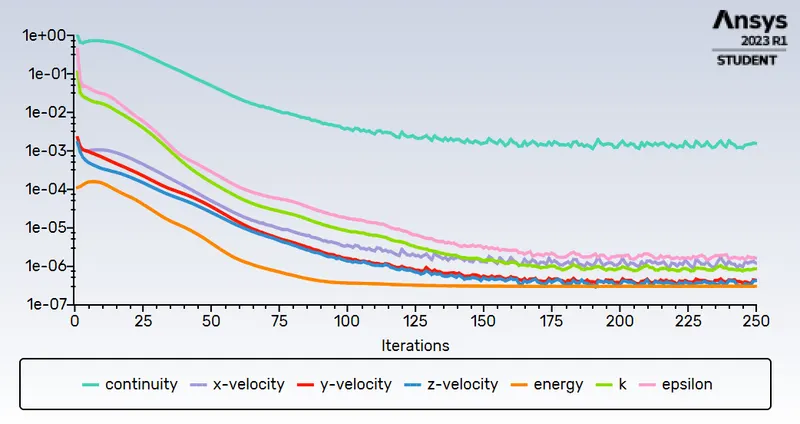
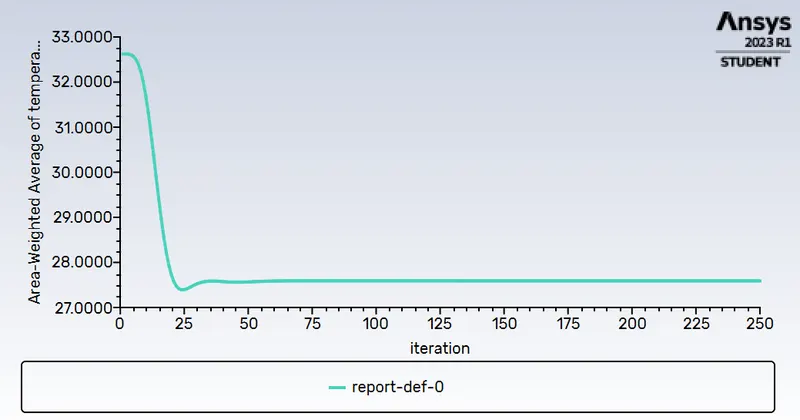
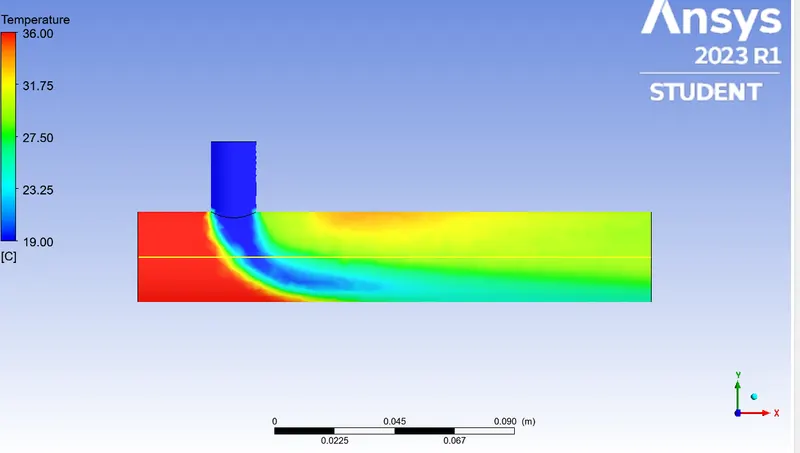
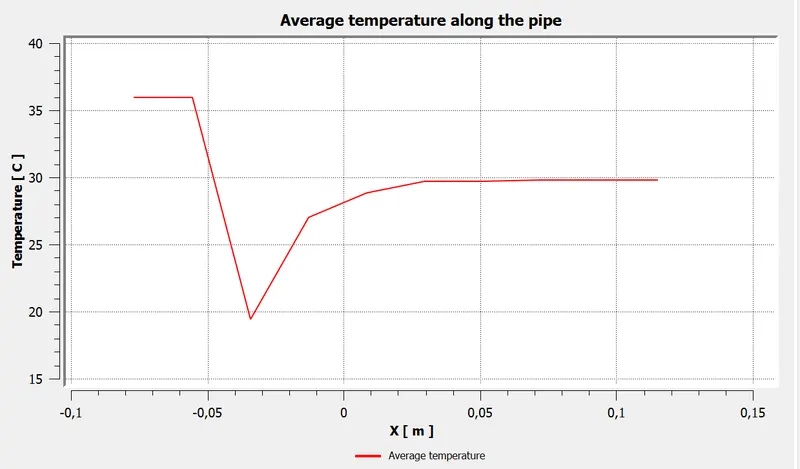
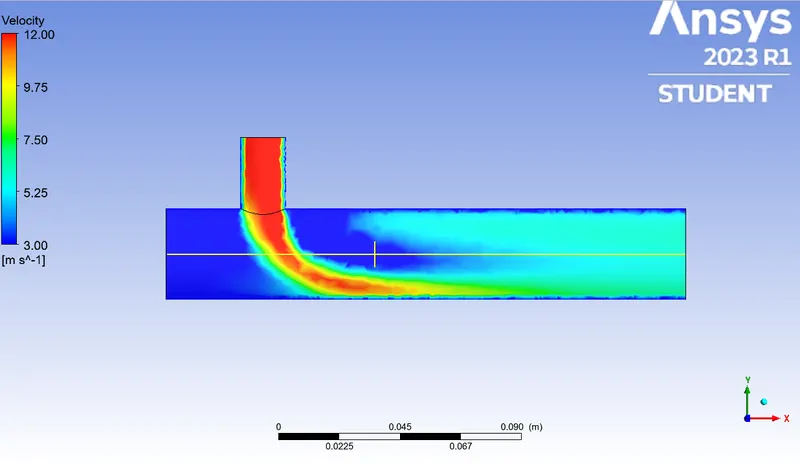
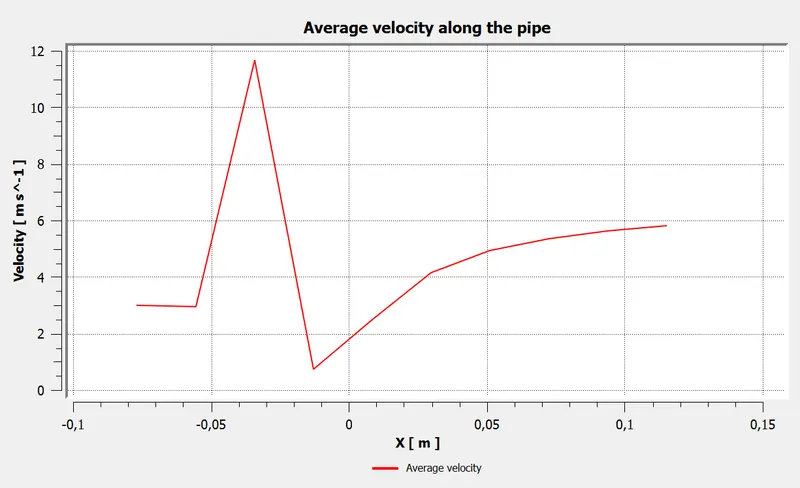
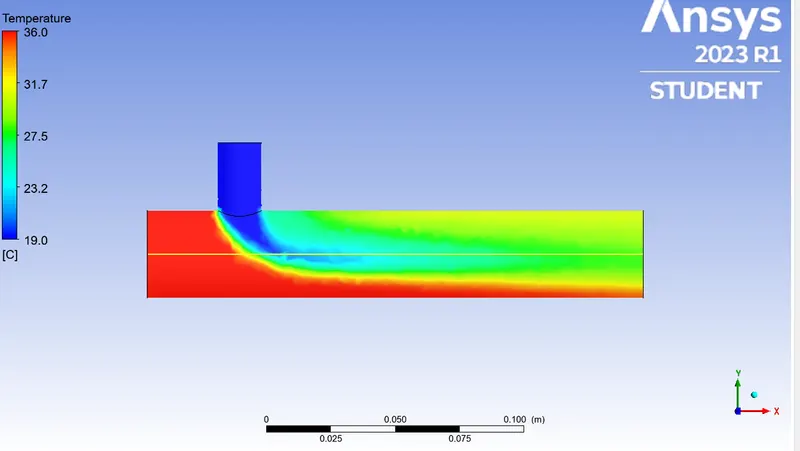
Regarding the reports obtained in the simulation solution, the following plots, longitudinal contours, average velocity and temperature along the pipe plot for each momentum ratio were obtained:
- K-epsilon model
Momentum Ratio = 2
Average temperature:
Average velocity:
Momentum Ratio=4
Average temperature:
Average velocity:
- K-omega model
Momentum Ratio = 2
Average temperature:
Average velocity:
Momentum Ratio=4
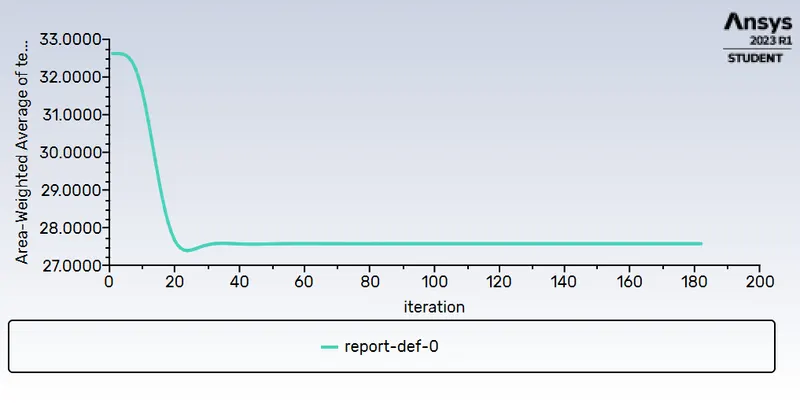
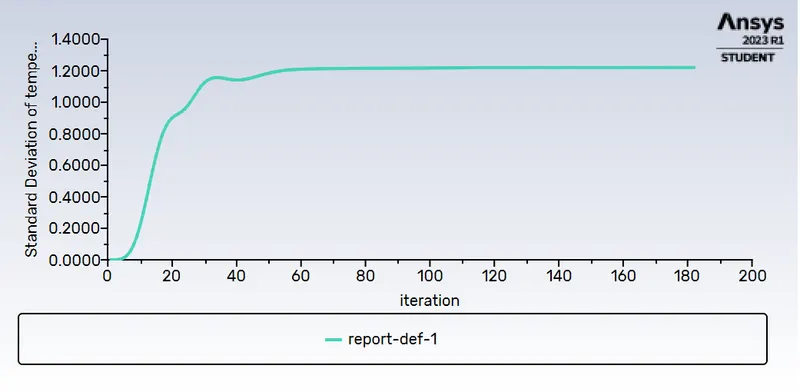
Average temperature:
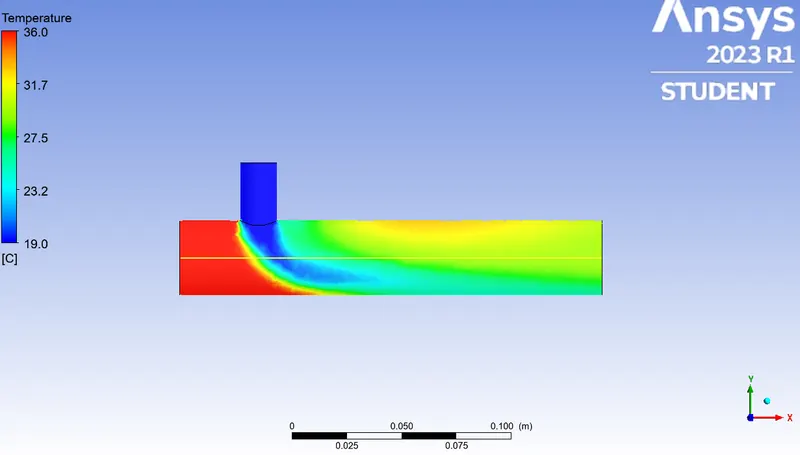
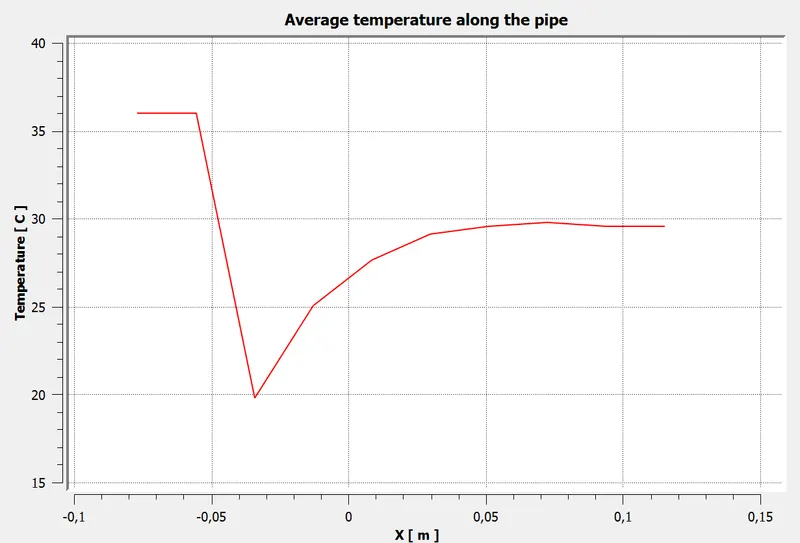
Average velocity:
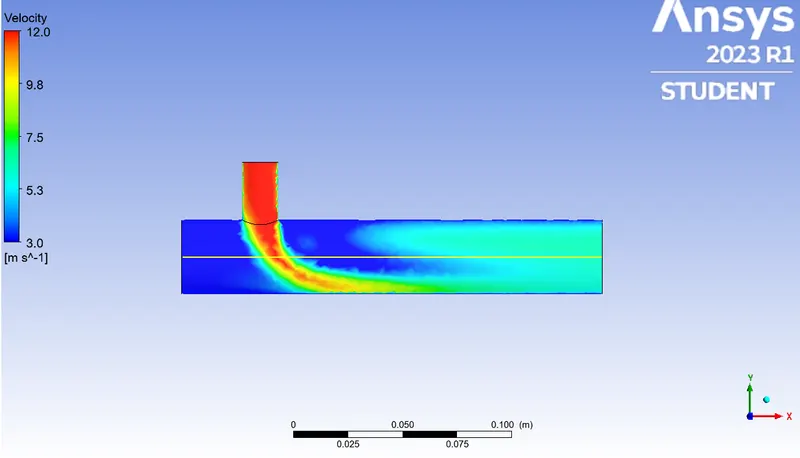
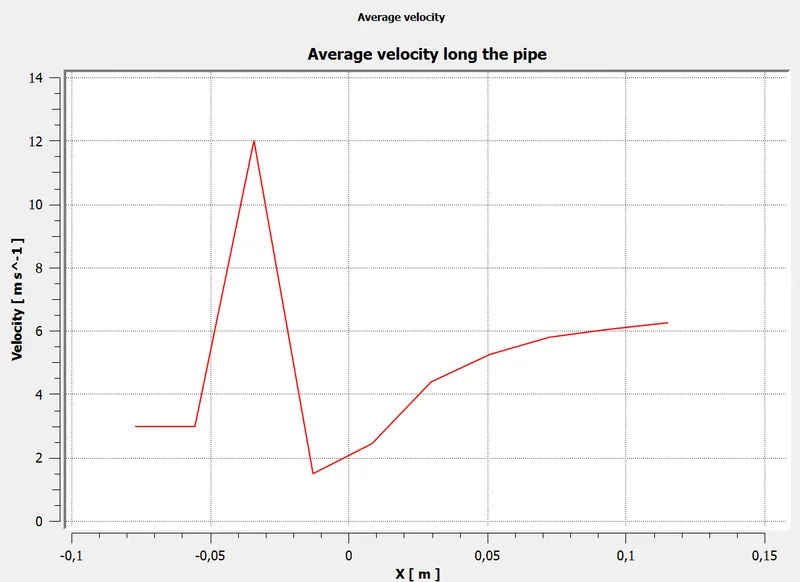
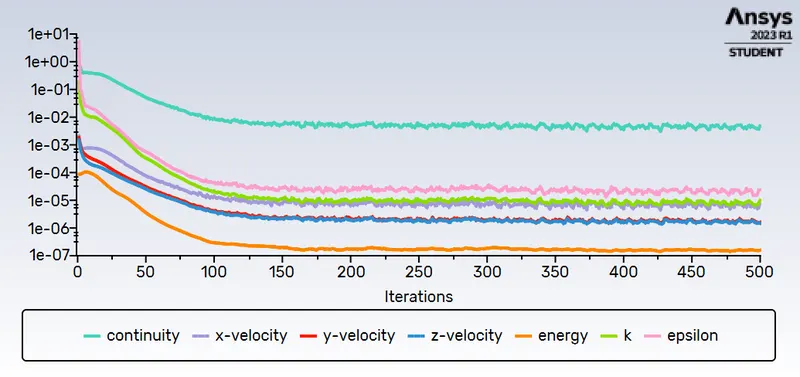
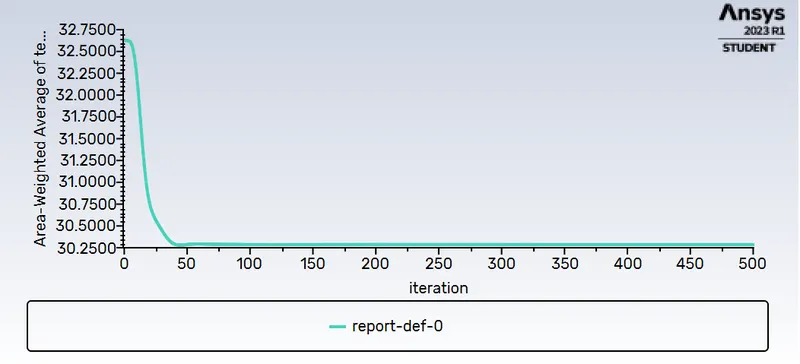
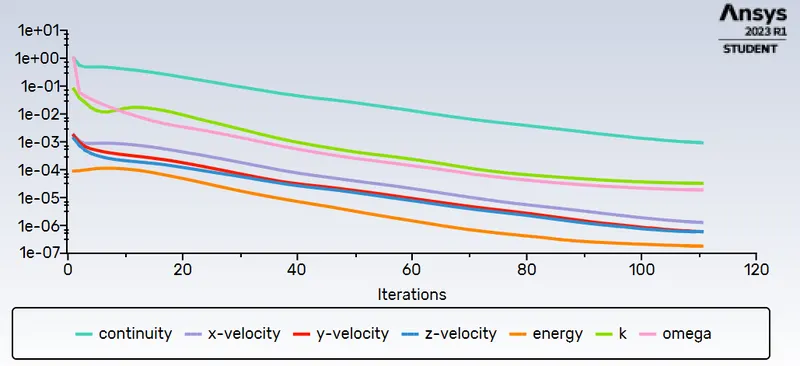
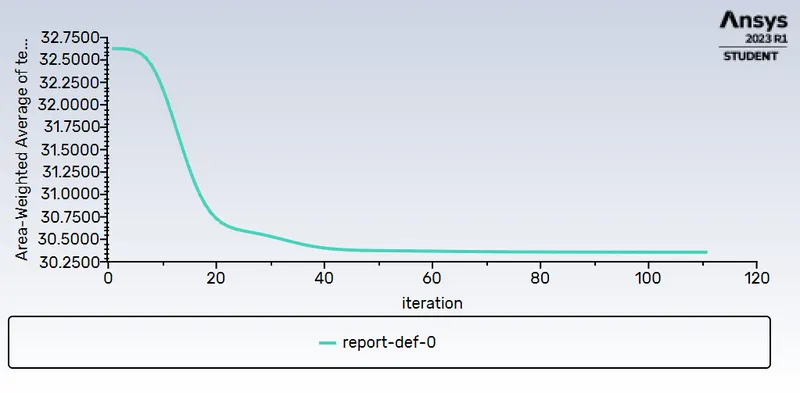
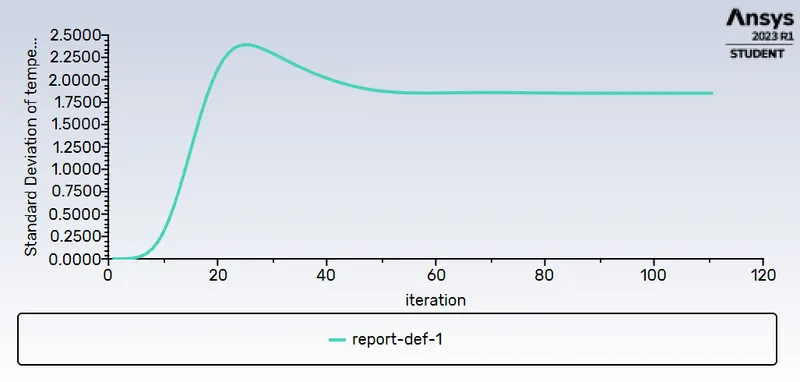
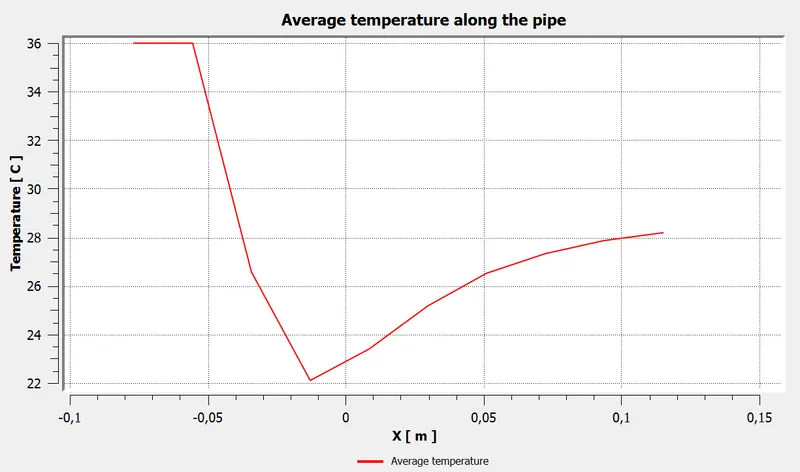
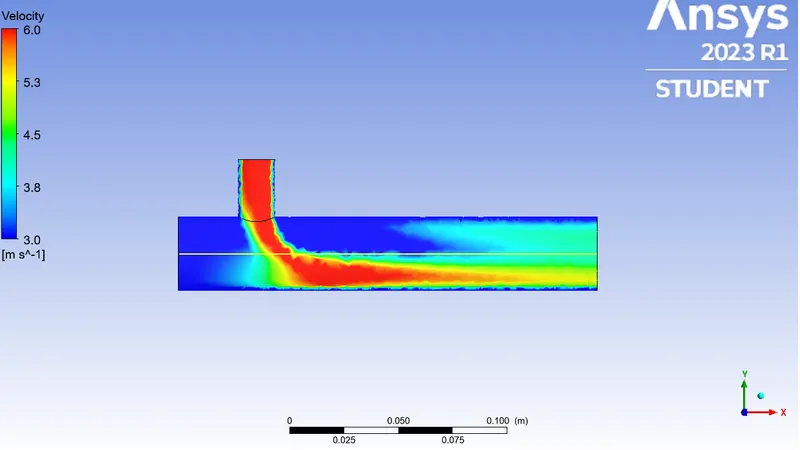
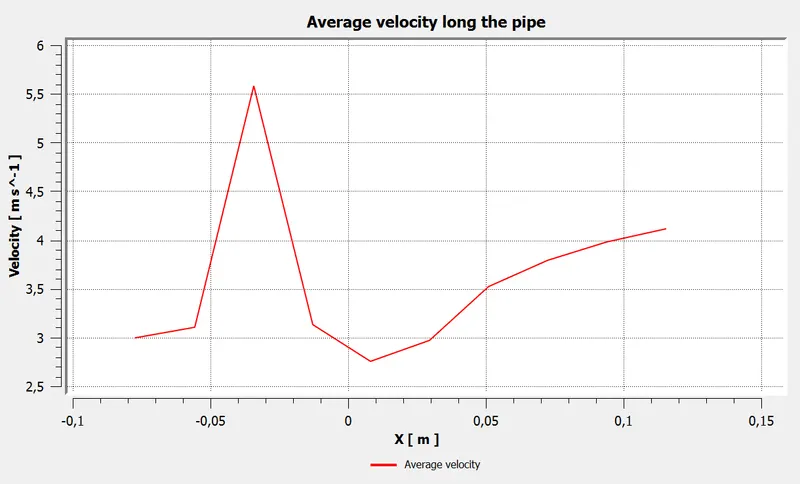
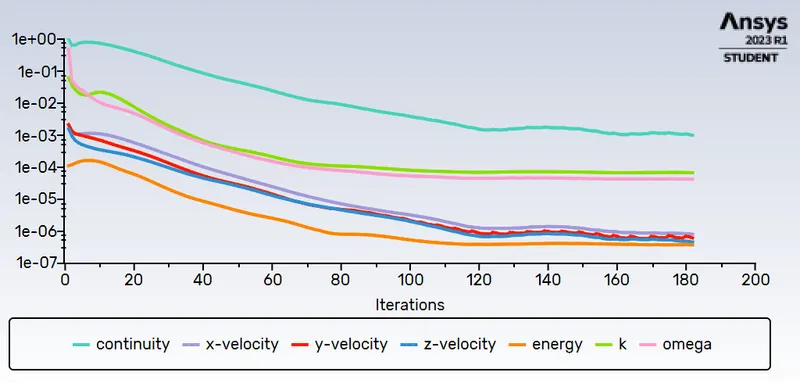
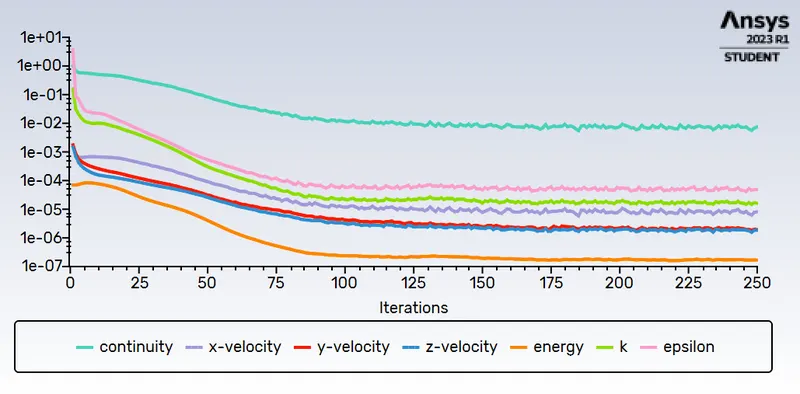
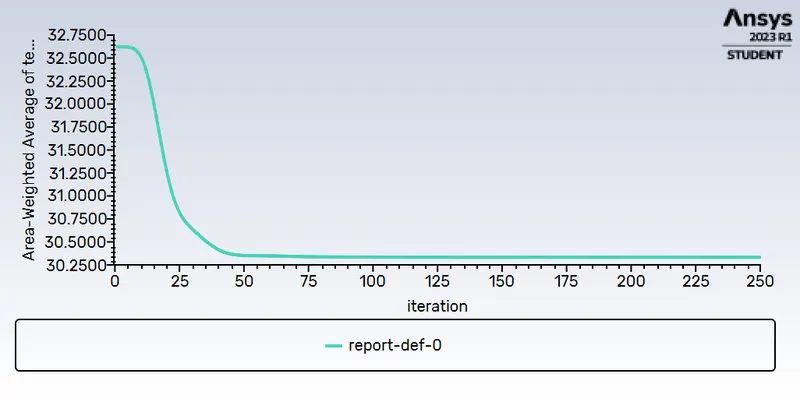
K-epsilon results shows the average temperature at 2 and 4 momentum ratio are approximately equals to 30.33 °C and 27.5 °C respectively; K-omega achieves average temperatures of 30.4 °C and 27.6 C respectively, then, this little variation between these two models is because of the standard deviation of the temperature in K-epsilon is less than the K-omega model. This deviation can be compared looking at the third picture from each momentum ratio case, where the standard deviation in K-Epsilon is lower than the K-omega according to the plots stabilization.
Analytical values help get certain the K-Epsilon values obtained approaches nearer to these ones such that the values only should vary in an error of `3*10^-7`. Taking the obtained results, it is determined the better model to obtain results more accurate will be K-Epsilon in realizable form. K-Omega SST (Shear Stress Transport) predicts very well the near-wall flow behavior and turbulence, however, its efficiency is better in low Reynolds numbers and, this model also produces higher turbulence values in spots where there is stagnation flow.
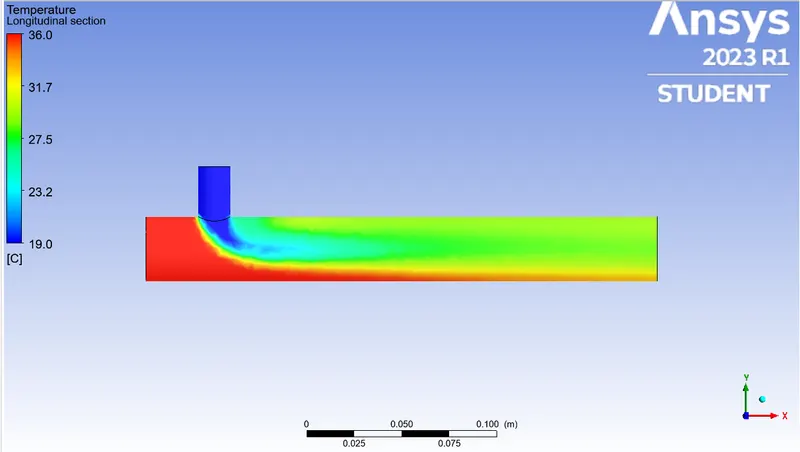
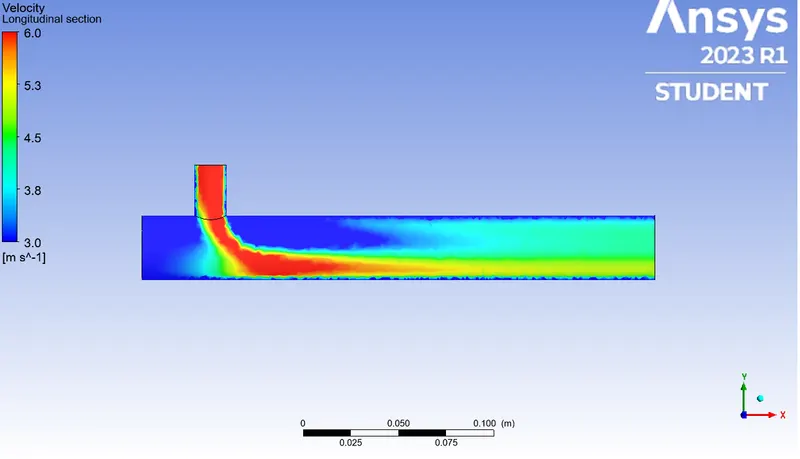
So, the long mixing tee statistic plots, flow behavior contours, average velocity and temperature along the pipe plots will be:
Long mixing tee
Momentum Ratio=2
Average temperature:
Average velocity:
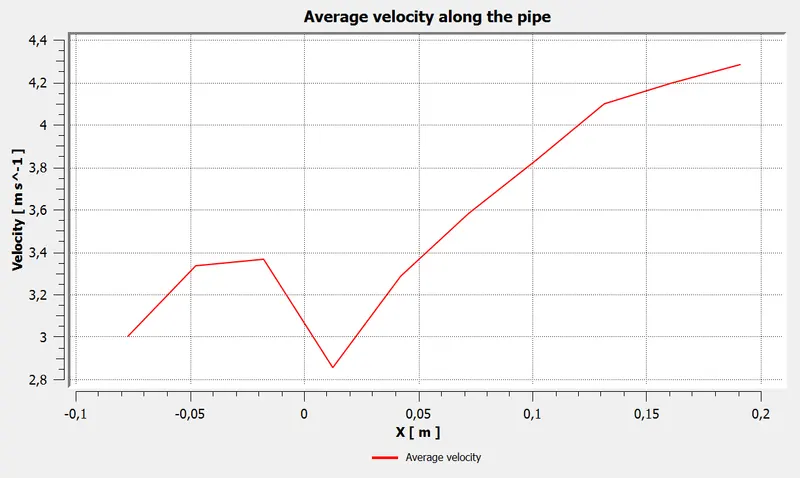
Momentum Ratio=4
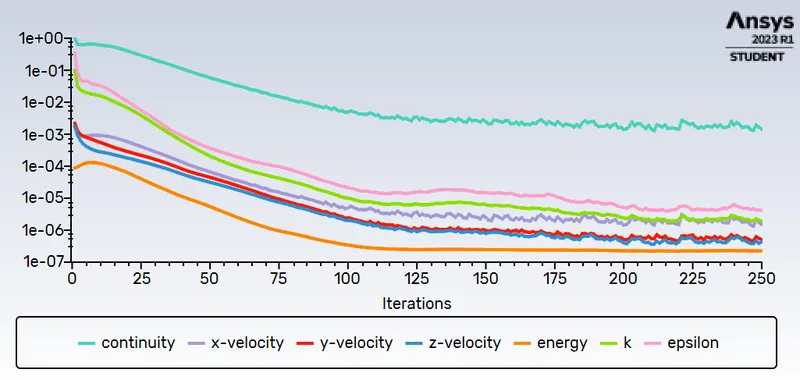
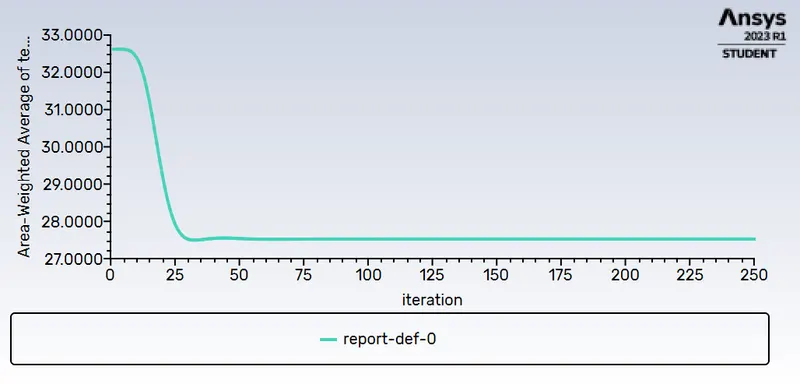
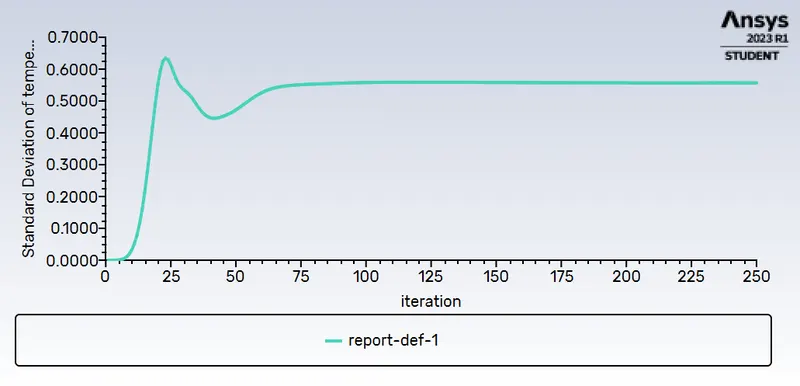
Average temperature:
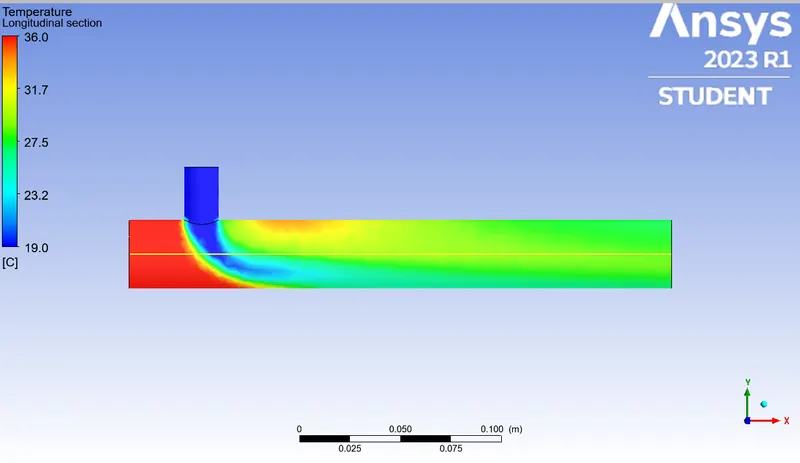
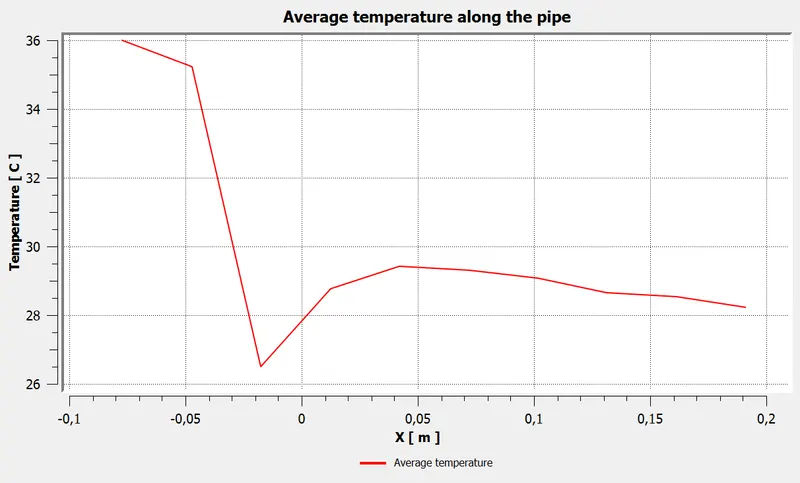
Average velocity:
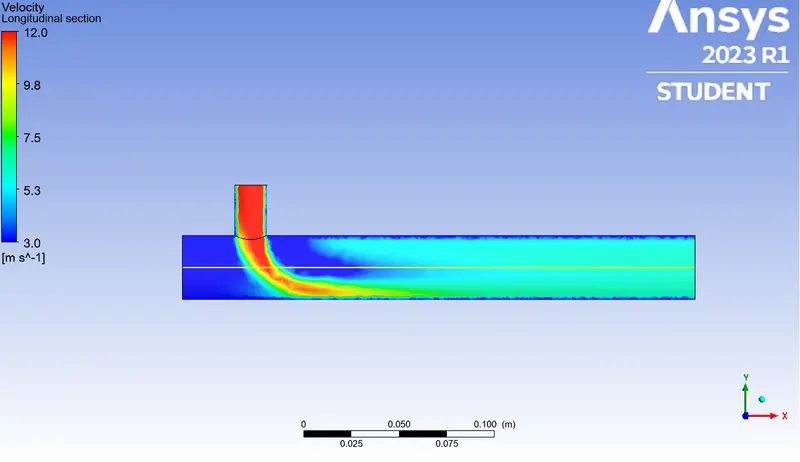
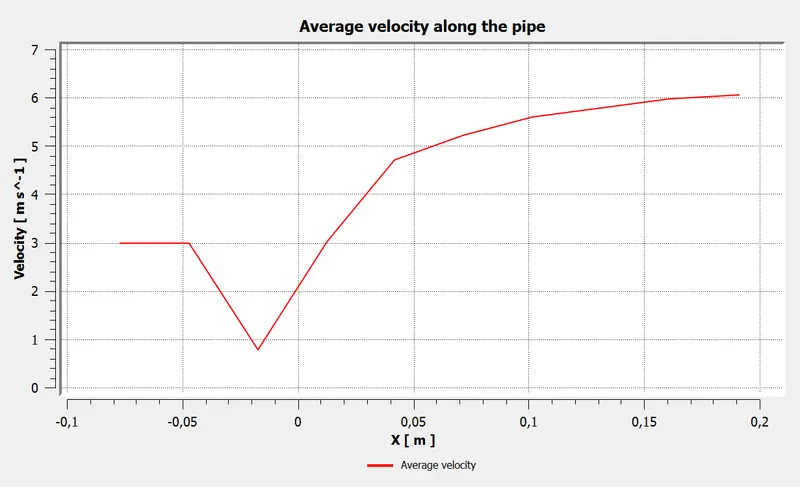
In each momentum ratio case it can be seen the temperature and velocity keep contant once it is achieved an stabilization point, and the plots obtained shows the length increasing helps the flow does not loss energy, because of the outlet section has been moved ahead. It is also important to describe the velocity increasing in the cold flow makes the hot flow loss energy and temperature at the same time, this issue can be seen in the fifth picture from each momentum ratio simulation.
Now, looking at the comparison table, the results obtained are:
Comparison table
| Parameters | Short mixing Tee pipe | Long mixing Tee pipe | ||||
| K-Epsilon, MR=2 | K-Epsilon, MR=4 | K-Omega, MR=2 | K-Omega, MR=4 | MR=2 | MR=4 | |
| Cell count | Elements: 50980 , Nodes: 10552 , Size: 0.0027m | Elements: 51013 , Nodes: 10583 , Size: 0.00315m | ||||
| Average Outlet Temperature (°C) | 30.3 | 27.5 | 30.4 | 27.6 | 30.3 | 27.5 |
| No. of iterations | 158 | 114 | 110 | 150 | 105 | 132 |
But, watching the contours obtained, it can be determined that depending on the function that the tee pipe would work, it is better use a long tee design than short tee, due to the long tee reach a temperature gradient smoothler. However, it must be taken into account to choose the more appropiate length, in order to do not be affected by the pressure drops.
CONCLUSIONS
Mixing tee pipe is a useful and easy engineering design that it just depends on the flow behavior which is passing through it. However, the flow behavior must be analyzed if the pipe would accomplish with a determined work which would require the outlet primitive parameters keep constants and accurates like testing laboratories, pharmaceutical freezers, aircraft air conditioning systems, etc. So, these types of analyses are required in order to supply the costumer or user requirements.
Aside the k-epsilon realizable and k-omega SST, there are some turbulence models that will provide the accurate result depending on the simulation type; one of the most well known turbulence models is Spalart Allmaras, which it can be used for determining in an accurate way the flow behavior across the pipes, calculating the transient function in a single governing kinematic equation. This model is very useful in aerodynamics simulations too.
That's it, thanks for reading.
REFERENCES
https://www.sciencedirect.com/science/article/abs/pii/S0017931014005559